IoT Sensors for Hydroponics: Monitor Your Garden From Anywhere
IoT sensors for hydroponics let you track pH, EC, water level, temperature, humidity, and light in real time, so you can keep plants in their ideal range without standing over your system all day. When paired with simple controllers, they can even automate dosing, top offs, and alerts so you prevent problems instead of reacting to them.
TL;DR: With a handful of inexpensive IoT sensors and a Wi-Fi hub, home growers can monitor hydroponic systems from anywhere, get alerts before plants stress, and make smarter adjustments that improve yield and reliability. The same tools that power smart homes now make it realistic for apartment growers to run “smart” DWC, NFT, and tower systems on a normal budget.
What are IoT sensors for hydroponics?
IoT sensors for hydroponics are internet-connected devices that measure key environmental and water parameters in your system, then send that data to an app, dashboard, or automation platform. Instead of checking pH with a handheld meter or eyeballing water level, sensors stream measurements automatically so you can review trends and receive alerts.
In practice, most home setups use a small collection of sensors: pH, EC (nutrient strength), water temperature, air temperature, humidity, light level, and water level. More advanced builds add CO₂ sensors, dissolved oxygen probes, or flow sensors for high-demand crops like tomatoes and peppers.
How do hydroponic IoT systems work?
Hydroponic IoT systems combine three layers: sensors that collect data, a microcontroller or hub that reads those sensors, and a network connection that pushes data to the cloud or your local network. The hub might be a Wi-Fi-enabled microcontroller, a Raspberry Pi, or a commercial gateway that comes with a branded app.
Once online, the system can log data, draw charts over time, and trigger alerts when values drift outside set ranges. Some growers take the next step by adding relays and pumps, so the same platform can control dosing pumps, top-off valves, lights, or fans according to the sensor values.
Arduino vs Raspberry Pi automation → Arduino vs Raspberry Pi for Hydroponic Automation
Which parameters should you monitor?
For most home and apartment hydroponic gardens, the most useful IoT metrics fall into three categories: water chemistry, root-zone stability, and room environment. Dialing these in first has a much bigger impact than chasing exotic metrics like CO₂ or PAR for basic herb and lettuce setups.
Key water and nutrient sensors
- pH: Keeps nutrients bioavailable in the 5.5–6.5 range for most leafy greens and herbs. Drifts outside that range can lock out key nutrients and show up as leaf yellowing or tip burn.
- pH meter guide → Best pH Meters for Hydroponics (2025)
- EC/PPM: Tracks nutrient strength so you can avoid starvation and salt burn. Beginner-friendly crops like lettuce and basil typically thrive at relatively low EC, while fruiting crops need higher values.
- Water temperature: Helps prevent root rot and low dissolved oxygen by keeping solution in a moderate range. Warm solution in closed indoor systems is one of the fastest ways to lose a crop, especially in hot climates.
Environmental sensors
- Air temperature: Protects cool-weather crops like lettuce from bolting and heat stress while keeping warm-season crops productive. Temperature data also guides when you run fans, heaters, or air conditioning around your system.
- Relative humidity: Impacts transpiration, disease risk, and overall plant stress. High humidity can encourage fungal issues, while very low humidity can cause leaf curl in dry climates like Arizona.
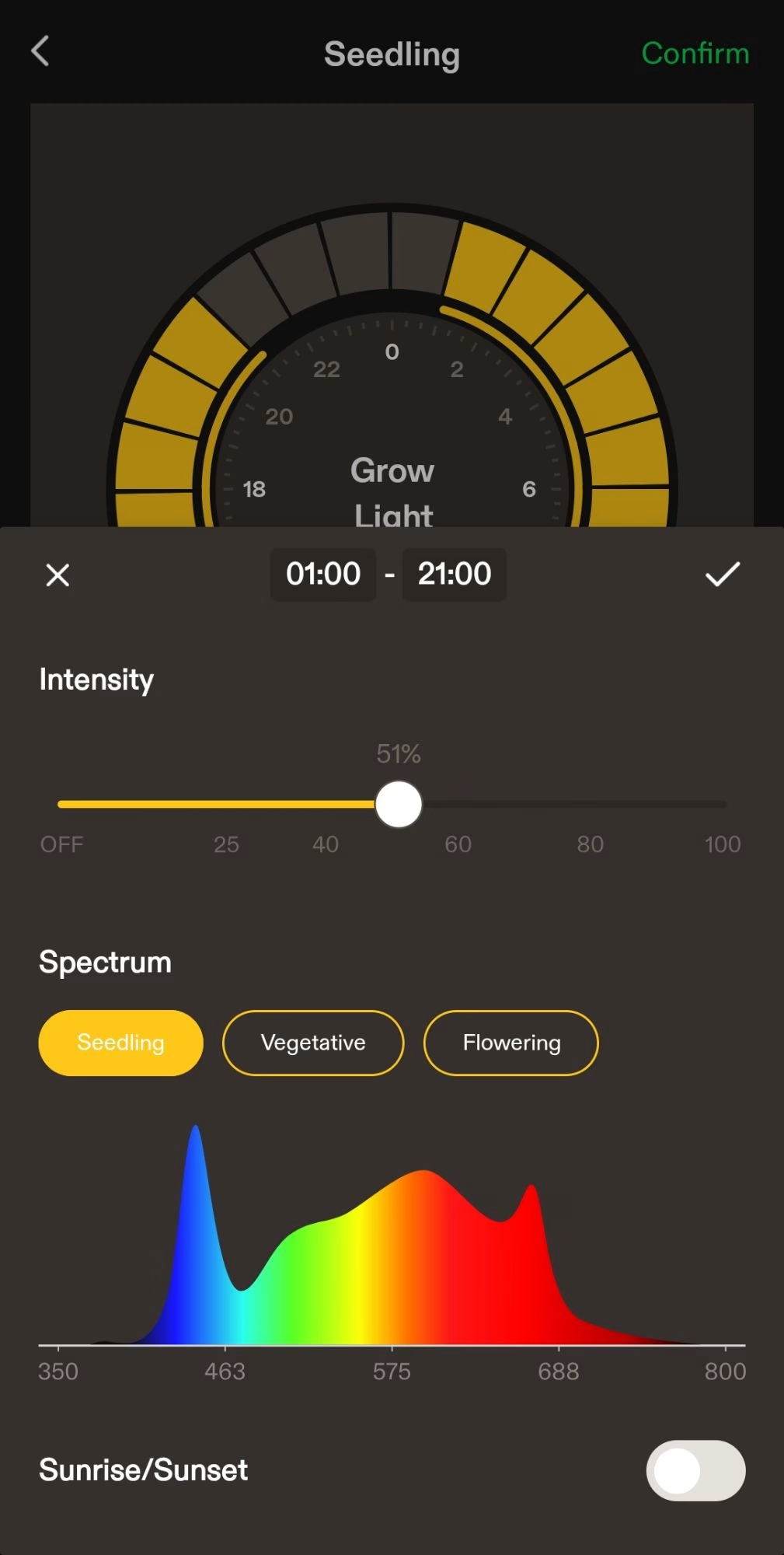
- Light level (lux/PAR proxy): Confirms that plants receive consistent light duration and intensity. Many smart grow lights now tie into these readings so you maintain a stable photoperiod for long-day and short-day crops.
System health sensors
- Water level: Prevents pumps from running dry and alerts you before reservoirs get dangerously low. This is especially important for small countertop systems and Kratky-style containers that deplete quickly in hot apartments.
- Flow or pump status: Confirms that NFT channels, drip lines, or tower manifolds are actually circulating water. A simple flow sensor or current sensor on your pump can catch failures before plants wilt.
What kinds of IoT sensors can you use?
There are two main routes: off-the-shelf smart garden sensors, or DIY sensor boards connected to platforms like Arduino and Raspberry Pi. Both can work for hydroponics, and many growers use a hybrid approach to balance cost, reliability, and flexibility.

Off-the-shelf smart sensors
- Wi-Fi plant monitors: Battery-powered probes that measure temperature, moisture, and sometimes light. These are easy to deploy but often designed for soil, so they are better for room conditions than submerged nutrient tanks.
- Smart plugs and power strips: Not sensors by themselves, but they tie into schedules and let you remote-control pumps and lights. Some models provide energy monitoring to estimate system costs.
- System power & cost → Calculating Yield and ROI for Home Hydroponic Systems
- Integrated “smart” hydroponic kits: Countertop or cabinet systems with built-in sensors, Wi-Fi, and companion apps. These are beginner-friendly but usually less customizable than DIY setups.
DIY sensor boards
- pH and EC modules with probes: Designed to work with microcontrollers and provide analog or digital outputs. Many hobby boards are affordable but need regular calibration to remain accurate.
- Temperature, humidity, and pressure sensors: Popular chips like DHT-series or BME-series give reliable readings for indoor grow rooms. These are usually plug-and-play with Arduino or similar boards.
- Ultrasonic or float water-level sensors: Mounted in reservoirs to track liquid levels without needing to open lids constantly. These pair well with alerts and pump control scripts.
What are the benefits of IoT sensors in hydroponics?
The biggest wins come from consistency and early detection: sensors help you stabilize conditions and catch problems before they show on leaves. For home and apartment growers, that translates into fewer surprises and more predictable harvests.
Practical advantages for home growers
- Fewer manual checks: Daily pH, EC, and water-level checks drop to quick app glances instead of multiple trips to the system. This matters if your setup is in a closet, garage, or spare room away from your main living space.
- Earlier warnings: Alerts on your phone can warn you when pumps fail, lights stay off, or temperatures spike. That extra few hours can be the difference between limp lettuce and a fully salvaged crop.
- Data-driven tuning: Over weeks and months, the data shows how your system responds to nutrient changes, reservoir size, and different crops. That makes it easier to fine-tune things like EC and photoperiod for each plant type.
Yield and quality improvements
- More stable pH and EC reduce nutrient lockout and stress, which can boost growth and shorten harvest times for leafy greens.
- Tight temperature and DO control around the root zone help prevent root diseases and improve nutrient uptake.
- Dissolved oxygen guide → Dissolved Oxygen in Hydroponics: Why Air Pumps Matter
- With consistent light and climate, intermediate and advanced growers can push fruiting crops like tomatoes, cucumbers, and peppers to higher yields in DWC, NFT, or Dutch bucket systems.
- System type overview → Hydroponic System Types: DWC, NFT, Ebb and Flow, Kratky, and More
Are there downsides or risks?
IoT sensors and automation introduce complexity, cost, and new failure modes, especially if Wi-Fi or power is unreliable. Beginners should treat sensors as decision-support tools first, then gradually introduce automation instead of handing full control to code on day one.
Common challenges include calibration drift, hardware glitches, and overconfidence in sensor readings. A miscalibrated pH probe or stuck relay can cause more damage than a missed manual check, so periodic validation with handheld tools is still important.
What equipment do you need for IoT hydroponic monitoring?
The exact gear depends on your system size and goals, but most home growers can start with a small core kit and add complexity over time. The table below outlines typical components for different system types.
Core components by system type
| System type | Recommended sensors | Typical control add-ons | Best for |
|---|---|---|---|
| Kratky buckets | Water level, room temperature, light level | Smart plug for lights | Leafy greens, herbs in small spaces. |
| DWC tubs/buckets | pH, EC, water temperature, water level, air temp/humidity | Smart plug or controller for air pump and lights | Lettuce, basil, spinach, compact tomatoes. |
| NFT / channels | pH, EC, water temp, flow or pump current, air temp/humidity | Pump controller, smart timers, dosing pumps | Leafy greens, strawberries, herbs. |
| Dutch buckets / drip | pH, EC, water temp, reservoir level, air temp/humidity | Pump control, dosing, irrigation cycles | Tomatoes, peppers, cucumbers. |
| Vertical towers | Water level, water temp, air temp/humidity, light level | Pump control, light scheduling | Space-limited apartment gardens. |
From multiple runs in hot, dry climates like Phoenix, it is especially helpful to prioritize water temperature and reservoir-level monitoring, since evaporation and heat soak can spike much faster than in cooler regions. For apartment growers with limited time, starting with smart plugs and basic temperature/humidity sensors is a low-friction way to step into IoT without re-wiring everything.
How to choose IoT sensors for your hydroponic setup
Choosing sensors is mostly about matching your goals, budget, and comfort level with tinkering. Overbuying complex gear you never fully install is a bigger risk than starting small and expanding later.
Key selection criteria
- Accuracy and calibration: Look for pH and EC probes that support two-point calibration and have replaceable probes. For temperature and humidity, check stated accuracy and operating range to match your indoor environment.
- Connectivity: Wi-Fi is the most common for apartments, but Bluetooth and Zigbee devices can bridge through a hub if you want a more robust local network. If your grow area has spotty Wi-Fi, consider a local-only controller like a Raspberry Pi that logs data even if the internet drops.
- Durability and IP rating: Sensors sitting near reservoirs or in tents should have at least splash resistance. Probes meant for continuous immersion should be rated for that use, not just quick dips.
Budget planning
- Entry-level: A smart plug, a combined temp/humidity sensor, and a basic Wi-Fi water-level sensor can fit into a modest budget and still provide meaningful protection.
- Intermediate: Adding pH, EC, and water-temperature probes plus a microcontroller or Pi brings real-time nutrient control within reach for serious hobbyists.
- Advanced: Full automation with dosing pumps, cloud dashboards, and custom dashboards suits growers running multiple reservoirs or side hustles selling produce.
Selling hydroponic produce → Hydroponic Food Safety and Selling to Restaurants
How to set up remote monitoring on a home hydroponic garden
The simplest path is to start with monitoring only: log data, set alerts, and verify the readings before letting any sensor control pumps or dosing. Once the numbers look reliable, gradually tie in automation one subsystem at a time.
Typical setup flow
- Step 1: Map your system: Identify which reservoirs, pumps, and grow areas you want to monitor first. Prioritize the most failure-sensitive points such as pumps, water temperature, and reservoir levels.
- Step 2: Mount sensors: Install probes where they can read accurately without interfering with roots or splashing, and mount environmental sensors at canopy height. Avoid placing sensors directly under high-intensity LEDs that can skew readings.
- Step 3: Connect to a hub: Wire or pair sensors to your hub, then connect it to Wi-Fi or your local network. Test signal strength in the grow area and add a repeater if needed.
- Step 4: Configure alerts: Set realistic thresholds for pH, EC, temperature, and water level based on your crops and system design. Start with conservative ranges so you learn how your system naturally fluctuates.
- Step 5: Review trends: Watch graphs over several days or weeks to understand your reservoir’s natural pH drift, evaporation rate, and temperature swings. Use these trends to plan reservoir size, insulation, and top-off routines.
- Step 6: Add automation: Only after readings are stable should you connect dosing pumps or relays, starting with non-critical tasks like light schedules and fan control. Always keep a manual override and backup plan.
Maintenance and calibration: how do you keep sensors accurate?
IoT sensors are not “set it and forget it” devices, especially for hydroponic nutrient solutions that can foul probes. Regular cleaning and calibration keep your data trustworthy and prevent silent drift.
Routine maintenance practices
- pH and EC probes: Rinse with distilled water after exposure, avoid wiping glass bulbs, and store pH probes in proper storage solution instead of dry air. Calibrate monthly or according to manufacturer guidance.
- Temperature and humidity sensors: Keep dust and condensation off sensor vents, and avoid mounting directly in airflow from fans. Replace low-cost sensors if they show obvious drift vs a reference thermometer.
- App and firmware updates: Check for firmware updates that fix logging bugs, improve stability, or add features. Keep backups of your configuration so you can restore quickly after changes.
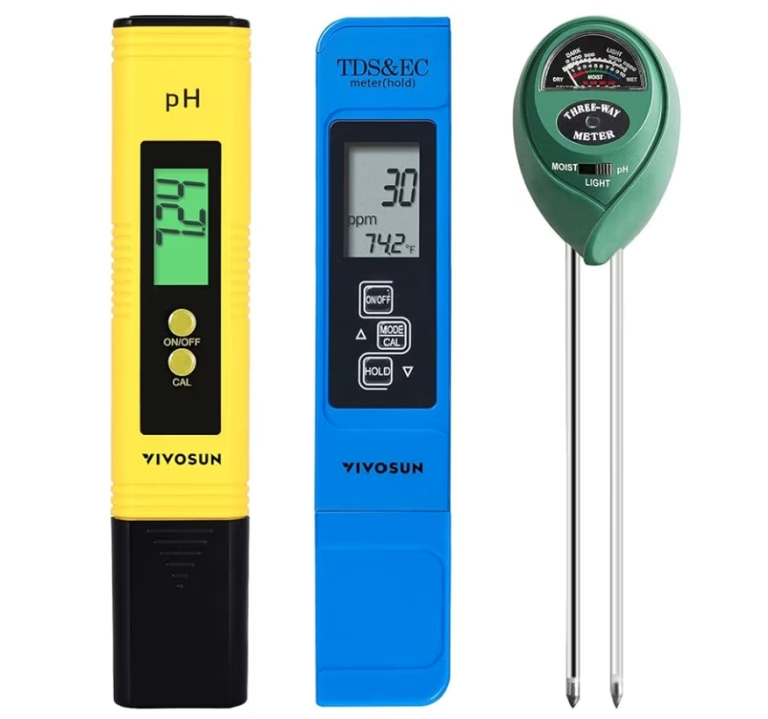
In home systems, a simple cross-check works well: spot-check automated readings against a handheld pH meter and thermometer weekly. If they differ significantly, recalibrate the sensor or investigate wiring and placement before trusting automation decisions.
What hydroponic systems benefit most from IoT sensors?
All hydroponic systems gain something from monitoring, but high-density or fast-changing systems benefit the most. Systems with small reservoirs or long flow paths are particularly vulnerable to rapid swings and pump failures.
- DWC and recirculating systems: Benefit from pH, EC, water temperature, and dissolved oxygen monitoring due to large shared reservoirs.
- NFT and vertical towers: Gain from flow, water-level, and pump status sensors, since any interruption quickly dries exposed roots.
- Dutch buckets and drip: Respond well to irrigation-timing and EC monitoring for heavy feeders like tomatoes and cucumbers.
Leafy greens, herbs, and microgreens are usually more forgiving, which makes them ideal for learning IoT basics. Fruiting crops and specialty herbs reward more advanced monitoring once you are comfortable reading and acting on the data.
Medicinal herbs and potency → Boosting Medicinal Herb Potency with Hydroponic Control
How-To: Set up a basic IoT monitoring system for a DWC hydroponic tub
Title: How to Add Simple IoT Monitoring to a DWC Hydroponic System
Description: A beginner-friendly walkthrough for adding core IoT sensors to a small DWC tub so you can track pH, EC, temperature, and water level from your phone.
Materials and tools
- 1 Wi-Fi-capable microcontroller or hub (or a compatible smart sensor kit)
- pH and EC sensor modules with probes rated for continuous immersion
- Waterproof temperature probe for the reservoir
- Water-level sensor (float, ultrasonic, or optical)
- Combined air temperature/humidity sensor
- Jumper wires, mounting hardware, and a small electronics enclosure
- Cable glands or grommets for routing probes into the lid
- Distilled water and calibration solutions for pH and EC
Step 1: Plan sensor placement
Decide where each sensor will sit in or around the reservoir so it reads accurately and stays out of the way of roots and air stones. Mark cable routing paths in the lid so you can drill clean holes for probes and glands.
Step 2: Mount the hub safely
Install the microcontroller or hub outside the reservoir splash zone, ideally on the wall or side of the stand. Ensure the enclosure has ventilation but remains protected from spills and high humidity.
Step 3: Install water and nutrient probes
Drill holes in the reservoir lid and fit cable glands so pH, EC, and temperature probes can hang in the solution without bending sharply. Position probes away from air stones to reduce bubble interference with readings.
Step 4: Add water-level sensing
Mount the chosen water-level sensor so it can detect your desired low and high points in the reservoir. For float switches, verify they move freely; for ultrasonic sensors, ensure a clear line of sight to the water surface.
Step 5: Wire sensors to the hub
Connect each sensor to the microcontroller according to pinout diagrams, and double-check polarity and voltage ratings. Use strain relief and tidy wiring to reduce the chance of accidental disconnections when you lift the lid.
Step 6: Configure Wi-Fi and data logging
Connect the hub to your home Wi-Fi and set up a dashboard or app to display pH, EC, temperature, and water level. Confirm that each sensor reports reasonable values and appears on your graphs.
Step 7: Calibrate sensors
Use manufacturer-recommended calibration procedures for pH and EC probes with fresh calibration solutions. Note calibration dates in your app or a notebook so you know when to recalibrate.
Step 8: Set alert thresholds
Define safe and warning ranges for pH, EC, water temperature, and water level based on the crops in your DWC system. Configure notifications by email, text, or app push so you are alerted quickly when values leave those ranges.
Step 9: Validate against handheld tools
During the first week, compare sensor readings against a trusted handheld pH meter and thermometer once or twice. Adjust calibration or placement as needed until the readings stay consistent.
Step 10: Iterate and expand
Once you trust the data, consider adding automation for lights or pumps with smart plugs or relays while keeping manual backups. Over time, you can expand to additional reservoirs, NFT lines, or vertical towers using the same basic pattern.
FAQ: IoT sensors for hydroponic gardens
Are IoT sensors worth it for a small indoor hydroponic system?
Yes, even a single DWC tub or countertop system can benefit from basic temperature, humidity, and water-level monitoring. For beginners, the main value is catching pump failures and heat spikes early instead of losing a crop overnight.
How much does a basic hydroponic IoT setup cost?
A simple package with a smart plug, temp/humidity sensor, and water-level sensor can fit into a modest budget. Adding pH, EC, and a hub increases the cost but pays off for anyone running multiple systems or higher-value crops.
Is it hard to set up IoT sensors if I am not a programmer?
Many off-the-shelf sensors and smart plugs use phone apps and require no coding at all. DIY sensor boards and microcontrollers require more technical comfort, but there are many prebuilt examples and community guides for hydroponic monitoring.
Do I still need handheld meters if I use IoT sensors?
Yes, handheld meters are still useful for periodic verification and backup. IoT sensors should guide daily decisions, but occasional cross-checks make sure there is no hidden calibration drift or hardware issue.
Can IoT sensors prevent root rot in hydroponics?
Sensors do not cure root rot directly, but they help you maintain cooler water, stable DO, and proper nutrient levels. That prevention-focused control reduces the conditions that lead to root diseases in DWC and recirculating systems.
Root rot guide → Root Rot in Hydroponics: Causes, Symptoms, and Fixes
What happens if my Wi-Fi goes down?
If Wi-Fi drops, you lose remote access and cloud alerts, but many controllers can keep logging data locally and continue running scheduled tasks. It is still smart to design your system so pumps and air stones default to a safe state if the network fails.
Which plants benefit most from IoT monitoring?
Fast-growing leafy greens, herbs, and microgreens benefit from consistent conditions and quick responses to issues. Fruiting crops like tomatoes, cucumbers, peppers, and strawberries gain even more once you optimize EC, light, and temperature using sensor data.
Can IoT sensors help me grow hydroponically in an apartment?
Yes, IoT monitoring is especially helpful in apartments where systems often share space with living areas and you cannot always hear pumps or see stress immediately. Remote monitoring and alerts give peace of mind if your system sits in a closet, hallway, or spare room.
Are there security risks with internet-connected hydroponic systems?
Any internet-connected device carries some security risk, especially if exposed directly to the wider internet. Using strong passwords, keeping firmware updated, and avoiding unnecessary remote access ports helps reduce these risks for home growers.
Smart device security →AI, Smart Devices, and Cybersecurity for Home Growers
If you’re interested in deepening your understanding of how IoT technology integrates with hydroponics automation, the book IOT in Hydroponics on Amazon offers comprehensive guidance on designing and managing smart hydroponic systems, from beginner to advanced levels (https://www.amazon.com/dp/B0G2HGXQ9F).
Author note
The author is a hydroponics-focused grower and cybersecurity engineer based in Phoenix, Arizona, who runs indoor systems through hot, dry summers and mild winters. Hydroponic systems have been tested in small home spaces to optimize for reliability, low noise, and minimal maintenance. Content focuses on practical, data-informed hydroponic methods that first-time growers and advanced hobbyists can actually implement with real budgets and real time constraints.
Share this:

Discover more from Soil Free Harvest
Subscribe to get the latest posts sent to your email.







2 Comments