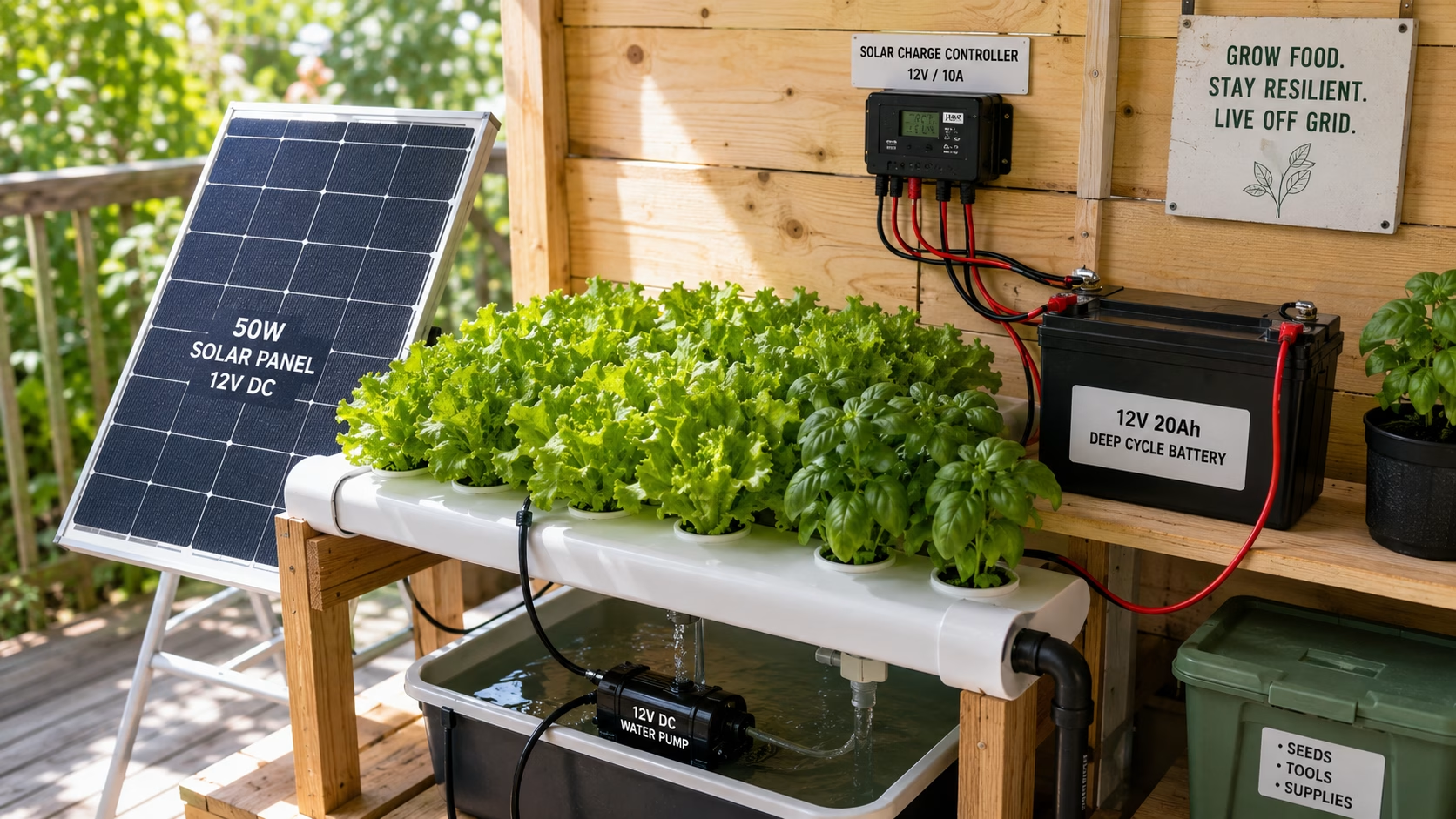
Off-Grid Hydroponics: Low Power and Backup Strategies
Off grid hydroponics relies on efficient, low voltage equipment paired with solar or battery storage to keep water circulating and roots oxygenated without depending on the utility grid. By favoring gravity fed layouts and high efficiency DC pumps, home growers can ride out power outages while maintaining healthy plants instead of watching roots suffocate in stagnant water.
TL;DR: Use 12 V DC systems, solar plus battery setups, and passive techniques like the Kratky method to minimize power draw and build climate resilient hydroponic gardens that keep running when the grid goes dark.
Affiliate Disclosure: This article contains affiliate links. If you purchase through these links, soilfreeharvest.com may earn a small commission at no extra cost to you.
What is off grid hydroponics?
Off grid hydroponics is any hydroponic setup designed to run without a permanent connection to grid electricity, either full time or during outages. Instead of assuming unlimited power for lights, pumps, and heaters, you design around low wattage components, smart scheduling, and stored energy capacity.
In Phoenix, I learned that even a small tent can cook nutrient solution if you oversize lights and ignore ventilation, while in Central Michigan the challenge flips to keeping roots warm and lights on through long, cloudy winters. In both climates the goal is the same: keep water moving and roots oxygenated even when the grid fails, which usually matters more than pushing maximum growth speed.
Comparing hydroponic system types → Comparing Hydroponic System Types for Home Growers
How does power consumption work in hydroponics?
Most of the electricity in a hydroponic garden goes into lighting, with pumps and fans usually a distant second. Modern LED grow lights are far more efficient than old HPS or metal halide fixtures, but they still dominate the energy budget in indoor systems because they may run 12 to 18 hours per day.
Water and air pumps typically use between about 5 and 25 watts each in small home systems, so their energy use is modest compared to lighting, especially if you use timers or intermittent flow. This is why off grid strategies often focus on cutting light load and choosing system designs that need minimal pumping.
Relative power and complexity by system type
| System type | Power dependency (0 to 10) | Complexity score (1 to 10) | Notes |
|---|---|---|---|
| Kratky | 0 | 1 | Passive reservoir, no electricity needed for basic operation. |
| Wick | 1 | 2 | Passive wicking, no pump, limited to small plants and containers. |
| DWC | 3 | 4 | Needs constant aeration but can run on a small DC air pump. |
| NFT | 5 | 7 | Requires continuous flow, sensitive to pump failures. |
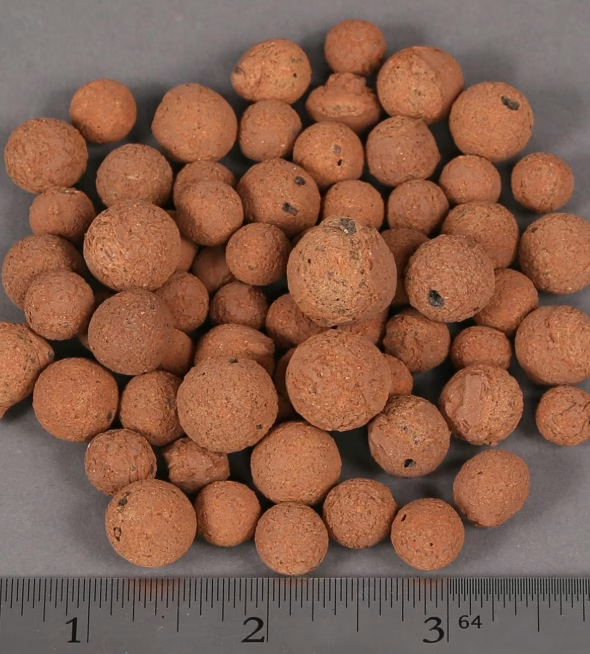
Using moisture retentive growing media such as coco coir or rockwool can give you a buffer during short power losses because roots stay moist even if pumps pause.
Growing media for off grid setups → Choosing the Right Substrate
How much power do small hydroponic systems really use?
Real world numbers help when you are deciding if off grid power is realistic. Most beginner and intermediate apartment systems use somewhere around 50 to 400 watts of connected load per system, with LEDs making up most of that range.
For example, a typical 2 by 4 foot LED panel for leafy greens often draws about 150 to 280 watts, while the companion air pump and small water pump might add only 5 to 25 watts each. Small countertop herb units with integrated LEDs and tiny pumps may use only about 1.5 to 2 kWh per day, while larger garage setups with stronger lights and heaters can reach 7 to 8 kWh per day.
Apartment hydroponic power audit → Home and Apartment Hydroponic Power Audit
Which hydroponic systems are best for off grid growing?
Not every system makes sense when you have limited watts. Some designs are naturally power frugal, while others depend on constant circulation or high intensity lighting.
Passive and low energy systems
- Kratky method
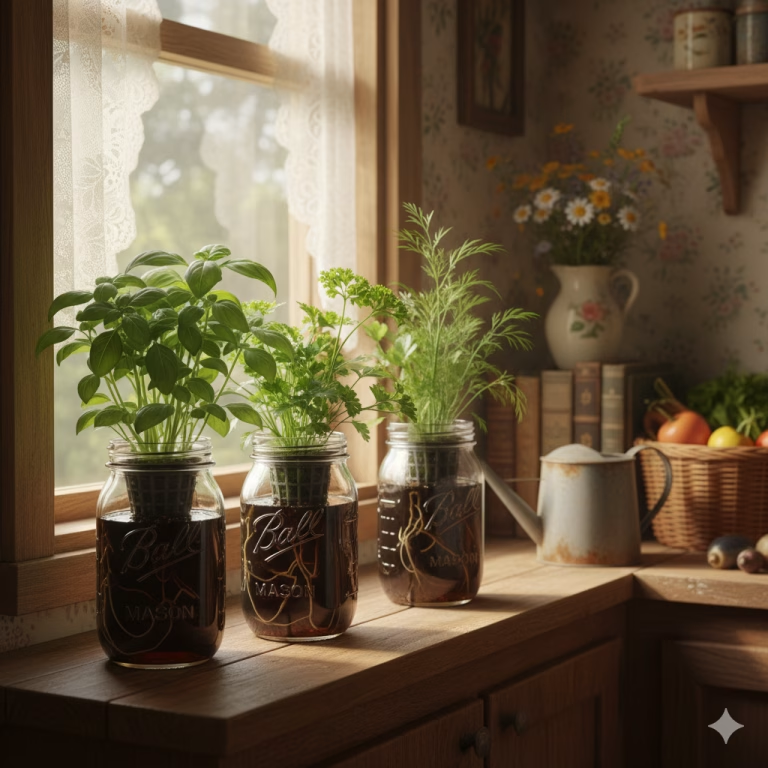
The Kratky method is a passive hydroponic technique where plants sit above a still nutrient reservoir with no pumps, timers, or electricity. It works exceptionally well for fast growing leafy greens in jars, buckets, or totes, making it ideal for emergency food or minimal power situations. - Wick systems
Wick hydroponics uses absorbent wicks to pull nutrient solution from a reservoir into the root zone, again with no pump required. These systems are best for herbs and small leafy plants in small containers where the wick can keep up with transpiration.
Active and energy dependent systems
- Deep Water Culture (DWC)
DWC suspends plant roots in a highly oxygenated nutrient solution using air stones and air pumps. Power demand is still modest because an efficient aquarium air pump can usually handle multiple buckets or a single large tote, especially if you choose a 12 V model driven from a battery. - Nutrient Film Technique (NFT)
NFT runs a thin sheet of nutrient solution through channels that the roots hang into, which means a pump must operate nearly continuously. NFT can be run off grid with a properly sized DC pump and battery, but you have less tolerance for long outages because roots dry out quickly once flow stops.
DWC setup guide → Build a 5 Gallon Bucket DWC System for Under $30: A Budget DIY Hydroponics Guide
NFT channels → Nutrient Film Technique Explained
What is the Kratky method and when should you use it?
The Kratky method was developed by Dr Bernard Kratky at the University of Hawaii as a non circulating, passive hydroponic technique where a plant is suspended above a reservoir of nutrient solution that drops over time. Because no pumps, timers, or electricity are required, it is widely described as one of the simplest and cheapest ways to start hydroponics for lettuce and other leafy greens.
In a classic Kratky jar or bucket, you leave an air gap between the net pot and the solution so that upper roots can access oxygen while lower roots stay in nutrient solution as the level falls. Research and grower experience suggest targeting pH roughly 5.5 to 6.0 and EC around 0.8 to 1.3 mS/cm for lettuce, with harvest often 4 to 7 weeks from seed under adequate light.
Kratky is best when you:
- Focus on lettuce, herbs, and leafy greens rather than heavy fruiting crops.
- Want systems that can ride through multi day outages with no moving parts.
- Need very low startup costs, often under about 20 dollars for a basic jar or tote rig.
Kratky method guide → Passive Hydroponic Growing Guide
Which battery types work best for off grid hydroponics?
Batteries are the heart of an off grid system, since they bridge the gap between when the sun shines and when your plants actually need power. Portable solar generators marketed for RVs and backup use typically combine lithium iron phosphate (LiFePO4) batteries with inverters and solar charge controllers, which many growers use to keep hydroponic pumps and lights running off grid.
Simple backup systems for small pumps can also use sealed lead acid or AGM batteries similar to those found in UPS units or mobility scooters, sometimes paired with small solar panels or trickle chargers. When choosing between chemistries, consider weight, up front cost, expected service life, and whether you want an all in one portable power station or a DIY battery and charge controller build.
Typical use cases:
- LiFePO4 packs or solar generators
Best for long term daily cycling, deeper discharge, and portability, like running an indoor NFT rack or DWC tote from a single integrated unit. - AGM or sealed lead acid batteries
Suitable for occasional outages or seasonal use where cost is more important than long cycle life, such as a backup air pump for a small DWC or aquaponic system. - Small UPS units
Handy to ride through short outages of an hour or two, especially for air pumps and controllers, but usually too limited for full grow lighting.
How do you size solar for a hydroponic system?
Solar sizing starts with your load, not the panel. First, list each device, record its wattage, and estimate daily runtime in hours to get daily energy use in watt hours. Then, pick a battery size that can cover at least one to two days of that load without going past the recommended depth of discharge, especially in cloudy weather.
Example solar sizing walkthrough
Imagine a small off grid DWC setup:
- 10 W DC air pump running 24 hours per day.
- Optional 40 W LED bar running 12 hours per day.
Daily energy use:
- Pump: 10 W × 24 h = 240 Wh.
- Light: 40 W × 12 h = 480 Wh.
- Total: 720 Wh per day.
If you design around a 12 V battery bank, you divide 720 Wh by 12 V to get 60 Ah of ideal capacity, then increase that for depth of discharge limitations and a safety margin.
For panels, if you estimate about 4 hours of effective sun per day, you can divide 720 Wh by 4 hours, giving 180 W of panel as a starting point, then round up to a 200 W or 240 W array to cover inefficiencies. This is very similar to the panel sizes used in many small solar generator and garden pump kits that keep water features and pumps running off grid.
How to build a 12 V off grid hydroponic backup system
Short description: A simple 12 V DC battery plus solar backup system to keep a small hydroponic pump and air pump running during outages.
Materials and tools
- 12 V DC submersible pump sized for your NFT or drip flow.
- 12 V DC air pump and air stones for DWC aeration.
- 100 Ah LiFePO4 or AGM battery.
- 12V 100Ah LiFePO4 Lithium Battery (Affiliate Link) has good ratings on Amazon
- 150 W to 200 W solar panel or pair of smaller panels.
- HQST N-Type 16BB 200 Watt Solar Panel (Affiliate Link) has 4.5 stars on Amazon and a decent price point.
- MPPT solar charge controller rated for your panel and battery.
- Inline fuse holders and appropriate fuses.
- 12 V programmable timer (optional but useful).
- Basic hand tools and multimeter.
Step-by-Step Instructions
- Define your critical load
Decide which devices absolutely must stay on during an outage, usually air pumps and minimal water circulation rather than full strength lighting. Add up their wattage and daily runtime, as in the example above, to estimate daily energy use in watt hours. - Choose a 12 V battery bank
Select a 12 V LiFePO4 or sealed battery with enough amp hour capacity to cover at least one full day of load with a margin for cloudy weather. For a small pump and air pump in the 20 to 30 W combined range, many growers choose something around 50 to 100 Ah. - Mount the solar panel and run wiring
Install your solar panel in a sunny, unshaded location with tilt appropriate to your latitude and season, then run PV cable back to your charge controller location. Use UV resistant cable and secure it along walls or supports to avoid damage. - Install the MPPT charge controller
Connect the battery to the charge controller first, then the solar panel, following the manufacturer wiring diagram and polarity markings. Set the controller to the correct battery chemistry so it charges at appropriate voltages. - Add fuses and distribution
Install a fuse close to the positive battery terminal feeding your DC load distribution block or directly feeding your pumps. This protects wiring and devices if a short occurs in a cable or pump. - Wire pumps and optional timer
Connect the DC pump and air pump to the battery or controller load output, optionally passing through a 12 V timer if you plan to cycle flow instead of running continuously. Verify polarity, then power on and confirm that flow and aeration are adequate. - Test runtime and adjust
Run your system for at least a full day while monitoring battery voltage or state of charge to check whether your panel and battery sizing are adequate in your actual conditions. If the battery dips too low regularly, reduce load, increase panel wattage, or add more battery capacity. - Document and label everything
Label panel, battery, and load wiring, and keep a simple diagram taped near the system so you can troubleshoot quickly under stress. This is especially helpful if someone else needs to maintain the system while you are away.
What crops are best for low power hydroponics?
Leafy greens and herbs are the clear winners for off grid hydroponics because they need moderate light, modest nutrient strength, and often finish in under two months. Kratky studies and guides consistently highlight lettuce, basil, cilantro, parsley, mint, spinach, and similar leafy crops as top performers in passive systems.
Small fruiting plants like peppers, strawberries, or dwarf tomatoes are possible but usually require stronger lighting, more careful nutrient management, and larger reservoirs in Kratky style systems. Root crops such as carrots and potatoes are poor fits for standard hydroponic setups and especially awkward in passive off grid designs.
All about Kratky → The Complete Guide to Kratky Hydroponic Method: Build Your Own DIY Passive Growing System
Fruiting crops indoors → Tomatoes and Peppers in Hydroponics
How do you keep plants alive during a blackout?
If you already have a grid tied system, you may still face unplanned outages. The main threats during a blackout are stagnant, de oxygenated water and rapidly changing temperatures, especially in DWC and NFT systems. Most plants can survive several hours without perfect conditions, but roots in warm, still water can start to suffer within that window.
Practical emergency steps include:
- Manually stirring or lifting and dunking net pots in the reservoir every few hours to increase dissolved oxygen when pumps are off.
- Moving small systems closer to windows or cooler parts of the home to stabilize temperature.
- Using battery powered aquarium air pumps or small portable power stations as temporary backups for aeration.
- Reducing light intensity or photoperiod temporarily to slow plant metabolism while power is constrained.
Emergency hydroponic care → Keeping Plants Alive During Power Outages
What are the most common off grid failures and how do you troubleshoot them?
Even well designed systems fail, and off grid systems add extra failure modes related to batteries and solar. A simple symptom and fix table helps you respond quickly.
Troubleshooting guide
| Symptom | Likely cause | Quick fix |
|---|---|---|
| Wilting plants mid day despite moist roots | Reservoir overheating or inadequate dissolved oxygen. | Shade or insulate the reservoir, add aeration, and lower solution temperature. |
| Yellowing new growth, especially in fast greens | Nutrient imbalance or low EC, possibly from under feeding to save water changes. | Check EC and top up nutrients to recommended range for your crop. |
| Pump not running at night, fine in daytime | Battery undersized or failing, solar not fully charging. | Reduce load, increase panel size or battery capacity, and check charge controller settings. |
| Air pump hums but no bubbles | Clogged air stone or kinked airline. | Replace air stones and inspect tubing. |
| pH drifting up over several days | Hard top up water or nutrient depletion. | Adjust pH and consider using filtered water or re mixing solution. |
| Battery shows full but cuts off under load | Old or damaged battery with voltage sag. | Plan to replace battery and derate its capacity in your sizing calculations. |
Hydroponic troubleshooting → Why Your Hydroponic System Failed: A Troubleshooting Flowchart for 7 Critical Problems
How do climate and seasons change your off grid plan?
Climate determines whether you fight heat, cold, or lack of light. In hot, dry climates like Phoenix, high ambient temperatures and intense sun can overheat nutrient solution and accelerate evaporation, which stresses roots and concentrates salts. Insulating reservoirs, shading system tops, and avoiding dark containers can greatly reduce temperature spikes and water loss.
In colder climates like Michigan, the main off grid challenge is maintaining root zone temperatures and light availability through long, dark winters. Indoor systems often need lights on 12 to 18 hours per day for good growth, which increases energy demand exactly when solar output is weakest. Many growers respond by scaling back to compact, low light tolerant crops in winter and reserving high power crops for bright seasons.
Climate specific hydroponics → Managing Hydroponics in Extreme Heat: Reservoir Cooling and Shading Strategies
What maintenance schedule should you follow off grid?
A simple maintenance calendar keeps small issues from turning into plant losses, especially when you depend on batteries and solar. Off grid systems reward short, regular checks instead of infrequent big overhauls.
Suggested maintenance checklist
- Daily
- Verify pumps and air stones are running and listen for unusual noises.
- Glance at battery or solar generator state of charge, especially after cloudy days.
- Check water level in reservoirs and top up with plain water as needed.
- Weekly
- Test pH and EC, adjusting into your target range for each crop.
- Inspect leaves for pests or nutrient issues and prune dead material.
- Wipe down light fixtures and check that timers are on the correct schedule.
- Monthly
- Clean pump intakes, lines, and air stones to prevent flow reduction.
- Inspect wiring and connections around batteries and charge controllers for corrosion or heat.
- Do a partial nutrient change or full change depending on crop and reservoir size.
- Seasonally
- Re evaluate light schedules and intensities as day length changes.
- Adjust solar panel tilt and clear any dirt or snow buildup.
- Audit your power budget if you add new lights or systems.
Hydroponic maintenance planner → DIY Hydroponic System Maintenance Guide
How much does an off grid hydroponic system cost?
Costs vary widely depending on size, crop choice, and whether you buy integrated solar generators or build your own battery bank. Small Kratky setups can often be started for under about 20 dollars using jars or buckets, net pots, and nutrient solution, since no pumps or electronics are required.
At the other end, full indoor systems with grow lights, pumps, and heaters can consume dozens of kWh per day and are sometimes powered by portable solar generators with battery capacities around 2000 Wh or more. Many home growers land in the middle with modest LED fixtures in the 150 to 280 watt range, small pumps, and a compact solar generator or DIY battery system sized to carry at least the pumps and minimal lighting through an outage.
Rough example ranges:
- Passive Kratky shelf
- Materials: containers, net pots, media, nutrients, inexpensive LED strips or bright window.
- Approximate cost: low tens of dollars for several plants, not including optional lighting.
- Small off grid DWC tote
- Materials: tote, air pump, stones, basic nutrients, simple LED, small UPS or battery powered air pump.
- Approximate cost: into the low hundreds of dollars if you add a quality light and backup power.
- Solar backed multi channel NFT rack
- Materials: channels, pump, reservoir, strong LED bars, charge controller, panels, large battery or solar generator.
- Approximate cost: several hundred dollars and up depending on light quality and battery size.
Budget planning for hydroponics → Cost Breakdown for Home and Apartment Systems]
Frequently asked questions about off grid hydroponics
Is off grid hydroponics more expensive than grid tied?
Up front, yes, because you are buying batteries, solar panels, or portable power stations in addition to normal hydroponic equipment. Over time, you can offset some of that cost by reducing grid electricity use and gaining resilience against rate hikes and outages, especially if you live in an area with frequent power cuts.
Can I realistically run grow lights off grid?
You can, but lights will dominate your energy budget and drive most of your solar and battery sizing. Many off grid growers either downsize light intensity, shorten photoperiods, or combine direct sun with supplemental LEDs to keep power requirements manageable.
How difficult is it to maintain an off grid system?
Day to day maintenance is similar to any hydroponic system, but you also need to monitor battery health, solar output, and total load. Once you understand your power budget and seasonal patterns, it becomes routine to glance at charge levels along with pH and EC checks.
What is the biggest risk for off grid growers?
The primary risk is losing aeration or circulation for a long enough period that roots suffocate or reservoirs overheat, especially in DWC and NFT systems. A close second is under sizing batteries or panels so severely that you routinely hit low voltage cutoffs, which shortens battery life and causes frequent restarts.
How often should I check my battery and solar setup?
During the first few weeks, you should check your charge controller or power station readout daily to understand how your system behaves in your climate and season. Once you have a stable pattern, many growers switch to quick daily glances plus a more thorough weekly or monthly inspection of wiring and charge history.
What plants work best for beginners in off grid systems?
Lettuce, basil, cilantro, spinach, kale, and other leafy greens are the most forgiving because they tolerate moderate light levels and shorter growth cycles. They are ideal for Kratky, wick, or low power DWC systems and give quick wins while you learn your power setup.
Can I expand my off grid system later?
Yes, solar and battery systems are inherently modular, and many solar generators can be paralleled with extra panels or batteries. Just remember that every added light or pump increases your daily energy use, so revisiting your power audit and sizing calculations before expansion is important.
How long can plants survive without power in a typical outage?
In many home systems, healthy plants can survive a several hour outage with little harm, especially if roots have good moisture and ambient temperatures are moderate. Problems arise fastest in hot conditions or in NFT channels where roots dry quickly, so those systems benefit the most from even a small backup air pump or battery.
Is the Kratky method enough for serious food production?
For leafy greens and herbs, Kratky can absolutely provide a steady supply if you stagger plantings and choose adequate container sizes. For larger or more nutrient hungry crops, you may eventually outgrow pure Kratky and transition to active systems, but it remains a valuable low power tool in any off grid strategy.
Author note
I am a cybersecurity engineer, animal lover, and plant enthusiast who has spent years experimenting with small space hydroponics in apartments, backyards, and spare rooms. I started building low power systems to handle brutal summers in Phoenix, Arizona, where grid outages and extreme heat can wipe out a reservoir in hours. Later, in Central Michigan, I had to redesign everything for long, dim winters and heating challenges instead of cooling. My focus is practical off grid and indoor systems that regular renters and homeowners can actually build, maintain, and afford, so that fresh greens and herbs are always within arm’s reach.
Share this:

Discover more from Soil Free Harvest
Subscribe to get the latest posts sent to your email.