
How to Run Multiple Hydroponic Systems in a Small Apartment Without Tripping Breakers or Spiking Your Power Bill
By performing a hydroponic power audit, you can safely run multiple hydroponic systems in a small apartment as long as you know how many watts are on each circuit, stay under about 80 percent of a breaker’s rating, and choose efficient LED lights and pumps. With typical compact LEDs and air pumps, most renters can run one to three small systems for roughly 8 to 40 dollars per month in added electricity, depending on local rates and how aggressively they push lighting and climate control.
TL;DR: Treat your hydro gear like a mini data center: add up all the watts, compare to your breaker’s safe limit (around 1,440 watts on a 15 amp circuit), and use timers, smart plugs, and efficient LEDs to keep both breakers and bills under control.
What Is an Apartment Hydroponic Power Audit?
An apartment hydroponic power audit is a simple checklist-based process for adding up the power draw of your lights, pumps, fans, and climate gear, then comparing that total to your circuit and budget limits. The goal is to answer two questions: “Will this trip a breaker?” and “What will this add to my monthly power bill?”
In this guide I will walk through realistic wattages for common home systems, give you real monthly cost examples for Arizona, Michigan, and a US average, and wrap it into a renter-friendly audit checklist you can repeat any time you add new gear.
Hydroponic basics → beginner hydroponics overview
How Much Power Do Small Hydroponic Systems Really Use?
Most beginner and intermediate apartment systems fall in the 50 to 400 watt range per system, with lights being the dominant load and pumps and fans adding a relatively small overhead.
For context, modern LED grow lights for an 8 square foot 2×4 grow area are often in the 150 to 280 watt range, depending on how light hungry your plants are and the efficiency of the fixture. Air pumps, small water pumps, and clip fans are usually 5 to 20 watts each.
Typical component wattages in apartment hydro
These are realistic example ranges for common apartment-scale gear:
| Component | Typical watt range | Notes |
|---|---|---|
| LED bar/panel for 2×4 area | 150 to 280 W | Efficient full spectrum LEDs can fully light leafy greens and herbs in this range.reddit+3 |
| LED bar for small herb shelf | 20 to 100 W | Often used for Kratky jars or a shallow NFT channel. |
| Aquarium / hydro air pump | 5 to 10 W | Many multi outlet pumps rated around 10 W for hydro or aquariums.buceplant+2 |
| Small water pump (drip/NFT) | 5 to 25 W | Usually continuous or near continuous run. |
| Clip or inline fan | 5 to 40 W | Depends on size and speed. |
| Small dehumidifier | 150 to 300 W | Continuous or near continuous in humid climates. |
| Portable AC space cooler | 600 to 1,200 W | Large load if shared with your grow. |
If you keep your core hydro gear (lights, pumps, fans) under about 400 to 600 watts per circuit, you usually have enough headroom for normal home loads on the same branch, as long as you avoid combining with heavy hitters like space heaters or microwaves.
LED grow lights → choosing LED spectrum and wattage for hydroponics
What Are Typical Electricity Rates in Arizona, Michigan, and Nationally?
Electricity price is the other half of the equation. As of 2025–2026 data:
- Arizona residential electricity averages about 15 to 15.5 cents per kilowatt hour, which is below the US average.
- Michigan residential rates average about 19.3 cents per kilowatt hour, which is on the higher side nationally.
- Across the US, the residential average is roughly 17 to 19 cents per kilowatt hour, depending on the source and month.
I will use approximate values of 0.15 dollars per kWh for Arizona, 0.19 dollars per kWh for Michigan, and 0.18 dollars per kWh for a US “average renter” in the cost examples below.
How Do You Estimate Monthly Cost for a Hydroponic System?
The basic formula you need is simple:
- Monthly kWh = (Total watts ÷ 1,000) × hours per day × 30.
- Monthly cost = monthly kWh × your local cost per kWh.
Below are three realistic apartment scenarios with approximate monthly cost in Arizona, Michigan, and on a US average rate. Numbers are rounded to keep the math reader friendly.
Scenario 1: Low power herb and salad rack
Setup:
- 100 W LED bar, 14 hours per day for leafy greens and herbs.
- 5 W air pump, 24 hours per day for a small DWC reservoir.buceplant+2
- 5 W small circulation pump, 24 hours per day.
- 5 W clip fan, 18 hours per day.
Approximate monthly energy:
- LED: 0.1 kW × 14 × 30 ≈ 42 kWh.
- Air pump: 0.005 × 24 × 30 ≈ 3.6 kWh.
- Water pump: 0.005 × 24 × 30 ≈ 3.6 kWh.
- Fan: 0.005 × 18 × 30 ≈ 2.7 kWh.
Total ≈ 52 kWh per month.
Estimated monthly cost:
- Arizona at about 0.15 per kWh: roughly 8 dollars per month.
- Michigan at about 0.19 per kWh: roughly 10 dollars per month.
- US average at about 0.18 per kWh: roughly 9 dollars per month.
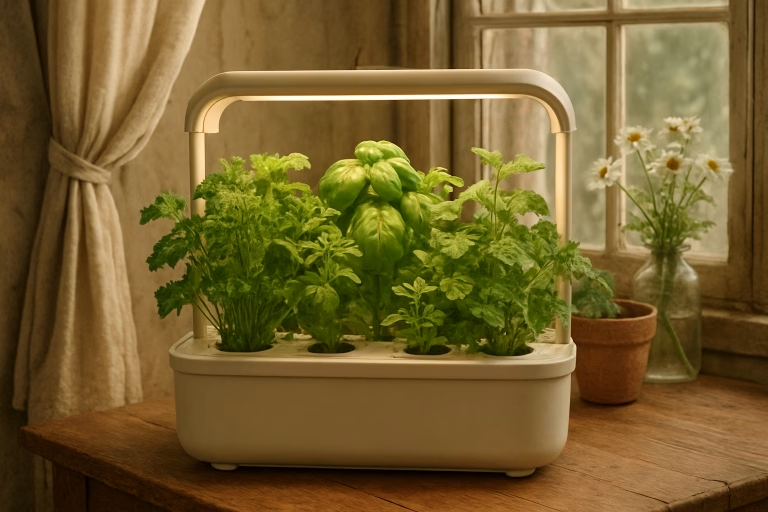
This setup is ideal for basil, lettuce, cilantro, mint, and other leafy herbs in small DWC, Kratky, or NFT systems.
Leafy greens guide → best hydroponic lettuce and herb varieties
Scenario 2: Two 2×4 systems for mixed crops
Setup (per 2×4 system):
- 200 W LED panel, 16 hours per day for greens or 12 to 16 hours for fruiting plants.
- 10 W air or water pump, 24 hours per day.
- 10 W fan, 18 hours per day.
Per system monthly energy:
- LED: 0.2 × 16 × 30 ≈ 96 kWh.
- Pump: 0.01 × 24 × 30 ≈ 7.2 kWh.
- Fan: 0.01 × 18 × 30 ≈ 5.4 kWh.
Total ≈ 108 kWh per system. Two systems ≈ 216 kWh per month.
Estimated monthly cost for both systems together:
- Arizona: about 32 to 34 dollars per month.
- Michigan: about 40 to 42 dollars per month.
- US average: about 38 to 40 dollars per month.
Use this level if you want one leafy green system plus a slightly more intense system for fruiting peppers, dwarf tomatoes, or strawberries.
Scenario 3: Adding climate control on top of lighting
If your apartment needs a dedicated dehumidifier or portable AC for the grow area, power use can double.
Example add-ons:
- 250 W dehumidifier, 12 hours per day → about 90 kWh per month.
- 600 W portable AC, 6 hours per day → about 108 kWh per month.
Together that is roughly another 200 kWh per month. At a US average of 0.18 per kWh, that can add around 36 dollars per month on top of lighting and pumps.
This level of climate control is usually only needed for dense fruiting canopies or sealed tents, not for a simple rack of herbs in a living room.
Humidity control → managing humidity in indoor hydroponic grow
How Do Breakers and Circuits Limit What You Can Run?
In a typical North American apartment, most standard outlets are on 15 amp or 20 amp circuits at around 120 volts. A 15 amp circuit is theoretically 1,800 watts (15 × 120), and a 20 amp circuit is 2,400 watts (20 × 120).
Because hydro gear often runs for more than three hours at a time, it counts as a “continuous load,” and the National Electrical Code guidance is to keep continuous loads under about 80 percent of a breaker’s rating. That means a practical target of 1,440 watts on a 15 amp circuit and 1,920 watts on a 20 amp circuit.
Simple circuit loading example
Imagine you plug the following into the same 15 amp circuit:
- Two 200 W LED panels = 400 W.
- Two 10 W air pumps = 20 W.
- Two 10 W fans = 20 W.
- One 300 W dehumidifier = 300 W.
Total = 740 W, which is safely under a 1,440 watt continuous target. Even if that circuit also serves a laptop and a TV, you are still comfortable, as long as you do not add a space heater or microwave to the same branch.
If you instead shared the circuit with a 1,500 W space heater, you would be well over the 1,440 watt continuous guideline and likely to trip the breaker or create nuisance trips.
How Do You Find Which Outlets Share a Circuit?
Renters often do not have detailed panel maps, so a quick manual check is worth the effort.
Quick mapping method
- Plug a small lamp or phone charger into the outlet near your hydro system.
- Turn breakers off one by one until that outlet loses power.
- Note all other outlets or lights that went off at the same time; they are on the same circuit.
Label the breaker and room for your own notes. This helps you avoid stacking your grow, computer gear, and big appliances on a single circuit. If in doubt, or if anything seems warm or unreliable, get a licensed electrician to confirm.
Which Hydroponic Systems Work Best in Apartments With Limited Power?
Some system types are naturally power efficient and apartment friendly; others push you toward higher lighting and climate loads.
Best low to moderate power systems
These are excellent for kitchens, living rooms, and small spare rooms:
- Kratky jars and tubs
Static nutrient solution with passive aeration, only the light uses power, so total draw can be as low as 20 to 100 watts for a small shelf. Great for lettuces, basil, mint, and microgreens.
Kratky tutorial → how to build a Kratky lettuce tote - Simple DWC buckets or totes
One air pump and stone per bucket or per small group of buckets, typically 5 to 10 watts per pump plus lighting. Ideal for leafy greens, herbs, and compact peppers.
DWC guide → deep water culture step by step - NFT channels and small drip systems
Small continuous or timed water pumps in the 5 to 25 watt range plus moderate LEDs. Great for herbs, strawberries, and small leafy crops on vertical racks.
NFT systems → nutrient film technique for home growers
Higher power but still manageable systems
These can be run in apartments but demand more power planning:
- Dense fruiting tents (2×4 or 3×3)
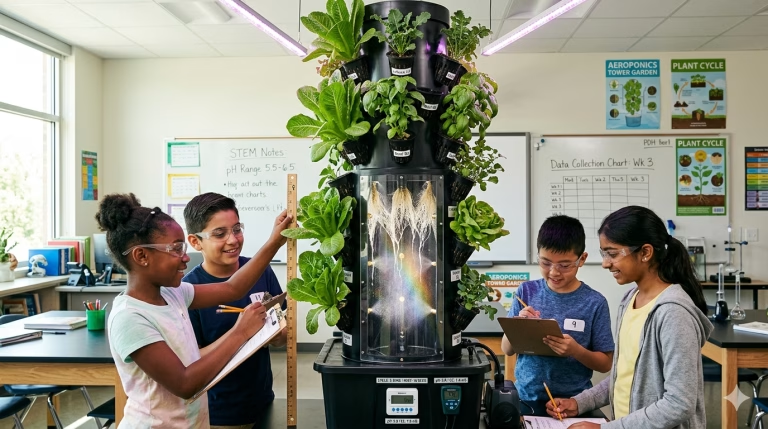
LEDs in the 200 to 400 watt range, plus stronger fans, sometimes dehumidifier or portable AC, especially in hot climates like Arizona. - Tall vertical towers with full ring lighting
Total LED wattage can rival or exceed a 2×4 tent, especially if every tier has its own light.
For beginners and intermediate growers in small apartments, I usually recommend starting with one low power rack or Kratky/DWC combo, then adding a single 2×4 tent if you want to step up to fruiting crops.
How Do Smart Plugs and Automation Help Control Power Use?
Smart automation gives you better timing, monitoring, and safety without a huge learning curve.
Helpful automation tools for apartment hydro
- Digital or smart timers for lights
Ensure consistent 14 to 16 hour days for greens or appropriate veg/flower schedules for fruiting plants, while guaranteeing lights turn off even if you forget. - Smart plugs with energy monitoring
Let you see exactly how many watts each device is drawing and how that changes over time. Many plugs show real time watts and daily or monthly kWh, which is perfect for tightening your audit. - Environmental controllers
Coordinate exhaust fans, humidifiers, and dehumidifiers based on temperature and humidity thresholds, so they only run when needed rather than 24/7. - Wi Fi power strips
Group control lights, fans, and pumps on separate channels while keeping a single wall outlet and cord footprint.
Used correctly, these tools reduce both wasted runtime and the odds that you accidentally leave lights or pumps on longer than necessary.
Automation basics → smart plugs and controllers for hydroponics
Apartment Hydroponic Power Audit Checklist for Renters
This is the repeatable process I use when setting up grows in new apartments or helping friends in hot climates like Phoenix and frozen ones like Central Michigan.
Step 1: List every electrical device in your grow
Include:
- LED fixtures, bars, or panels.
- All pumps (air and water).
- All fans (oscillating, clip, inline).
- Humidifiers, dehumidifiers, and any portable AC used for the grow.
Write down the label wattage for each item; if the nameplate lists amps instead, multiply amps × 120 to get watts.
Step 2: Measure real world wattage where possible
Nameplate ratings can be conservative or rounded. Smart plugs with energy monitoring can show actual draw while devices are running.
Use a plug in meter or monitoring plug on each major device (especially LED lights and dehumidifiers) for at least a few hours at typical settings. This gives you a more accurate watt value for your audit than the label alone.
Step 3: Assign each device to a circuit
Use the breaker flipping method described earlier to determine which outlets share a circuit. Plug your hydro gear into known outlets, then label your gear list with the circuit number it lives on.
Aim to keep each major grow area primarily on one or two circuits, and avoid sharing those circuits with heaters, toasters, microwaves, or hair dryers.
Step 4: Add up total watts per circuit
For each circuit, sum the watts of all hydro devices you have assigned to it, plus any known large home loads that share the circuit. Compare that total to a safe target:
- 15 amp breaker target: keep continuous loads at or below about 1,440 watts.
- 20 amp breaker target: keep continuous loads at or below about 1,920 watts.
If you are over, you must move devices to a different circuit, reduce the number of systems, or swap for more efficient equipment.
Step 5: Estimate monthly kWh and cost
Using the scheduling you plan to use:
- Calculate monthly kWh for each device, then sum per system and per circuit.
- Multiply by your local cost per kWh (for example, about 0.15 in Arizona, 0.19 in Michigan, or 0.17 to 0.19 as a US average).
Compare that number to your current bill and to what you are comfortable spending on the hobby. Many renters are happy with 10 to 40 dollars per month in extra electricity for a solid indoor harvest.
Step 6: Adjust for season and climate
In hot places like Arizona, summer AC may already be your main load, so adding a tent that needs its own cooling has a bigger cost impact than in shoulder seasons. In cooler places like Michigan, winter humidity and heating patterns can change how much dehumidification you need.
Plan for your worst case month, not your best case month. If your budget is tight, size your systems assuming the most expensive season.
How To: Run a Quick Apartment Hydroponic Power Audit
Title: Quick Apartment Hydroponic Power Audit
Description: A simple, renter friendly procedure to estimate whether your hydroponic systems will overload a circuit or blow up your electricity bill.
Here is a prebuilt spreadsheet to complete this audit if you don’t want to create one yourself:
Materials / Tools:
- Pen and paper or a spreadsheet.
- Access to your breaker panel.
- Smart plug or plug in power meter (optional but recommended).
- Flashlight and a small lamp or phone charger for circuit testing.
Steps:
- Gather your grow equipment list
Write down every electrical device in your hydro setup, including lights, pumps, fans, and any climate control gear. Copy the nameplate wattage or amps from the labels so you have a starting point for each item. - Find your electricity rate per kWh
Check your latest power bill or your utility’s website for the current residential rate in cents per kilowatt hour. Note any seasonal tiers, but for a basic audit you can use the average rate shown on your bill. - Map which outlets are on which breakers
Plug a small lamp or charger into the outlet you plan to use for your grow. Turn breakers off one by one until it goes dark, then note which rooms and outlets died with it. Label that breaker with its coverage so you know which other devices share the same circuit. - Assign each grow device to a circuit
For each piece of equipment, write the breaker number next to it based on the outlet you intend to use. If you find that too many big items land on the same circuit, plan to spread them to outlets that live on different breakers. - Add up total watts per circuit and compare to safe limits
Sum the watts of all devices on each circuit. If your breaker is 15 amps, aim to stay at or under about 1,440 watts of continuous load; for a 20 amp breaker, target 1,920 watts or less. If you exceed those limits, rearrange equipment or downsize. - Estimate monthly energy use and cost
For each device, multiply watts by hours per day and by 30, then divide by 1,000 to get monthly kWh. Multiply that total by your local price per kWh to see how much your systems will add to your bill in an average month. - Validate with a real world test
Once your system is running, use a smart plug or meter on the main light or power strip for a few days. Compare the measured kWh to your estimate, and adjust run times or equipment if your actual usage is higher than expected. - Document your baseline and revisit when you expand
Save your notes or spreadsheet as your “grow baseline.” Any time you add a new system, repeat this audit quickly by plugging new numbers into the same structure so you do not creep past your breaker or budget limits.
Which Plants and System Types Work Best for Low Power Apartment Grows?
If your goal is to stay under about 10 to 20 dollars per month in added electricity, lean into crops that do well under modest light and little to no climate control.
Great low power plants:
- Leafy greens like lettuce, spinach, and Asian greens.
- Soft herbs like basil, cilantro, parsley, and mint.
- Microgreens and baby salad mixes.
System types:
- Kratky totes or jars under 20 to 100 watt LED bars.
- DWC tubs with a single 5 to 10 watt air pump.
- Shallow NFT channels on wire racks.
Higher power candidates:
- Dwarf tomatoes, peppers, and dense strawberries need stronger lighting and may benefit from more aggressive ventilation or dehumidification.
Nutrient management → hydroponic nutrient and pH guide
Grow media → choosing clay pebbles, rockwool, and coco for hydroponics
FAQ: Apartment Hydroponic Power and Safety
How much does it cost per month to run a small hydroponic system?
A single modest herb or salad rack often adds around 8 to 12 dollars per month in Arizona and 10 to 14 dollars per month in Michigan, assuming a 50 to 150 watt total draw. On a US average rate, many renters see roughly 10 dollars per month for a basic system. Your actual bill depends on light hours, local rates, and whether you add climate gear like dehumidifiers.
How many hydroponic systems can I run on one circuit?
On a 15 amp circuit, a safe continuous target is about 1,440 watts total for all devices. In practice that often means one reasonably loaded 2×4 tent plus a small shelf system, or two low to moderate power systems, as long as you do not share that circuit with big appliances or a space heater.
Can grow lights really trip my breaker?
Yes. Efficient LEDs still draw a few hundred watts, and combined with fans and climate control they can easily push a circuit over its safe continuous limit, especially if that same circuit also feeds a kitchen outlet or space heater. An audit that sums all loads on each breaker is the best way to avoid nuisance trips.
Are smart plugs safe for running grow lights and pumps?
Quality smart plugs rated for at least 15 amps can safely run individual lights or pumps if you stay under their rated load and use them in dry indoor locations. Energy monitoring plugs are especially useful because they expose real time wattage and cumulative kWh so you can refine your estimates. Avoid overloading cheap power strips by daisy chaining multiple high draw devices.
Do pumps and air stones use a lot of power?
Compared to lighting, pumps are lightweights. Many multi outlet hydro or aquarium air pumps are only 5 to 10 watts, and small water pumps are often under 25 watts. They run many hours per day, so they matter for your audit, but they rarely determine whether you trip a breaker.
How fast will I see results after setting up a hydro system?
For leafy greens and herbs, you can usually see new root growth and stronger foliage within one to two weeks after transplanting into a well lit, well oxygenated hydro system. First harvests for cut and come again lettuce often come in 3 to 5 weeks, depending on variety and temperature. Fruiting plants take longer, often 8 to 12 weeks or more to reward you with ripe tomatoes or peppers.
Is it safe to run hydroponics in a rental apartment?
Yes, as long as you manage electrical loading, control humidity, and prevent leaks. Keep your continuous load under about 80 percent of each breaker’s rating, use GFCI protected outlets where possible, and place reservoirs in trays or on waterproof mats to protect floors. Many landlords never object as long as the setup is tidy and does not cause water or mold damage.
What is the biggest power mistake beginners make?
The most common mistake is underestimating total load and plugging everything into one outlet that shares a circuit with heaters or kitchen appliances. The second most common is running climate control gear longer or harder than necessary because there is no environmental controller or smart timing. A quick power audit plus basic automation avoids both problems.
Do I need a dedicated circuit for a small indoor grow?
For one low to moderate power system, most renters can share a general purpose circuit with normal room loads and still be fine, as long as they avoid adding heaters and other high draw devices to that branch. Once you step into larger tents, multiple high watt LEDs, or significant dehumidification, it is worth talking to an electrician about dedicated circuits and load balancing.
Author Note
I have been running indoor hydroponic setups in small spaces for over a decade, starting in hot, dry apartments around Peoria and Phoenix, Arizona, and now in a much cooler, more humid corner of Central Michigan. Most of my experience is with DWC, Kratky, and small NFT systems tuned for apartments and rentals. I focus on power efficient lighting, simple automation, and practical designs that fit around normal life, pets, and work from home schedules. My goal with Soil Free Harvest is to help urban and suburban growers harvest more food indoors without wrecking their power bill or their lease.
External Resources for Further Reading
- US Energy Information Administration average residential electricity rates and trends.
- EnergySage overview of electricity costs by state.
- Choose Energy and PowerOutage state by state residential rate comparisons.
Share this:

Discover more from Soil Free Harvest
Subscribe to get the latest posts sent to your email.







2 Comments