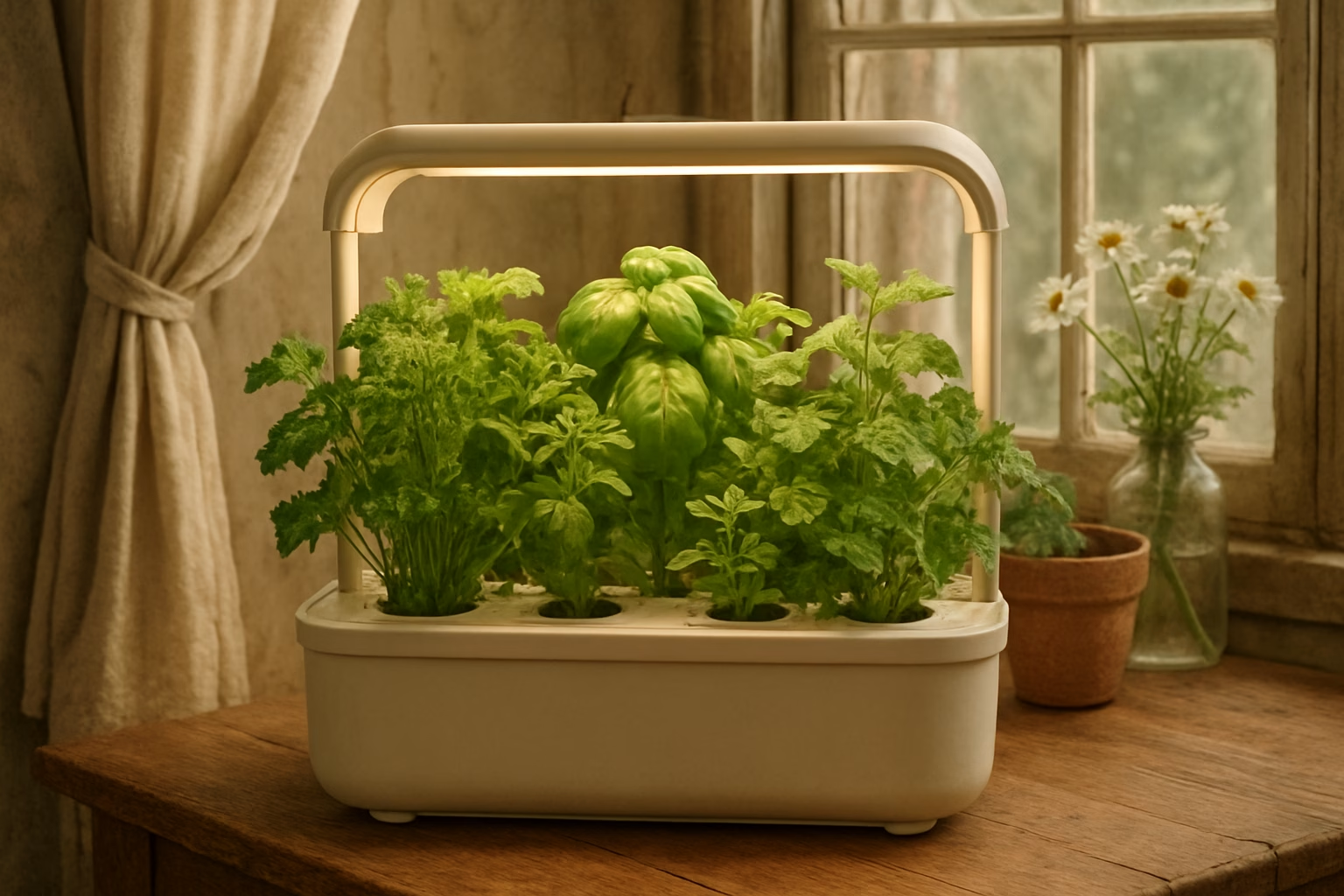
Indoor Hydroponic Herbs: 10 Easy Varieties for Year-Round Kitchen Gardens
Fresh herbs can transform any dish from ordinary to extraordinary, but buying organic herbs from the grocery store quickly becomes expensive. What if you could grow restaurant-quality herbs in your kitchen year-round, regardless of weather or season? Indoor hydroponic herbs offer the perfect solution for home cooks who want consistent access to fresh, flavorful herbs without the hassle of soil-based gardening.
Hydroponic herb growing has exploded in popularity because it delivers faster growth, higher yields, and more intense flavors compared to traditional soil methods. With the right setup, you can harvest fresh basil, cilantro, and other culinary herbs every week while enjoying the satisfaction of growing your own food.
Why Choose Hydroponic Herbs Over Traditional Gardening?
Growing herbs hydroponically offers several compelling advantages over soil-based methods:
Faster Growth Rates: Hydroponic herbs typically grow 25-30% faster than their soil-grown counterparts because nutrients are delivered directly to the root zone in optimal concentrations.
Year-Round Production: Indoor hydroponic herb gardens aren’t limited by seasons, frost, or outdoor pests. You can harvest fresh herbs in December just as easily as in July.
Superior Flavor: Many hydroponic herb growers report more intense, concentrated flavors because plants can focus energy on essential oil production rather than extensive root development.
Space Efficiency: Vertical hydroponic systems can produce 3-4 times more herbs per square foot compared to traditional garden plots.
No Soil-Borne Diseases: Hydroponic systems eliminate soil-borne pathogens, fungal issues, and pest problems that commonly affect outdoor herb gardens.
The 10 Easiest Indoor Hydroponic Herbs for Beginners
1. Basil (Ocimum basilicum)
Basil tops the list of beginner-friendly hydroponic herbs because of its rapid growth and high market value. Sweet basil varieties like ‘Genovese’ and ‘Italian Large Leaf’ thrive in hydroponic systems and can be harvested continuously for 8-12 weeks.
Growing Requirements:
- pH Range: 5.5-6.5
- EC Level: 1.0-1.6
- Growing Temperature: 65-75°F (18-24°C)
- Light Requirements: 14-16 hours of LED grow lights daily
- Harvest Time: 3-4 weeks from seed
Pro Tips: Pinch flower buds to encourage leaf production. Harvest outer leaves regularly to maintain compact, bushy growth.
2. Cilantro (Coriandrum sativum)
Cilantro grows exceptionally well in cooler hydroponic environments and provides continuous harvests when succession planted every 2-3 weeks. This fast-growing herb is perfect for beginners because it tolerates slight pH fluctuations.
Growing Requirements:
- pH Range: 6.0-6.7
- EC Level: 0.8-1.2
- Growing Temperature: 60-70°F (15-21°C)
- Light Requirements: 12-14 hours daily
- Harvest Time: 3-4 weeks from seed
Pro Tips: Keep temperatures below 75°F to prevent bolting. Plant new seeds every 2 weeks for continuous harvests.
3. Parsley (Petroselinum crispum)
Both flat-leaf and curly parsley varieties excel in hydroponic systems. Parsley grows slowly initially but produces abundant harvests over 12-16 weeks, making it one of the most cost-effective herbs to grow hydroponically.
Growing Requirements:
- pH Range: 5.5-6.5
- EC Level: 0.8-1.8
- Growing Temperature: 60-70°F (15-21°C)
- Light Requirements: 12-14 hours daily
- Harvest Time: 6-8 weeks from seed
Pro Tips: Soak seeds for 24 hours before planting to improve germination rates. Harvest outer stems first to encourage new growth.
4. Chives (Allium schoenoprasum)
Chives are virtually indestructible in hydroponic systems and provide continuous harvests for months. They’re perfect for beginners because they tolerate nutrient fluctuations and can be cut repeatedly without damage.
Growing Requirements:
- pH Range: 6.0-7.0
- EC Level: 1.2-1.8
- Growing Temperature: 60-70°F (15-21°C)
- Light Requirements: 12-16 hours daily
- Harvest Time: 6-8 weeks from seed
Pro Tips: Cut chives to 2 inches above the base for best regrowth. They can produce for 6+ months with proper care.
5. Oregano (Origanum vulgare)
Oregano develops intense flavor in hydroponic systems and can be harvested continuously for 4-6 months. Mediterranean varieties like ‘Greek’ oregano offer the strongest flavor profiles.
Growing Requirements:
- pH Range: 5.5-6.5
- EC Level: 1.0-1.6
- Growing Temperature: 65-75°F (18-24°C)
- Light Requirements: 14-16 hours daily
- Harvest Time: 4-6 weeks from seed
Pro Tips: Pinch flowers to maintain leaf quality. Oregano becomes more flavorful with slightly higher EC levels.
6. Mint (Mentha species)
Spearmint and peppermint grow vigorously in hydroponic systems, though their aggressive growth requires regular pruning. Mint thrives in slightly cooler conditions and provides excellent yields.
Growing Requirements:
- pH Range: 5.5-6.5
- EC Level: 1.2-1.8
- Growing Temperature: 60-70°F (15-21°C)
- Light Requirements: 12-14 hours daily
- Harvest Time: 4-5 weeks from seed
Pro Tips: Control mint’s spreading habit by regular harvesting. Separate from other herbs as it can overwhelm neighboring plants.
7. Thyme (Thymus vulgaris)
Thyme develops exceptional flavor in hydroponic systems and tolerates slightly drier conditions than other herbs. Common thyme and lemon thyme both perform well indoors.
Growing Requirements:
- pH Range: 5.5-7.0
- EC Level: 0.8-1.6
- Growing Temperature: 60-70°F (15-21°C)
- Light Requirements: 14-16 hours daily
- Harvest Time: 6-8 weeks from seed
Pro Tips: Allow growing medium to dry slightly between waterings. Thyme prefers consistent, moderate nutrients rather than high feeding.
8. Sage (Salvia officinalis)
Sage grows slowly but produces aromatic leaves with incredible flavor intensity in hydroponic systems. It’s a long-term herb that can produce for 8-12 months with proper care.
Growing Requirements:
- pH Range: 5.5-6.5
- EC Level: 1.0-1.8
- Growing Temperature: 65-75°F (18-24°C)
- Light Requirements: 14-16 hours daily
- Harvest Time: 8-10 weeks from seed
Pro Tips: Harvest sparingly during the first 2 months to allow strong root development. Mature plants can handle more aggressive harvesting.
9. Rosemary (Rosmarinus officinalis)
While slower-growing than other herbs, rosemary develops intense, piney flavors in hydroponic systems. It’s a perennial herb that can produce for years with proper care.
Growing Requirements:
- pH Range: 5.5-6.5
- EC Level: 0.8-1.4
- Growing Temperature: 65-75°F (18-24°C)
- Light Requirements: 16-18 hours daily
- Harvest Time: 10-12 weeks from seed
Pro Tips: Rosemary prefers slightly drier conditions. Allow growing medium to dry between waterings and maintain good air circulation.
10. Dill (Anethum graveolens)
Dill grows quickly in hydroponic systems and provides both fresh leaves and seeds. It’s perfect for beginners because it tolerates temperature fluctuations and grows rapidly.
Growing Requirements:
- pH Range: 5.5-6.5
- EC Level: 1.0-1.6
- Growing Temperature: 60-70°F (15-21°C)
- Light Requirements: 12-14 hours daily
- Harvest Time: 4-6 weeks from seed
Pro Tips: Succession plant every 3 weeks for continuous harvests. Harvest leaves before flower development for best flavor.
My favorite place to order seeds online: SeedsNow
Essential Equipment for Your Indoor Hydroponic Herb Garden
Growing Systems
Deep Water Culture (DWC): Perfect for beginners, DWC systems suspend herb roots in oxygenated nutrient solution. Systems like the General Hydroponics WaterFarm provide excellent results for 2-4 herb plants.
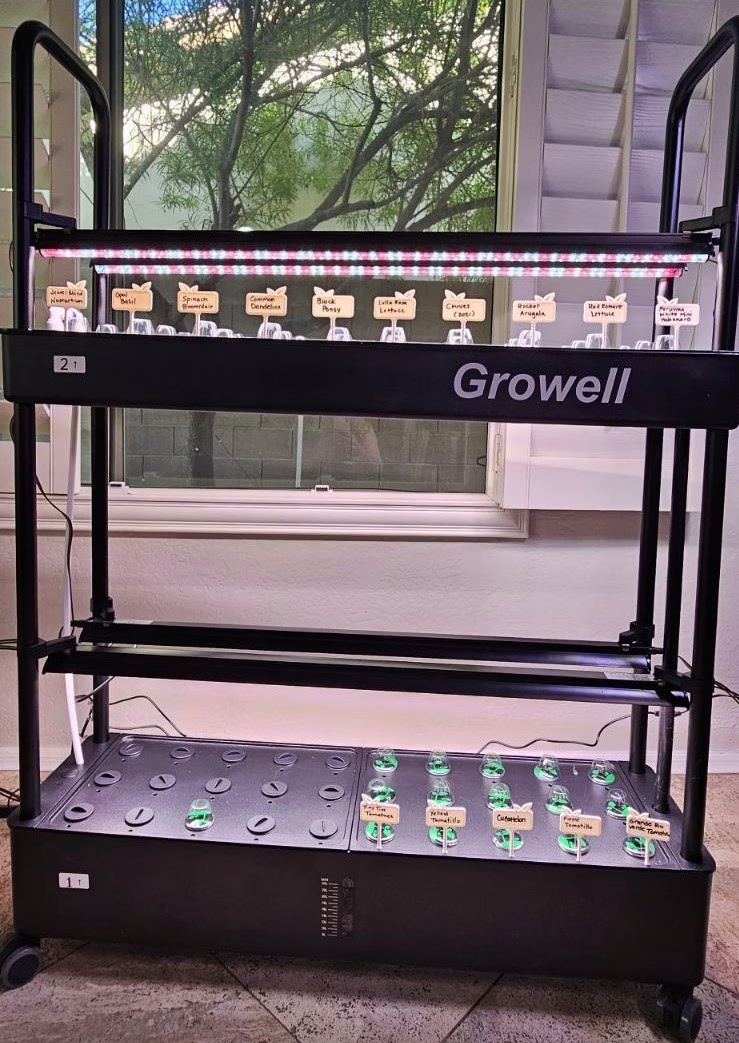
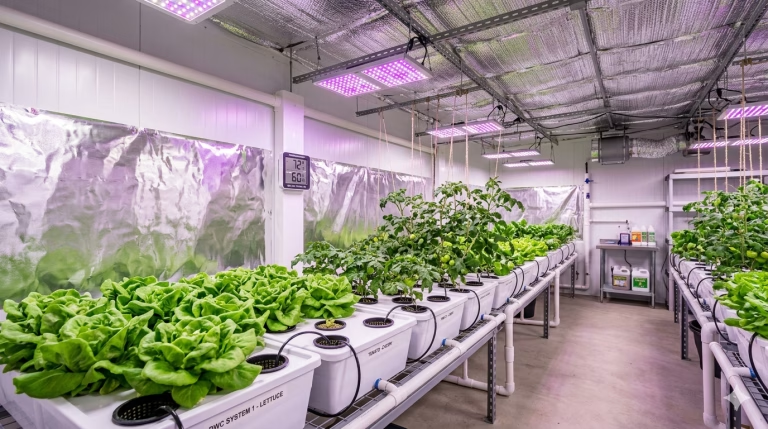
Nutrient Film Technique (NFT): Ideal for continuous harvesting, NFT systems like the Hydrofarm MegaGarden can support 6-12 herb plants in a compact footprint.
Ebb and Flow: These systems flood growing containers periodically, making them perfect for herbs that prefer slightly drier conditions like thyme and rosemary.
Lighting Solutions
LED grow lights have revolutionized indoor herb production. For a small herb garden, consider these options:
Full-Spectrum LED Panels: 300-600 watt full-spectrum LEDs like the Mars Hydro TS series provide excellent coverage for 4-9 herb plants.
T5 Fluorescent: More affordable option for beginners, T5 fluorescent fixtures work well for leafy herbs but may not provide enough intensity for flowering herbs.
Lighting Schedules: Most herbs require 12-16 hours of daily light. Use timers to maintain consistent photoperiods.
Nutrients and pH Management
Complete Nutrient Solutions: Use hydroponic-specific nutrients like General Hydroponics Flora Series or Masterblend 4-18-38 for consistent results.
pH Testing: Digital pH meters or pH test strips help maintain optimal ranges. Most herbs prefer slightly acidic conditions (pH 5.5-6.5). Bloom City pH Control kit is nice to have around when you realize your pH levels are off.
EC/TDS Monitoring: Electrical conductivity meters ensure proper nutrient concentrations. Herbs generally prefer EC levels between 0.8-1.8.
Setting Up Your First Indoor Hydroponic Herb Garden
Step 1: Choose Your Location
Select a space with:
- Access to electrical outlets for lights and pumps
- Adequate ventilation for air circulation
- Temperature stability between 60-75°F
- Easy access for daily monitoring and harvesting
Step 2: Install Your System
DWC Setup:
- Fill reservoir with pH-adjusted water
- Add nutrients according to manufacturer recommendations
- Install air pump and air stone for oxygenation
- Place net pots with growing medium in lid
- Adjust water level to just touch bottom of net pots
NFT Setup:
- Install growing channels with slight downward slope
- Connect reservoir pump to channel inlet
- Ensure proper drainage back to reservoir
- Test flow rate (should be 1-2 liters per minute)
- Place plants in net pots along channels
Step 3: Seed Starting
Rockwool Method:
- Soak rockwool cubes in pH 5.5 water for 30 minutes
- Plant 2-3 seeds per cube
- Place under humidity dome with gentle lighting
- Maintain 70-75°F temperature for optimal germination
- Transplant when roots emerge from cube bottom
Step 4: Transplanting and Care
- Transplant seedlings when they have 2-3 sets of true leaves
- Gradually increase light intensity over 7-10 days
- Monitor pH and EC levels weekly
- Harvest regularly to encourage continued production
Nutrient Management for Maximum Herb Production
Understanding NPK Ratios
Herbs generally prefer balanced to slightly nitrogen-heavy fertilizers during vegetative growth:
Vegetative Stage: 20-10-20 or similar balanced ratios
Mature Plants: 15-5-20 to encourage essential oil production
Nutrient Scheduling
Week 1-2: EC 0.6-0.8 (gentle introduction for seedlings)
Week 3-4: EC 0.8-1.2 (active vegetative growth)
Week 5+: EC 1.0-1.6 (mature plant maintenance)
Common Nutrient Deficiencies
Nitrogen Deficiency: Yellow lower leaves, stunted growth
- Solution: Increase overall nutrient concentration or add nitrogen supplement
Iron Deficiency: Yellow leaves with green veins (interveinal chlorosis)
- Solution: Check pH levels; iron availability decreases above pH 6.5
Calcium Deficiency: Brown leaf tips, poor root development
- Solution: Add calcium supplement or check water quality
For the full blog post on hydroponic nutrient management: The Ultimate Guide to Hydroponic Nutrients: Types, Benefits & Best Practices
Harvesting Techniques for Maximum Yields
The Cut-and-Come-Again Method
Most herbs respond well to regular harvesting that encourages new growth:
- First Harvest: When plants reach 4-6 inches tall, cut stems back to 2-3 inches
- Subsequent Harvests: Remove 1/3 of plant material every 7-14 days
- Pinching: Remove flower buds regularly to maintain leaf production
Optimal Harvest Timing
Morning Harvests: Essential oils are most concentrated in early morning before heat stress
Pre-Flower: Harvest leaves just before flowering for peak flavor concentration
Continuous Cutting: Regular harvesting stimulates new growth and extends productive life
Troubleshooting Common Problems
Slow Growth
Causes: Insufficient light, incorrect pH, nutrient deficiency, poor air circulation
Solutions: Increase light duration/intensity, check pH levels, verify nutrient concentrations, improve ventilation
Leggy Growth
Causes: Insufficient light intensity, excessive nitrogen
Solutions: Move lights closer or increase wattage, reduce nitrogen in nutrient solution
Wilting Plants
Causes: Root rot, nutrient burn, temperature stress
Solutions: Check root health, reduce nutrient concentration, maintain proper temperatures
Pest Management
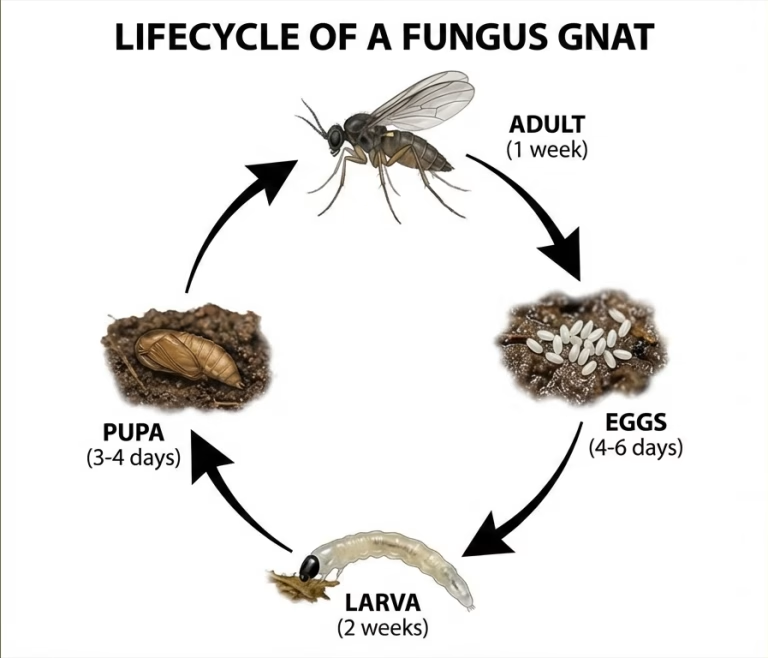
Common Pests: Aphids, spider mites, fungus gnats
Prevention: Maintain clean growing environment, monitor plants regularly, quarantine new plants
Treatment: Use insecticidal soap, beneficial insects, or neem oil for organic control
Cost Analysis and ROI Calculation
Initial Investment
Basic DWC System: $50-100
LED Lighting: $75-200
Nutrients and Supplies: $50-75
Seeds and Growing Medium: $25-50
Total Startup Cost: $200-425
Operating Costs (Monthly)
Electricity: $15-30 (LED lighting and pumps)
Nutrients: $10-15
Water: $5-10
Replacement Supplies: $10-20
Total Monthly Cost: $40-75
Potential Savings
Fresh organic herbs from grocery stores average $3-5 per small package. A productive hydroponic herb garden can yield:
- Basil: 4-6 oz per month per plant ($12-18 grocery value)
- Cilantro: 3-4 oz per month per plant ($9-12 grocery value)
- Parsley: 4-5 oz per month per plant ($12-15 grocery value)
With 6-8 herb plants, monthly harvest value can reach $150-300, providing excellent ROI within 3-4 months.
Advanced Tips for Expert-Level Results
Environmental Controls
Humidity Management: Maintain 50-60% relative humidity for optimal growth
Air Circulation: Use small fans to prevent stagnant air and strengthen plant stems
Temperature Consistency: Avoid temperature swings greater than 10°F
Companion Planting
Some herbs grow better together in hydroponic systems:
- Basil + Parsley: Similar nutrient requirements and harvest schedules
- Thyme + Rosemary: Both prefer slightly drier conditions
- Mint (isolated): Grow separately due to aggressive spreading
Seasonal Adjustments
Winter Growing: Increase light duration to compensate for shorter days
Summer Growing: Provide additional cooling and humidity control
Year-Round Production: Rotate varieties based on seasonal preferences
Scaling Your Herb Production
Expanding Your System
Start with 4-6 herb plants and gradually expand based on consumption needs:
Small Scale: 6-12 plants for personal use
Medium Scale: 20-30 plants for gift-giving and sharing
Commercial Scale: 50+ plants for farmers market sales
Succession Planting
Plant new herbs every 2-3 weeks to ensure continuous harvests:
- Week 1: Plant basil and cilantro
- Week 3: Plant parsley and chives
- Week 5: Plant oregano and thyme
- Continue rotating to maintain steady production
Conclusion
Indoor hydroponic herbs offer an accessible entry point into soil-free growing while providing practical benefits for home cooks. The 10 herb varieties covered in this guide represent the most beginner-friendly options that deliver consistent results with minimal experience.
Starting with a simple DWC or NFT system, you can harvest restaurant-quality herbs year-round while enjoying significant cost savings compared to purchasing organic herbs from grocery stores. The initial investment pays for itself within 3-4 months, and the ongoing satisfaction of growing your own food makes hydroponic herb gardening a rewarding long-term hobby.
Remember that success with indoor hydroponic herbs comes from consistency in monitoring and maintenance rather than complex techniques. Start with 2-3 herb varieties, master the basics, and gradually expand your system as your confidence and experience grow.
Whether you’re looking to enhance your cooking, reduce grocery costs, or simply enjoy the satisfaction of growing your own food, indoor hydroponic herbs provide an excellent foundation for a lifetime of soil-free gardening success.
Share this:

Discover more from Soil Free Harvest
Subscribe to get the latest posts sent to your email.







One Comment