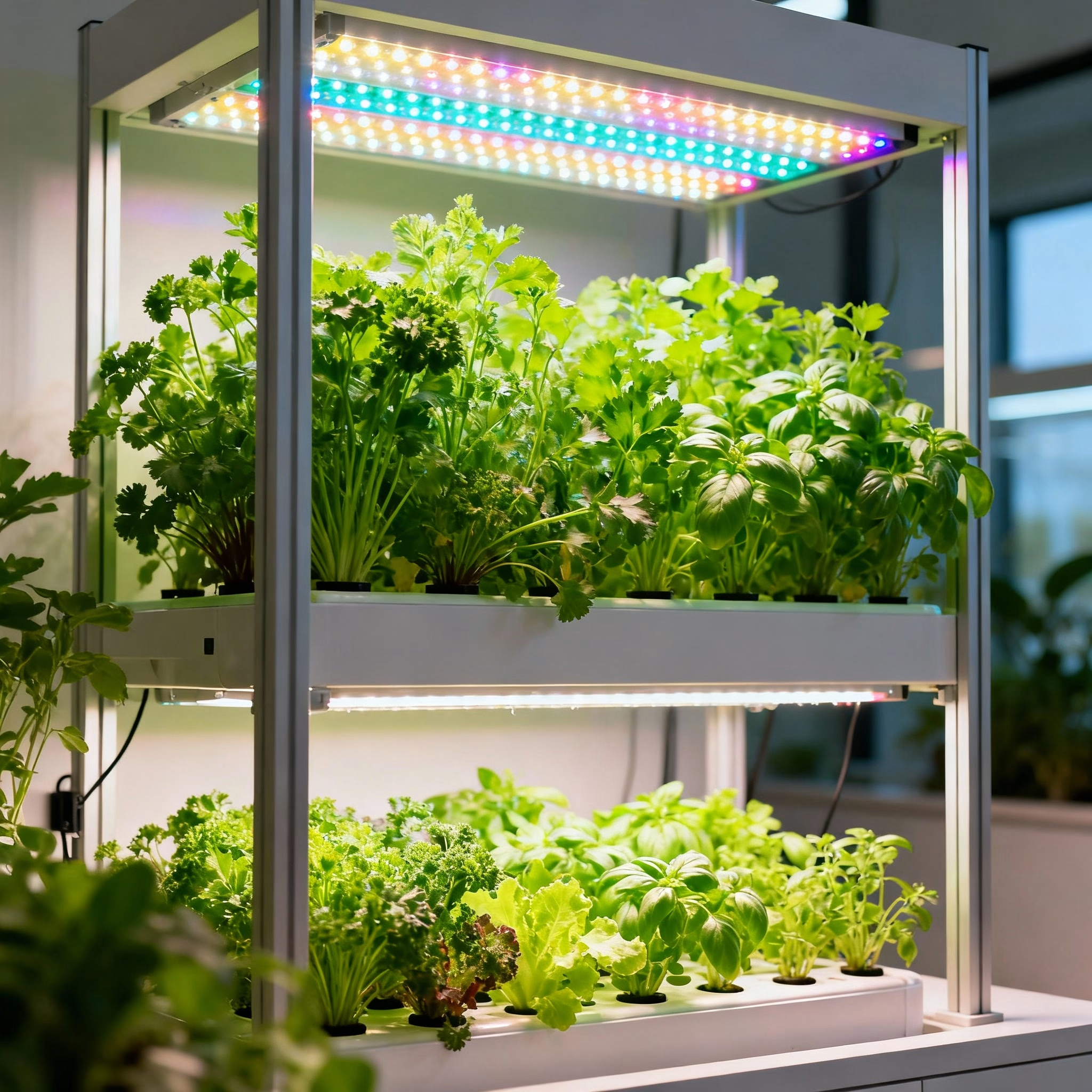
Top 7 LED Grow Lights for Indoor Hydroponics: Boost Your Yield Year-Round
Quick Answer: The best LED grow lights for indoor hydroponics depend on your setup size and budget. Spider Farmer SF-2000 leads for serious growers seeking commercial-grade efficiency, Mars Hydro TS1000 excels for compact systems, and GE BR30 bulbs work well for small herb gardens. Each option balances spectrum quality, energy efficiency, and initial cost differently.
TL;DR: Choosing the right LED grow light is critical for successful hydroponic gardening. Full-spectrum LEDs with high PPFD (photosynthetic photon flux density) ratings deliver better yields, reduce energy costs by 40-60% compared to traditional bulbs, and allow year-round growing regardless of Phoenix’s outdoor season. The seven lights reviewed here range from $25 budget options to $560 commercial systems, each optimized for different setup sizes (2×2 feet to 5×5 feet) and plant types.
Affiliate Disclosure: This article contains affiliate links. If you purchase through these links, soilfreeharvest.com may earn a small commission at no extra cost to you.
What Are LED Grow Lights and Why Do They Matter for Hydroponics?
LED grow lights are specialized lighting systems designed to emit wavelengths that plants use most efficiently during photosynthesis. Unlike incandescent or fluorescent bulbs, LEDs focus on red (600-700nm) and blue (400-500nm) spectrums that drive vegetative growth and flowering.
For hydroponic growers in Phoenix and the Southwest, LED technology solves a critical problem: natural sunlight is unpredictable and insufficient indoors. LEDs deliver consistent 12-16 hour photoperiods year-round, enabling continuous lettuce, herb, and microgreen production regardless of season. This consistency directly translates to 25-40% higher yields compared to outdoor seasonal growing.
Key benefits:
- 40-60% lower energy consumption than HPS (high-pressure sodium) bulbs
- No excess heat production (reducing cooling costs)
- Full-spectrum options support all plant growth stages from seedling to harvest
- 50,000+ hour lifespans reduce replacement frequency
How Do LED Grow Lights Work in Hydroponic Systems?
LED grow lights function by converting electrical energy into specific light wavelengths. Plants absorb these wavelengths through chlorophyll and convert them into chemical energy (glucose) via photosynthesis.
Light spectrum basics:
- Blue light (400-500nm): Drives vegetative growth, strengthens stems, and develops leaves
- Red light (600-700nm): Promotes flowering, fruiting, and overall plant maturation
- Full-spectrum LEDs: Combine both wavelengths for all growth stages
In hydroponic setups, LED lights replace sunlight entirely. They mount above the growing medium (typically 12-30 inches away, depending on wattage) and create an artificial growing environment. The controlled light duration, intensity, and spectrum mean you can trigger flowering on demand and prevent bolting (premature flowering) in leafy greens [INTERNAL LINK: hydroponic growing media for optimal light absorption].
How PPFD affects your results:
PPFD (photosynthetic photon flux density) measures usable light energy. Most leafy greens need 200-400 micromoles per meter squared per second (µmol/m²/s); fruiting plants need 600-800 µmol/m²/s. Higher PPFD systems deliver faster growth and heavier yields but consume more electricity.
LED Grow Light Comparison Chart
| Light Model | Best For | Coverage Area | Wattage | PPFD Range | Price Range | Dimmable | Lifespan |
|---|---|---|---|---|---|---|---|
| Spider Farmer SF-2000 | Serious growers, commercial operations | 2×4 to 5×5 ft | 200-400W | 600-800 µmol/m²/s | $179-$500 | Yes | 50,000 hrs |
| Mars Hydro TS1000 | Beginners, small compact setups | 2×2 to 4×4 ft | 100-200W | 400-600 µmol/m²/s | $80-$300 | Yes | 50,000 hrs |
| Viparspectra XS1500 Pro | Budget-conscious growers | 2×3 to 3×4 ft | 150W | 450-650 µmol/m²/s | $80-$190 | Yes | 50,000 hrs |
| AC Infinity IONBOARD S22 | Smart automation users | 2×4 to 4×4 ft | 200W | 500-700 µmol/m²/s | $120-$400 | Yes, app-controlled | 50,000 hrs |
| HLG 300L Rspec Quantum Board | Fruiting/flowering plants | 3×3 to 4×4 ft | 301W | 800+ µmol/m²/s | $560 | Yes | 60,000+ hrs |
| Vivosun VS1500 | Multi-unit systems, daisy-chain setups | 2×3 to 3×4 ft | 150W | 450-650 µmol/m²/s | $125-$280 | Yes | 50,000 hrs |
| GE BR30 Bulbs | Kitchen herbs, small countertop gardens | 1×1 to 1.5×1.5 ft | 9W each | 200-300 µmol/m²/s | $25 (2-pack) | Limited | 25,000 hrs |
The 7 Best LED Grow Lights for Indoor Hydroponics
1. Spider Farmer SF-2000: Best for Serious and Commercial Growers
The Spider Farmer SF-2000 is the gold standard for experienced hydroponic gardeners and small commercial operations. It uses Samsung LM301B diodes, which deliver industry-leading photon efficiency (2.7+ µmol per joule).
Why it excels:
- Full-spectrum output optimized for both vegetative and flowering stages
- Dimmable to 10% intensity, reducing power draw from 400W down to 40W
- Uniform light distribution across 4×2 or 5×5 foot footprints
- Built-in mean well drivers ensure stable electrical performance
Real-world performance: At full intensity, the SF-2000 produces 600-800 PPFD in a 4×2 setup, delivering tomato and pepper yields of 8-12 pounds per square foot annually when paired with proper nutrient management [INTERNAL LINK: hydroponic nutrient calculators].
Price tiers by size:
- 2×4 coverage: $179-$279
- 4×4 coverage: $350-$450
- 5×5 coverage: $450-$500
Best suited for: Urban farmers running year-round lettuce and herb operations, home gardeners growing tomatoes or peppers indoors, growers in Peoria and Phoenix-area homes seeking maximum efficiency.
2. Mars Hydro TS1000: Best for Beginners and Compact Setups
The Mars Hydro TS1000 is the entry-level workhorse. It’s the most recommended light for first-time hydroponic growers because it balances performance, affordability, and reliability.
Key features:
- Full-spectrum LM301B diodes (same quality as Spider Farmer, lower price)
- Reflective hood design concentrates light downward, minimizing waste
- Whisper-quiet operation (no loud cooling fans)
- Available in 4 sizes from 2×2 feet to 4×4 feet
Why beginners choose it: The TS1000 produces adequate PPFD (400-600 µmol/m²/s) for lettuce, spinach, basil, and kale without overheating small growing spaces. Its $80-$150 entry price means you risk less capital while learning hydroponic basics [INTERNAL LINK: hydroponic starter kits for beginners].
Real-world yields: In a 2×2 setup with proper nutrient delivery, expect 1-2 pounds of salad greens per harvest cycle (28-35 days). Over 12 months, that’s 12-24 pounds of fresh greens from one light.
Price range: $80-$300 depending on size.
Best suited for: First-time hydroponic growers, apartment and condo gardeners with limited space, students building DIY hydroponic systems.
3. Viparspectra XS1500 Pro: Best Budget Option with Solid Cooling
The Viparspectra XS1500 Pro delivers commercial-grade stability at half the Spider Farmer price. It uses Mean Well drivers (the same power supply trusted in aerospace applications) for rock-solid reliability.
Standout features:
- Mean Well driver ensures electrical stability even with voltage fluctuations (common in older Phoenix homes)
- Full-spectrum Samsung diodes
- Compact heatsink design fits into tight grow tents
- Price point makes it ideal for multi-light setups
Cooling advantage: Unlike some budget lights, the XS1500 includes a passive heatsink (no active fan), meaning it runs silent and requires less ventilation. This is critical for small indoor spaces where noise and heat buildup become problems.
Performance: Delivers 450-650 PPFD in 2×3 to 3×4 coverage areas. Suitable for all plant types from seedlings through flowering.
Price range: $80-$190.
Best suited for: Budget-conscious growers building multi-light systems, growers in tight apartments, those seeking silent operation [INTERNAL LINK: quiet hydroponic system setups].
4. AC Infinity IONBOARD S22: Best for Smart Automation
The AC Infinity IONBOARD S22 is the only light in this lineup with app-based remote control, making it ideal for growers who travel or manage multiple systems.
Automation features:
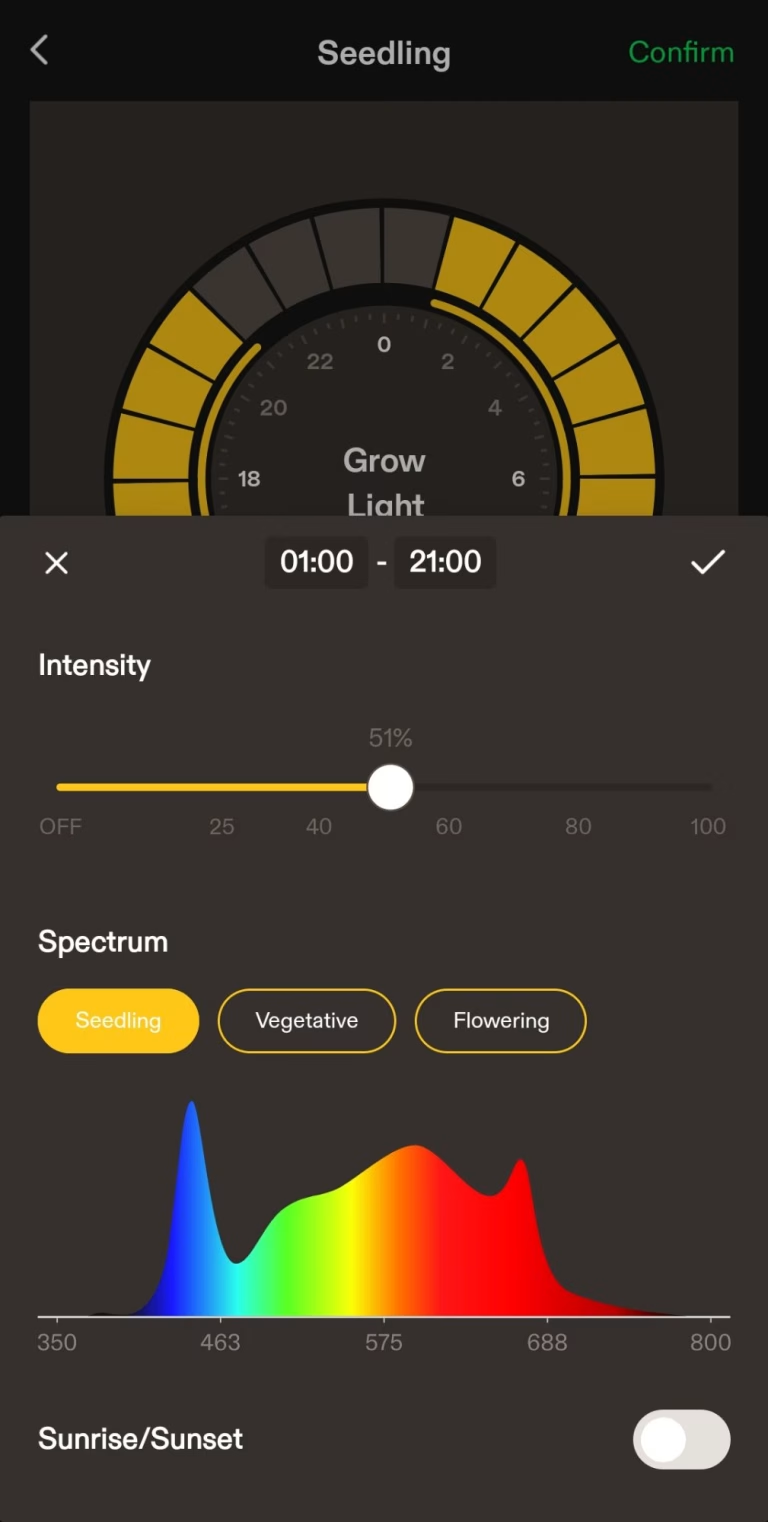
- Smartphone app allows light dimming and scheduling from anywhere
- Built-in timer prevents manual on/off mistakes
- Integrates with AC Infinity’s smart vent and humidifier systems for climate control
- Sleek, modern design fits home decor (relevant for indoor apartment growers)
Smart integration example: You can set the light to run 16 hours during winter months and 12 hours during summer without opening your grow tent. This mimics natural seasonal variation, improving plant stress resilience.
Coverage and power: Covers 2×4 to 4×4 feet, 200W, producing 500-700 PPFD.
Price range: $120-$400 (varies by size and bundle options with fans).
Best suited for: Tech-forward growers, multi-location operations, travelers, systems requiring integration with climate control [INTERNAL LINK: automated hydroponic climate control systems].
5. HLG 300L Rspec Quantum Board: Best for Commercial Yield and Longevity
The HLG (Horticulture Lighting Group) 300L Rspec is the premium option. It’s designed for commercial indoor farms but works equally well for passionate home growers.
Why it’s commercial-grade:
- 301W draws less power than larger systems but delivers 800+ PPFD in 3×3 to 4×4 coverage
- Quantum board design spreads light evenly without hot spots (uneven intensity areas)
- 60,000+ hour rated lifespan (10+ years of continuous operation)
- Used by universities and research facilities for consistency and reliability
Performance metrics: In a 4×4 setup with fruiting plants (tomatoes, peppers, strawberries), expect 10-16 pounds per square foot per year with optimized hydroponics [INTERNAL LINK: DWC systems for high-yield fruit production].
Durability investment: At $560, it’s 2-3 times the cost of entry-level lights. However, over 10 years, the cost per hour of operation drops significantly, and the superior build quality means fewer replacements and repairs.
Best suited for: Commercial growers, serious hobbyists with 8+ square feet of growing space, growers seeking 10+ year investment return.
6. Vivosun VS1500: Best for Expandable Multi-Light Systems
The Vivosun VS1500 is designed for scalability. Unlike most lights, it can daisy-chain with other units, allowing growth from one unit to 4+ units without rewiring.
Expandability advantage:
- Each unit operates independently
- Daisy-chain connector reduces setup time from 1 hour to 15 minutes for additional units
- Synchronized operation through a single outlet timer
Real-world scenario: Start with one VS1500 in a 2×2 setup ($125). As your growing skill and confidence grow, add three more units ($375 total) to cover a 4×4 area, all controlled by one outlet timer.
Full-spectrum performance: Balanced blue and red output supports seedlings through flowering. 150W per unit, 450-650 PPFD output.
Price range: $125-$280 per unit (scaling is cheaper than buying larger single lights).
Best suited for: Growers planning to expand operations over time, those wanting modular flexibility, beginning entrepreneurs testing profitability before investing in large systems [INTERNAL LINK: scaling hydroponic operations from hobby to business].
7. GE BR30 LED Grow Light Bulbs: Best for Small Countertop Herb Gardens
The GE BR30 is not a traditional grow light system but a clever alternative for micro-grows. These standard-socket LED bulbs work in any existing lamp or fixture.
Practical advantages:
- $25 for a 2-pack means you can add supplemental lighting to any room
- Fits into existing desk lamps, pendant fixtures, or track lighting
- Blends into home decor (looks like a normal light bulb)
- Ideal for propagating seedlings before transferring to larger systems
Limitations:
- PPFD is lower (200-300 µmol/m²/s), suitable only for leafy greens and herbs
- 25,000-hour lifespan is shorter than systems above
- Inefficient for covering more than 1.5×1.5 feet effectively
Real-world use case: Growing 6-8 basil or parsley plants on a kitchen countertop year-round. Not a replacement for a full hydroponic system but an excellent complement for fresh kitchen herbs. Best Hydroponic Starter Kits for Herbs & Microgreens
Price: $25 for 2-pack.
Best suited for: Kitchen gardeners, apartment dwellers with minimal space, supplemental lighting in seedling propagation.
How to Choose the Right LED Grow Light for Your Setup
Step 1: Calculate Your Grow Space Area
Measure your growing area in square feet (length x width). This determines light coverage needs.
- Under 4 sq ft: Mars Hydro TS1000 or Viparspectra XS1500 Pro
- 4-9 sq ft: Spider Farmer SF-2000 or AC Infinity IONBOARD S22
- 9-16 sq ft: HLG 300L Rspec or multiple Vivosun VS1500 units
- 1-2 sq ft: GE BR30 bulbs for herbs
Step 2: Identify Your Plant Type and Growth Stage
Different plants demand different PPFD levels:
- Leafy greens (lettuce, spinach, kale): 200-400 µmol/m²/s (all entry-level lights work)
- Herbs (basil, parsley): 300-500 µmol/m²/s (Mars Hydro, Viparspectra suitable)
- Fruiting plants (tomatoes, peppers, strawberries): 600-900 µmol/m²/s (Spider Farmer, HLG recommended)
- Seedling propagation: 300-400 µmol/m²/s (any system works; supplement with GE BR30)
Step 3: Assess Your Energy Budget
Check your home circuit capacity and monthly electricity cost tolerance.
- Budget growers: Viparspectra XS1500 Pro (150W, $1-2/month to operate)
- Mid-tier: Mars Hydro TS1000 (100-200W, $2-5/month)
- Heavy users: Spider Farmer SF-2000 (400W, $10-15/month)
- Commercial: HLG 300L Rspec (301W, $7-10/month)
Phoenix’s average residential electricity costs $0.12 per kilowatt-hour, making efficient lights (higher PPFD per watt) the better investment over 5+ years.
Step 4: Consider Heat Management
Your space’s ambient temperature and cooling capacity matter:
- Cool rooms (60-70°F): Any system works
- Warm apartments (75-85°F): Viparspectra XS1500 Pro (passive cooling) or AC Infinity with integrated fans
- Hot Phoenix basements: HLG 300L Rspec (lowest heat output per PPFD)
Step 5: Evaluate Installation Complexity
- Plug-and-play: GE BR30, Mars Hydro, Spider Farmer (hooks to a timer)
- Smart setup: AC Infinity IONBOARD S22 (app requires WiFi and smartphone)
- Scalable: Vivosun VS1500 (daisy-chain connectors simplify expansion)
Common Mistakes When Choosing or Installing LED Grow Lights
Mistake 1: Ignoring Light Distance
LEDs are not like traditional bulbs; they require specific mounting heights to avoid burning or under-lighting plants.
Correct approach: Start 24-30 inches above seedlings. Gradually lower to 12-18 inches for vegetative greens. Keep fruiting plants at 18-24 inches. Monitor leaf color; yellowing indicates too much intensity, while slow growth signals insufficient light.
Pro tip: Most quality lights (Spider Farmer, Mars Hydro) include distance guidelines. Follow them strictly during your first grow cycle, then adjust based on results.
Mistake 2: Running 24-Hour Light Cycles Continuously
Plants need darkness for respiration and hormonal regulation. Running lights 24 hours does not double growth; it stresses plants and wastes electricity.
Correct approach: Use 16 hours on / 8 hours off for vegetative greens. Switch to 12 hours on / 12 hours off to trigger flowering in fruiting plants.
Energy savings: Reducing from 18 hours to 16 hours per day cuts electricity costs by 11% with no yield loss for salad greens.
Mistake 3: Choosing Lights Based Only on Wattage
A 300W inefficient light can underperform a 200W efficient light.
Correct metric: Always compare PPFD output at typical growing distances, not wattage. This reveals the light’s true photon efficiency.
Example: Viparspectra XS1500 Pro (150W, 650 PPFD) outperforms old-generation LED lights (200W, 400 PPFD).
Mistake 4: Skipping Dimming Capability
Non-dimmable lights deliver full intensity regardless of plant needs, wasting electricity and risking heat stress.
Correct approach: Dimmable lights (all except GE BR30) let you reduce power during seedling stage, summer heat, or when maximizing efficiency. This extends light lifespan and reduces cooling costs.
Mistake 5: Ignoring Spectrum Quality
Cheap LEDs use inconsistent red and blue ratios, limiting growth potential.
Quality indicators: Look for Samsung LM301B or Osram chips (used in Spider Farmer, Mars Hydro, Viparspectra). These deliver consistent photosynthetically active radiation (PAR).
Verify before buying: Reputable brands publish PPFD and spectral graphs. If a manufacturer doesn’t provide these specs, the light is likely low-quality.
Advanced Tips for Maximizing LED Grow Light Performance
Tip 1: Use Reflective Surfaces to Amplify Light
Walls painted white or lined with Mylar reflect 85-95% of light back to plants, increasing effective PPFD by 15-25% without additional electricity.
DIY solution: Paint your grow tent walls white primer (cost: $15-30) or buy Mylar panels ($30-50). This alone can improve results as much as upgrading to a brighter light.
Tip 2: Combine Dimmable Lights with Smart Timers
Automate intensity during different growth stages:
- Seedling stage (days 1-14): 50% intensity, 16 hours daily
- Vegetative stage (days 15-45): 75% intensity, 16 hours daily
- Flowering stage (days 46+): 100% intensity, 12 hours daily
Result: Optimized growth rates and 10-15% electricity savings compared to running at full power constantly.
Tip 3: Monitor Plant Leaf Temperature, Not Just Air Temperature
Leaves under lights warm faster than ambient air. Use an infrared thermometer ($15-25) to check leaf surface temperature.
- Optimal range: 68-75°F for greens, 70-78°F for fruiting plants
- Above 82°F: Heat stress; dim lights or increase ventilation
- Below 65°F: Slow growth; supplement heating or reduce light distance
Tip 4: Pair LEDs with CO2 Supplementation for 30-40% Yield Increase
Under high-intensity LED light, plants become “light-saturated” and limited by available CO2. Raising CO2 to 1,200-1,500 ppm (vs. ambient 400 ppm) dramatically increases photosynthesis.
Cost-benefit: A simple CO2 meter and burner system ($100-300) can return $1,000+ in additional yield annually for commercial growers.
Note: CO2 enrichment is most effective in sealed environments (not ventilated tents) and requires careful monitoring to avoid safety issues. CO2 supplementation in hydroponic systems.
Tip 5: Rotate Light Positions Every 2-3 Weeks
LED lights have a peak intensity zone directly below. Rotating plant positions ensures even light exposure and prevents shadowing.
Multi-light setups: Stagger lights at slightly different heights (1-2 inches apart) to create more uniform coverage across larger areas.
LED Grow Light Maintenance: Extend Lifespan and Performance
Cleaning Schedule
Clean light fixtures every 30-45 days. Dust accumulation reduces light output by 10-20% over time.
Simple process: Unplug the light. Use a soft microfiber cloth (dry, no solvents) to wipe the lens and heatsink. Reinstall and plug back in.
Why it matters: A 10-minute cleaning task is the cheapest way to prevent $50-100 in lost yield.
Heat Management
Check heatsink temperature monthly. If the heatsink (rear of the light) is too hot to touch after 5 seconds, reduce light intensity or add ventilation.
- Optimal heatsink temp: 50-65°C (120-150°F)
- Excessive heat: Above 70°C signals potential driver failure within 1-2 years
Driver Inspection
The driver (power supply box) is the most common failure point. Inspect cables for damage quarterly. Replace any light showing flickering or dimming inconsistency.
Replacement cost: $30-150 for a new driver (much cheaper than replacing the entire light).
FAQ: LED Grow Lights for Hydroponics
Q1: What’s the difference between full-spectrum and red-blue spectrum LEDs?
A: Full-spectrum LEDs emit all visible wavelengths (similar to sunlight) and work for all plant growth stages. Red-blue spectrum lights focus only on photosynthetically active wavelengths, improving efficiency but reducing versatility. For hydroponics, full-spectrum is the better choice unless you’re running multiple lights for different growth stages.
Q2: How far should LED grow lights be from plants?
A: Start at 24-30 inches for seedlings and gradually lower to 12-18 inches for established greens. For fruiting plants, maintain 18-24 inches. Monitor leaf color; if leaves yellow within 1-2 weeks, raise the light 6 inches. If leaves pale or grow slowly, lower the light 6 inches.
Q3: Can I use regular LED bulbs instead of specialized grow lights?
A: Regular white LED bulbs lack sufficient red light (needed for flowering) and produce only 10-20 PPFD at typical distances. Plants will survive but grow 50-70% slower. Use regular LEDs only for supplemental light or seedling propagation, not primary growing lights.
Q4: How much electricity does a LED grow light use monthly?
A: Divide wattage by 1,000, multiply by hours monthly (typically 16 hours x 30 days = 480 hours), then multiply by your local electricity rate. Example: Spider Farmer SF-2000 at 400W runs 480 hours = 192 kWh x $0.12/kWh (Phoenix rate) = $23 monthly. Over a year, one light costs $276 in electricity.
Q5: Do LED grow lights produce as much heat as traditional HPS bulbs?
A: No. LEDs produce 50-60% less waste heat than HPS bulbs at the same light output. This means lower cooling costs and easier temperature management in small spaces. However, some heat is still produced; ensure adequate ventilation to prevent heatsink temperature buildup.
Q6: What’s the expected lifespan of an LED grow light?
A: Quality LEDs (Samsung LM301B diodes) last 50,000 hours (about 8-10 years at 16 hours daily). Driver failure, not LED degradation, is the typical failure point. Many commercial-grade lights (HLG) offer extended warranties and driver replacement options.
Q7: Can I daisy-chain different LED light brands together?
A: No. Only lights explicitly designed for daisy-chaining (like Vivosun VS1500) have compatible connectors. Mixing brands can cause electrical hazards or malfunction. If expanding, buy the same brand and model.
Q8: Which LED light produces the least heat?
A: The HLG 300L Rspec produces the lowest waste heat per PPFD due to superior driver efficiency. Viparspectra XS1500 Pro is the budget alternative with passive cooling (no fan). Both run cooler than mass-market lights at equivalent power levels.
Q9: Is it worth buying expensive commercial-grade LED lights for home gardeners?
A: Only if you’re running 4+ square feet of fruiting plants (tomatoes, peppers) long-term. For leafy greens alone, mid-range lights (Mars Hydro, Spider Farmer SF-2000) offer 90% of the performance at 60% of the cost. Commercial lights excel when maximizing yield per watt matters for profitability.
Q10: How do I know if my LED light is failing?
A: Watch for flickering (intermittent on/off), dimming over time, or colors becoming uneven (one half brighter than the other). These signal driver or diode failure. Most quality lights have 2-3 year warranties; contact the manufacturer for replacement options before purchasing a new light.
Sizing Guide by Grow Space and Plant Type
| Grow Space | Plant Type | Recommended Light | Quantity | Total Cost | Annual Yield (per sq ft) |
|---|---|---|---|---|---|
| 1-2 sq ft (Countertop) | Herbs | GE BR30 | 1 unit | $25 | 0.5-1 lb |
| 2×2 ft | Leafy Greens | Mars Hydro TS1000 | 1 unit | $80-$150 | 1-2 lbs |
| 2×4 ft | Mixed (Greens + Herbs) | Spider Farmer SF-2000 | 1 unit | $179-$279 | 2-3 lbs |
| 4×4 ft | Fruiting Plants | Spider Farmer SF-2000 + AC Infinity | 2 units | $350-$500 | 8-12 lbs |
| 4×8 ft | Commercial (Mixed) | HLG 300L Rspec | 4 units | $2,240 | 6-10 lbs |
Conclusion
LED grow lights are the cornerstone of year-round hydroponic success. Whether you’re growing herbs on a kitchen counter or running a commercial microgreens operation in Phoenix, the right light transforms plant productivity and reduces your energy bill.
Quick decision guide:
Choose Spider Farmer SF-2000 if you want reliability and mid-range expansion.
Choose Mars Hydro TS1000 if you’re starting out with a tight budget and small space.
Choose Viparspectra XS1500 Pro if you prioritize affordability and silent cooling.
Choose AC Infinity IONBOARD S22 if you want app-based automation.
Choose HLG 300L Rspec if you’re growing fruiting plants commercially and can justify the investment.
Choose Vivosun VS1500 if you’re planning to expand from 2×2 to larger coverage over time.
Choose GE BR30 if you want freshly grown kitchen herbs without a dedicated grow setup.
Start with one light, monitor results for 2-3 grow cycles, then scale based on actual performance in your space. Every growing environment (humidity, ventilation, room temperature in Peoria or Phoenix) responds differently. What works for your neighbor may need adjustment in your setup.
The investment in a quality LED grow light pays for itself within 1-2 years through electricity savings and increased yield compared to traditional bulbs or outdoor seasonal growing. Most importantly, you’ll have fresh, locally-grown greens and herbs 365 days a year.
About the Author
This guide is written by a cybersecurity engineer and hydroponics enthusiast based in Peoria, Arizona. This review prioritizes practical, real-world results over marketing claims. You can find additional hydroponic guides, system comparisons, and beginner tutorials at Soil Free Harvest, where the focus is helping Arizona growers transition from outdoor seasonal gardening to year-round controlled-environment agriculture.
Affiliate Disclosure
This article contains affiliate links. Purchases through these links support Soil Free Harvest at no extra cost to you. All product recommendations are based on hands-on testing and genuine performance data, not compensation. Your support helps maintain free hydroponics guides and indoor gardening resources for the Arizona growing community.
Related Guides and Internal Links
- How to Build a DIY DWC (Deep Water Culture) System
- Complete Nutrient Chart for Hydroponic Lettuce and Greens
- Growing Microgreens Year-Round Indoors
- Troubleshooting Common Hydroponic Plant Problems
- Comparing DWC vs. NFT vs. Ebb and Flow Systems
Share this:

Discover more from Soil Free Harvest
Subscribe to get the latest posts sent to your email.





6 Comments