Hydroponic Starter Supply Checklist: Your Complete Budget-Friendly Guide to Soil-Free Success
Ready to dive into the exciting world of hydroponics but feeling overwhelmed by all the equipment options? You’re in the right place! Whether you’re dreaming of fresh herbs on your countertop or planning a full-scale indoor garden, this comprehensive hydroponic starter supply checklist breaks down everything you need to start growing—without breaking the bank.
Hydroponics isn’t just for commercial growers anymore. With systems ranging from simple DIY setups under $50 to premium automated gardens, there’s a hydroponic solution for every budget and skill level. Let’s explore what you really need to get started, compare prices across different budget tiers, and help you make smart purchasing decisions that’ll have you harvesting fresh greens in no time.
Affiliate Disclosure: This article contains affiliate links. If you purchase through these links, soilfreeharvest.com may earn a small commission at no extra cost to you.
Understanding Your Hydroponic System Options
Before we dive into individual supplies, it’s crucial to understand which type of system best fits your needs. Each system type has different equipment requirements and price points.
Deep Water Culture (DWC) is the most beginner-friendly option, where plant roots suspend directly in oxygenated nutrient solution. A basic single-bucket DWC setup costs just $40-60 and requires minimal equipment: a bucket, air pump, air stone, net pots, and growing medium. This is hands-down the best starting point for hydroponics newbies.
Kratky Method is even simpler—a completely passive system with no moving parts that costs as little as $20-40 to set up. Perfect for leafy greens and herbs, the Kratky method eliminates pumps entirely, making it ultra-quiet and energy-free. However, it’s less versatile than active systems.
Nutrient Film Technique (NFT) systems use shallow channels where a thin film of nutrient solution flows past plant roots. These cost $100-200 to build and work excellently for leafy greens and herbs, though they require more maintenance to prevent clogging.
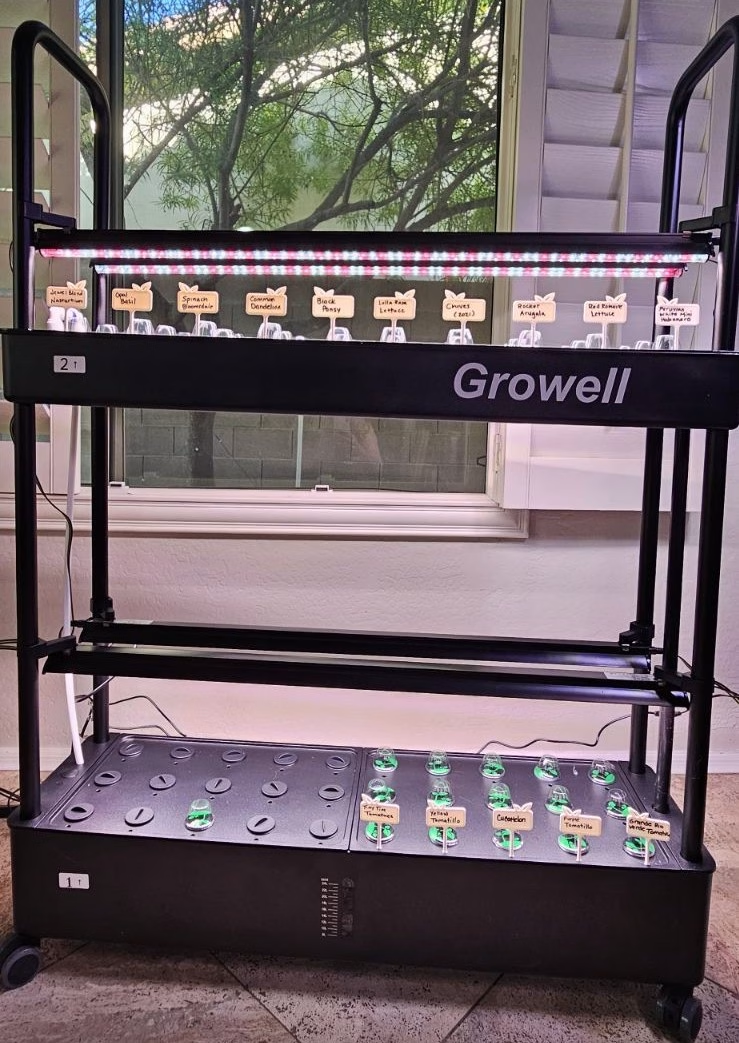
Complete Countertop Kits like the AeroGarden Harvest ($100-150) or iDOO systems offer plug-and-play convenience with built-in LED lights, automated timers, and minimal assembly. These are perfect for absolute beginners who want guaranteed success without DIY construction.
Essential Supplies: Your Core Hydroponic Shopping List
Growing Medium ($5-50)
Your plants need something to anchor their roots, and the growing medium you choose makes a significant difference in system performance.
Hydroton Clay Pebbles are the gold standard for hydroponics. A 10-liter bag runs $12-17, while a larger 50-liter bag costs $45-52. These expanded clay aggregates are pH-neutral, reusable for years, provide excellent drainage and aeration, and work with virtually all hydroponic systems. The initial investment pays off since you can sterilize and reuse them indefinitely.
Rockwool Cubes excel at seed starting and propagation. A sheet of 98 starter plugs (1.5-inch) costs $15-20, while larger 4-inch cubes for transplanting run $20-25. Rockwool offers perfect air-to-water ratio (80% water, 20% air) and comes pre-sterilized. The main downside? Unlike clay pebbles, rockwool isn’t reusable.
Budget Alternative: For ultra-budget builds, coconut coir pellets ($2-5 for a brick) or even cotton balls work for seed starting, though they’re less ideal for long-term growing.
Net Pots ($5-35)
These plastic mesh containers hold your growing medium and plants while allowing roots to grow through the openings.
2-inch net pots cost $5-10 for a 25-pack, $10-15 for 50-pack, or $15-25 for 100-pack. These work great for herbs, lettuce, and smaller plants.
3-inch net pots run slightly more: $8-12 for 25, $15-20 for 50, or $25-35 for 100 pieces. Use these for larger leafy greens and vegetables.
Pro Tip: The more you buy, the better your per-unit cost. If you’re planning to expand your hydroponic garden (and you probably will—it’s addictive!), buy the 100-pack upfront.
Hydroponic Nutrients ($15-80 per bottle)
This is where traditional soil fertilizers won’t work—you absolutely need nutrients specifically formulated for hydroponics.
General Hydroponics Flora Series is the industry standard three-part system (FloraGro, FloraMicro, FloraBloom). Quart-size bottles run $15-20 each, while gallon jugs cost $35-45 per bottle. You’ll need all three bottles for complete plant nutrition through all growth stages. For beginners, this is the most reliable choice with decades of proven results.
Budget Option: MaxiGro or MaxiBloom powder nutrients offer excellent value at about $5 for a year’s supply for small systems. While less convenient than liquid nutrients, they’re incredibly cost-effective.
Important: Never use soil fertilizers in hydroponics—they don’t dissolve properly and will clog your system while starving your plants.
pH Testing and Adjustment ($20-350)
Maintaining proper pH (5.5-6.5 for most crops) is absolutely critical for nutrient uptake. This is the #1 beginner mistake that kills hydroponic gardens.
Budget Option: A basic digital pH meter costs $10-15. Add General Hydroponics pH Up and pH Down bottles at $10-15 each (quart size) or the pH Control Kit at $24 for both plus test solution.
Mid-Range: A 4-in-1 pH/TDS/EC/Temperature meter runs $25-40 and combines multiple essential measurements in one device. This is the sweet spot for most hobby growers.
Premium: The Bluelab Combo Meter at $330 is the industry standard for serious growers, offering laboratory-grade accuracy and durability.
EC/TDS Meter ($10-150)
These meters measure the strength of your nutrient solution—essential for preventing nutrient burn or deficiency.
Budget: Basic TDS pens start at $10-20 and work fine for beginners.
Mid-Range: Hanna GroLine testers ($80-120) offer improved accuracy and durability.
Premium: Bluelab Truncheon meters ($150) are practically indestructible and require no calibration.
Air Pump and Accessories ($20-90)
Oxygenating your nutrient solution prevents root rot and dramatically improves plant growth.
Air Pumps: A basic 2-outlet pump costs $18-25, 4-outlet adjustable pumps run $30-45, and commercial-grade 8-outlet pumps cost $65-90. For a single DWC bucket, the smallest pump is plenty.
Air Stones: Simple 4-inch round stones cost $3-5 each, while 2-packs of cylinders run $5-8. These create the fine bubbles that oxygenate your water.
Air Tubing: Get 25 feet of 1/4-inch tubing for $5-10, or save with a 100-foot roll at $15-25.
Grow Lights ($30-800)
Unless you’re growing outdoors or in a very sunny window, LED grow lights are essential.
Budget: Basic 100W LED panels cost $30-50 and work for small herb gardens under 2 square feet. However, many of these cheap options fail within 1-2 harvests.
Mid-Range: Quality full-spectrum 220W LEDs run $300-400 and provide professional performance for 2×2 to 3×3 grow spaces. The Spider Farmer and Mars Hydro brands offer excellent value in this range.
Premium: Commercial-grade 600W+ systems cost $600-800 but deliver maximum yields and last for years.
Critical Advice: Avoid lights under $200 unless you’re just experimenting—inferior components mean frequent replacements that cost more long-term than investing in quality upfront.
Reservoir and Containers ($5-100)
Your nutrient solution needs a home, and container choice impacts system performance.
Budget: A simple 5-gallon food-grade bucket costs $5-10 and works perfectly for DIY DWC systems.
Mid-Range: Food-grade 10-gallon storage totes run $15-25 and accommodate more plants.
Premium: Professional reservoirs with sight glasses and drain valves cost $50-100 but make maintenance much easier.
Pro Tip: Always choose opaque containers—light penetration promotes algae growth that competes with your plants for nutrients.
Water Pump ($15-150, if needed)
Not all systems need water pumps. DWC and Kratky systems don’t require them, but NFT and drip systems do.
Small submersible 160 GPH pumps cost $15-25, adjustable 400 GPH models run $35-50, and commercial 1000+ GPH pumps cost $80-150.
Timers and Accessories ($5-50)
Timers automate your light cycles: basic mechanical timers cost $5-10, digital programmable models run $15-25, and smart WiFi-enabled timers cost $30-50.
Measuring Tools: Measuring cups, syringes, or graduated cylinders ($5-20) ensure accurate nutrient mixing.
Complete Budget Breakdowns: What Will You Actually Spend?
Ultra-Budget DIY Setup: $100-150
Perfect for beginners who want to learn hydroponics basics with minimal investment:
- Single 5-gallon DWC bucket or Kratky system: $5-10
- Basic air pump and stone (if DWC): $20-30
- Net pots (6-pack, 3-inch): $5-10
- Clay pebbles or rockwool (starter amount): $15-25
- Basic nutrients (MaxiGro/MaxiBloom powder): $5-10
- pH test kit and adjusters: $15-25
- Budget LED grow light (if indoor): $30-50
- Seeds: $5-10
Total: $100-150 | Monthly Operating Cost: $10-15 | Grows: 1-4 plants
This bare-bones setup teaches fundamentals without breaking the bank. Perfect for herbs, lettuce, and leafy greens.
Beginner Complete: $250-400
A more robust system with better equipment that sets you up for long-term success:
- Countertop hydroponic kit (AeroGarden/iDOO) OR 2-4 bucket DWC system: $100-150
- Quality pH and EC/TDS combo meter: $25-40
- General Hydroponics Flora Series (quarts): $45-60
- Growing medium (clay pebbles 10L + rockwool starter sheet): $30-40
- Net pots (assorted sizes, 50-pack): $15-25
- Air pump, stones, and tubing (if DWC): $30-45
- Quality LED grow light: $100-150 (if needed)
- Timer and measuring tools: $15-25
- Seeds and accessories: $10-20
Total: $250-400 | Monthly Operating Cost: $20-30 | Grows: 6-12 plants
This setup provides room to grow your skills with quality equipment that won’t need immediate replacement.
Hobby Grower: $500-800
For serious enthusiasts ready to produce significant harvests:
- Multi-plant hydroponic system (6-12 sites): $150-300
- Premium pH and EC meters (Bluelab or Hanna): $200-400
- Complete nutrient line (gallons) plus supplements: $100-150
- Growing medium bulk supply: $50-80
- Net pots (100-pack assortment): $40-60
- Commercial air pump and accessories: $60-90
- Quality full-spectrum LED (300W+): $300-400
- Automation (timers, controllers): $40-70
- Seeds, replacement supplies: $30-50
Total: $500-800 | Monthly Operating Cost: $30-50 | Grows: 12-24 plants
This level delivers consistent, abundant harvests and includes backup equipment for uninterrupted growing.
Serious Setup: $1,000-2,000+
For year-round production or commercial aspirations:
- Large vertical tower or multi-tier system: $400-800
- Premium monitoring and control systems: $300-500
- Commercial-grade lighting system: $600-800
- Complete nutrient program with additives: $150-250
- Bulk growing medium and supplies: $100-150
- Professional meters and backup equipment: $200-300
- Environmental controls (fans, dehumidifier): $150-250
- Infrastructure (shelving, power management): $100-200
Total: $1,000-2,000+ | Monthly Operating Cost: $50-100 | Grows: 24+ plants
This investment level supports serious production with automation, redundancy, and commercial-quality equipment.
The Top 5 Hydroponic Beginner Mistakes
Ignoring pH and EC levels is the #1 killer of hydroponic gardens. Even if you have perfect nutrients, plants can’t absorb them if pH is wrong. Invest in quality meters and check them daily, especially in small reservoirs. Keep pH between 5.5-6.5 for most crops.
Poor water management destroys more gardens than any other factor. Always use filtered or aged tap water, change your nutrient solution every 10-14 days, and maintain proper water temperature (65-72°F / 18-22°C). Warm water holds less dissolved oxygen and promotes root rot.
Using soil fertilizers instead of hydroponic nutrients is a rookie mistake that clogs systems and starves plants. Soil fertilizers don’t dissolve properly in water-based systems. Always use nutrients specifically labeled for hydroponics.
Neglecting system cleaning invites diseases, algae, and pests. Clean reservoirs, channels, and tubing weekly. Perform thorough sanitization with food-safe hydrogen peroxide or mild bleach solution (rinse well!) between crops.
Overcrowding plants limits airflow, creates nutrient competition, and reduces yields. Plants need space to grow—what looks roomy at planting becomes crowded at maturity. Start with fewer plants than you think will fit.
Seed Starting Success Tips
Starting seeds hydroponically requires attention to detail, but success rates are excellent when you follow these guidelines:
Soak growing medium properly: Rockwool cubes should be soaked in half-strength nutrient solution (pH adjusted to 6.0) for 30 minutes before planting. This ensures proper moisture and prevents pH shock.
Maintain ideal conditions: Keep germination temperature at 70-80°F, provide appropriate light (varies by plant—lettuce needs light, tomatoes prefer darkness initially), and maintain moisture without waterlogging.
Use humidity domes: Clear plastic domes or loosely tied plastic bags maintain moisture around seeds during germination.
Transfer carefully: Once seedlings develop 2-3 true leaves and strong roots, gradually expose them to your main hydroponic system conditions to minimize transplant shock.
Water Temperature Management
Water temperature significantly impacts plant health, nutrient uptake, and disease resistance. The ideal range is 65-72°F (18-22°C) for most crops.
Why it matters: Cold water holds more dissolved oxygen (essential for healthy roots), but too-cold water stuns growth. Warm water promotes rapid growth but increases root rot risk and holds less oxygen.
Temperature control solutions: Use aquarium heaters for cold conditions or chillers for warm environments. For budget-conscious growers, adding beneficial bacteria like Hydroguard helps prevent root diseases even if temperature isn’t perfect.
Smart Shopping: Where to Find the Best Deals
Recommended Retailers
Amazon offers convenience and competitive pricing on complete starter kits, meters, and small-batch supplies. Prime shipping means quick delivery when you need replacement parts.
Specialty hydroponic suppliers (HTG Supply, Hydrobuilder, Growers House) provide expert-grade equipment, bulk pricing, and knowledgeable customer support. Their prices on nutrients and growing medium often beat Amazon for larger quantities.
Local hydroponic stores offer immediate availability, personalized advice, and the chance to see equipment before buying. Supporting local businesses also connects you with experienced growers in your area.
DIY and hardware stores work great for containers, tubing, buckets, and other non-specialized components at rock-bottom prices.
Buying in Bulk to Save
Growing medium: Clay pebbles in 50L bags cost about $0.90-1.00 per liter versus $1.20-1.70 in 10L bags—a 30%+ savings. (50L is a lot) Here is a good mid-size at a good price point: 19 LBS Organic Leca Clay Pebbles (affiliate link)
Nutrients: Gallon jugs provide 4× the volume of quart bottles but often cost less than 3× the price. General Hydroponics FloraSeries Hydroponic Nutrient Fertilizer System (affiliate link) on Amazon is available in pints, quarts, and gallons so you can see the price difference per ounce.
Net pots: 100-packs drop per-unit cost by 40-50% compared to small packages. 100 PCS 2 Inch Heavy Duty Net Pots (affiliate link) is a good example of that.
Your Hydroponic Journey Starts Here
Starting your hydroponic garden doesn’t require thousands of dollars or years of experience. With a basic understanding of essential equipment, smart budget choices, and attention to key factors like pH and water temperature, you’ll be harvesting fresh, pesticide-free produce in just weeks.
Start small—even a single DWC bucket growing lettuce teaches invaluable lessons. As you gain confidence and experience, expand gradually with additional plants, improved equipment, and more challenging crops. The beauty of hydroponics lies in its scalability: today’s countertop herb garden becomes tomorrow’s vertical tower producing pounds of fresh vegetables weekly.
Invest wisely in the fundamentals: quality pH and EC meters prevent far more problems than they cost, while buying the cheapest grow light often leads to disappointment and replacement purchases. Balance your budget between essential accuracy (meters) and acceptable compromise (containers, basic nutrients).
Join the community: Connect with other hydroponic growers through online forums, local clubs, and social media groups. The hydroponic community is incredibly welcoming and eager to share knowledge, troubleshoot problems, and celebrate your successes.
Your fresh, flavorful, chemical-free produce awaits—no soil required! Which hydroponic system will you build first?
Ready to get started? Download the complete supply comparison spreadsheet with links to recommended products below to plan your perfect hydroponic setup within your budget!
Hydroponic Starter Supply Checklist
Share this:

Discover more from Soil Free Harvest
Subscribe to get the latest posts sent to your email.