Deep Water Culture (DWC) Hydroponics: The Complete Beginner’s Guide to Growing Faster
Deep water culture (DWC) hydroponics suspends plant roots directly in an oxygenated, nutrient-rich water reservoir, eliminating soil and dramatically accelerating growth compared to traditional gardening. It is one of the simplest and most reliable hydroponic systems, making it ideal for indoor growers, beginners, and urban gardeners who want consistent harvests year-round. When properly set up and monitored, DWC systems can produce 30–50% faster growth rates and higher nutrient uptake efficiency than soil-based alternatives.
TL;DR: DWC keeps roots continuously immersed in an aerated nutrient solution using an air pump and air stones, requiring only a bucket or tub, net pots, inert growing media, pH/EC monitoring, and basic maintenance. The ideal pH range is 5.5–6.5, water temperature 65–72°F, and nutrients should be changed every 1–2 weeks. DWC works best for indoor and controlled-environment growers in hot, dry climates (like Peoria, Arizona), and performs exceptionally well with leafy greens, herbs, and compact fruiting plants like peppers and determinate tomatoes.
Affiliate Disclosure: This article contains affiliate links. If you purchase through these links, soilfreeharvest.com may earn a small commission at no extra cost to you.
What is DWC (Deep Water Culture) hydroponics?
Deep water culture is a hydroponic growing method where plant roots are suspended in a container of oxygenated, nutrient-enriched water rather than soil or other media. Plants sit in net pots filled with inert growing media (typically clay pebbles or rockwool), while roots grow downward into the solution below. An air pump continuously delivers oxygen through air stones at the bottom of the reservoir, keeping dissolved oxygen levels high enough for healthy root development and disease prevention.
Unlike soil gardening, which relies on microbial activity to break down nutrients, DWC delivers readily available nutrients directly to the root zone in dissolved form. This creates a direct pathway between nutrient source and plant uptake, significantly reducing the time plants spend searching for food and water.
Why does DWC matter for home and indoor growers?
DWC addresses several critical challenges that indoor and space-limited growers face. In compact urban environments, such as apartments, balconies, or small garage spaces, DWC allows you to produce fresh vegetables and herbs using just a few square feet. A single 5-gallon DWC system can support one large plant or multiple leafy greens simultaneously.
For growers in hot, arid climates like Peoria, Arizona, DWC conserves water by up to 90% compared to outdoor soil gardening while maintaining consistent moisture and nutrient availability at the root zone. Because the system is sealed and soilless, it eliminates soil-borne pests, pathogens, and diseases that frequently plague traditional gardens. This translates to healthier plants, cleaner harvests, and fewer pesticide applications.
Additionally, DWC’s simplicity means fewer mechanical failure points than recirculating or flood-and-drain systems, making it lower-risk for beginners while still offering professional-grade results.
How does a DWC system work step-by-step?
Understanding the mechanics of DWC helps you troubleshoot problems and optimize performance.
The basic setup: Each plant sits in a net pot inserted into a lid or platform positioned above a water reservoir. An air pump (typically 40–80 watts for small systems) connects via airline tubing to air stones submerged at the bottom of the reservoir. When powered on, the pump pushes air through the tubing, creating bubbles that rise through the nutrient solution.
Initial root contact: When seedlings are first transplanted, the water level is set approximately 1 inch below the net pot’s bottom. This air gap allows young roots to access moisture from splashing water and humid air while still receiving oxygen. As roots develop and extend downward, they enter the fully saturated solution below.
Continuous nutrient delivery: Once roots reach the aerated solution, they remain submerged in a constant stream of oxygen-rich, nutrient-dense water. Plants can absorb water, nutrients, and oxygen simultaneously without the energy expenditure required in soil gardening, where roots must actively search for pockets of moisture and nutrient availability.
Temperature and oxygen balance: Warmer water holds less dissolved oxygen, making temperature management critical. The bubbling action from air stones accomplishes two goals: it increases dissolved oxygen levels and distributes heat evenly throughout the reservoir.
What are the main benefits of DWC hydroponics?
DWC delivers measurable advantages over soil gardening and competing hydroponic systems:
- Accelerated growth rates: Plants typically grow 30–50% faster in DWC systems because roots have constant access to oxygenated nutrients without competition from soil microbes or physical barriers.
- Low operational complexity: Once dialed in, DWC requires only daily water-level checks and 2–3 times weekly pH/EC testing. There is no soil to amend, fertilizers to mix into soil, or soil-specific pest management.
- Excellent water efficiency: DWC uses 90% less water than outdoor gardening and up to 40% less than passive hydroponic methods because the closed system eliminates runoff and soil evaporation.
- Disease and pest reduction: Growing soilless in a controlled environment dramatically reduces exposure to soil-borne pathogens, fungi, nematodes, and many insect pests.
- Highly scalable: A single bucket can be your starting point; once proficient, you can expand to multi-bucket systems, stacked arrays, or commercial-scale DWC operations without changing core principles.
- Suitable for diverse plant types: While especially strong with leafy greens and herbs, DWC also supports peppers, compact tomatoes, strawberries, and many other fruiting and flowering crops.
Hydroponic system comparisons → Best Budget Hydroponic Kits Under $150: Affordable Garden Systems Compared
DWC vs. other hydroponic systems: How does it compare?
Knowing when to choose DWC over alternatives helps match your system to your goals.
DWC vs. NFT (Nutrient Film Technique)
| Aspect | DWC | NFT |
|---|---|---|
| Water flow | Static reservoir with aeration | Continuous, shallow film flowing through channels |
| Root environment | Roots submerged in oxygenated solution | Roots mostly in air, fed by thin nutrient stream |
| Best for | Larger root masses, fruiting plants, herbs, greens | Shallow-rooted crops, lightweight plants |
| Maintenance complexity | Low; monitor pH, EC, water level | Moderate; must maintain channel flow balance |
| Failure tolerance | High; power loss allows hours before oxygen depletion | Low; power loss or channel clog causes rapid crop failure |
| Initial cost | Very low; requires only a bucket and air pump | Moderate to high; channels, pumps, and controls |
| Scalability | Excellent; add buckets easily | Good but more complex with each addition |
Key takeaway: DWC is the safer, more reliable choice for beginners and low-complexity operations. NFT is superior for specialized applications (like vertical lettuce walls) where space is premium and plants are lightweight.
DWC vs. Kratky (Passive DWC)
Kratky systems use no air pump. Instead, a fixed water level gradually drops as plants drink and water evaporates, naturally exposing more roots to air over time. While Kratky is even simpler than DWC, it is passive, slower, and limited to shorter-cycle crops like lettuce. DWC’s active aeration enables larger plants, faster growth, and longer production cycles.
We compared Kratky and DWC in this post: Kratky Method vs Deep Water Culture: Which Is Better?
Which growers and climates is DWC best suited for?
DWC is universally adaptable but shines in specific scenarios.
Ideal for:
- Indoor growers with controlled lighting and climate (apartments, basements, spare rooms, grow tents)
- Beginners seeking a forgiving, low-failure system
- Urban gardeners with limited outdoor space
- Growers in hot, dry regions (Arizona, Nevada, parts of California) where outdoor soil gardening is seasonally challenged
- Hobbyists and small commercial producers wanting fast crop cycles
- Growers prioritizing water conservation and soilless methods
Less ideal for:
- Outdoor, full-sun operations (temperature and light control are difficult; algae is harder to prevent)
- Very large-scale commercial farms (recirculating systems with centralized nutrient management scale better)
- Growers lacking reliable electricity (air pump failure leads to rapid crop loss)
Climate considerations: DWC performs best when water temperature can be maintained near 65–72°F. In hot climates like Arizona this requires insulated reservoirs, basement or shaded growing spaces, or active water cooling. Conversely, in very cold climates, you may need reservoir heaters to maintain optimal temperatures.
How to build and set up a basic DWC system
A single-bucket DWC is the perfect entry point. It is inexpensive, modular, and lets you master fundamentals before scaling.
Materials and tools you’ll need
Container and structure:
- Food-grade 5-gallon bucket or larger opaque tub (opacity prevents algae growth)
- Matching lid (or custom platform)
- Hole saw bit sized to fit your net pots (typically 2.5″–3″)
Growing media and pots:
- Net pots (3″–6″ diameter, depending on plant size)
- Inert growing media: expanded clay pebbles (Hydroton/LECA), rockwool cubes, or perlite
Aeration system:
- Air pump (40–80 watts for a 5-gallon bucket)
- Airline tubing (typically 3/8″ diameter)
- Air stones (2–4 per bucket, depending on size)
- Check valve (optional but recommended; prevents backflow if pump fails)
Nutrients and monitoring:
- Complete hydroponic nutrient formula (e.g., General Hydroponics Flora, Masterblend, or MaxiGro)
- pH meter or test kit with pH Up and pH Down solutions
- EC (electrical conductivity) or TDS (total dissolved solids) meter
- Small containers for mixing and measuring
Water and miscellaneous:
- Filtered or dechlorinated water (chlorine can inhibit nutrient uptake)
- Seedlings or young rooted cuttings
- LED grow lights (if growing indoors)
- Thermometer for monitoring water temperature
Hydroponic nutrients guide → The Ultimate Guide to Hydroponic Nutrients: Types, Benefits, and Best Practices
Growing media comparison → Hydroponics Growing Mediums: The Ultimate Guide for Thriving Soil-Free Gardens
Grow lights for hydroponics → Top 7 LED Grow Lights for Indoor Hydroponics: Boost Your Yield Year-Round
Step-by-step DWC setup instructions
Step 1: Clean and prepare the container
Thoroughly rinse the bucket, lid, and all components with clean water to remove dust, manufacturing residues, and any potential pathogens. Dry completely. If the bucket has been used before, sanitize with a 10% bleach solution (1 part bleach to 9 parts water), rinse multiple times, and dry again. This prevents early crop failure from hidden mold or bacteria.
Step 2: Cut net pot holes in the lid
Using the hole saw, carefully cut holes in the lid sized to fit your net pots snugly. Space holes 6–8 inches apart to give each plant adequate root room and to allow for airflow around the canopy. Drill a small additional hole (roughly 1/4″) near the edge of the lid as an exit for the air pump tubing. Smooth any rough edges with sandpaper to prevent cuts on your hands or damage to tubing.
Step 3: Install the air system
Place air stones on the bottom of the bucket (distribute 2–4 stones for even oxygenation). Run airline tubing from the air pump, through the small hole in the lid, and down to the air stones. Connect the air pump to a timer (optional but helpful for energy management if growing outdoors). Position the air pump above the water level or install a check valve to prevent water from siphoning back into the pump if power is lost.
Step 4: Fill and prepare the nutrient solution
Fill the bucket with filtered or dechlorinated water to approximately 1 inch below the bottom of the net pots (this leaves an air gap for young roots). Add hydroponic nutrients according to the manufacturer’s dosing recommendations, typically 2–4 ml per gallon for vegetative growth. Stir thoroughly to dissolve and distribute nutrients evenly.
Step 5: Test and adjust pH and EC
Using your pH meter, measure the solution’s current pH. Most vegetables and herbs thrive at 5.5–6.5 pH in hydroponics. If the pH is outside this range, use pH Up (potassium hydroxide or similar) or pH Down (phosphoric acid) to bring it into target range. Re-measure after 30 minutes to confirm. Then measure EC or TDS; for young seedlings, aim for 800–1,200 µS/cm EC (or 560–840 ppm TDS). Adjust nutrient concentration by adding more nutrient solution (to raise EC) or plain water (to lower EC).
Step 6: Turn on the air pump and verify aeration
Power on the air pump and observe the air stones. You should see a vigorous, continuous stream of bubbles rising through the solution and agitating the water surface. If bubbling is weak or absent, check for kinked tubing, clogged air stones, or a malfunctioning pump. Strong aeration is non-negotiable; weak aeration leads to root rot and crop failure.
Step 7: Prepare net pots and transplant seedlings
Rinse your chosen growing media (clay pebbles, rockwool, etc.) under clean water to remove dust. Fill net pots loosely, roots need room to grow downward through the media. Gently remove seedlings from their nursery pots or propagation trays, keeping as much root intact as possible. Place seedlings into the net pots so that the bottom of the root zone just touches the moist air gap or light splashing from the bubbling solution. For very young seedlings, you can prop them higher with extra media to prevent waterlogging; as roots grow, they will naturally descend.
Step 8: Install lights and optimize the growing environment
If growing indoors, mount LED grow lights 12–24 inches above the plant canopy. Adjust height based on light intensity and plant response; most growers raise lights as plants grow. Maintain a photoperiod of 14–18 hours daily for vegetative growth. Keep air temperature between 68–75°F and relative humidity around 50–65% to prevent mold and encourage transpiration. Provide gentle air movement with a small fan to strengthen stems and prevent stagnant pockets.
Step 9: Establish a monitoring and maintenance routine
Create a simple daily and weekly checklist:
- Daily: Check water level; top up with plain water if level drops more than 1/4 inch.
- 2–3 times weekly: Test pH and adjust into 5.5–6.5 range. Measure EC/TDS and note trends.
- Weekly: Visually inspect roots (peek under the lid) for color (white/cream is healthy; brown or slimy indicates rot) and look for pest damage or disease on leaves.
- Every 1–2 weeks: Perform a full nutrient solution change. Empty the old solution, rinse the reservoir, refill with fresh water and nutrients, and recalibrate pH and EC.
Step 10: Plan for troubleshooting and optimization
Once the system runs for 3–5 days, observe plant behavior. Drooping leaves might indicate low humidity, high water temperature, or early nutrient deficiency. Algae growth on the reservoir surface signals light is reaching the solution; cover or block light entry. If roots are yellowing or growth slows, check pH drift (very common) or EC imbalances. Most early problems are caught and corrected within the first week.
Best plants to grow in a DWC system
DWC excels with certain plant types and struggles with others. Start with proven crops to build confidence.
Excellent for DWC (beginner-friendly):
- Lettuce and leafy greens (buttercrunch, romaine, kale, spinach, arugula)
- Culinary herbs (basil, mint, cilantro, parsley, dill)
- Chard
- Green onions (scallions)
- Microgreens
Good for DWC (with moderate experience):
- Compact tomato varieties (determinate, cherry tomatoes)
- Peppers (bell peppers, hot peppers, Thai varieties)
- Strawberries
- Eggplant
- Bush beans
Challenging for DWC (requires advanced setup):
- Large indeterminate tomatoes (need very large root space and tall grow spaces)
- Root vegetables (carrots, beets, etc. require different media and harvest methods)
- Melons and squash (require very large reservoirs and structural support)
Why the variation? Leafy greens and herbs have shallow, fibrous root systems and short harvest cycles, making them forgiving. Fruiting plants need larger root zones, more nutrients, and careful light and temperature management. Root crops don’t thrive in DWC because their edible biomass grows in soil, not in water.
Hydroponic crop selection → What Can You Grow in Hydroponics? 25+ Crops for Beginners to Advanced Growers
How to monitor and maintain a DWC system
Consistency in monitoring prevents 90% of common DWC problems.
Daily monitoring tasks
- Check water level: The solution level should remain stable day-to-day. If it drops more than 1/4–1/2 inch per day, plants are drinking heavily (often a sign of high heat, strong light, or dry air) or there is an undetected leak. Top up with plain water to maintain the correct level.
- Visual plant inspection: Look at leaf color, turgor (firmness), and overall appearance. Wilting suggests heat stress, low humidity, or pH problems. Yellowing or purpling suggests nutrient issues.
- Listen to the air pump: A healthy pump hums consistently. If it goes silent or sounds strained, investigate immediately.
2–3 times weekly monitoring
- pH measurement: Using a calibrated pH meter, measure the solution. Record the value and adjust into 5.5–6.5 using pH Up or Down as needed. pH drift is normal and common; frequent small corrections are better than large occasional ones.
- EC/TDS measurement: This tells you nutrient concentration. For vegetative crops, maintain 1,200–1,600 µS/cm EC (or 840–1,120 ppm TDS). As plants mature and demand more nutrients, EC can increase slightly. If EC climbs rapidly, water is evaporating faster than nutrients are being consumed, top up with plain water.
- Water temperature: Use a thermometer to check reservoir temperature. Ideal range is 65–72°F. If temperature exceeds 75°F regularly, investigate cooling options (shade, insulation, reservoir chiller).
Weekly deep monitoring
- Root inspection: Carefully lift one or more net pots and look at the roots. Healthy roots are white, cream-colored, or light tan. Brown, slimy, or foul-smelling roots indicate root rot (likely from low oxygen or high temperature). Early intervention (aeration increase, temperature drop, partial water change) can save the crop.
- Leaf tissue sampling (optional): For advanced growers, regularly photograph plant foliage and compare to nutrient deficiency charts. Early deficiency detection allows nutrient adjustment before severe damage.
Every 1–2 weeks: Full nutrient solution change
The most powerful maintenance action is a complete nutrient solution change. Over 1–2 weeks, plants consume some nutrients preferentially, water evaporates (leaving minerals behind), and microorganisms can accumulate.
Steps for a full change:
- Turn off the air pump.
- Carefully remove net pots and store plants temporarily in a humid, cool location.
- Drain the old solution (you can reuse it for outdoor plants or compost).
- Rinse the bucket and air stones with clean water; drain thoroughly.
- Refill with fresh water and add nutrients to the correct concentration.
- Measure and adjust pH into 5.5–6.5.
- Verify air stone function and restart the pump.
- Reinstall the net pots and monitor closely for 24–48 hours for any signs of transplant shock.
Common DWC problems and troubleshooting
Early identification and correction prevent crop failure.
Root rot (brown, slimy roots; foul smell; wilting despite wet roots)
Causes: Low dissolved oxygen, water temperature above 75°F, or pathogenic bacteria/fungi already present in the solution.
Solutions:
- Increase aeration: Verify air pump is running; add additional air stones if needed.
- Lower water temperature: Shade or insulate the reservoir; if growing in a very hot climate, consider a reservoir chiller or move the system to a cooler location.
- Perform an emergency partial water change: Remove 30–50% of the old solution and replace with fresh, cool, oxygenated water.
- Add hydrogen peroxide (food-grade, 3%) at 1 ml per gallon as a temporary antimicrobial boost (only for emergency; not a long-term solution).
Algae growth (green slime on surfaces, water cloudiness, nutrient competition)
Causes: Light penetration into the reservoir; warm temperatures.
Solutions:
- Block all light from reaching the solution: Use opaque reservoir covers, reflective tape, or black plastic.
- Keep the reservoir in a dark location or cover with a blanket.
- Clean algae from surfaces with a cloth or soft brush.
- Consider slightly lowering water temperature (algae thrive in warm conditions above 75°F).
Yellow or pale leaves (despite adequate light)
Causes: Nitrogen deficiency, pH out of range (preventing nutrient uptake), or early nutrient imbalance.
Solutions:
- Check and correct pH first; pH outside 5.5–6.5 locks up many nutrients.
- Measure EC; if it is low, increase nutrient concentration slightly.
- If pH and EC are correct and yellowing persists, perform a partial water change (50%) to reset nutrient ratios.
Rapid pH drift (pH changes significantly day-to-day)
Causes: Aggressive plant nutrient uptake (normal in vigorous systems), bacterial activity, or nutrient imbalance.
Solutions:
- Perform more frequent small pH adjustments rather than waiting for large drift.
- Perform full nutrient solution changes every 7–10 days (instead of 14 days) to reset pH.
- Some drift is normal; systems that maintain pH within 5.8–6.2 (a narrower range) are considered well-dialed.
Wilting or drooping despite adequate moisture
Causes: High air temperature (>80°F), low humidity (<40%), heat stress, or root zone flooding in very young seedlings.
Solutions:
- Reduce light intensity or raise grow lights higher from canopy.
- Increase air movement with a small fan.
- Lower air temperature by running lights at night or using climate control.
- For very young seedlings, temporarily raise the net pot higher so roots don’t sit in water continuously until they are more developed.
Advanced tips to master DWC systems
Once you have one successful cycle under your belt, these refinements significantly boost yield and reliability.
Temperature and climate optimization for hot climates
Growers in Peoria, Arizona and similar hot, dry regions face unique DWC challenges. Water temperature can easily exceed 75°F in summer, risking root rot. Solutions include:
- Running lights at night and keeping lights off during the hottest part of the day (shift your photoperiod to 6 PM–midnight or similar).
- Placing the reservoir in a basement, closet, or shaded room where ambient temperature is cooler.
- Wrapping the bucket in reflective insulation or white exterior paint to reduce heat absorption.
- Installing an aquarium chiller (costs $150–400 but is very effective) for serious growers with larger systems.
Upgrade to multi-bucket systems
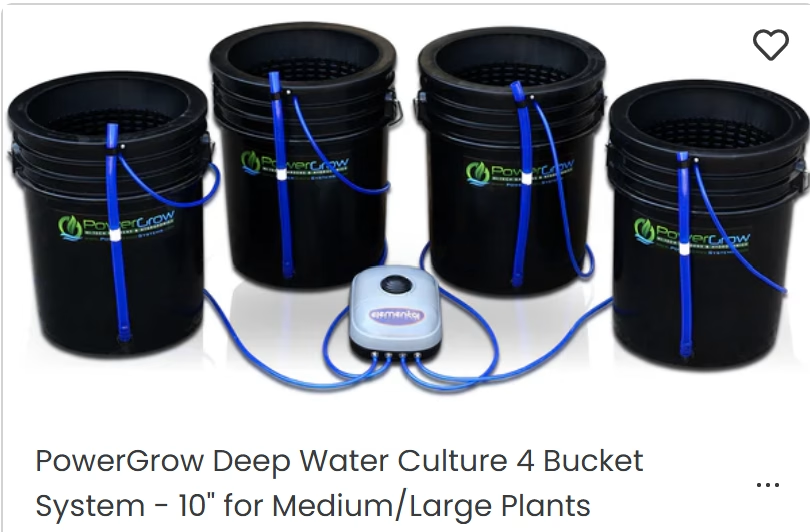
Once proficient with a single bucket, expand to 2, 3, or 4 buckets, each with its own air stone but fed from a single larger air pump. This allows you to grow multiple varieties simultaneously, stagger harvest cycles, and improve overall productivity. Each bucket operates independently but shares air supply and nutrient management protocols.
Nutrient fine-tuning for maximum yield
Standard DWC nutrient formulas work well for most growers, but optimization is possible:
- Vegetative stage (weeks 1–4): Use formulas higher in nitrogen (higher N-P-K ratio such as 7-9-5). EC around 1,200–1,400 µS/cm.
- Flowering/fruiting stage (weeks 5+): Switch to formulas higher in phosphorus and potassium (lower N, higher P-K such as 5-7-9). EC can increase to 1,400–1,600 µS/cm.
- Track and adjust based on plant response; some crops thrive with slightly different nutrient profiles.
Backup aeration and power management
For growers who cannot afford downtime, a backup air pump (battery-powered or AC) ensures oxygenation continues if the primary pump fails. A power outage lasting several hours can devastate a crop; a simple backup extends survival time significantly.
Record-keeping and data logging
Maintain a simple spreadsheet or notebook tracking:
- Planting date and variety
- pH, EC, water temperature (daily or 3x weekly)
- Any adjustments made and date
- First signs of deficiency or pest pressure
- Harvest date and yield
Over multiple cycles, patterns emerge. You’ll learn which nutrient concentrations work best for your specific environment, optimal harvest timing, and early warning signs of problems.
FAQ: Deep Water Culture hydroponics
Is DWC really suitable for complete beginners with no prior gardening experience?
Yes, DWC is one of the most beginner-friendly growing systems because it eliminates soil complexity and pest management. As long as you monitor pH (ideally 5.5–6.5), water temperature (65–72°F), and ensure the air pump runs consistently, even first-time growers achieve strong results within 4–6 weeks.
How often do I need to change the nutrient solution in a DWC system?
Most home growers change the entire reservoir every 1–2 weeks. Frequent changes prevent salt accumulation, nutrient imbalances, and pH drift that harm long-term plant health. Top-ups with plain water on off-days maintain water level between full changes.
What is the best pH range for DWC hydroponics?
A pH between 5.5 and 6.5 is optimal for most vegetables and herbs in DWC. This range allows maximum nutrient availability and uptake. pH above 6.8 can cause micronutrient lockup; pH below 5.0 can cause toxicity issues.
Is an air pump truly essential for DWC, or can roots survive without constant aeration?
An air pump is non-negotiable. Roots submerged in still water quickly deplete dissolved oxygen and suffocate within 24–48 hours, leading to rapid rot and crop failure. Strong, consistent bubbling from air stones is a hallmark of a healthy DWC system.
Can I grow tomatoes and peppers successfully in a small home DWC system?
Yes, but they are more demanding than leafy greens. Peppers and compact (determinate) tomato varieties grow very well in DWC when given strong lighting (16+ hours daily), adequate root space (10–15 gallon reservoir per plant), and careful nutrient management. Beginners usually start with herbs and greens first, then graduate to fruiting crops.
What water depth should I maintain in a DWC bucket?
Start with water about 1 inch below the net pot bottoms to create an air gap. As roots develop and grow downward into the solution over 1–2 weeks, they naturally enter the full nutrient bath. Maintain water level within 1–2 inches of the root zone; if level drops more than 1/4 inch daily, top up with plain water.
What is the ideal water temperature range for a DWC system?
Aim for 65–72°F. Warmer water (above 75°F) holds less dissolved oxygen and promotes root disease. Cooler water (below 60°F) slows nutrient uptake and plant growth. In hot climates like Peoria, Arizona, maintaining this range may require cooling strategies.
Can I run a DWC system outdoors, or is it really an indoor-only method?
DWC can be run outdoors, but it is significantly more challenging. Outdoor systems struggle with fluctuating temperatures, direct sunlight on reservoirs (causing algae blooms), pest infiltration, and inconsistent light. Most growers achieve superior results with DWC indoors or in controlled spaces like greenhouses.
What is the key difference between DWC and Kratky (passive hydroponics)?
Kratky uses no air pump; instead, water level drops naturally as plants drink, exposing more roots to air over time. DWC uses constant aeration to keep roots in oxygenated water. DWC enables faster growth, larger plants, and longer crop cycles, while Kratky is simpler but slower and limited to short-cycle crops like lettuce.
How do I prevent algae from growing in my DWC reservoir?
Algae thrive on light and warm temperatures. Prevent growth by: keeping the reservoir completely covered and opaque; blocking all light entry (use black buckets, covers, or reflective tape); maintaining water temperature below 72°F; and changing the solution every 1–2 weeks to remove any algae spores or accumulated organic matter.
Recommended DWC equipment and kits for home growers
For growers interested in pre-assembled systems or quality components, Soil Free Harvest recommends researching these categories:
- DWC-specific kits: Look for 4–6 bucket kits with integrated air systems, properly sized for vegetative and early flowering stages.
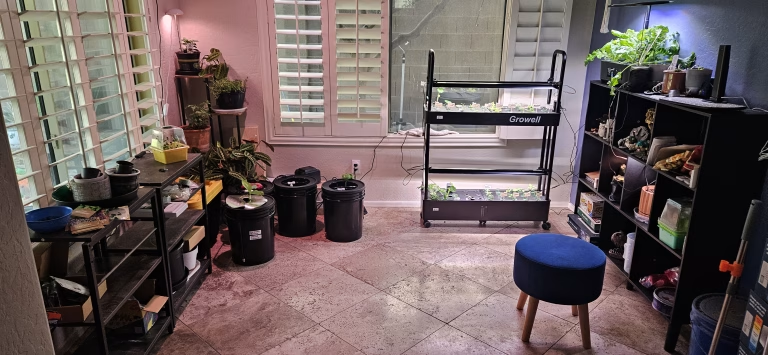
- The one I use at home is VIVOSUN DWC Hydroponics Grow System with Top Drip Kit (affiliate link) it comes with everything you need to get started and you can order it with a single bucket kit or all the way up to 8 buckets.
- Growing media: Expanded clay pebbles (Hydroton, LECA) and rockwool cubes are reliable, reusable choices. The kit above comes with LECA already, but if you are going the DIY route I recommend the Hydroton Original Clay Pebbles (affiliate link)
- Nutrient formulas: Three-part systems (like General Hydroponics Flora series) offer flexibility; simpler two-part or one-part formulas work equally well for most growers.
- Monitoring tools: A good digital pH meter and EC meter are essential investments; analog testers work but are less accurate over time.
- Air systems: Choose air pumps rated for your reservoir size (typically 40–80W for home setups) and quality air stones that don’t clog easily.
Common beginner mistakes in DWC and how to avoid them
Awareness prevents expensive crop failures.
- Undersizing or neglecting the air pump: A weak or intermittent air pump is the #1 killer of DWC crops. Ensure the pump is sized correctly for your reservoir and runs 24/7. A momentary power loss or clogged air stone can begin root rot within hours.
- Ignoring water temperature: Many beginners don’t monitor temperature and are shocked when roots rot in summer heat. Use a thermometer; in hot climates, plan cooling strategies before growth starts.
- Overfeeding with nutrients (high EC): More nutrient doesn’t equal more growth; it causes nutrient burn, salt accumulation, and poor uptake. Start conservative (EC 1,200 µS/cm for seedlings) and increase only as plants demonstrate healthy growth.
- Allowing light into the reservoir: Even a small light leak causes algae blooms that cloud water, consume oxygen, and compete with plants for nutrients. Use opaque containers exclusively; cover or block any transparent tubing or areas.
- Skipping pH management: Many beginners test pH once and assume it stays stable. pH drifts constantly. Frequent small adjustments (every 2–3 days) prevent nutrient lockup and deficiency.
- Delaying full nutrient changes: Topping up old solution with more nutrients compounds imbalances. Complete solution changes every 1–2 weeks reset all parameters and prevent long-term problems.
- Transplanting weak or diseased seedlings: Start with healthy, robust seedlings; weak or slow seedlings often never recover in DWC and waste time and nutrients.
Author bio
I am a cybersecurity engineer and avid hydroponics enthusiast based in Central Arizona. Living in a harsh desert climate, I’ve spent years perfecting indoor growing methods that withstand high heat and dry air. My passion is combining technology with sustainable food production to help others grow fresh food in any space, no matter how small.
Conclusion
Deep water culture hydroponics is a proven, scalable path to indoor food production. Whether you are a first-time grower in a small apartment or an ambitious hobbyist looking to expand your harvests, DWC delivers measurable results when fundamentals are respected: consistent aeration, pH stability, appropriate nutrient strength, and regular monitoring.
Start small with a single 5-gallon bucket and a leafy green or herb crop. Master the basics over one cycle. Then, confident in your ability to manage pH, temperature, and nutrients, scale to multiple plants or advance to demanding crops like peppers and tomatoes. The learning curve is gentle, the failure recovery is quick, and the rewards, fresh, home-grown food year-round are well worth the investment.
Share this:

Discover more from Soil Free Harvest
Subscribe to get the latest posts sent to your email.







12 Comments