Hydroponics and Climate Anxiety: Growing Food Security in Your Home
Yes, home hydroponic gardening can meaningfully reduce climate anxiety by giving you direct control over a reliable source of fresh food, right where you live. Hydroponic systems use far less water than soil, grow faster, and can be run indoors in both scorching summers and harsh winters, which makes them a powerful tool for personal food security. Combined with the proven mental health benefits of gardening, tending a small hydroponic system can turn climate worry into daily, tangible action.
TL;DR: If climate headlines leave you feeling stressed, a simple indoor hydroponic system can give you year round greens, cut your dependence on fragile supply chains, and create a calming daily ritual that supports your mental health. Start with fast crops like lettuce and basil in a basic deep water culture or Kratky setup, and build from there as your skills and confidence grow.
What is climate anxiety and why are home growers feeling it?
Climate anxiety is the ongoing worry, fear, or grief people feel about climate change and its effects on their future, community, and daily life. Recent surveys show that about one third of American adults worry about climate change every week, and around 7 percent report at least mild psychological distress specifically linked to climate change.
For many people, that stress is tied directly to food systems: heat waves, drought, supply chain disruptions, and price spikes all threaten something as basic as dinner. When grocery bills feel unpredictable or shelves go empty even briefly, it is natural for home growers, apartment gardeners, and hobbyists to wonder how they will keep their households fed in the long term.
What is hydroponic gardening in simple terms?
Hydroponic gardening is the practice of growing plants in water enriched with nutrients instead of soil. The roots sit in or above a nutrient solution while being supplied with oxygen, either from air stones, falling water, or passive air gaps.
Because water and nutrients are delivered directly to the root zone and recirculated, hydroponic systems can use around 90 percent less water than conventional soil growing while producing 20 to 25 percent more yield per square meter and growing 40 to 50 percent faster. This efficiency is part of what makes hydroponics such an appealing answer to both climate anxiety and food security concerns, especially in apartments and small homes where space is limited.
For most leafy greens and herbs, a typical hydroponic nutrient solution runs at pH 5.5 to 6.5 with mild to moderate electrical conductivity, which is easy to manage with basic test kits. Once you learn those ranges, it becomes a repeatable process rather than a guessing game.
What is hydroponics → The Complete Beginner’s Guide to Hydroponic Gardening: Build Your Soil-Free Fortune in 2025
How does hydroponics actually reduce climate anxiety?
Gardening in general is strongly associated with lower stress, anxiety, and depression scores in multiple studies. Research from universities in Florida, Texas, and Michigan has shown that even new gardeners experience reduced anxiety and improved mood after regular, hands on time with plants.
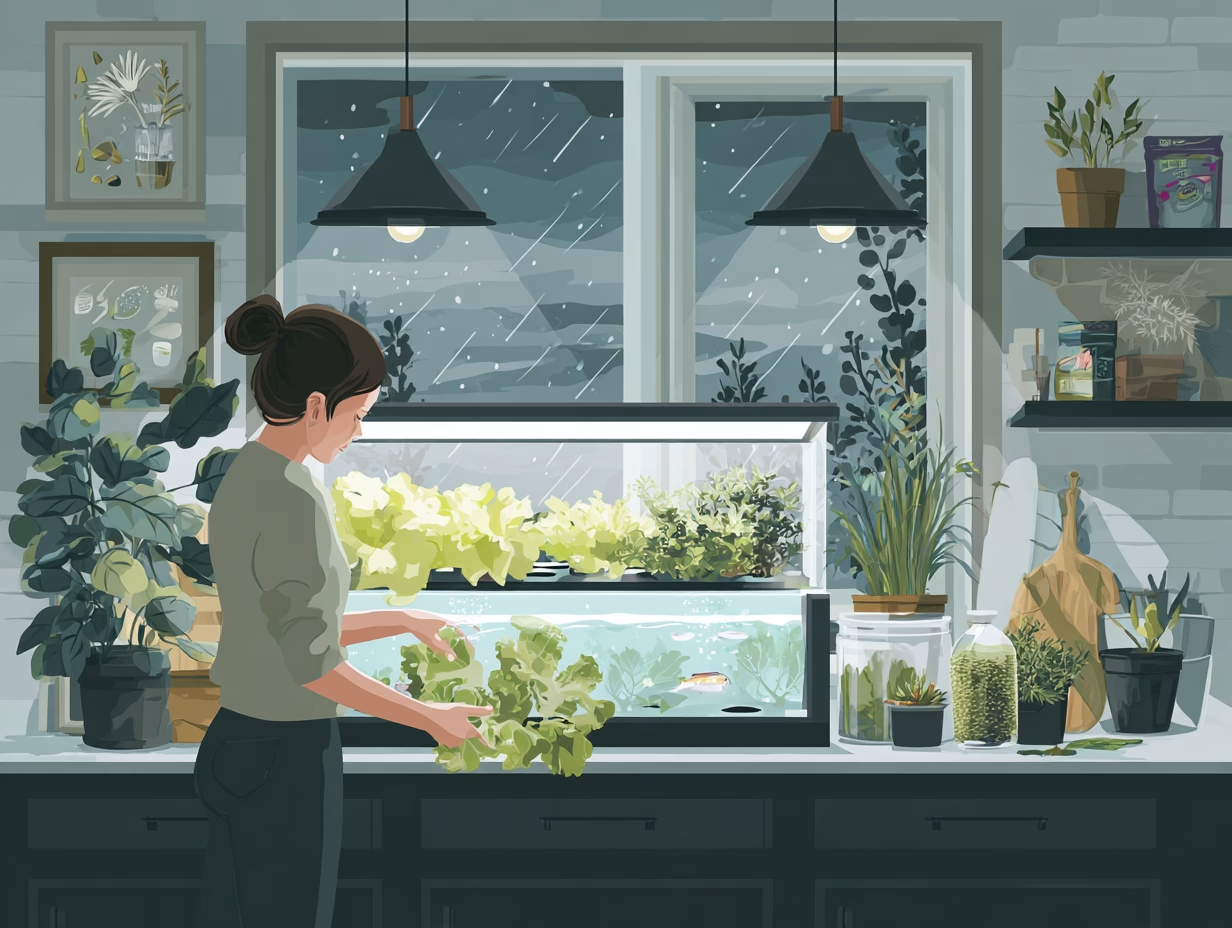
Hydroponics brings that same benefit indoors and makes it more controllable: you can tend your plants in the evening after work, during a heat wave, or in the middle of winter without stepping outside. A small, well lit hydroponic corner becomes a daily ritual and a visible reminder that you are doing something constructive in the face of global problems.
From a psychological standpoint, climate anxiety often comes from feeling powerless and overwhelmed. Hydroponic gardening gives you a clear action path: check pH, mix nutrients, tweak light height, and harvest fresh food. That shift from doom scrolling to hands on care can meaningfully change how you process climate news.
How does a home hydroponic system improve food security?
Food and nutrition researchers emphasize that home and urban gardening are important strategies for strengthening local food systems when global supplies are strained. During the pandemic and recent climate related disruptions, home gardens helped many families buffer against shortages and rising prices, especially in cities.
Hydroponics extends that idea by letting you grow food indoors or in tight urban spaces where soil gardening is not possible. With proper lighting, you can harvest leafy greens year round, independent of outdoor temperature, rainfall, or local soil quality. Even a compact shelf system can supply a steady trickle of lettuce, herbs, and microgreens that reduce your reliance on stores.
Here are some simple, citable numbers that illustrate the resilience benefits:
| Aspect | Hydroponic reality |
|---|---|
| Water use | Around 90 percent less water than soil based growing. |
| Growth speed | 40 to 50 percent faster than soil on average. |
| Yield per area | Roughly 20 to 25 percent higher per square meter. |
| Lettuce seed to harvest | About 28 to 45 days in dialed in systems. |
| Multiple cuts from one plant | 3 to 5 cut and come again harvests for leafy lettuce. |
Those numbers translate into something practical: if you start a batch of lettuce every two weeks, you can be harvesting some kind of greens nearly all the time, even if outdoor conditions are unreliable.
Planning a hydroponic salad bar → Best Types of Lettuce to Grow Indoors Using Hydroponics
Which hydroponic systems are best for anxious beginners?
You do not need a complex high tech setup to start building food security. Several simple systems are especially friendly for beginners who are already feeling stressed and want something manageable.
Is Kratky hydroponics good for low stress resilience?
Kratky systems are passive setups where plants sit in a nutrient filled container with a fixed air gap above the water. As the plants drink, the water level drops and the roots naturally develop a moist upper zone for oxygen and a wet lower zone for nutrients.
Pros for climate anxious growers:
- No pumps, timers, or electricity required for the basic setup.
- Very quiet and low maintenance.
- Great for leafy greens and herbs with modest nutrient needs.
Cons:
- Limited control once you fill the reservoir.
- Less ideal for larger fruiting crops that demand continuous high oxygen and nutrients.
Kratky makes an excellent backup or starter system, especially if you want a non electric option to complement a more advanced rig.
Passive hydroponics jars → The Complete Guide to Kratky Hydroponic Method: Build Your Own DIY Passive Growing System
Why choose deep water culture (DWC) for everyday food security?
Deep water culture suspends plant roots in an aerated nutrient solution using net pots and floating lids or bucket tops. An air pump and air stone run continuously, keeping oxygen high for aggressive root growth.
Benefits for resilience:
- Very stable water volume, which buffers pH and temperature swings.
- Excellent for fast, high density production of lettuce, basil, chard, and other leafy crops.
- Easy to scale by adding more buckets or a larger reservoir.
Drawbacks include dependency on electricity for the air pump, and the need to monitor water temperature more closely in hot climates. From my own DWC setups, a basic four bucket system has been enough to keep salad greens and herbs flowing steadily for a small household once dialed in.
DWC bucket build → Build a 5 Gallon Bucket DWC System for Under $30: A Budget DIY Hydroponics Guide
When does nutrient film technique (NFT) make sense?
Nutrient film technique runs a thin film of nutrient solution through narrow channels where plant roots hang in the flow. It is efficient for small rooted plants and can deliver very fast growth when tuned correctly.
NFT is powerful but more sensitive: pump failures or clogs can stress plants quickly, and channels can be harder to insulate in extreme heat or cold. As a result, I usually recommend NFT as a second or third system once you are comfortable maintaining DWC or Kratky under your local conditions.
NFT how to → Complete Guide to NFT Hydroponics Systems
What equipment do you need to grow climate resilient food indoors?
You can start with a small kit and build from there. Here are the core components that support both food security and mental ease:
- Food safe reservoir or buckets with lids.
- Net pots and an inert growing medium such as clay pebbles or rockwool.
- Hydroponic nutrients formulated for leafy greens.
- pH test kit or pH meter and pH up / pH down solutions.
- Optional but recommended: EC or TDS meter to track nutrient strength.
- LED grow light with timer, sized to your growing area.
- Air pump, air line, and air stones for DWC systems.
- Small fan for airflow and disease prevention.
A simple breakdown looks like this:
| Item | Purpose |
|---|---|
| Reservoir / bucket | Holds nutrient solution and plant roots. |
| Net pots + media | Support plants and allow roots to grow through. |
| Nutrient solution | Provides all essential minerals for growth. |
| Air pump and stones | Oxygenate water to prevent root rot. |
| LED grow light | Replaces sunlight for indoor growing. |
| pH and EC tools | Keep solution in the right comfort zone. |
| Fan and basic shelving | Support airflow and organization. |
Hydroponic growing media explained → Hydroponics Growing Mediums: The Complete Guide to Types, Selection, and Management
Choosing LED grow lights → How Many Watts of Grow Light Do You Need for Hydroponics? (Simple Canopy Sizing Guide)
Hydroponic nutrient basics → The Ultimate Guide to Hydroponic Nutrients: Types, Roles, Application, and Optimization
How to set up a simple climate resilient hydroponic system at home
Title: Build a 4 bucket deep water culture salad system
Description: A beginner friendly DWC setup that can supply steady greens and herbs in almost any climate, using common parts and a small LED grow light.
Materials and tools
- Four 5 gallon food safe buckets with lids
- Four 6 inch net pot lids or lids drilled for net pots
- Hydroponic clay pebbles or similar media
- 2 outlet aquarium air pump, manifold, air line, and two air stones per bucket
- Complete hydroponic nutrient suitable for leafy greens
- pH test kit or meter plus pH up / pH down
- EC or TDS meter (optional but helpful)
- LED grow light sized to cover the four buckets
- Power strip with surge protection and basic timer
- Drill with hole saw (if modifying your own lids)
I have a link for everything you need to get started (minus the plants) here: Dee’s DWC Bucket Setup List (Affiliate Link)
- Plan your growing space
Choose a spot near an outlet that stays between about 60 and 75 degrees Fahrenheit most of the time, such as a spare room, basement corner, or insulated garage area. Avoid direct vents that blow hot or cold air onto the plants to reduce temperature swings and stress. Make sure you can easily reach the buckets for refilling and testing. - Prepare buckets and lids
If your lids are not pre cut, use a hole saw to cut one 6 inch hole centered in each lid for the net pot. Rinse buckets and lids with warm water and a small amount of unscented soap, then rinse thoroughly so no residue remains. Clean equipment reduces the risk of root diseases that can undermine your sense of security. - Install air stones and pump
Place two air stones at the bottom of each bucket and run airline tubing up and out the side or through a notch in the lid. Connect all lines to a manifold and then to the air pump, mounting the pump above water level if possible to prevent back siphoning. Turn the pump on and confirm a steady stream of bubbles in each bucket. - Mix and adjust nutrient solution
Fill each bucket with water, leaving a couple of inches of headroom, then add nutrients according to the label for leafy greens, usually targeting a mild EC to start. Test pH and adjust into roughly the 5.5 to 6.5 range, which works well for most lettuce and herbs. Record what you used so you can repeat it next time. - Plant seedlings in net pots
Start seeds in rockwool cubes or another seed starter, then transplant when roots are showing and the first true leaves have formed. Place the cubes into the net pots, surround them with clay pebbles, and set each pot into a lid so that the bottom of the cube is just touching the top of the nutrient solution. - Set up lighting and timers
Mount the LED light 12 to 24 inches above the plant canopy, following the manufacturer’s recommendations. Use a timer to provide around 14 to 16 hours of light per day for leafy greens, which supports the fast 28 to 45 day seed to harvest timelines observed in many hydroponic lettuce systems. - Dial in daily and weekly checks
Each day, glance at water levels, air bubbles, and plant leaves, and feel the reservoir sides to gauge temperature. Once or twice per week, test pH and EC, topping off with plain water as needed and adding nutrients if the solution becomes too weak. This simple rhythm keeps the system stable without overwhelming you. - Harvest and replant on a schedule
Begin harvesting outer leaves once plants reach 4 to 6 inches tall, leaving the centers intact to regrow. Plan to start new seedlings every 1 to 2 weeks so that as one bucket is nearing the end of its productive life, another is coming online, smoothing out your harvests and your sense of security.
How do you maintain your system without adding stress?
The key is to keep maintenance predictable and bite sized instead of reacting only when something looks wrong. A simple routine might look like this:
- Daily: quick visual check of plants, bubbles, light, and temperature.
- Twice weekly: pH and EC test, top ups with water or nutrients.
- Every 1 to 2 weeks: partial reservoir change for small systems.
- Monthly: wipe down surfaces, check for algae, clean fan filters.
Research on gardening and mental health suggests that regular, modest engagement is enough to capture most of the anxiety reducing benefits. You do not need to turn hydroponics into a second full time job for it to be helpful.
Hydroponic maintenance checklist → printable weekly and monthly task list
What are the limitations and risks of hydroponic prepping?
Hydroponics is powerful, but it is not magic. Some realistic drawbacks to consider:
- Electricity dependence: Most systems rely on pumps and lights, which makes backup plans important if you are worried about outages.
- Upfront cost: A reliable indoor setup with lights and meters costs more than a few seed packets and soil beds.
- Learning curve: You will need to get comfortable with measuring pH, mixing nutrients, and responding to plant signals.
- System failures: A pump failure in a recirculating system can stress plants faster than in soil, particularly for NFT.
Being honest about these tradeoffs helps keep your expectations realistic, which in turn protects your mental health. You are building an additional layer of resilience, not a perfect bunker.
Troubleshooting: which problems spike anxiety and how do you fix them?
Certain issues show up over and over again for new hydroponic growers. Learning to read them early will keep your plants – and your stress levels – more stable.
Common anxiety inducing problems and quick responses:
- Yellowing new leaves: Often linked to nutrient imbalance, pH drift, or specific deficiencies. Check pH first, then verify that you are mixing nutrients to recommended strength.
- Wilting despite full reservoirs: Can point to poor oxygenation or root disease. Confirm that air stones are bubbling strongly and that roots are white to cream colored, not brown and slimy.
- Algae on surfaces or in the reservoir: Usually from light leaks. Cover exposed solution with lids, tape, or opaque plastic, and clean affected areas with diluted peroxide.
- Slow growth compared with expected 30 to 45 day lettuce timelines: Look at light intensity and duration, as insufficient light is a common bottleneck.
From multiple runs in hot, dry climates, I have found that logging pH, EC, and basic observations in a simple notebook or app dramatically reduces stress. You can see patterns over time instead of feeling like every setback is random.
Hydroponic troubleshooting guide → Why Your Hydroponic System Failed: A Troubleshooting Flowchart for 7 Critical Problems
Which plants are best for climate resilient hydroponics?
Some crops shine in small, indoor hydroponic systems, especially when your focus is mental health and reliable harvests rather than maximizing calories.
Great beginner and resilience friendly choices:
- Leafy greens: Loose leaf and butterhead lettuce, kale, Swiss chard, pak choi, and spinach perform very well in DWC and NFT systems, often reaching harvest in roughly 30 to 60 days depending on variety.
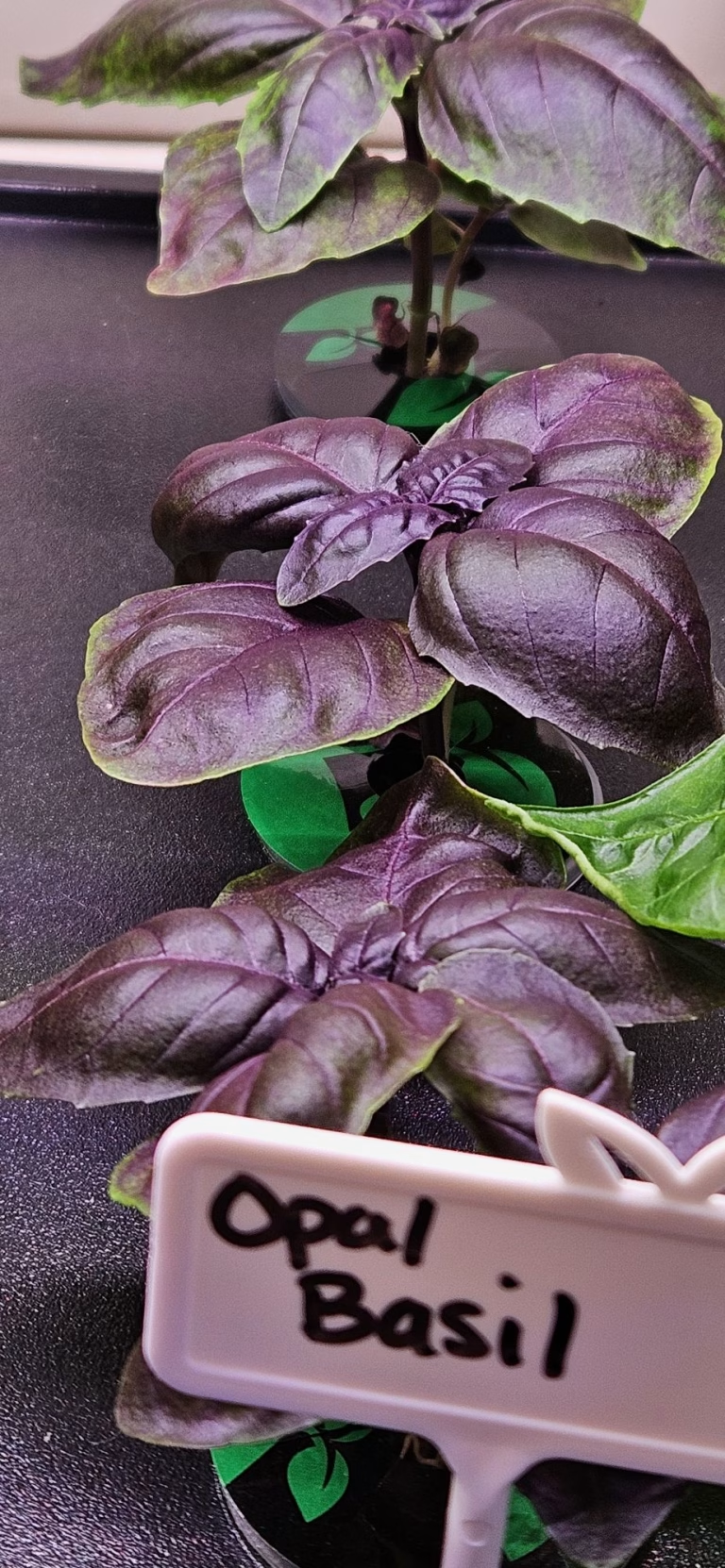
- Herbs: Basil, mint, cilantro, parsley, dill, and oregano are highly productive in small Kratky jars or DWC buckets and add a lot of flavor and nutrition per square foot.
- Microgreens: Sunflower, pea, radish, and mixed salad microgreens can be ready in 10 to 20 days, giving you extremely fast, nutrient dense harvests.
More advanced but worthwhile:
- Tomatoes and peppers: Compact varieties do well in larger DWC or recirculating systems with strong lighting and good trellising.
- Strawberries: Productive in NFT channels or tower systems once temperatures and pollination are managed.
Leafy greens and herbs are usually the sweet spot for climate anxious growers because they are fast, forgiving, and useful in daily cooking. Once you have a steady salad and herb pipeline, you can experiment with fruiting crops as your skills and infrastructure grow.
Best plants for hydroponics → What Can You Grow in Hydroponics? 25+ Crops for Beginners to Advanced Growers
How does hydroponics look in different climates, from Phoenix to Central Michigan?
In the Phoenix area, I ran hydroponic systems in environments where summer highs routinely pushed past 110 degrees Fahrenheit. The main battle there was heat management: shading windows, running lights at night, insulating reservoirs, and sometimes using frozen water bottles to keep nutrient solution temperatures in a safe range.
In Central Michigan, the challenges flip. Winters are long and dark, so artificial lighting and some degree of space heating are essential, but nutrient solution temperatures are easier to keep in the ideal zone. Community research from Michigan State University and others has also highlighted how gardening in this region supports mental and social well being, especially when long winters weigh on mood.
The lesson is that hydroponics is adaptable. With the same core DWC or Kratky techniques, you can tune your system for desert heat or Midwestern cold, and that geographic flexibility itself is reassuring when you think about future climate shifts.
Frequently asked questions about hydroponics and climate anxiety
Is hydroponics actually sustainable if it uses electricity?
Yes, it can be, especially when you consider water use and yield per square foot. Hydroponic systems often use about 90 percent less water than traditional soil based methods while producing 20 to 25 percent more food in the same footprint. If you pair efficient LED lighting with reasonable temperatures and possibly some renewable power, the environmental impact per unit of food can be very competitive.
How much does a basic climate resilient hydroponic setup cost?
Costs vary by region and what you already own, but a modest indoor DWC setup with buckets, air pump, basic meters, and a small LED light typically lands somewhere between a few hundred dollars and the lower end of more advanced soil garden infrastructure. Spread over years of use and hundreds of heads of lettuce and herbs, that investment can pay back in both food and mental stability.
How hard is hydroponics to learn for a beginner?
If you can follow a recipe and pay attention to a few numbers, you can learn hydroponics. The main skills are mixing nutrients according to the label, keeping pH in the right range, and watching your plants for signs of stress. Most people get comfortable with the basics after a couple of crop cycles, especially with forgiving plants like lettuce, basil, and chard.
How long will it take before I am eating my own hydroponic food?
For fast crops like lettuce and leafy greens, you can often harvest your first leaves about 28 to 45 days after sowing seeds or within 3 to 4 weeks after transplanting into a well tuned system. Microgreens can be even faster, coming in as little as 10 to 20 days depending on the variety.
Can hydroponics really help with my climate anxiety or is that just wishful thinking?
While hydroponics is not a substitute for professional mental health care, there is good evidence that gardening in general reduces stress, anxiety, and depression for many people. Combining that with a concrete preparedness goal – like building a small home food supply – gives your climate worry a constructive outlet, which many people find grounding.
What happens if the power goes out?
Short outages of a few hours usually are not catastrophic, especially in DWC systems where roots remain in water and can hold some oxygen. Problems grow if pumps and lights are off for many hours in hot or very cold conditions, or if shallow systems like NFT run dry. Simple backups like battery powered air pumps, manual aeration, or temporarily moving plants to Kratky style containers can buy you time during longer disruptions.
Are there safety or mold risks with indoor hydroponics?
Any indoor plant setup needs airflow and sensible humidity control, but hydroponic systems are not inherently more mold prone than potted plants if you keep water covered and the room ventilated. Small fans and dehumidifiers where needed can keep conditions comfortable for both plants and people. It is also important to keep reservoirs opaque to limit algae growth, which simplifies maintenance.
Can I grow enough food hydroponically to replace the grocery store?
For most people in typical homes or apartments, hydroponics is better viewed as a powerful supplement rather than a complete replacement. That said, research on home and urban gardening shows that even relatively small garden areas can significantly boost dietary diversity and reduce food insecurity when managed well. A dedicated grow room or multiple racks can produce a substantial share of your household greens, herbs, and some fruits.
Is hydroponics suitable for renters and small apartments?
Yes, this is one of hydroponics’ biggest strengths. Systems can be compact, clean, and self contained, without heavy pots of soil or permanent modifications to the building. As long as you protect floors from occasional spills and manage light spill and noise, a small DWC or Kratky setup can fit into many rental spaces.
Author note
I have run hydroponic systems in both the blazing heat of the Phoenix, Arizona area and the long winters of Michigan, focusing on making indoor and urban growing practical for real households. That includes deep water culture lettuce racks in garages, Kratky herb jars on apartment windowsills, and compact systems in spare room corners. My writing and consulting are aimed at helping beginners move from climate anxiety and food insecurity toward hands on, resilient home food production. Whether you are in a desert apartment or a snow belt duplex, I want hydroponics to feel like a tool you can actually use, not a science project you watch from afar.
Share this:

Discover more from Soil Free Harvest
Subscribe to get the latest posts sent to your email.