The Tetraploid Effect: Understanding Genetic Expression in Hydroponically Grown Plants like Tetraploid Basil
Get ready to nerd out with me! Dive into the science of why certain plants like tetraploid basil behave differently in hydroponic systems and what this means for home growers.
Introduction: Why Some Basil Plants Seem Supercharged in Hydroponics
If you have grown basil hydroponically, you may have noticed something remarkable: some varieties explode with oversized leaves, produce dramatically faster growth, and generate more intense aromatic compounds than their conventional counterparts. You might attribute this to better nutrient delivery or superior growing conditions. But the real story lies deeper in the plant’s DNA.
Sweet basil holds a secret that most home growers never discover. Scientific analysis has revealed that basil is naturally tetraploid, meaning its cells contain four complete sets of chromosomes instead of the typical two found in diploid plants. This quadruple genetic complement fundamentally alters how basil grows, expresses its genes, and responds to the hydroponic environment. Understanding this tetraploid effect transforms how you approach indoor herb cultivation and opens doors to optimized growing strategies that work with plant genetics rather than against them.
What Is Tetraploidy and How Does It Arise?
Polyploidy refers to the condition where plant cells contain more than the standard two paired sets of chromosomes. In diploid organisms, each cell contains two copies of every gene (2n). Tetraploid organisms, by contrast, possess four complete chromosome sets (4n). This fundamental difference in genetic architecture creates a cascade of consequences for plant physiology, growth patterns, and biochemical expression.
Sweet basil specifically contains 56 chromosomes across its genome, with a genome size of approximately 2.13 billion base pairs, making it an autotetraploid where all chromosome sets originated from the same species. Genome sequencing analysis confirmed that approximately 80 percent of the complete gene sequences were found in multi-copy states, with 86 percent of these being duplicated, definitively establishing basil’s tetraploid nature.
Tetraploidy can occur naturally through spontaneous chromosome doubling during plant development, or it can be artificially induced through colchicine treatment, which disrupts chromosome segregation during cell division. In cultivated basil, tetraploidy appears to have become fixed as a natural characteristic of the species, conferring advantages significant enough to maintain itself through plant evolution.
The Genomic Shock: Initial Response to Doubled Chromosomes
When cells double their genetic material, they experience what plant biologists call “genomic shock” or “genome shock.” This sudden availability of redundant genetic copies triggers immediate and profound changes in gene regulation, chromatin architecture, and epigenetic modification patterns that ripple through all cellular processes.
The presence of duplicate genes releases these genes from certain evolutionary selection pressures. While one copy of a duplicated gene may retain its original function, additional copies become free to evolve new roles, diverge into specialized functions, or undergo regulatory changes that alter expression timing and tissue specificity. This evolutionary flexibility provides polyploid plants with adaptive advantages while simultaneously requiring sophisticated mechanisms to manage the complexity of multiple gene copies operating within a single cell nucleus.
Chromatin Remodeling and Three-Dimensional DNA Organization
In tetraploid basil cells, the fundamental architecture of how DNA is organized within the nucleus changes dramatically. Chromatin, the complex of DNA and proteins that package genetic material, undergoes significant remodeling. Histone modifications including methylation and acetylation patterns shift, making different genomic regions more or less accessible to the transcription machinery that reads genetic instructions.
Research on polyploid plants has demonstrated that whole genome duplication reshapes chromatin accessibility patterns throughout the genome. Regions that are normally tightly condensed and transcriptionally silent become more accessible, while other regions show decreased accessibility. These changes are mediated by histone chaperones and chromatin remodeling complexes that coordinate the positioning of nucleosomes and exposure of regulatory DNA elements.
The three-dimensional conformation of the genome itself changes in tetraploids. Entire chromosomal regions shift position relative to each other, altering the interaction networks between regulatory elements and genes they control. This spatial reorganization means that the same gene sequence can be regulated differently simply because its physical proximity to regulatory regions has changed in three-dimensional nuclear space.
Homeolog Gene Expression: When Duplicate Copies Tell Different Stories
One of the most fascinating consequences of tetraploidy is the phenomenon of homeolog expression bias. When basil underwent tetraploidization, each gene now exists in multiple copies called homeologs. These homeologs often display dramatically different expression patterns.
In some cases, one homeolog retains its ancestral function while others undergo partial or complete silencing through epigenetic mechanisms. This silencing is typically mediated by changes in DNA methylation patterns or histone modifications rather than by DNA sequence changes. Gene silencing represents a reversible regulatory adjustment that allows the cell to fine-tune which genetic copies contribute to different cellular functions.
Research on tetraploid coffee (Coffea arabica) revealed no preferential expression of one genome over the other across the genome broadly, yet examination of specific gene families showed complex patterns where approximately 30 percent of genes exhibited homeolog expression bias. Expression differences are often attributable to epigenetic divergence between parental alleles that accumulated before polyploidization occurred, suggesting that the regulatory landscape established during diploid evolution continues to influence which copies are expressed.
In basil specifically, analysis of the biosynthetic pathway genes responsible for producing aroma compounds revealed a complex pattern of both genetic redundancy and specialization among homeologs. Some genes controlling the production of eugenol and methyl chavicol, which determine basil’s distinctive chemotype, showed clear evidence of expression partitioning where different homeolog copies preferentially contributed to aroma production in different leaf tissues or developmental stages.
Subfunctionalization and Neofunctionalization
When tetraploid genomes stabilize, duplicate genes frequently undergo either subfunctionalization or neofunctionalization. In subfunctionalization, each duplicate copy specializes in performing only part of the ancestral gene’s full function, with different copies handling different aspects of the original role. This subdivision of ancestral functions means that neither copy alone can fully replace the other, leading to long-term genetic stability and mutual dependence.
Neofunctionalization represents the evolutionary opposite: one copy retains the original ancestral function while another accumulates mutations conferring a novel function entirely absent from the diploid ancestor. This acquisition of new function allows polyploid plants to gain metabolic capabilities unavailable to their diploid relatives.
In polyploid wheat, this principle has been exploited extensively. Genes encoding alcohol dehydrogenase exist in duplicate copies where one primarily responds to water submersion stress while the other is upregulated under cold conditions. This functional partitioning enables tetraploid wheat to simultaneously manage multiple environmental stresses more effectively than diploid ancestors that must handle both stressors with a single gene copy.
Why Tetraploid Basil Thrives in Hydroponics: Cellular Morphology and Nutrient Uptake
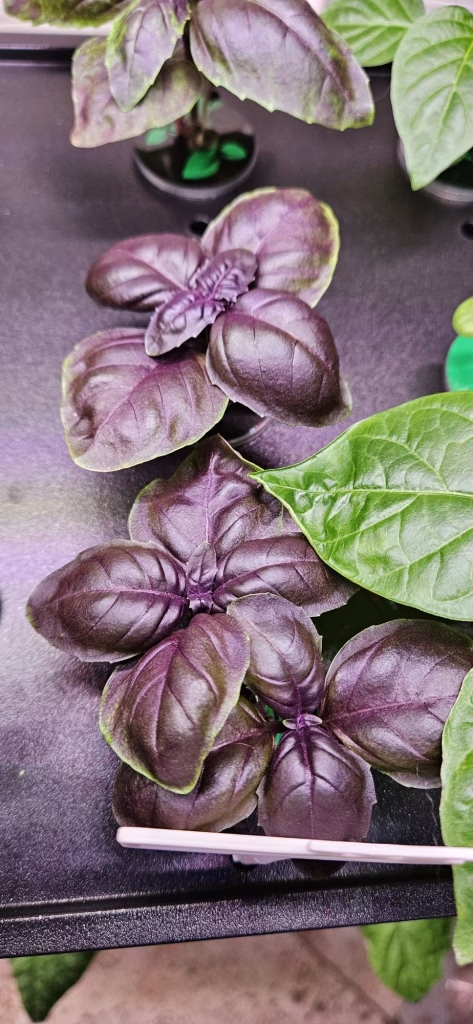
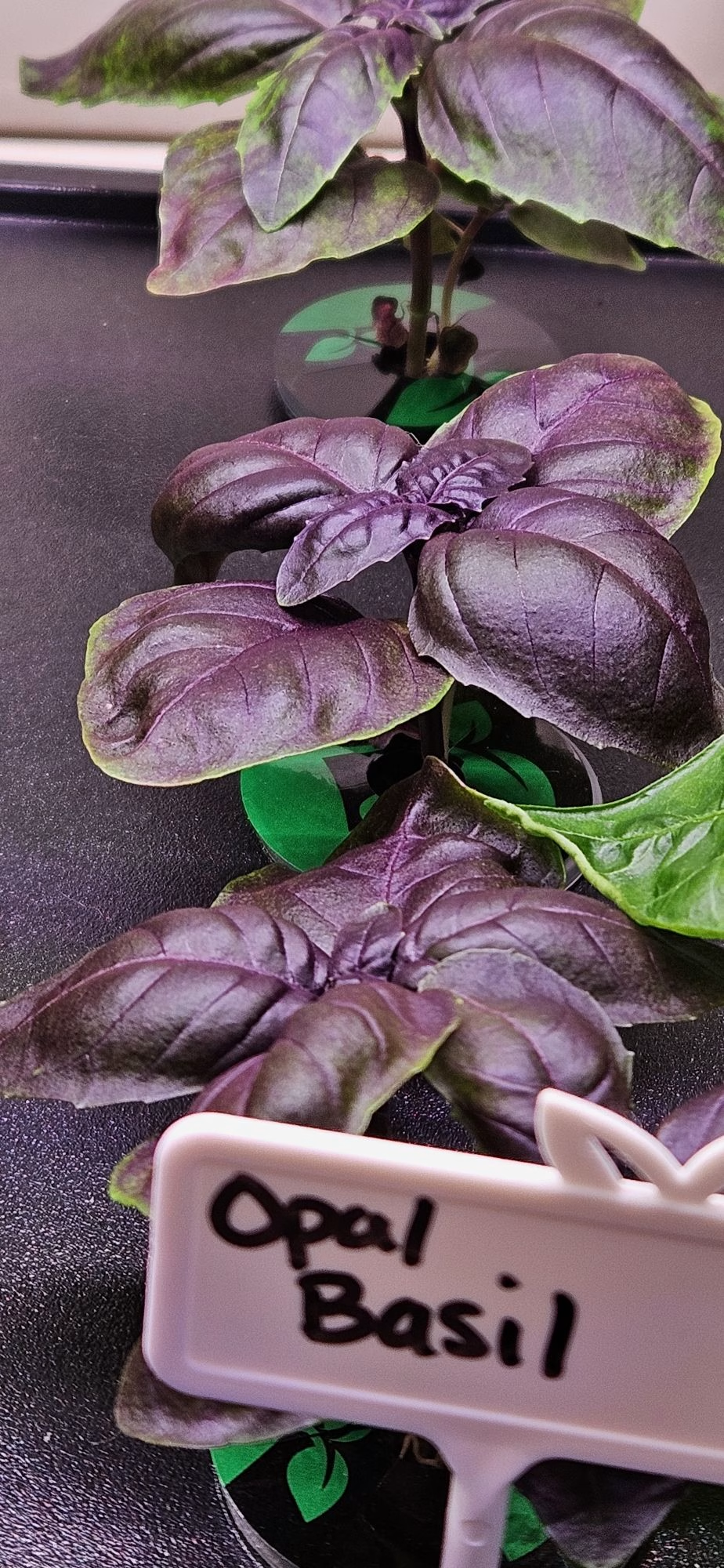
One of the most visually apparent consequences of tetraploidy is cellular enlargement. Tetraploid plants consistently produce larger cells than their diploid counterparts. In basil specifically, induced tetraploids demonstrate substantially larger leaves, taller and thicker stems, increased branching density, and more pronounced trichomes compared to diploid controls.
This cellular enlargement occurs because cells in tetraploid organisms contain approximately twice the DNA content of diploid cells. During mitosis and cell division, this doubled DNA content is distributed among daughter cells, meaning each resulting cell receives more genetic material. This increased nuclear DNA content correlates with increased cell volume during the cell cycle progression phases before cell division.
Larger Cell Size Means Enhanced Nutrient Uptake Efficiency
In hydroponic systems, where nutrients are delivered directly to the root zone in highly soluble form, the enhanced cellular dimensions of tetraploid roots confer significant advantages. Research on tetraploid plants consistently demonstrates increased root biomass and more extensive root systems compared to diploid relatives when grown in hydroponic conditions.
The stele, the central conducting tissue of roots, shows significantly larger cross-sectional area in tetraploid roots. The xylem and phloem vessels, which transport water and nutrients upward and sugars downward, increase in diameter. Larger vessel diameter enhances hydraulic conductance, allowing more rapid water and nutrient transport throughout the plant. Total stele area in tetraploid roots showed strong positive correlation with both nitrogen and phosphorus uptake.
Stomates, the pores through which plants exchange gases with the atmosphere, show dramatically different characteristics between diploid and tetraploid basil. While tetraploid basil stomata are substantially larger, they are less densely distributed on leaf surfaces. Pollen diameter in tetraploid basil increases approximately 55 percent compared to diploids, and guard cell lengths increase from approximately 16.21 micrometers in diploids to 25.72 micrometers in tetraploid plants.
The larger guard cell size in tetraploids leads to lower stomatal conductance and decreased transpiration rate despite increased individual stomatal size. This paradoxical effect occurs because stomatal density (number per unit area) decreases more substantially than individual stomatal size increases. The net result is more efficient photosynthetic water-use, meaning plants extract more photosynthetic advantage per unit of water transpired.
The Trichome Effect: How Tetraploid Basil Produces Superior Aromatic Compounds
Basil’s distinctive aroma depends critically on essential oil production in specialized glandular structures called trichomes. These microscopic hairs on leaf surfaces are responsible for synthesizing and storing the volatile compounds that define basil’s chemical character.
Tetraploid basil demonstrates dramatically enlarged trichomes compared to diploid varieties. Analysis of tetraploid lemon balm, which shares similar trichome architecture with basil, revealed that tetraploid plants produced a 75 percent increase in average essential oil yield specifically attributable to significantly larger peltate trichomes (the specialized secretory trichomes responsible for oil production).
The diameter of oil-secreting glands in tetraploid plants increased from approximately 20.85 micrometers in diploids to 30.24 micrometers in tetraploid populations. This size increase is not merely cosmetic; it represents substantially greater physical volume for essential oil accumulation and storage. The increased biosynthetic capacity translates into higher concentrations of key aromatic compounds.
Research on essential oil composition in tetraploid versus diploid plants revealed that while certain components remained consistent, major aroma compounds increased proportionally. In lemon balm, geranial increased by 11.06 percent and neral increased by 9.49 percent in tetraploid plants compared to diploid controls. In basil, the genes encoding eugenol and methyl chavicol biosynthesis exist in multiple homeologous copies whose expression patterns are optimized through polyploidy-driven regulatory divergence.
For home hydroponic growers, this means that tetraploid basil varieties produce more concentrated aromatics per unit of leaf tissue, translating into more intensely flavored leaves suitable for culinary use. The enhanced trichome size also provides larger surface area for essential oil volatile loss, potentially offering more intense aromatic characteristics during harvest and storage.
Stress Tolerance and Hydroponic Resilience
Polyploid plants exhibit enhanced tolerance to diverse abiotic stresses including drought, salinity, and nutrient imbalance. Tetraploid plants consistently outperform diploid controls under water deficit conditions. When exposed to equivalent levels of polyethylene glycol-induced water stress, tetraploid fig cultivars maintained relative water content at 80 to 85 percent while diploid counterparts declined to 55 to 62 percent under identical conditions.
The enhanced stress tolerance in polyploids results from multiple coordinated mechanisms. Tetraploid plants show altered expression of stress-responsive gene networks, with upregulation of pathways controlling reactive oxygen species management, osmoprotectant accumulation, and cellular repair mechanisms. The greater number of homeologous gene copies enables tissue-specific partitioning of stress response genes, allowing simultaneous management of multiple stressors.
Under salt stress conditions, tetraploid rice hybrids exhibited significantly higher germination rates than diploid hybrids and their parents. Transcriptome analysis revealed substantially higher gene expression levels for genes involved in sugar metabolism and stress response pathways. This enhanced metabolic capacity appears to provide buffer capacity to manage the oxidative damage and ionic imbalance that accompany salinity stress.
In hydroponic systems, where environmental conditions can shift rapidly and plants cannot draw on soil buffering capacity, the enhanced stress tolerance of tetraploid plants provides significant practical advantages. Tetraploid plants show greater resilience when nutrient concentrations fluctuate, when dissolved oxygen levels vary, or when pH drifts from optimal ranges.
Heterosis and Hybrid Vigor in Polyploid Systems
The concept of heterosis or hybrid vigor explains why polyploid plants frequently outperform their diploid ancestors. In hybrids formed between genetically diverse parents, the offspring typically display superior growth vigor, increased biomass accumulation, and higher yields compared to either parent. This phenomenon occurs through multiple molecular mechanisms including nonadditive gene expression, where homologous genes from the two parents are expressed at different levels in the hybrid compared to parental levels.
In tetraploid plants, certain aspects of heterosis become permanently fixed. The presence of four gene copies creates complex regulatory networks where different homeologous copies contribute variably to cellular functions. This constitutive heterosis means that tetraploid plants begin life with certain inherent growth vigor advantages built into their genome.
The molecular basis for polyploidy-associated vigor includes altered expression of circadian clock genes that coordinate metabolic timing, enhanced expression of genes controlling starch and chlorophyll synthesis, and increased photosynthetic efficiency. Transcriptional networks controlling cell wall composition show systematic modifications that create more digestible, more expansive cell walls in polyploid tissues.
Gene Expression Dominance and Expression Level Dominance
In tetraploid basil, not all gene copies contribute equally to cellular functions. Expression level dominance describes the phenomenon where homeolog expression patterns resemble one parental genome more closely than the other, or where one homeolog copy produces substantially more transcript than expected from gene copy number.
Research on gene expression in various polyploid plants has identified several patterns. Some genes show nearly balanced expression across all homeolog copies. Others show strong biased expression toward specific homeologs. Still others exhibit tissue-specific bias where different homeologs predominate in different tissues or developmental stages.
Importantly, genes involved in primary metabolism (basic cellular functions required for survival) show more balanced expression across homeologs, while genes involved in secondary metabolism (specialized functions like essential oil production) often show strong expression biases. This pattern suggests that polyploids maintain functional robustness for essential processes while allowing specialized metabolic functions to become finely tuned through regulatory divergence.
Practical Implications for Home Hydroponic Growers
Understanding tetraploid basil’s genetic characteristics translates into concrete growing advantages:
Nutrient uptake efficiency: The larger stele area and enhanced root anatomy in tetraploid basil means these plants can absorb nutrients more efficiently from hydroponic solutions. Consider using slightly lower nutrient concentrations than standard recommendations, as tetraploid basil may extract nutrients with greater efficiency, potentially reducing nutrient waste and expense.
Enhanced essential oil production: Tetraploid basil varieties offer superior aromatic intensity, producing more concentrated essential oils per unit leaf mass. This higher essential oil content translates directly into superior flavor for culinary applications and more efficient preservation of aroma during drying or freezing.
Stress resilience: Tetraploid basil shows enhanced tolerance to pH fluctuations, nutrient concentration variations, and dissolved oxygen fluctuations common in home hydroponic systems. This inherent stress tolerance reduces the impact of occasional system maintenance lapses or environmental variations.
Optimal hydroponic conditions for basil: Maintain pH between 5.5 and 6.5 with electrical conductivity between 1.0 and 1.6 mS/cm (700 to 1,120 PPM). Tetraploid basil maintains productivity across this full range, while diploid varieties show more sensitivity to deviations.
Harvest timing strategy: The larger trichomes on tetraploid basil accumulate essential oils more substantially before reaching saturation. Consider harvesting when the first leaves attain full expansion to capture maximum aromatic potential before oils experience atmospheric volatilization losses.
Epigenetic Inheritance and Long-Term Plant Performance
A profound aspect of tetraploid plant genetics involves epigenetic inheritance. Unlike genetic mutations that permanently alter DNA sequence, epigenetic modifications (principally DNA methylation and histone modifications) can be dynamically adjusted in response to environmental conditions while still being heritable through cell division and even multiple plant generations.
In tetraploid plants, the expanded epigenetic landscape created by quadruple genome duplication provides enhanced flexibility for environmental responsiveness. Genes can be silenced or activated through epigenetic mechanisms rather than permanent genetic changes, allowing rapid adaptation to changing conditions while maintaining genetic stability across generations.
For hydroponic basil, this means plants grown under optimized hydroponic conditions experience different epigenetic programming than plants grown under suboptimal conditions. Seeds saved from high-performance hydroponic basil plants may show epigenetic legacy effects, with offspring demonstrating improved nutrient uptake efficiency and stress tolerance compared to plants grown from seeds descended from plants cultivated in suboptimal environments.
The Bottom Line: Genetic Complexity Creates Practical Growing Advantages
Tetraploid basil represents a fascinating example of how polyploidy creates fundamental differences in plant physiology and biochemistry. The quadruple genome architecture, with its multiple gene copies, complex epigenetic regulation, and altered expression networks, generates plants that are demonstrably superior in hydroponic cultivation compared to diploid alternatives.
Understanding the tetraploid effect contextualizes why certain basil varieties perform exceptionally well in hydroponic systems. It explains the superior essential oil production, faster growth rates, and enhanced stress tolerance observed in commercial basil varieties optimized for controlled environment agriculture.
As a home hydroponic grower, capitalizing on tetraploid basil genetics means selecting varieties bred for commercial hydroponic production rather than traditional soil-based cultivation, maintaining precise nutrient delivery systems that supply nutrients at concentrations optimized for tetraploid uptake efficiency, and understanding that the superior performance is not accidental but results from millions of years of genomic evolution toward exactly the kind of optimized nutrient delivery that hydroponics provides.
The tetraploid effect transforms basil from a nice addition to your hydroponic garden into a high-performance crop where genetic architecture and cultivation method align perfectly for maximum productivity, aromatic intensity, and growing satisfaction.
SeedsNow has 16 varieties of Basil last I checked.
Tetraploid vs. Non-Tetraploid Basil Varieties
Based on comprehensive genetic research, most common culinary basil varieties are naturally tetraploid, while several specialty and traditional varieties exhibit different ploidy levels. Here is the breakdown:
Tetraploid Basil Varieties (4x = 52 chromosomes)
Most Ocimum basilicum (sweet basil) cultivars are tetraploid, including:
Genovese-Type Varieties:
- Genovese – Classic Italian basil with authentic flavor
- Genovese Gigante – Large-leaf Genovese variety
- Perrie – Fresh-cut Genovese-type used in genome sequencing studies
- Prospera® series (Italian Large Leaf DMR, Compact DMR, Active DMR) – Downy mildew resistant Genovese hybrids
- Aroma 2 – Fusarium-resistant Genovese type
- Noga Prospera® – Tall Genovese variety
- Mia Prospera® – Semi-compact Genovese
Other Sweet Basil Cultivars:
- Mammoth – Large-leaf variety with stronger flavor than Genovese
- Lettuce Leaf – Exceptionally large leaves sometimes used in salads
- Fino Verde – High-yielding variety with over 550g/plant fresh biomass
- Mrs. Burns – Lemon basil variety (Mrs. Burns Lemon)
- Anise basil – Anise-flavored sweet basil
- Clove basil – Clove-scented variety
- Licorice basil – Licorice-flavored cultivar
- Thai tömzsi and Thai hosszú – Thai basil varieties
- Vietnamese basil – Southeast Asian cultivar
- Nufar F1 – Fusarium-resistant variety
- Dolly basil – Compact variety
- Blue Spice – Cross between O. basilicum and O. americanum
- Opalescent – F5 hybrid between ‘Mrihani’ and ‘Opal’ basil
- Red Crimson – Red/purple variety
- Siam Queen – Thai basil variety
- Aromatto – Aromatic cultivar
- Osmin – Compact dark purple variety
- Dolce Fresca – Compact variety for containers
Purple Basil Varieties (O. basilicum var. purpurascens):
- Dark Opal – Traditional purple sweet basil
- Purple Opal – Purple variety
- Purple Ruffles – Ruffled purple leaves
- Persian basil – Purple variety
Diploid Basil Varieties (2x = 26 chromosomes)
Ocimum americanum (American/African Basil):
- Peruvian Purple Basil – Purple-leaved American basil
- Spicy Globe Basil – Compact globe-shaped variety
- Lime Basil – Lime-scented variety (some sources classify as O. americanum)
Ocimum sanctum (Holy Basil/Tulsi) – Variable ploidy:
- Green Holy Basil – Reported as diploid (2n=16, 32) in some studies
- Vana Holy Basil – Wild-type holy basil
- Kaprao/Krapao (Thai Holy Basil) – Red and white varieties
Note: Some O. sanctum varieties have been reported as tetraploid (2n=72) in different studies, indicating significant intraspecific variation.
Mixed or Uncertain Ploidy
Ocimum × citriodorum (Lemon Basil):
- Lemon Basil – Hybrid between tetraploid O. basilicum and diploid O. americanum, resulting in mixed ploidy
- Mrs. Burns Lemon – Lemon basil cultivar
- Sweet Dani – Fusarium-resistant lemon basil
Ocimum gratissimum (African Basil):
- African Basil – Reported as tetraploid (2n=40) with base number x=10
- African Blue Basil – Sterile hybrid variety
Ocimum kilimandscharicum (Camphor Basil):
- Camphor Basil – Contains high camphor content, ploidy varies
How to Identify Tetraploid Basil
Morphological Indicators:
- Larger pollen grains (52.9-73.6 μm vs. 43.9-63.5 μm in diploids)
- Larger stomata (guard cells 25.72 μm vs. 16.21 μm in diploids)
- Larger leaves and thicker stems
- More pronounced trichomes (oil glands)
- Increased biomass (tetraploid plants typically produce 30-50% more fresh weight)
Genetic Verification:
Modern genome sequencing confirms that approximately 80% of complete gene sequences in sweet basil exist in multi-copy states, with 86% being duplicated, definitively establishing tetraploidy.
Commercial Implications
Most commercial basil varieties are tetraploid because this genetic architecture provides:
- Enhanced essential oil production (up to 75% increase in some compounds)
- Superior stress tolerance and disease resistance
- Larger leaves and higher yields
- Better adaptation to hydroponic cultivation
Diploid varieties (primarily O. americanum types) are less common in commercial production but offer unique flavors and characteristics valued in traditional cuisines and specialty markets.
This genetic diversity within the Ocimum genus provides home growers and commercial producers with options tailored to specific growing conditions, flavor profiles, and cultivation systems.
Share this:

Discover more from Soil Free Harvest
Subscribe to get the latest posts sent to your email.