Hydroponic Ventilation and Airflow Basics: The Complete Guide for Home Growers
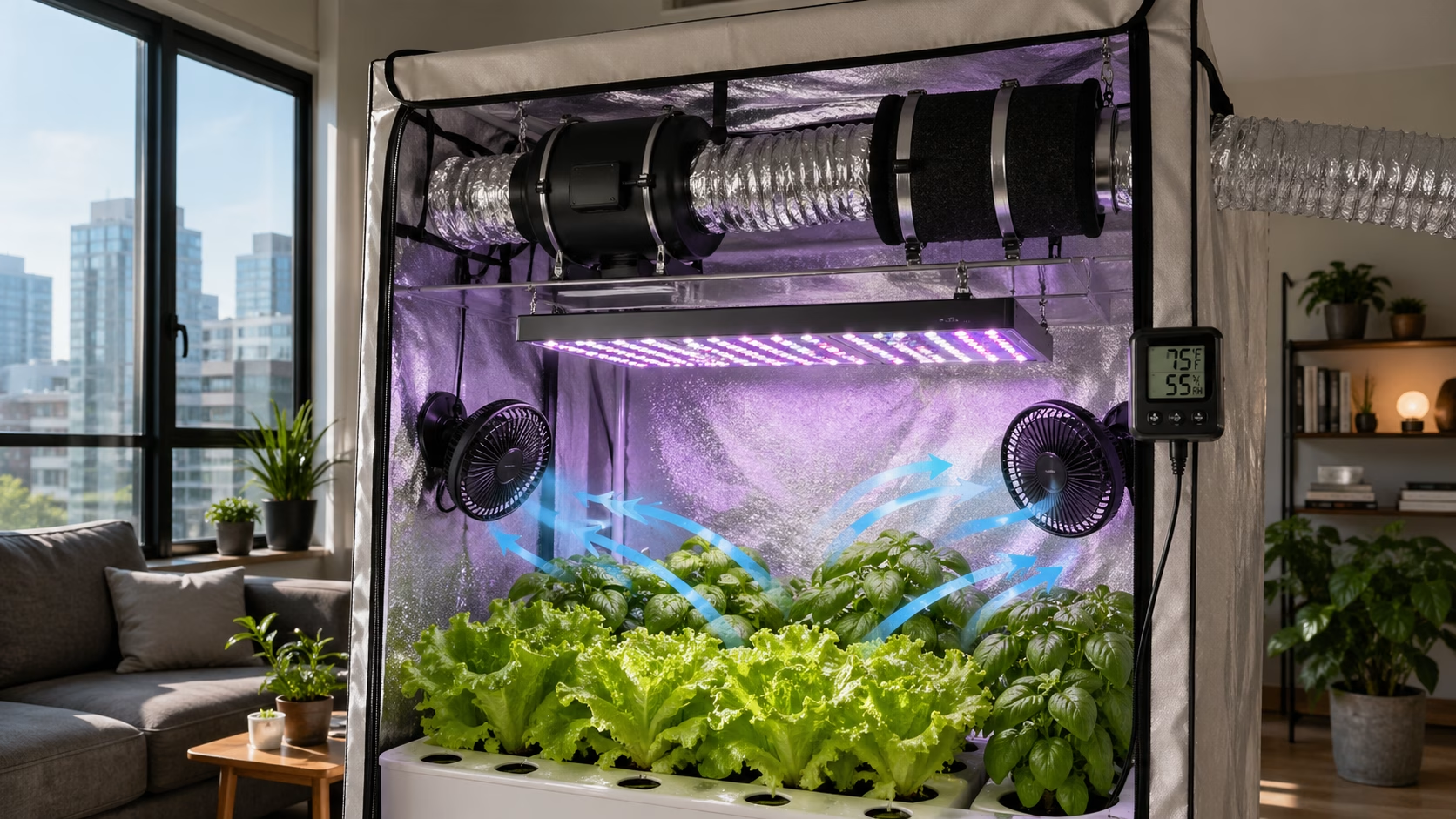
Hydroponic ventilation exchanges air in your grow space every 1-3 minutes to control temperature, humidity, CO2 levels, and prevent mold. Proper airflow uses exhaust fans for outgoing stale air, intake vents for fresh air, and oscillating fans for circulation inside the canopy. This keeps plants healthy in sealed environments like tents or rooms.
TL;DR: Calculate CFM by dividing grow space volume by 3, install exhaust at top with carbon filter, add clip fans for movement, and automate with controllers for 72-80°F days and 55-65% RH.
Affiliate Disclosure: This article contains affiliate links. If you purchase through these links, soilfreeharvest.com may earn a small commission at no extra cost to you.
What Is Hydroponic Ventilation?
Hydroponic ventilation manages air in soilless systems where plants lack natural soil airflow. It removes heat from lights, excess moisture from transpiration, depleted CO2, and odors while bringing in fresh air. Without it, temperatures spike above 85°F, humidity exceeds 70%, and pathogens thrive.
In my Phoenix setups, poor ventilation caused 20% yield drops from heat stress in summer. Now in Michigan’s cooler climate, I maintain steady 75°F with basic fans.
- Key roles: Temperature regulation (ideal 70-85°F), humidity control (40-65% RH), CO2 replenishment (400-1000 ppm), pest prevention.
- Temperature control → Optimizing Your Hydroponic Grow Room Environment: Temperature and Humidity Control].
Why Is Airflow Essential in Hydroponics?
Airflow strengthens stems by simulating wind, improves nutrient uptake via transpiration, and prevents microclimates. Stagnant air leads to powdery mildew or bud rot, especially in dense canopies like SCROG.
Beginners see 30-50% faster growth with good circulation. It suits all systems: DWC needs it for root oxygenation, NFT for channel flow.
- Benefits: Even CO2 distribution boosts photosynthesis by 20-30%; reduces pest risks by drying leaf surfaces.
- DWC systems → Deep Water Culture (DWC) Hydroponics: The Complete Beginner’s Guide to Growing Faster
Benefits of Proper Hydroponic Ventilation
Strong ventilation cuts energy costs long-term by stabilizing environments. Plants transpire efficiently, leading to 25% higher yields in leafy greens like lettuce.
It handles hot lights (LEDs produce less heat than HPS) and high-humidity veg stages. In apartments, quiet EC fans keep noise under 50dB.
| Benefit | Impact on Yields | Best For |
|---|---|---|
| Temp Control | Prevents stress above 85°F | Hot climates like Arizona |
| Humidity Mgmt | Keeps RH 40-65% to avoid mold | Flowering stage |
| CO2 Refresh | 400-1200 ppm for growth | Veg/flower |
| Odor Control | Carbon filters scrub smells | Urban apartments |
LED grow lights → How Many Watts of Grow Light Do You Need for Hydroponics? (Simple Canopy Sizing Guide)
Drawbacks of Hydroponic Ventilation Systems
High upfront costs: $100-400 for fans and ducting in a 4×4 tent. Electricity adds $10-30/month for 24/7 runs.
Noise from cheap fans disturbs apartments; poor installs cause leaks or imbalances. Over-ventilation dries plants too fast.
- Cons: Maintenance (clean filters quarterly), power outages stop cooling, initial learning curve for CFM sizing.
- Hydroponic costs → How Much Does It Cost to Start a Hydroponic Garden?
Required Equipment for Hydroponic Ventilation
Core gear includes inline exhaust fans (EC motors preferred), carbon filters, ducting, clip-on oscillators, and controllers. Start with 4-6″ fans for small tents.
Humidity probes automate speeds. For vertical systems, add horizontal fans.
- Exhaust fan: 200-400 CFM for 4x4x6′ tent
- Oscillation fans: 2-3 per tent for canopy breeze
- Ducting: Insulated 6-8″ flexible
- Growing media → Hydroponics Growing Mediums: The Complete Guide to Types, Selection, and Management
How to Calculate CFM for Your Hydroponic Setup
Measure room volume: length x width x height in feet. Divide by 1-3 for air exchanges per minute; add 20-50% for filters/ducts.
Example: 4x4x6.5′ tent = 104 cu ft. 104 / 3 = 35 CFM base; with 50% = 52 CFM minimum.
In hot Phoenix summers, I upsized by 30% to handle 100°F intake air.
Formula: CFM = (L x W x H) / minutes per exchange + resistance factor.
How-To: Setting Up Hydroponic Ventilation Step-by-Step
Build a Basic Ventilation System for a 4×4 Grow Tent
Description: Install exhaust, intake, and circulation for optimal airflow in 30-60 minutes. Maintains 72-80°F and 50-60% RH for hydroponic greens and herbs.
Materials/Tools:
- Inline duct fan (200-400 CFM, EC motor)
- VivoSun is one of my favorite brands and this is an affordable option: VIVOSUN 6 Inch Inline Duct Fan 240 CFM Check availability through partnered retailers for up‑to‑date pricing.
- Carbon filter (matching size)
- 6-8″ insulated ducting (10-15 ft)
- 2 oscillating clip fans
- Speed controller or thermostat
- Duct clamps, hanging straps, duct tape
- Drill, scissors, ladder
- Calculate and Select Fan Size. Measure tent volume and compute CFM as volume / 3 + 30%. Buy EC fan for quiet variable speed; pair with matching carbon filter.
- Mount Carbon Filter and Fan Inside Tent. Hang from top bars using straps. Connect filter to fan with short duct; arrow on fan points to exhaust port.
- Attach Ducting to Exhaust Port. Run insulated duct from fan to top tent flap or window seal. Minimize bends; clamp securely. Exhaust outside or to attic.
- Set Up Passive Intake. Cut or open bottom vents opposite exhaust (20-30% of exhaust area). Add filtered intake fan if negative pressure too strong.
- Install Oscillating Fans. Clip 1-2 fans to poles at canopy level. Angle for gentle breeze across plants; avoid direct blasts on roots.
- Wire Controller and Test. Connect fan to speed/thermostat controller with temp/RH probe. Run at 50% speed; check for leaks, balance pressure.
- Monitor and Adjust. Use hygrometer for 55-65% RH veg. Increase speed if over 80°F; clean pre-filters monthly.
Tips: Negative pressure (intake < exhaust) prevents leaks. In dry Arizona, add humidifier.
Nutrients → Guide to Hydroponic Nutrients: Types, Roles, Application, and Optimization
Hydroponic Ventilation Maintenance Tips
Clean pre-filters biweekly to maintain CFM; replace carbon yearly. Check ducts for tears quarterly.
Lubricate fan motors annually. In humid Michigan winters, dry ducts to prevent mold.
- Daily: Check temps/RH.
- Weekly: Wipe fans.
- Buffer plants → Hydroponic Buffer Plants: How “Bodyguard” Plants Protect and Stabilize Your System
Troubleshooting Hydroponic Ventilation Problems
Too Hot? Clean clogged filter (drops CFM 20-40%); shorten ducts. Add larger fan.
High Humidity? Boost exhaust speed; ensure intake dry air.
Noisy? Switch to EC; run at 60%.
Pests/Mold? Improve circulation; space plants 8-12″ for kale.
| Issue | Cause | Fix |
|---|---|---|
| Overheating | Clogged filter | Clean/replace |
| Mold | Stagnant air | Add oscillators |
| Low Yields | Poor CO2 | Faster exchanges |
| Odor Leaks | No negative pressure | Adjust vents |
Best Scenarios for Hydroponic Ventilation
Ideal for apartments with tents: Compact, odor-free. Suits lettuce, basil, kale (shallow roots, high transpiration).
Vertical farms need laminar flow fans. Hot/dry climates like Phoenix require 50% extra CFM.
- Small spaces: 2×2 tents with 4″ fans.
- Advanced: CO2-enriched rooms at 1200 ppm.
- Plant guide → What Can You Grow in Hydroponics? 25+ Crops for Beginners to Advanced Growers
FAQ
How much does hydroponic ventilation cost for beginners?
Basic 4×4 setup runs $150-300: $100 fan/filter combo, $30 ducting, $20 clips. Monthly electric: $10-20 at 50W. Add controller for $50 automation.
Is hydroponic ventilation hard to set up?
Not for intermediates; 30-60 minutes with tools. Beginners follow CFM calc and steps. Test pressure first to avoid leaks.
What are common ventilation mistakes in hydroponics?
Undersized fans cause heat spikes; no circulation leads to mold. Skip carbon in apartments for odors.
How often to replace hydroponic carbon filters?
Every 12-18 months in home grows; sooner if heavy odors. Clean pre-filter monthly to extend life.
Can ventilation prevent root rot in DWC?
Yes, by lowering humidity and temps below 75°F. Combine with air stones for 6-8 ppm DO.
What’s the best fan type for quiet hydroponic tents?
EC inline fans run silent at 40-50dB variable speed. Avoid cheap AC models.
Does ventilation affect hydroponic yields?
Absolutely: Proper airflow boosts 20-30% via better CO2 and transpiration. Poor setup halves lettuce heads.
How to ventilate vertical hydroponic systems?
Use horizontal fans for laminar flow; exhaust top, intake bottom. Space plants to avoid wet spots.
What CFM for a 2x4x6 tent?
Volume 48 cu ft / 3 = 16 base +30% = 21 CFM. Use 4″ fan.
Ventilation risks in power outages?
Heat builds fast; use backups or passive vents. Insulate tents.
Author Note
I’ve run hydroponic systems for 8 years, from Phoenix’s scorching 110°F summers to Michigan’s humid seasons, focusing on compact indoor/urban grows. Ventilation saved my yields in Arizona heat domes. Apartment hobbyists get my simplest setups for reliable harvests.
Share this:

Discover more from Soil Free Harvest
Subscribe to get the latest posts sent to your email.






One Comment