The Water Cycle Within: Understanding Evapotranspiration in Closed Hydroponic Systems
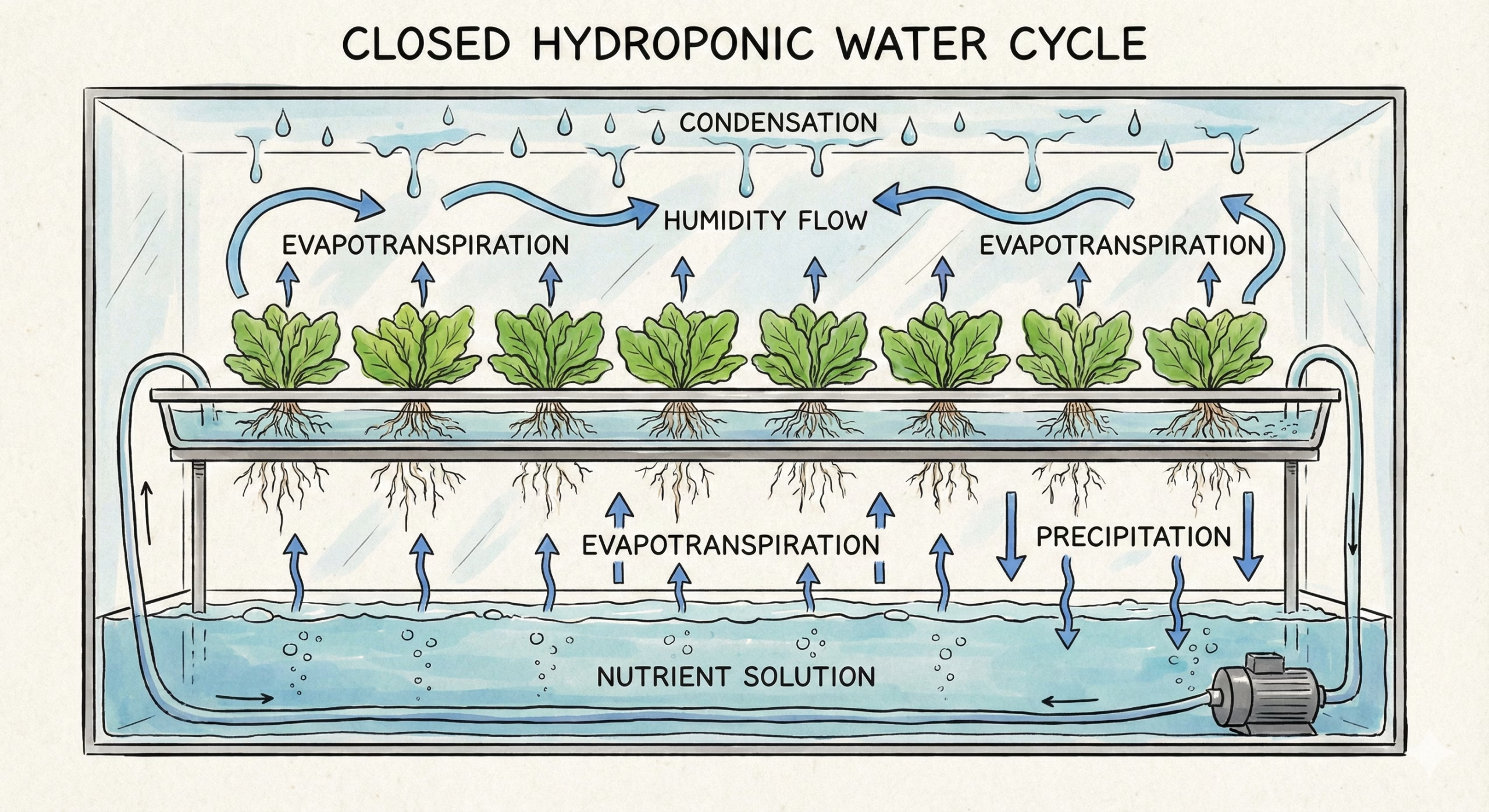
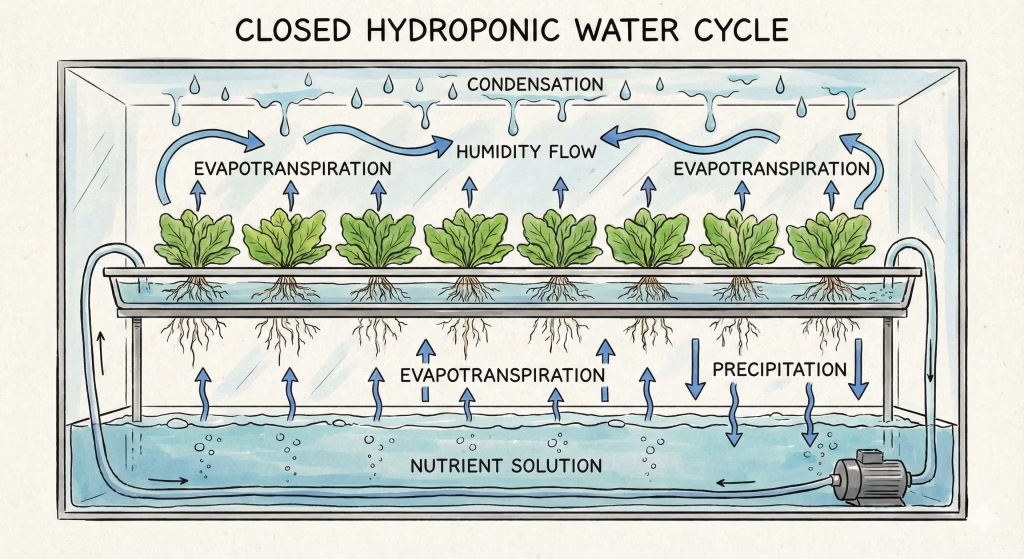
Evapotranspiration in closed hydroponic systems represents one of the most overlooked yet critical aspects of modern agricultural technology. While traditional soil-based farming relies on visible precipitation and runoff to manage water, closed hydroponic systems operate within a sealed ecosystem where water movement follows entirely different physical and biological principles. Understanding evapotranspiration (ET) in these systems is essential for growers who want to optimize yields, reduce resource waste, and maintain healthy plants in controlled environments.
What Is Evapotranspiration and Why It Matters in Hydroponics
Evapotranspiration refers to the total water loss from both evaporation and transpiration occurring through plant surfaces and growing media. In simpler terms, it represents all the water that leaves your hydroponic system in the form of water vapor. This process is not merely a side effect of plant growth; it is fundamental to how nutrients move through plants, how energy distributes across the growing environment, and how water balance maintains itself within closed-loop systems.
The distinction between evaporation and transpiration matters in technical discussions. Evaporation occurs from exposed water surfaces in your reservoir, from moist growing media, and from any standing water in the system. Transpiration, by contrast, is the physiological loss of water from plant leaves through specialized pores called stomata. Together, these two processes create the total evapotranspiration demand that affects your nutrient solution concentration, humidity levels, and overall system stability.
In closed hydroponic systems specifically, approximately 99 percent of the water absorbed by plants is lost through transpiration, while only 1 percent is used for actual metabolic functions within plant tissues. This remarkable ratio underscores just how dominant transpiration is in the water balance equation. The remaining 1 percent serves critical functions including nutrient transport, cell turgor maintenance, and support for photosynthesis, but the vast majority of absorbed water exits through the leaves.
The Physics Behind Evapotranspiration in Sealed Systems
The mechanics of evapotranspiration in closed hydroponic systems differ significantly from outdoor agriculture or even conventional greenhouses. In sealed systems, the water cycle becomes self-contained, creating feedback loops that directly impact plant health and system stability.
Water Balance Fundamentals
The fundamental water balance equation that governs closed hydroponic systems can be expressed as:
Water Input = Water Output + Change in Storage
In closed-loop systems, water input typically comes only from the nutrient solution in the reservoir. Water output occurs through evapotranspiration and minor system leaks. The change in storage represents water held in the growing media and the nutrient solution itself. This equation demonstrates that any water lost through evapotranspiration must be compensated by either adding fresh water or accepting declining solution levels and rising nutrient concentrations.
Understanding this balance is crucial because neglecting it creates multiple problems. As water evaporates from the system, the dissolved salts and nutrients become more concentrated. If left unmanaged, this rising electrical conductivity (EC) eventually reaches toxic levels that inhibit nutrient absorption and damage plant roots. Conversely, adding too much water to compensate for ET can dilute nutrients and disrupt the carefully calibrated nutrient ratios your plants require.
Vapor Pressure Deficit: The Hidden Driver
Vapor pressure deficit (VPD) is perhaps the single most important concept for understanding evapotranspiration dynamics in closed systems. VPD measures the difference between the amount of water vapor present in the air and the maximum amount that air can hold at a specific temperature.
When air is warm, it can hold more water vapor. When air is humid, less room remains for additional vapor. VPD quantifies this relationship using the unit kiloPascals (kPa). A high VPD indicates dry, warm air that aggressively pulls water from plants and surfaces. A low VPD indicates cool, humid air where transpiration slows and condensation becomes likely.
The relationship between VPD and transpiration is not linear. As VPD increases, transpiration increases, but plants simultaneously respond by partially closing their stomata to conserve water. This stomatal response represents an evolutionary adaptation to drought stress. In closed systems where plants cannot access additional water reserves, high VPD creates a physiological stress response that actually reduces transpiration despite the air’s capacity to accept more vapor.
For most hydroponic crops, an optimal VPD falls between 0.8 and 1.2 kPa. Below 0.6 kPa, relative humidity becomes so high that transpiration nearly halts, and condensation risks increase dramatically. Above 1.6 kPa, plants experience water stress even when nutrient solution is abundant, because they cannot transpire fast enough to maintain cellular turgor and support nutrient transport.
In a sealed system where humidity concentrations are high relative to outdoor environments, VPD management becomes the primary tool for controlling evapotranspiration rates.
The Role of Plant Stomata in Water Loss
Plant stomata are the microscopic pores on leaf surfaces through which most transpiration occurs. These openings make up only about 3 percent of the leaf surface area, yet they account for the vast majority of water loss from plants. Understanding stomatal behavior is essential for grasping how closed systems regulate water movement.
Stomata open and close in response to multiple environmental signals. Light triggers stomatal opening during the day to allow carbon dioxide entry for photosynthesis. Increasing temperature, decreasing humidity (rising VPD), and stress conditions trigger partial stomatal closure. Water stress is sensed by roots, and chemical signals called abscisic acid travel upward to guard cells, causing stomata to close and reduce water loss.
The degree to which stomata remain open is measured as stomatal conductance, expressed in millimoles of water per square meter per second. Higher conductance means stomata are more open and transpiration rates are higher. Stomatal conductance responds dynamically to VPD, with most plants reducing conductance as VPD increases above their species-specific threshold.
In closed hydroponic systems, this stomatal behavior creates an interesting dynamic. If your sealed environment becomes too humid (low VPD), stomata open fully because the plant senses no water stress. This paradoxically can increase transpiration even though the air is already saturated and cannot accept more vapor. Excess vapor condenses on cool surfaces, creating conditions favorable for fungal diseases like botrytis and powdery mildew.
Conversely, if your sealed environment becomes too dry (high VPD), stomata close partially to conserve water, reducing both transpiration and carbon dioxide uptake. This cuts photosynthesis rates, slowing growth and reducing yields. Finding the optimal VPD range is therefore critical for maintaining plant health while managing your hydroponic water cycle effectively.
Quantifying Evapotranspiration: From Theory to Practice
Predicting and measuring evapotranspiration in closed hydroponic systems requires understanding several mathematical frameworks and practical measurement techniques.
The Penman-Monteith Method and Its Application
The Penman-Monteith equation represents the gold standard for estimating reference evapotranspiration across diverse environments. This equation combines energy balance and mass transfer principles to calculate water loss as a function of net radiation, air temperature, humidity, wind speed, and atmospheric pressure.
While the complete Penman-Monteith equation involves numerous parameters and is typically applied to outdoor agricultural settings, simplified versions adapted for indoor agriculture have emerged. Research institutions now customize crop-specific models that account for the unique characteristics of closed environments where wind speed is negligible, radiation comes from artificial lights rather than the sun, and temperature fluctuations are minimal and controlled.
The adapted approach uses a reference evapotranspiration value (ETo) specific to your indoor conditions, then multiplies this by a crop coefficient (Kc) that accounts for the specific plant species and its growth stage:
ETc = ETo × Kc
Crop coefficients vary from 0.3 to 1.2 depending on the plant. Early-stage seedlings have low coefficients around 0.3 to 0.4 because minimal leaf area exists for transpiration. Fully mature plants with extensive foliage reach coefficients of 1.0 to 1.2. Some crops like lettuce maintain coefficients near 1.0 throughout their production cycle, while others like tomatoes show coefficients rising from 0.7 at early stages to 1.05 at full maturity.
Measuring actual ET in research settings often uses lysimeters—specialized tanks that sit on load cells to continuously track weight changes. As plants transpire and water evaporates, the system weight decreases proportionally. By monitoring these weight changes in real time and accounting for any water additions, researchers can calculate precise evapotranspiration rates specific to crop species, growth stage, and environmental conditions.
In commercial closed systems, practical estimation relies more on water level monitoring combined with nutrient concentration tracking. As solution levels drop and EC rises, growers can infer that evapotranspiration has occurred and adjust their water management accordingly.
Energy Balance in Sealed Growing Environments
Evapotranspiration represents the largest energy consumer in a closed hydroponic system’s energy balance. The energy balance equation that governs all thermal dynamics states:
Net Radiation = Latent Heat Flux + Sensible Heat Flux + Soil (or Growing Media) Heat Flux
In this equation, latent heat flux (LE) represents the energy consumed by evaporation and transpiration. Sensible heat flux (H) represents temperature changes in the air and physical surfaces. Growing media heat flux (G) represents heat stored in or released from the growing medium itself.
In indoor hydroponic systems where artificial lights provide net radiation and environmental controls manage temperature, the energy that lights deliver must go somewhere. When plants transpire actively, much of that energy goes into the latent heat flux that drives water evaporation from leaf surfaces. This evaporation cools the plant and surrounding air through a process called evaporative cooling.
When transpiration rates drop (due to high VPD causing stomatal closure or low light levels), more energy manifests as sensible heat. Air temperature rises, and leaves heat up. This temperature increase further elevates VPD, creating a feedback loop where rising temperature and declining transpiration reinforce each other.
Understanding these relationships allows growers to predict how changes to one environmental parameter will cascade through the system. Increasing light intensity increases net radiation but also increases ET demands. Running fans to reduce air temperature may paradoxically reduce ET by lowering VPD, depending on whether humidity also rises. This complexity is why careful monitoring and gradual adjustments prove more effective than dramatic system changes.
Condensation: The Inverse Problem in Sealed Systems
In outdoor agriculture, condensation is rarely problematic. In closed hydroponic systems, excessive condensation represents a serious challenge with multiple negative consequences.
Formation and Risk Mechanisms
Condensation occurs when moist air contacts a surface cooler than the dew point temperature. In closed systems, this typically happens when warm, humid air from around the plants encounters cooler surfaces such as reservoir covers, exposed piping, greenhouse roofs, or external walls.
The dew point temperature is the threshold where air becomes completely saturated with water vapor. At this point, any additional cooling causes water vapor to condense into liquid droplets. Interestingly, the relationship between temperature and dew point is steep. Research on space-based hydroponic systems found that condensation would form when temperature differentials were as small as 0.1 degrees Celsius in systems operating near 100 percent relative humidity.
Condensation creates problems beyond mere water droplets. The film of liquid water covering leaves and surfaces becomes a breeding ground for fungal spores and bacterial pathogens. Botrytis (gray mold), powdery mildew, and bacterial leaf spot diseases thrive in humid conditions where standing water covers plant surfaces. Excessive condensation can quickly turn a profitable growing cycle into a catastrophic crop loss.
Additionally, condensation disrupts the transpiration stream. Plants recognize water on their leaf surfaces and, in some cases, close stomata because they no longer sense water stress. This paradoxically can increase transpiration from exposed surfaces while reducing it from the plant itself, creating unstable growing conditions.
Humidity Management and Evapotranspiration Control
The most effective tool for managing condensation in closed systems is precise humidity control, which is fundamentally about managing evapotranspiration rates.
Ideal relative humidity in commercial closed hydroponic systems ranges from 50 to 60 percent. This range maintains sufficient VPD to drive healthy transpiration without creating excessive evaporative demand that stresses plants. It also keeps surfaces warm enough that cooler-than-dew-point temperatures are unlikely under normal operating conditions.
Achieving and maintaining this humidity requires balancing several factors. Air circulation through fans prevents localized pockets of stagnant, high-humidity air. Ventilation systems exchange indoor air with outside air or conditioned air from dehumidifiers. Temperature management keeps all surfaces above the dew point by maintaining consistent growing environment temperatures. Some advanced systems use specialized anti-condensation coatings on roof materials to reduce surface area where condensation can nucleate.
However, the most fundamental control method remains evapotranspiration management. By maintaining optimal growing conditions that support healthy transpiration, growers naturally keep humidity from rising to dangerous levels. Conversely, attempts to suppress evapotranspiration by reducing temperature or humidity often backfire by raising relative humidity so high that condensation becomes inevitable.
Factors Influencing Evapotranspiration Rates in Closed Systems
Light and Radiation
Light represents the primary energy source driving evapotranspiration in closed hydroponic systems. During photoperiods when grow lights operate, plants transpire actively. Outside of illuminated periods, transpiration drops dramatically, though it never reaches zero.
The intensity and duration of light exposure directly correlate with ET rates. Doubling light intensity from 300 to 600 micromoles per square meter per second increases reference evapotranspiration by approximately 50 to 70 percent in most crop species. Extending the photoperiod from 14 to 18 hours increases total daily ET proportionally.
Light spectrum also influences ET, though less dramatically than intensity. Red and blue wavelengths that plants absorb most efficiently for photosynthesis also tend to promote more open stomatal conductance than light in other spectrum regions. LED grow lights engineered for specific crop types can modulate ET rates by optimizing the light spectrum for each crop’s stomatal response characteristics.
Understanding these relationships allows growers to use light management as a tool for evapotranspiration control. Reducing ET during high-risk condensation periods can be achieved by temporarily reducing light intensity or shortening the photoperiod, though this has the trade-off of reducing photosynthesis and slowing growth.
Temperature Dynamics
Temperature affects evapotranspiration through multiple mechanisms. Warmer air increases the saturation vapor pressure, raising the atmosphere’s capacity to accept water vapor. This increases evaporative demand even if relative humidity remains constant. Additionally, warmer temperatures increase the metabolic activity of plants, promoting more open stomata and higher transpiration rates.
The relationship between temperature and ET is not linear. Increasing temperatures from 15 to 25 degrees Celsius increases ET more dramatically than increasing temperatures from 25 to 35 degrees Celsius. At very high temperatures (above 35 degrees Celsius), plants often close stomata to prevent excessive water loss, causing ET to plateau or even decline despite rising evaporative demand.
In closed systems, day-night temperature differential management offers a powerful tool. Maintaining higher temperatures during the photoperiod when ET demands are high and plants benefit from active transpiration, then reducing temperatures during dark periods, optimizes the energy balance. Overnight temperature reduction also helps prevent condensation formation.
Relative Humidity and Its Dynamics
Relative humidity represents the percentage of water vapor currently in the air compared to the maximum amount that air can hold at that temperature. In closed systems, relative humidity directly reflects the balance between transpiration (which adds vapor to the air) and either ventilation (which removes humid air) or dehumidification (which condenses excess vapor).
Higher relative humidity reduces the evaporative demand from the atmosphere, slowing transpiration rates. This creates a self-limiting feedback. As plants transpire and add moisture to the air, humidity rises, reducing transpiration. This can be beneficial for preventing excessive water stress but problematic if humidity becomes too high and promotes condensation.
Optimal management typically involves maintaining relative humidity between 50 and 70 percent during photoperiods and allowing it to drop slightly to 45 to 55 percent during dark periods when condensation risk is higher.
Plant Development Stage and Leaf Area
As plants grow and develop more leaf area, their transpiration capacity increases proportionally. A seedling with only 10 centimeters squared of leaf area transpires far less than a mature plant with 1000 centimeters squared of leaf area, even under identical environmental conditions.
Crop coefficients reflect this reality by varying across growth stages. Young seedlings require less water per unit of solution volume because their transpiration demand is low. As plants mature and develop full canopy coverage, water requirements increase dramatically. Adjusting irrigation schedules and nutrient solution strengths based on growth stage prevents the overwatering and nutrient imbalance problems that occur when growers apply uniform water management across the entire production cycle.
Nutrient Solution Temperature
Cooler nutrient solutions hold more dissolved oxygen than warm solutions. This is critical because roots require adequate oxygen for aerobic respiration, the metabolic process that provides energy for nutrient absorption and water uptake. Maintaining nutrient solution temperatures between 18 and 22 degrees Celsius (65 to 72 degrees Fahrenheit) ensures optimal dissolved oxygen levels between 5 and 7 parts per million.
When nutrient solution temperatures rise above 22 degrees Celsius, dissolved oxygen declines precipitously. Even slight temperature increases can reduce oxygen availability enough to stress root respiration, reducing the plant’s capacity to absorb water and minerals. This creates a paradox: while higher water temperatures initially increase transpiration demand through higher VPD, they simultaneously reduce the plant’s ability to meet that demand through root oxygen limitation.
Additionally, warmer solutions promote the growth of harmful anaerobic bacteria and fungi that thrive in low-oxygen environments. Many growers now use water chillers or circulation through cooling coils to maintain solution temperatures in the optimal range, especially during warm seasons or under intense lighting.
Water Loss Quantification and System Losses
Research on closed hydroponic systems reveals that evapotranspiration losses typically account for about 5 to 10 percent of the total water cycled through the system per day. This means that in a 1000-liter system cycling water multiple times daily, 50 to 100 liters of water is permanently lost as vapor.
These losses increase predictably with environmental stress. During summer months or in warmer climates, evaporation rates rise 20 to 30 percent compared to cooler seasons. High-intensity lighting systems increase daily losses compared to moderate-intensity systems. Deep water culture systems (where roots are suspended in aerated water) show higher evaporation rates than systems using growing media because the large open water surface area increases direct evaporation beyond what occurs through plant transpiration.
Practical implications emerge from these numbers. In a thousand-plant commercial lettuce operation running a deep water culture system, losing 5 to 10 percent of solution daily means potentially 500 to 1000 liters of water evaporates or transpires each week. Over a production cycle, this accumulation significantly affects both water usage and nutrient solution composition.
System-Specific Evapotranspiration Characteristics
Deep Water Culture and Floating Raft Systems
In deep water culture (DWC) systems, plant roots suspend in aerated water. The large surface area of the water reservoir exposes significant liquid to air contact, promoting direct evaporation independent of plant transpiration. Research comparing hydroponic systems found that DWC’s water evaporation rates were higher in summer due to this exposed reservoir design.
Floating raft systems share similar characteristics. The air-water interface across the entire raft surface allows continuous evaporation. While these systems offer simplicity and excellent oxygen availability for roots, they accept higher evapotranspiration rates as a trade-off.
Nutrient Film Technique
The nutrient film technique (NFT) continuously circulates a thin film of nutrient solution across plant roots in sloped channels. Since the film is thin and plants cover most of the channel surface, direct evaporation is minimized. However, plants still transpire actively, and the technique’s efficiency means most water loss comes from transpiration rather than surface evaporation.
NFT systems require careful flow rate management because the thin film leaves no margin for error. Inadequate flow rates result in root sections receiving insufficient moisture, while excessive flow rates cause unnecessary recirculation losses and increased evapotranspiration from the fully wetted surfaces.
Media-Based and Ebb-and-Flow Systems
In media-based systems using growing media such as coir, perlite, or expanded clay pellets, water retention in the medium moderates direct evaporation. The growing media acts as a buffer, storing water and releasing it gradually to roots. This reduces the rate of total evapotranspiration compared to systems with exposed water surfaces.
Ebb-and-flow systems alternate between flooding and draining phases. During flood cycles, the medium is thoroughly wetted and some direct evaporation occurs. During drain cycles, air-filled porosity increases and root aeration improves. These systems typically show lower total evapotranspiration than continuously flooded systems.
Closed System Recirculation and Water Management Implications
The fundamental principle of closed-loop recirculation—that water is captured, filtered, and returned—creates unique challenges for managing evapotranspiration.
Nutrient Concentration Changes
As water evaporates and transpires from the system, dissolved minerals remain behind. A closed system losing 500 liters of water through evapotranspiration over one week will see its electrical conductivity increase as the nutrients become more concentrated in the remaining 9500 liters of solution.
This process creates several problems. First, many mineral salts have maximum solubility limits. As concentration rises, calcium and magnesium salts may precipitate out of solution, reducing availability to plants. Second, excessively high nutrient concentrations create osmotic stress where the nutrient solution becomes hypertonic relative to plant cell sap. Water moves out of plant cells into the solution through osmosis, causing wilting and cellular damage even though water is physically abundant.
Professional growers manage this through regular monitoring and adjustment. Electrical conductivity meters provide real-time feedback on solution concentration. When EC rises above target ranges, growers add fresh water to dilute the solution. This approach requires precise calculation to add only enough fresh water to restore target EC without overcompensating and swinging the other direction.
Some advanced systems incorporate real-time ET monitoring using weight sensors on the reservoir or individual plant containers. As ET occurs, system weight decreases. Automated controllers trigger water addition when weight drops by preset amounts, maintaining solution levels and EC within tight ranges.
Pathogen and Algae Growth Control
Water remaining in a closed system undergoes continuous recycling through plant roots and growing media. This provides excellent conditions for harmful microorganisms to proliferate if not actively managed.
Nutrient film systems and drip systems recirculate water multiple times daily. Each pass through the root zone exposes the solution to pathogens that may be present on root surfaces. In healthy systems, beneficial microorganisms suppress pathogen growth. In compromised systems, diseases like Pythium (root rot) can proliferate explosively and wipe out an entire crop within days.
The evapotranspiration process actually contributes indirectly to these risks. As water is lost through evapotranspiration and the solution volume decreases, the water remaining in the system becomes more concentrated, not just in nutrients but in any pathogens or dissolved metabolic byproducts. This increases pathogen pressure unless offset by water addition, filtration, or sterilization.
Optimization Strategies for Closed System Evapotranspiration
Monitoring and Measurement Protocols
Implementing reliable ET monitoring begins with simple practices. Daily solution level tracking provides baseline data on overall water loss. Comparing level changes across days reveals patterns tied to light, temperature, or humidity changes. Weekly electrical conductivity measurements track whether solution concentration is rising faster than expected, signaling either excessive evapotranspiration or inadequate water management.
Advanced operations employ multiple sensor types. Dissolved oxygen sensors (measuring in parts per million or milligrams per liter) track whether root respiration has adequate oxygen support. Temperature sensors at the reservoir and in the growing media reveal whether thermal management is maintaining optimal conditions. Humidity sensors (measuring in percent relative humidity) confirm that ventilation and temperature controls are maintaining the target range.
Environmental Control Optimization
Since evapotranspiration in closed systems is fundamentally driven by environmental conditions, optimizing those conditions directly optimizes ET management.
Maintaining growing environment temperatures between 22 and 25 degrees Celsius during photoperiods and 18 to 20 degrees Celsius during dark periods creates a day-night differential that drives beneficial temperature-based humidity management. Cooler night temperatures reduce humidity and condensation risk.
Operating exhaust fans and ventilation systems during peak ET periods (typically mid-morning through mid-afternoon) removes excess humidity before it builds to dangerous levels. Scheduling ventilation to coincide with the warmest, driest part of the day maximizes dehumidification efficiency.
Establishing proper air circulation patterns through strategically placed fans ensures that every plant encounters fresh air rather than stagnant pockets of high humidity.
Irrigation Scheduling Based on ET Predictions
Rather than watering on fixed schedules, advanced growers adjust irrigation timing based on predicted ET demands. During high-light periods when ET rates peak, more frequent irrigation keeps solution levels stable. During low-light periods or cooler seasons, irrigation frequency decreases.
Crop coefficient approaches allow growers to predict water requirements based on growth stage. Multiplying the relevant reference evapotranspiration by the stage-specific crop coefficient provides an estimate of daily water loss. Adding 10 to 15 percent to account for measurement uncertainty and system variations provides an irrigation target.
Conclusion: The Critical Role of Evapotranspiration Understanding
Evapotranspiration in closed hydroponic systems represents far more than a simple water-loss phenomenon. It is the central mechanism through which plants interact with their carefully controlled environments, the primary driver of energy balance within sealed growing spaces, and the fundamental process around which successful water and nutrient management must be built.
The physics and mechanics of evapotranspiration in these systems involve complex interactions between light, temperature, humidity, plant physiology, and system design. Water balance equations, vapor pressure deficit relationships, and energy balance principles all converge to create the conditions that determine whether plants thrive or struggle.
For hydroponic growers seeking to move beyond trial-and-error management toward data-driven optimization, understanding evapotranspiration is essential. Monitoring ET-related parameters, controlling the environmental factors that drive transpiration, and adjusting water and nutrient management in response to changing ET demands separates high-performing operations from mediocre ones.
As closed hydroponic systems become increasingly sophisticated with automated environmental controls and real-time monitoring, the importance of understanding evapotranspiration mechanics only increases. Growers who master this often-overlooked aspect of hydroponic technology position themselves for consistent yields, resource efficiency, and ultimately, profitability in an increasingly competitive landscape.
Share this:

Discover more from Soil Free Harvest
Subscribe to get the latest posts sent to your email.