
Optimizing Your Hydroponic Grow Room Environment: Temperature and Humidity Control
The ideal grow room environment for most hydroponic crops sits around 70 to 80°F during the day with relative humidity between 45 and 65 percent, depending on your growth stage and specific plants. Air temperature and humidity directly control how fast plants transpire, absorb nutrients, and resist disease, making them the two most important variables you can manage after light and water quality. Getting these two factors right transforms your setup from chaotic and unpredictable into a stable, high-yield system.
TL;DR: Maintain day temperatures of 70 to 85°F, night temperatures of 60 to 75°F, and humidity between 45 and 65 percent, adjusted slightly by crop type and growth stage. Use basic fans, proper ventilation, and a simple dehumidifier if needed to hit these targets without overspending.
Affiliate Disclosure: This article contains affiliate links. If you purchase through these links, soilfreeharvest.com may earn a small commission at no extra cost to you.
Why does hydroponic grow room temperature matter so much?
Air temperature controls the rate of plant metabolism, water uptake, and the speed of nutrient movement from the root zone into the leaf. When temperature stays consistent and within the ideal range, every other part of your hydroponic system works more efficiently. If your grow room is too cold, nutrients lock up in the water, leaves turn purple, and growth stalls. If it is too hot, plants wilt, roots struggle to absorb oxygen, and pests thrive.
The relationship between air temperature and water temperature is critical. Your water should stay between 65 and 75°F while air stays between 70 and 80°F. When air is much warmer than water, moisture condenses on leaves and disease follows. When water is much warmer than air, dissolved oxygen crashes and root rot takes hold.
Preventing root rot in hydroponics → hydroponic root rot prevention
What is vapor pressure deficit and why should I care?
Vapor Pressure Deficit (VPD) is a technical way to measure the difference between how much moisture the air can hold and how much it actually contains. Simply put, it tells you whether plants are transpiring efficiently or if they are stressed by the humidity level you have chosen.
In practical terms, VPD unifies temperature and humidity into a single dial. A proper VPD range for most vegetative crops is 0.8 to 1.2 kPa (kilopascals). If your VPD falls outside this range, plants either transpire too slowly (too wet) or too fast (too dry), and nutrient uptake becomes erratic.
For example, if your grow room sits at 75°F and 55 percent humidity, your VPD is approximately 1.0 kPa, which is ideal for leafy greens. If you raise humidity to 75 percent at the same temperature, VPD drops to 0.5 kPa, plants transpire slowly, and mold risk climbs. If you drop humidity to 35 percent, VPD jumps to 1.5 kPa, plants transpire too fast, and leaves yellow.
Most hydroponic growers do not need to calculate exact VPD values. Instead, aim for the temperature and humidity ranges in this guide, and VPD will fall into a healthy zone automatically.
What temperature and humidity ranges are best for different growth stages?
Most hydroponic crops move through three main phases: seedlings and clones, vegetative growth, and flowering or fruiting. Each stage has slightly different environmental needs.
Seedling and clone stage (days 1 to 14)
Young seedlings and clones have fragile roots and need high humidity to prevent wilting before root systems are strong enough to handle drier air. Target temperatures of 70 to 80°F during the day and 65 to 75°F at night, with relative humidity of 70 to 80 percent. Keep light intensity low (400 to 600 PPFD) during this phase so plants are not stressed by harsh conditions.
At this stage, focus on stability over precision. Day-to-night temperature swings larger than 10°F cause stress. Humidity swings cause clones to wilt or develop fungal issues.
Vegetative growth phase (week 2 to flowering trigger)
Once roots establish and leaves thicken, plants can handle lower humidity. Gradually dial humidity down to 50 to 65 percent. Keep day temperatures at 75 to 85°F and night temperatures at 60 to 75°F. Plants grow fastest in this range and rarely experience nutrient deficiency if humidity, pH, and EC are stable.
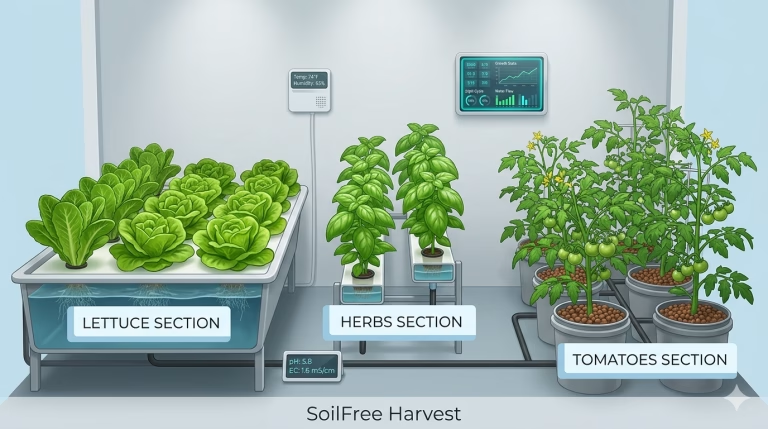
Leafy greens like lettuce, spinach, and arugula thrive at the lower end of this range (50 to 55 percent humidity). Fruiting plants like tomatoes and peppers prefer 55 to 65 percent humidity during vegetative growth.
Flowering or fruiting phase (fruit set through harvest)
Once plants begin flowering or producing fruit, humidity should drop to 40 to 50 percent to reduce disease risk and push plants to focus energy on fruit development instead of vegetative growth. Temperatures can run slightly cooler: 70 to 80°F during the day and 55 to 70°F at night. The cooler nights encourage pollen viability and fruit set in crops like tomatoes and peppers.
Lower humidity in this phase also prevents bud rot and powdery mildew, two diseases that can wipe out harvests in the final weeks.
Hydroponic nutrient deficiency signs → nutrient lockout in hydroponics
What are the most common temperature and humidity mistakes?
Mistake 1: Ignoring day to night temperature swings. Many home growers do not actively cool their rooms at night, allowing temperature to drop 15 to 20°F. This extreme swing triggers stress, slows transpiration, and can cause nutrient absorption problems. Aim for a swing no larger than 10°F.
Mistake 2: Running humidity too high throughout vegetative growth. Growers often set humidity to 70 or 80 percent because they think it helps plants, but this actually slows growth, invites powdery mildew, and makes botrytis (bud rot) a constant threat. Dial down to 50 to 65 percent as soon as roots establish.
Mistake 3: Venting cold outdoor air into a warm grow room. In winter or cool climates, bringing in outside air without tempering it will tank humidity, spike VPD, and stress plants. Use a small heater or fan to gradually mix outside and inside air.
Mistake 4: Overpowering dehumidifiers. Removing all moisture from a grow room does as much damage as leaving it soaking wet. Over-dehumidification stresses plants, increases powdery mildew risk (paradoxically), and raises electricity costs. Start with a modestly sized unit and dial it back rather than going oversized.
Mistake 5: Not monitoring temperature and humidity consistently. Many growers set up their rooms once and assume conditions stay stable. In reality, temperature and humidity drift with the season, light intensity, and how many plants are in the room. Check your readings every few days and adjust your equipment gradually.
How do I control temperature in my hydroponic grow room?
Temperature control depends on whether your grow room is too hot, too cold, or both depending on season.
If your room is too hot (above 85°F):
The simplest fix is an oscillating fan (20 to 30 inches) placed low in the room to move air across the canopy and floor. Most indoor growers in hot climates start here. A single fan often drops temperature 3 to 5°F and improves humidity stability.
If a fan alone does not work, add exhaust ventilation by installing a small inline duct fan (4 to 6 inches) that pulls warm air out through ducting. Pair it with intake ventilation (louvers or passive intake) so cool air flows back in. This creates gentle circulation and steady cooling without shock to plants.
For very hot climates like the Phoenix area, a small window air conditioner or portable cooler dedicated to your grow space is the most reliable long-term solution. Budget 500 to 2,000 dollars depending on room size and outdoor temperature.
If your room is too cold (below 65°F):
A simple radiant heater or ceramic space heater placed outside the grow area (and thermostat-controlled) can warm incoming air. Most small grow rooms heat well with a 750 to 1,500 watt heater running part-time.
Some growers use an insulated grow tent to trap heat and reduce the heating load. A well-sealed tent can be 5 to 10°F warmer than the room around it with minimal supplemental heat.
If your room swings between day and night extremes:
Use a thermostat-controlled outlet to turn heating or cooling on and off as needed. These devices cost 30 to 60 dollars and automatically switch equipment when temperature drifts more than 2 to 3°F from your setpoint. This approach eliminates manual adjustments and keeps conditions stable.
How do I manage humidity in a hydroponic grow room?
Humidity control is the second half of environment optimization. In practice, humidity is harder to dial in than temperature because it depends on air exchange, transpiration, and water surface area in your system.
If humidity is too high (above 70 percent):
The best first step is always airflow. A standing fan moving air across leaves and around the room often drops relative humidity 10 to 15 percent by itself. Do not point the fan directly at plants or you will cause wind damage and stress.
If a fan is not enough, add gentle ventilation by running an inline exhaust fan a few hours per day or in stages. Start with 15 minutes on, 45 minutes off (25 percent duty cycle) and increase as needed. This pulls moisture out without shocking the plants.
For stubborn humidity, add a dehumidifier. For a small grow room (40 to 100 square feet), a 30 to 50 pint dehumidifier works well and costs 150 to 400 dollars. Place it outside your tent if possible and duct the exhaust out of the room, or place it inside with a drain hose running to a floor drain.
Size your dehumidifier based on room volume and your local climate. An undersized unit will run constantly and fail to control humidity. An oversized unit will over-dry the air and waste electricity. If in doubt, aim for 80 percent capacity at your target humidity rather than 100 percent.
If humidity is too low (below 40 percent):
Low humidity is common in very hot and dry climates like Arizona. The simplest fix is a humidifier that generates cool mist and sits outside the grow area, with air pulled into the room by fans.
Alternatively, leave more water surface area exposed in your reservoir so more water naturally evaporates. In DWC systems, this is nearly automatic. In drip or NFT systems, you can place shallow trays of nutrient water next to the main system to passively raise humidity.
Avoid ultrasonic humidifiers in hydroponic systems because they can leave mineral deposits on leaves and equipment. Use evaporative (cool mist) or steam humidifiers instead.
DWC hydroponics guide → Deep Water Culture hydroponic systems
NFT hydroponics guide → Nutrient Film Technique for hydroponics
How-To: Setting Up Temperature and Humidity Monitoring and Control
Title: Monitor and Stabilize Your Grow Room Temperature and Humidity
Description: Learn how to measure and control air temperature and humidity in your hydroponic grow room using basic equipment and a simple routine.
Materials and Tools Needed:
- Digital hygrometer-thermometer (analog-digital combo, 20 to 40 dollars)
- Oscillating fan (20 to 30 inches, 50 to 80 dollars)
- Thermostat-controlled outlet (optional, 30 to 60 dollars)
- Small space heater or ceramic heater (optional, 50 to 150 dollars)
- Portable dehumidifier (if needed, 150 to 400 dollars)
- Inline duct fan and ducting (if upgrading from fan, 100 to 200 dollars)
- Mounting brackets and zip ties for securing equipment
Steps:
- Place your hygrometer-thermometer at canopy height and away from fans, heaters, and lights. Mount it on a small stand or clip it to a grow tent pole at the level where leaves sit. Position it where air can flow freely around the sensor, not in stagnant corners. Record readings in the morning, midday, and evening for one week to establish your baseline. This helps you understand what your room normally does before you make changes.
- Install an oscillating fan on a low stand to improve air circulation. Place the fan so it moves air across the lower canopy and along the floor without directly blasting any single plant. Oscillating fans cover more area than stationary fans and reduce wind damage. Run it on medium speed during lights-on hours. This simple step often drops temperature 3 to 5°F and naturally improves humidity distribution.
- Set a target temperature range for your current growth stage. Use the ranges outlined earlier: seedlings 70 to 80°F, vegetative 75 to 85°F day and 60 to 75°F night, flowering 70 to 80°F day and 55 to 70°F night. Mark your target range on a small sticky note next to your hygrometer so you remember the goal. Check readings daily for the first two weeks of each new crop to build a habit.
- Install a thermostat-controlled outlet if day-to-night swings exceed 10°F. Plug your heater or cooler into the thermostat unit, set it 2 degrees below your night minimum, and let it run automatically. This removes the guesswork and keeps temperature swings tight. Most thermostat outlets show current temperature on a small display, so you can verify settings at a glance.
- Add an exhaust fan and intake louvers if temperature stays above 85°F with a standing fan alone. Install a 4 to 6 inch inline duct fan at the top of your grow tent or room, ducting air outside through a window or wall. Add intake louvers or passive vents lower in the room so fresh cool air flows back in. This creates a gentle circulation loop and drops temperature 5 to 10°F without shocking plants. Run the exhaust fan on a timer for 30 to 60 minutes every 4 to 6 hours, or continuously if outside temperature is cool.
- Place a dehumidifier outside your grow area if humidity stays above 65 percent for more than half your lights-on period. Position the intake to pull humid air from near your grow tent and duct the dry exhaust back out of the room (out a window or into the main house). Size the unit based on your room volume and local climate. A 40-pint dehumidifier handles most small to medium home grow rooms. Use a hygrometer to confirm it is cutting humidity to your target 50 to 65 percent range within one to two hours after startup.
- Measure and log temperature and humidity daily for the first month, then weekly afterward. Record the numbers in a simple spreadsheet or note on your phone, along with any observations (fan noise, odors, plant stress). After a few weeks, patterns emerge: you learn when and where humidity spikes, when heaters run most, and which plants show stress first. This data lets you tune equipment timing and dial in your environment more precisely over time.
- Adjust equipment gradually and watch the 24 hour cycle before making new changes. If humidity is still high after one hour of dehumidifier operation, do not immediately size up to a larger unit. Instead, run it longer or dial back other moisture sources (like watering frequency). If temperature swings are still 12°F after adding a fan, wait two days and measure again before adding a heater or cooler. Plant systems are slow to respond, and rushing changes leads to overcorrection and stress.
How do temperature and humidity affect different hydroponic system types?
Different hydroponic systems respond differently to environmental shifts because they manage water and oxygen in different ways.
Deep Water Culture (DWC) systems keep roots submerged in aerated water, so temperature directly controls dissolved oxygen. A 1°F drop in water temperature can raise dissolved oxygen by 0.3 mg/L, which is significant. In DWC, stable air temperature helps keep water stable. Humidity is less critical because roots are wet, but you still want to prevent bud rot and powdery mildew in flowering crops.
Nutrient Film Technique (NFT) and ebb and flow systems expose roots to air more than DWC, so humidity and airflow matter more. Lower humidity (50 to 55 percent) in these systems helps roots stay oxygenated and prevents film stagnation. Temperature should stay stable to prevent nutrient precipitation on roots.
Kratky and passive systems rely entirely on natural evaporation and air diffusion, so temperature and humidity are the only tools you have to prevent root hypoxia (oxygen starvation). Keep these rooms cooler (65 to 75°F) and at moderate humidity (50 to 60 percent) to maximize dissolved oxygen.
Drip and rockwool systems are the most forgiving to temperature and humidity swings because they re-wet roots frequently. Still, stable conditions accelerate growth and reduce disease. Aim for the standard ranges and you will see 15 to 25 percent faster growth compared to rooms with large swings.
Ebb and flow hydroponics → Ebb and Flow hydroponic systems
Kratky method → Passive Kratky hydroponics for beginners
What crops thrive in what temperature and humidity ranges?
Leafy greens (lettuce, spinach, arugula, kale) are the most forgiving. They grow well at 70 to 80°F and 45 to 55 percent humidity. They actually prefer cooler conditions and tighter humidity, which is why they are the best crop for beginners.
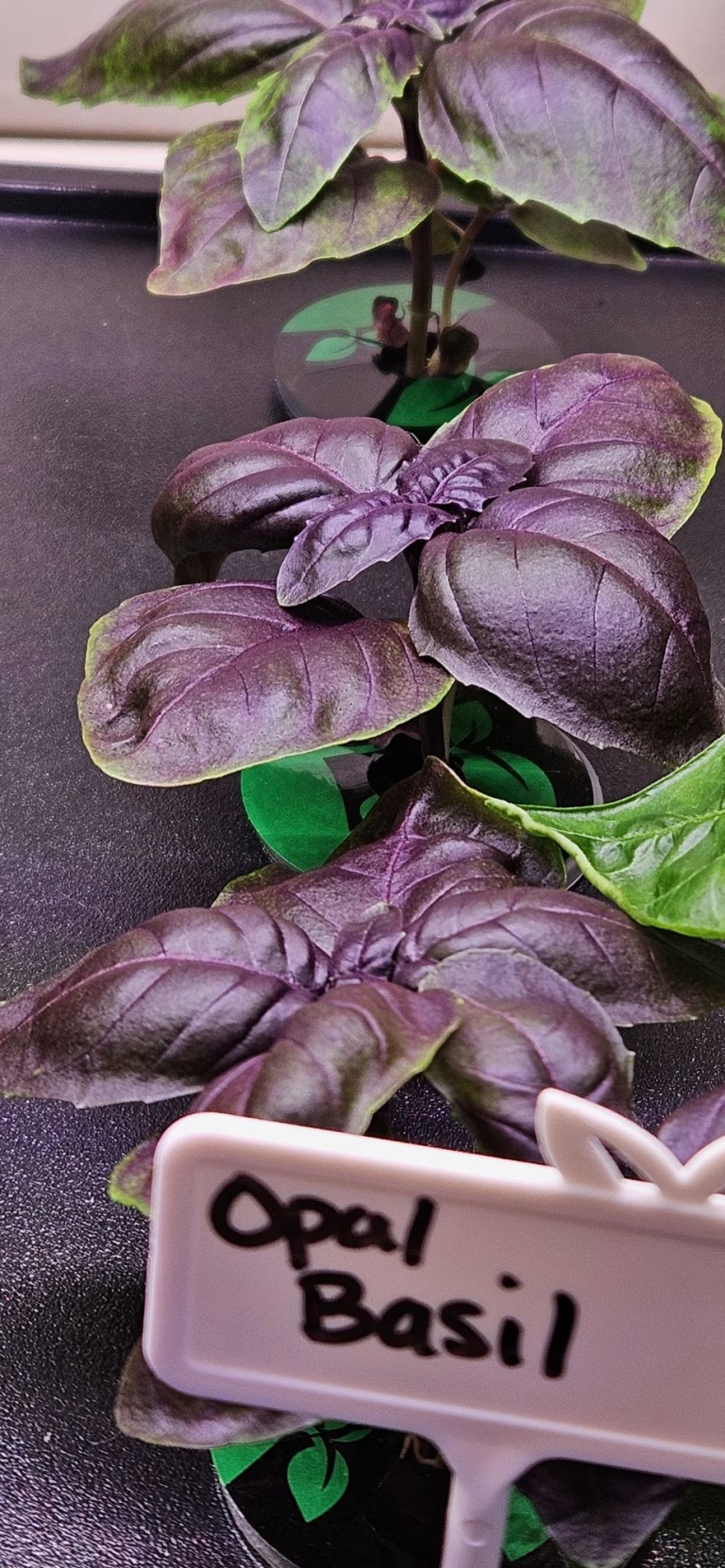
Herbs (basil, cilantro, parsley, mint) are similarly forgiving. Most herbs hit harvest in 25 to 35 days at 75 to 80°F and 50 to 60 percent humidity. Basil prefers warmer temperatures (78 to 85°F) and higher humidity (60 to 70 percent) compared to other herbs.
Fruiting plants (tomatoes, peppers, cucumbers, eggplant) need warmer conditions overall: 80 to 85°F during vegetative growth and 75 to 80°F during flowering. They prefer 50 to 60 percent humidity. Once flowering begins, drop humidity to 40 to 50 percent to encourage pollen and fruit development.
Microgreens grow fast and can tolerate cooler conditions (65 to 75°F) and higher humidity (65 to 75 percent) during their short 10 to 14 day cycle. They are a good test crop if you are still dialing in your environment because they show results quickly and do not carry over problems to the next cycle.
Edible flowers like nasturtiums, pansies, and calendula prefer mild conditions: 70 to 78°F and 50 to 60 percent humidity. They are less sensitive to humidity than greens but more sensitive to temperature swings.
Troubleshooting common temperature and humidity problems
Problem: Powdery mildew appears even though humidity looks normal on the hygrometer.
Root cause: Humidity may be normal on average, but spikes overnight or in one corner of the room. Measure humidity at multiple heights and locations. Also check that air is circulating evenly across the whole canopy. Dead spots with stagnant air develop mold even in moderate humidity.
Solution: Add a second fan, increase fan speed, or adjust fan placement to reach all corners. Run your exhaust fan more often. Lower humidity setpoint by 5 to 10 percent.
Problem: Leaves yellow and growth slows even though nutrients and pH look correct.
Root cause: Temperature may be too cold, locking up nutrients despite correct pH. Or humidity may be so high that transpiration is slow and roots cannot pull water and minerals at the rate they need.
Solution: Raise air temperature 2 to 3°F if it is below 70°F. Lower humidity 5 to 10 percent if it is above 70 percent. Check water temperature separately; if it is below 60°F, your heater may have failed.
Problem: Leaves wilt during the day even though water looks good.
Root cause: Either humidity is too low (plants transpire faster than roots can supply water) or airflow is pushing water loss too fast. Or temperature is spiking and stressing roots.
Solution: Raise humidity 5 to 10 percent and slow down fans temporarily to see if it helps. Check that water temperature is stable (not spiking to 80°F or higher). If problem persists, check for root rot.
Problem: Condensation beads on tent walls and equipment every morning.
Root cause: Humidity is too high overnight, and temperature is dropping faster than air can exchange moisture. This is common when growers do not ventilate enough or do not reduce humidity for night cycle.
Solution: Lower nighttime humidity by running your dehumidifier or exhaust fan more aggressively overnight. Reduce daytime humidity setpoint by 5 to 10 percent overall. Improve nighttime ventilation so moist air leaves the room before condensing.
Problem: Temperature swings 15 to 20°F from day to night.
Root cause: No active heating or cooling, and grow light heat is not being managed. The room warms 10 to 15°F when lights are on and cools dramatically when they turn off.
Solution: Use a thermostat-controlled outlet and a small heater to maintain night minimum temperature. During day, improve cooling with fans or exhaust ventilation. Or shift your lights-on schedule to match room temperature cycles in your house.
Frequently Asked Questions
Q: What is the single most important thing I should focus on if I can only control one environmental factor?
A: Temperature stability matters more than hitting exact numbers. A grow room that stays at 72°F all day and night will outperform a room that swings from 65°F to 85°F even if that room’s average is 75°F. Stable conditions let plants settle in and absorb nutrients consistently. Start by getting temperature swings below 10°F, then fine-tune humidity.
Q: Can I grow hydroponic plants in a closet if I do not have perfect temperature and humidity?
A: Yes, but you will see slower growth and more disease. Most home growers in closets deal with temperature swings and higher humidity. This usually means adding a small fan and dehumidifier. Many successful closet growers target 65 to 75 percent humidity instead of the ideal 50 to 65 percent, and crops still produce. Expect 20 to 30 percent slower growth and more frequent pest or disease pressure.
Q: How much does it cost to dial in a perfect grow room environment?
A: For a small apartment or closet grow (25 to 50 square feet), plan 200 to 400 dollars for a basic setup: oscillating fan (50 to 80 dollars), hygrometer (20 to 40 dollars), thermostat outlet (30 to 60 dollars), and dehumidifier if needed (150 to 300 dollars). For a larger room or tent (100+ square feet), add inline ventilation (150 to 300 dollars) and possibly an AC unit (500 to 2,000 dollars). Most home growers start small and add gear gradually as they learn what their room actually needs.
Q: What happens if my grow room is too dry for weeks on end?
A: Leaves yellow and curl, stems become brittle, and powdery mildew paradoxically can develop (because plants are stressed and weaker). Very dry air (below 30 percent humidity) also raises VPD so high that leaves transpire faster than roots can supply water, causing wilting even in wet systems. Add humidity with a cool mist humidifier or by leaving more water surface exposed in your reservoir.
Q: Do I need to reduce temperature and humidity before I switch to flowering stage?
A: Not immediately, but you should plan a gradual shift. Start dropping humidity 2 to 3 percent per day once plants show early flower or fruit buds, until you reach 40 to 50 percent by the time fruit is actively developing. Temperature can stay the same or drop slightly (3 to 5°F) during flowering. Do not shock plants with sudden big changes. A transition week is healthier than dropping humidity from 65 to 40 percent in one day.
Q: How often should I replace my hygrometer or thermometer if they seem to drift?
A: Most cheap digital hygrometers (under 50 dollars) drift 2 to 5 percent accuracy over 6 to 12 months of heavy use. If your meter shows 55 percent and your tent wall is covered in condensation, the meter is probably wrong. Buy a second hygrometer from a different brand and compare readings. If both read differently, send one back or buy a more accurate model (50 to 100 dollars). For serious growers, a small weather station or smart sensor (100 to 200 dollars) can log data over time and alert you to drifts.
Q: What is the cheapest way to control humidity if I do not want to buy a dehumidifier?
A: Run an exhaust fan on a timer for 20 to 30 minutes every 4 to 6 hours during lights-on. This pulls humid air out and is free if you already have a fan installed for temperature control. In dry climates, the opposite works: leave water surface area exposed and run a humidifier (30 to 80 dollars) instead. Many apartment and closet growers manage humidity with just fans and no dehumidifier by accepting slightly higher humidity swings.
Q: How do I know if my air pump, chiller, or humidifier has failed?
A: For air pumps, listen for bubbling in your reservoir or DWC bucket. If you do not hear it, the pump likely failed. For chillers, feel the water inlet and outlet tubes; the outlet should feel cool if the unit is running. Compare actual water temperature to your setpoint. For humidifiers, check for mist output when you look closely at the air intake, or feel moisture on your hand held near the outlet. Most equipment lasts 1 to 3 years with regular use, so budget for replacement every season.
Q: Can I use a regular room humidifier or dehumidifier from the hardware store in my grow room?
A: Yes, but be careful with placement and duct exhaust out of the room if possible. Household humidifiers and dehumidifiers work fine in hydroponic grow spaces. Do not place them directly inside your tent where they will take up plant space or drip on equipment. Duct their exhaust out a window so you do not re-humidify the room after dehumidifying it. Most household units are efficient and cheaper than grow-specific equipment.
Final thoughts: Why your environment is the invisible lever of indoor growing
Your temperature and humidity regime is the one thing that affects every other part of your hydroponic system. Dial it in, and suddenly your nutrients stay stable, disease pressure drops, and yields jump 20 to 30 percent. Ignore it, and you spend money on expensive equipment, nutrients, and lights while plants struggle through a mediocre harvest.
The good news is that dialing in temperature and humidity does not require expensive gear or advanced knowledge. A basic fan, a cheap hygrometer, and the willingness to observe and adjust are enough to get most home grows producing consistently.
Start by measuring your current conditions for a week. Then add one piece of equipment at a time, wait a few days, and measure the effect. This methodical approach builds your intuition faster than following a preset recipe, and it ensures your final setup matches your specific space and climate.
Author Bio
This article was written by a hydroponics specialist based in Phoenix, Arizona. Living in one of the hottest, driest regions in North America has provided real-world testing of temperature and humidity control across extreme seasons, from 115°F summer heat to cool 45°F winter nights. The author focuses on practical, budget-conscious solutions that work without expensive equipment or constant monitoring, specializing in helping beginners turn compact spaces into reliable food production systems. Current interests include automation and sensor integration, sustainable nutrient management, and crop optimization for arid climates.
Share this:

Discover more from Soil Free Harvest
Subscribe to get the latest posts sent to your email.







2 Comments