Hydroponic Nutrient Solutions for Medicinal Herbs: Optimizing Compound Concentration
Medicinal and specialty herb growers operating hydroponic systems face a unique challenge: achieving not just maximum yield, but maximum potency. Growing herbs like basil, echinacea, peppermint, and turmeric in soil provides inconsistent bioactive compound concentrations due to variable environmental conditions and nutrient availability. Hydroponics eliminates this problem by offering precise control over every nutrient your plants receive. By strategically optimizing nutrient solution concentrations, growers can significantly increase the concentration of desired therapeutic compounds such as menthol, withanolides, curcumin, and polyphenols. This comprehensive guide reveals exactly which nutrient levels trigger maximum bioactive compound production in your medicinal herbs, how to group plants efficiently in vertical growing systems, and how to achieve pharmaceutical-grade potency in every harvest cycle.
Understanding Hydroponic Nutrient Fundamentals for Bioactive Compound Production
The link between nutrient concentration and secondary metabolite production is direct and well-documented in scientific literature. Unlike primary metabolites (carbohydrates, proteins) that support basic plant growth, secondary metabolites are the bioactive compounds that give medicinal herbs their therapeutic value. These compounds include alkaloids, flavonoids, polyphenols, terpenes, and phenolic acids. The key insight that most growers miss is that plants don’t produce maximum secondary metabolites under ideal growing conditions. Instead, moderate stress from carefully controlled nutrient levels triggers a plant’s defense mechanisms, stimulating the production of these valuable compounds.
Electrical conductivity (EC) is the most critical parameter for managing nutrient concentration in hydroponic systems. EC measures the total dissolved salt concentration in your nutrient solution, with most medicinal herbs requiring EC levels between 1.0 and 2.4 mS/cm depending on their specific type. For instance, basil and cilantro thrive at lower EC levels around 1.0 to 1.6 mS/cm, while nutrient-demanding herbs like mint and rosemary require EC levels between 1.8 and 2.4 mS/cm. The pH of your solution must be maintained between 5.5 and 6.5 to ensure optimal nutrient availability. Values outside this range lock up essential micronutrients like iron and zinc, preventing their uptake even when present in solution.
When EC levels fall too low, plants experience nutrient deficiency and stunted growth, reducing both yield and compound concentration. Conversely, excessively high EC causes nutrient burn, where salt concentrations damage root tissues and inhibit water absorption. The optimal strategy is to maintain moderate EC levels that provide sufficient nutrition while inducing mild stress that upregulates secondary metabolite production. Research on medicinal plant species like Sideritis cypria demonstrates that intermediate nutrient levels (NPK at 150-75-350 mg/L) produce superior phenolic and flavonoid content compared to either minimal or maximal nutrient applications.
| Herb Group | Examples | EC Range | pH Range | N (mg/L) | P (mg/L) | K (mg/L) |
|---|---|---|---|---|---|---|
| Low-Nutrient Herbs | Basil, Chamomile, Dill, Cilantro | 1.0-1.6 mS/cm | 5.5-6.0 | 100-130 | 40-50 | 150-200 |
| Medium-Nutrient Herbs | Mint, Oregano, Thyme, Sage | 1.6-2.0 mS/cm | 5.8-6.5 | 150-180 | 50-75 | 200-300 |
| High-Nutrient Herbs | Rosemary, Echinacea, Lavender, Parsley | 2.0-2.4 mS/cm | 6.0-6.5 | 200-250 | 75-100 | 300-400 |
Macronutrient Optimization for Maximum Bioactive Compound Concentration
Nitrogen (N), phosphorus (P), and potassium (K) are the three macronutrients that most significantly influence secondary metabolite production in medicinal herbs. Each plays a distinct role in triggering the biochemical pathways that produce therapeutic compounds.
Nitrogen Management for Enhanced Alkaloid and Phenolic Production
Nitrogen is the most critical element for medicinal herb growth, as it directly influences the synthesis of alkaloids, flavonoids, and essential oils that define a plant’s medicinal value. Most medicinal herbs require nitrogen concentrations between 100 and 300 mg/L, depending on their growth stage and species. Low nitrogen levels (75-100 mg/L) slow biomass accumulation but increase the concentration of protective secondary metabolites as plants redirect resources from growth to defense. However, nitrogen levels below 100 mg/L typically result in unacceptably low yields. Intermediate nitrogen (150 mg/L) provides balanced growth with robust secondary metabolite accumulation, making this the recommended standard for most hydroponic medicinal herb systems.
Higher nitrogen levels (250-300 mg/L) increase plant growth rate and mineral accumulation but can actually decrease phenolic and flavonoid concentrations. Research on Sideritis species shows that while high nitrogen increases nutrient use efficiency and water use efficiency, it simultaneously reduces the total phenols and flavonoids that give the plant its therapeutic value. The explanation lies in plant physiology: when nitrogen is abundantly available, plants preferentially allocate resources to rapid vegetative growth rather than investing energy in expensive secondary metabolite synthesis. For specialty growers targeting maximum bioactive compound concentration, the sweet spot is nitrogen between 130 and 180 mg/L, which balances adequate biomass production with strong activation of secondary metabolism.
Phosphorus as a Bioactive Compound Trigger
Phosphorus plays an underestimated role in medicinal herb potency optimization. While phosphorus is typically thought of as a root-development nutrient, it also directly influences phenolic and flavonoid biosynthesis. Experimental research demonstrates that low phosphorus levels (50 mg/L) actually maximize both plant biomass and secondary metabolite production in several medicinal herb species. This counterintuitive finding reflects phosphorus’s role in plant stress signaling. When phosphorus availability is slightly limited, plants activate antioxidant defense mechanisms that upregulate the production of protective phenolic compounds.
The optimal phosphorus concentration range for medicinal herbs is 50 to 75 mg/L. Using phosphorus at these lower levels increases plant fresh and dry biomass by up to 59.8% compared to standard formulations while simultaneously reducing oxidative stress markers (malondialdehyde) and enhancing antioxidant enzyme activities (superoxide dismutase and peroxidase). Higher phosphorus levels (100 mg/L) increase chlorophyll production and support vegetative growth but provide no additional benefit for bioactive compound concentration. Many commercial nutrient formulations contain excessive phosphorus, wasting resources and potentially reducing the therapeutic potency of harvested material. For pharmaceutical-grade medicinal herb production, reduce phosphorus to the 50-75 mg/L range.
Potassium’s Complex Role in Compound Accumulation
Potassium is involved in photosynthesis, enzyme activation, and stress response mechanisms, making it central to secondary metabolite production. Medicinal herbs require potassium levels between 150 and 400 mg/L depending on species and desired outcomes. Intermediate potassium (350 mg/L) combined with moderate nitrogen and phosphorus produces the highest phenolic and flavonoid content. Low potassium (150 mg/L) decreases polyphenol production but increases copper accumulation in plant tissue. High potassium (550 mg/L) causes oxidative stress and paradoxically decreases phenolic content while activating antioxidant enzyme defenses.
The key insight is that potassium interacts with nitrogen and phosphorus in complex ways. High nitrogen and high potassium together create excessive nutrient availability that reduces secondary metabolite production. Conversely, moderate nitrogen (150 mg/L) combined with intermediate potassium (350 mg/L) and low phosphorus (50-75 mg/L) creates mild nutrient stress that maximizes polyphenol and flavonoid biosynthesis. This combination optimizes the N:K and N:P ratios that regulate the activation of secondary metabolism pathways.
Stress Elicitation Strategies for Medicinal Compound Enhancement
Beyond basic nutrient optimization, advanced growers can employ stress elicitation techniques that further amplify bioactive compound production. Elicitors are compounds or environmental conditions that trigger a plant’s defense responses, dramatically increasing secondary metabolite synthesis within days. Two of the most effective elicitors are salicylic acid (SA) and methyl jasmonate (MeJA), which can be applied to hydroponic nutrient solutions at precise concentrations.
Salicylic acid at 50 to 200 micromolar concentrations increases phenolic and phenylpropanoid compound production by more than 100%, tripling the concentration of mucic acid derivatives and phenols in plant tissue. Methyl jasmonate at similar concentrations enhances flavonoid, terpene, and alkaloid production through distinct biochemical pathways. The optimal strategy involves applying these elicitors in short pulses rather than continuously, as continuous exposure reduces their effectiveness. For hydroponic systems, adding SA or MeJA at 50-100 micromolar concentrations for 3 to 24 hours before harvest triggers maximum secondary metabolite accumulation without damaging plant tissues.
Withanolide production in ashwagandha (Withania somnifera) increases dramatically under moderate abiotic stress conditions. Research shows that brief exposure to mild heat stress (45 degrees Celsius for 2 to 5 hours) increases withanolide concentration by 25 to 40% compared to controls, with the effect mediated through increased expression of squalene synthase, a key enzyme in withanolide biosynthesis. Brief UV-B radiation exposure (313 nm for 15 minutes) similarly enhances withanolide accumulation. For menthol production in peppermint, aeroponics systems with biostress exposure increase menthol content by over 10% compared to unstressed plants, with combined stresses producing even higher menthol concentrations. These elicitation strategies require careful implementation but can yield dramatic improvements in bioactive compound concentration.
Essential Oils and Volatile Compound Optimization Through Nutrient Management
Medicinal herbs like basil, mint, oregano, and thyme are prized specifically for their essential oil content, which contains the volatile compounds responsible for their therapeutic effects and characteristic aromas. Essential oil production responds dramatically to nutrient solution optimization. Research on spearmint demonstrates that supplementing the nutrient solution with amino acid mixtures increases volatile oil production and optimizes the concentration of carvone (the primary active compound in spearmint oil). Sulfur compound addition further enhances this effect, with the combination producing the highest quantity of volatile oil with maximum carvone content.
Peppermint grown in aeroponics systems produces 10.66% higher menthol content compared to soil-grown plants, demonstrating that hydroponic systems with precise nutrient control can substantially increase the concentration of volatile compounds. The optimization strategy involves increasing potassium to support volatile biosynthesis (K at 300-400 mg/L), maintaining moderate to high nitrogen (150-200 mg/L), and adding micronutrient boosts (particularly sulfur and amino acids) that serve as building blocks for volatile compound synthesis. Temperature management is equally critical, as volatiles are most concentrated when plants experience a 5 to 10 degree Celsius drop in nighttime temperature compared to daytime conditions, triggering enhanced biosynthesis of defensive volatiles.

Strategic Herb Grouping for Vertical Farming Space Optimization
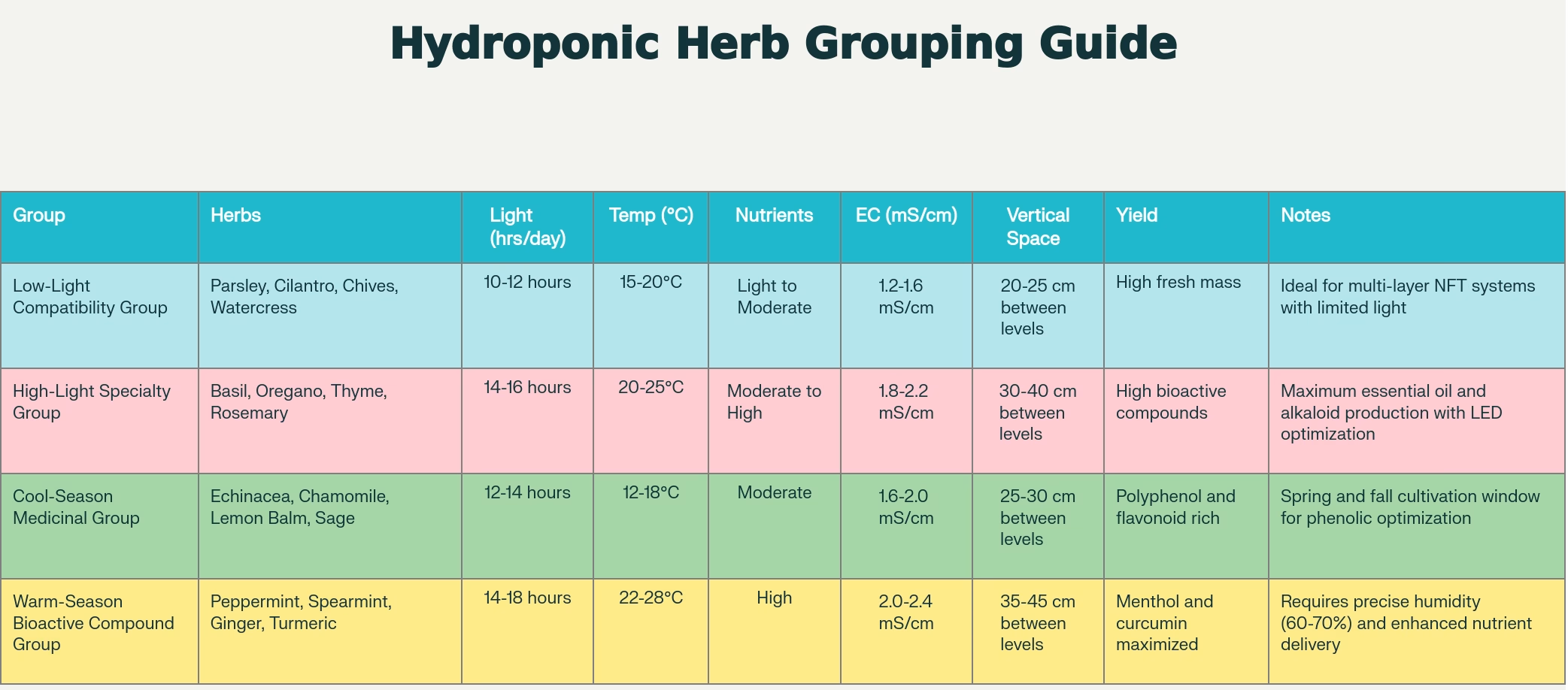
One of hydroponics’ greatest advantages is the ability to stack plants vertically in multi-layer systems, dramatically increasing production per square meter. However, not all medicinal herbs have identical growing requirements, creating a challenge for vertical farm design. The solution is to strategically group herbs with compatible light, temperature, and nutrient requirements into distinct cultivation zones.
Low-Light Compatibility Group
Parsley, cilantro, chives, and watercress are shade-tolerant herbs that produce excellent yields with just 10 to 12 hours of daily light. These herbs are ideal for the lower levels of vertical systems where light penetration is reduced, or for early morning and evening growing periods in greenhouse operations. They thrive at cooler temperatures (15 to 20 degrees Celsius), require light to moderate nutrients (EC 1.2 to 1.6 mS/cm), and can be spaced just 20 to 25 centimeters apart vertically. These herbs produce high fresh mass, making them economically productive despite their lower bioactive compound concentration compared to high-light species.
High-Light Specialty Compound Group
Basil, oregano, thyme, and rosemary are light-demanding herbs that achieve maximum bioactive compound production only when receiving 14 to 16 hours of daily high-intensity light (200 to 300 micromoles per square meter per second). These herbs thrive at warmer temperatures (20 to 25 degrees Celsius), require moderate to high nutrients (EC 1.8 to 2.2 mS/cm), and should be positioned in the upper levels of vertical systems where light intensity is highest. Vertical spacing of 30 to 40 centimeters allows adequate light penetration to lower leaves and encourages the development of dense foliage rich in essential oils and polyphenols. These herbs are the most economically valuable medicinal crop for commercial bioactive compound production.
Cool-Season Medicinal Phenolic Group
Echinacea, chamomile, lemon balm, and sage are cool-season herbs that accumulate their highest concentrations of polyphenols and flavonoids during spring and fall cultivation when daytime temperatures are 12 to 18 degrees Celsius. These herbs require 12 to 14 hours of light daily and moderate nutrients (EC 1.6 to 2.0 mS/cm). Vertical spacing of 25 to 30 centimeters is adequate for these medium-sized herbs. Growing these species seasonally in cool conditions and storing dried material optimizes the timing of harvest for maximum polyphenol and flavonoid concentration.
Warm-Season Bioactive Compound Maximization Group
Peppermint, spearmint, ginger, and turmeric are warm-season specialists requiring 14 to 18 hours of daily light and temperatures between 22 and 28 degrees Celsius for maximum essential oil and alkaloid production. These herbs require high nutrients (EC 2.0 to 2.4 mS/cm) and precise humidity control (60 to 70%) to prevent leaf diseases and maximize volatile compound synthesis. Vertical spacing of 35 to 45 centimeters accommodates the larger growth habit of these plants and prevents leaf crowding that reduces essential oil concentration. The economic value of herbs in this group is exceptionally high due to their premium prices for pharmaceutical and cosmetic applications.
Specific Medicinal Herbs: EC and Nutrient Profiles for Compound Optimization
Different medicinal herbs achieve maximum bioactive compound concentration at distinctly different nutrient levels. Understanding these species-specific requirements allows growers to achieve pharmaceutical-grade potency. Basil, the most commercially important culinary medicinal herb, thrives at EC 1.0 to 1.6 mS/cm with nitrogen between 100 and 130 mg/L and phosphorus between 40 and 50 mg/L. At these levels, basil produces exceptional quantities of rosmarinic acid (a potent antioxidant and anti-inflammatory compound) alongside its characteristic essential oil profile. Increasing nutrients above this range actually decreases rosmarinic acid concentration as the plant prioritizes growth over defense compound synthesis.
Mint species, including peppermint and spearmint, require higher nutrient concentrations (EC 2.0 to 2.4 mS/cm) with nitrogen between 200 and 240 mg/L to maximize menthol and menthone synthesis. Supplementing the nutrient solution with additional sulfur (S) and amino acids further enhances essential oil yield and composition. Deep flow technique (DFT) systems specifically optimized for mint production with these nutrient levels can produce commercial-grade peppermint with menthol concentrations exceeding 50% of total volatile content, compared to 35 to 40% in conventionally grown material.
Turmeric, which contains the precious compound curcumin, requires EC levels between 2.2 and 2.6 with macronutrients at nitrogen 170 to 180 mg/L, phosphorus 110 to 120 mg/L, and potassium 200 to 240 mg/L. Micronutrients are equally critical, with iron at 4 to 6 ppm, manganese at 3 ppm, and zinc at 0.25 ppm. The key optimization for turmeric hydroponics is reducing phosphorus to 50 mg/L during the vegetative stage while increasing it to 100 to 120 mg/L during rhizome development to maximize curcumin accumulation.
Echinacea species, valued for their immunostimulatory compounds (cichoric acid, caffeic acid, echinacoside), produce maximum bioactive compound concentration at intermediate nutrient levels (EC 1.8 to 2.0 mS/cm). Research indicates that moderate stress from nutrient limitations actually increases polyphenol and alkamide production in echinacea, making the plant’s natural adaptation to marginal conditions favorable for bioactive compound synthesis.
Monitoring and Maintaining Optimal Nutrient Concentrations in Practice
Successfully maintaining optimal nutrient concentrations in commercial hydroponic systems requires systematic monitoring and regular adjustments. EC should be measured daily using a calibrated EC meter, with records maintained to detect trends and plan nutrient solution changes. Most hydroponic systems gradually accumulate salts through plant uptake of water without proportional nutrient removal, causing EC to creep upward over time. When EC rises above your target range, partially drain and replace the nutrient solution to bring EC back to optimal levels.
pH should be monitored at least three times weekly, as it directly controls nutrient availability even when EC levels are correct. Acidic conditions (pH below 5.5) can lead to manganese and iron toxicity, while alkaline conditions (pH above 6.5) lock up these same elements, creating deficiencies. Use sulfuric acid to lower pH and potassium hydroxide to raise it. Most growers adjust pH in the morning when it is most stable, after taking three measurements spaced several hours apart. When three consecutive pH readings are identical, this indicates stability and allows reliable pH adjustment.
Nutrient solution changes should occur every 2 to 4 weeks in commercial systems, or whenever EC or pH proves difficult to maintain within target ranges. Incomplete nutrient removal creates antagonisms where excess accumulation of one element inhibits uptake of another, creating apparent deficiencies in otherwise adequately-supplied nutrients. Complete solution changes eliminate this problem and reset the nutrient balance to optimal levels. For growers targeting maximum bioactive compound concentration, incorporating a nutrient solution change 1 to 2 weeks before harvest, combined with elicitor application (SA or MeJA at 50 to 100 micromolar), creates a powerful final “stress period” that maximizes secondary metabolite accumulation.
Water Quality and Micronutrient Synergy
While macronutrients receive the most attention, micronutrients play equally critical roles in secondary metabolite synthesis. Iron, manganese, zinc, copper, and boron are essential cofactors for the enzymes that produce polyphenols, alkaloids, terpenes, and other bioactive compounds. Research on medicinal herb species demonstrates that iron at 4 to 6 ppm produces the highest phenolic and polyphenol content, while zinc deficiency consistently reduces flavonoid and alkaloid production.
The starting water quality profoundly influences micronutrient management. If your water source contains high levels of sodium, chloride, or sulfate, these elements accumulate in the hydroponic system over time, eventually reaching concentrations that interfere with nutrient uptake and reduce secondary metabolite production. In such cases, periodic complete water changes or the installation of reverse osmosis (RO) filtration becomes essential. The additional cost of RO water is quickly recovered through improved herb potency and reduced losses from nutrient antagonisms.
Chelated micronutrient formulations remain dissolved across the entire pH range (5.5 to 7.0) and maintain availability even in the presence of phosphorus or other ions that would normally precipitate out standard forms. For specialty medicinal herb production, chelated micronutrient formulations significantly outperform standard forms, justifying their higher cost through improved herb quality and more consistent secondary metabolite production.
Balancing Yield with Potency: The Economic Reality
The ultimate goal of nutrient optimization is maximizing the concentration of bioactive compounds per unit of plant material harvested. This is not identical to maximizing yield (total fresh weight). In fact, the nutrient concentrations that produce the highest yields often produce lower bioactive compound concentrations, while the concentrations that maximize compound concentration sometimes reduce total yields. Commercial growers must balance this tradeoff based on market economics.
For pharmaceutical applications, nutraceutical supplements, and cosmetic ingredient production, bioactive compound concentration commands premium prices that justify reduced yields. In these markets, optimizing nutrient levels to maximize secondary metabolite production (even at the cost of 10 to 20 percent lower fresh weight) produces substantially higher revenue per square meter of cultivation area. For fresh culinary herb markets where volume matters more than potency, slightly higher nutrient levels that maximize biomass production are appropriate despite producing lower secondary metabolite concentration.
Conclusion: Implementing Nutrient Optimization in Your Medicinal Herb Hydroponic System
Optimizing hydroponic nutrient solutions for medicinal herb bioactive compound production requires understanding both the fundamental science of plant secondary metabolism and the specific requirements of each herb species you cultivate. The evidence is clear: intermediate macronutrient concentrations (N at 150 mg/L, P at 50 to 75 mg/L, K at 300 to 350 mg/L) combined with precise EC management (1.0 to 2.4 mS/cm depending on herb type) and pH control (5.5 to 6.5) produce superior bioactive compound concentration compared to conventional high-nutrient approaches. Grouping herbs by compatible light, temperature, and nutrient requirements enables efficient vertical farming that maximizes production per square meter while maintaining the specific conditions each species requires for peak potency.
For growers targeting premium medicinal markets, implementing stress elicitation techniques (salicylic acid, methyl jasmonate, controlled heat or UV exposure) in the final weeks before harvest can further increase bioactive compound concentration by 25 to 100% depending on the species and compounds targeted. Meticulous monitoring of EC, pH, and nutrient solution composition, combined with regular complete solution changes, prevents nutrient antagonisms and maintains the precise conditions necessary for consistent pharmaceutical-grade herb production.
The global medicinal and aromatic plant market is projected to grow from 800 million USD to 50 trillion USD by 2050, with increasing demands for sustainable, high-potency production systems. Growers who master nutrient optimization in hydroponics will capture a significant share of this expanding market, producing medicinal herbs with therapeutic compound concentrations unattainable in conventional soil-based agriculture. Begin by selecting one or two herb species that match your market demands, implement the nutrient profiles recommended in this guide, and carefully measure and record the bioactive compound concentration of your harvests. The data you collect will confirm that precision nutrient management in hydroponics delivers therapeutic potency that soil-based production simply cannot match.