How to Start Hydroponics Without Soil or Sunlight
Hydroponics without soil or sunlight is absolutely possible if you give plants the four things they still need: water, nutrients, oxygen, and artificial light. For indoor growers, beginners, and urban gardeners, the simplest path is a small recirculating system or a countertop unit paired with full-spectrum LED grow lights.
TL;DR: Choose a beginner-friendly hydroponic system, replace sunlight with LEDs, keep pH around 5.5 to 6.5, and grow crops that tolerate indoor conditions like lettuce, basil, mint, and spinach. In Phoenix and other hot, dry climates, indoor hydroponics is especially useful because it avoids heat stress, soil issues, and seasonal limits.
Here’s how to start from scratch—with product recommendations that make setup frictionless.
Affiliate Disclosure: This article contains affiliate links. If you purchase through these links, soilfreeharvest.com may earn a small commission at no extra cost to you.
What Is Hydroponics Without Soil or Sunlight?
Hydroponics is a method of growing plants in water instead of soil, with nutrients delivered directly to the roots. When sunlight is unavailable, indoor growers replace it with artificial lighting, usually full-spectrum LEDs.
This setup can work in apartments, offices, spare rooms, garages, and small grow tents. It is best for growers who want tighter control over temperature, humidity, feeding, and harvest timing.
Why Does It Work Indoors?
Plants do not need soil itself, but they do need support, oxygen, water, nutrients, heat, and light. Hydroponics gives you control over those inputs, which is why it performs well in places with limited space, poor soil, or extreme weather.
That matters in desert cities like Phoenix, where intense heat and dry air can make outdoor gardening inconsistent. Indoor hydroponics also reduces many soil-borne disease problems and can use water more efficiently than conventional gardening.
How Does It Grow Plants Without Sunlight?
A hydroponic system works by delivering a nutrient solution to the root zone while keeping roots oxygenated. Depending on the system, roots may sit in water, hang in moist air, or rest in an inert medium like coco coir, rockwool, perlite, or clay pebbles.
Grow lights replace the sun by providing the wavelengths plants use for photosynthesis. For most indoor leaf crops, a daily light cycle of about 12 to 16 hours is common, while many growers keep the nutrient solution in the pH range of 5.5 to 6.5 for better nutrient uptake.
Common system types
| System type | How it works | Best for | Notes |
|---|---|---|---|
| Deep Water Culture | Roots hang in oxygenated nutrient water | Lettuce, basil, greens | Simple, low cost, needs an air pump |
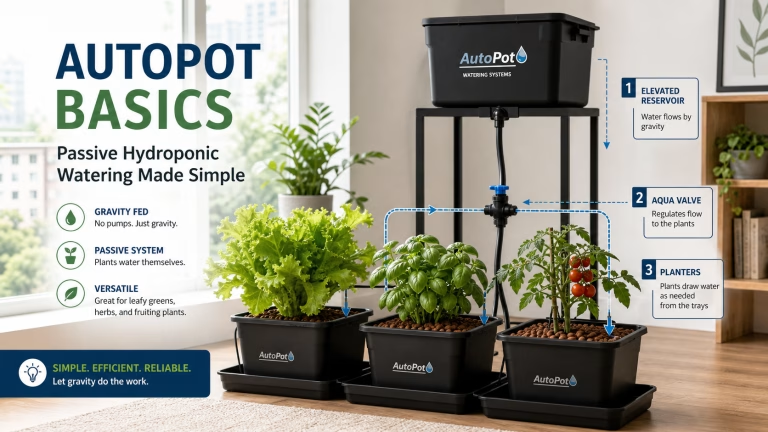
| Wick system | A wick pulls solution into the medium | Microgreens, herbs, seedlings | Passive, quiet, low maintenance |
| Nutrient Film Technique | A thin film of solution flows past roots | Fast-growing greens | Efficient but less forgiving if pumps fail |
| Aeroponics | Roots are misted with nutrients | Advanced growers | High performance, more complex |
What System Should Beginners Start With?
If you are new, start with a DWC or a self-contained countertop system because both are easy to understand and easy to maintain. These systems reduce the number of moving parts, which lowers the chance of beginner mistakes.
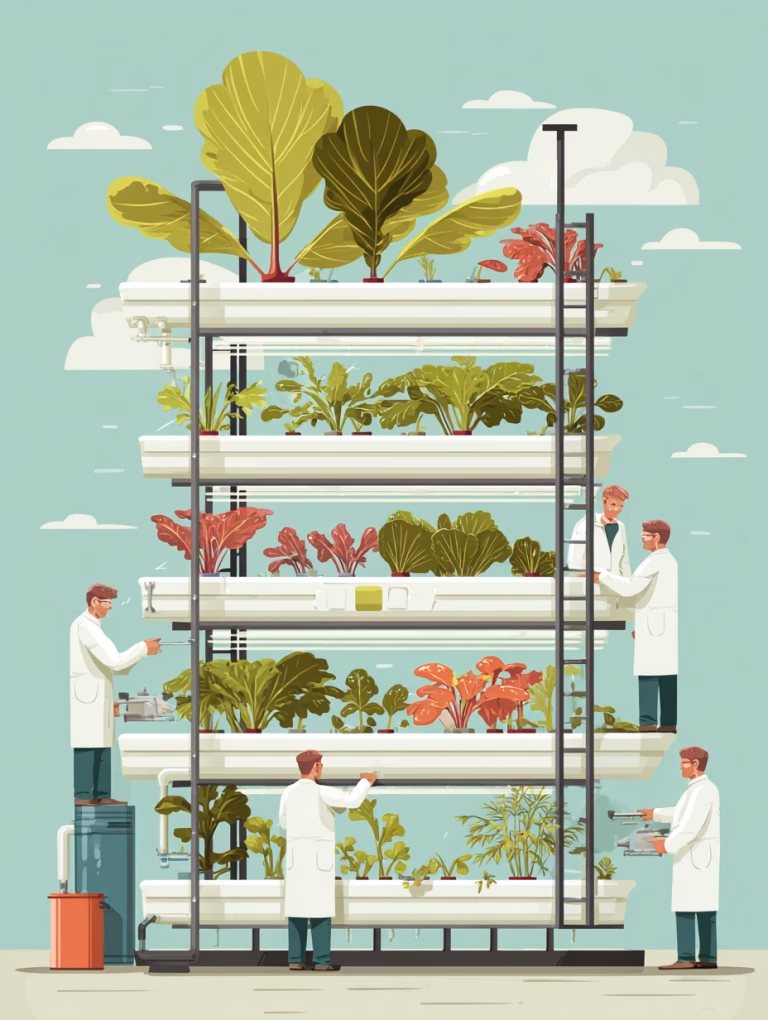
For small apartments, a compact LED-based unit is often the fastest way to get results. For growers who want more output, a vertical tower or multi-bucket DWC setup gives you more plant slots without needing outdoor space.
What Materials Do You Need?
A basic indoor hydroponic setup does not need much equipment, but each part matters. The goal is to create a stable root environment, steady light, and a nutrient mix that stays in range.
Materials and tools
- Reservoir or grow container.
- Net pots or planting cups.
- Growing medium such as coco coir, rockwool, clay pebbles, or perlite.
- Hydroponic nutrients.
- pH test kit or digital pH meter.
- Air pump and air stone for DWC.
- Full-spectrum LED grow light.
- Timer for light control.
- Clean water.
- Optional: EC meter, thermometer, and hygrometer.
How Do You Set It Up?
Here is the simplest beginner workflow for hydroponics without soil or sunlight. This approach works well for lettuce, basil, mint, kale, and other leafy crops
Step 1: Pick the right crop
Start with fast-growing, compact plants that tolerate indoor conditions. Lettuce and herbs are the easiest because they respond well to moderate light and do not need a long growth cycle.
Step 2: Choose a system
Use a DWC, wick, or countertop system for your first run. These systems are less demanding than aeroponics or nutrient film systems, which makes them better for learning the basics.
Step 3: Install the light
Mount a full-spectrum LED above the canopy and keep the distance appropriate for the fixture. Most small indoor greens do well with a consistent daily light schedule rather than irregular on-and-off use.
Step 4: Prepare the medium
Rinse inert media before use, especially clay pebbles and rockwool. The medium should support the plant, hold some moisture, and avoid adding unwanted nutrients of its own.
Step 5: Mix nutrients
Use a hydroponic nutrient formula designed for water culture, not garden soil. Start at a mild strength, then increase only if the plants show healthy growth and no tip burn.
Step 6: Balance pH
Check the solution regularly and keep the pH in a range that lets roots absorb nutrients efficiently. For most hydroponic greens, 5.5 to 6.5 is a practical target.
Step 7: Add oxygen
If you are using DWC, run an air pump and air stone to keep the root zone oxygenated. Roots that sit in stagnant water are much more likely to struggle.
Step 8: Maintain environment
Keep the grow area clean, stable, and easy to monitor. A simple thermometer, hygrometer, and timer can prevent a lot of avoidable stress in small indoor systems.
What Mistakes Slow Beginners Down?
The biggest mistake is treating hydroponics like soil gardening. Soil habits such as overwatering, using random fertilizer, or ignoring pH can create fast nutrient problems in a soilless system.
Other common mistakes include weak light, poor oxygenation, and choosing plants that are too large or too slow for a first setup. Crowding too many plants into a small unit also reduces airflow and increases disease risk.
- Wrong pH range.
- Nutrient solution too strong too early.
- Insufficient light intensity.
- Warm, stagnant water.
- Poor sanitation between grows.
- Large fruiting crops in a starter system.
- No monitoring for pests or algae.
Which Growing Media Work Best?
Different media work better in different systems, and the best choice depends on water retention, aeration, and how much support the roots need. Rockwool, coco coir, and clay pebbles are the most common beginner options.
| Medium | Strengths | Weaknesses | Best use |
|---|---|---|---|
| Rockwool | Fast germination, consistent moisture | Needs pH prep, can be messy | Seed starting, propagation |
| Coco coir | Good moisture retention, beginner-friendly | Needs nutrient management | Starter systems, mixed media |
| Clay pebbles | Reusable, airy, easy to rinse | Low water retention | DWC, tower systems |
| Perlite | Lightweight, inexpensive | Can float, dries faster | Wick systems, blends |
Check out our guide to growing media here: Hydroponics Growing Mediums: The Complete Guide to Types, Selection, and Management
What Advanced Growers Should Improve?
Once the basics are stable, the next gains usually come from better monitoring. An EC meter, a reliable timer, and consistent cleaning routines will improve crop uniformity more than fancy gear alone.
Advanced growers should also think in terms of crop stage, not just crop type. Nutrient strength, light intensity, and reservoir maintenance often need adjustment from seedling stage to vegetative growth and finally harvest.
Advanced tips
- Track pH drift daily during setup.
- Log reservoir temperature and top-off volume.
- Sterilize or replace media between crops when needed.
- Match crop choice to the system, not the other way around.
- Use integrated pest management instead of reactive spraying.
Which Plants Are Best?
Leafy greens and herbs are the easiest crops for indoor hydroponics because they mature quickly and stay compact. Fruiting crops can work too, but they need stronger light, more nutrients, and more patience.
| Beginner-friendly plants | Harder but possible |
|---|---|
| Lettuce | Tomatoes |
| Basil | Peppers |
| Mint | Cucumbers |
| Spinach | Strawberries |
| Arugula | Larger vining crops |
For the non DIYers in the House:
Step 1: Choose Your Hydroponic System
You don’t need a greenhouse or plumbing degree. Start with a plug-and-play system that fits your space and ambition.

Recommended Starter Kit: Click & Grow Smart Garden 9
This countertop unit is perfect for beginners. It comes with seed pods, a built-in LED grow light, and a sleek finish that won’t clash with your kitchen. No soil. No mess. Just plug it in and watch basil explode.
Scaling Up? Try: Hydroponic Tower Garden by Lettuce Grow
This vertical system grows up to 36 plants in 2 square feet. Ideal for serious growers who want to harvest leafy greens, herbs, and even cherry tomatoes indoors.
Step 2: Replace Sunlight with Full-Spectrum Grow Lights
Plants don’t need sunlight—they need the right wavelengths. That’s where grow lights come in.
Top Pick: Spider Farmer SF-1000 LED Grow Light
This full-spectrum light mimics natural sunlight and is energy-efficient. It’s perfect for small grow tents or shelf setups.
Budget Option: GE BR30 Grow Light Bulbs
Screw these into standard fixtures and you’re good to go. Great for herbs and leafy greens.
Step 3: Use a Soilless Growing Medium
Even without soil, roots need something to anchor to. Enter inert mediums like:
- Coco Coir – sustainable and retains moisture well
- Rockwool Cubes – ideal for seed starting
- Clay Pebbles (LECA) – reusable and great for deep water culture
Best LECA: Hydroton Expanded Clay Pebbles
These are the gold standard for hydroponic growers. Rinse before use and you’re set.
Step 4: Dial In Your Nutrients
Plants in hydroponics rely entirely on water-soluble nutrients. You’ll need a balanced mix of nitrogen, phosphorus, potassium, and micronutrients.
Best All-in-One: General Hydroponics Flora Series
This 3-part system lets you tweak nutrients based on growth stage. It’s beginner-friendly and widely trusted.
Don’t Forget: pH Control Kit
Hydroponics lives and dies by pH. Keep it between 5.5 and 6.5 for optimal nutrient uptake.
Step 5: Automate and Monitor
If you’re building a passive income system, your garden should be passive too.
Smart Upgrade: LandTek Smart EC pH Temperature Monitor
Monitor temperature, humidity, and water levels from your phone. Set alerts. Stay stealth.
Optional Add-On: VivoSun Grow Tent Kit
Control your microclimate and keep pests out. Ideal for Arizona summers or tight indoor spaces.
Final Thoughts
Hydroponics without soil or sunlight isn’t just possible—it’s profitable. Whether you’re growing for personal use or building a defensible affiliate niche, the setup is modular, scalable, and automation-friendly.
Start small. Optimize. Then scale like a machine.
FAQ
Can you really grow hydroponics without sunlight?
Yes, as long as you replace sunlight with a proper grow light. Plants only need the correct light spectrum and enough daily light hours to photosynthesize effectively.soilfreeharvest+1
Do hydroponic plants need soil at all?
No, they do not need soil itself. They only need root support, water, nutrients, oxygen, and light, which hydroponic systems provide in controlled form.extension.unr+1
What is the easiest hydroponic system for beginners?
Deep Water Culture is often the easiest starting point because it is simple, inexpensive, and easy to understand. A wick system is even simpler, but it is limited to smaller, low-demand plants.extension.
What pH should hydroponic water be?
A practical target for many hydroponic crops is pH 5.5 to 6.5. Staying in that range helps plants absorb nutrients more consistently.
What can you grow indoors with hydroponics?
Lettuce, basil, mint, spinach, and other leafy greens are the most beginner-friendly choices. Fruiting crops like tomatoes and peppers can work, but they usually need more light and stronger feeding.
How often do you change hydroponic nutrients?
That depends on system size, plant stage, and water use. Many growers top off water as needed and replace or refresh the reservoir on a regular schedule to keep pH and nutrient balance stable.
Is hydroponics good for hot climates like Arizona?
Yes, especially for indoor growers in hot, dry climates. Indoor hydroponics avoids extreme heat, wind, and poor soil while giving you year-round control over the crop environment.
Why do hydroponic roots need oxygen?
Roots still respire, so they need oxygen to function well. In systems like DWC, an air pump and air stone keep the water from becoming stagnant and help prevent root stress.
Is hydroponics water efficient?
Usually yes, because the system can recycle unused nutrient solution in closed-loop setups. That is one reason hydroponics is attractive in arid regions and small indoor grows.
What should I monitor first?
Start with pH, water level, temperature, and plant health. Those four checks catch most beginner issues before they become crop failures
Author Note
This guide was written with indoor hydroponics readers in mind, especially beginners growing in apartments, homes, and small urban spaces. The practical angle reflects the realities of hot, dry growing conditions common in the Phoenix metro area. For more than just theory, it is shaped to help growers choose simple systems, stable nutrients, and crops that actually finish well indoors.
Share this:

Discover more from Soil Free Harvest
Subscribe to get the latest posts sent to your email.