Top 5 Common Hydroponic Mistakes New Gardeners Make
Avoid These Pitfalls to Grow Smarter, Not Harder: A Deep Dive into Hydroponic Success
Hydroponic gardening has exploded in popularity, especially among apartment growers, sustainability enthusiasts, and urban entrepreneurs who crave the taste of homegrown produce without relying on soil or large outdoor spaces. From living room lettuce stations to balcony basil farms, this method promises high yields, faster growth, and a thrilling peek into the future of food.
But here’s the truth that separates weekend hobbyists from thriving hydroponic masters: success in hydroponics isn’t just about what you grow, it’s about how you manage your system. Even a small mistake can throw off the delicate balance that keeps your plants healthy and productive.
In this deep-dive guide, we’re breaking down the five most common hydroponic mistakes that plague new hydroponic gardeners and showing you exactly how to fix them before they ruin your crop. You’ll walk away understanding your nutrient levels, space management, system choice, water quality, and root health better than 90% of beginners.
Why Precision Matters in Hydroponics
Unlike soil gardening, where roots can buffer missteps by pulling from organic matter in the dirt, hydroponic setups rely entirely on what you provide the nutrients, the water, the light, and the oxygen. There’s no safety net.
Think of it as the Formula 1 of gardening: the rewards are massive, but so are the stakes if you cut a corner. Plants will communicate stress quickly. The color of the leaves, the smell of the roots, and even the growth rate all become feedback from your system.
When you apply the right habits and avoid common pitfalls, you’ll not only achieve impressive yields, you’ll also create a low-maintenance, automated system that practically grows food for you.
Let’s get started.
Mistake #1: Ignoring pH and EC Levels
If you take away just one tip from this article, it’s this: hydroponic plants live and die by their pH and EC levels.
pH measures how acidic or alkaline your nutrient solution is, while EC (electrical conductivity) measures the concentration of nutrients dissolved in the water. These two numbers determine how effectively your plants can absorb vital minerals.
Why It Matters
Imagine giving your plants a gourmet meal but locking it behind a door they can’t open. That’s what happens when pH or EC drifts out of range. Even with expensive nutrient mixes, your plants might become nutrient-starved because they physically can’t absorb what’s in the water.
Typical symptoms of imbalance include:
- Yellowing leaves
- Stunted growth
- Brown or burned leaf tips
- Weak flavor in herbs and greens
How to Fix It
- Invest in a digital pH and EC meter (the small expense pays off quickly).
- Check your nutrient reservoir at least once a week, or daily for high-performance systems.
- Maintain pH between 5.5 and 6.5 for most crops.
- For EC, start with 1.2–2.0 mS/cm depending on plant type and growth stage.
- Use pH Up and pH Down solutions (liquid acids or bases) to fine-tune your levels gradually.
Pro tip: track your readings in a simple spreadsheet or app. Patterns reveal how your plants feed and which adjustments work best over time.
We recommend Bloom City pH Control Kit (affiliate link) for maintaining pH levels – Hydroponics lives and dies by pH. Keep it between 5.5 and 6.5 for optimal nutrient uptake.
Mistake #2: Overcrowding Your Grow Space
Many new growers assume that packing more plants into a system will increase yield. Unfortunately, hydroponics plays by different rules. Crowding your grow space creates competition instead of cooperation.
Why It Happens
When you start your first hydroponic system, it’s easy to underestimate how much your plants will expand. A tiny basil sprout can double in size overnight under ideal conditions. Multiply that by ten plants, and suddenly your grow area turns into a humid jungle with zero airflow.
The Consequences
Overcrowding leads to a cascade of issues:
- Poor airflow, inviting mold, mildew, and pests.
- Light blockage, preventing lower leaves from photosynthesizing.
- Root competition in shared reservoirs, leading to inconsistent nutrient uptake.
- Microclimate stress, where trapped humidity encourages plant disease.
How to Fix It
- Research the mature size of your plants before sowing.
- Follow plant spacing guidelines for example, 8–10 inches for lettuce, 12–18 inches for herbs like basil.
- Use vertical hydroponic systems or tiered racks to grow upward instead of outward.
- Regularly prune and train plants for better airflow and even light distribution.
- Add small clip-on fans to mimic natural airflow.
If you’re growing for profit or frequent harvests, it’s better to have fewer, high-performing plants than a jungle of stressed, mediocre ones.
Mistake #3: Choosing the Wrong System for Your Goals
Not every hydroponic setup plays nicely with every crop or every lifestyle. Beginners often get seduced by flashy systems without considering whether they fit their space, budget, or daily routine.
System Types at a Glance
- Deep Water Culture (DWC): Roots are suspended in oxygenated nutrient water. Great for beginners and fast-growing leafy greens.
- Kratky Method: A passive version of DWC needing no pumps perfect for simple setups or educational projects.
- Nutrient Film Technique (NFT): A thin stream of nutrient solution flows over roots in a channel. Excellent for herbs and lettuce.
- Ebb and Flow (Flood and Drain): Roots are periodically flooded with nutrients then drained. Suited for diverse crop types.
- Aeroponics: Sprays roots with a nutrient mist. Offers highest oxygenation and yield potential but demands precision.
For a more in-depth comparison of the top two systems, see our post Kratky Method vs Deep Water Culture: Which Is Better?
Mistake Breakdown
Choosing a complex or incompatible system wastes money and frustrates new growers. For instance, NFT systems thrive with small-root plants but struggle with fruiting crops like tomatoes that need stable support.
How to Fix It
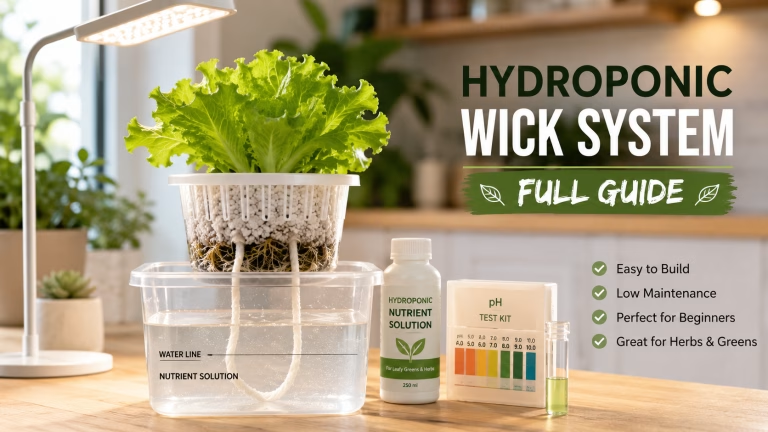
- Start small with DWC or Wick Systems for minimal maintenance and forgiving performance.
- Match your system to your crop type:
Herbs and greens → NFT or DWC
Fruit-bearing plants → Ebb and Flow or Drip Systems
Microgreens → Kratky or Capillary Mat setups - Factor in available time, budget, and technical skill.
- If automation appeals to you, opt for systems with integrated timers, float switches, and water sensors.
Pick a setup that works for your schedule, not against it. Automation tools like pH regulators and EC dosing systems can transform a manual grow into a nearly self-maintaining ecosystem.
Mistake #4: Poor Water Quality
Water quality is the lifeblood of hydroponics. It’s not just a medium it’s the messenger that delivers every nutrient your plant consumes. Unfortunately, tap water often introduces invisible saboteurs into the system.
What’s in Tap Water?
Even in cities with high-quality water, chlorine, chloramines, fluoride, and heavy metals like copper or lead can affect plant health. Hard water (high in calcium and magnesium) throws off nutrient balance and raises EC levels artificially.
The Damage It Causes
Low-quality water can:
- Disrupt nutrient absorption.
- Cause inconsistent growth and leaf chlorosis.
- Encourage root stress or “nutrient lockout.”
- Alter the pH more rapidly than expected.
How to Fix It
- Use filtered water or reverse osmosis (RO) systems for precise control.
- For small operations, let tap water sit for 24–48 hours to allow chlorine to dissipate naturally.
- Test for hardness (ppm or dH) using inexpensive aquarium test kits.
- Supplement RO water with calcium-magnesium (Cal-Mag) solutions to restore essential minerals.
- Keep a water-change schedule refresh your nutrient solution every 1–2 weeks to avoid buildup.
An often-overlooked hack: maintain a second batch of pre-adjusted water on standby. This ensures consistency when refilling or topping off your system.
Mistake #5: Neglecting Root Health
Above-ground growth may get all the attention on Instagram, but the unseen world beneath your net pots determines 90% of your system’s success. Healthy roots act as a plant’s immune system and nutrient highway.
Recognizing Healthy Roots
Ideally, roots should appear:
- White or cream-colored.
- Firm to the touch.
- Odorless.
- Full of fine hair-like tendrils.
If you notice brown, slimy, or foul-smelling roots, you’re likely dealing with root rot often caused by poor oxygenation, warm water temperatures, or bacterial infection.
The Science Behind It
Roots breathe just like leaves. When oxygen levels in the nutrient solution drop, anaerobic bacteria move in, consuming decaying root tissue. The process snowballs, choking off water absorption and eventually killing the plant.
How to Fix It
- Keep the root zone temperature between 65–75°F (18–24°C).
- Use air stones or diffusers to inject oxygen into your reservoir.
- Inspect roots weekly, lifting plants slightly to check for discoloration or smell.
- Use hydrogen peroxide (3–5 mL/L) as a short-term treatment for mild rot.
- Introduce beneficial microbes or mycorrhizal inoculants for ongoing root protection.
Bonus tip: opaque or dark-colored reservoirs prevent light penetration and algae formation, creating a cleaner root environment.
Going Beyond the Basics: Smart Hydroponic Habits
Avoiding beginner mistakes is step one. But to truly grow smarter, not harder, you’ll need to develop a few key habits that separate efficient growers from frustrated ones.
- Log everything: Keep track of water changes, pH, EC, and any symptoms you observe. Patterns teach faster than tutorials.
- Calibrate your meters monthly for accuracy.
- Monitor temperature and humidity with a digital hygrometer to prevent hidden stressors.
- Invest in LED grow lights with adjustable intensity tailored to growth phases.
- Embrace automation with Wi-Fi plugs, nutrient dosers, and pH controllers as your system scales.
Hydroponics rewards consistency. A few simple checks each week save you countless troubleshooting hours later.
Eco-Friendly Growth: Sustainable Hydroponics at Home
Water efficiency is one of hydroponics’ biggest superpowers. Compared to traditional soil farming, hydro systems can use up to 90% less water and avoid fertilizer runoff entirely.
To push sustainability further:
- Reuse nutrient runoff by feeding ornamental or non-edible plants.
- Compost plant trimmings for use in other garden systems.
- Switch to organic-certified nutrient lines wherever possible.
- Use biodegradable grow media like coconut coir or peat alternatives.
By aligning hydroponic efficiency with eco-conscious practices, you’ll grow food that’s both sustainable and profitable.
General Hydroponics Flora Series: (affiliate link) an industry standard 3-part mix suitable for all growth stages is a good, affordable nutrient solution.
Troubleshooting Quick Guide
| Symptom | Likely Cause | Fix |
|---|---|---|
| Yellow leaves | High pH or nitrogen deficiency | Check pH/EC, increase nitrogen balance |
| Brown roots | Root rot or excessive heat | Reduce reservoir temp, add air stones |
| Algae growth | Light exposure on water | Cover reservoir, reduce light leak |
| Slow growth | Low EC or poor lighting | Increase nutrient strength, improve light intensity |
| Bitter greens | Excess nitrogen or heat stress | Dilute nutrients, lower ambient temperature |
Bookmark this table, it’ll save your harvest someday.
The Mindset of a Successful Hydroponic Grower
Hydroponics isn’t “set and forget.” It’s “set, observe, learn, adjust.” The best growers treat their systems like living ecosystems not machines. Every pH tweak, lighting change, and nutrient dose becomes part of a learning loop that improves future crops.
Remember: mistakes aren’t failures they’re feedback. Even seasoned growers mess up; what sets them apart is how quickly they adapt.
Final Thoughts: Grow Smarter, Not Harder
The next generation of food production is happening indoors, in urban apartments, and on kitchen counters just like yours. Hydroponics lets anyone transform empty corners into lush, edible landscapes.
By avoiding the five mistakes outlined here, overlooking pH and EC, overcrowding your grow area, choosing the wrong setup, neglecting water quality, and ignoring root health, you’ll set a solid foundation for every future harvest.
Start small. Measure often. Learn constantly. And before long, you’ll realize your system doesn’t just produce plants it produces independence, knowledge, and the satisfaction of mastering one of the most exciting frontiers in modern gardening.
Share this:

Discover more from Soil Free Harvest
Subscribe to get the latest posts sent to your email.







One Comment