AutoPot Style Irrigation Basics: Passive Hydroponic Watering Systems for Home Growers
AutoPot style irrigation is a passive hydroponic watering method that uses gravity, a reservoir, and a float valve to deliver nutrient solution only when plants need it. It is one of the simplest ways to automate watering without pumps, timers, or electricity, which makes it especially useful for home growers, apartment gardeners, and anyone who wants a low-maintenance indoor or patio grow.
TL;DR: AutoPot style systems are best thought of as set-and-forget, gravity-fed irrigation for soilless growing. They work especially well for herbs, leafy greens, peppers, tomatoes, and other medium to heavy feeders when you want consistent moisture with minimal daily labor.
What is AutoPot style irrigation?
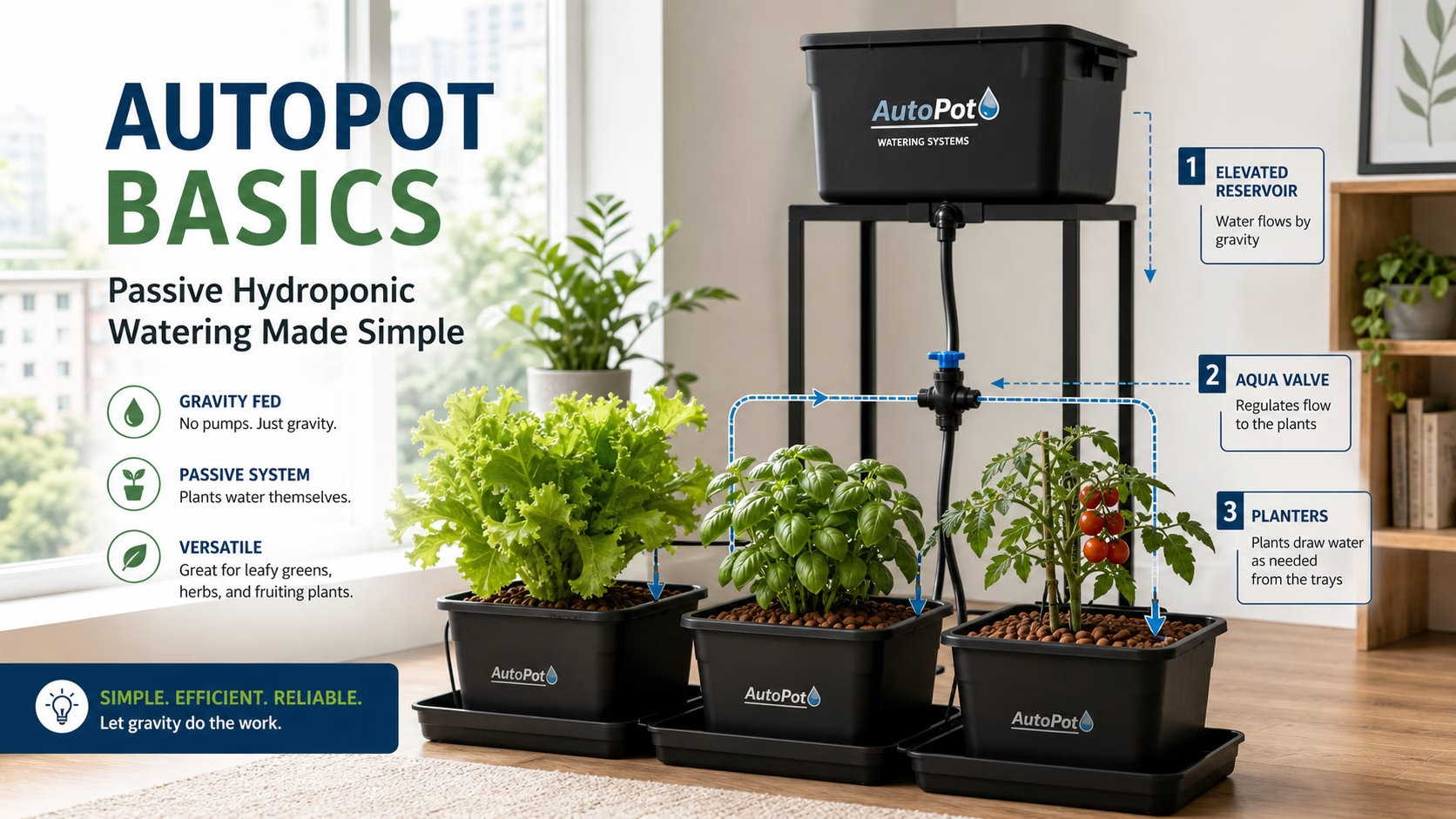
AutoPot style irrigation is a passive watering system that feeds plants from a reservoir through a valve-controlled tray or pot base. When the plant uses water, the valve opens and refills the tray, then shuts off again once the correct water level is reached.
Unlike drip hydroponics, there is no pump cycling on and off, and unlike hand watering, the root zone stays more consistent from day to day. That stability is the main reason many hobby growers like it for indoor tents, balconies, small greenhouses, and simple backyard setups.
How does passive hydroponic watering work?
The core idea is simple: gravity moves nutrient solution from the reservoir to each pot, and a float-type valve controls when refill happens. As the medium wicks moisture upward, roots access water and nutrients without the grower needing to intervene every day.
In practical terms, the tray holds a shallow nutrient pool, the substrate draws that moisture upward, and the plant drinks until the level drops enough for the valve to reopen. This creates a repeated wet-to-nearly-dry cycle in the root zone, which helps keep oxygen available while still preventing drought stress.
Why do growers choose it?
Passive hydroponic watering systems are popular because they reduce daily labor and remove several points of failure common in pump-driven systems. There is no timer to program, no pump to clog, and no need for mains pressure when the setup is designed correctly.
The biggest benefits are consistency, simplicity, and scalability. Once you learn one pot, you can usually expand to several pots with the same reservoir and feeding routine.
What are the main benefits?
AutoPot style irrigation has a practical appeal for beginner and intermediate growers. It is easy to understand, easy to expand, and forgiving if you are not always around to water manually.
Key advantages include:
- No electricity required for watering, which helps in outages and simple spaces.
- More consistent moisture than hand watering.
- Less daily work, especially for busy households.
- Good scalability for multi-pot home grows.
- Efficient nutrient use because the system refills only when needed.
What are the limitations?
This style of irrigation is not perfect for every plant or every grower. It depends heavily on the right growing medium, proper nutrient strength, clean plumbing, and enough reservoir height for gravity feed.
The main tradeoffs are:
- It is less flexible than top-feed drip for rapid changeovers.
- It can be less ideal for very small seedlings if the medium stays too wet.
- Reservoir management still matters, so passive does not mean maintenance free.
- Heavy fruiting crops may need careful EC and pH control to avoid salt buildup.
Which plants work best?
AutoPot style systems are best for crops that like steady moisture and do well in containers with strong root support. The best fits are lettuce, spinach, herbs, peppers, tomatoes, and many other vegetables that adapt well to soilless culture.
In my own style of testing in compact indoor systems, leafy greens and basil are the easiest wins because they respond quickly and do not demand complicated training. Fruiting plants can perform very well too, but they ask for better nutrient control and more patience.
Best herbs for indoor hydroponics → What Can You Grow in Hydroponics? 25+ Crops for Beginners to Advanced Growers
Which system types are best?
Passive hydroponic watering is especially strong in a few setups:
- Container gardens with inert media.
- Indoor grow tents with limited floor space.
- Patios and small greenhouses where electricity is inconvenient.
- Multi-pot hobby systems where the grower wants a simple daily routine.
It is not usually the best choice for raft systems, deep water culture, or any setup that needs strong aeration in the root zone. Those methods rely on different oxygen and water delivery patterns.
What equipment do you need?
A basic AutoPot style system has a small number of core parts. Most commercial and DIY versions revolve around a reservoir, pots or containers, trays, and a valve that meters water into each tray.
Required materials
- Reservoir or tank.
- Tubing and fittings.
- Valve or float valve assembly.
- Plant pot or container.
- Tray or base that can hold a shallow water layer.
- Inert growing medium such as perlite, coco coir blends, clay pebbles, or similar media used in hydroponics.
- Best hydroponic growing media → What Can You Grow in Hydroponics? 25+ Crops for Beginners to Advanced Growers
Helpful tools
- pH meter.
- EC or TDS meter.
- Measuring cup or graduated jug.
- Clean scissors or tubing cutter.
- Bucket for mixing nutrients.
- Optional water filter if your source water is hard or dirty.
How do you set one up?
How to build a simple passive hydroponic watering system
A passive hydroponic watering system uses gravity and a valve to keep plant roots supplied with nutrient solution without pumps or timers. This setup is ideal for home growers who want stable watering with low daily effort.
Materials and tools
- Reservoir with lid.
- Gravity-fed tubing.
- Float valve or AutoPot style valve.
- Pot tray or base tray.
- Grow pot or fabric pot.
- Inert medium such as coco/perlite, perlite-heavy blend, or clay pebbles.
- pH meter and EC meter.
- Nutrient solution.
- Drill or hole saw if you are modifying a container.
- Scissors or tubing cutter.
Steps
- Choose the reservoir location.
Place the reservoir higher than the plant trays so gravity can move solution reliably. A stable, elevated position also makes it easier to inspect water level and top off the tank. - Install the valve and tubing.
Connect the reservoir to the tray or base using the valve and supply line. The valve should allow the tray to refill only when the level drops, which is the heart of the passive system. - Prepare the grow containers.
Fill pots with a medium that wicks well and still leaves enough air around the roots. For home hydroponics, inert media such as coco blends, perlite mixes, or clay pebbles are commonly used because they support roots without creating muddy conditions. - Set the pots into the trays.
Make sure each pot sits flat and that water can reach the base evenly. Uneven placement can cause one side to stay wetter than the other, which leads to uneven root growth. - Mix the nutrient solution.
Add hydroponic nutrients to clean water, then check pH and EC before filling the reservoir. For most hydroponic crops, a pH in the 5.5 to 6.5 range is a practical target, with many growers aiming near 5.8 to 6.2 for consistent uptake. - Prime the system.
Fill the reservoir and allow the trays to cycle once or twice before planting. This helps confirm that the valve opens and closes correctly and that the medium begins to wick as expected. - Transplant seedlings or starts.
Move healthy plants into the prepared pots once they have enough roots to handle the medium. Seedlings that are too small can stay overly wet, so start them carefully and avoid flooding too high in the pot. - Observe the first few days closely.
Watch for runoff, dry spots, or excess saturation. In the first week, small adjustments to medium blend, reservoir level, or nutrient strength usually matter more than major changes in hardware. - Record your settings.
Note pH, EC, reservoir volume, and plant response. That record makes it much easier to repeat success on your next run, especially if you grow more than one crop type.
What maintenance does it need?
Passive systems still need regular attention, just less than pump-based setups. Reservoir checks, pH testing, and line inspection are the main chores.
A practical maintenance rhythm looks like this:
- Check reservoir level daily or every other day.
- Test pH and EC several times per week.
- Refill and remix nutrients as the crop drinks.
- Inspect valves and tubing weekly.
- Flush the system periodically to reduce salt buildup.
From multiple runs in hot, dry conditions and then in cooler indoor spaces, the biggest mistake I see is treating the reservoir like a set it and forget it bucket. The system is passive, but the nutrient balance is not.
What problems happen most often?
The most common issues are valve failures, poor wicking, nutrient imbalance, and medium choice problems. If the tray never fills, the line may be blocked or the reservoir may be too low. If the medium stays soggy, the pot may be too small, the medium too fine, or the tray too deep.
Other frequent problems include:
- pH drifting out of range.
- EC rising too high as water evaporates.
- Roots staying too wet in young plants.
- Salt crust around the tray edge.
- Uneven growth between pots on the same line.
How do you troubleshoot it?
Start with the simplest possible check. Look at water level, flow path, valve behavior, and medium saturation before changing nutrients or replacing parts.
A fast troubleshooting sequence:
- Confirm the reservoir has enough solution.
- Check for kinks or blocked tubing.
- Inspect the valve for debris.
- Verify the pot medium is not too dense.
- Measure pH and EC.
- Flush if you suspect salt buildup.
- Rebalance the reservoir and test again.
That process solves most home grow problems without overcomplicating the system.
How does it compare to other hydroponic systems?
Passive watering is different from DWC, NFT, and drip systems because the grower is trading speed and precision for simplicity and reliability. It is usually less technical than recirculating systems and far easier to live with in a small home or apartment.
| System type | Main strength | Main drawback | Best use |
|---|---|---|---|
| AutoPot style passive irrigation | Low labor, no pump, steady moisture | Less flexible for fast changes | Home growers, apartments, patios |
| DWC | Fast growth and simple root access | Needs aeration and close oxygen control | Leafy greens, herbs |
| NFT | Efficient nutrient delivery | Can fail quickly if flow stops | Compact greens and herbs |
| Drip hydroponics | Flexible and scalable | More hardware and maintenance | Mixed crops, fruiting plants |
Is it good for beginners?
Yes, this is one of the most beginner-friendly hydroponic watering styles if you already understand basic nutrient mixing and pH. The hardware is simpler than many recirculating systems, and the daily routine is lighter than hand watering.
That said, beginners still need to learn the basics of medium selection, pH, and EC. A passive system reduces work, but it does not eliminate the need to understand plant nutrition.
Where does it fit best?
This style fits best in home gardens where convenience matters more than maximum experimental control. It is a strong option for apartment gardeners, indoor tent growers, and people who travel or work long hours.
It is also a good match for growers who want a tidy setup with fewer moving parts. In urban spaces, that usually means less noise, fewer cords, and a cleaner footprint.
FAQ
How much does an AutoPot style system cost?
A small DIY setup can be relatively affordable, while branded multi-pot kits cost more because you are paying for convenience and repeatable parts. The final price depends on reservoir size, valve quality, pot count, and whether you add meters or filters.
Is it hard to build one?
Not really, especially if you can follow a basic plumbing layout and measure pH correctly. The biggest learning curve is choosing a medium that wicks well without staying too wet.
Do I need electricity?
Not for the watering function itself. That is one of the main reasons passive hydroponic watering systems are so appealing for simple indoor and patio grows.
What plants grow best in it?
Leafy greens, herbs, peppers, and tomatoes are strong choices. The system is especially useful for plants that like steady moisture and can handle container culture well.
Can I use it indoors?
Yes, and that is one of its best use cases. Indoor tents, spare rooms, basements, and apartments all benefit from a watering system that does not need a pump cycle.
What is the biggest mistake growers make?
Using the wrong medium or ignoring reservoir chemistry. If the medium stays too wet or the pH drifts too far, the system can underperform even if the hardware is working correctly.
How often do I need to check it?
At minimum, check the reservoir and plant response regularly, especially during the first few weeks. Many growers find that a quick daily glance and a few deeper checks per week is enough once the system is dialed in.
Is it better than drip hydroponics?
It is better if you want simplicity and low daily labor. Drip systems are more flexible, but passive irrigation is usually easier to manage for small home grows.
Can I use soil?
Not for a true hydroponic setup. The system performs best with inert or soilless media that supports capillary movement and keeps nutrients available at the root zone.
Author note
I write from hands-on experience with indoor and urban growing systems, including years of practical work in Phoenix, Arizona and more recent growing in Michigan. That background shaped my preference for simple, reliable hydroponic setups that can handle both hot, dry conditions and cooler seasonal swings. My focus at SoilFreeHarvest.com is helping home growers and apartment gardeners build productive systems without unnecessary complexity. I especially enjoy testing watering methods, media blends, and compact setups that make indoor growing more consistent for busy people.
Share this:

Discover more from Soil Free Harvest
Subscribe to get the latest posts sent to your email.







One Comment