How to Survive (and Profit From) a Power Outage: Backup Systems for Hydroponic Farms
A power outage can kill a hydroponic crop in Phoenix in less than a day, but that loss is optional. With the right backup aeration, power, and cooling, you can ride out most outages and turn a single saved crop into pure profit.
TL;DR: Protect aeration and temperature first, size backup power to your most critical loads, and use a tiered plan that starts with a battery air pump and scales up to solar and whole-system backup as your farm grows.
Affiliate Disclosure: This article contains affiliate links. If you purchase through these links, soilfreeharvest.com may earn a small commission at no extra cost to you.
Why are power outages a real threat for Phoenix hydroponic growers?
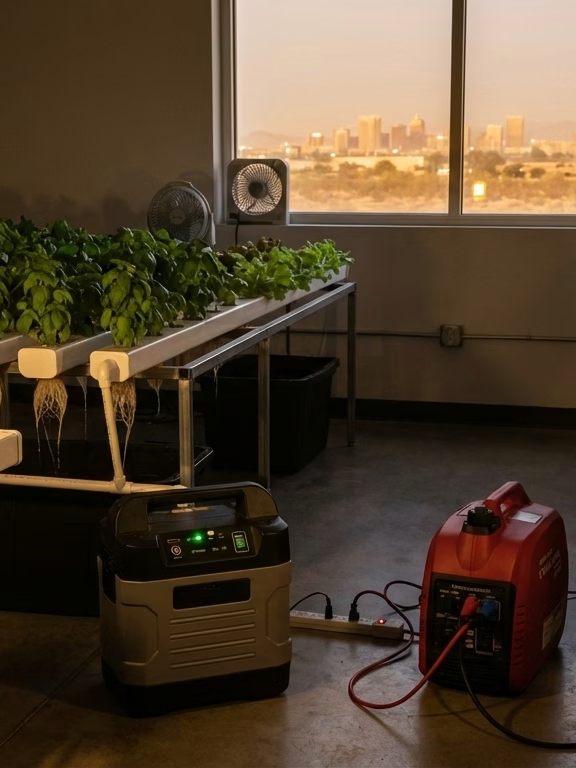
Phoenix is already one of the hottest cities in the United States and the urban heat island effect means summer nights often stay above 90°F. When massive heat waves hit, power demand for air conditioning pushes utilities like APS and SRP to new record peaks, which increases stress on the grid. At the same time, research shows that power failures have become more common nationwide during extreme weather and heat events.
Studies that modeled what happens when a heat wave and a blackout hit Phoenix at the same time found that over a million residents could face dangerous indoor heat, with thousands at risk of heat illness or death. Arizona still ranks highly for overall grid reliability, but record-breaking summers like 2023 and rising demand are narrowing the safety margin. For hydroponic growers, this means you cannot rely on “the power almost never goes out” as a risk strategy.
Summer cooling tips for hydroponic systems in Phoenix → hydroponic cooling strategies for Arizona heat
What happens to your hydroponic system in the first 4 hours without power?
Hydroponic systems are life-support machines for plant roots. When power drops, several things start happening at once.
- Aeration stops, so dissolved oxygen begins to fall.
- Pumps stop, so nutrient flow and circulation stall.
- Cooling and environmental controls shut down, so water and air temperatures climb.
- Lights shut off, disrupting the photoperiod and lowering photosynthesis.
On a 110°F Phoenix afternoon, these processes move very quickly. A crop that looks fine 30 minutes into an outage can be in real trouble by hour four.
Minutes 0 to 60: Silent damage begins
In deep water culture (DWC), Kratky with minimal headspace, and any system with standing water, roots start using up dissolved oxygen the moment your air pump stops. Within 30 to 60 minutes, DO levels can drop enough for roots to shift toward anaerobic stress, even if they still look healthy.
If your grow space or greenhouse is already hot, fans and air conditioning shutting off also cause a slow but steady rise in leaf and canopy temperature. Sensitive crops like lettuce, spinach, and strawberries are the first to show stress.
Hours 1 to 4: Root oxygen and heat become the real killers
Between 2 and 6 hours without aeration, roots in warm, still water become prime targets for opportunistic pathogens, especially Pythium and other root-rot organisms. The warmer the water, the faster the DO crash and the faster pathogens can multiply.
At the same time, Phoenix outdoor or uncooled greenhouse temps can push reservoir temperatures above 80°F and air above 100°F in a matter of hours. Cool-season crops can begin to wilt, tip burn, or permanently stall just from this short heat spike.
How fast do different hydroponic systems fail during an outage?
Some system types tolerate outages better than others. Here is a quick comparison.
| System type | Outage tolerance (summer Phoenix) | Main failure mode |
|---|---|---|
| DWC / Bubbler Buckets | 2 to 6 hours before serious root damage | Oxygen crash in warm, stagnant water |
| Kratky (deep volume) | 4 to 12 hours if water is deep and cool | Heat buildup and slow oxygen depletion |
| NFT / Vertical channels | 1 to 3 hours before roots dry or overheat | Roots drying in empty channels |
| Ebb and Flow | 2 to 8 hours depending on last flood cycle | Roots drying or overheated media |
| High pressure aeroponics | Under 1 hour in hot conditions | Roots dry out when mist stops |
These are general ranges, not guarantees. Shaded, insulated reservoirs and lower plant density buy you time. Shallow, dark, or uninsulated systems cut that safety window down to almost nothing.
Compare DWC, NFT, and ebb and flow → hydroponic system types for home growers
What is the realistic action timeline during a power outage?
Think of outages in three windows so you can respond without panic.
- Immediate: 0 to 4 hours
- Short-term: 4 to 12 hours
- Long-term: 12+ hours
The longer the outage, the more you shift from “keep plants alive” to “run on backup power efficiently and protect your equipment.”
What should you do in the first 30 minutes of a power outage?
The first 30 minutes are about fast triage, not perfection.
- Confirm the outage and estimate duration
Check your breaker panel to rule out a local trip, then check outage maps from your electric utility company on your phone. If the estimate is under 1 hour, you may be able to ride it out with minimal backup, especially at night. - Activate backup aeration immediately
Plug in or switch on any battery-powered air pumps for DWC or fish tanks. If you have a UPS, prioritize air pumps and critical circulation pumps, not lights. - Shade and insulate your reservoirs
Cover reservoirs with reflective or insulated covers, or even emergency blankets, to slow temperature rise. In a pinch, cardboard plus a white sheet is better than leaving plastic totes in direct sun. - Check water and air temperature
Use a thermometer on both the reservoir and the grow area. If water is already above 75°F, you are on a tighter clock and should act aggressively on cooling.
What should you do between 4 and 12 hours without power?
If the outage passes 4 hours or the utility has no clear restoration time, you are in survival-mode operations.
How often should you do manual aeration?
If you do not have an air pump running, plan to manually aerate the reservoir:
- Every 15 to 20 minutes for 2 to 3 minutes when water is above 75°F
- Every 30 minutes if water is closer to 68 to 72°F
You can:
- Stir vigorously with a clean paddle or long spoon.
- Scoop water and pour it back from a height to splash and entrain air.
- Cycle small submersible pumps via a battery inverter if you have that option.
Is this fun? No. Does it save leafy greens or strawberries during a single 6 hour outage? Very often yes.
How should you monitor pH, temperature, and dissolved oxygen?
Plan to check key metrics every 2 hours during a long outage:
- Water temperature
Keep it under 75°F if possible for leafy greens, under 78°F for many fruiting crops. Consider emergency ice packs in sealed bags if temps spike. - pH
Heat and stagnation can shift pH, especially in smaller reservoirs. For most systems, aim for 5.5 to 6.5 and avoid sudden corrections unless you see extreme drift. - Dissolved oxygen
If you have a DO meter, this is the time to use it. Try to keep DO above 5 ppm for most crops. If you do not have a meter, treat warm, still water as low oxygen by default.
How to monitor pH and EC in hydroponic systems → beginner hydroponic water testing guide
What changes once an outage goes past 12 hours?
Outages over 12 hours move into a different category. You must think about:
- Reservoir hygiene, not just oxygen.
- Plant selection and triage.
- Fuel, battery state of charge, and generator runtime.
This is when a pre-built backup power plan pays off. You will not have the mental bandwidth to design power budgets when it is 110°F and you have already been hand stirring a reservoir for 8 hours.
If you are running a small commercial or side-hustle farm, this is also where the math flips. Losing a single $500 crop once can justify the cost of a $300 UPS or a $500 portable generator.
What backup options make sense at different budgets and system sizes?
Here is a high level breakdown before diving into each tier.
| Tier | Budget | Typical loads covered | Best for |
|---|---|---|---|
| 1 | 100 to 300 USD | Air pumps, small DC circulation, monitoring | Balcony, closet, or single rack growers |
| 2 | 300 to 800 USD | Critical pumps plus maybe small fans | Garage setups, small greenhouses |
| 3 | 1,500 to 5,000 USD | Most of the system for limited time | Larger hobby farms and microgreens producers |
| 4 | 5,000+ USD | Whole system and often household loads | Off-grid or high value year-round farms |
Tier 1: What are the cheapest backup options (100 to 300 USD)?
Tier 1 focuses on keeping roots alive and water cool enough, not on running lights or full climate control.
Recommended Tier 1 gear
- Battery powered air pumps with spare D batteries or built-in lithium packs.
- Rechargeable Aquarium Air Pump, Adjustable Battery-Powered Oxygen Aerator ~ Check availability through partnered retailers for up‑to‑date pricing.
- Small 12 V DC air pumps plus a deep cycle battery and inexpensive inverter.
- Reflective or insulated reservoir covers.
- Clip-on shade cloth or thermal blankets for greenhouses or patios.
- Manual aeration tools such as a sturdy ladle or paddle.
For many balcony or indoor tent growers, this tier alone can prevent most crop losses in short outages.
Pros
- Low cost and simple to store.
- No fuel, exhaust, or noise.
- Scales easily by adding more pumps or a second battery.
Cons
- Limited runtime if you forget to keep batteries charged.
- Cannot power your main AC or grow lights.
- Requires manual work for longer outages.
Tier 2: When does a UPS or small generator make sense (300 to 800 USD)?
Tier 2 covers the jump to automatic, plug-and-play backup for your most critical equipment.
Using a UPS for hydroponics
A UPS (uninterruptible power supply) is ideal for:
- Air pumps and small circulation pumps.
- Control equipment such as Arduino or Raspberry Pi controllers and WiFi sensors.
- Routers and cameras if you rely on remote monitoring.
A 1000 to 1500 VA UPS often costs around 250 to 350 USD and might run a 50 to 100 watt load for 2 to 4 hours. That is sufficient to ride out the many short outages that utilities restore in under an hour, especially during storms.
From an ROI standpoint, one saved crop worth 300 to 500 USD on a single outage can completely pay back the UPS. After that point, every saved crop becomes pure profit.
This CyberPower Mini Tower should do the trick and it is under $300 – CyberPower CP1500PFCLCD PFC Sinewave UPS Battery Backup and Surge Protector ~ Check availability through partnered retailers for up‑to‑date pricing.
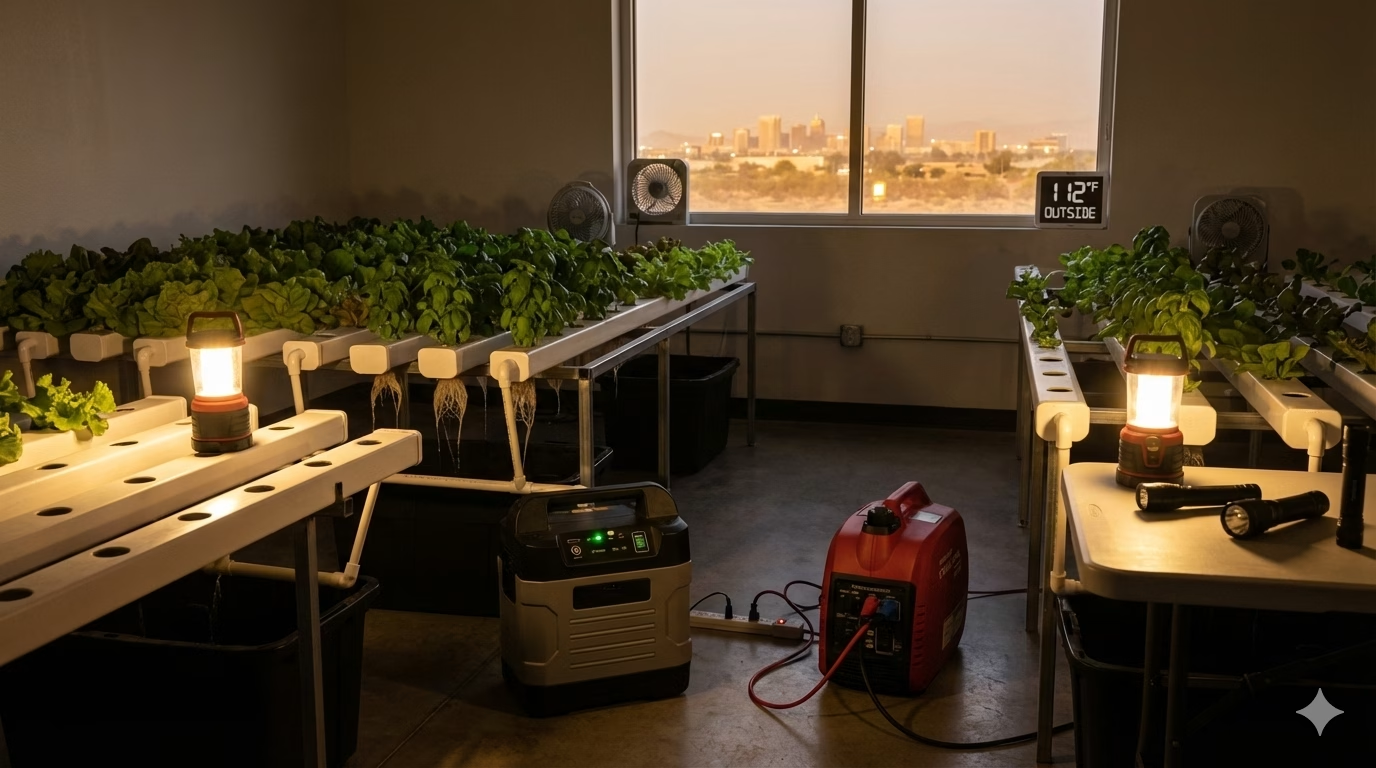
Adding a 2,000 watt portable generator
A small inverter generator in the 2000 watt class often costs 400 to 700 USD. It can run:
- Air and water pumps.
- Dehumidifier or mini-split AC on economy mode for a single room.
- A few LED lights, but usually not your entire flowering room.
Key tips:
- Choose an inverter type generator if you plan to run sensitive electronics, controllers, or LED drivers.
- Store stabilized fuel and test run the generator monthly.
- Use heavy duty outdoor extension cords and keep the generator outside to avoid carbon monoxide buildup.
Here is a solar option from DJI: DJI Power 1000 V2 Portable Power Station ~ Check availability through partnered retailers for up‑to‑date pricing.
Tier 3: How do you protect a whole small hydroponic farm (1,500 to 5,000 USD)?
Once you are running multiple tents, a dense vertical farm rack, or a small greenhouse business, you need more than a UPS and a small generator.
Whole system generators and automatic transfer switches
A 5,000 to 7,500 watt generator, either portable or standby, can power:
- All hydro pumps and air systems.
- A moderate sized mini split or two small window units.
- Environmental controls, dehumidifiers, and selected lighting circuits.
An automatic transfer switch (ATS) can start a standby generator and switch the load over within seconds of a power outage. This is ideal for:
- High value microgreens or baby greens with tight harvest schedules.
- Seedling propagation systems where a few hours of heat stress can ruin future production.
- Small commercial operations with delivery commitments.
Expect:
- 1,500 to 3,000 USD for a robust portable generator plus cords and manual transfer options.
- 3,000 to 5,000 USD for a standby generator with ATS and installation.
Solar plus battery hybrid as a mid level option
If your roof or yard can handle a few solar panels, a small hybrid system can:
- Charge a lithium battery bank during normal days.
- Run pumps, controllers, and some fans in an outage without fuel.
- Reduce your daily electricity bill slightly at the same time.
In Phoenix, solar has excellent production, which helps keep your batteries topped off for emergency use even in partial grid failures. A 1 to 2 kW solar array with a 5 to 10 kWh battery can easily run critical hydro loads for many hours.
Tier 4: What does a fully off grid hydroponic backup system look like (5,000+ USD)?
Tier 4 is for serious homesteaders, crypto miners relocating rigs, and tech-savvy growers who want full independence.
Off grid solar plus lithium battery array
A robust off grid system for a hydroponic operation typically includes:
- 4 to 10 kW of solar panels.
- 10 to 30 kWh of lithium battery storage.
- A hybrid inverter capable of seamless switching between grid, solar, and battery.
- Optionally, a backup generator for extended cloudy periods.
With careful load planning, this can run:
- All hydro pumps and air 24/7.
- Efficient LED lighting on a defined schedule.
- Climate control for a well insulated space, often via high efficiency mini split.
DIY EV battery hacks for advanced users
Some advanced users repurpose:
- Salvaged Tesla modules.
- Used Nissan Leaf packs.
- Other retired EV battery modules.
These can provide very high energy density at relatively low cost per kWh. However, they demand:
- Respect for high voltage DC safety.
- Proper BMS (battery management systems) and fusing.
- Fire safety planning and appropriate enclosures.
This tier is best for experienced electrical and electronics hobbyists or those who can work with a qualified installer.
How do you build a step by step hydroponic power outage action plan?
Use the following simple framework so you and anyone helping you know exactly what to do.
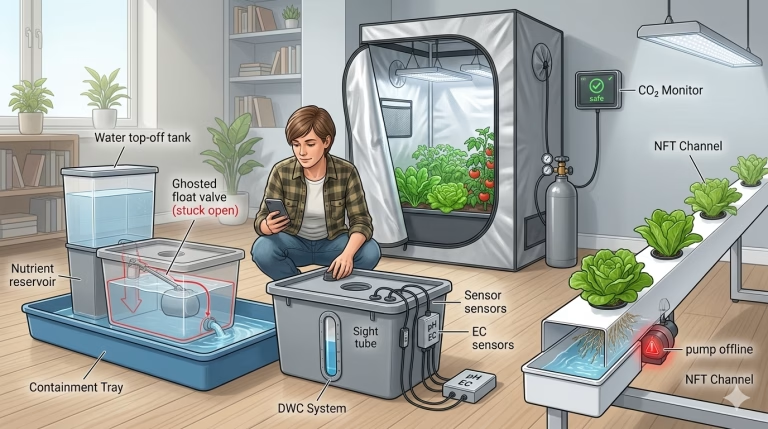
Step 1: Identify your critical loads
List:
- Air pumps for DWC, fish tanks, or root zones.
- Main circulation pumps that keep nutrients moving.
- Minimum fans or AC needed to keep the grow space under dangerous temperatures.
Add up the wattage for these loads. This number drives your UPS and generator sizing far more than your total “nice to have” wattage.
Step 2: Decide your acceptable downtime
Ask:
- For home hobby systems, can you tolerate a 2 to 4 hour window before backup kicks in, or do you need instant coverage?
- For a commercial rack, do you need nearly zero downtime to protect contracts or quality?
If you need instant coverage, prioritize a UPS and possibly an automatic transfer system. If a short delay is acceptable, a manual generator start may be enough.
Step 3: Choose your tier and mix of tools
Based on your budget and load list:
- Small growers: Tier 1 plus a modest UPS often works well.
- Growing hobbyists: Tier 2 with a small inverter generator covers most realistic outages.
- Commercial or high value: Tier 3 or 4, possibly mixing standby generators with solar batteries.
Write down specific models, battery sizes, and how long each configuration can run your critical loads.
How to set up a basic backup power plan for a Phoenix hydroponic farm
Title: Basic backup power plan for hydroponic growers in Phoenix
Description: A practical process to design, install, and test a tiered backup power solution that keeps your hydroponic crops alive during summer outages.
Materials and tools
- Notebook or spreadsheet for load calculations
- Labels and a marker
- Kill-a-watt style meter or plug in power meter
- Battery powered air pump or UPS
- Optional: inverter generator or solar battery system
- Heavy duty extension cords and power strips
- Thermometer and, ideally, dissolved oxygen meter
Step 1: Map your hydroponic system and outlets
Write down each piece of equipment, its wattage, and which outlet or circuit it uses. Label plugs and outlets so you can identify critical loads without guessing during an outage. This mapping also helps you avoid overloading any single circuit when you move to generator power.
Step 2: Calculate critical load wattage and runtime
Use a power meter to verify actual watts for pumps, fans, and air systems. Separate “must run” devices from “optional” gear such as extra lights or nonessential fans. Decide how many hours you want backup for that critical load, then multiply watts by hours to get required watt hours for batteries or fuel estimates for generators.
Step 3: Install and configure your UPS or battery system
Place your UPS or battery inverter near your most critical loads. Plug only essential devices into it at first and label that power strip as “critical only.” If your system allows, configure shutoff thresholds or priorities so that lower priority outlets cut off before root aeration.
Step 4: Set up your generator or solar connection
Position your generator outside with a safe exhaust path and weather protection. Pre run a dedicated extension cord path to your hydroponic area so you are not hunting for cables in the dark. If you use a solar battery system, ensure the hydro room has a clearly labeled critical loads panel or dedicated outlet.
Step 5: Test a simulated outage on a mild day
On a cooler day or evening, intentionally shut off the main hydro circuit and switch to your backup configuration. Time how long the UPS runs and whether any circuits overload the generator. Note surprises such as pumps that pull more power on startup than expected and adjust your plan.
Step 6: Create a written outage checklist and store it visibly
Summarize your steps in plain language on one sheet: turn on UPS, start generator, connect these three plugs, check reservoir temperature, adjust fans. Tape this checklist near your main hydro area. Anyone in your household should be able to follow it even if you are not home.
Step 7: Maintain batteries, fuel, and sensors
Put a recurring reminder on your calendar to test UPS runtime and charge levels monthly. Rotate or stabilize generator fuel every few months and run the unit for at least 10 to 15 minutes to keep it ready. Calibrate your pH and DO meters on a schedule so their readings stay trustworthy in a real emergency.
Hydroponic maintenance checklist → weekly and monthly hydroponic system maintenance guide
How does all of this tie into water conservation and system resilience?
Hydroponic systems already use water more efficiently than soil systems, which is a major advantage in Arizona. However, in a panic during outages, growers sometimes dump reservoirs to “start over” or out of fear of root rot.
Backup systems help you:
- Keep water cool and oxygenated, reducing the need for emergency dumps.
- Maintain stable pH and EC so you can resume normal operation quickly.
- Protect your investment in both water and nutrients, not just plants.
Over a season, this can save hundreds of gallons in a small farm and far more on a commercial scale.
Hydroponic power outage FAQ
Can I use a car battery to run my hydroponic system in an outage?
Yes, but with limitations. A single car battery plus a small inverter can run an air pump and a modest circulation pump for several hours, especially if you keep loads under 100 watts. Car batteries are not designed for deep cycling, so repeated full discharges will shorten their life. For frequent use, a deep cycle or lithium battery is a better choice.
How long before a generator can damage sensitive electronics?
Modern inverter generators are generally safe for electronics because they provide cleaner power. Traditional open frame generators can produce voltage spikes, especially under uneven loads. To protect LED drivers and controllers, use an inverter generator whenever possible and avoid running loads that cause sudden large surges on the same generator.
What is the cheapest way to keep my hydroponic plants alive during outages?
The absolute cheapest approach is a battery powered air pump, manual aeration, and simple insulation for your reservoirs. For many small systems, that combination can bridge the most common 1 to 4 hour outages. As your system and crop value grow, you can add a small UPS and then consider a portable generator.
Should I prioritize lights or cooling during a summer outage?
Prioritize cooling and aeration over lights. Plants can tolerate a dark period in the middle of the day much better than they can tolerate 100°F air and 85°F nutrient solution. Once you stabilize temperature and oxygen, you can bring some lights back on if you have extra generator or battery capacity.
How often do Phoenix outages last more than a few hours?
Most weather related outages in Phoenix are restored within an hour or two, according to utility reports and media coverage, especially when they are caused by storms rather than grid wide failures. However, studies highlight a rising risk of longer outages overlapping with extreme heat. That combination is rare but high impact, which is why even home growers benefit from a simple backup plan.
What crops are most at risk during a hot weather outage?
Cool season and shallow rooted crops are the first to suffer. Lettuce, spinach, basil, strawberries, and delicate herbs can experience severe heat stress and root damage within a few hours if water is warm and un-aerated. Larger, more heat tolerant plants like peppers and tomatoes are more forgiving but still at risk if water temperatures climb and DO crashes.
Is it worth backing up my aquarium or aquaponics system too?
Yes, aquaponic fish are extremely vulnerable to oxygen loss. A battery powered air pump or UPS covering your main aeration can prevent mass fish loss within hours. Since fish waste drives your plant nutrition, losing your fish stock can set you back months in both biology and cost.
Can I share one generator between my home and hydroponic farm?
Often yes, as long as you size the generator appropriately and manage loads carefully. Many growers prioritize a window AC or mini split for a safe room and then run critical hydro pumps and basic lighting off the same unit. Plan circuits and receptacles ahead of time so you can move plugs quickly without overloading any one branch.
Author note
This guide is written from the perspective of a Phoenix, Arizona grower who has run DWC buckets, NFT rails, and small greenhouse systems through brutal summers. From multiple runs in hot, dry conditions, the single biggest lesson has been that aeration and temperature matter more than watt hungry lighting during outages. With a modest investment in backup power and a clear action plan, even hobbyists can protect thousands of dollars in crops each season. The focus is on practical, repeatable strategies that work for apartment growers, garage farms, and backyard greenhouses across the desert.
Share this:

Discover more from Soil Free Harvest
Subscribe to get the latest posts sent to your email.