Classroom Hydroponics Setup: Complete Guide to Building an Indoor School Grow Lab (2026)
A classroom hydroponics setup is a compact indoor grow lab that lets students grow plants in water with nutrients instead of soil, using simple systems like deep water culture tubs or small vertical units. It works by circulating nutrient solution around plant roots under LED lights, giving tight control over light, water, and nutrients so growth is fast and very visible for teaching. With a few square feet, a safe power source, and basic school-friendly procedures, most teachers can run a reliable classroom system year round.
TL;DR: A school grow lab uses small hydroponic systems, LED lights, and food safe procedures to turn a classroom corner into a hands-on STEM lab for lettuce, herbs, and greens. Start small with one deep water culture or raft system, follow simple safety rules, and expand as students and staff get comfortable.
What is a classroom hydroponics grow lab?
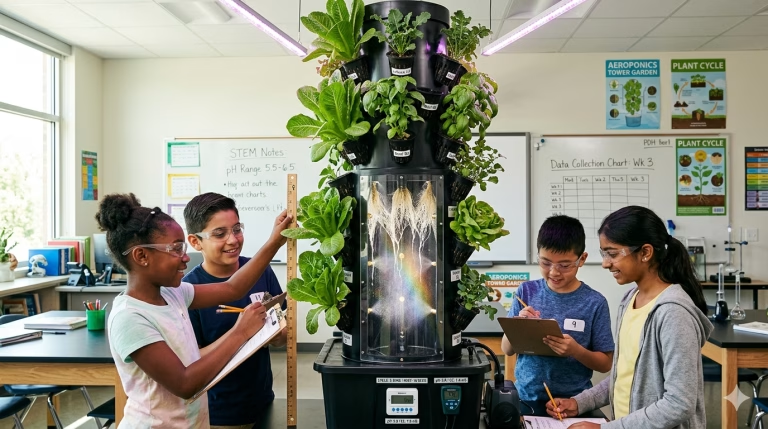
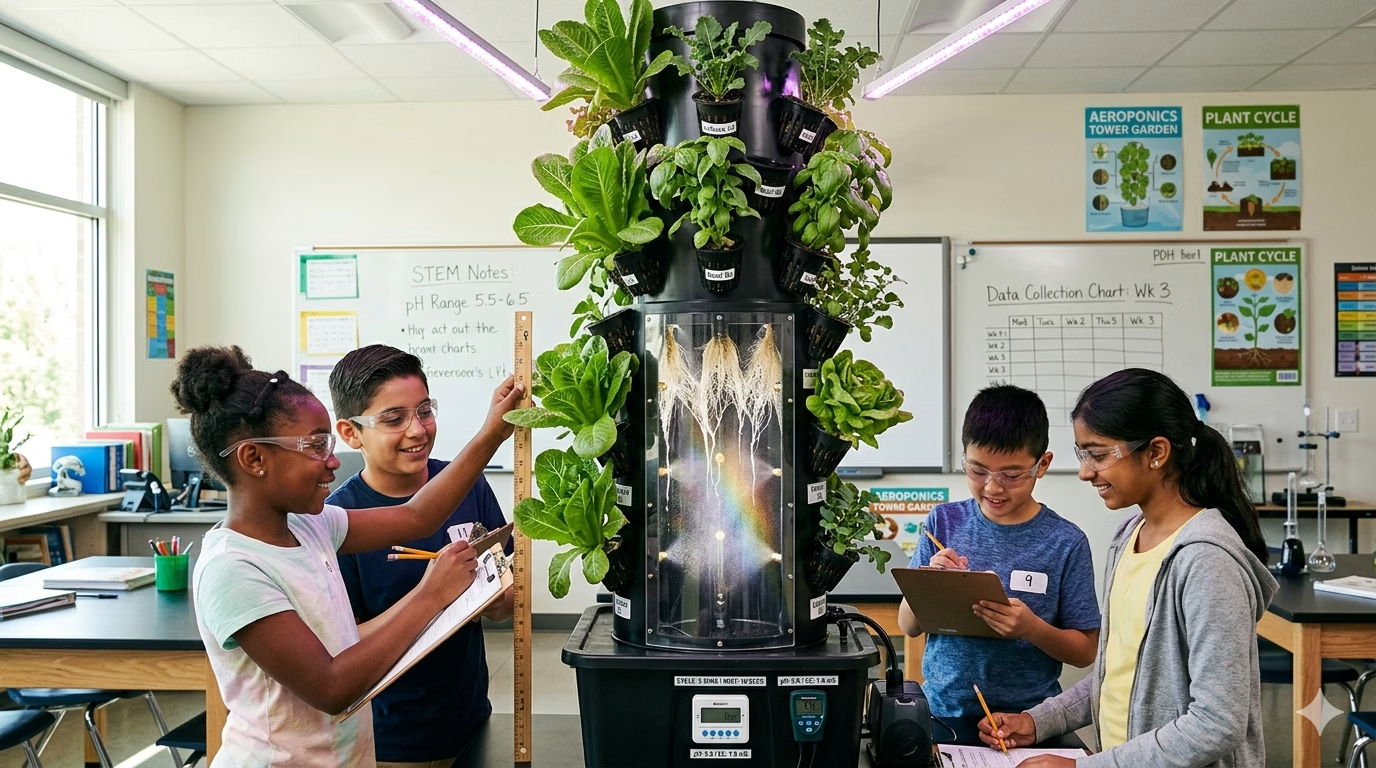
A classroom hydroponics grow lab is a dedicated area in a school where plants are grown without soil using nutrient solutions, pumps, and lights. It can be as small as one tabletop system or as large as a room of racks, but the goal is always hands-on STEM and food literacy.commercial.
Typical classroom labs focus on:
- Fast crops like lettuce, basil, and microgreens
- Compact systems that fit on counters, carts, or wall racks
- Clear visibility so students can see roots, water flow, and plant growth up close
How does a classroom hydroponic system work?
Every classroom system follows the same basic cycle: water plus nutrients plus light plus oxygen. The system holds a nutrient solution in a reservoir, delivers it to plant roots, and returns it back in a loop.
Key parts of the process:
- Plants sit in net pots with a growing medium like rockwool or clay pebbles above a nutrient reservoir
- A pump or air stone keeps water moving and oxygenated so roots do not suffocate
- LED grow lights provide the right spectrum and intensity for 12 to 16 hours per day
- Teachers or students monitor pH, EC, water level, and plant health weekly or more often
Which hydroponic systems fit classrooms best?
Several system types work well in school settings because they fit small spaces and are easy to explain. For beginners, start with deep water culture or raft systems and add vertical towers or kits as confidence grows.
Common system types for schools
| System type | How it works | Best for |
|---|---|---|
| Raft / floating DWC | Plants float on foam over aerated nutrient solution | Lettuce, basil, classroom demos |
| Deep Water Culture | Net pots sit above an aerated nutrient reservoir | Leafy greens, herbs, quick cycles |
| Vertical towers | Nutrient drips down through vertical channels | Tight spaces, demonstration towers |
| Modular racks / farms | Multi-tier systems with integrated lights and pumps | School-wide food programs, advanced courses |
| Education kits | All-in-one classroom kits with curriculum built in | Elementary and middle school STEM |
Many schools pair a classroom tub or kit with individual student projects like microgreen trays or small Kratky jars. This keeps one main system stable while still giving each student something to own and monitor.
Different hydroponic system types → Comparing Hydroponic System Types for Home Growers
What plants grow best in a school hydroponic lab?
For a classroom, success and speed matter more than exotic crops. Fast leafy greens and herbs give quick wins, clear data, and high harvest rates.
Best beginner plants:
- Leafy greens: lettuce, spinach, kale, Swiss chard
- Herbs: basil, mint, cilantro, chives, parsley
- Microgreens: radish, broccoli, pea shoots for rapid cycles
- Compact fruiting plants only in advanced labs: bush tomatoes, peppers, strawberries
In lab-style setups, lettuce or basil typically goes from transplant to harvest in about 3 to 5 weeks, depending on light and nutrient management. Microgreens can be ready in 7 to 14 days, which fits neatly into short units or after-school programs.
Best plants for hydroponics → What Can You Grow in Hydroponics? 25+ Crops for Beginners to Advanced Growers
What are the benefits of classroom hydroponics?
School hydroponics is powerful because it reaches science, math, health, and environmental topics in one physical project. Students see real time cause and effect, which is especially valuable for visual and hands-on learners.
Key benefits:
- STEM integration: Lessons in biology, chemistry, physics, and data analysis become tangible in daily plant checks and experiments.
- Food literacy: Students connect leafy greens and herbs directly to nutrition, cooking, and school meals.
- Space efficiency: Systems can live in classrooms, cafeterias, or repurposed rooms that would never support soil beds.
- Year round growing: Indoor lighting and climate control allow projects in any season, even in cold regions like Central Michigan.
- Engagement: Harvesting and tasting crops in class keeps students motivated and curious about plant care.
Hydroponics for STEM learning → Free Hydroponic Lesson Plans to Teach STEM Using Hydroponics
What are the drawbacks and risks in a school setting?
A classroom lab is not risk free, and planning around those risks will make your program sustainable. Most issues fall into four buckets: electrical and water, chemical handling, food safety, and ongoing workload.
Main drawbacks and risks:
- Electrical safety: Pumps, timers, and lights near water require proper outlets, GFCI protection, and avoiding overloaded power strips or extension cords.
- Chemical safety: Nutrient concentrates and pH adjusters must be labeled, stored away from students, and handled with basic protective gear.
- Food safety: If students eat the produce, handwashing, clean surfaces, and pest monitoring become important to avoid contamination.
- Maintenance burden: Someone must own weekly checks on pH, EC, cleaning, and repairs, even during breaks or testing weeks.
With simple rules and clear responsibilities, schools can manage these risks just like they manage science labs and kitchens.
What equipment do you need for a classroom hydroponics setup?
Exact gear depends on system type, but most indoor school labs share a common core kit. Off the shelf education systems often bundle this equipment with age appropriate curriculum.
Essential components:
- Growing systems
- Raft or DWC tubs with lids and net pot holes
- Vertical towers or modular racks for tight spaces
- Water and air management
- Reservoirs or tanks (often 10 to 50 liters for classroom tubs)
- Submersible pumps or air pumps with stones for oxygenation
- Lighting and power
- Full spectrum LED grow lights with timers
- Surge protected power strips and, ideally, GFCI outlets
- Nutrient and plant care
- Hydroponic nutrient solution and measuring cups
- pH test kit or meter and pH up/down products
- EC or TDS meter for nutrient strength, especially in advanced classes
- Growing media and seeds
- Rockwool cubes, sponges, or clay pebbles
- Lettuce and herb seeds chosen for indoor growing
- Safety and sanitation
- Labels, gloves, eye protection for older grades
- Handwashing access and cleaning supplies for surfaces and tanks
Hydroponic nutrients for beginners → Guide to Hydroponic Nutrients: Types, Roles, Application, and Optimization
Choosing hydroponic grow lights → Canopy Sizing Guide
How do you plan the space and layout for a school grow lab?
Successful classroom labs start with honest space and supervision planning before any system is ordered. The best systems fit the room instead of forcing teachers to reorganize constantly.
Planning steps:
- Identify a space
- Classroom corner, science lab bench, cafeteria wall, or repurposed storage room can all work.
- Confirm there is a nearby sink or drain, or plan for rolling carts and buckets.
- Check power and safety
- Confirm dedicated outlets and ask facilities staff about GFCI and load limits.
- Keep walkways clear and avoid placing systems where students rush between classes.
- Decide on visibility
- Place systems where roots, tubing, and reservoirs are easy to show during lessons.
- Consider clear sided tanks or open racks for better visibility.
- Plan for storage
- Nutrients, pH adjusters, meters, and extra media need secure, labeled storage.
In larger programs, schools have converted old locker rooms or storage spaces into full grow rooms with multiple units and dedicated maintenance schedules.
How to set up a basic classroom hydroponic lab (step by step)
This section covers a practical starting point: a single raft or deep water culture tub that can support roughly 8 to 24 plants, ideal for lettuce and basil. You can scale this pattern by adding more tubs or moving to vertical towers later.
Classroom hydroponics lab: quick build overview
A teacher or coordinator can set up a simple raft style classroom lab in an afternoon, then bring students in for seeding and monitoring. This approach is low cost, easy to explain, and forgiving for beginners.
Materials and tools
Materials:
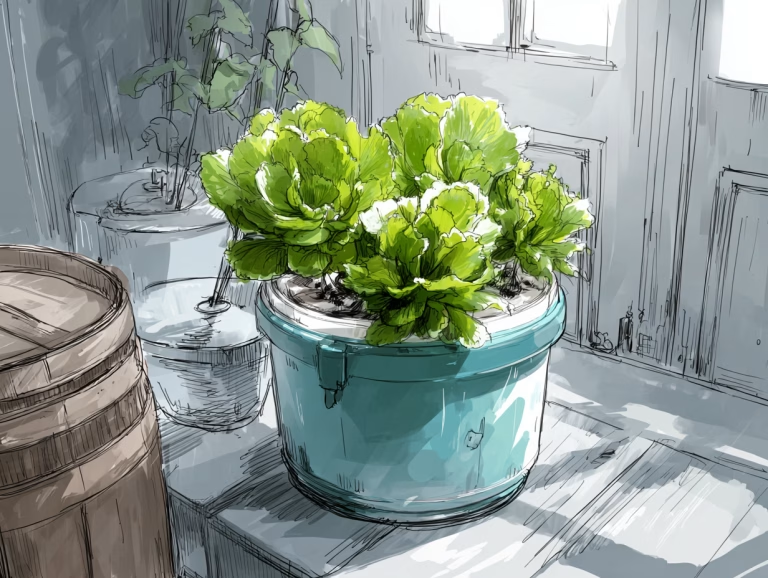
- Plastic container or low profile tank with lid (5 Gallon buckets or totes work great for this)
- Styrofoam or rigid foam board cut to fit container (This is a good recycling opportunity)
- Net pots or rockwool cubes sized to fit foam holes
- Hydroponic nutrient solution for leafy greens
- Seeds for lettuce and herbs
- LED grow light and timer
- Aquarium air pump, tubing, and air stone
- I have a curated Amazon list here with most of these items: Essential Hydroponics Supplies
Tools:
- Drill with hole saw or craft knife for foam
- Measuring tape and marker
- pH test kit or meter
- Bucket or pitcher for mixing nutrient solution
- Basic PPE: gloves and safety glasses for adult work
How to build a classroom raft/DWC system
Title: Build a simple classroom hydroponic raft system
Description: A beginner friendly method to set up a raft style classroom grow lab for leafy greens and herbs.
- Plan the tub and plant spacing
Measure your container and decide how many plants you want to grow, usually 6 to 12 in a single classroom tub. Leave several inches between plant sites so lettuce heads or basil plants have room to expand. - Cut the foam raft and plant holes
Cut a foam board to fit the top of the container, allowing it to float freely without binding on the sides. Mark hole positions spaced about 6 to 9 inches apart, then cut holes sized to fit your net pots or rockwool cubes snugly. - Prepare the air system and reservoir
Place the air stone in the bottom of the empty container and run tubing out to the external air pump, keeping electrical parts away from water. Fill the container with room temperature water, leaving about 2 to 3 centimeters of space between the surface and the bottom of the foam once it floats. - Mix and add nutrients
Add hydroponic nutrient concentrate according to the label, starting at roughly half strength for seedlings and younger students. Stir well, then plug in the air pump so the water is visibly bubbling, which supplies oxygen to the developing roots. - Start seeds in cubes or plugs
Moisten rockwool or other starter cubes with diluted nutrient solution, then place one or two seeds in each cube. Keep cubes in a tray or directly in the raft holes until seedlings emerge with a few true leaves, topping up water in the reservoir as needed. - Install the raft and light
Place the seeded foam raft on the reservoir so the cubes touch or nearly touch the nutrient solution, allowing capillary action to pull water to the seeds. Mount LED grow lights above the tub and set a timer for roughly 14 to 16 hours of light per day, adjusting height to maintain healthy growth without leaf burn. - Dial in pH and nutrient levels
Test pH and adjust into a typical leafy green target range around 5.5 to 6.5 using pH up or pH down products as needed. Check solution strength with an EC or TDS meter if available, increasing nutrient concentration to full strength after about a week of growth. - Schedule student checks and maintenance
Create a simple task chart where students check water level, plant appearance, and basic parameters once or twice per week. Replace the full nutrient solution roughly every 2 weeks, or more often if the system is tightly stocked or heavily used for harvests.
Step by step DWC build → Build a 5 Gallon Bucket DWC System for Under $30: A Budget DIY Hydroponics Guide
Raft Build → Hydroponics Basics for Grades 3-5 Classrooms: Hands-On Styrofoam Raft Projects and NGSS Lesson Plans
How do you run daily and weekly maintenance?
Routine care determines whether your hydroponic lab stays healthy or becomes a constant troubleshooting project. Good classroom programs break work into quick daily checks and slightly deeper weekly tasks.
Daily tasks
- Visual plant checks
- Look for wilt, discoloration, algae, or pests on leaves and stems.
- Water level and bubbles
- Confirm the reservoir is topped up enough to reach plant roots and that the air pump or circulation is working.
- Safety quick scan
- Make sure cords are off the floor near puddles and there are no spills or leaks.
Weekly tasks
- pH and nutrient checks
- Measure pH and adjust as needed to stay in the target range for your crop.
- Top up nutrients and check EC or TDS if the program uses meters.
- Cleaning and sanitation
- Wipe surfaces, remove dead leaves, and check for algae buildup around the edges of the raft or tank.
- Student data logging
- Have students record plant height, leaf count, and system readings for use in math and science projects.
Every 2 to 4 weeks, or between crop cycles, plan a deeper clean that includes draining reservoirs, rinsing components, and sanitizing equipment according to manufacturer guidance.
How do you keep classroom hydroponics safe and food safe?
Hydroponics can be handled like a supervised science lab: clear rules, simple training, and safe equipment. Combining good electrical, chemical, and hygiene practices keeps students and produce safe.
Safety basics to cover with staff and students:
- Electrical and water
- Use certified electricians for any new electrical work and avoid daisy chaining extension cords.
- Keep outlets, timers, and power strips away from splash zones and off the floor.
- Chemical handling
- Store nutrients and pH products in labeled containers, out of unsupervised reach.
- Provide gloves and eye protection when older students help mix solutions.
- Food safety
- Require handwashing before touching plants or harvesting, and restrict eating to designated areas.
- Keep pets and nonessential traffic out of production areas and monitor for signs of pests or rodents.
These rules align closely with guidance used in professional hydroponic food production, scaled down to classroom size.
How do you troubleshoot common classroom hydroponics problems?
Problems in school labs usually fall into a few repeat themes: plant health issues, technical failures, and human errors like missed checks. Turning each issue into a mini investigation can be a teaching moment.
Typical issues and quick checks:
- Yellowing leaves
- Check pH first, then nutrient strength, since imbalanced pH can lock out key nutrients.
- Slow growth or spindly plants
- Confirm light intensity and distance, and extend daily light duration if safe and appropriate.
- Wilting despite plenty of water
- Inspect roots for rot or lack of oxygen; verify air pumps and stones are working.
- Algae growth
- Reduce light leaking into reservoirs and consider shorter flood times for certain systems.
- Equipment failures
- Keep spare pumps or air stones on hand, especially in programs relying on a single system.
Encourage students to document each problem, hypothesis, and solution as part of their science work instead of hiding issues when they pop up.
When does a school move from one tub to a full grow lab?
Many programs start with a single DWC tub or education kit and expand when student interest and administrative support grow. The transition is less about technology and more about planning.
Signs you are ready to expand:
- Existing system runs smoothly through one or more full crop cycles
- Students can handle daily and weekly tasks with minimal prompting
- There is clear demand from classes, clubs, or school nutrition staff for more produce
- Facilities staff understand and support the program, including cleaning, power, and security needs
At that point, schools often add vertical towers, modular racks, or multiple tubs and begin connecting the lab to cafeteria or snack programs.
How do different climates affect indoor school hydroponics?
Indoor systems shield plants from most outdoor weather, but climate still affects room temperature, humidity, and building HVAC patterns. In hot, dry environments like Phoenix, heat from lights and equipment matters; in cold places like Michigan, dry winter air and drafts may affect plants.
Climate related tips:
- Hot, dry climates
- Use efficient LEDs that produce less heat and monitor reservoir temperature to avoid root stress.
- Consider insulating tanks or using cool water when mixing nutrients.
- Cold or highly seasonal climates
- Watch for cold air drafts in winter, especially near exterior doors or windows.
- Humidity can drop in heated buildings, so monitor plants for faster water use.
Indoor school labs in cities like Denver have shown that hydroponic racks can produce steady crops of lettuce and herbs regardless of winter snow or summer heat waves when the room is well managed.
FAQ: Classroom hydroponics and indoor school grow labs
How much does a classroom hydroponic setup cost?
A basic classroom tub or small kit for 8 to 24 plants typically costs in the low hundreds of dollars, especially if you already have shelving or tables. More advanced vertical or rack systems can reach into the thousands but often serve multiple classes or labs at once.
How hard is it to run a classroom hydroponic system?
Difficulty is comparable to running a small aquarium plus a basic science lab, and it becomes easier after a couple of crop cycles. With clear checklists, students can handle most daily and weekly tasks while teachers focus on lesson design and oversight.
How long until students can harvest something?
In a typical school lab, lettuce and herbs go from transplant to harvest in about 3 to 5 weeks, and microgreens are ready in 1 to 2 weeks. This makes it possible to plan at least one harvest inside a standard unit or grading period. If you want to try something that will take longer throughout the school year, strawberries are a great option.
Is hydroponic produce from a classroom safe to eat?
Yes, as long as basic food safety guidelines are followed, including handwashing, clean equipment, and keeping pets and pests out of the grow area. Teachers should treat the lab like a mini food facility and follow school policies for serving or sharing produce.
What are the biggest mistakes beginners make in school grow labs?
Common mistakes include ignoring pH, overloading power strips, skipping solution changes, and crowding too many plants into a small tank. Starting with one simple system, a clear maintenance schedule, and realistic plant counts usually avoids these pitfalls.
Do classroom hydroponic systems require special permissions?
Schools may require approval for installing new electrical equipment, water lines, or significant room changes, and some regions require certified electricians for certain work. It is smart to involve facilities managers early and document your safety plans and procedures.
Can younger students safely participate in hydroponic projects?
Younger students can safely plant seeds, observe roots, and help harvest under supervision, while adults handle electrical connections and chemical mixing. Simple systems like raft tubs and microgreen trays are especially well suited to elementary classrooms.soilfreeharvest+2
Which hydroponic system is best for a school that has very little space?
Vertical towers and compact tabletop kits are often the best match for tight classrooms or hallways because they grow upward instead of outward. Many schools use one or two towers to provide enough plants for demonstrations and tastings in multiple classes.
Can a hydroponic classroom lab support a school lunch program?
A single classroom system usually supports tastings or small salad additions, while multiple racks or towers can feed a pilot lunch program or snack bar. Schools that connect their labs to cafeterias often plan harvest schedules and crops in coordination with nutrition services.
Author note
This article is written from experience setting up and troubleshooting indoor hydroponic systems in hot, dry conditions around Phoenix, Arizona and in colder, highly seasonal Central Michigan. From short cycle lettuce tubs to more complex vertical systems, the focus has always been on making hydroponics practical and reliable for classrooms and small urban spaces. Multiple runs across very different climates have shown that simple systems, good safety habits, and realistic plant choices matter more than fancy hardware. The goal is to help teachers and program leaders build school grow labs that actually last beyond the first enthusiastic semester.
Share this:

Discover more from Soil Free Harvest
Subscribe to get the latest posts sent to your email.