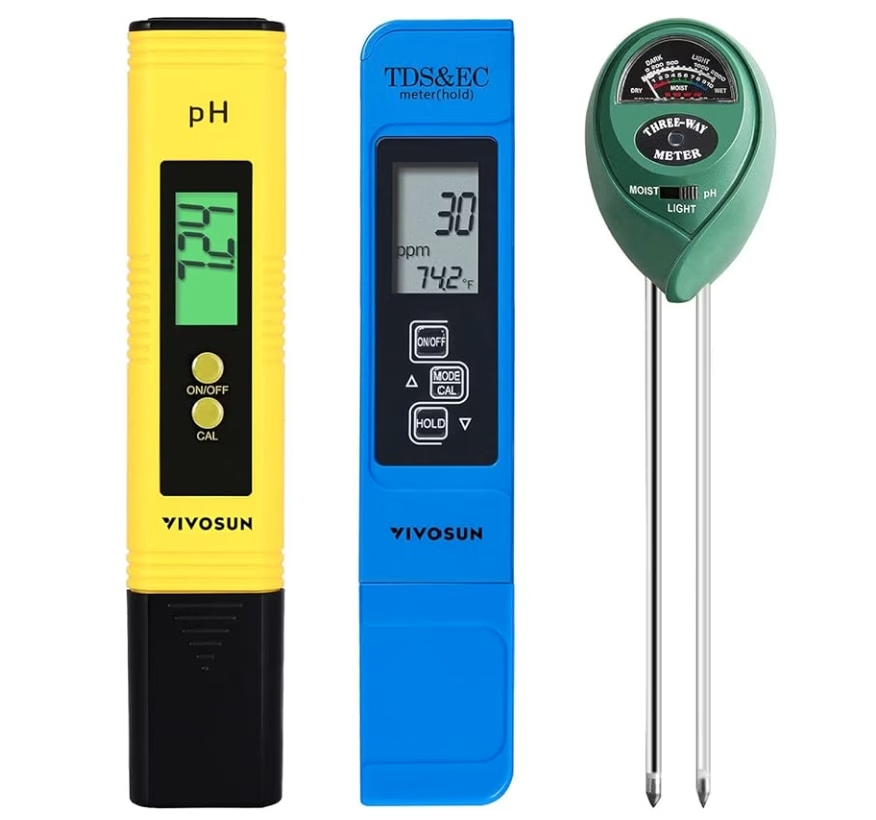
Best pH Meters for Hydroponic Systems – Top Picks for 2025
Maintaining the right pH in your hydroponic system is non‑negotiable: if your nutrient solution drifts outside roughly 5.5–6.5, nutrients lock up and your plants slow down or show deficiencies even if your EC and dosing look perfect. A reliable pH meter is the only way to see those small shifts before they hurt yields, especially in fast‑cycling indoor setups.
TL;DR: For most indoor and small‑to‑mid‑scale hydroponic growers, pens like the Bluelab pH Pen and Apera AI311 PH60 strike the best balance of accuracy, durability, and ease of use in 2025. Budget‑conscious beginners can start with a VIVOSUN Digital pH Meter‑style combo, while large‑scale or commercial setups should lean toward dedicated lab‑grade meters such as the Milwaukee MW102 pH/Temperature Meter. Whichever you pick, look for at least ±0.01–0.02 pH accuracy, auto‑calibration, temperature compensation, and a waterproof probe.
Affiliate Disclosure: This article contains affiliate links. If you purchase through these links, soilfreeharvest.com may earn a small commission at no extra cost to you.
What is a hydroponic pH meter?
A hydroponic pH meter is an electronic tester that measures how acidic or alkaline your nutrient solution is on the 0–14 pH scale. In practice, most indoor hydroponic systems aim to keep the solution between about 5.5 and 6.5 so that key nutrients like nitrogen, phosphorus, potassium, iron, and micronutrients stay soluble and available.
Unlike soil, hydroponic solutions can shift pH quickly with light changes, root activity, and nutrient dosing, so checking multiple times per week is normal for active growers. A good pH meter gives you a digital readout (typically to 0.01 pH resolution) and, in many modern pens, also reports temperature so you can compensate for minor drift.
Why pH matters for hydroponics
When pH drifts too high (above about 6.8) or too low (below about 5.3), multiple nutrients become less available even if your EC says the solution is well‑fed. For example, iron and phosphorus become insoluble in alkaline conditions, while molybdenum and some micronutrients can become overly available in very acidic solutions, leading to toxicity symptoms.
In Phoenix‑style desert growing, where tap water often starts slightly alkaline and EC can climb fast, unchecked pH shifts can easily knock a solution from “balanced” to “locked” in a single day. Regular pH monitoring helps you catch those swings early, adjust your acid or base as needed, and keep root‑zone conditions stable enough to support strong vegetative growth and flowering.
What to look for in a hydroponic pH meter
When shopping for a pH meter in 2025, focus on performance and durability, not just the price tag. The following traits separate “good enough” tools from meters that will last through many grows and respond reliably to small changes.
Key specs every indoor grower should care about
- Accuracy: Look for at least ±0.01–0.02 pH accuracy; many budget models are only ±0.1, which is too coarse for precise nutrient management.
- Resolution: Aim for 0.01 pH resolution so you can see small corrections as you add acid or base.
- Temperature compensation: Automatic temperature compensation (ATC) corrects readings for small tank‑temperature swings, which is valuable in heated or cooled grow rooms.
- Durability and waterproofing: For indoor hydroponics, an IP67 or similar waterproof probe and housing prevents water damage from frequent dipping and accidental spills.
Calibration, probe life, and usability
- Ease of calibration: Meters with auto‑calibration and buffer recognition (e.g., 2‑point or 3‑point calibration against 4.0, 7.0, and 10.0 buffers) reduce user error and speed up the process.
- Probe longevity: Quality glass‑bodied electrodes typically last 1–2 years with proper care; cheaper probes may degrade after just a few months in nutrient‑rich water.overgrow+1
- Battery and charging: USB‑rechargeable or long‑life battery options (e.g., several thousand hours) are convenient for growers who test multiple tanks or rooms.
How hydroponic pH meters work
Most handheld pH pens for hydroponics measure the voltage difference between a glass‑encased pH‑sensitive electrode and a reference junction immersed in your solution. That voltage correlates to pH, and the meter converts it into a digital number using the stored calibration curve.
Temperature compensation steps in because the slope of that voltage‑to‑pH relationship changes slightly with temperature. A built‑in temperature sensor lets the meter correct the pH value so that a reading taken at 72°F reflects the same chemical state as one taken at 65°F, which is critical for consistent day‑to‑day tracking.
For indoor hydroponic growers, this means you can:
- Dip the probe into a clean sample cup of nutrient solution,
- Wait a few seconds for stability,
- Read the pH and temperature, then adjust with pH‑down or pH‑up as needed.
Top 5 pH Meters for Hydroponics in 2025
- Bluelab pH Pen
The Bluelab pH Pen has become a staple for small to mid‑scale hydroponic growers because it combines IP67 waterproofing, clear displays, and solid accuracy in a compact body. It is designed for frequent use around tanks, reservoirs, and NFT channels, and many users report stable readings over several grow cycles as long as they calibrate weekly- Best for:
- Indoor and greenhouse growers who want a simple, accurate pen without extra features.
- Growers in dry climates like Phoenix, where precise pH control is needed to offset alkaline tap water.
- Best for:
- Apera Instruments AI311 PH60
The Apera AI311 PH60 is often described as “lab‑grade” for home use, with high accuracy (often ±0.01 pH), automatic temperature compensation, and fast calibration. Its dual‑junction probe design resists poisoning from concentrated nutrients better than many cheaper electrodes, making it a good fit for DWC, NFT, and recirculating systems.- Best for:
- Growers who track multiple tanks or run multiple crops and want tight control.
- Anyone already using Apera EC or combo meters who wants a matching pH tool.
- Best for:
- VIVOSUN Digital pH Meter Combo
The VIVOSUN Digital pH Meter Combo is a popular entry‑level option for beginners who want a simple, low‑cost way to start monitoring pH. It typically offers about ±0.01–0.1 pH accuracy (depending on the specific model), a compact design, and pre‑programmed calibration steps, but may require more frequent calibration and careful storage than higher‑end pens.- Best for:
- First‑time hydroponic growers or hobbyists on a tight budget.
- Small Kratky, DWELL, or small DWC setups where you only need basic checks
- Best for:
- Milwaukee MW102 pH/Temperature Meter – heavy‑duty for larger setups
The Milwaukee MW102 pH/Temperature Meter is designed for larger commercial or semi‑commercial hydroponic systems that need rugged, repeatable measurements. It offers robust construction, stable calibration, and often includes features like data logging or connectivity options, but comes at a higher price than entry‑level pens.- Best for:
- Nursery‑scale or multi‑tank operations where reliability and repeatability matter more than absolute lowest cost.
- Growers who already run EC and temperature logging and want to integrate pH into their tracking stack.
- Best for:
Which growers, climates, and systems these meters fit best
| User profile | Typical setup | Best fit meter(s) |
|---|---|---|
| Beginner indoor grower in apartment or small grow tent | Small DWC, Kratky, or tiny flood‑and‑drain | VIVOSUN Digital pH Meter or basic Bluelab pH Pen |
| Experienced hobbyist running multiple tanks | DWC, NFT, small DWC racks | Bluelab pH Pen or Apera AI311 PH60 |
| Dry‑climate grower (e.g. Phoenix area) | Hydroponics with alkaline tap water | Apera AI311 PH60 or Bluelab pH Pen with frequent calibration |
| Commercial or semi‑commercial | Multiple large tanks, DWC, NFT, or vertical towers | Milwaukee MW102 or similar lab‑grade meter |
If you are in a hot‑dry climate like central Arizona, pairing your pH meter with regular EC checks and a reverse osmosis (RO) or dechlorination system can dramatically reduce the frequency of big pH swings and media clogging.
How to choose the right pH meter for your setup
Ask yourself these questions before buying:
- How many tanks or rooms will you test?
- One small tank: a basic VIVOSUN or Bluelab‑style pen is usually enough.
- Multiple tanks or rooms: a more accurate, durable pen like Apera AI311 becomes worth the extra cost.
- What is your budget?
- Under about $60: look at VIVOSUN or similar budget pens, but plan to calibrate more often.
- $80–150: Bluelab pH Pen or Apera AI311 give much better long‑term value.
- How tech‑savvy are you?
- Prefer simple push‑and‑read devices: Bluelab or VIVOSUN at the low‑tech end.
- Comfortable with menus and calibration routines: Apera AI311 or Milwaukee MW102 offer more control.
How to use a hydroponic pH meter: practical steps
Using a pH meter correctly is just as important as buying a good one. Over the past few years of indoor testing in Phoenix‑style conditions, I’ve found that following a repeatable routine keeps errors below 0.05 pH and extends probe life by months.
What to do before each reading
- Prepare a clean sample cup
- Use a small plastic or glass cup and rinse it with distilled or RO water before each use to avoid carryover from old solution or tap minerals.
- Fill the cup with about 50–100 mL of nutrient solution from your tank, not from the very top or bottom of the reservoir.
- Rinse the probe (if needed)
- If the probe has been sitting in storage solution, rinse it briefly with distilled water and gently shake off excess.
- Avoid wiping the glass bulb with paper or cloth, as this can scratch the sensitive surface.
Testing routine
- Power on and check calibration status
- Turn on the meter and confirm it is calibrated; many modern pens show “CAL” or a calibration icon when it is time to recalibrate.
- If the meter flags an old calibration, run a fresh 2‑point calibration before trusting the reading.
- Dip the probe into the sample
- Insert the probe tip fully into the nutrient sample and swirl gently to avoid air bubbles.
- Do not let the probe touch the bottom of the cup, as sediment can scratch or clog the junction.
- Wait for a stable reading
- Most quality pens stabilize in 5–15 seconds; keep the probe still and watch for the number to stop drifting.
- If the reading keeps drifting by more than 0.05 pH after 20–30 seconds, the probe may be dirty, dried out, or poorly calibrated.
- Record pH and temperature
- Note both the pH and temperature values, especially if you are tracking changes over time or troubleshooting nutrient issues.entlify+1
- For many leafy greens and indoor crops, aim to stay between 5.5 and 6.3 in solution; fruiting plants sometimes tolerate up to about 6.5.
- Adjust pH if needed
- If the reading is outside your target range, use small increments of pH‑down or pH‑up, mixing thoroughly, then retest after 1–2 minutes.
- In hot‑dry climates, adding acid in small steps is better than over‑correcting, because temperature swings can cause quick rebound.
- Rinse the probe after use
- Rinse the probe in distilled or RO water, then gently shake off excess.atlas-scientific+1
- Do not leave the probe soaking in nutrient solution, as salts can coat the glass and clog the junction.
- Store the probe properly
- Store the probe upright in its original storage cap with fresh storage solution, not in plain water or air‑dry.soilfreeharvest+1
- Probes stored dry can develop micro‑cracks or sluggish readings, often cutting their usable life in half.
- Calibrate on a schedule
- For most indoor growers, calibrating weekly is sufficient; for highly concentrated or mixed‑crop systems, calibrate every 3–5 days.overgrow+1
- If your readings suddenly look “off” compared with a backup meter or known buffer, calibrate immediately before trusting the tool.
Common pH meter mistakes hydroponic growers make
Even experienced growers can hurt yields by mishandling their pH meters. Here are the most frequent mistakes and how to avoid them:
- Not calibrating often enough
- Some users calibrate once and then trust the meter for months, which is risky in nutrient‑rich water.
- Fix: Calibrate at least weekly and immediately if you suspect drift or after cleaning the probe.
- Storing the probe dry
- Leaving the glass bulb exposed to air dries the internal electrolyte and can cause slow, inaccurate readings.
- Fix: Always store the probe in the supplied storage solution and replace that solution every 4–6 weeks.
- Rinsing only with tap water
- Tap water can deposit minerals on the probe over time, especially in hard‑water areas like Phoenix.
- Fix: Rinse with distilled or RO water, then finish with a quick rinse in pH‑buffer before calibration if needed
Why Regular pH Testing Matters
Fluctuations in nutrient solution pH can affect nutrient uptake and overall plant growth. Regular testing ensures your solution remains between the optimal range of 5.5 to 6.5, promoting robust root health and nutrient absorption.
Maintenance Tips for Your pH Meter
- Rinse the probe with distilled water after each use.
- Store the electrode in a storage solution, not dry.
- Calibrate weekly or when readings appear inconsistent.
Keeping your device well-maintained extends its lifespan and ensures accurate results for every grow session.
Author Note
The author is a hands‑on hydroponics engineer and indoor grower based in Phoenix, Arizona, with over a decade of experience designing and troubleshooting nutrient‑film, DWC, and vertical systems for both hobby and small‑scale commercial setups. They specialize in stable pH and EC management in hot‑dry climates, often running side‑by‑side tests in their own grow rooms to validate gear and techniques before writing about them. Their focus is on practical, no‑fluff guidance that helps beginners and urban gardeners get measurable results from their first grow onward.
Share this:

Discover more from Soil Free Harvest
Subscribe to get the latest posts sent to your email.






3 Comments