Biofilters Explained: How Biofiltration Works in Aquaponics (For Home Growers)
Biofilters in aquaponics are simple in concept but crucial in practice: they are dedicated spaces (usually tanks or canisters filled with porous media) where colonies of beneficial bacteria convert toxic fish waste ammonia into plant usable nitrate and help remove solid waste from the system. In essence, a biofilter turns your fish tank’s waste treatment plant into the plant feeding engine of the whole system.
TL;DR: A biofilter is the part of your aquaponic or aquaculture setup where nitrifying bacteria live; it cleans the water for fish and loads the water with nutrients for plants.
What is a biofilter in aquaponics?
A biofilter is a structure—often a separate tank, canister, or simply a densely packed media section—designed to maximize surface area so that beneficial bacteria can colonize and break down nitrogenous waste. In practice, that means it converts ammonia and nitrite into nitrate, which plants can then absorb, while also trapping some solid debris.
Why do I need a biofilter?
Without enough biofiltration, ammonia and nitrite build up quickly and can kill fish, even at low concentrations. Plants help by taking up nitrate, but the intermediate work of converting ammonia into nitrate is done almost entirely by bacteria living in the biofilter and on other system surfaces.
Expanding on this → Nitrogen Cycle in Aquaponics Explained
How does biofiltration work in aquaponics?
In an aquaponic system, the biofilter is the biological “engine room” of the nitrogen cycle.
The nitrification sequence
Nitrifying bacteria perform a two step conversion:
- Nitrosomonas converts ammonia NH3/NH4+ into nitrite NO2−.
- Nitrobacter converts nitrite NO2− into nitrate NO3−, which plants can use.
Both steps require oxygen and lower pH slightly, so dissolved oxygen above about 5 mg/L and a pH around 6.8–7.5 are ideal for strong biofilter performance.
Do I need a separate biofilter?
Whether you need a separate biofilter or can rely on the grow bed depends on your system type and stocking density.
Media bed systems
In media filled grow beds, the gravel, expanded clay, or lava rock provides enough surface area for bacteria, so a standalone biofilter is usually optional. Think of the grow bed itself as the primary biofilter plus mechanical filter in one.
Raft and NFT systems
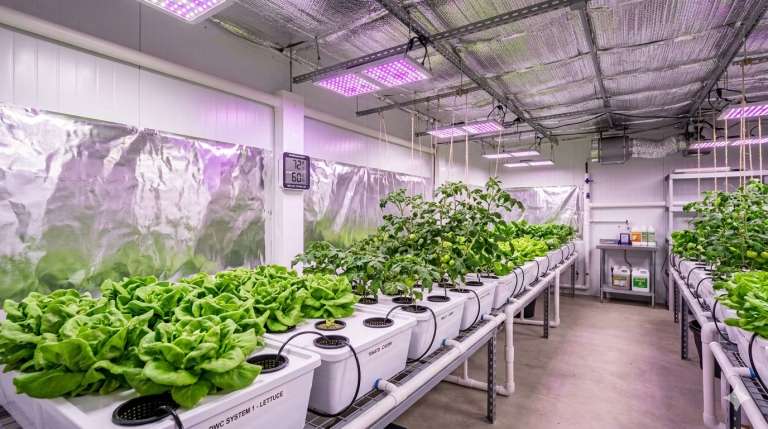
In deep water raft (DWC) or Nutrient Film Technique (NFT) systems, plant channels offer little surface area, so a separate biofilter or a dedicated bio media chamber is strongly recommended. Without it, ammonia and nitrite can spike between fish and plants, stressing or killing the fish.
System Comparisons → DWCAquaponics System Types Explained: Media Bed, Raft, NFT, and Hybrid vs NFT aquaponics
Types of biofilters for home aquaponics
For home growers and apartment setups, three main biofilter types are practical:
1. Moving bed (MBBR style)
A moving bed biofilter uses free floating plastic media (rings, K1/K5 style bits, or bio balls) suspended in a tank and kept tumbling with air or water flow. The constant motion keeps biofilm well oxygenated and helps prevent clogging, and the high surface area per volume makes it efficient for small spaces.
Typical range:
- 1–2 ft³ of media per 100–150 gallons of water at moderate stocking.
- Media specific surface area can range from about 150–3500 m²/m³, depending on brand.
2. Trickle / drip biofilters
In a trickle or drip biofilter, water flows in a thin film over a bed of media such as foam pads, lava rock, or bio rings, then drips down into a sump or fish tank. This design exposes bacteria to air and water at the same time, keeping oxygen high and biofilm clean.
Best for:
- Balcony or indoor setups where you want separate mechanical + bio stages.
3. Static / submerged media filters
A static filter uses a submerged chamber packed with media such as foam blocks, ceramic rings, or stone that stay in place as water flows through. It doubles as mechanical filter and biofilter: coarse media traps solids on top, while finer media below become the main bacteria habitat.
Good if:
- You want low energy use and simple maintenance for small tanks or starter rigs.
Benefits of using a biofilter in your system
Well designed biofiltration offers several measurable advantages for home aquaponics:
- Better water quality – Ammonia and nitrite stay low, usually under 0.5 mg/L once cycled, which keeps fish healthy.
- More stable plants – Consistent nitrate production (often 5–60 mg/L depending on fish load and plant uptake) supports steady leafy green and fruiting crop growth.
- Higher fish density – With adequate biofilter surface area, you can stock roughly 0.5–1 fish pound per 100 gallons without overloading the bacteria.
- Less chemical use – You avoid synthetic fertilizers and many “water conditioners” because the biofilter plus plants handle most nitrogen removal.
Drawbacks and limitations to watch
Adding a biofilter isn’t all upside; there are a few trade offs:
- Extra space and plumbing – A separate tank or media chamber eats up shelf or balcony real estate and can complicate water flow design.
- Maintenance time – Clogging can slow flow or reduce oxygen; media needs periodic inspection and occasional cleaning or replacement.
- Capital plus energy cost – An extra pump, air stones, or a small second tank adds to both startup cost and ongoing electricity use.
How to size a biofilter for home use
Sizing matters; too small and the system becomes unstable, too large and you waste space and plumbing.
Simple thumb rules for beginners
For a typical home or small scale system, you can use these rules:
- Low to moderate stocking: aim for at least 2.5 ft² of effective bio media surface per gallon of water.
- Heavier fish stocking: move toward about 5–10 ft² of surface per “metabolic pound” of fish, which allows you to feed more aggressively.
For example, a 100 gallon tank with 5–10 lb of tilapia might need roughly 0.5–1 ft³ of high surface media (e.g., K5 style) to keep ammonia and nitrite under control.
How to build and set up a basic biofilter
Below is a how to you can adapt to a small media bed or MBBR style biofilter for home or apartment use.
Title: Building a simple submerged / moving bed biofilter
Description
This walk through shows how to build a compact biofilter that fits under or beside a fish tank and supplies nitrifying bacteria to your aquaponic plants.
Materials and tools
- 5–20 gallon barrel or opaque food grade tote
- PVC pipe and fittings (1⁄2ʺ or 3⁄4ʺ), or flexible vinyl tubing
- 3–10 ft³ of bio media (e.g., K1/K5 style plastic media, small bio balls, or ceramic rings)
- Submersible pump or gravity feed plumbing
- Air pump, air stones, and airline tubing (optional for MBBR)
- Drill or hole saw
- PVC solvent and tape (if using rigid pipe)
- Zip ties or clamps
Step by step setup
- Pick a location and tank size
Choose a tank that matches your fish tank volume (e.g., ~25–50% of fish tank size). Place it slightly lower than the fish tank if using gravity return, or beside it if using a pump. - Drill inlet and outlet holes
At the bottom third of the tank, drill one inlet hole for water from the fish tank and one outlet hole near the top for water returning to the grow bed or sump.
Use bulkhead fittings or PVC reducers to make watertight seals; test with water before filling with media. - Add bio media
Pour in your chosen biofilter media so it fills about 60–80% of the tank.
Leave space for water to flow through and, if using a moving bed, enough room for air driven tumbling. - Connect plumbing and aeration
Link the fish tank outlet to the biofilter inlet and the biofilter outlet to the grow bed or sump using PVC or flexible tubing.
If building an MBBR, position air stones or diffusers at the bottom of the biofilter so bubbles lift and tumble the media. - Prime and start the system
Fill the biofilter with system water and start the pump or air supply.
Check for leaks, adjust flow so water moves through the media without flooding the fish tank, and watch for any air lock issues in the plumbing. - Cycle the biofilter (without fish or before adding more)
Introduce ammonia (fishless cycling) or a starter bacteria culture into the biofilter water and test ammonia, nitrite, and nitrate every 2–3 days.
Expect 2–6 weeks for a full cycle, depending on temperature (24–28°C speeds things up) and aeration. - Load in fish and plants
Once ammonia and nitrite stay near 0 mg/L and nitrate begins to rise, you can add fish at a moderate stocking rate.
Gradually add plants so they can keep up with nitrate production; rapid plant growth can actually slow nitrate accumulation.
[INTERNAL LINK: follow up step → how to cycle an aquaponics biofilter safely]
Common maintenance and troubleshooting
Biofilters are low maintenance but not “install and forget.”
Routine checks
- Weekly: inspect water flow through the biofilter; sluggish flow suggests clogging.
- Biweekly: check for musty or sour smells, which can indicate anaerobic pockets where heterotrophic bacteria dominate.
- Monthly: gently stir or rinse media (using system water, not tap) if you notice heavy sludge buildup.
pH and oxygen balance
- Keep pH between about 6.5 and 7.5 to support strong nitrification.
- If your system runs low on dissolved oxygen, add more air stones or increase surface turbulence; nitrification slows below about 3–5 mg/L DO.
When ammonia or nitrite spikes
Common causes in a biofilter include:
- Overfeeding or sudden fish load increase beyond the filter’s capacity.
- Power loss or clogged media that stops water flow through the biofilter.
If levels jump, reduce feeding, increase aeration, and consider doing partial water changes until the bacteria “catch up.”
[INTERNAL LINK: emergency guide → ammonia spikes in aquaponics]
What plants and systems work best with a biofilter?
Best plant types
- Leafy greens (lettuce, kale, spinach, herbs) thrive on steady nitrate from well cycled biofilters and can handle mild fluctuations.
- Fast growing fruiting crops (dwarf tomatoes, peppers, cucumbers) benefit once the system is mature and nitrate is stable; they need more calcium and potassium, so watch for nutrient imbalances.
Best system types
- Media bed systems – Biofilter capacity is built into the grow bed; dedicate a small additional biofilter only if you push fish density higher.
- Raft (DWC) and NFT systems – Almost always benefit from a separate biofilter or a dedicated bio media chamber to handle the nitrogen load.
[INTERNAL LINK: crop specific → best plants for indoor aquaponics]
FAQ: Biofiltration in aquaponics
Do I really need a biofilter for a small home system?
Not always. If you’re using a media bed system with low fish stocking, the grow bed can act as the biofilter. A separate biofilter becomes more important with raft, NFT, or heavier fish loads.
How long does it take to “cycle” a biofilter?
Typically 2–6 weeks for a full cycle, depending on temperature, aeration, and how much ammonia is available. In warmer conditions (24–28°C) with good oxygen, you’ll often see 2–4 weeks.
Can I use normal aquarium filter media instead of aquaponic biofilter media?
Yes. Many aquarists use sponge pads, ceramic rings, or bio balls in aquaponics, as long as they’re inert and offer high surface area. Just avoid any chemical impregnated media meant to remove nutrients.
How often do I clean the biofilter?
Light inspection every 2–4 weeks; physical cleaning only when flow drops or sludge builds up heavily. When you clean, use system water to rinse media gently so you don’t shock the bacteria.
What are the signs of a failing biofilter?
Rising ammonia or nitrite, sluggish water flow, anaerobic smells, and fish gasping are common signs. If tests show ammonia or nitrite increasing despite feeding changes, treat it as a biofilter issue.
Can I over filter my system?
It’s hard to “over filter” biologically, but oversized biofilters can make nitrate levels fluctuate more if plants or stocking change quickly. The main practical downside is taking up space and using extra energy.
Is biofiltration different in hydroponics vs aquaponics?
In hydroponics, biofilters are usually optional and used mainly for root‑zone microbes or compost tea. In aquaponics, biofiltration is mandatory because fish continuously produce ammonia that must be processed.
Should I run the biofilter 24/7?
Yes. Cutting off water or air flow for hours can start killing bacteria colonies and trigger ammonia spikes when you restart. Treat the biofilter as a continuous life support unit for your system.
Are biofilters safe for small apartment setups?
Absolutely, as long as you size them correctly and keep regular maintenance. A small media bed or compact MBBR can fit on a stand under a 20–50 gallon tank and handle herbs, lettuce, and even a few tilapia or koi.
What’s the biggest mistake beginners make with biofilters?
Most common mistakes are under sizing the media, neglecting aeration, or cycling with fish already present. Starting with low stocking, adding a bit of extra media, and cycling fishless first will dramatically reduce crash risk.
About the author
I’m a hydroponics and aquaponics hobbyist who started building systems in small apartments in Phoenix, Arizona, where hot, dry conditions forced me to pay close attention to water quality and biofiltration. Later, I adapted those designs to the cooler, more humid climate of Michigan, testing everything from compact DWC units to small media bed aquaponics under grow lights. My focus is on practical, beginner friendly indoor and urban growing setups that anyone can maintain without a PhD in chemistry.
Share this:

Discover more from Soil Free Harvest
Subscribe to get the latest posts sent to your email.