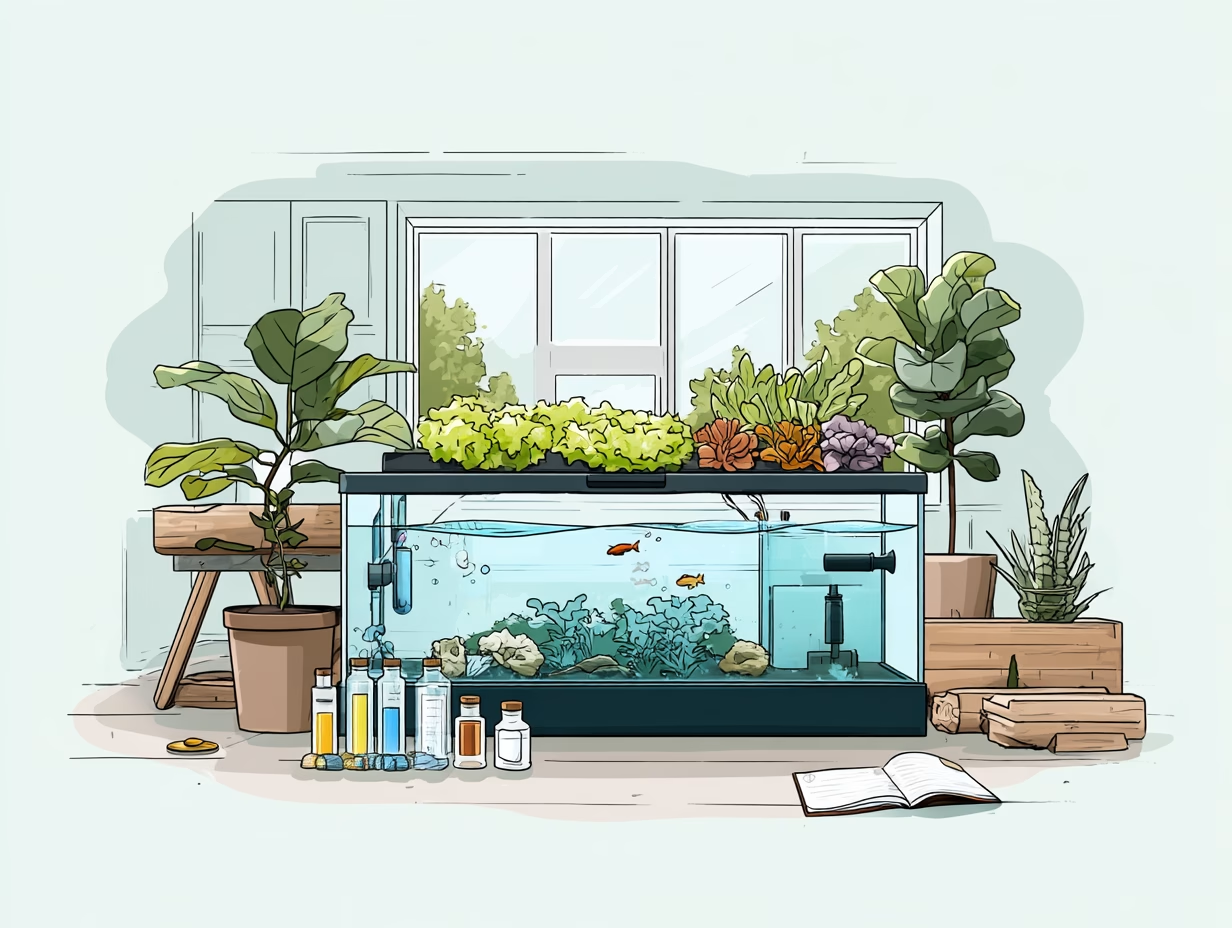
Nitrogen Cycle in Aquaponics Explained
The nitrogen cycle is the engine that makes aquaponics work. Fish waste becomes ammonia, bacteria convert that ammonia into nitrite and then nitrate, and plants use the nitrate as food while the water becomes safer for fish.
TL;DR: If the cycle is healthy, fish waste feeds plants instead of poisoning the tank. The key numbers most home growers track are pH around 6.8 to 7.0, dissolved oxygen above 2.0 mg/L at minimum, and ammonia and nitrite kept as close to zero as possible once the system is cycled.
What is the nitrogen cycle in aquaponics?
In aquaponics, the nitrogen cycle is the biological process that converts fish waste into plant-available nutrients. It begins when protein in fish feed is digested and most of that nitrogen leaves the fish as ammonia rather than becoming fish biomass.
That ammonia is toxic if it builds up, so the system depends on nitrifying bacteria to convert it into less harmful forms. In a healthy system, ammonia becomes nitrite, then nitrate, and plants absorb the nitrate through their roots.
How does the cycle work?
The process has three main stages: ammonia production, nitrite conversion, and nitrate formation. Fish waste, uneaten feed, and decaying organic matter all contribute ammonia to the water.
The first bacterial group, commonly called Nitrosomonas, oxidizes ammonia into nitrite. The second group, commonly called Nitrobacter, converts nitrite into nitrate, which plants can use efficiently.
Why does this matter to growers?
Without a working nitrogen cycle, fish can be poisoned by ammonia or nitrite spikes, and plants can stall from nutrient imbalance. With a stable cycle, the system becomes a self-reinforcing loop where fish feed plants and plants help clean the water.
From practical experience, this is the point where beginners either gain confidence or lose the system, because suddenly matters more than visuals alone. A clear tank is not enough if the chemistry is drifting.
What numbers should you track?
A good aquaponics grower watches a small set of numbers consistently. The most useful ones are pH, ammonia, nitrite, nitrate, temperature, and dissolved oxygen.
| Metric | Healthy target | Why it matters |
|---|---|---|
| pH | 6.8 to 7.0 | Balances fish health, bacteria activity, and plant nutrient availability |
| Ammonia | Near 0 ppm in a cycled system | High levels can harm or kill fish |
| Nitrite | Near 0 ppm in a cycled system | Also toxic to fish and a sign of incomplete cycling |
| Nitrate | Present and rising, then managed by plants | Main plant nutrient product of nitrification |
| Dissolved oxygen | Above 2.0 mg/L minimum, higher is better | Nitrifying bacteria are aerobic and slow down when oxygen is low |
| Temperature | Roughly 77 to 86 F for best bacterial activity | Cold water slows nitrification; very hot water also harms it |
A practical home-grow rule is simple: if ammonia rises, the biofilter is underbuilt or overloaded; if nitrite rises, the second stage of nitrification is lagging; if nitrate climbs and plants look hungry, you likely need more plant mass or better feeding balance.
What equipment do you need?
Aquaponics does not require a huge parts list, but it does require the right parts. The most important components are a fish tank, grow bed or grow channels, water pump, air pump, plumbing, and test kits.
Core equipment
- Fish tank.
- Grow bed, raft bed, or NFT channels.
- Water pump and tubing.
- Air pump and air stones.
- Water test kits for ammonia, nitrite, nitrate, and pH.
- Dechlorinator for tap water.
If you are using a media bed, the itself acts as part of the biofilter and gives bacteria a place to colonize. If you are using raft or NFT systems, solids filtration becomes more important because roots and channels can clog more easily.
How do you cycle a new aquaponics system?
A new aquaponics system must be cycled before it can safely support fish and plants at full strength. is the safest beginner method because it lets bacteria establish without exposing fish to toxic spikes.
How to cycle an aquaponics system
Description: Establish the nitrifying bacteria colony before stocking fish heavily, so ammonia and nitrite are converted reliably.
Materials/Tools:
- Water source.
- Dechlorinator.
- Ammonia source or fish food.
- Test kit for ammonia, nitrite, nitrate, and pH.
- Air pump and air stones.
- Pump, plumbing, and grow bed or biofilter.
- Optional bacteria starter.
- Set up and fill the system.
Assemble the tank, pump, grow area, and aeration, then fill with dechlorinated water. Make sure all circulation is working before adding anything biological. - Stabilize pH and temperature.
Aim for pH close to 7.0 and keep the water in a bacteria-friendly temperature range, ideally warm enough for nitrification to start well. This helps the microbial community establish faster. - Add an ammonia source.
Use household ammonia, fish food, or another controlled source to create a measurable ammonia level. The point is to feed bacteria, not to overload the system. - Test water frequently.
Check ammonia, nitrite, nitrate, and pH every few days during the early stage. You should first see ammonia, then nitrite, then nitrate as the colony develops. - Wait for nitrite to peak and fall.
Nitrite usually appears after ammonia and may spike before dropping as the second bacterial group catches up. This is the most important sign that the biofilter is maturing. - Confirm nitrate production.
When nitrate begins to accumulate and ammonia and nitrite are both low, the system is close to ready. That means the cycle is functioning in both directions. - Add fish gradually.
Start with a light instead of stocking heavily on day one. Sudden waste loads can overwhelm even a partly cycled system. - Add plants and keep observing.
Seedlings or transplants help consume nitrate and stabilize the loop. Continue testing weekly so you can catch changes before they become emergencies.
In my own setups, the fastest cycles came when I kept aeration strong, avoided overfeeding, and resisted the urge to “fix” the tank with too many adjustments at once. Stability usually beats speed.
What systems work best?
Different aquaponics system types handle the nitrogen cycle differently. Media beds are the easiest for beginners because they support both filtration and bacteria growth, while raft and NFT systems usually need more deliberate solids management and biofiltration.
Media beds vs raft beds → Aquaponics System Types Explained: Media Bed, Raft, NFT, and Hybrid
| System type | Best for | Nitrogen-cycle advantage | Main limitation |
|---|---|---|---|
| Media bed | Beginners, mixed crops, apartments, backyards | Media supports bacteria and filters solids | Heavier and bulkier |
| Raft / DWC | Leafy greens, fast harvests, small commercial beds | Stable root zone and consistent nutrient access | Needs strong aeration and solids control |
| NFT | Herbs, compact spaces, vertical layouts | Efficient and space-saving | Clogs and root issues are common |
| Hybrid | Mixed crops, advanced growers | Flexible nutrient and filtration management | More complex to build and tune |
For most home growers, media bed systems are the best first system because they tolerate beginner mistakes better than NFT and need less external filtration than raft systems. If your goal is mostly lettuce, basil, kale, or other leafy crops, raft systems can be excellent once the cycle is stable.
Aquaponics vs hydroponics
Aquaponics and hydroponics both grow plants without soil, but aquaponics uses fish waste and bacteria to create nutrients while hydroponics relies on synthetic or bottled solutions. The nitrogen cycle is the core difference: aquaponics recycles fish ammonia into plant nitrate biologically, while hydroponics adds nutrients directly.
| Feature | Aquaponics | Hydroponics |
|---|---|---|
| Nutrients | From fish waste via nitrogen cycle | Added as liquid solutions |
| Startup | Needs cycling (weeks) | Faster, mix and plant |
| Ongoing costs | Mostly fish feed | Nutrient salts |
| Sustainability | Closed loop, less waste | Higher input costs |
| Complexity | Higher (fish + plants) | Simpler for plants only |
| Best for | Leafy greens, long-term | Fruiting crops, quick cycles |
Hydroponics is often easier for beginners who want speed and control, while aquaponics rewards patience with more sustainable nutrient production. In hot climates like Phoenix, aquaponics helped me manage water use better, but hydroponics scaled faster for tomatoes.
What plants and fish fit best?
The nitrogen cycle supports almost any aquaponics crop, but some plants thrive more easily than others. Fast-growing greens are the best fit for beginner systems because they handle nutrient swings better.
Best plant choices
- Lettuce.
- Kale.
- Basil.
- Mint.
- Swiss chard.
- Asian greens.
- Cilantro.
- Bok choy.
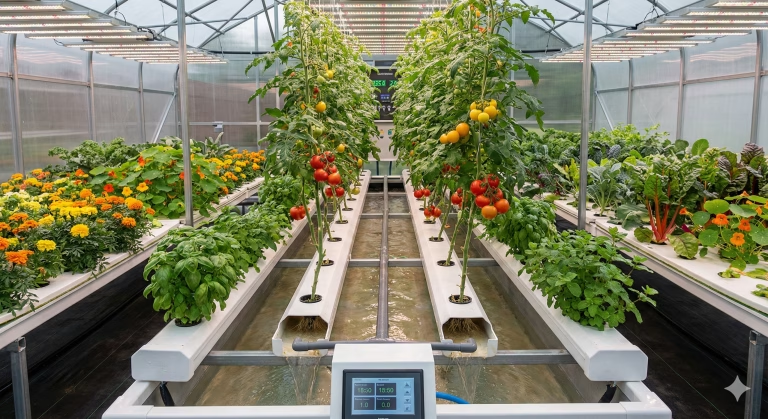
Fruiting plants like tomatoes and peppers can work, but they usually demand stronger nutrient balance, more root support, and more careful system management. That makes them better for mature media-bed or hybrid systems than for a first-time raft or NFT setup.
Best fish choices
- Tilapia for warm water systems.
- Goldfish for ornamental or beginner setups.
- Bluegill for some climates.
- Trout for cooler water systems.
Fish selection should match your local temperature and your ability to hold it steady. In hot places like Phoenix, warm-water species made more sense for me; in Central Michigan, indoor systems with temperature control are much easier to keep stable.
What are the benefits?
Aquaponics gives you a closed-loop nutrient cycle with less waste than soil gardening. The nitrogen cycle is the reason it works, because the system turns fish waste into usable plant food instead of treating it as trash.
Main benefits include:
- Lower water use than traditional soil gardening.
- Continuous nutrient recycling.
- Faster growth for many leafy crops.
- Less mess than many soil setups indoors.
- Strong fit for urban and apartment growers.
A healthy cycle also reduces dependence on synthetic fertilizers, which is one reason aquaponics appeals to people who want a more sustainable food system. For indoor growers, it can create a very controllable environment when light, oxygen, and pH are managed well.
What are the drawbacks?
The nitrogen cycle is powerful, but it is not automatic in a way that beginners can ignore. If oxygen drops, pH drifts too low, fish are overfed, or filtration is undersized, the cycle can crash or stall.
Common drawbacks include:
- Longer startup time before the system is stable.
- Regular testing requirement.
- Sensitivity to pump failures and low oxygen.
- Less flexibility for heavy fruiting crops in small systems.
- Need for good balance between fish load and plant load.
One of the biggest beginner mistakes is assuming more fish means better growth. Too many fish can create ammonia faster than bacteria and plants can process it, especially in a young system.
What maintenance keeps it stable?
Stable aquaponics is mostly about consistency. Test water weekly after the system matures, watch feeding rates, keep aeration strong, and remove solids before they rot.
Weekly maintenance checklist
- Test pH, ammonia, nitrite, and nitrate.
- Inspect pump flow and air delivery.
- Check roots for clogging or dead spots.
- Remove excess solids if your system uses a filter.
- Top off evaporated water.
- Feed fish conservatively.
- Trim plants so the system stays balanced.
If pH drops too far, nitrification slows down and the whole cycle weakens. If dissolved oxygen falls, the bacteria responsible for the cycle lose efficiency quickly.
What troubleshooting matters most?
Most aquaponics problems are really nitrogen-cycle problems in disguise. Yellowing plants, stressed fish, and cloudy water often point back to imbalance in ammonia, nitrite, nitrate, oxygen, or pH.
Common problems and fixes
- Ammonia spike: Feed less, add more aeration, reduce fish load, and check biofiltration.
- Nitrite spike: The second stage of nitrification is lagging, so keep testing and avoid adding more fish.
- Low nitrate: Add more plant mass or increase feeding carefully.
- pH crash: Buffer slowly and check whether nitrification is consuming alkalinity.
- Slow plant growth: Verify light levels, oxygen, and available nitrate.
A good troubleshooting habit is to change one variable at a time. That makes it much easier to understand whether the system is improving or just moving the problem around.
Who is this best for?
This method is best for home growers who want a productive, low-soil, water-efficient system and are willing to test water regularly. It works especially well for apartment gardeners, hobbyists, and urban growers who want leafy greens, herbs, and small mixed harvests.
Best system matches:
- Beginners: media bed.
- Leafy greens: raft.
- Small spaces: NFT or compact hybrid.
- Mixed crops and higher flexibility: hybrid.
- Cooler or warmer climates: choose fish and insulation to match local conditions.
If you want the simplest entry point, start with a media bed and leafy greens. If you want the highest output of salad crops, build toward a raft system once you understand cycling.
FAQ
How long does it take to cycle an aquaponics system?
Most systems take a few weeks to cycle, and fishless cycling is often faster and safer than cycling with fish. The exact time depends on temperature, aeration, ammonia input, and how much seeded media or bacteria starter you add.
What is the biggest risk in aquaponics?
The biggest risk is an ammonia or nitrite spike, especially in a new or overfed system. Those compounds are toxic to fish and usually signal that the biofilter is not keeping up.
Why does pH matter so much?
pH affects both bacteria performance and the balance between ammonia and ammonium in water. When pH is too low, nitrification slows; when it is too high, more toxic ammonia is present.
Can I use aquaponics indoors?
Yes, aquaponics works very well indoors if you provide enough light, aeration, and temperature control. Indoor systems are often easier to stabilize than outdoor setups in extreme climates.gogreenaquaponics+1
What are the easiest plants to grow?
Leafy greens are usually the easiest, especially lettuce, basil, kale, and similar crops. They grow quickly and are more forgiving when nutrient levels fluctuate.
How much does a beginner system cost?
A simple home aquaponics system can often be built in the low hundreds of dollars, depending on tank size, pump quality, and media choice. Bigger raft or hybrid systems cost more because they need more plumbing, aeration, and filtration.
Do I need a biofilter?
Yes, in practice you always need a place for nitrifying bacteria to live, even if it is built into media beds or another grow component. Raft and NFT systems usually need more deliberate biofiltration than media beds.
What happens if I overfeed the fish?
Overfeeding adds more ammonia than the bacteria and plants may be able to process, which can cause fish stress or a cycle crash. Feed lightly and increase slowly only when your test results show the system can handle it.
Can aquaponics handle tomatoes?
Yes, but tomatoes are more demanding than leafy greens and usually do better in mature media-bed or hybrid systems. They need stronger support, more nutrients, and tighter management than beginner crops.
What should I watch first when something goes wrong?
Start with ammonia, nitrite, pH, temperature, and dissolved oxygen. Those five readings usually reveal the root cause faster than guessing based on plant appearance alone.
Author note
I write from hands-on experience with indoor and urban growing systems, including years of practical work in Phoenix, Arizona and more recent living and growing conditions in Central Michigan. That means I have seen aquaponics behave very differently in heat, dryness, cold seasons, and indoor-controlled environments. My focus is on clear, reliable guidance for apartment gardeners and home growers who want productive systems without unnecessary complexity.
Share this:

Discover more from Soil Free Harvest
Subscribe to get the latest posts sent to your email.







One Comment