How to Choose LED Grow Lights for Your Hydroponic System (Beginner to Advanced Guide)
Choosing LED grow lights for a hydroponic system starts with matching light to plants, not the other way around. For most home setups, look for full-spectrum LED fixtures that cover your grow area at roughly 20–40 actual watts per square foot or with PPFD in the 200–900 μmol/m²/s range, depending on whether you grow leafy greens or fruiting crops. Prioritize good coverage, efficiency, and low heat over raw wattage numbers or marketing claims.
TL;DR: Measure your grow space, choose a full-spectrum LED sized to that footprint, check that it delivers appropriate PPFD for your plant type, and make sure you can adjust height and timers as plants grow. For most indoor hydroponic gardens, a quality LED will last 50,000+ hours, use far less electricity than older lights, and support strong growth from seedling to harvest.
What are LED grow lights ?
LED grow lights are specialized fixtures that emit plant-usable light (PAR) so your hydroponic garden can photosynthesize indoors without sunlight. Compared to older HID or fluorescent options, modern LEDs are far more energy efficient and generate much less heat, which is ideal for tight apartments and enclosed tents.
Most hydroponic LEDs provide a broad, full-spectrum output that mimics natural daylight while emphasizing key red and blue wavelengths that drive photosynthesis and plant structure. Many units now add UV and far-red to boost color, flavor, and flowering performance in more advanced setups.
What is hydroponics → beginner hydroponics overview
How do LED grow lights work in a hydroponic system?
LED grow lights use semiconductor diodes to convert electrical energy into photons in specific wavelength ranges plants can use, typically 380–800 nm. The fixture’s driver controls current and voltage to keep output stable and efficient over tens of thousands of hours.
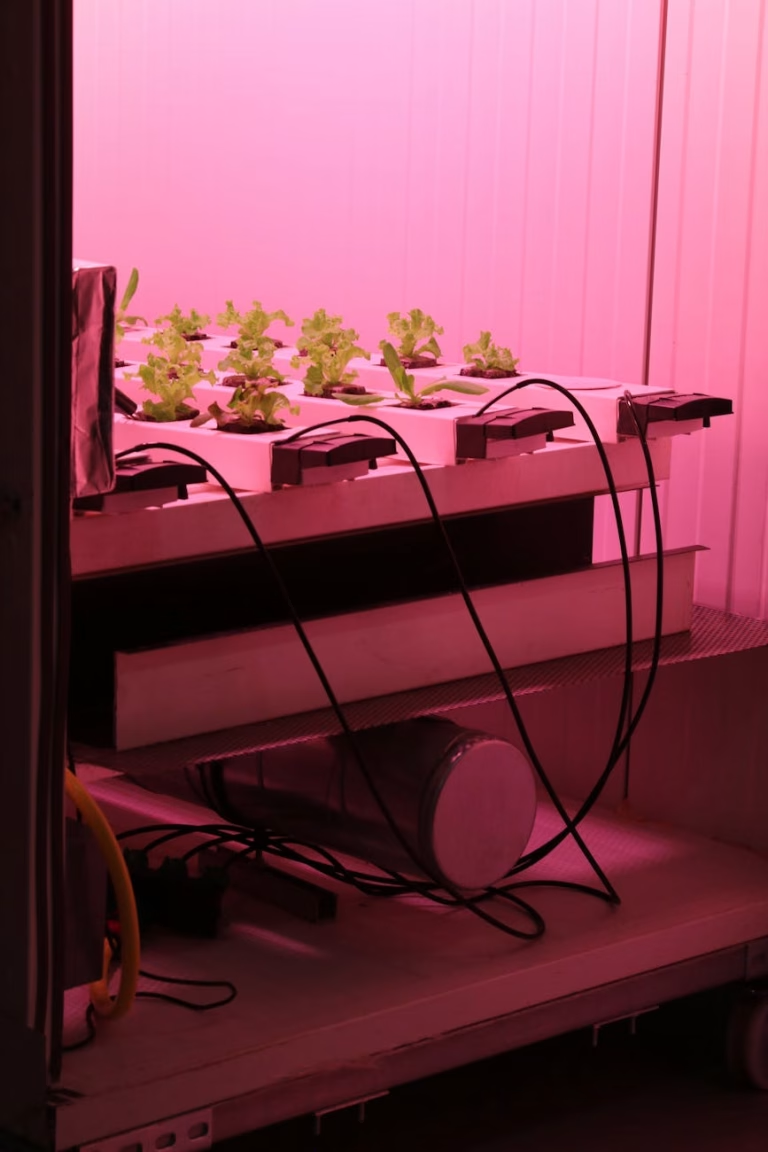
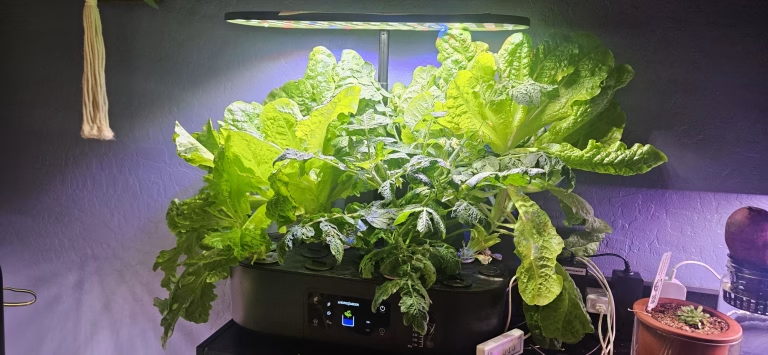
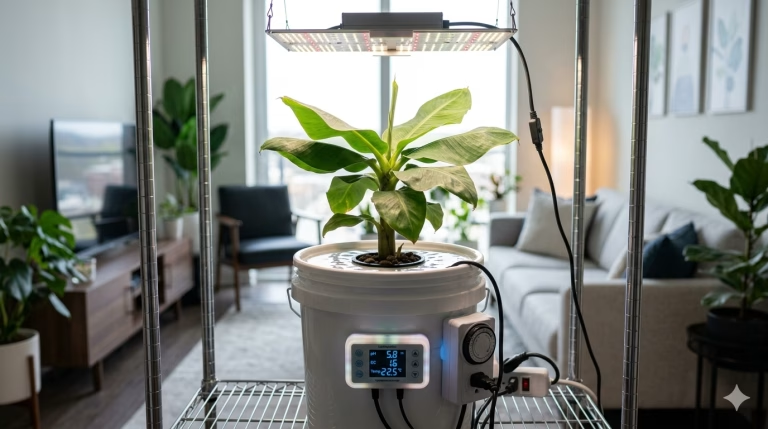
In a hydroponic system, LEDs hang above channels, buckets, or towers and provide consistent PPFD so plants can photosynthesize while roots sit in nutrient solution instead of soil. Light height, photoperiod, and intensity are adjusted as plants move from seedlings to vegetative growth and finally to flowering or fruiting stages.
Why choose LEDs over other grow lights?
LEDs have become the default choice for home hydroponics because they deliver more usable light per watt than HID or fluorescent bulbs while producing far less waste heat. That means lower power bills, easier temperature management, and less risk of heat stress or leaf burn.
They also last dramatically longer: many quality LED grow lights are rated for 50,000+ hours of operation, which can translate to several years of continuous use in a home garden. LEDs can be built into slim, low-profile bars or boards that fit over NFT channels, DWC reservoirs, or vertical gardens without taking over the room.
Main benefits of LED grow lights
- High electrical efficiency and up to 50 percent energy savings compared to older technology.
- Long lifespan with minimal bulb replacements or maintenance.
- Lower heat output, which is crucial for small apartments, cabinets, and grow tents.
- Tunable spectrum options for seedlings, vegetative growth, and fruiting crops.
Key drawbacks and tradeoffs
- Higher upfront cost than basic fluorescent or budget HID kits.
- Quality varies widely; “cheap” LEDs can have poor spectrum, low PPFD, and misleading wattage claims.
- Some fixtures have limited spread, so you may need multiple units to cover wider beds or multi-level systems.
What LED light spectrum do hydroponic plants need?
Plants rely on photons in the PAR range, commonly defined as 400–700 nm, though many modern horticultural LEDs extend that to 380–800 nm to include useful UV and far-red. Within that range, blue light around 425–450 nm and red light around 630–660 nm drive most photosynthesis and strongly influence leaf development, stretching, and flowering.
A full-spectrum LED designed for plants distributes output across the visible range so your greens do not look washed out and can perform in all stages of growth. Many manufacturers use white LEDs with added red diodes or fine-tuned spectra that roughly mimic natural sunlight but with slightly boosted red.
Spectrum for different growth stages
- Seedlings: Slightly higher blue ratio (around 30–50 percent of total red/blue mix) to support compact growth and strong roots.
- Vegetative: Balanced full spectrum with moderate blue and strong red to encourage leaf and stem growth without excessive stretching.
- Flowering/fruiting: Emphasis on red at 630–660 nm plus some far-red to maximize photosynthetic rate and fruit set, alongside enough blue to keep structure tight.
Best plants for hydroponics → What can you grow in hydroponics?
How much LED light output do you need?
For hydroponic leafy greens and herbs, target PPFD in roughly the 200–400 μmol/m²/s range at canopy level, with 12–16 hours per day of light. Fruiting crops like tomatoes, peppers, and cucumbers usually perform best with PPFD around 600–900 μmol/m²/s for 12–14 hours.
If manufacturers do not list PPFD, a rough rule is 20–40 actual LED watts per square foot of grow area for typical home systems. Higher watt densities suit dense, flowering canopies, while lower values are fine for lettuce rafts or herb channels in shallow systems.
Coverage area vs wattage
- Always check the stated coverage area at both vegetative and flowering settings, because coverage usually shrinks at higher intensities.
- For a 2 ft by 4 ft NFT table (8 square feet), a 160–320 W high-efficiency LED is often adequate depending on crop type and mounting height.
- Using two smaller fixtures instead of one large panel can improve side lighting and reduce shading for tall or bushy plants.
How far should LED grow lights be from hydroponic plants?
The optimal distance depends on fixture wattage, lens design, and plant sensitivity, but it usually falls between a few inches and a couple of feet. Lower-power LEDs (around 200 W) can often sit 30–50 cm above the canopy, while 1000 W class fixtures may need 90–115 cm to spread light evenly without burning leaves.
Soft herbs and seedlings are especially sensitive and prefer gentler PPFD, so start with lights higher and gradually lower them as plants acclimate and you observe leaf response. A simple check is to hold your hand at canopy level; if it feels uncomfortably hot after 30 seconds, the light is likely too close for many hydroponic crops.
Practical mounting tips
- Start at the manufacturer’s recommended hanging height and adjust in 2–5 cm increments weekly as plants grow.
- Use adjustable ratchet hangers so you can easily raise or lower fixtures over DWC buckets, Kratky reservoirs, or tower gardens.
- Watch for signs of stress like bleaching, curling, or scorched leaf tips and respond by increasing the distance or dimming the light if possible.
DWC hydroponics guide → deep water culture setup
Which LED grow light features matter most?
For a home hydroponic garden, the most important LED features are full spectrum, adequate coverage, efficiency, and basic control over timing and intensity. Build quality, driver reliability, and warranty length also matter because a failed fixture can stall your entire system.
Key feature comparison
| Feature | Why it matters for hydroponics | Typical benchmarks |
|---|---|---|
| Spectrum | Supports all stages and plant types | Full spectrum 380–800 nm with strong red/blue output |
| PPFD / efficacy | Determines growth rate and yield | Efficacy around 2.5–2.8 μmol/J on modern fixtures |
| Coverage area | Matches your NFT channels, DWC tubs, or towers | Clear veg/flower footprint listed at set heights |
| Wattage (actual) | Drives PPFD and power cost | Around 20–40 W per square foot for most home gardens |
| Dimming / controls | Fine-tunes intensity for seedlings vs fruiting | Onboard dimmer or external controller support |
| Heat management | Keeps solution and room temperature stable | Passive fins or quiet fans with good airflow |
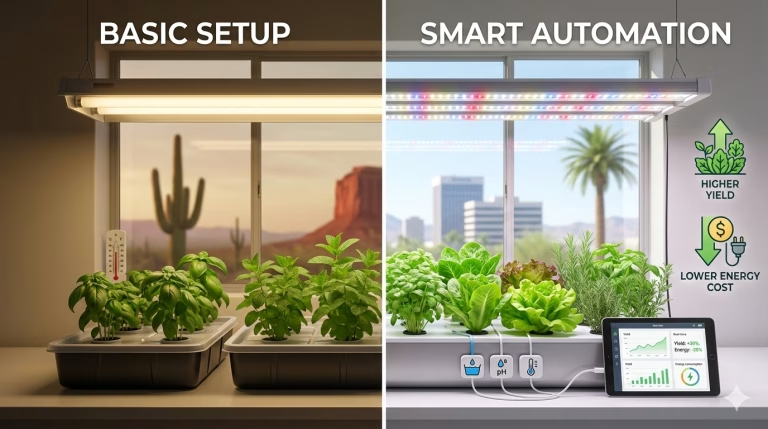
Hydroponic automation basics → timers, sensors, and smart control for indoor gardens
How to choose LED grow lights for different hydroponic systems
Different hydroponic layouts have different lighting needs because of canopy shape, height, and plant density. Choosing the right fixture style can make maintenance easier and reduce dark spots or leggy growth.
Best LEDs for DWC and Kratky systems
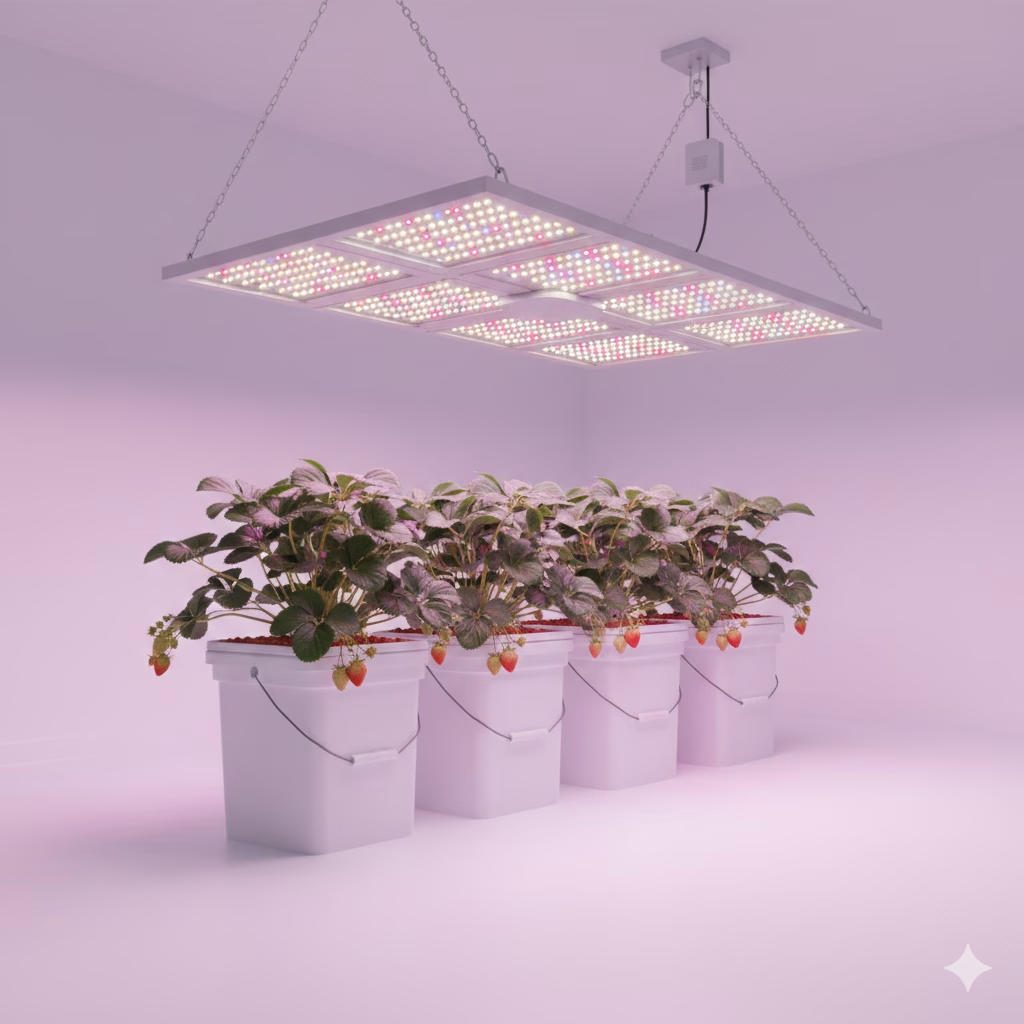
- Use panel or bar-style fixtures that evenly cover the footprint of your buckets or tubs so each plant receives similar intensity.
- Focus on full-spectrum units in the 200–400 W range for small groups of leafy greens or compact fruiting plants, scaled to your square footage.
- In personal DWC setups in hot, dry climates, higher efficacy LEDs with good passive cooling help keep nutrient solution temperatures more stable.
Kratky method guide → passive hydroponics for beginners
Best LEDs for NFT channels and horizontal racks
- Long bar fixtures or multiple slim LED strips often match the shape of NFT channels better than a single square board.
- Aim for uniform PPFD along the full length of the channel so plants at the ends do not lag behind those in the center.
- Consider daisy-chainable units for longer racks so you can expand as you add more channels or trays.
Best LEDs for vertical towers and wall gardens
- Use ring or multi-sided bar fixtures that can wrap light around the tower or wall to minimize shaded sides.
- Since towers often host a mix of leafy greens and herbs at different heights, prioritize fixtures with dimming and adjustable mounting brackets.
- Reflective walls or supplemental side strips can dramatically improve uniformity and help lower tiers keep up.
Vertical hydroponics → setups for small spaces
How much do LED grow lights cost to buy and run?
Entry-level LED grow panels for small hydroponic herb gardens can start under $100, while high-efficiency, brand-name fixtures for larger areas often run several hundred dollars. Midrange fixtures around 300 W that cover roughly a 3 ft by 3 ft area are common for serious hobbyists.
Operating costs depend on fixture wattage, hours per day, and local electricity rates, but LEDs typically cut lighting energy use by up to 50 percent compared with older HID setups. For a 300 W LED running 16 hours per day in a home herb garden, expect around 4.8 kWh daily, which you can multiply by your local rate to estimate monthly cost.
Budget hydroponic kits → starter systems under $150
How to maintain and troubleshoot LED grow lights in hydroponics
LED fixtures require far less maintenance than HID systems, but they still benefit from periodic cleaning and inspection. Dust build-up on lenses or bars can noticeably reduce PPFD at the canopy over time.
Common symptoms of lighting issues include stretching (too little light), leaf bleaching (too much light or lights too close), and uneven growth across the bed. When troubleshooting, check mounting height, photoperiod, dimmer settings, and fixture output before assuming the problem is nutrients or pH.
Basic maintenance checklist
- Wipe lenses or bars with a soft, dry cloth every 2–4 weeks to remove dust and residue.
- Inspect power cords, drivers, and hanging hardware for wear or heat damage every grow cycle.
- Verify timers and controllers are keeping consistent schedules after power outages or system updates.
Hydroponic maintenance schedule → daily, weekly, and monthly tasks
How-To: Set up LED grow lights for a home hydroponic system
Title: Setting up LED grow lights for an indoor hydroponic garden
Description: A simple step-by-step process for mounting and dialing in LED grow lights over a small indoor hydroponic setup, from measurement to first harvest.
Materials and tools
- LED grow light fixture sized to your grow area
- Adjustable rope ratchets or hanging kit
- Mechanical or digital timer
- Measuring tape
- Power strip or surge protector rated for your load
- Optional: PPFD meter or reliable light app for fine tuning
Step 1: Measure your grow area
Measure the length and width of your hydroponic footprint, such as a 2 ft by 4 ft table or a 3 ft by 3 ft tent floor. Multiply to get total square footage; this number will guide the LED wattage and coverage you need.
Step 2: Choose an appropriately sized LED
Select a full-spectrum LED fixture whose recommended coverage matches your measured area at vegetative and flowering intensities. Aim for roughly 20–40 W per square foot or PPFD in the correct range for your plant type.
Step 3: Plan safe power and timer placement
Identify a wall outlet and route power through a surge-protected power strip positioned away from splashing nutrient solution. Plug your timer into the strip so it can control one or more fixtures without overloading a single outlet.
Step 4: Mount anchor points above the system
Install hooks, bars, or a ceiling rail above your hydroponic setup that can support the combined weight of the fixtures and hanging hardware. Make sure there is enough vertical space to raise and lower the lights as plants grow toward the canopy.
Step 5: Hang the LED at initial height
Attach rope ratchets to the fixture and hang it at the manufacturer’s recommended starting distance for your wattage, often 30–50 cm for smaller LEDs. Center the light over your hydroponic channels, buckets, or towers so the footprint covers all plants.
Step 6: Set an appropriate light schedule
Program your timer for 14–16 hours on for leafy greens and most herbs, or 12–14 hours for fruiting crops once they start flowering. Keep the schedule consistent day to day so plants experience a stable light-dark rhythm.
Step 7: Observe plant response and adjust
Over the first week, watch for stretching, leaf curling, or bleaching that would signal light is too weak or too intense. Raise, lower, or dim the fixture in small increments to dial in a healthy, compact canopy.
Step 8: Reposition as plants grow
As your plants gain height in DWC buckets or along NFT channels, periodically raise the light to maintain target distance and uniform coverage. For mixed-height plantings, consider training or pruning taller crops so they do not overshadow shorter, light-hungry greens.
Hydroponic troubleshooting guide → solving common indoor growing problems
FAQ: LED grow lights for hydroponic systems
How much should I spend on an LED grow light for a small hydroponic garden?
For a small herb or lettuce system, a decent entry-level LED panel can cost under $100, while higher-efficiency fixtures with better coverage and lifespan often sit in the $150–$300 range. The extra investment in a quality light usually pays off through lower energy use, fewer replacements, and stronger harvests.
Can I use regular household LED bulbs for hydroponics?
Household LEDs can keep a few low-light herbs alive, but they rarely provide enough PAR or proper spectrum for vigorous growth, especially for fruiting plants. Dedicated grow lights deliver higher PPFD, better red/blue balance, and a form factor designed to cover plant canopies instead of room walls.
How long should I run LED lights for hydroponic plants each day?
Most leafy greens and herbs thrive with 14–16 hours of light and 8–10 hours of darkness per day, while many fruiting crops do well at 12–14 hours once flowering begins. Keeping a consistent daily schedule with a timer prevents stress and growth slowdowns.
Will LED grow lights make my apartment too hot?
LEDs are much cooler than HID or halogen lights, but they still generate some heat that can warm a small room if ventilation is poor. Choosing high-efficacy fixtures and providing simple airflow, such as a clip fan and cracked door, usually keeps temperatures within a safe range for hydroponic systems.
How do I know if my plants are getting enough light?
Plants that stretch, lean heavily toward the fixture, or produce small, pale leaves often need more light intensity or longer photoperiods. A PPFD meter or a reliable app can help quantify light at the canopy, but visual cues plus steady, compact growth are good practical indicators.
Can one LED grow light cover multiple hydroponic systems?
One sufficiently large LED can cover several small systems if their combined footprint matches the light’s effective coverage area at your hanging height. However, spreading multiple smaller fixtures over separate tables or racks often yields more uniform light and flexibility as you expand.
Are dimmable LED grow lights worth it?
Dimmable fixtures let you dial back intensity for seedlings and shade-tolerant crops, then increase output for mature, light-hungry plants, which can improve growth and reduce wasted energy. They are especially useful in mixed gardens where you want fine control without constantly raising and lowering the lights.
How long do LED grow lights last in a hydroponic setup?
Quality LED grow lights are often rated for 50,000 hours or more, which can translate to several years of daily use in a typical home garden. Over time, they gradually lose output rather than failing suddenly, so you may eventually replace them to maintain strong PPFD.
Do I need UV or far-red LEDs for my hydroponic plants?
Most beginners achieve excellent results with standard full-spectrum LEDs that focus on visible red and blue output, without special UV or far-red diodes. UV and far-red can offer incremental benefits for flavor, color, or flowering in advanced setups, but they are optional rather than mandatory.
Author note: SoilFreeHarvest is written by a cybersecurity engineer with a (mostly) green thumb in Phoenix, Arizona, where indoor hydroponic systems have to perform reliably in a hot, dry climate and sometimes in tight rental spaces. Years of testing different growing setups indoors have shown how much lighting quality impacts yield and resilience. The focus here stays on practical, repeatable methods that apartment gardeners and home growers can apply without commercial budgets. Each guide aims to help you grow more food indoors with less guesswork and more confidence.
Share this:

Discover more from Soil Free Harvest
Subscribe to get the latest posts sent to your email.