Crop Rotation in Hydroponics: Breaking Nutrient Solution Cycles and Preventing Nutrient Imbalances

Crop rotation stands as one of agriculture’s oldest and most proven management practices. Traditional gardeners have rotated crops through their fields for centuries to maintain soil fertility, suppress pests, and promote overall plant health. But here’s the catch: hydroponics operates on fundamentally different principles than soil-based gardening. There is no soil to replenish. The root zone isn’t a living ecosystem that regenerates nutrients through decomposition. Plants float in a carefully engineered nutrient solution that requires constant management and monitoring. So the question becomes immediately relevant for hydroponic growers: does crop rotation apply to soilless systems, and if so, how does it work?
The short answer is yes, but with significant modifications. Crop rotation in hydroponics isn’t about rebuilding depleted soil fertility. Instead, it’s about managing nutrient imbalances, preventing salt accumulation, reducing disease pressure, and optimizing the operational efficiency of your hydroponic system. Understanding this distinction is crucial for growers looking to extend the lifespan of their nutrient solutions, reduce the frequency and cost of complete system flushes, and maintain healthier plants with minimal chemical interventions.
How Traditional Crop Rotation Works in Soil Based Gardens
To understand how crop rotation applies to hydroponics, let’s first examine how it functions in conventional agriculture. Traditional crop rotation involves systematically planting different crop types in a planned sequence over multiple growing seasons. This practice delivers several interconnected benefits that keep soil living and productive.
Rotating crops naturally restores soil fertility. Heavy feeders like tomatoes and corn deplete nitrogen and phosphorus rapidly, leaving the soil depleted after a single season. When a nitrogen fixing legume such as beans or alfalfa is planted next, it replenishes nitrogen through its symbiotic relationship with rhizobia bacteria in the soil. Root systems also vary significantly among crops. Deep rooted crops like carrots pull nutrients from deeper soil layers, making them accessible to subsequent shallow rooted crops planted in the same space.
Crop rotation breaks disease and pest cycles that would otherwise escalate with each planting. Many soil borne pathogens and pests specialize in particular plant families. Growing tomatoes continuously in the same soil allows pathogenic fungi, bacteria, and nematodes to multiply unchecked. Rotating to lettuce, which those pathogens cannot infect, starves the pathogen population. The microbial diversity in soil also improves with crop rotation. Different crops produce distinct root exudates, the organic compounds secreted by roots, which feed different microbial populations. This biological diversity ultimately enhances soil structure, water retention, and nutrient cycling.
Research demonstrates measurable benefits from traditional crop rotation. Studies show that farms implementing diverse rotations achieve 27 to 48 percent higher yields compared to monoculture systems. Crop rotation can reduce pest losses by up to 63 percent and decrease soil borne disease pressures by 40 to 60 percent. Cover crops integrated into rotation systems reduce erosion by 43 percent and increase soil organic matter by 1.2 percent annually.
The Hydroponics Reality: Where Traditional Rotation Fails
Hydroponics fundamentally changes the agricultural equation. In hydroponic systems, plants grow in an inert medium or directly suspended in nutrient solution. There is no living soil. There are no symbiotic relationships with nitrogen fixing bacteria. Nutrient cycling doesn’t happen through decomposition. All nutrients come from the carefully balanced solution formulated by the grower.
This is where traditional crop rotation logic breaks down. In soil gardens, crop rotation works partly because you’re managing a complex biological system that regenerates itself. In hydroponics, you’re managing a closed chemical system. The absence of soil means certain principles of traditional rotation simply don’t apply.
Consider pest and disease management. While crop rotation does help reduce disease pressure in hydroponics, the benefit is less dramatic than in soil systems because hydroponic environments are already highly controlled. Most commercial hydroponic growers operate in controlled environment agriculture settings with sophisticated sanitation protocols, pH and EC monitoring, and environmental controls that inherently limit disease pressure. Rotating crops provides additional insurance against establishment of crop specific pathogens, but it’s not the primary disease management tool it is in outdoor soil agriculture.
Similarly, the concept of soil rejuvenation through rotation is completely irrelevant in hydroponics. There is no soil to rejuvenate. The growing medium, whether rockwool, clay pebbles, or coco coir, is either disposable or thoroughly cleaned between crops. It doesn’t accumulate organic matter or build fertility over time.
Why Crop Rotation Actually Matters in Hydroponics: Nutrient Solution Management
Despite these differences, crop rotation remains a powerful strategy in hydroponics for a completely different reason: managing the chemistry of the nutrient solution itself. This is where the real value of rotation emerges.
Every plant species has a unique nutrient uptake profile. Lettuce and basil, which are fast growing leafy crops, require high nitrogen and relatively lower phosphorus and potassium. Tomatoes and peppers, which transition from vegetative growth to fruit production, initially need nitrogen but shift dramatically to potassium and phosphorus as they enter flowering and fruiting stages. Strawberries have yet another distinct nutrient demand profile.
In a recirculating hydroponic system, plants remove nutrients from the solution at different rates and different ratios. Nitrogen gets depleted faster than potassium. Phosphorus uptake rates differ from calcium uptake rates. As plants selectively consume certain nutrients, the remaining ions accumulate in the solution. Over weeks and months, this selective nutrient depletion and ion accumulation creates serious imbalances.
Research on recirculating hydroponic systems shows that simply maintaining electrical conductivity at a target level does not prevent nutrient imbalances. Continuous recycling with tap water containing moderate to high alkalinity can result in apparent increases in solution EC despite target EC maintenance, accompanied by nutrient deficiencies in plants and reduced growth. Ion accumulation becomes problematic particularly with calcium and sodium from the irrigation water, which can interfere with the uptake of other essential nutrients through antagonistic interactions.
This is where crop rotation becomes invaluable. By rotating crop types with different nutrient uptake profiles, growers can prevent the selective depletion and accumulation that plagues monoculture hydroponic systems. Different crops utilize different nutrients from the solution at different rates, promoting a more balanced nutrient profile across all macronutrients and micronutrients.
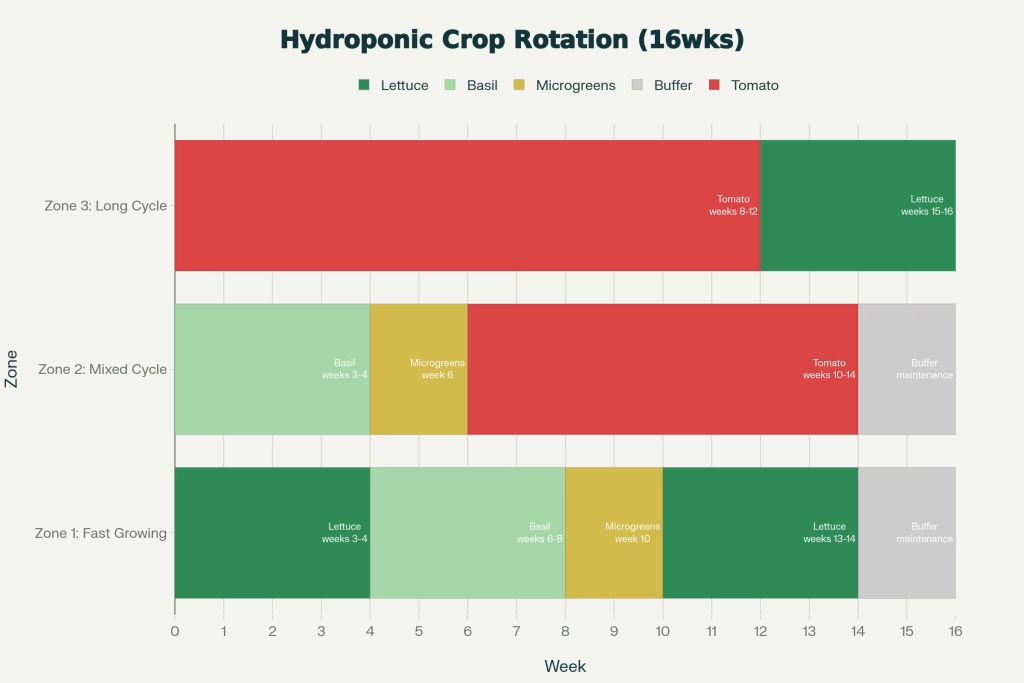
Zone 1: Fast Growing Cycle cycles through quick turnaround crops (lettuce, basil, microgreens) that complete in 2-4 weeks, allowing multiple plantings per system per quarter. This zone demonstrates how leafy greens naturally deplete different nutrients than herbs, creating the nutrient profile balancing discussed in your blog.
Zone 2: Mixed Cycle combines rapid succession with a longer fruiting crop. By inserting quick microgreens between basil and tomato transitions, this zone optimizes space utilization while managing the nutrient solution adjustment needed when moving from nitrogen-hungry basil to potassium-heavy tomato production.
Zone 3: Long Cycle maintains tomato through its full 8-12 week production window, then transitions to fast-growing lettuce to utilize remaining system capacity. This demonstrates the practical approach described in your blog where growers maintain different crops on different timelines simultaneously.
Understanding Nutrient Imbalances and Nutrient Lockout
Before exploring rotation strategies, it’s essential to understand what actually happens when nutrient imbalances develop in hydroponics. Nutrient imbalances manifest in two distinct problems: nutrient deficiencies and nutrient toxicities.
Nutrient deficiencies occur when plants cannot access adequate quantities of essential nutrients. These might develop due to insufficient nutrient supply initially, but they’re often caused by pH drift. Most nutrients are most available to plant roots within a specific pH range, typically 5.5 to 6.5 for most hydroponic crops. Phosphorus availability drops dramatically at high pH. Iron becomes unavailable above pH 6.8, leading to chlorosis (yellowing between leaf veins) despite adequate iron in the solution.
Nutrient toxicities develop when beneficial nutrients accumulate to concentrations that harm the plant. Sodium and chloride are particularly problematic in recirculating systems using tap water. These ions are poorly absorbed by most plants and accumulate continuously. Eventually, their concentration becomes high enough to disrupt osmotic balance in plant cells or to interfere with uptake of beneficial ions like potassium and calcium.
The most insidious problem is nutrient lockout. This occurs when salt accumulation and ion imbalances reach such levels that plants cannot absorb available nutrients despite their presence in the solution. Common examples include excess potassium competitively inhibiting calcium and magnesium uptake, or accumulated sodium disrupting the water balance in plant cells. Lockout develops slowly over multiple crop cycles, making it particularly deceptive because plants show deficiency symptoms even though the solution technically contains adequate nutrients.
Commercial hydroponic growers typically manage lockout through complete system flushes. They periodically drain the entire nutrient solution and start fresh. This is expensive in both nutrients wasted and water consumed. On a 300 square meter greenhouse, complete solution changes can waste millions of liters of water annually while requiring expensive nutrient replenishment.
How Crop Rotation Prevents Nutrient Imbalances
The mechanism by which crop rotation prevents these imbalances is straightforward in principle but powerful in practice. When you grow the same crop continuously, it pulls the same subset of nutrients in the same ratios repeatedly. Nitrogen depletes rapidly. Potassium may lag behind calcium uptake. Over weeks, the solution develops a characteristic imbalance specific to that crop.
By rotating to a different crop with different nutrient uptake requirements, you change what’s being pulled from the solution. A crop that requires more phosphorus relative to nitrogen than your previous crop will preferentially deplete phosphorus, allowing previously accumulated nitrogen to be utilized. A crop sensitive to high potassium concentrations will consume excess potassium that accumulated during the previous crop cycle.
Real world data from commercial hydroponic operations demonstrates this principle in action. When lettuce and basil were rotated in sequence in NFT systems, complete solution changes could be extended from six weeks to ten weeks. This 40 percent reduction in solution change frequency directly resulted from nutrient uptake patterns leveling out the selective depletions and accumulations that would otherwise occur.
The same concept applies to other crop combinations. Tomato, which requires substantial calcium and potassium, consumes these ions preferentially when transitioned from lettuce, which is satisfied with lower concentrations. This consumption prevents the accumulation patterns that develop with tomato monoculture.
Research on species specific replenishment solutions backs this up. When formulated using mass balance principles that account for the uptake ratios of specific crops, replenishment solutions dramatically improved solution stability compared to standard commercial replenishment solutions. For arugula grown with species specific replenishment, solution EC decreased more gradually over production cycles. For standard commercial replenishment solutions, EC increased continuously due to salt accumulation.
The Rotation Benefit:
When you grow lettuce continuously, nitrogen depletes rapidly while potassium accumulates. The solution becomes nitrogen depleted and potassium rich. When you then transition to tomato, its high potassium demand consumes the accumulated potassium that built up during the lettuce cycle. Simultaneously, tomato’s lower nitrogen needs allow the nitrogen depleted from lettuce production to partially restore through reduced consumption patterns.
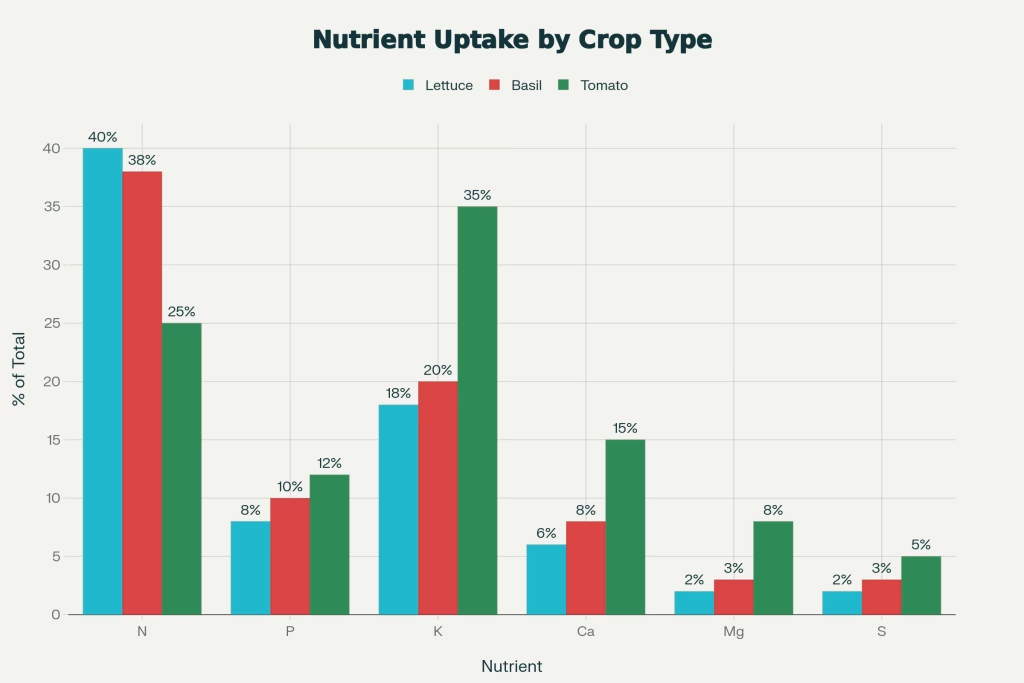
Lettuce and Basil (the green bars) emphasize nitrogen uptake at 40% and 38% respectively, while their potassium demand is relatively modest at 18% and 20%. These leafy crops preferentially deplete nitrogen from the nutrient solution. (see pmc.ncbi.nlm.nih)
Tomato (the orange bars) tells a completely different nutrient story. Its nitrogen uptake drops to 25% while potassium skyrockets to 35% of total nutrient demand. Calcium uptake more than doubles from 6% in lettuce to 15% in tomato. (see extension.msstate)
Succession Planting and System Optimization
Beyond nutrient management, crop rotation in hydroponics enables succession planting, a practice that dramatically improves system efficiency and economic performance. This involves maintaining multiple crops at different growth stages simultaneously, with staggered planting dates such that one crop finishes just as another reaches market size.
A typical succession planting approach maintains plants in three distinct stages: seedlings approximately one to two weeks from transplant, plants in active growth at middle stages, and mature plants ready for harvest. As mature plants are harvested, seedlings move up to fill that space. New seedlings are started to replenish the youngest stage.
The timeline varies by crop. Fast growing lettuce requires new succession plantings every 8 weeks during prime growing seasons. Slower growing fruiting crops like tomatoes might follow 14 to 20 week cycles. The key is timing the transitions so that space is never idle.
Succession planting solves multiple problems simultaneously. First, it maintains continuous production. Instead of the feast or famine model where an entire system finishes simultaneously, you harvest portions regularly. This creates consistent supply for markets and stable cash flow for growers.
Second, it maximizes utilization of expensive infrastructure. Your lights remain on continuously rather than cycling off during fallow periods. Pumps, environmental controls, and growing infrastructure operate at full capacity year round. This amortizes fixed costs across more production.
Third, succession planting naturally accommodates crop rotation. You’re not trying to force incompatible crops into the same space. Instead, when one crop finishes its full production cycle, you transition the entire production area to a different crop. The transition point is natural and logical.
Practical Implementation of Crop Rotation in Hydroponics
Successfully implementing crop rotation in hydroponics requires understanding several key factors and planning ahead. Unlike soil gardening where you might rotate crops opportunistically, hydroponic rotations require intentional scheduling.
Start by identifying compatible crop groupings. Leafy greens and herbs generally share similar nutrient profiles and can be rotated among themselves without major system adjustments. Fruiting crops like tomatoes, peppers, and cucumbers have distinct nutrient requirements, particularly in phosphorus and potassium needs during fruit production. Growing fruiting crops after fast depleting leafy crops gives the system time to accumulate the higher nutrient concentrations these crops demand.
Timing considerations are critical. Select crops with growth rates and cycles that fit your production calendar. Attempting to rotate a 100 day tomato crop with a 30 day microgreens crop creates constant system disruption rather than optimization. Better practice pairs crops with similar cycle lengths, such as basil with lettuce in shorter cycles, or tomato with pepper in longer cycles.
Monitor pH and EC data to identify when rotation becomes necessary. Consistent pH drift outside the optimal 5.5 to 6.5 range suggests nutrient uptake imbalances are developing. EC rising consistently despite target maintenance indicates salt accumulation. When these trends emerge, transitioning to a different crop prevents further degradation.
Synchronize harvest and transplanting. Drain the previous crop completely just as you transplant new seedlings. Take this opportunity for light sanitation and cleaning. Rinse the reservoir and growing beds with a dilute peroxide solution if biofilm is evident. Some growers introduce beneficial bacteria inoculations like Bacillus species to accelerate root development and establish microbial populations that reduce pathogenic development.
Adjust nutrient solution concentrations for the incoming crop. While some overlap exists, different crops have different optimal EC levels. Lettuce typically thrives at 0.8 to 1.2 mS/cm EC. Tomato prefers 2.0 to 5.0 mS/cm depending on growth stage. Making these adjustments when transitioning crops prevents the overfeeding that occurs when you move from one crop to another without solution modification.
Managing Nutrient Solution Changes and Complete Flushes
While crop rotation substantially extends the productive life of a nutrient solution, complete flushes still become necessary periodically. The question becomes how frequently. Without crop rotation, complete solution changes might be required every two to three weeks to prevent salt accumulation and nutrient lockout. With intentional crop rotation and careful monitoring, growers can extend this interval to 8 to 10 weeks, dramatically reducing water consumption and nutrient waste.
The flushing decision should be data driven. Track your EC measurements weekly. When EC begins rising despite target level maintenance and despite crop changes, a complete flush becomes warranted. Track pH stability as well. When you must make larger and more frequent pH adjustments to keep pH within target range, solution degradation is advancing.
Plant symptoms also provide feedback. Stunted growth despite apparent adequate nutrition, unexplained yellowing or browning leaf edges, or declining quality and flavor in harvested produce all suggest nutrient imbalances severe enough to require a complete reset.
When you do flush, completely drain the previous solution. Don’t try to balance a degraded solution with adjustments. This wastes effort and resources. Clean the reservoir thoroughly. Remove any biofilm or algae buildup. Prepare fresh solution using appropriate nutrient formulations for your incoming crop. Test the pH and EC, make adjustments, and confirm the solution meets target specifications before introducing transplants.
Disease and Pest Advantages from Rotation
While hydroponics already minimizes many pest and disease issues through controlled environment agriculture practices, crop rotation provides additional protection. Different plant species and even different varieties support different suites of pathogens and pests. Downy mildew affects cucurbits but not solanaceae. Botrytis commonly affects herbs but can establish on any plant under humid conditions. Thrips prefer peppers over leafy greens.
By rotating crop families, you break these pest and disease cycles. A pathogen that built up during lettuce production might find no suitable host when tomato is grown next. The absence of preferred host removes the resource needed for pathogen survival. Populations diminish significantly.
This rotation advantage is more pronounced in open field agriculture where pathogens survive in soil between seasons. In hydroponics with controlled environments and careful sanitation, it’s less critical but still valuable. The combination of environmental controls plus crop rotation creates a formidable barrier against pathogenic establishment.
Advanced Management: Mass Balance and Species Specific Replenishment Solutions
For growers committed to maximizing nutrient solution longevity and minimizing complete flushes, mass balance formulation represents the cutting edge of nutrient management in hydroponics. This approach uses the simple principle that nutrients supplied should match nutrients removed by plants.
Mass balance formulation starts with measuring the ratio of nutrients plants uptake relative to water transpired. When plants receive water and nutrients, they transpire water (especially under hot and dry conditions) at rates that may differ significantly from nutrient uptake rates. Under hot, dry conditions, plants transpire more water than they take up nutrients, requiring dilute nutrient solutions to prevent overfeeding. Under cool, humid conditions, the reverse may be true.
By adjusting replenishment solution concentration to match this water to nutrient uptake ratio, growers prevent the salt accumulation and selective ion depletion that occurs with one size fits all replenishment strategies. This requires tracking your system’s specific water use and nutrient uptake, but the reward is extended solution longevity.
Research from the University of Arkansas demonstrated this principle with species specific replenishment solutions formulated for arugula and basil. When replenished with these species specific solutions, EC remained stable throughout the production cycle, even when standard commercial replenishment solutions caused EC to rise and create nutrient imbalances.
Implementing mass balance requires either manual tracking and calculation or investment in precision nutrient delivery systems and pH/EC monitoring equipment. The complexity is higher, but for commercial operations, the savings in water, nutrients, and labor make this investment worthwhile.
Planning Your Rotation Calendar
Successful crop rotation begins with intentional planning. Map out your growing space and establish zones that will rotate through different crops on a regular schedule. For example:
A three zone system might follow a simple schedule: Zone One grows leafy greens, Zone Two grows herbs, Zone Three grows fruiting crops. Each completes a full cycle over 16 weeks. When Zone One finishes its leafy greens, it transitions to herbs from Zone Two. Zone Two transitions to fruiting crops. Zone Three returns to leafy greens. This rotation repeats continuously.
Alternatively, a two zone system might rotate between fast growing crops like lettuce and basil in Zone One, and slow growing crops like tomato in Zone Two. Zone One completes multiple cycles while Zone Two completes one.
The specific schedule depends on your available space, market demand, growing capacity, and personal crop preferences. The key is planning intentionally rather than growing reactively.
Conclusion: Crop Rotation Reimagined for Hydroponics
Crop rotation in hydroponics differs fundamentally from traditional soil based rotation, but it remains profoundly important for advanced growers. The benefits aren’t about rebuilding depleted soil or managing a living ecosystem. Instead, they’re about preventing nutrient imbalances, extending nutrient solution longevity, improving economic efficiency, and maintaining optimal plant health.
By rotating crops with different nutrient uptake profiles, maintaining succession plantings that optimize system utilization, and monitoring pH and EC to detect when rotation becomes necessary, hydroponic growers can dramatically improve their operations. Complete solution changes shift from twice monthly occurrences to quarterly or less frequent events. System efficiency improves. Production becomes more consistent. The gap between nutrient solution chemistry and plant physiology narrows.
For growers operating small home hydroponic gardens, crop rotation provides mental structure and the satisfaction of variety. For commercial operations managing hundreds of square meters of growing space, strategic rotation becomes a core operational practice that directly impacts profitability and sustainability. Either way, understanding and implementing appropriate crop rotation transforms hydroponics from a simple nutrient delivery system into a truly optimized growing method.