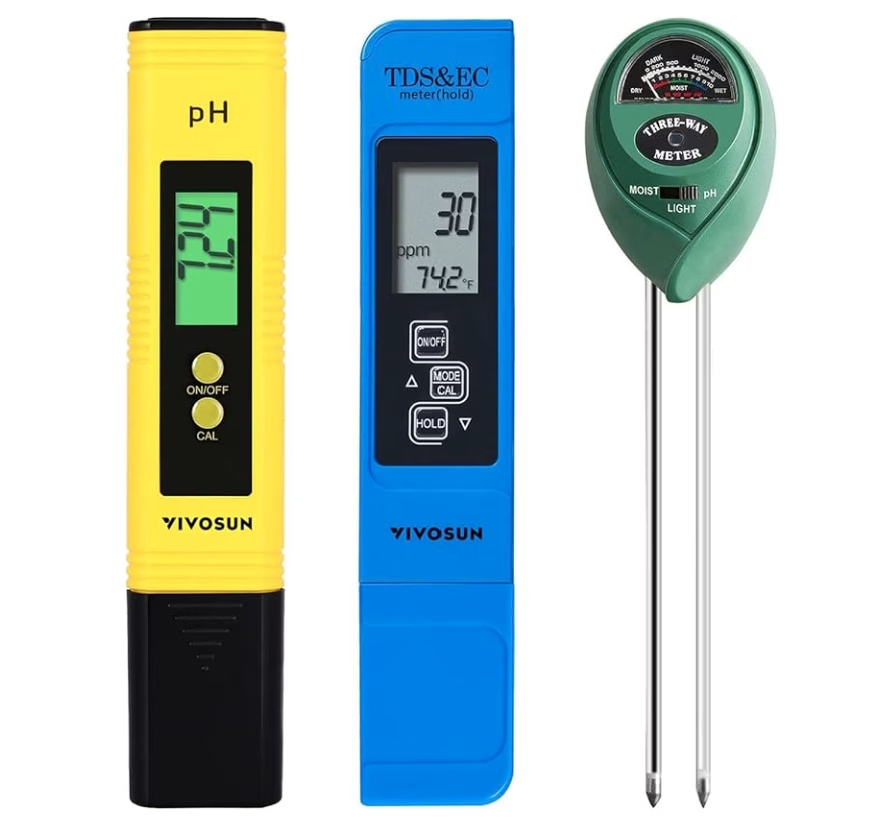
pH Drift 101: Why Your Plants Are Starving (Even With Perfect Nutrients)
If you’re giving your plants what you think is the perfect nutrient feeding but they still look tired, yellowed, or stunted, it’s time to talk about an often-overlooked issue: pH drift. Even the best nutrient solution is useless if the pH is off, because plants simply cannot absorb nutrients properly when the pH is out of balance. This guide will walk you through everything you need to know about pH drift, beginner mistakes, how to troubleshoot, fix, and prevent it, plus essential calibration steps for your pH meter to keep things accurate.
Why pH Matters So Much for Plants
pH measures how acidic or alkaline your growing medium or nutrient solution is on a scale from 0 to 14, where 7 is neutral. Most plants thrive in a slightly acidic range of 5.5 to 6.5, allowing roots to absorb the full spectrum of nutrients. When the pH drifts outside this range:
- Certain nutrients become chemically unavailable.
- Toxic elements can become more soluble.
- Nutrient lockout happens, leading to deficiencies.
Symptoms of nutrient lockout include yellowing leaves, leaf spots, tip burn, and stunted growth classic signs your plants are starving despite adequate fertilizer.
Common Beginner Mistakes and How to Avoid Them
Many growers lose time and plants because of simple pH mistakes:
- Neglecting Daily pH Testing: pH fluctuates constantly, so checking only once a week isn’t enough. Test daily or with every nutrient change using a reliable pH meter.
- Skipping Calibration: A pH meter’s accuracy depends on regular calibration with standard buffer solutions. Beginners often skip this, leading to false readings and wrong adjustments.
- Using Poor Quality pH Up/Down Solutions: Some generic products can degrade or harm plants. Use hydroponic-grade pH adjusters trusted by growers.
- Not Cleaning the pH Electrode: Dirty or dried-out electrodes give erratic readings. Clean the probe regularly and keep it hydrated in storage solution.
- Overcorrecting pH Too Quickly: Large jumps in pH shock roots. Always adjust slowly and retest after each change.
Solution Tips:
- Set a routine for daily pH checks.
- Calibrate your pH meter weekly (detailed below).
- Purchase trusted pH up/down solutions.
- Clean and soak your electrode regularly.
- Adjust pH in small increments.
The pH Troubleshooting: Step-by-Step Diagnosis
To systematically fix pH problems, follow these steps:
- Is the pH meter calibrated?
If no, calibrate using fresh standard buffers (pH 4, 7, and 10). - Is the electrode clean and hydrated?
If readings wobble, clean and soak the electrode as per manufacturer instructions. - Is there rapid pH fluctuation?
Check environmental factors like temperature, CO2 absorption, or water source. - Is the water conductivity (EC) too low?
Low dissolved solids can destabilize pH. Adjust nutrient concentration if needed. - Are the pH up/down solutions fresh and high quality?
Replace if expired or contaminated. - Make small, gradual adjustments with pH up or down until pH stabilizes between 5.5 and 6.5.
This method ensures you isolate the root cause without guessing, saving time and protecting your crop.
How to Use pH Up and pH Down Solutions Correctly
- pH Up: Usually potassium hydroxide; raises pH when solution is too acidic (<5.5).
- pH Down: Usually phosphoric or nitric acid; lowers pH when solution is too alkaline (>6.5).
Add these solutions drop-by-drop with thorough stirring. Use a calibrated pH meter to confirm changes and avoid large swings that stress plants.
Advanced Nutrients pH Perfect: (affiliate link) Simplifies pH management, helping reduce guesswork.
Step-by-Step Calibration Instructions for pH Probes
Accurate pH readings start with proper calibration. Here’s a reliable step-by-step process:
- Gather materials: pH buffer solutions (pH 4, 7, optionally 10), distilled water, clean containers, and your pH meter.
- Prepare the probe: Rinse the electrode in distilled or deionized water to remove residues.
- Calibrate mid-point (pH 7):
- Place the probe in pH 7 buffer solution at around 77°F (25°C).
- Wait 1-2 minutes for the reading to stabilize.
- Initiate calibration mode on your meter and confirm to set the mid-point.
- Rinse the probe gently with distilled water and blot dry.
- Calibrate low or high point:
- Immerse the probe in pH 4 (acidic) or pH 10 (alkaline) buffer solution depending on expected measuring range.
- Wait until the reading stabilizes again.
- Confirm second calibration point on your device.
- Rinse and store properly: After calibration, rinse and store the probe in storage solution to avoid dry-out damage.
Repeat calibration weekly or more often if your readings drift or accuracy is critical. Also calibrate after:
- Probe cleaning or maintenance.
- Long storage periods.
- After noticeable measurement inconsistencies.
When and How Often to Calibrate Your pH Meter
- Routine use: Calibrate weekly.
- Heavy use or critical applications: Daily calibration recommended.
- After cleaning or maintenance: Calibrate before use.
- Following long idle periods: Always recalibrate.
This schedule keeps your pH readings precise and reliable, directly impacting nutrient management success.
Factors Impacting pH Stability Beyond Calibration
- Temperature: pH readings decrease with rising temperatures. Aim to keep nutrient solutions around 72-75°F.
- CO2 Absorption: Carbon dioxide forming carbonic acid can lower pH unexpectedly.
- Conductivity Levels: Higher EC buffers pH changes; very low EC water leads to fluctuations.
- Reservoir Age: Nutrients degrade and precipitate over time, causing pH swings. Change reservoirs regularly (every 1-2 weeks).
By controlling these variables, pH drift decreases and your plants get consistent feeding.
Before and After Nutritional Lockout Photos
- Before correction: Pale, yellowed, stunted plants with tip burn despite full nutrient feeding.
- After correction: Deep green, lush growth showing how proper pH unlocks nutrient uptake.
These photos vividly demonstrate how proper pH management reverses nutrient lockout, saving your crops.youtube
Advanced Tips for Maintaining pH Stability
- Flush hydroponic systems regularly to prevent salt buildup.
- Use nutrient formulas designed for hydroponics.
- Track pH and electrical conductivity (EC) together.
- Consider automatic pH dosing for large or commercial growers.
- Keep detailed records of your pH trends and plant responses.
Handy Resources to Deepen Your pH Knowledge
- pHionics pH Fixes Guide for detailed charts and explanations. –https://www.phionics.com/2020/11/05/the-guide-to-ph-drift/
- Atlas Scientific pH calibration kits and sensors. – https://atlas-scientific.com/blog/how-to-calibrate-ph-meter/
- Dosatron automated pH dosing systems. – https://www.dosatron.com/en-nam/blog/how-to-control-ph-in-hydroponics/
Controlling pH drift is essential to ensuring your plants absorb every nutrient you provide. With careful monitoring, routine probe calibration, quality pH adjusters, and understanding root causes of pH shifts, you transform nutrient solutions into plant fuel. Use this guide as your foundation to diagnose, adjust, and master pH management for thriving gardens and hydroponic success.
Happy growing!
Share this:

Discover more from Soil Free Harvest
Subscribe to get the latest posts sent to your email.








5 Comments