Insulated Greenhouse Design for Hydroponics
An insulated greenhouse is one of the best ways to make hydroponics more reliable in cold or highly variable climates because it slows heat loss, stabilizes root-zone temperatures, and reduces energy demand. For hydroponic growers, that usually means steadier growth, fewer environmental swings, and better control over pH, EC, humidity, and plant health
TL;DR: Build for heat retention first, then balance that insulation with ventilation, condensation control, and a hydroponic system that matches your crops. The best insulated greenhouse designs use efficient glazing, sealed gaps, thermal buffering, and steady airflow so plants stay productive without constant climate swings.
What is an insulated greenhouse for hydroponics?
An insulated greenhouse is a growing structure designed to reduce heat loss and soften temperature swings, usually through better glazing, sealed seams, and added thermal barriers. In hydroponics, insulation matters even more because roots respond quickly to nutrient solution temperature, oxygen levels, and abrupt environmental changes.
The goal is not to make the greenhouse airtight. The goal is to create a structure that holds warmth on cold nights, sheds excess heat when the sun climbs, and keeps humidity from turning into chronic condensation.
Why does insulation matter more in hydroponics?
Hydroponic systems react fast to environmental changes because the roots are directly exposed to water, nutrient solution, or moist air. When solution temperatures get too cold, uptake slows, and when water gets too warm, dissolved oxygen drops and disease pressure can rise.
In practical growing, the biggest benefit of insulation is often not just lower heating cost. It is steadier crop behavior, especially in leafy greens and herbs that tend to suffer when root-zone and canopy temperatures swing too far in a single day.
Root zone temperature control → Water Temperature Management and Cooling Solutions in Hydroponic Systems
How does insulated greenhouse design work?
Insulated greenhouse design works by limiting conductive, convective, and radiant heat loss. The glazing material does most of the heavy lifting because covering choice directly affects R-value, light transmission, durability, and nighttime heat retention.
A good design also combines insulation with ventilation and moisture control. If warm, moist air is trapped against colder surfaces, condensation forms, and that can raise disease pressure, reduce visibility, and create maintenance problems over time.
What parts reduce heat loss?
- Glazing such as twin-wall polycarbonate or inflated double poly film.
- Air sealing around doors, vents, baseboards, and panel joints.
- Night insulation such as thermal curtains or interior insulating layers.
- Perimeter or foundation insulation to reduce cold transfer from the ground.
- Thermal mass, including water reservoirs or water barrels, to buffer temperature swings.
How important is R-value?
R-value measures resistance to heat flow, so a higher R-value means better insulation performance. Source material on greenhouse insulation notes that 8 mm twin-wall polycarbonate can reach an R-value of 1.72, while inflated double poly film can reach about 1.5, which helps explain why both are popular for winter growing.
For home growers, R-value should not be the only decision factor. Moisture resistance, light diffusion, long-term durability, and how easily the structure can be ventilated matter just as much in daily use.
Which is better: dual paned windows or polycarbonate panels?
For most hydroponic greenhouse builds, polycarbonate panels are usually the better choice because they combine useful insulation, lighter weight, impact resistance, and good light diffusion in a form that is easier to build around. Dual paned windows can work, especially in small custom builds or repurposed structures, but they are heavier, more fragile, and often less forgiving in hobby greenhouse construction.
The better option depends on your priorities. If you want a practical, lower-risk greenhouse shell for year-round hydroponics, polycarbonate usually wins, while dual paned windows make more sense when appearance, reuse of salvaged materials, or a glass-like finish matters most.
Dual paned windows vs polycarbonate panels
| Feature | Dual paned windows | Polycarbonate panels |
|---|---|---|
| Insulation approach | Two layers of glass with sealed air space | Twin-wall or multi-wall plastic with insulating air channels |
| Typical greenhouse use | Small custom builds, repurposed windows, sunroom-style spaces | Purpose-built greenhouses, hobby and commercial structures |
| Weight | Heavy, requires stronger framing | Light, easier to install and support |
| Impact resistance | Glass can crack or shatter | Polycarbonate is highly impact resistant |
| Light quality | Clear view, less diffusion | Good transmission with more diffusion, which helps reduce hotspots |
| Condensation handling | Depends on frame quality and seals | Some panel systems use vented or tape-sealed ends to help manage condensation |
| Cost profile | Can be low if salvaged, higher if bought new and framed properly | Moderate upfront cost, often good value for greenhouse use |
| Best fit | Decorative builds, attached spaces, reclaimed-material projects | Dedicated hydroponic greenhouses, season extension, year-round growing |
When should you choose dual paned windows?
Choose dual paned windows if you already have high-quality salvage windows, want a small greenhouse with a more traditional appearance, and are comfortable engineering a stronger frame. They can be a reasonable option for compact spaces, but the weight, breakage risk, and custom fitting work usually make them less beginner-friendly.
When should you choose polycarbonate panels?
Choose polycarbonate panels if you want the most practical balance of insulation, durability, and easy installation for hydroponic growing. Source material highlights twin-wall and multi-wall polycarbonate as strong greenhouse insulation choices because they retain heat, diffuse light well, and hold up across varied weather conditions.
What are the benefits and drawbacks of an insulated hydroponic greenhouse?
Insulation makes hydroponic production more stable, but it also adds cost and design complexity. For most home growers, the best outcome comes from balancing insulation with airflow, humidity control, and crop choice rather than simply chasing the highest possible insulation value.
| Feature | Benefits | Tradeoffs |
|---|---|---|
| Twin-wall polycarbonate | Better heat retention, good diffusion, durable shell. | Higher upfront cost |
| Double poly film | Lower cost, decent insulation, high light transmission | Needs inflation hardware and periodic maintenance |
| Thermal curtain | Reduces nighttime heat loss | Adds hardware and management |
| Thermal mass | Buffers temperature swings | Takes up space and adds weight |
| Tight sealing | Cuts drafts and improves climate stability | Can trap humidity if ventilation is weak |
Main benefits
- Lower heating demand in winter.
- More stable root-zone temperatures.
- Less stress from day to night temperature swings.
- Better season extension and more consistent crop timing YouTube.
- Improved reliability for lettuce, herbs, strawberries, and compact fruiting crops.
Main drawbacks
- Higher upfront build cost.
- More attention needed for humidity management and airflow.
- Slightly lower light transmission with some insulating materials.
- More planning required for drainage, condensation, and maintenance.
Which crops and system types work best?
Insulated greenhouses are especially useful for cool-season leafy greens, herbs, strawberries, seedlings, and compact fruiting crops in areas with cold nights or strong seasonal swings. They are also well suited for growers who want earlier spring starts, later fall harvests, or year-round production of salad crops.
Best crop fits include:
- Lettuce.
- Basil.
- Kale.
- Spinach.
- Arugula.
- Microgreens.
- Strawberries.
- Compact tomatoes and peppers in larger, well-ventilated builds.
Best hydroponic system fits include:
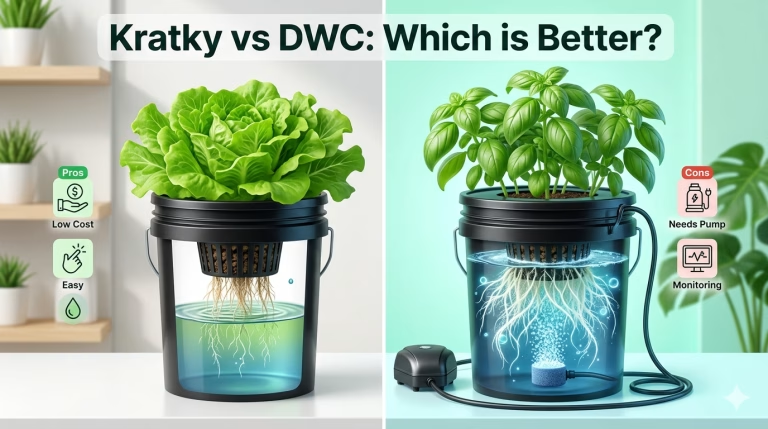
- DWC for leafy greens and herbs.
- NFT for fast, lightweight crops.
- Ebb and flow for seedling trays and mixed starts.
- Drip systems for tomatoes, peppers, cucumbers, and other larger plants.
Which systems are easiest for beginners?
DWC is usually the easiest entry point because the design is straightforward and reservoir conditions are easy to monitor. NFT can be very productive for greens, but it tends to be less forgiving if pumps fail or channels dry out, while drip systems are better for larger fruiting plants with higher nutrient demand.
DWC beginner setup → Deep Water Culture (DWC) Hydroponics: The Complete Beginner’s Guide to Growing Faster
NFT vs DWC → Comparing Hydroponic System Types for Home Growers
Best crops for beginners → What Can You Grow in Hydroponics? 25+ Crops for Beginners to Advanced Growers
What equipment and materials do you need?
A well-insulated hydroponic greenhouse usually has five layers: structure, glazing, climate control, water and nutrients, and monitoring. The exact parts vary by budget, but these categories stay consistent whether the greenhouse is a small backyard build or a more advanced hobby setup.
Core materials
- Frame made from wood, galvanized steel, or aluminum.
- Glazing made from twin-wall polycarbonate, multi-wall polycarbonate, or inflated double poly film.
- Weather stripping, sealant, and fastening hardware.
- Ventilation equipment including roof vents, exhaust fans, and circulation fans.
- Heating equipment suited to local winter temperatures.
- Hydroponic system components including reservoirs, tubing, pumps, or channels.
- Monitoring tools such as a thermometer, hygrometer, pH meter, and EC meter.
- Aeration equipment for DWC systems, including an air pump and air stones.
Useful tools
- Drill and bits.
- Tape measure.
- Utility knife.
- Level.
- Caulk gun.
- Fan mounting hardware.
- Safety glasses and gloves.
Understanding pH and EC → The Ultimate Guide to Hydroponic Nutrients: Types, Roles, Application, and Optimization
How do you build an insulated greenhouse for hydroponics?
How to build an insulated hydroponic greenhouse
Create a structure that retains heat, controls humidity, and protects the nutrient solution from rapid temperature swings. Start with a simple shell, then add ventilation, hydroponics, and monitoring in that order so you can troubleshoot each layer before planting.
Materials and tools
- Frame materials.
- Twin-wall or multi-wall polycarbonate panels, or double poly film.
- Weather stripping and sealant.
- Fasteners and brackets.
- Exhaust fan and circulation fans.
- Optional thermal curtain or interior insulation layer.
- Hydroponic system, reservoir, tubing, pumps, and air pump as needed.
- pH and EC meter.
Step 1: Choose the site and orientation
Place the greenhouse where it receives strong winter sun and drains well after rain or snow. In colder climates, southern exposure usually improves passive solar gain and makes it easier to hold temperatures overnight.
Step 2: Build a strong, sealed frame
Assemble a frame that can support your glazing choice and local wind or snow loads. Seal obvious gaps around joints, baseboards, doors, and vent openings because even small leaks can increase winter heat loss.
Step 3: Install the glazing
Use polycarbonate panels if you want an easier, durable, hydroponics-friendly shell, or choose another covering that matches your budget and climate goals. Twin-wall polycarbonate and inflated double poly film are both recognized greenhouse insulation options because their trapped air layers improve heat retention.
Step 4: Add nighttime insulation
Install a thermal curtain or an interior insulating layer if winter production is a priority. Heat retention curtains are specifically used to reduce nighttime heat loss and lower heating demand when outdoor temperatures drop.
Step 5: Set up ventilation and circulation
Install exhaust ventilation and internal circulation fans so moist air does not collect on colder surfaces. Strong airflow is one of the best defenses against condensation, mold pressure, and stagnant plant zones.
Step 6: Install the hydroponic system
Place channels, beds, or reservoirs where they are protected from drafts and easy to service. In DWC, keep aeration strong because oxygen supply becomes more critical as nutrient solution warms.
Step 7: Add monitoring equipment
Use a thermometer, hygrometer, pH meter, and EC meter to track both climate and nutrient balance. Many hydroponic crops perform well around pH 5.5 to 6.5, but EC targets change based on plant type and growth stage.
Step 8: Test before planting
Run the greenhouse through a warm afternoon and a cold night if possible before adding crops. Watch for leaks, condensation, weak airflow, unstable temperatures, or reservoir issues so problems are solved before roots are in the system.
Winter growing checklist → Winter Hydroponics: Maximize Yield During Short Light Days with Strategic Lighting
Ventilation planning → Hydroponic Ventilation and Airflow Basics: The Complete Guide for Home Growers
What settings should you monitor in daily operation?
Hydroponic greenhouse success depends on holding a few key numbers in a workable range. Exact targets vary by crop, but consistent monitoring helps beginners catch problems before they turn into stalled growth or disease.
Starting target ranges
- pH: 5.5 to 6.5 for most hydroponic crops.
- Leafy greens EC: often about 0.8 to 1.6 mS/cm depending on crop and stage.
- Fruiting crops EC: often about 2.0 to 3.5 mS/cm for heavier feeders such as tomatoes and peppers.
- Humidity: low enough to prevent persistent condensation and leaf wetness.
- Water temperature: cool enough to preserve dissolved oxygen, especially in DWC.
Crop examples
| Crop | pH range | General EC range | Notes |
|---|---|---|---|
| Lettuce | 5.5 to 6.5 | Lower range | Fast turnover, ideal for DWC and NFT |
| Basil | 5.5 to 6.5 | Moderate range | Likes stable warmth and good airflow |
| Tomatoes | 5.5 to 6.5 | Higher range | Needs support, pruning, and stronger ventilation |
| Peppers | 5.5 to 6.5 | Moderate to higher range | Good fit for drip systems and larger containers |
Buffer plants and climate balancing → Hydroponic Buffer Plants: How “Bodyguard” Plants Protect and Stabilize Your System
How do you maintain an insulated hydroponic greenhouse?
Maintenance is mainly about climate consistency, nutrient consistency, and sanitation. Once the greenhouse shell is dialed in, most routine work becomes simple observation and correction rather than constant rebuilding.
Weekly tasks
- Check pH and EC.
- Look for condensation on walls, glazing joints, and the ceiling.
- Confirm vents, fans, and pumps are working correctly.
- Inspect for algae, biofilm, or weak bubbling in DWC.
- Top off reservoirs and track water temperature trends.
Between crop cycles
- Drain and clean reservoirs.
- Rinse tubing and fittings.
- Remove plant debris and old roots.
- Inspect seals, tapes, and insulation layers.
- Replace clogged emitters, worn air stones, or damaged lines.
Common maintenance mistake
One of the most common mistakes is adding insulation without enough air exchange. That usually leads to moisture buildup, and moisture buildup often turns into disease pressure, slippery surfaces, and poor crop consistency.
Preventing algae in reservoirs → Algae, Root Rot, and Clogs: The Holy Trinity of Hydroponic Problems
What problems happen most often, and how do you fix them?
Most greenhouse hydroponic problems fall into four categories: heat loss, condensation, oxygen loss, and nutrient drift. Once you identify which category the symptoms belong to, the fix becomes much clearer.
Heat loss at night
If temperatures drop too quickly after sunset, check glazing gaps, door seals, and whether you need a nighttime insulating layer. Better-insulated coverings such as twin-wall polycarbonate or inflated double poly hold heat better than single-layer coverings.
Condensation on walls and ceiling
If droplets form regularly, increase internal air movement and make sure moist air can actually leave the structure. Condensation happens when warm, moist greenhouse air meets a cooler surface, and repeated wetting raises mold and disease risk.
Low oxygen in DWC
If roots look dull, smell sour, or plants stall despite normal feeding, check air pumps, air stones, and nutrient temperature. DWC systems depend on active oxygenation, and warmer water holds less dissolved oxygen.
Nutrient lockout
If plants yellow, twist, or stop growing even though feeding seems normal, test pH first. Most hydroponic crops absorb nutrients best in a slightly acidic range of roughly 5.5 to 6.5.
What works best in hot, dry climates versus cold climates?
Climate changes the design priorities more than most beginners expect. In cold climates, heat retention and nighttime insulation matter most, while in hot, dry climates the larger challenge is usually venting heat fast enough without overstressing plants.
In a Central Michigan-style winter, insulated glazing, strong sealing, thermal buffering, and dependable heating make the biggest difference. In a Phoenix-style environment, the same greenhouse often needs more emphasis on ventilation, shade cloth, and summer heat management, even if insulation still helps during shoulder seasons and winter nights.
First-hand growing perspective
From multiple hydroponic runs in very hot, dry conditions, cooling mistakes tend to show up faster than heating mistakes because water temperatures and leaf stress can rise in a single afternoon. In colder settings, the opposite is true, and small leaks or poor nighttime insulation tend to show up first in reservoir performance and slower plant growth.
How much does an insulated hydroponic greenhouse cost?
Cost depends on size, glazing choice, climate control level, and whether the build is seasonal or truly year-round. It helps to think in tiers rather than a single price because each layer of automation and insulation changes the budget.
- Budget build: simple frame, double poly covering, basic fans, and manual monitoring.
- Mid-range build: twin-wall polycarbonate, improved sealing, better ventilation, and active heat.
- Advanced build: thicker multi-wall panels, automated controls, dedicated heating and cooling, and backup monitoring.
For most hobby growers, the best value usually comes from spending first on the shell, sealing, and airflow rather than jumping straight to oversized pumps or complex add-ons.
Common questions
Is an insulated greenhouse worth it for hydroponics?
Yes, especially in places with cold nights, shoulder-season swings, or year-round growing goals. Insulation helps stabilize the environment, and hydroponic systems respond very well to that stability because roots are exposed and sensitive to rapid changes.
Are polycarbonate panels better than dual paned windows?
For most greenhouse growers, yes. Polycarbonate panels are lighter, easier to install, more impact resistant, and specifically designed for greenhouse use, while dual paned windows are usually better suited to custom or reclaimed-material builds.
Do I need heating in an insulated greenhouse?
In cold climates, usually yes. Insulation reduces heat loss, but it does not create heat on its own, so winter production often still requires a properly sized heating system.
Which hydroponic system is easiest inside an insulated greenhouse?
DWC is often the easiest for leafy greens and herbs because it is simple to monitor and easy to build on a small scale. For tomatoes and peppers, drip systems are often a better fit because they handle larger root zones and heavier feeding more comfortably.
What pH should I keep in my reservoir?
A strong general range is 5.5 to 6.5 for most hydroponic crops. It is still important to adjust by crop and monitor EC alongside pH because plants can show stress even when pH alone looks acceptable.
How quickly will I see results?
Leafy greens often show visible progress within 2 to 4 weeks, and many varieties can be harvested in roughly 30 to 45 days under good conditions. Fruiting crops take longer, but they benefit just as much from environmental consistency.
What is the most common beginner mistake?
The most common mistake is building for insulation but not for airflow. A tight greenhouse with weak ventilation usually develops condensation issues, which then raise disease pressure and create unstable growing conditions.
Can insulated greenhouses work in Arizona-type heat?
Yes, but the strategy changes. In hot, sunny climates, shade, ventilation, and cooling capacity often matter more than maximizing insulation, though insulated coverings can still help at night and during winter production.
Author note
This article reflects practical hydroponic experience shaped by growing in and around Phoenix, Arizona and later in Michigan, where climate priorities shift from intense summer heat to long, cold winters. The focus stays on indoor, urban, and small-space growing methods that help home growers build productive systems without unnecessary complexity. Particular attention goes to greenhouse insulation, water temperature stability, nutrient management, and realistic design choices for hobby-scale hydroponics.
Share this:

Discover more from Soil Free Harvest
Subscribe to get the latest posts sent to your email.