How to Start Your Indoor Survival Garden Using Hydroponics
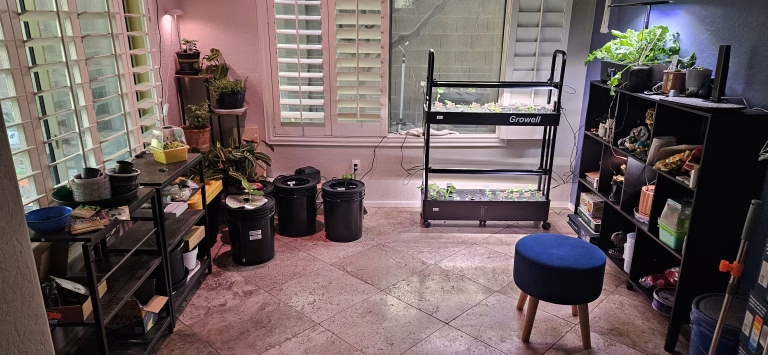
Life can change in an instant a supply chain delay, a power outage, or inflation raising food costs yet again. Having an indoor survival garden means taking control of your food supply, no matter what life throws your way. Thanks to hydroponics, you can do it even in a studio apartment or basement corner. This guide will walk you through every step of starting an indoor hydroponic survival garden what to buy, how to set it up, and how to keep it thriving year-round.
Affiliate Disclosure: This article contains affiliate links. If you purchase through these links, soilfreeharvest.com may earn a small commission at no extra cost to you.
Why Hydroponics Is Perfect for Survival Gardening
Hydroponics is the science of growing plants without soil, using nutrient‑rich water instead. For survivalists and self‑sufficiency enthusiasts, this method offers several unmatched advantages:
- No dependency on soil quality. You don’t need to own land or worry about contaminated soil.
- Compact setups. Systems can fit in any space from a kitchen countertop to a converted closet.
- Faster growth. Plants often grow 25–50% quicker than traditional soil gardens when properly managed.
- Water efficiency. Uses up to 90% less water than soil gardens a major advantage if you’re conserving resources.
Hydroponic gardening is not just for hobbyists; it’s a reliable food production method that some NASA systems and commercial vertical farms rely on today.
If you’re serious about learning how to build self‑reliance, bookmark our What Is Hydroponic Gardening? A Beginner’s Guide on SoilFreeHarvest.com for design inspiration and equipment comparisons.
Step 1: Define Your Goals and Space
Before plugging in pumps or buying nutrient solutions, start with a clear purpose. Ask yourself:
- Do you want to grow fresh greens and herbs for daily meals?
- Are you building a long-term emergency food supply?
- What’s your available space and lighting situation?
Even if you’re tight on space, options exist. For example:
- Small NFT (Nutrient Film Technique) towers can produce a steady supply of lettuce and herbs.
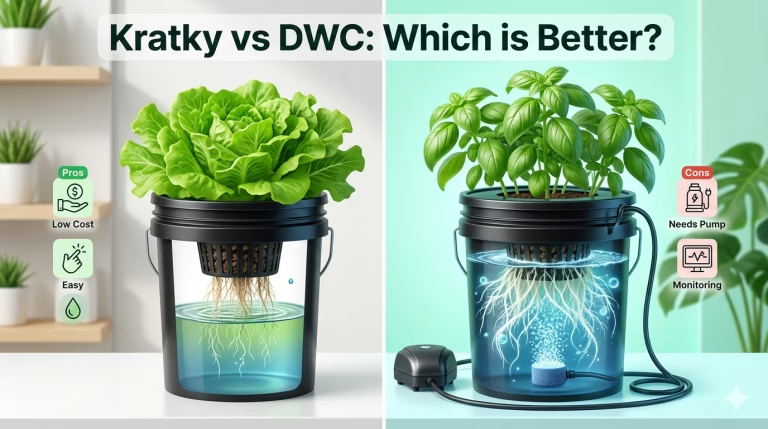
- A deep water culture (DWC) bucket system fits beneath shelves or inside grow tents.
- Compact countertop hydroponic kits can keep basil and spinach on hand for fresh salads.
If you have a spare room or basement corner, you can scale into a mini indoor farm. For setup ideas, explore our Best Indoor Hydroponics Systems for Small Apartments for schematics that maximize yield per square foot.
Step 2: Choose the Right Hydroponic System
There are several major types of hydroponic systems. Each comes with its benefits, costs, and learning curves.
| System Type | Ideal For | Pros | Cons |
|---|---|---|---|
| Deep Water Culture (DWC) | Beginners, small spaces | Simple setup, inexpensive, great for leafy greens | Requires aeration and frequent monitoring |
| Nutrient Film Technique (NFT) | Continuous harvest herbs/greens | Efficient water/nutrient use, scalable | Not suitable for large fruiting plants |
| Ebb and Flow (Flood & Drain) | Root veggies, peppers | Flexible, reliable | More moving parts |
| Wick System | Low‑maintenance users | No pump, silent operation | Limited nutrient flow, smaller yield |
| Aeroponic System | Experienced growers | Fastest growth, minimal water | Costlier, needs frequent care |
If you’re new, start with DWC or a Wick system. These are inexpensive and require minimal maintenance.
Looking for an easy hydroponic starter kit? Try the Ahopegarden Hydroponics Growing System Kit Indoor Herb Garden with Grow Light 12 Pods from our affiliate partners it includes everything from nutrient solution to LED lights, perfect for getting started today.
Step 3: Gather Equipment and Supplies
To build your indoor survival hydroponic garden, you’ll need a few key pieces of equipment. Choosing quality gear pays for itself during emergencies when reliability matters most.
Essential Equipment List
- Grow lights Full spectrum LED grow lights are best for energy efficiency and plant health.
Consider the VIVOSUN Grow Lights for consistent coverage and low heat output. - Containers and reservoirs – Food-grade plastic bins or buckets for holding water and nutrients.
- Air pump and stones (if using DWC) – Keep oxygen levels high around roots to prevent rot.
- Growing medium – Clay pebbles, coco coir, rockwool cubes, or perlite depending on the system.
- Net pots or baskets – Support plant roots while letting them access nutrients freely.
- Nutrient solution – Balanced hydroponic fertilizer formulas for greens, fruits, or herbs.
Check General Hydroponics Flora Series for a time-tested nutrient combination that stores well. - Measurement tools – A reliable pH tester, EC meter, and clean measuring syringes.
- Timer and surge-protected power strip – For automating lighting and pumps.
Step 4: Set Up Your Survival Garden
With tools ready, it’s time to assemble your hydroponic system.
- Prepare your grow area. Clean surfaces, remove dust, and ensure nearby outlets are safe from moisture.
- Mount your lighting system. Position LED panels about 12–18 inches above the plants.
- Cut Holes in Containers (if needed). Cut holes in container lid or sides (watch water level spacing) depending on your setup to fit your net pots in.
- Install your reservoir. Fill with clean, filtered water. Tap water can work, but check for chlorine or high mineral content.
- Place growing medium into net pots. Add seedlings or sprouted seeds.
- Mix your nutrient solution. Follow the manufacturer’s dosage start at half strength for young plants.
- Check pH and EC levels. Ideal range for most greens: pH 5.8–6.5 and EC 1.0–1.6.
- Turn on light and air pump. Maintain a consistent light schedule around 14–16 hours per day for leafy crops.
Tip: To prevent power interruptions, connect your air pump to a battery backup. During a blackout, even a small UPS system can keep your plants oxygenated for hours. This is what we have used at our house for the last 2 years for our computers and our grow lights/pumps and they are still running strong – APC UPS Battery Backup and Surge Protector
Step 5: Choose the Best Crops for Survival Gardening
Some plants thrive in hydroponic systems, while others demand extensive pollination or deeper root zones. The best crops for an indoor survival system are fast-growing, nutrient‑dense, and easy to harvest.
Fast and Reliable Choices
- Lettuce (any variety) – Grows quickly and provides steady yields.
- Spinach – Dense with iron and vitamins.
- Kale – Resilient, nutrient-rich, and excellent for smoothies or soups.
- Swiss chard – Adds color diversity and essential minerals.
- Basil, cilantro, parsley, chives – Herbs enhance meals and are easy to preserve by drying.
- Microgreens – Extremely fast-growing; harvest in 10–14 days.
- Cherry tomatoes or peppers – Use small systems with strong lighting to fruit successfully.
If you’re planning for long-term nutritional backup, prioritize plants with high vitamin content and calorie density. Mix greens with herbs and a few fruiting plants for a balanced supply.
Step 6: Master Plant Nutrition
Without soil, the nutrient solution becomes the entire food source for your crops. Get this part right, and you’ll enjoy robust growth and consistent yields.
Key Nutrients to Monitor
- Nitrogen (N): Leaf growth
- Phosphorus (P): Root and flower development
- Potassium (K): Overall plant health
- Calcium, magnesium, sulfur: Essential secondary elements
- Iron, zinc, manganese, boron, copper: Micronutrients for resilience
Use a balanced nutrient formula rated for hydroponics.
Try the FoxFarm Liquid Nutrient Trio, available via SoilFreeHarvest.com’s partners, for an organic-leaning option that stores well.
Maintain your solution by refreshing weekly and checking EC and pH regularly. Over time, water evaporates while salts concentrate, which can harm roots if uncorrected.
Step 7: Light and Temperature Control
Light is your second most critical factor after nutrition. Plants convert light energy into food, so maintaining proper light intensity ensures efficient growth.
Ideal Light Levels
- Leafy greens: 200–400 PPFD (photosynthetic photon flux density)
- Fruiting plants: 400–800 PPFD
- Light duration: 14–16 hours on, 8–10 hours off
Use automated timers for consistency. Set lights 12–18 inches above the canopy and raise them as your plants grow.
Keep room temperatures between 68°F and 75°F and relative humidity around 50–60%.
If you live in a colder climate, invest in a small space heater with a thermostat.
Step 8: Manage Water Quality
Water is the lifeblood of any hydroponic system. The healthier your water, the better your crops.
Best Practices for Clean Water
- Use filtered, dechlorinated water. Chlorine can harm root systems.
- Maintain water temperature between 65°F–72°F for maximum oxygen saturation.
- Replace nutrient solutions weekly to prevent buildup.
- Periodically flush reservoirs with clean water to reset mineral balance.
If you live in an area with hard water, consider installing a reverse osmosis filter.
The Waterdrop G5P500 Reverse Osmosis Water Filter available through Amazon works perfectly for compact hydroponic setups.
Step 9: Implement a Sustainable Cycle
A survival garden should be self-sustaining and low‑dependency. You can design a cycle that keeps producing with minimal replanting.
Continuous Growing Strategy
- Stagger your plantings every two weeks.
- Harvest outer leaves of greens instead of uprooting the entire plant.
- Reuse or clone plants using healthy cuttings (especially herbs like basil and mint).
For ultimate independence, learn to create and store your own seed stock. Save seeds from mature plants and label storage jars with dates.
See Survival Garden Seeds – Seed Saving articles for long-term preservation techniques.
Step 10: Prevent and Solve Common Problems
Even a well-set system can develop issues. Knowing what to look for prevents small problems from wiping out your food supply.
| Problem | Likely Cause | Quick Fix |
|---|---|---|
| Yellowing leaves | Nitrogen deficiency or pH imbalance | Check nutrient levels; adjust pH to 6.0 |
| Wilting | Oxygen shortage or clogged air stone | Clean air stone, improve aeration |
| Root rot | Warm water or stagnant solution | Lower water temp, increase flow |
| Slow growth | Insufficient light or nutrients | Raise light intensity, recheck EC |
| Algae buildup | Light exposure to reservoir | Cover tank, reduce light leak |
Most issues come back to three factors: poor pH control, low oxygen, or inconsistent light. Keep logs of daily readings and plant observations vital for troubleshooting.
Building Long-Term Food Security with Hydroponics
Once your system runs smoothly, expand slowly. Add modular units or vertical stacks to produce a variety of foods year‑round. By mastering nutrient management, lighting, and automation, you’ll have a sustainable urban food source ready to support your household through any crisis.
Hydroponics can also integrate into broader preparedness strategies. Use the fresh yield to supplement long‑term food storage like freeze‑dried meals or canned goods.
Maintaining Your Hydroponic System for Years
A well-run indoor survival garden can last indefinitely with proper care. Commit to a simple weekly routine:
- Refill and refresh nutrient solution.
- Clean and inspect pumps, air stones, and reservoirs.
- Sanitize containers monthly with diluted hydrogen peroxide.
- Rotate crops and re-seed for continuous yield.
- Keep lights dust-free and fans clear for proper airflow.
Once your system stabilizes, it requires less than 30 minutes a day less time than a grocery store run.
To make maintenance easier, the VGrow All-in-One Smart Grow Box from our affiliates syncs with timers, sensors, and pumps.
Final Thoughts: Your First Harvest and Future Growth
Starting your indoor survival hydroponic garden might feel ambitious, but within weeks you’ll see green success sprouting before your eyes. The sense of control and independence you’ll gain is invaluable fresh food, chemical-free produce, and resilience against uncertainty.
Hydroponics isn’t just a hobby; it’s an investment in your self‑reliance and security.
For your next steps:
- Every drop, seed, and adjustment you make brings you closer to a sustainable lifestyle where your indoor garden becomes your safety net one harvest at a time.
Share this:

Discover more from Soil Free Harvest
Subscribe to get the latest posts sent to your email.