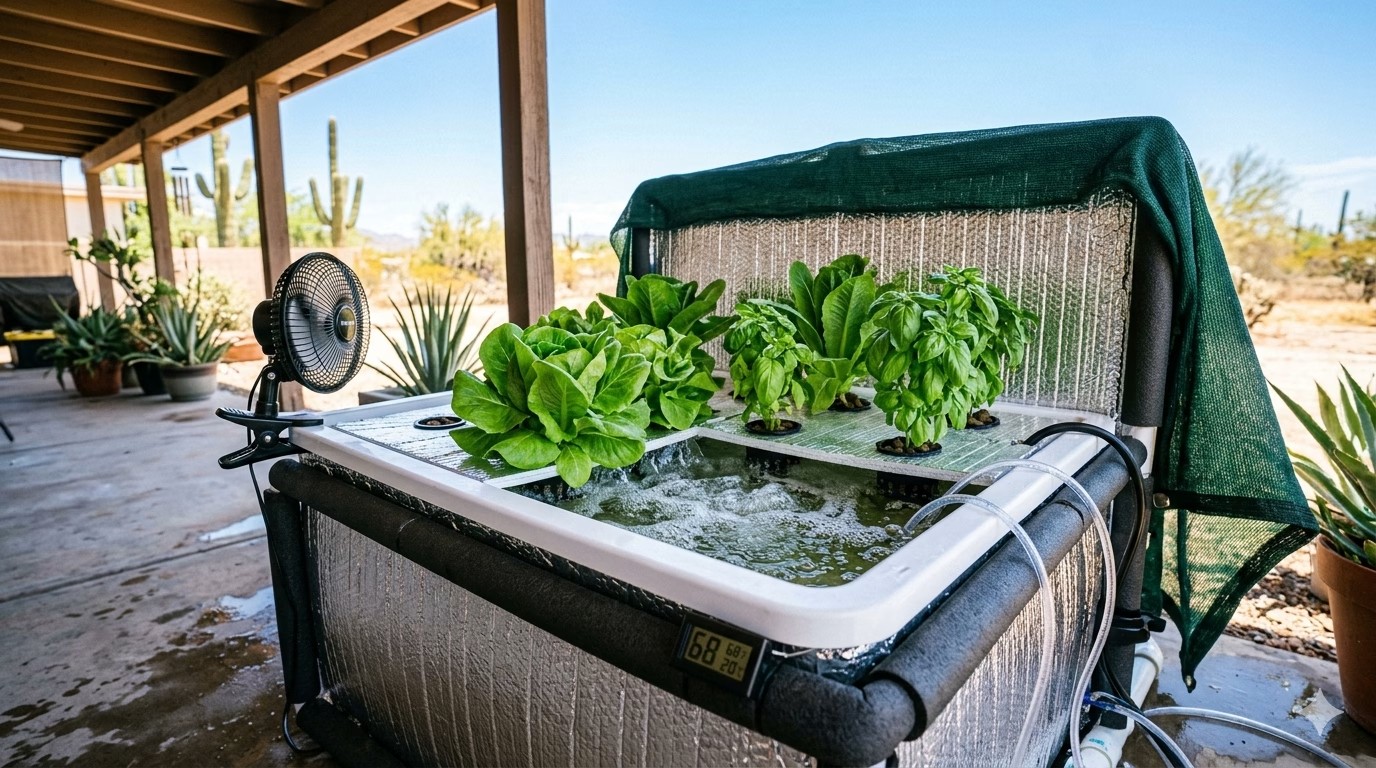
Managing Hydroponics in Extreme Heat: Reservoir Cooling and Shading Strategies
Extreme heat can absolutely be managed in hydroponics, but the reservoir becomes the priority. Keep nutrient water cool, shaded, oxygenated, and stable, and most home systems can keep producing even in brutal summer conditions. Managing hydroponics in extreme heat is a must when you live in the desert.
TL;DR: In hot weather, target nutrient solution temperatures around 65 to 75 F for most crops, with strong aeration and light-blocking reservoir protection. The cheapest wins are shade, insulation, reflective covers, and moving the reservoir out of direct sun; chillers are the most reliable long-term fix.
Affiliate Disclosure: This article contains affiliate links. If you purchase through these links, soilfreeharvest.com may earn a small commission at no extra cost to you.
Why does heat hit hydroponics so hard?
Hydroponics is more sensitive to temperature swings than soil growing because roots live in a small volume of water. As water warms up, it holds less dissolved oxygen, which makes roots work harder and raises the risk of stress, algae, and root disease.
In my own hot-climate hydroponic work, the first sign of trouble is usually not a dead plant, but a reservoir that drifts into the upper 70s or 80s F, followed by slower growth, more pH drift, and a stronger need to top off water. That is why reservoir management matters more than almost anything else during summer.
What is the ideal reservoir temperature?
For most hydroponic crops, a nutrient solution range of 65 to 75 F is a practical target, while some sources allow up to 80 F as an upper working range. In DWC especially, many growers aim closer to 68 to 72 F because submerged roots need maximum oxygen support.
Here is a simple reference you can use:
| Condition | What it usually means | Practical action |
|---|---|---|
| Below 60 F | Uptake slows and growth can stall | Warm gradually if needed |
| 65 to 75 F | Strong general target for most crops | Maintain this range |
| 75 to 80 F | Higher stress risk, lower oxygen | Add cooling and more aeration |
| Above 80 F | High risk zone for root issues | Act immediately |
Warm water does not guarantee root rot, but it sharply raises the odds when aeration is weak, reservoirs are dirty, or the system is exposed to direct sun.
Which systems struggle most in heat?
DWC and other deep reservoir systems are usually the most vulnerable because roots sit directly in the nutrient solution for long periods. NFT and drip systems can still suffer, but they often recover faster if the reservoir stays cool and the root zone gets enough airflow.
Best fit for hot-weather control:
- NFT for leafy greens and herbs.
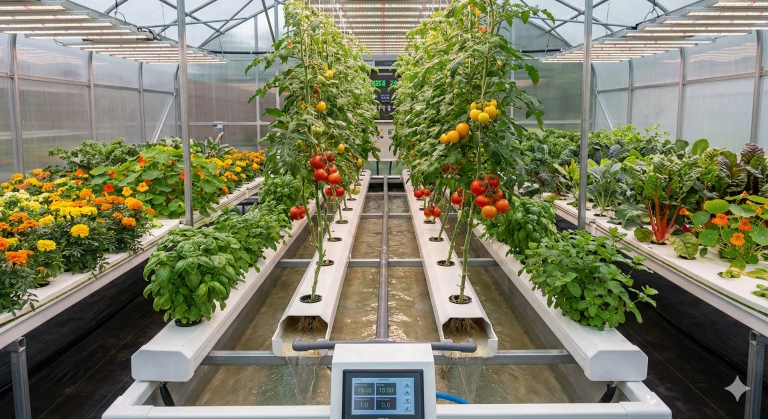
- Drip systems for tomatoes, peppers, cucumbers, and other fruiting crops.
- DWC only if you can cool and aerate aggressively.
- Kratky only for mild heat or very short crop cycles, because passive reservoirs heat up quickly.
Hydroponic system comparison → DWC vs NFT vs drip vs Kratky
What are the best reservoir cooling strategies?
The best approach is layered. One tactic may buy you a few degrees, but a combination of shade, insulation, reflective surfaces, and airflow is what usually keeps a system stable through summer.
1. Put the reservoir in shade
Direct sun on the tank is one of the fastest ways to heat nutrient water. Even a simple shaded corner, patio overhang, or shade-cloth frame can make a major difference.
2. Use a white or reflective cover
Light-colored surfaces reflect heat instead of absorbing it, so a white reservoir or reflective lid helps lower thermal gain. Covers also block light, which reduces algae growth in the tank.
3. Insulate the sides and lid
Insulation slows the rate at which heat enters the reservoir. In practice, wrapping the tank, adding foam around exposed sides, or using a purpose-built insulated cover can help a lot in desert sun or on hot patios.
4. Increase air movement around the tank
Fans do not cool water directly, but they reduce hot air buildup around the system and help keep the surrounding microclimate from baking the reservoir. This matters most when the tank sits in a closed balcony, greenhouse, or corner with poor ventilation.
5. Add cooling water carefully
If your reservoir spikes, adding cooler water can reduce temperature quickly. The key is to do it gradually so you do not shock the root zone with a sudden change.
6. Use a chiller when the heat is persistent
A water chiller is the most dependable solution when summer heat is frequent or extreme. It costs more up front, but it gives the most stable temperatures and the least day-to-day babysitting.
How do you shade a hydroponic reservoir?
The goal is to block direct sunlight while still allowing ventilation around the tank. Shade should reduce heat gain without trapping a hot pocket around the reservoir.
Common options include:
- Shade cloth over the whole system.
- A reflective tank cover.
- White exterior wrap or paint made for safe use around water containers.
- A simple frame that keeps cloth or cover off the tank surface so air can circulate.
If I had to rank the easiest wins for a beginner, I would start with moving the reservoir out of direct sun, then adding a white reflective cover, then adding shade cloth over the entire system. That sequence is inexpensive and usually enough to prevent the worst heat spikes in small home setups.
What equipment do you need?
A hot-weather hydroponic setup does not need fancy gear to start, but it does need a few basics if you want stable results. The more extreme the climate, the more important monitoring becomes.
Required tools and materials
- Reservoir with a lid or cover.
- Air pump and air stones for aeration.
- Digital thermometer for nutrient solution temperature.
- pH meter and EC meter.
- Shade cloth or reflective cover.
- Insulation material or reflective wrap.
- Fresh water source for top-offs.
- Optional: water chiller, fan, or frozen bottle rotation system.
See my Amazon List for some of the supplies you might need: Hydroponics in the Heat (Affiliate Link)
How-to: Cool a hydroponic reservoir in extreme heat
Short title: Summer Reservoir Cooling for Hydroponics
Description: A beginner-friendly method for lowering nutrient solution temperature, reducing light exposure, and keeping roots healthier during hot weather.
Materials and tools
- Reservoir with lid.
- White or reflective cover.
- Shade cloth.
- Insulation wrap or foam board.
- Air pump and air stone.
- Thermometer.
- Optional: chiller, fan, frozen bottles, or cool top-off water.
Steps
- Move the reservoir out of direct sun.
Place the tank in the shadiest available location, even if the grow tray or plants stay in brighter light. The reservoir is usually the most heat-sensitive part of the system. - Cover the tank with a reflective lid or white surface.
A light-colored cover reflects solar gain and blocks light from reaching the nutrient solution. This reduces both heat buildup and algae growth. - Insulate the exposed sides.
Wrap the reservoir or use foam panels to slow heat transfer from the air. Insulation works best when paired with shade rather than used alone. - Add shade cloth above the whole system.
Shade cloth cuts direct sun on the tank, plumbing, and nearby surfaces. It is especially useful on patios, balconies, and outdoor grow areas. - Improve airflow around the setup.
Put a fan nearby if the air is stagnant or trapped. Better airflow lowers ambient heat around the tank and helps plants recover from stress faster. - Run strong aeration continuously.
Warm water holds less oxygen, so extra air stones or a stronger pump help protect roots. This is one of the most important upgrades for DWC in summer. - Top off with cool water carefully.
When temperatures start creeping up, replace evaporated water with cooler water in small amounts. This can stabilize the reservoir without shocking the root zone. - Install a chiller if the problem keeps returning.
If your reservoir regularly climbs above 75 to 80 F, a chiller may be the only consistently reliable solution. It is especially worthwhile for larger systems or heat-sensitive crops.
How do you manage nutrients in hot weather?
Heat changes more than water temperature. It can also increase evaporation, concentrate the solution, and cause pH and EC to drift faster than usual.
That means you should test more often in summer than you would in mild weather. For most systems, a pH range of 5.5 to 6.5 is a strong general target, while EC depends on crop type and growth stage.
Summer monitoring habits
- Check temperature daily.
- Check pH and EC daily or every other day.
- Top off evaporated water before the reservoir gets too concentrated.
- Replace old nutrient solution on schedule instead of stretching it too long.
- Watch for root browning, slimy buildup, or a sour smell.
Which plants handle heat best?
Not every crop tolerates summer hydroponics equally well. The best choices are usually heat-tolerant, fast-growing, or naturally warm-season crops.
Best crops for hot conditions
- Lettuce, if the water is kept cool and the air is not extreme.
- Basil and many herbs.
- Tomatoes, especially indeterminate varieties.
- Peppers, including sweet and hot types.
- Cucumbers.
- Some greens and fast-cycle specialty crops with strong airflow and tight temperature control.
Crops that need more caution
- Lettuce in very hot rooms or outdoor summer sun.
- Spinach and other cool-season greens.
- Strawberries in uncooled systems.
- Any crop in small passive reservoirs that heat up quickly.
What are the biggest mistakes?
Most heat-related hydroponic failures come from a few predictable errors. The good news is that each one is fixable once you know what to look for.
Common mistakes
- Letting the reservoir sit in direct sun.
- Ignoring the water temperature and only watching air temperature.
- Not using enough aeration.
- Overfeeding when the solution is already hot and concentrated.
- Waiting until roots turn brown before making changes.
- Using a small passive reservoir for a crop that needs stable water conditions.
In practice, the biggest mistake is assuming the plants can tolerate the same heat that a person can tolerate. Hydroponic roots are far less forgiving than leaves, especially when oxygen levels drop.
When is a chiller worth it?
A chiller becomes worth the expense when cooling tricks stop being enough. If your reservoir repeatedly crosses the upper stress range, or if you are growing sensitive crops in a hot climate, mechanical cooling can save time, plant health, and harvest consistency.
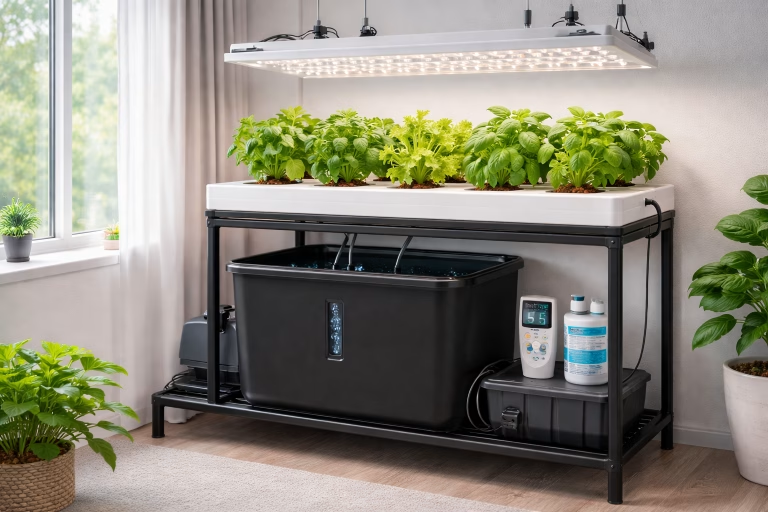
For small apartment systems, shade and insulation are often enough. For larger outdoor setups, greenhouse gardens, or DWC systems in summer heat, a chiller is often the difference between stable growth and constant rescue work.
Best system choices by grower type
Here is a practical way to choose a system if you live with summer heat or limited indoor cooling. The main goal is to match plant type and maintenance level to the climate reality.
| Grower situation | Best system choice | Why it works |
|---|---|---|
| Beginner with leafy greens | NFT or small DWC with strong shade | Fast growth, simpler monitoring |
| Apartment grower | Compact drip or countertop system | Easier to control temperature indoors |
| Hot outdoor patio | Drip with shaded reservoir | Better root-zone control than passive methods |
| Fruiting crops | Drip or recirculating system | Handles heat and feeding better |
| Heat-sensitive greens | Cooled NFT or indoor system | Cooler water protects quality |
What should you remember first?
If you only remember four things, remember these: shade the reservoir, block light, keep water oxygenated, and monitor temperature daily in summer. Those four habits solve most extreme-heat problems before they become crop losses.
A hydroponic system does not need perfect weather to succeed, but it does need a stable root zone. Once you protect the reservoir, the whole garden becomes much easier to manage.
Internal link ideas
[INTERNAL LINK: Hydroponic growing media guide → growing media for seedlings and transplants]
[INTERNAL LINK: DWC basics → deep water culture setup for beginners]
[INTERNAL LINK: NFT system guide → nutrient film technique for leafy greens]
[INTERNAL LINK: Hydroponic nutrient chart → pH and EC targets by crop]
[INTERNAL LINK: Reservoir maintenance checklist → cleaning and sanitation routines]
[INTERNAL LINK: Beneficial microbes in hydroponics → root health and disease prevention]
[INTERNAL LINK: Best hydroponic plants for summer → heat-tolerant crop selection]
[INTERNAL LINK: Indoor grow room ventilation → fans, exhaust, and airflow planning]
[INTERNAL LINK: Water testing for hydroponics → meters, calibration, and record keeping]
FAQ
How hot is too hot for hydroponic water?
For many crops, water above 75 F starts to raise stress risk, and above 80 F is where problems become much more likely. The exact tipping point depends on the crop, aeration, cleanliness, and system type.
Can I use ice to cool a hydroponic reservoir?
Yes, but use it carefully and gradually. Sealed frozen bottles or controlled cooling additions are safer than dumping ice directly into the tank because abrupt temperature swings can stress roots.
Do shade cloths really help?
Yes, especially outdoors. Shade cloth reduces direct sun on the reservoir and surrounding surfaces, which lowers heat buildup and also helps protect plants from excess light stress.
Is a white reservoir better than a dark one?
Usually yes in hot conditions. White or reflective surfaces bounce more sunlight away, while dark tanks absorb more heat and warm the nutrient solution faster.
What is the easiest cooling method for beginners?
The simplest first move is to keep the reservoir out of the sun and cover it with a light-colored lid. That alone can make a noticeable difference before you add fans, insulation, or a chiller.
Which plants are hardest to grow in extreme heat?
Cool-season crops like lettuce and spinach are usually the most difficult without cooling. Warm-season crops such as tomatoes, peppers, cucumbers, and many herbs are generally more forgiving.
How often should I check pH and EC in summer?
Daily is ideal for small home systems during hot weather. Heat drives faster evaporation and nutrient concentration, so pH and EC can drift more quickly than they do in cooler months.
Do I need a chiller for an apartment hydroponic setup?
Not always. If your system is indoors, small, shaded, and well-ventilated, insulation and airflow may be enough. A chiller becomes more useful when room temperatures stay high or the reservoir is larger and harder to stabilize.
Why do roots get damaged faster in heat?
Warm water holds less oxygen, so roots can become oxygen-starved even when they look wet and healthy. That oxygen drop is one of the main reasons hot reservoirs become vulnerable to root disease.
Author note
This article reflects hands-on hydroponic experience shaped by growing in both Phoenix, Arizona and Michigan. That combination matters because it covers two very different extremes, dry desert heat and a cooler, more variable northern climate. My focus is practical indoor and urban growing systems that fit apartments, patios, and small home setups.
Share this:

Discover more from Soil Free Harvest
Subscribe to get the latest posts sent to your email.






One Comment