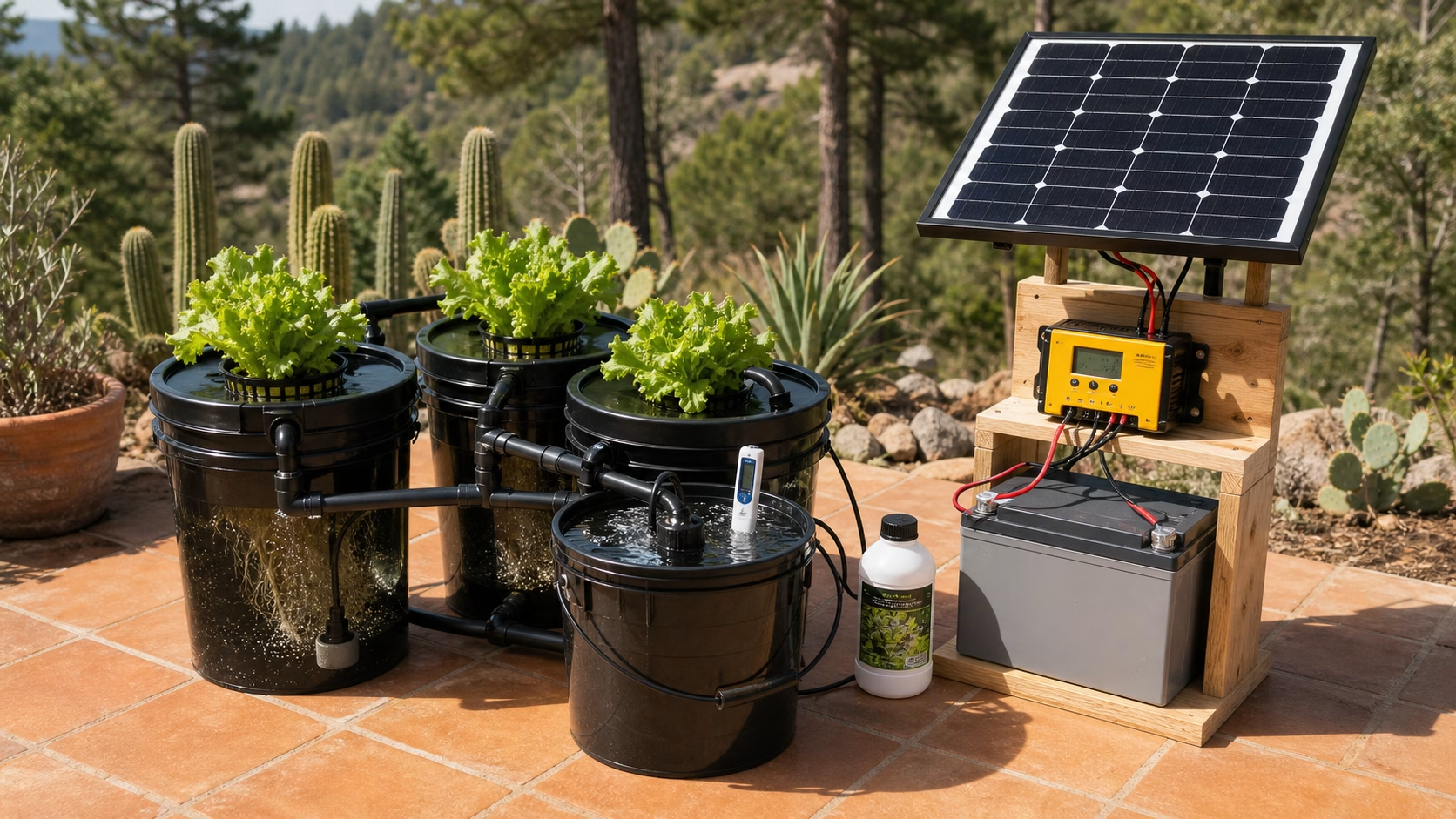
Components for Solar Powered Hydroponics: Off-Grid Parts List
Solar powered hydroponics works best when you build around the pump, the power budget, and the crop you actually want to grow. For most home growers, the core parts list is a solar panel, charge controller or DC converter, battery buffer if you want night operation, a DC water pump, tubing, reservoir, grow containers, and a way to monitor pH and EC.
TL;DR: If you want a reliable off-grid hydroponic system, start with a 12V DC pump, a properly sized solar panel, a charge controller, and a battery only if you need after-sunset runtime. For leafy greens and herbs, keep pH around 5.5 to 6.5 and use a simple, low-power system like DWC, NFT, or drip.
Affiliate Disclosure: This article contains affiliate links. If you purchase through these links, soilfreeharvest.com may earn a small commission at no extra cost to you.
What is solar powered hydroponics?
Solar powered hydroponics is a hydroponic grow system that runs on solar electricity instead of grid power. In practice, that usually means the pump, aeration, timer, or controller are powered by a panel, often through a battery and charge controller for stable operation.
This setup is popular for patios, balconies, garages, sheds, and emergency food growing because it reduces dependence on outlets and can keep a small system running in remote or blackout-prone locations. It also fits low-power systems better than large, high-demand fruiting systems.
How does it work?
A solar panel generates DC electricity during the day. That power can run a pump directly, charge a battery, or feed a DC converter or charge controller that regulates the voltage for the load.
If you use a battery, the controller helps keep it charged and can switch power delivery when sunlight drops. If you skip the battery, the system is simpler but usually only runs reliably in daylight unless you oversize the panel and match the load carefully.
What crops and systems work best?
Solar hydroponics is best for plants that tolerate modest water movement and lower power demand. In my own hot-climate experience, leafy greens and herbs are the easiest crops to keep stable, especially when the system is simple and the lighting load is not part of the solar budget.
Best plant types
- Lettuce.
- Basil.
- Kale.
- Pak choi.
- Mint.
- Cilantro.
- Swiss chard.
- Microgreens in shallow systems.
These crops usually do well in pH ranges around 5.5 to 6.5, with lower EC targets than heavy fruiting crops. Tomatoes and peppers can be grown too, but they need more power, more nutrients, and better environmental control.
Best system types
- DWC, because the water movement and air needs are low.
- NFT, if you keep the pump duty cycle efficient.
- Simple drip systems, especially small recirculating builds.
- Kratky plus solar only if you want ultra-low power and no pump at all.
DWC is especially attractive for solar because a small air pump can support roots well, and the rest of the system can stay very simple.
Comparing System Types -> Comparing Hydroponic System Types for Home Growers
Why choose solar hydroponics?
Solar hydroponics is useful when you want to grow off-grid, reduce electricity use, or place a system where outlets are inconvenient. It is also a good teaching project because each component has a clear purpose and failure point.
Main benefits
- Lower operating cost after installation.
- Better resilience during outages.
- Flexible placement on patios, rooftops, and outbuildings.
- Quiet operation with DC pumps and air stones.
- Good match for compact, beginner-friendly systems.
Main drawbacks
- Upfront cost is higher than a plug-in system.
- Cloudy weather can reduce runtime.
- Battery sizing adds complexity.
- Fruiting crops may outgrow the power budget quickly.
- Voltage mismatch can damage pumps if you skip regulation.
From multiple runs in hot, dry climates, I have found that simplicity wins. A small, well-matched system usually performs better than an overcomplicated one with an undersized battery and a pump that is trying to do too much.
What parts do you need?
A solar hydroponic parts list should be built around the load, not the panel. That means you choose the pump first, then size the panel and battery around the actual watt draw. The majority of the items you need are on my Amazon List: Off Grid Hydroponic Gardening
Core electrical parts
- Solar panel, usually 12V nominal for small builds.
- Solar charge controller if using a battery.
- Battery, usually deep-cycle, if you need night runtime.
- DC pump matched to the system size.
- Inline fuse or fuse holder.
- Waterproof connectors and weather-resistant wiring.
- Optional DC-DC converter if you want to regulate without a battery.
Hydroponic grow parts
- Reservoir or bucket.
- Net cups.
- Growing medium such as clay pebbles or rockwool.
- Air stone and airline tubing for DWC.
- Return lines or drip emitters if using recirculation.
- pH meter and EC meter.
- Hydroponic nutrients.
- pH up and pH down.
Structural parts
- Lightproof container or bucket.
- Mounting rack or frame.
- Hose clamps or cable clips.
- Timer or smart plug if the load is intermittent.
- Shade cloth if your climate is intense.
How do you size the solar setup?
Sizing starts with the pump wattage and how many hours per day you want it to run. A small DC pump around 5 to 15 watts is often a practical target for compact hydroponics, while larger systems can climb quickly and require more battery and panel capacity.
Simple sizing rule
- Find pump wattage.
- Multiply by daily runtime hours.
- Add 20 to 30 percent margin for losses.
- Size the battery for the runtime you need after sunset.
- Size the panel to recharge the battery on an average sunny day.
For example, a 10 watt pump running 12 hours uses about 120 watt-hours per day. Once you add conversion losses and cloudy-day margin, a small solar panel can become a medium panel very quickly, which is why solar hydroponics works best when the system is efficient.
How do you build it?
How to assemble a solar powered hydroponic system
Description: Build a compact off-grid hydroponic grow using solar power, a DC pump, and a reservoir-based system for herbs or leafy greens.
Materials and tools:
- Solar panel.
- Charge controller or DC voltage regulator.
- Deep-cycle battery, optional but recommended for night use.
- 12V DC pump or air pump.
- Reservoir or grow bucket.
- Net cups.
- Growing medium.
- Airline tubing and air stone, if using DWC.
- Hydroponic nutrients.
- pH meter and EC meter.
- Drill, hole saw, utility knife, tubing cutter, and wire strippers.
- Waterproof enclosure for electronics.
- Fuse and basic electrical connectors.
1. Choose the grow style.
Pick DWC, NFT, or drip based on your crop and power budget. For most beginners, DWC is the simplest because the oxygenation requirement is easy to meet with a small air pump.
2. Calculate your power load.
Write down the watt draw of every electrical component, especially the pump and any lighting. Keep the first version small so the solar budget is realistic and the system can run reliably.
3. Select the solar panel and controller.
Choose a panel that can cover the daily load plus losses, and use a charge controller if a battery is in the system. If you are running direct DC without a battery, make sure the pump can handle the panel output or use a regulator.
4. Prepare the reservoir and grow sites.
Drill lid openings for net cups and route tubing cleanly through the container. Make the reservoir opaque so algae cannot take hold as easily.
5. Install the pump and airflow.
Place the pump in the reservoir or nearby enclosure depending on your system layout. In DWC, position the air stone low in the container so bubbles rise through the solution and oxygenate the root zone.
6. Wire the power system.
Connect the panel to the controller, battery if used, and then the load. Add a fuse and protect every exposed connection from moisture because hydroponic environments are wet by design.
7. Mix nutrients and set pH.
Fill the reservoir with water, add nutrients, and test the solution. Most leafy greens and herbs do well around pH 5.5 to 6.5, while tomatoes and peppers usually prefer the same pH band but with higher EC.extension.
8. Transplant seedlings and monitor.
Place seedlings into the net cups with the chosen medium and watch the water level, root development, and pump performance. Check pH and EC daily at first, then adjust once the system settles.
9. Test shade, heat, and runtime.
Run the system through a full sunny day and a low-light period before calling it finished. In hot, dry climates, evaporation and reservoir temperature can change the system faster than people expect, so this step matters.
What maintenance does it need?
Solar hydroponics is low-maintenance, not no-maintenance. The most important habits are checking the pump, confirming the battery state if you use one, and keeping the nutrient solution stable.
Routine checks
- Verify pump flow and listen for unusual noise.
- Check battery voltage or controller status.
- Measure pH and EC.
- Top off water as it evaporates.
- Clean algae, salt buildup, and tubing residue.
- Inspect panel surfaces for dust or debris.
A good rule is to inspect daily in the first two weeks, then every few days once the system stabilizes. If the weather changes or plants grow quickly, expect nutrient demand and water use to shift with it.
What troubleshooting matters most?
Most problems in solar hydroponics come from power mismatch, heat stress, or nutrient drift. The good news is that the fixes are usually straightforward if you diagnose one layer at a time.
Common problems and fixes
| Problem | Likely cause | Fix |
|---|---|---|
| Pump stops at dusk | No battery or undersized battery | Add battery capacity or reduce runtime |
| Weak water flow | Voltage drop or undersized pump | Check wiring and match voltage correctly |
| Yellowing leaves | pH out of range or low nutrients | Recheck pH and EC |
| Root browning | Low oxygen or warm reservoir | Improve aeration and lower solution temperature |
| Algae growth | Light hitting reservoir | Use opaque containers and cover openings |
| Burning leaf tips | EC too high | Dilute nutrient solution |
If you only remember one thing, remember this: fix the power problem first, then the water movement, then the nutrient balance. That order saves a lot of guesswork.
Which setup is best for beginners?
For beginners, a small DWC system is usually the best starting point. It uses a manageable number of parts, gives roots constant access to oxygenated water, and works well with herbs and leafy greens.
Best beginner scenario
- 1 to 4 plant buckets.
- 12V DC aeration or small pump.
- Short tubing runs.
- Opaque reservoir.
- Lettuce, basil, kale, or mint.
- Simple solar panel with battery backup if needed.
If you want to grow fruiting crops like tomatoes or peppers, expect more power, more nutrient management, and more heat control. Those crops can work, but they are a better fit after you have already run a small system successfully.
What mistakes should you avoid?
The most common mistake is buying the panel before understanding the pump load. Another common mistake is using an AC pump with an inverter when a DC pump would have been simpler and more efficient.
Mistakes to avoid
- Oversizing the system before proving the concept.
- Running light through clear reservoirs.
- Skipping a fuse.
- Ignoring pH and EC.
- Using weak tubing or leaky fittings.
- Expecting a tiny panel to run a large pump all day and night.
A practical rule from real-world builds is to start smaller than you think you need. Once you understand your crop behavior and daily watt use, expanding becomes much easier.
What results can you expect?
In a small solar hydroponic system, leafy greens can often show visible new growth within 7 to 14 days after transplant, assuming light, nutrients, and pH are in range. Full harvest timing depends on the crop, but lettuce and many herbs are often ready in roughly 3 to 6 weeks after establishment.
The best results come from matching the crop to the system. If your goal is dependable off-grid production, herbs and greens are the sweet spot, not heavy, high-demand fruiting plants.
FAQ
How much does a solar hydroponic system cost?
A small DIY setup can be relatively affordable if you already own tools, but costs rise fast when you add batteries, controllers, and better pumps. The biggest price drivers are usually the solar panel, battery, and electrical hardware.
Do I need a battery?
Not always. A battery is useful if you want the pump to run after sunset or during cloudy periods, but a direct solar setup can work for simple daylight-only systems. Battery-free systems are simpler, but they are less forgiving.
What is the best plant for a beginner?
Lettuce is one of the easiest options because it grows quickly and does well in a modest nutrient range. Basil is another strong choice if you want a crop that handles small systems well.
How hard is solar hydroponics?
It is moderate difficulty if you are comfortable with basic wiring, plumbing, and nutrient management. The hydroponic side is usually easier than the solar side, because voltage matching and battery sizing can be confusing at first.
What is the biggest risk?
The biggest risk is undersizing the power system and letting the pump fail when the plants need it most. Nutrient imbalance and algae are next on the list, especially if the reservoir is not opaque.
How often should I check pH?
At the beginning, check pH daily until the system stabilizes. Many growers can move to every few days after that, but fast-growing crops can still shift the solution quickly.
Can I grow tomatoes off-grid?
Yes, but tomatoes need more power, stronger support, and a higher nutrient load than leafy greens. They are better as a second-stage project after you have a reliable small system.
Is DWC the best solar option?
For most beginners, yes. DWC pairs well with small pumps and simple electrical setups, which makes it one of the easiest hydroponic systems to run on solar power.
How long before I see growth?
You can often see root and leaf response within 1 to 2 weeks after transplant if the environment is stable. Harvest timing depends on the crop, light, and temperature, but greens usually move much faster than fruiting crops.
Author note
This article reflects hands-on hydroponics experience from growing in both Phoenix, Arizona and Michigan, where heat, humidity, and seasonal light behave very differently. That contrast is useful because solar hydroponics has to work in both dry high-evaporation conditions and cooler indoor or shoulder-season setups. My focus is practical indoor and urban growing with systems that are simple, reliable, and realistic for home growers.
Materials and Tools Shopping List
Here is a curated list of Amazon products that match the materials and tools section from the solar powered hydroponics post. Each link is selected for compatibility, beginner-friendliness, and positive reviews for hydroponic use. Prices and availability may vary. (The Full List is here: https://amzn.to/4tkBv12)
Materials
- Solar panel: Renogy 50W 12V Monocrystalline Solar Panel https://amzn.to/3P2vZlR
- Charge controller: EPEVER 10A PWM Solar Charge Controller 12V https://amzn.to/3QMs7pE
- Deep-cycle battery: Mighty Max ML35-12 12V 35AH SLA Battery https://amzn.to/4u40xD4
- 12V DC pump: EcoPlus 396 GPH Submersible Pump 12V https://amzn.to/4nijeA7
- Reservoir: 5 Gallon Bucket with Lid (hydroponics compatible) https://amzn.to/4whaGh8
- Net cups: 2 Inch Net Pots (pack of 30) https://amzn.to/3QVDPyf
- Growing medium: Hydroton Clay Pebbles 10L https://amzn.to/4ddeBCW
- Air stone and airline: Hydroponic Air Stone and 10ft Tubing Kit https://amzn.to/4uwJ7i1
- Hydroponic nutrients: General Hydroponics Flora Series (starter kit) https://amzn.to/4tXx79l
- pH meter and EC meter: Apera Instruments AI209 pH Meter Kit https://amzn.to/49xn96o
Tools
- Drill and hole saw: DeWalt Cordless Drill Kit https://amzn.to/4nlEmpq
- Hole Saw Set: DEWALT Bi-Metal Hole Saw Kit https://amzn.to/4dvjnwQ
- Wire strippers: Klein Tools Wire Stripper/Cutter https://amzn.to/4wc3y5L
- Waterproof enclosure: IP65 Enclosure Box https://amzn.to/4etp27D
- Inline fuse: Inline Fuse Holder Kit https://amzn.to/4wyHwKH
These items form a complete, functional build for a small DWC system. Total estimated cost is around $300 to $500, depending on bundle deals and shipping. Check wattage ratings and voltage compatibility before purchase.
Share this:

Discover more from Soil Free Harvest
Subscribe to get the latest posts sent to your email.