Do Smart Sensors And LED Upgrades Actually Pay Off? Hydroponic Yield and ROI With and Without Automation
Smart sensors and efficient LED upgrades can absolutely pay off in small hydroponic systems, but only when you match the tech to your goals, space, and local power costs. For most Phoenix home growers, the best payoff comes from upgrading weak lights first, then adding simple automation (timers, basic sensors) instead of jumping straight to a fully “smart” system.
TL;DR: Expect roughly 15–40 percent higher yield and 10–30 percent lower water and nutrient waste from smart control and monitoring, with LED upgrades often paying for themselves in 12–24 months in active grows. In a Phoenix apartment herb system, careful upgrades can turn a “fun hobby” into a setup that at least breaks even, while a garage greens system can realistically save a few hundred dollars per year in groceries once dialed in.
What Do “Smart Sensors” And LED Upgrades Mean In Hydroponics?
Smart upgrades in hydroponics usually fall into two buckets: monitoring/control hardware and higher efficiency lighting.
Common smart components:
- Environment sensors: temperature, humidity, and light sensors that help tune your grow room or tent.
- Water and nutrient sensors: pH, EC, water level sensors that prevent silent problems and keep plants in the optimal zone.
- Controllers and connectivity: WiFi or Bluetooth hubs, microcontrollers, and apps that automate pumps, lights, and dosing.
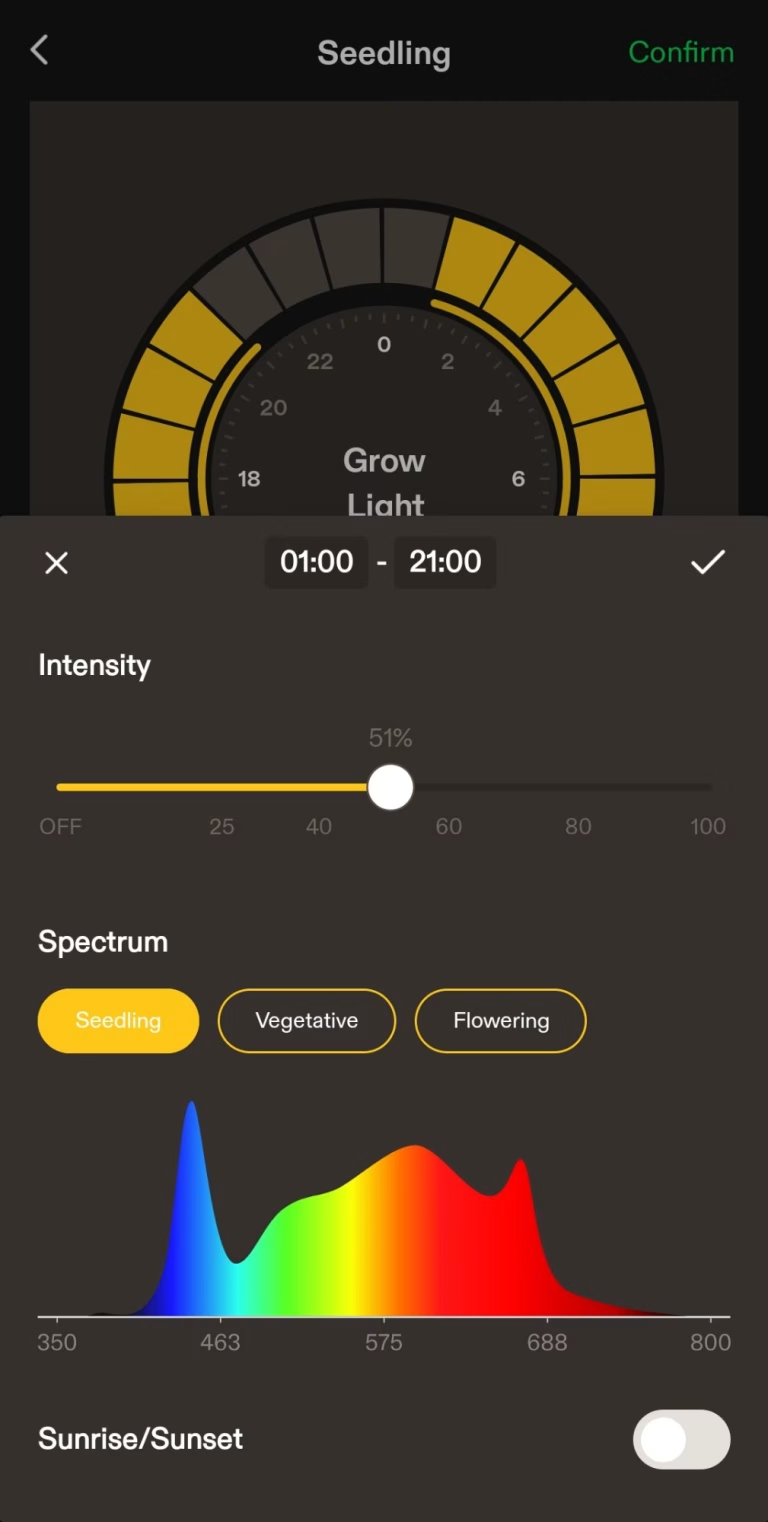
- Efficient LEDs: fixtures with higher µmol per joule, better spectrum control, and longer service life than “cheap purple” lights.
From multiple runs in hot, dry climates, the biggest “feelable” differences for home growers are more consistent growth, less guessing, and fewer crashes from pH or heat swings.
Best hydroponic Lighting Guide → Wattage and Canopy Sizing Guide
How Do Smart Sensors Actually Improve Yield And Stability?
Smart sensors do not make plants grow faster by themselves, but they let you hold the environment in the sweet spot more of the time.
Key ways sensors and automation help:
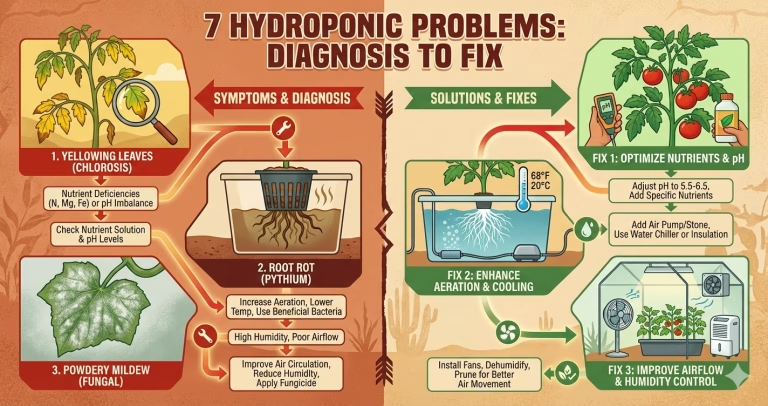
- Tighter pH and EC control: Automated or alert-based monitoring keeps nutrients where plants can actually absorb them, preventing both hidden deficiencies and burn.
- Consistent irrigation cycles: Timers and level sensors avoid letting roots dry out or drowning them, especially in smaller reservoirs.
- Better water efficiency: IoT systems in hydroponics have reported roughly 30–40 percent water savings by triggering irrigation only when needed.
- Early problem detection: Disease or stress detection systems have shown very high accuracy in experiments, reducing crop losses by catching issues early.
Research with IoT-enabled hydroponic systems reports yield bumps around 20–30 percent and big reductions in wasted water and nutrients when sensors and automation are used correctly.
Hydroponic nutrient management for beginners → The Ultimate Guide to Hydroponic Nutrients: Types, Roles, Application, and Optimization
Why Are LED Upgrades So Important For ROI?
Lighting is usually the biggest ongoing energy cost in indoor hydroponics, so lighting efficiency has a huge impact on both yield and your power bill.
Important LED concepts:
- Efficacy: Measured in µmol per joule, this tells you how much usable plant light a fixture creates per unit of electricity.
- Premium vs budget LEDs: High efficiency fixtures often run at 2.7–3.0+ µmol/J, while cheap LEDs may sit around 1.5–2.0 µmol/J, wasting more power as heat.
- Watts per square foot: For leafy greens and herbs, many growers succeed around 10–20 watts per square foot of LED with 16–18 hour days, while high-light crops can need more.
Switching from inefficient lights to modern LED grow lights can cut lighting energy use by 30–50 percent while improving photosynthetic light intensity in the canopy.
What Is The Baseline: Non‑Smart, Basic LED Apartment Herb System?
To understand ROI, it helps to define a simple, realistic baseline.
Example: Phoenix apartment kitchen herb system (12 months)
- Grow area: 2 square feet shelf or small rack.
- System type: simple Kratky jars or a small DWC tub with a basic air pump.
- Lighting: generic 40 watt “full spectrum” bar or cheap panel, about 20 watts per square foot.r
- Crops: basil, mint, cilantro, parsley for kitchen use.
Typical performance from a basic setup:
- Yield: roughly 0.3–0.5 ounces of usable herbs per square foot per week with okay lighting and manual care.
- Electricity: 40 watts × 16 hours per day × 365 days is about 234 kWh per year.
- Water and nutrients: low overall cost, but more hand adjustment and occasional pH swings.
In practical terms, you might replace a few store clamshells of herbs each week, but the system is fragile if you forget to check pH, water level, or room temperature.
What Is The Baseline: Non‑Smart Garage Greens System In Arizona?
Now scale up slightly to a garage greens setup, which is common in hot regions like Phoenix where outdoor summers are tough on lettuce.
Example: Arizona garage leafy greens system (12 months)
- Grow area: 8 square feet (for example a 2 × 4 foot NFT or DWC table).
- System type: recirculating NFT or DWC with a submersible pump and simple mechanical timer.
- Lighting: inexpensive LEDs at about 20 watts per square foot, total 160 watts.
- Crops: lettuce, kale, and other leafy greens for salads.
Expected baseline:
- Yield: many small farmers report several pounds of lettuce per cycle; a conservative home estimate is roughly 0.7–1.0 pounds per square foot per month in a dialed but manual system.
- Electricity: 160 watts × 16 hours per day × 365 days is around 934 kWh per year for lighting alone.
- Climate control: the hot garage may force you to shorten the growing season or add some cooling, which affects ROI.
This kind of system can produce a lot of food, but managing nutrients and temperature by hand is work, and summer heat in Phoenix can quickly push things out of range.
How Does Yield Change With Smart Sensors And Automation?
Adding smart tech tends to improve consistency more than raw “speed,” but consistency translates to more harvestable biomass over the year.
Based on published studies and real-world commercial case studies:
- Precision fertigation and automated nutrient control have been associated with yield increases around 25–30 percent while reducing fertilizer waste by about 30 percent.
- Smart climate control in hydroponics has reduced energy consumption by around 25 percent in some greenhouse cases while cutting crop losses.
- Automation and early disease detection can reduce crop losses by up to about 50 percent in advanced systems.
In home systems, you are unlikely to see the full commercial benefit, but a realistic target is roughly 15–25 percent yield improvement and fewer lost crops per year if you actively use sensor data and alerts.
How Much Power Do Efficient LEDs Save Over 12 Months?
To see if LEDs pay off, you have to look at both watts and efficacy.
Typical LED power needs:
- Many guidance sources say around 40 watts per square foot for flowering under LED, but leafy greens often do fine around 10–20 watts per square foot with long days.
- Efficient modern fixtures deliver higher PPFD at the same wattage, so you can reduce hours or dim them and still hit your target daily light integral.
Realistic savings estimate:
- Replacing a low‑efficiency fixture with a higher efficacy light that delivers similar PPFD can cut electricity use by 30–40 percent, purely from technology differences.
- Additional savings can come from reduced cooling needs since efficient fixtures waste less energy as heat.
In a high‑use system that runs 12–18 hours per day, that difference stacks up quickly over a year.
Example: Phoenix Apartment Herb System With And Without Smart Upgrades
The table below illustrates a realistic 12‑month comparison for a small herb grow in an apartment. Numbers are intentionally rounded, since every apartment and grow style is different.
| Factor | Basic setup (no smart) | Upgraded smart/LED setup |
|---|---|---|
| Grow area | 2 sq ft, basic DWC | 2 sq ft, DWC with sensors |
| Lighting | 40 W budget LED | 30 W high‑efficiency LED at similar PPFD |
| Yearly lighting energy | ~234 kWh | ~176 kWh (about 25% less) |
| Yield | ~0.4 oz/sq ft/week | ~0.5 oz/sq ft/week (about 20% more) |
| Crop failures | 1–2 full crashes per year | 0–1 small issues caught early |
| Monitoring | manual pH, EC checks | pH, EC, temp sensors with phone alerts |
What that means in practice:
- You might add several extra handfuls of herbs per month thanks to faster recovery from problems and tighter nutrient control.
- Your lighting power bill for this tiny system is small either way, so sensor ROI comes more from convenience and avoiding disasters than from energy savings.
For a Phoenix apartment grower, smart sensors here are more about making the hobby easy and reliable than about huge financial returns.
Example: Arizona Garage Greens System With And Without Smart Upgrades
The garage system has more room for ROI because both yield and power use are larger.
| Factor | Basic garage system | Smart/LED upgraded garage system |
|---|---|---|
| Grow area | 8 sq ft NFT/DWC | 8 sq ft NFT/DWC with control |
| Lighting | 160 W budget LEDs | 120 W efficient LEDs at similar PPFD |
| Yearly lighting energy | ~934 kWh | ~700 kWh (about 25% less) |
| Yield | ~0.8 lb/sq ft/month | ~1.0 lb/sq ft/month (around 25% more) |
| Climate management | manual fans, occasional overheating | temp/humidity monitoring, better timing of lights and fans |
| Crop losses in peak heat | multiple ruined batches possible | fewer losses due to earlier warnings |
In simple terms:
- If greens cost more at your local store, the extra yield adds up over the year, especially if you run a near‑continuous rotation.
- Power savings are big enough to matter, and better lights help manage heat in a Phoenix garage where summer temperatures can be brutal.
From my own runs in hot garages, just having better control over when lights and fans run can be the difference between “everything bolts or melts in June” and “you can squeeze in shoulder‑season crops with reasonable success.”
What Are The Upfront Costs For Smart Sensors And LED Upgrades?
Cost is where ROI becomes very real, especially for small hobby systems.
Typical cost ranges for home upgrades:
- Basic smart sensor kit (pH, EC, temp, water level with basic controller): often in the low hundreds of dollars.
- Premium high‑efficiency LED fixture for a 2 × 4 foot area: mid to high hundreds depending on brand and features.
- Miscellaneous automation (smart plugs, timers, relays): usually in the tens of dollars each.
For a Phoenix apartment herb rack, it is easy to “overspend” on tech relative to how much food you grow, while an 8–12 square foot greens system in a garage can justify better equipment more quickly.
Budget hydroponic build under $30 → Build a 5 Gallon Bucket DWC System for Under $30: A Budget DIY Hydroponics Guide
How Do You Calculate Simple ROI For A Smart Hydroponic Upgrade?
You do not need a spreadsheet to get a useful ROI estimate, though it helps.
Think about three buckets:
- Extra yield value: estimate how much more produce you will get in a year and multiply by a realistic store price.
- Energy savings: compare the yearly kWh of your old lights and schedule with the upgraded system and multiply by your local power rate.
- Reduced losses and convenience: this one is harder to price but matters, especially if you often lose crops or travel.
Basic mental math example for the garage system:
- If your upgraded system grows an extra 1–2 pounds of greens per month at store prices, you can quickly see whether that pays for a light in 1–2 years.
- If your lighting energy use drops by a few hundred kWh per year, that also chips away at the initial hardware cost.
For many hobby growers, the goal is not pure profit but a system that at least covers most of its own operating costs while staying fun rather than stressful.
Which Hydroponic System Types Benefit Most From Smart Upgrades?
Some systems naturally gain more from sensors and efficient LEDs.
Best candidates:
- DWC and recirculating systems: they respond strongly to tight control of pH, EC, and temperature, and they can suffer badly from neglect, so automation helps a lot.
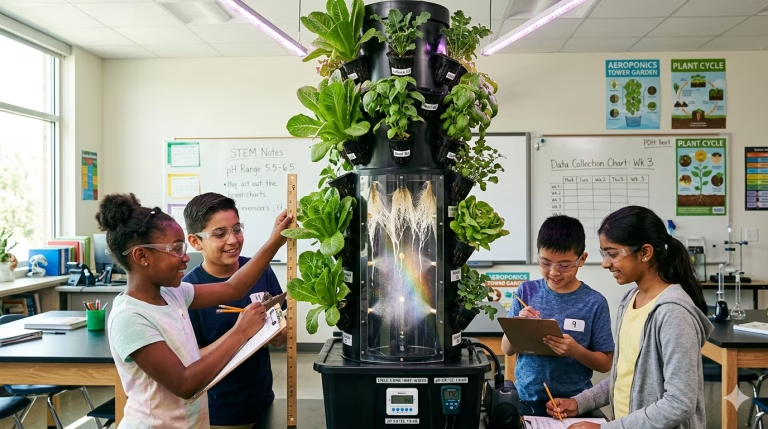
- NFT and vertical setups: small channels and towers can fail quickly if a pump stops, so monitoring flow and water level reduces catastrophic losses.
- High‑density leafy greens: lettuce, kale, bok choy, and similar crops in stacked or vertical systems gain from stable climate and good light distribution.
Systems that are more forgiving (like large media beds with buffer volume) still benefit from better LEDs but may not need complex sensors to perform well.
Choosing the right hydroponic system → Comparing Hydroponic System Types for Home Growers
Best leafy greens for hydroponics → Best Types of Lettuce to Grow Indoors Using Hydroponics
Which Plant Types Get The Best ROI From Smart Sensors And LEDs?
Not all plants justify the same level of investment.
Great candidates:
- Fast leafy greens: lettuce, spinach, Asian greens, and microgreens have short cycles and quick feedback from better conditions.
- High‑value herbs: basil, mint, cilantro, and specialty herbs that are expensive in stores but easy to grow indoors.
- Light‑hungry crops in constrained spaces: while fruiting plants need more light, you can sometimes justify strong LEDs if produce prices are high where you live.
Plants that may not justify heavy tech for beginners:
- Slow, large fruiting crops if you only grow a few plants and do not care about maximizing output.
- Very low‑value crops where store prices are already cheap and stable.
As a Phoenix home grower, focusing smart upgrades on greens and herbs you actually eat every week usually makes more sense than chasing a few tomatoes in July.
How To Upgrade A Basic Hydroponic System With Smart Sensors And LEDs
Title: How to Upgrade a Basic Hydroponic System With Smart Sensors And Efficient LEDs
Description: A practical, step‑by‑step guide to adding smart monitoring and efficient lighting to an existing home hydroponic system for better yield and ROI.
Materials and tools:
- Existing hydroponic system (DWC, NFT, or small raft).
- High‑efficiency LED grow light sized for your area.
- pH and EC sensor kit or meter, plus calibration solution.
- Water level sensor or clear sight tube, optional but helpful.
- Smart plug or timer for lights and pumps.
- Basic controller or app integration if using IoT modules.
- Mounting hardware, zip ties, and cable management supplies.
- Assess your current system and goals
Look at your grow area, plant types, and how often you actually harvest. Decide whether you are optimizing for more yield, lower energy bills, or less daily work. This keeps you from buying tech you will not use. - Size and select an efficient LED
Measure your footprint and pick a fixture with appropriate wattage and good efficacy for leafy crops, usually around 10–20 watts per square foot with long photoperiods. Check for µmol/J ratings above about 2.5, a balanced spectrum, and solid build quality. See our Simple Canopy Sizing Guide for more detailed information. - Mount the LED and dial in the light schedule
Hang or mount the light at the recommended height for your plants and system type. Start with a moderate intensity and a 14–18 hour day length for greens and herbs, then watch for stress or stretching and adjust gradually. - Install and calibrate pH and EC monitoring
Place sensors where water circulates well and follow calibration steps with the supplied solutions. Record your starting ranges so you can see how your system behaves over several days without changes. - Add water level or flow protection
Integrate a simple float switch, level sensor, or clear tube to know when the reservoir is running low. If possible, wire alerts or auto shutoffs so pumps do not run dry in your absence. - Connect smart plugs or timers
Use smart plugs or timers to control lights and pumps on a consistent schedule instead of manual switching. Set up notifications to alert you if a device fails or does not turn on as expected. - Set target ranges and alerts
In your controller or app, define acceptable ranges for pH, EC, temperature, and humidity for your specific crops. Configure notifications so you are pinged only when values drift enough to warrant action, not for every tiny fluctuation. - Run a short test cycle and log data
Grow one or two full cycles while watching how your charts and alerts line up with real plant performance. Note when issues arise and adjust thresholds, schedules, or setpoints so the system supports your actual lifestyle. - Refine for comfort and efficiency
If heat becomes an issue in a Phoenix garage or warm apartment, tweak light intensity and photoperiod, and consider scheduling lights for cooler hours. Revisit your nutrient dosing based on EC trends and visual plant health. - Decide on further automation
After living with the upgraded system for a bit, decide whether autos dosing, more sensors, or additional control layers would genuinely help you, or whether the system is already at a comfortable “set and check” level. This stepwise approach keeps the hobby fun and prevents gadget overload.
What Are The Main Drawbacks And Risks Of Smart, Automated Hydroponics?
Smart upgrades bring complexity as well as benefits.
Common downsides:
- Higher upfront cost: sensors, controllers, and high‑efficiency LEDs cost more than basic gear.
- Tech maintenance: calibration, firmware updates, and occasional connectivity issues add chores that are different from traditional plant care.
- Over‑automation risk: if you rely completely on automation without understanding your system, a single misconfigured setting can cause widespread problems.
The best approach for most home growers is to keep fundamentals simple and add smart features gradually, so you understand what each component is really doing for you.
FAQ: Smart Sensors, LEDs, Yield, And ROI In Home Hydroponics
Do smart sensors always increase hydroponic yield?
Smart sensors do not magically push plants to grow faster, but they help you keep pH, EC, and temperature in their ideal ranges more consistently. That tends to reduce stress and crop losses and can boost yield by roughly 15–30 percent when used actively, especially in DWC and recirculating systems.
How long does it take for an LED upgrade to pay for itself?
Payback depends on your grow size, hours of use, and local power rates. In frequently used systems, swapping from inefficient lights to high‑efficiency LEDs that save 30–40 percent on electricity can often pay back in 1–3 years through lower bills and improved yield.
Are smart hydroponic systems too complicated for beginners?
They can feel intimidating at first, but you can start small with simple timers, a decent pH meter, and one or two basic sensors. Many beginners find that even minimal automation reduces stress and makes it easier to learn by giving clear feedback on how the system behaves.
What if the internet or app goes down in a smart system?
It is important to design your system so basic functions like lighting and pumps continue to run on simple timers or local control even if connectivity is lost. Use remote access for monitoring and alerts, but avoid relying on cloud services for critical on/off decisions whenever possible.
Do smart upgrades save much water in small home systems?
Water savings are more dramatic in larger farms, but home systems can still benefit from smart irrigation and level control. IoT‑enabled hydroponic setups have reported water use reductions of around 30–40 percent by only topping up or circulating when needed.
Which plants benefit most from efficient LEDs?
Leafy greens and herbs are excellent candidates because they respond quickly to proper light levels and spectrum. High‑efficiency LEDs let you hit target intensities for these crops while keeping energy use manageable, especially when you run lights 14–18 hours per day.reddit+1
Are high‑efficiency LEDs always better than cheaper lights?
Higher efficacy LEDs generally provide more usable light per watt, but spectrum, build quality, and coverage also matter. A moderately efficient light with a good spectrum and even coverage can sometimes outperform an ultra‑efficient but poorly designed fixture in real grow rooms.
Is it worth adding sensors to a tiny herb system?
For very small herb systems, the financial return from sensors alone is usually modest because overall water and energy use are low. In those setups, smart monitoring is mostly about convenience, learning, and avoiding the occasional complete crop crash rather than hard dollar savings.
Do smart systems reduce labor for home growers?
Smart automation can reduce repetitive tasks like manual switching and constant checking, especially in larger systems. You will still need to prune, harvest, and maintain equipment, but your time shifts from emergency troubleshooting to scheduled check‑ins.
Author Note
I grow indoors in Phoenix, Arizona, where heat and dry air push hydroponic systems hard for much of the year. Over multiple seasons I have tuned DWC and NFT systems with progressively smarter sensors, timers, and efficient LEDs to stay productive through both shoulder seasons and intense summers. That experience has taught me that good lighting and a few well chosen sensors often beat complex automation for most home growers. My focus is helping apartment and urban gardeners build systems that feel reliable, understandable, and rewarding instead of overwhelming.
Share this:

Discover more from Soil Free Harvest
Subscribe to get the latest posts sent to your email.