How Light Intensity Affects Nutrient Uptake in Hydroponics
Quick Answer
Light intensity directly drives nutrient uptake in hydroponic systems by powering photosynthesis, which generates the energy plants need to actively transport minerals from the water solution into their roots. Without sufficient light intensity, plants cannot efficiently absorb nitrogen, potassium, calcium, magnesium, or micronutrients, even if those nutrients are present in abundance. Conversely, too much light intensity can stress plants, reduce nutrient uptake, and create symptoms that mimic nutrient deficiency.
TL;DR: Light intensity controls photosynthesis rate, which fuels the biological pumps in plant roots that absorb nutrients. Optimal light intensity (measured in PPFD) varies by crop and growth stage, but generally ranges from 200-300 μmol/m²/s for leafy greens. Finding the right light intensity for your system directly improves mineral uptake and accelerates growth.
Affiliate Disclosure: This article contains affiliate links. If you purchase through these links, soilfreeharvest.com may earn a small commission at no extra cost to you.
Understanding Light’s Role in Nutrient Uptake
Light and nutrients are inseparable partners in hydroponic growing. Many growers assume that adding more nutrients to the water will solve yellowing leaves or stunted growth, but the real problem is often insufficient light energy.
Here’s why: Photosynthesis converts light energy into chemical energy (ATP and NADPH), which plants use to power active transport mechanisms in root cells. Active transport is the process that allows roots to pull minerals against a concentration gradient, moving them from a dilute solution into plant tissue. Without adequate light, the roots simply don’t have enough energy to perform this uptake.
Think of it this way: light is the fuel, and nutrient uptake is the engine. No fuel, no movement.
The Photosynthesis and Nutrient Connection
When light hits plant leaf tissue, it excites electrons in chlorophyll molecules, initiating a cascade of chemical reactions. These reactions produce the energy carriers (ATP) and reducing power (NADPH) that drive photosynthesis and, crucially, feed into root metabolism.
The more light a plant receives (up to a saturation point), the more photosynthate is produced. This sugar-rich sap flows down to the roots through the phloem, providing energy for:
- Opening ion channels in root cell membranes
- Powering selective nutrient uptake pumps
- Maintaining healthy root tissue and root hair growth
- Supporting nutrient translocation from root to shoot
This is why low-light plants consistently show nutrient deficiency symptoms even when nutrient levels in the water are perfect. The roots simply lack the metabolic energy to absorb and distribute minerals.
Nutrient solution composition and EC management → article on hydroponic nutrient solutions
How Light Intensity Is Measured in Hydroponics
Before optimizing light intensity, you need to understand how it’s quantified. Most hydroponic growers use two metrics: PPFD and DLI.
PPFD: Photosynthetic Photon Flux Density

PPFD (measured in micromoles per square meter per second, or μmol/m²/s) tells you the instantaneous intensity of light available to plants at any given moment. It represents the number of photons in the 400-700 nm range (photosynthetically active radiation, or PAR) hitting a surface per second.
A PPFD meter (also called a quantum sensor or PAR meter) measures this value at a specific point in time. For example, a reading of 250 μmol/m²/s means 250 micromoles of photons are reaching that spot every second.
PPFD is most useful for:
- Positioning grow lights at the correct height
- Checking light uniformity across your canopy
- Comparing different LED panels and fixture designs
- Adjusting distance as plants grow
DLI: Daily Light Integral
DLI (measured in moles per square meter per day, or mol/m²/day) is the total amount of light energy a plant receives over a full 24-hour period. It combines PPFD, photoperiod (hours of light), and daily variability into one meaningful number.
For example, if your lights deliver an average PPFD of 250 μmol/m²/s and run for 16 hours per day, your DLI is approximately 14.4 mol/m²/day.
DLI is more important than momentary PPFD for long-term growth predictions because it accounts for total daily light energy. Different crops have different DLI requirements:
- Lettuce and leafy greens: 14-16 mol/m²/day
- Basil and soft herbs: 12-17 mol/m²/day
- Fruiting crops (tomato, pepper): 17-25 mol/m²/day
- Microgreens: 3-8 mol/m²/day (low light, short growth cycle)
Why Both Metrics Matter
PPFD tells you about instantaneous light availability (useful for preventing light stress during peak hours). DLI tells you whether your total daily light exposure is adequate for the crop’s growth stage and species.
LED grow lights for hydroponic systems → article on selecting LED Lights
Light Spectrum and Nutrient Uptake: Which Colors Matter Most
Not all light is equal when it comes to nutrient absorption. The color (wavelength) of light significantly influences which nutrients plants prioritize and how efficiently roots absorb them.
Blue Light (400-500 nm): The Mineral Booster
Blue light is the primary driver of nutrient uptake in roots. When blue photons hit photoreceptors in root cells (called phototropins), they trigger the opening of ion channels in cell membranes. These channels allow potassium, calcium, magnesium, and other minerals to flow into root tissue.
Blue light also promotes:
- Stomatal opening on leaves, increasing gas exchange and photosynthetic rate
- Chlorophyll synthesis, which increases light-harvesting capacity
- Compact, sturdy vegetative growth with short internodes
- Enhanced uptake of micronutrients like iron and zinc
Research on hydroponic lettuce shows that increasing blue light from 10% to 50% of the light spectrum significantly increased calcium, magnesium, potassium, and iron concentrations in plant tissue.
Red Light (620-750 nm): The Root Energizer
Red light is the most efficient wavelength for driving photosynthesis on a per-photon basis. It penetrates deeper into leaf tissue than blue light, reaching the photosynthetic machinery in lower leaf layers.
Red light promotes:
- Strong photosynthetic rates, producing the energy and sugars needed for nutrient uptake
- Flowering and fruiting through phytochrome signaling in roots
- Root system expansion and development
- Enhanced water and mineral uptake by established root systems
- Increased biomass accumulation
In hydroponic systems, a shift toward red light late in the growth cycle signals plants to allocate resources toward flowering and fruit development rather than vegetative growth.
Far-Red Light (700-800 nm): The Expansion Enhancer
Though outside the traditional PAR range, far-red light (added as a supplement) improves light absorption by promoting canopy expansion and leaf growth. Studies show that supplementing red and blue with far-red light increased uptake of potassium, calcium, and magnesium in lettuce compared to red and blue alone.
Optimal Red-to-Blue Ratios
Research consistently shows that a blend of red and blue light outperforms single-wavelength light for nutrient uptake. The optimal ratio depends on growth stage and crop type:
- Early vegetative stage: 75-80% blue, 20-25% red (promotes compact, bushy growth and strong nutrient uptake)
- Mid-vegetative to flowering: 60-70% red, 30-40% blue (balances biomass production with flowering signals)
- Fruiting stage: 70-80% red, 20-30% blue with far-red supplement (maximizes fruiting and mineral translocation)
A common starting point for most hydroponic crops is an 3:1 or 4:1 red-to-blue ratio, which provides strong photosynthesis while maintaining nutrient uptake efficiency.
Photoperiod optimization for different crops → article on light cycles and crop timing
Optimal Light Intensity by Growth Stage and Crop
Light intensity needs change as plants develop. Early seedlings cannot use high PPFD and will show light stress, while mature plants in the flowering stage demand intense light for maximum yield.
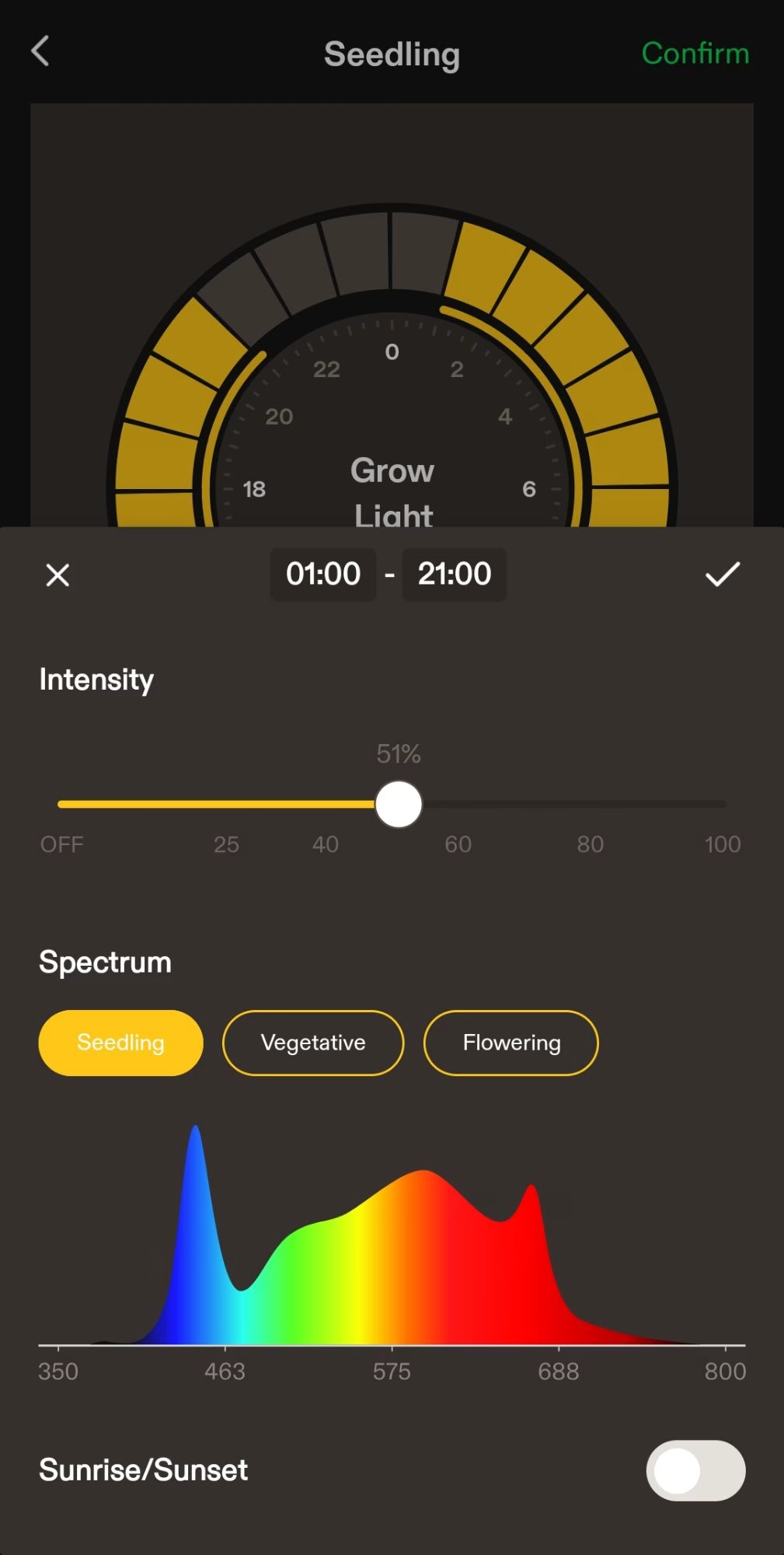
Seedling Stage (First 2-3 Weeks)
Seedlings have minimal chlorophyll and fragile tissues. Excessive light will burn cotyledons and true leaves before they’re ready.
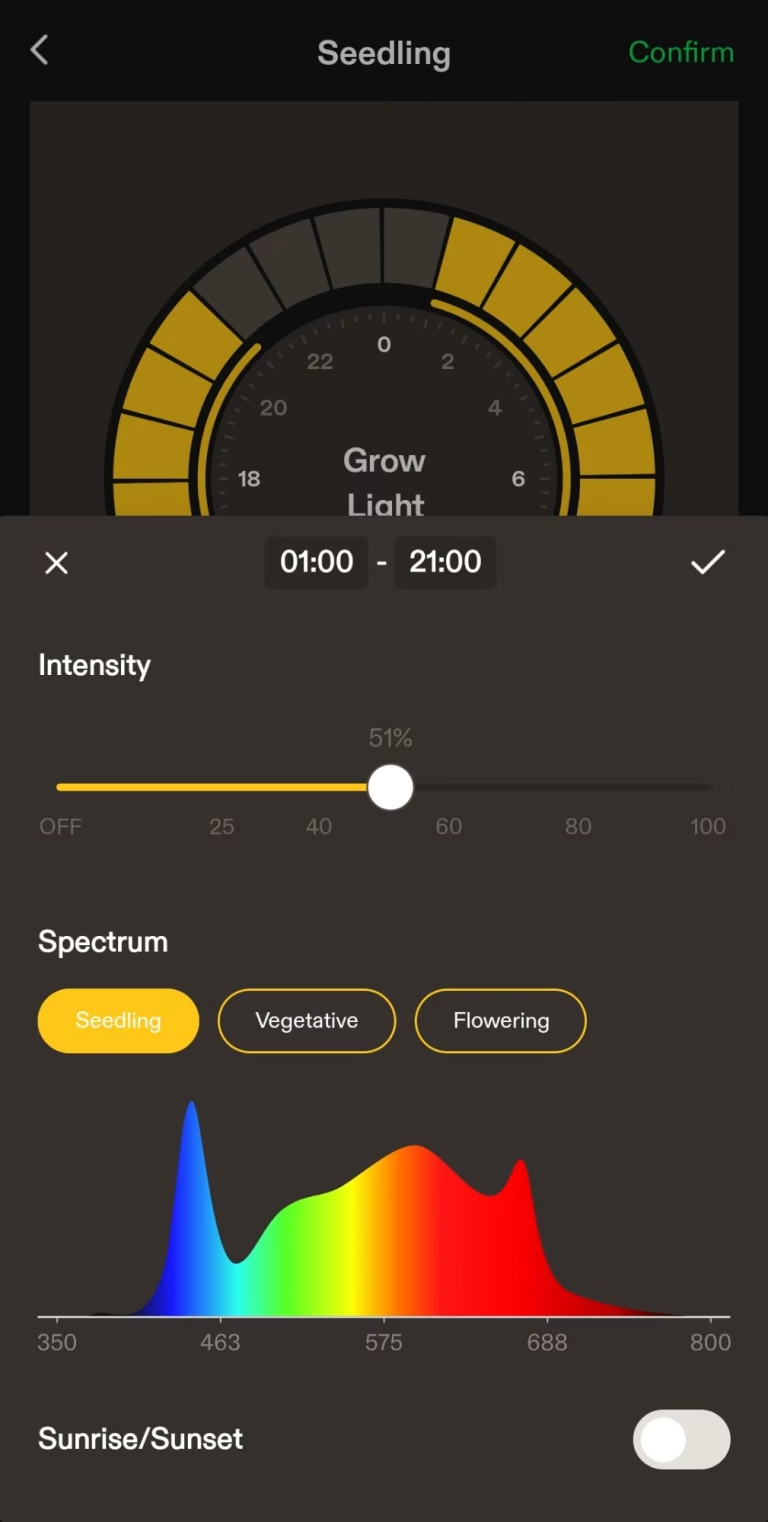
Recommended PPFD: 100-250 μmol/m²/s
Recommended photoperiod: 16-18 hours
Recommended height: 24-36 inches above seedlings
Many growers run 24-hour continuous light for the first 3-5 days to speed germination, then drop to 16-18 hours. At this stage, blue light dominates the spectrum to encourage compact, sturdy seedlings and prevent legginess.
Vegetative Stage (3-8 Weeks, Typical)
Plants are now building leaves, stems, and root mass. Higher light intensity and longer photoperiods maximize vegetative growth.
Recommended PPFD: 250-350 μmol/m²/s
Recommended photoperiod: 16-20 hours
Recommended height: 12-24 inches above canopy
During this phase, plants have the energy for aggressive nutrient uptake. Nitrogen and potassium demand is highest as the plant builds tissue. Higher light intensity correlates directly with faster nutrient absorption and faster growth cycles.
If your lights provide 250 μmol/m²/s, a 16-hour photoperiod delivers roughly 14.4 mol/m²/day DLI, which is adequate for leafy greens but marginal for fruiting crops.
Flowering and Fruiting Stage (Variable Duration)
For day-neutral crops like tomato and pepper, flowering happens at full intensity. Light intensity should increase to support the high metabolic demand of fruit development.
Recommended PPFD: 300-450 μmol/m²/s
Recommended photoperiod: 16-18 hours (rest is important for hormonal signaling)
Recommended height: 12-18 inches, adjusted for leaf temperature
At this stage, the red-to-blue ratio should shift toward more red light to support fruit ripening and carbohydrate translocation to fruit tissue. Micronutrients like calcium, magnesium, and boron become critical to prevent blossom-end rot and other deficiencies in developing fruit.
How to Measure and Adjust Light Intensity in Your System
Guessing at light intensity leads to wasted resources and suboptimal growth. Proper measurement is straightforward and inexpensive.
Step 1: Obtain a PPFD Meter
A quantum sensor or PAR meter measures PPFD directly. Budget options start around $50 (smartphone apps with limited accuracy) to $200+ (professional meters).
Required specifications:
- Measures wavelengths 400-700 nm
- Displays PPFD in μmol/m²/s
- Ability to take multiple readings over time to calculate DLI
- Optional but useful: data logging and USB export
Popular options for home growers include the Photone app (smartphone), Vabira PAR meters ($50-100), and professional meters like Apogee Instruments ($300+).
Step 2: Map Your Light Distribution
Light doesn’t distribute evenly from a single fixture. The center directly below the light is always brighter than the edges.
Procedure:
- Position your quantum sensor at canopy height (where plants will be located)
- Take PPFD readings at the center and at least four edge points
- Record readings in a grid pattern if you have multiple fixtures
- Average the readings to estimate your overall PPFD
Aiming for at least 80% uniformity ensures all plants receive similar light and nutrient uptake rates.
Step 3: Adjust Fixture Height
Light intensity falls off dramatically with distance due to the inverse-square law. Doubling the distance from a light source reduces intensity to one-quarter.
General guidelines for LED grow lights:
- Seedlings: 24-36 inches above canopy
- Vegetative plants: 12-24 inches above canopy
- Flowering/fruiting: 12-18 inches above canopy
Adjust height based on leaf temperature. If leaf temperature exceeds 29°C (84°F), raise the fixture. If plants show light stress (see troubleshooting), adjust accordingly.
Step 4: Calculate Your DLI
Once you know your average PPFD across the canopy, calculate DLI:
DLI (mol/m²/day) = PPFD (μmol/m²/s) × photoperiod (hours) × 3.6 / 1,000,000
Example: 250 PPFD × 16 hours × 3.6 / 1,000,000 = 14.4 mol/m²/day
Compare this to your crop’s target DLI. If you’re short, either increase PPFD (lower the light), extend the photoperiod, or both.
Step 5: Monitor Growth and Adjust
Observe your plants daily for the first week after adjusting light:
- Are leaves pale or yellowing? Increase light intensity (lower the fixture or extend photoperiod)
- Are leaf margins burning or bleached? Decrease intensity (raise the fixture or shorten photoperiod)
- Are stems stretching? Increase blue light or raise intensity
- Is growth slow? Usually indicates low light; increase PPFD or DLI
Most hydroponic crops show visible response to light intensity changes within 3-7 days.
pH management and nutrient availability → article on testing and adjusting pH
Light Intensity and Nutrient Deficiency Symptoms
One of the biggest mistakes growers make is adding more nutrients when the real problem is insufficient light. Understanding the difference between true nutrient deficiency and light-related issues saves time and money.
Low-Light Nutrient Deficiency
When light is too dim (typically below 175 μmol/m²/s for leafy greens), plants lack the energy to absorb and transport minerals. Symptoms include:
- Overall pale or light-green leaf color
- Thin, elongated stems (etiolation)
- Small leaf size
- Slow, weak growth
- Poor root development
- Stunted flowering or no flowering
The entire plant looks “stretched” and unhealthy, not just specific leaves.
Remedy: Increase light intensity, check PPFD, lower the fixture, or extend photoperiod.
High-Light Stress (Photodamage)
Excessive light intensity or too-close positioning causes photoinhibition, a condition where plants cannot use all the light energy safely. Symptoms include:
- Yellowing or bleaching of upper leaves
- Veins remain green while tissue between veins turns yellow or white
- Leaf edges curl, darken, or appear “scorched”
- Leaves become brittle and may drop off
- Reduced photosynthetic rate (counterintuitively, plants shut down photosynthesis to protect themselves)
- Rapid soil drying and wilting despite adequate watering
This is sometimes mistaken for nutrient deficiency, especially nitrogen deficiency, but light-stressed leaves don’t fall off easily while nitrogen-deficient leaves do.
Remedy: Raise the light fixture, reduce light intensity via dimmer, or shorten the photoperiod. Increase humidity and provide air circulation to cool plants.
Nutrient Lockout from Light-Related pH Swings
Excessive light and heat can indirectly cause nutrient lockout by altering pH. High light intensity increases transpiration, which can raise pH in the nutrient solution and precipitate minerals like calcium, magnesium, and phosphorus. These nutrients become unavailable even though they’re present.
Symptoms: Newer leaves show mixed deficiency signs (calcium, magnesium, phosphorus); older leaves may be fine.
Remedy: Check and stabilize pH (5.5-6.5 for hydroponics). Lower light intensity slightly to reduce excessive transpiration. Test EC (electrical conductivity) and do a partial nutrient solution change if EC is too high.
Light Intensity and Specific Nutrient Uptake
Research reveals nuanced relationships between light spectrum and individual nutrient uptake. Understanding these helps optimize your system for specific crops.
Macronutrients (Nitrogen, Phosphorus, Potassium, Calcium, Magnesium, Sulfur)
Nitrogen (N) and potassium (K) show the strongest correlation with light intensity. Higher PPFD consistently increases uptake of both, which is why plants grow faster under better lighting.
Phosphorus (P) uptake is influenced more by light spectrum than intensity. Blue-dominant light enhances phosphorus uptake, while red light slightly reduces it in some crops.
Calcium (Ca) and magnesium (Mg) uptake increase significantly under combined red and blue light, especially with far-red supplementation. A 80% red + 20% blue ratio, or R/B 3:1 to 4:1, produces the highest Ca and Mg translocation to shoots.
Micronutrients (Iron, Zinc, Copper, Manganese, Boron)
Iron (Fe) and zinc (Zn) uptake are highly sensitive to light spectrum. The ratio of red to blue light influences their absorption; far-red supplementation can boost iron and zinc in some crops.
Boron (B) and copper (Cu) respond positively to higher blue light percentages (25-50%).
Manganese (Mn) responds more to red light in some crop varieties.
This is why a full-spectrum LED (combining blue, red, and ideally far-red) outperforms single-color lights. Different nutrients “prefer” different wavelengths, and a balanced spectrum ensures no nutrient is underabsorbed.
System-Specific Considerations: Light and Nutrient Uptake
Different hydroponic systems respond differently to light intensity adjustments because of how they deliver oxygen and nutrients to roots.
Deep Water Culture (DWC)
In DWC, roots are fully submerged in nutrient solution. Air stones provide oxygen. Light intensity directly affects nutrient uptake because the roots have unlimited access to nutrients; light is the rate-limiting step.
Higher light intensity = faster growth and faster nutrient depletion. You’ll need to monitor EC (electrical conductivity) closely and do more frequent partial water changes as plants in DWC systems under high light quickly deplete macronutrients.
Light recommendation for DWC: 250-400 μmol/m²/s during vegetative and flowering is standard.
DWC hydroponics guide → article on setting up DWC systems
Nutrient Film Technique (NFT)
In NFT, a thin film of nutrient solution flows continuously over roots. Roots are mostly exposed to air, which is beneficial for oxygen. Light intensity requirements are similar to DWC, but the thinner film means nutrient uptake depends more on flow rate and solution contact time.
High light intensity under NFT systems may require more frequent solution changes because nutrient depletion happens quickly in a small reservoir with high light driving rapid uptake.
Light recommendation for NFT: 200-300 μmol/m²/s is typically sufficient for leafy greens; 300-350 for faster turnover.
NFT hydroponics setup → article on building NFT systems
Ebb and Flow
Ebb and flow systems periodically flood and drain roots, exposing them to both nutrient solution and air. The intermittent nature allows for some rest periods, which can affect how light intensity translates to nutrient uptake.
Light intensity is still important, but the ability to rest roots between flood cycles can mitigate some stress from high light intensity.
Light recommendation for ebb and flow: 200-300 μmol/m²/s; avoid sustained ultra-high intensity without adequate rest periods between cycles.
Ebb & Flow hydroponics setup → All about Ebb & Flow systems
Practical Light Setup Guide for Home Hydroponic Growers
Materials and Tools Needed
- LED grow light panel (full-spectrum red and blue, ideally with far-red option)
- PPFD meter (quantum sensor or smartphone app)
- Adjustable light fixture (rope ratchet, pulley system, or adjustable hanging chains)
- Thermometer or infrared thermometer (to monitor leaf temperature)
- pH meter and EC meter (to monitor solution stability under high light)
- Timer for photoperiod control
- Notebook or spreadsheet for tracking light intensity and growth
Setting Up Optimal Light Intensity
Step 1: Choose Your Fixture
Select a full-spectrum LED panel rated for your grow area. Check the manufacturer’s recommended hanging distance for your desired PPFD. For example, a 300W panel might recommend 24 inches at 250 μmol/m²/s.
Budget allocation: A quality LED panel costs $150-400; a PPFD meter $50-200. Total startup: $200-600.
Step 2: Install Height Adjustability
Mount the light on adjustable chains or a pulley system so you can raise or lower it as plants grow. This is crucial for maintaining optimal PPFD as plants develop.
Use rope ratchets or adjustable hangers rated for your fixture weight plus extra safety margin.
Step 3: Measure Initial PPFD
Place your PPFD meter at the height where plant canopies will be. Take readings at the center and four corners of your grow area. Calculate the average PPFD.
If using a smartphone app, cross-check with a quality PAR meter if possible, as app accuracy varies.
Step 4: Adjust Fixture Height
Based on your target PPFD for the growth stage:
- Too high (below 150 PPFD)? Lower the fixture 3-6 inches and remeasure
- Too low (above 500 PPFD for seedlings)? Raise the fixture
- In range? Record the height for future reference
Step 5: Set Photoperiod and Calculate DLI
Install a basic timer (cost: $10-20) or smart plug to control on/off times consistently. Set initial photoperiod based on growth stage:
- Seedlings: 16 hours
- Vegetative: 18 hours
- Flowering: 16-18 hours
Calculate DLI using the formula above. If below target, extend photoperiod or plan to lower the fixture as plants grow and tolerate higher intensity.
Step 6: Monitor Daily
For the first 7-10 days:
- Check leaf color daily. Pale leaves = increase light; yellow/burnt leaves = decrease light
- Measure leaf temperature with an infrared thermometer. Aim for under 29°C
- Note growth rate. Most crops should show new leaf expansion within 5-7 days
- Monitor pH and EC. High light may increase transpiration and shift pH upward
Step 7: Fine-Tune Intensity by Growth Stage
As plants move from seedling to vegetative to flowering:
- Lower the light fixture 2-3 inches
- Remeasure PPFD
- Adjust photoperiod if needed to reach target DLI
- Observe response and adjust again if necessary
Troubleshooting Light-Related Nutrient Problems
Problem: Leaves Yellowing, Growth Slow
Diagnosis: Likely insufficient light, not nutrient deficiency.
Steps:
- Measure PPFD. Is it below 200 μmol/m²/s?
- If yes, lower the fixture 6 inches and remeasure
- Check photoperiod. Is it at least 16 hours for vegetative plants?
- If below, extend by 1-2 hours and monitor for 5 days
- Check pH and EC. Even if light improves, poor nutrient availability due to pH/EC will slow recovery
Expected improvement: New leaves should show normal color within 7 days if light is the issue.
Problem: Leaves Bleached or Burnt, Curled Edges
Diagnosis: Likely light stress (too intense) or heat stress from the light.
Steps:
- Raise the fixture 6-12 inches
- Check leaf temperature. If above 30°C, add a fan for air circulation
- Consider reducing photoperiod by 1-2 hours as a temporary measure
- Increase humidity with a humidifier or mist the air around plants (not on leaves during light hours)
- Trim off severely damaged leaves to redirect plant energy toward healthy growth
Expected improvement: New growth should look normal within 5-7 days.
Problem: Stunted Growth Despite Adding More Nutrients
Diagnosis: Likely a combination of insufficient light and/or poor nutrient uptake due to pH imbalance.
Steps:
- Measure PPFD. This is the most common hidden cause
- Measure and correct pH (target 5.5-6.5 for hydroponics)
- Check EC. If above 2.0, do a 25-50% water change to reduce salt concentration
- Ensure air pump (in DWC) or irrigation (in NFT/ebb and flow) is functioning
- Lower light fixture to increase PPFD
- Wait 7 days before adding more nutrients
Expected improvement: Growth rate should accelerate within 1-2 weeks if light was the limiting factor.
Problem: Inconsistent Growth Across Grow Area
Diagnosis: Uneven light distribution (low uniformity).
Steps:
- Map PPFD at multiple points (grid of 9 points minimum)
- Adjust fixture angle or height to improve uniformity
- Consider adding supplemental side lighting or reflective material to redirect light to dim areas
- Rotate plants weekly if possible to ensure all receive similar average light
- For permanent setups, invest in a fixture with better beam angle and spread
Key Takeaways: Light Intensity and Nutrient Uptake
- Light is the energy source for nutrient uptake. Without sufficient PPFD, roots cannot actively transport minerals from solution into plant tissue, regardless of how rich the nutrient solution is.
- PPFD (light intensity) and DLI (total daily light) are both important. Measure both to optimize growth. Most hydroponic lettuce and herbs thrive at 200-300 μmol/m²/s and 14-16 mol/m²/day DLI.
- Blue and red light both matter. A balanced spectrum (3:1 to 4:1 red-to-blue ratio) optimizes nutrient uptake better than single-color light. Far-red supplementation can boost macronutrient translocation.
- Light intensity should match growth stage. Seedlings need 100-200 PPFD; vegetative plants 200-350 PPFD; flowering/fruiting plants 300-450 PPFD.
- Too little light causes deficiency-like symptoms; too much light causes stress. Learning to distinguish between true nutrient deficiency and light-related issues prevents wasted time and money.
- pH stability becomes more critical under high light. Intense light increases transpiration, which can shift pH upward and lock out nutrients. Monitor and adjust accordingly.
- System type affects light-nutrient interaction. DWC responds quickly to light intensity changes; NFT and ebb and flow may allow slight reductions in intensity due to improved root aeration.
- Consistent measurement and adjustment yield consistent results. A $100 PPFD meter pays for itself through improved yields and reduced nutrient waste.
Frequently Asked Questions
Q: How much does a good PPFD meter cost, and is it worth buying?
A: Budget options start at $50 (smartphone apps with variable accuracy) to $100-150 (Vabira, budget quantum sensors). Professional meters run $300+. For home growers, a $100-150 quantum sensor is the best investment. It pays for itself through water and nutrient savings within one growing season. A PPFD meter allows you to dial in precise conditions and troubleshoot quickly, preventing costly mistakes.
Q: Can I use a 24-hour photoperiod for faster growth?
A: Continuous light (24 hours) accelerates growth in some day-neutral crops like tomato and basil but causes stress in long-term growing. Most research shows 16-18 hours of light with 6-8 hours of darkness yields better quality plants, lower energy use, and more stable nutrient uptake. Plants use the dark period for translocation and cellular repair. If you use continuous light, reduce intensity slightly and monitor for stress.
Q: Do I need far-red light in addition to red and blue?
A: For home growers, no. A quality full-spectrum LED with red and blue is sufficient for most crops. Far-red (supplemental to red and blue) provides marginal yield increases (5-15%) and is useful mainly for commercial operations optimizing profit. Skip it unless you’re already running optimal red and blue and want to push yields further.
Q: How do I know if low plant growth is from insufficient light or poor nutrient uptake?
A: Increase light intensity first. If growth accelerates within 7-10 days, light was the issue. If growth remains slow despite improved light, check pH (target 5.5-6.5) and EC (target 1.2-1.8 for most crops). If pH and EC are correct and light is adequate, then suspect a specific nutrient deficiency (look for color changes in new leaves) or root disease (smell for off-odors, check for root rot).
Q: Will raising light intensity increase yield proportionally?
A: No. Yield increases with light intensity up to a saturation point, then plateaus. For lettuce, saturation occurs around 300-350 PPFD. Beyond that, yield barely increases while electricity costs keep climbing. Know your crop’s saturation point and don’t waste energy pushing beyond it.
Q: Can I use HPS or fluorescent lights instead of LED for nutrient uptake?
A: Yes, but LEDs are more efficient. HPS and fluorescent produce the full PAR spectrum but waste energy as heat. They require more ventilation and consume 2-3x the electricity of modern LEDs for equivalent light output. If you already own HPS or fluorescents, use them, but upgrading to LED saves money long-term and allows better spectrum control.
Q: What’s the cheapest way to set up optimal lighting?
A: A 100W full-spectrum LED panel ($50-80 from budget brands) + a basic timer ($10-15) + smartphone PPFD app (free) is a minimum viable setup for a small home system. For better accuracy, budget $150-200 total for a quality LED + real PPFD meter + timer. The smartphone app is a good starting point for learning; upgrade to a real meter once you understand what you’re measuring.
Q: How does high altitude or dry climate affect light intensity and nutrient uptake?
A: In dry climates like Arizona (where this site is based), high light intensity can stress plants more than in humid areas. The dry air increases transpiration and can cause faster nutrient concentration buildup in the solution. Solution: Increase relative humidity with a humidifier, reduce photoperiod slightly, or lower light intensity by 50-100 PPFD. Monitor EC more frequently in dry climates.
Q: Do cloudy days or winter months require different light intensity adjustments?
A: In greenhouse operations with natural light supplementation, yes. Indoors with artificial lighting, no. A controlled hydroponic setup with LED lights is unaffected by weather or season; you control PPFD and photoperiod completely. This is a major advantage of hydroponics over field growing.
Q: Can I optimize light intensity for multiple crops in one grow area?
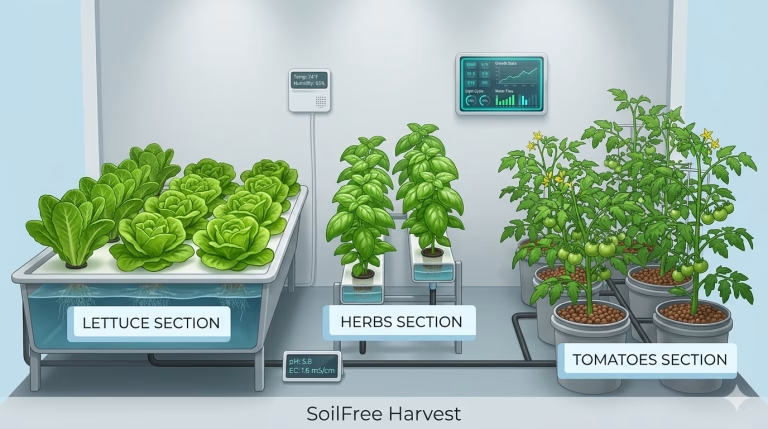
A: Not perfectly, but you can compromise. If growing lettuce (needs 250-300 PPFD) alongside basil (needs 200-250 PPFD), set the light to 250 PPFD. Lettuce grows slightly slower; basil is ideal. Fruiting crops (300-400 PPFD) need higher light than leafy greens; separate these into different zones if possible. Alternatively, rotate crops or use variable-intensity zones within one grow area.
Author Bio
This article was written by a hydroponics enthusiast and cybersecurity professional with deep expertise in hydroponic system design, nutrient management, and cultivation automation. From troubleshooting light and nutrient interactions in compact spaces to building scalable hydroponic setups that deliver consistent harvests year-round, the focus is on practical solutions that work in real-world conditions. The author’s background in compliance and systems thinking brings a data-driven approach to hydroponics, emphasizing measurement, documentation, and iterative improvement to help growers master the science of soil-free cultivation.
Share this:

Discover more from Soil Free Harvest
Subscribe to get the latest posts sent to your email.