
Essential Hydroponic Tools & Gear List for Home Growers 2026
What are the essential tools for hydroponics?
Don’t waste money on wrong gear. This 2026 list covers must-have hydroponic tools: pH/EC meters, chillers, air pumps, reservoirs, and more. Prioritized for beginners and apartment growers, with buying tips, cost breakdowns, and maintenance schedules to prevent issues like root rot or nutrient lockout.
A basic home kit typically includes a pH meter, EC or TDS meter, pH up and pH down solution, nutrient concentrate, a reservoir, a pump, air stones, timers, and a simple thermometer or hygrometer. (I have curated a list on Amazon for you here: Dee’s Essential Hydroponics Tools)
TL;DR: To run almost any small hydroponic system you need a way to mix and move nutrient solution, a way to measure pH and EC, reliable light and timers, and simple plant care tools.
Start with the monitoring gear and water handling equipment first, then add environmental and convenience tools as your system grows.
Affiliate Disclosure: This article contains affiliate links. If you purchase through these links, soilfreeharvest.com may earn a small commission at no extra cost to you.
What core tool categories do you actually need?
A useful way to think about hydroponic equipment is by category rather than brand.
If each category below is covered, you can grow lettuce, herbs, and even tomatoes in a closet, spare room, or small patio system.
| Category | Example tools | Why it matters |
|---|---|---|
| Monitoring | pH meter, EC/TDS meter, thermometer, hygrometer | Keeps nutrients in the right range and prevents invisible problems. |
| Water and nutrients | Reservoir, water pump, air pump, air stones, tubing, nutrient solution, mixing container | Moves and oxygenates solution and feeds plants consistently. |
| Environment control | Grow lights, light timer, pump timer, fans, humidifier/dehumidifier | Manages light cycles, heat, and humidity for steady growth. |
| Plant support and care | Net pots, growing media, trellis or plant clips, pruning snips, sticky traps | Holds plants upright, shapes growth, and keeps pests in check. |
| Hygiene and safety | Hydrogen peroxide or disinfectant, cleaning brushes, gloves, power strips with GFCI | Reduces disease risk and keeps electricity around water safer. |
Types of hydroponic systems → overview of DWC, NFT, ebb and flow, etc
Which monitoring tools are essential in hydroponics?
Monitoring tools are non negotiable because hydroponic plants depend entirely on your nutrient solution and climate rather than soil buffering out mistakes.
At a minimum you should have a pH meter and an EC or TDS meter plus a simple thermometer to track water and air temperature.
Why do you need a pH meter?
Most hydroponic vegetables and herbs grow best when the nutrient solution pH sits between about 5.5 and 6.5, which keeps most nutrients available to the roots.
Below 5.5 you risk locking out calcium and magnesium, and above 6.5 iron and other micronutrients become less available, even if they are technically in the water.
Essential tools for pH management:
- Digital pH meter or high quality liquid test kit
- pH up and pH down solutions (usually based on potassium hydroxide and phosphoric acid)
- Small measuring syringe or pipette for dosing
- Storage solution and calibration fluid for your meter
Extension sources recommend keeping the solution itself slightly more acidic, around 5 to 6, so the pH in the root zone stays between 6 and 6.5 after interaction with media and roots.
Hydroponic pH and EC guide → detailed nutrient management basics
Why do you need an EC or TDS meter?
An EC (electrical conductivity) or TDS (total dissolved solids) meter measures how strong your nutrient solution is, which lets you avoid underfeeding and overfeeding.
Many common hydroponic crops sit in a target EC range between about 1.0 and 2.4 depending on the species and growth stage.
Typical EC targets for small home systems:
- Leafy greens and most herbs: roughly 1.0 to 1.6 mS per cm
- Fruiting crops like tomatoes, peppers, and cucumbers: roughly 1.8 to 2.5 mS per cm
- Seedlings and newly transplanted starts: 0.6 to 1.0 mS per cm
Charts from hydroponic growers list detailed pH and EC ranges for more than 60 vegetables and herbs, which you can use to refine your targets once your system is stable.
What climate monitoring tools help indoors?
Temperature and humidity impact transpiration, nutrient uptake, and disease risk.
A compact digital thermometer and hygrometer combo gives you real time readings for air temperature and relative humidity around the canopy.
Useful environmental monitors:
- Room thermometer and hygrometer combo unit
- Aquarium thermometer or probe thermometer for reservoir water
- Optional infrared thermometer for checking leaf surface temperature
Growers often discover that poor growth traces back to too hot or too cold solution or to chronically low humidity during early growth rather than to nutrients, so these simple tools punch above their price.
Indoor hydroponic climate control → temperature and humidity for grow tents and closets
If you are looking for a more advanced method check out Geothermal Cooling for Systems
What water and nutrient handling tools are required?
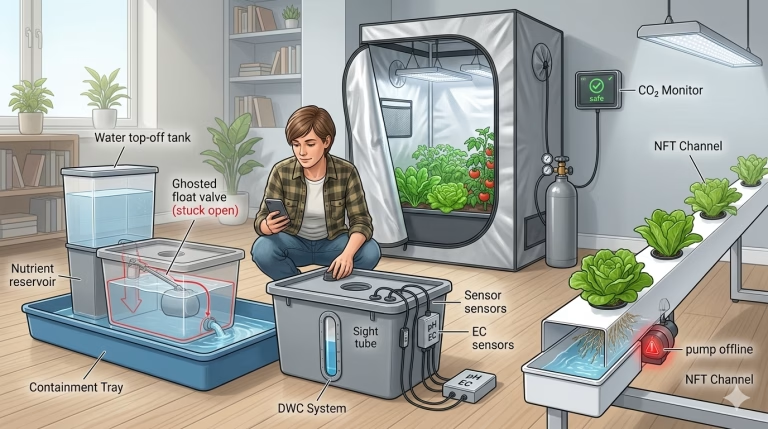
Water and nutrients are the heart of any hydroponic system, and the tools here are about moving, storing, and oxygenating solution.
Your exact list varies a bit with system type, but the core items repeat across DWC, NFT, drip, and ebb and flow builds.
What do you need for the reservoir and circulation?
Every hydroponic system needs a reservoir sized to hold at least a few days of nutrient solution plus some kind of pump to move it.
Even very small balcony systems benefit from a food grade reservoir with a tight lid to reduce algae and evaporation.
Check out our Food Safe Materials Guide
Core water handling tools:
- Reservoir: tote, bucket, or tank made from opaque, food safe plastic
- Submersible pump sized for your system height and flow
- Vinyl or polyethylene tubing to carry solution to your plants
- Bulkhead fittings or uniseals where lines enter or leave the reservoir
- Return plumbing for NFT and ebb and flow systems
Drip and ebb and flow systems rely on the pump to lift water into trays or drip lines, while NFT uses the pump to create a shallow stream down channels and back to the reservoir.
Why are air pumps and air stones important?
Roots need oxygen as much as leaves do, and submerging roots without aeration suffocates them quickly.
An aquarium style air pump with air stones or diffusers keeps dissolved oxygen high in deep water culture buckets and in reservoirs shared by NFT or drip systems.
For most home systems a small multi outlet pump feeding several round air stones is enough.
Look for models rated for continuous use and pair them with check valves on each airline to keep water from back siphoning during outages.
Which tools do you need for nutrients and mixing?
Hydroponic nutrients are usually sold as powdered mixes or two to three part liquid concentrates, and all require measuring and mixing tools.
Using the right tools here reduces salt buildup, pH swings, and nutrient lockout.
Useful nutrient handling tools:
- Clean mixing container, separate from the main reservoir
- Measuring spoons, beakers, or syringes reserved for nutrient use
- All in one mineral fertilizer designed for hydroponics
- Cal mag supplement for soft water or crops with high calcium and magnesium demand
- pH up and pH down solutions, as noted earlier
Most guides recommend mixing nutrients thoroughly in a separate container and then adding that concentrate to the main reservoir while monitoring EC and pH, instead of dosing straight into the system.
What environmental control tools help indoor hydroponics?
Indoors, light and climate replace the sun and weather, so the tools that manage them are important for yield and plant health.
Even if you only grow in a bright window you will likely end up adding at least a timer and a small fan.
Which lighting tools are needed?
Hydroponic plants do not care whether they are in soil or not when it comes to light: they still need the right intensity and spectrum.
Full spectrum LED grow lights have become the standard for home hydroponics because they are efficient, low heat, and compact.
Lighting tools to consider:
- LED grow light matched to your plant footprint and height
- Adjustable light hangers or a rack to keep fixture height correct
- Mechanical or digital timer to control on and off cycles
Common indoor schedules are 16 hours on and 8 hours off for leafy greens and herbs and 12 hours on and 12 hours off for flowering or fruiting plants like peppers and tomatoes.
A simple timer prevents missed light cycles and supports consistent growth.
Choosing LED grow lights → wattage, PPFD, and coverage for hydroponic gardens
What timers and controllers are useful?
Timers automate repetitive tasks and prevent simple but costly mistakes like forgetting a pump or light.
Growers often use separate timers for lights and pumps so that water cycles can run for minutes instead of hours.
Useful automation tools:
- Light timers for daily on and off schedules
- Pump timers with 15 minute increments for ebb and flow or drip cycles
- Optional cycle timers or smart plugs with app control
Video guides emphasize that pump timers should allow short duty cycles, since flood times of 15 minutes or less are common in many hobby ebb and flow systems and longer runs can stress roots and over saturate media.
Which tools help you manage temperature and humidity?
Most hydroponic vegetables grow best in air temperatures roughly between 65 and 80 degrees Fahrenheit, with moderate humidity.
In practice that means you may be adding heat in a cold basement in Michigan and fighting heat in a garage or patio in Arizona.
Climate control tools to consider:
- Oscillating fan to move air around the canopy
- Inline fan and ducting for larger tents or enclosed rooms
- Humidifier for dry winter air or desert climates
- Dehumidifier for damp basements
- Clip on fans to prevent stagnant pockets and disease
Hygrometers and thermometers from the monitoring section give you feedback on how effective these tools are and where to adjust.
What plant support and maintenance tools are helpful?
Plant support and maintenance gear keeps your system tidy and your plants easy to train and harvest.
These tools are inexpensive but save time in daily care.
What support tools do vining and heavy plants need?
Vining crops like tomatoes, cucumbers, and beans need physical support or they will sprawl and break under their own weight.
Many growers use trellis netting, plant yo yos, clips, or stakes to keep stems upright and improve air flow.
Useful support tools:
- Net pots or mesh pots that lock into lids, channels, or rafts
- Inert growing media such as expanded clay, coco chips, rockwool, or foam plugs
- Trellis netting, string, or vertical garden clips
- Tomato cages or stakes where space allows
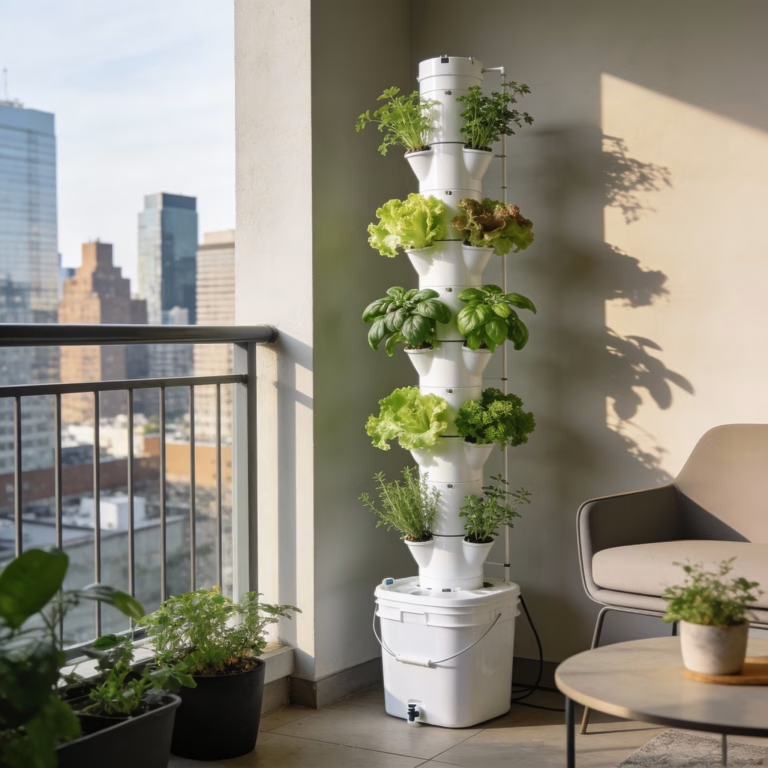
These tools pair well with vertical oriented system types like NFT channels and tall DWC buckets because they let you stack plants upward instead of outward.
Hydroponic growing media comparison → clay pebbles, rockwool, coco, and foams
What pruning and hygiene tools do you need?
Regular pruning encourages better airflow and directs energy into productive parts of the plant.
Sharp, clean pruning snips are far better than tearing leaves off by hand because they create smaller wounds and reduce disease entry.
Common maintenance tools:
- Pruning shears or snips
- Clean cloths or paper towels
- Food safe disinfectant or diluted hydrogen peroxide
- Spare scrub brushes for reservoirs and channels
Hydroponic shops also recommend preventive pest control tools like organic foliar sprays, sticky traps, and magnifying loupes for early detection.
Even though hydroponic systems often have fewer soil borne pests, flying insects and mites can still appear indoors.
Integrated pest management for hydroponics → prevention, monitoring, and treatment
How do tools differ by hydroponic system type?
The core monitoring and climate tools stay the same regardless of system, but plumbing parts change from method to method.
Knowing which tools matter for which systems helps you avoid buying parts you do not need yet.
Which tools are specific to DWC and Kratky systems?
Deep water culture (DWC) submerges roots in highly oxygenated nutrient solution using buckets or totes with net pot lids and strong aeration.
Kratky systems are a passive variant that skip pumps entirely by keeping a fixed air gap above the solution.
DWC specific tools:
- Light tight buckets or totes with drilled lids
- Net pots that fit the lid openings
- Powerful air pump and multiple air stones
- Optional water chiller or frozen bottle rotation in hot climates
These systems shine for leafy greens and basil because they are simple to build and maintain while delivering excellent oxygen levels to roots.
Which tools are specific to NFT and drip systems?
Nutrient film technique (NFT) runs a thin film of nutrient solution along gently sloped channels or pipes so roots can access water and air at the same time.
Drip systems deliver measured amounts of solution directly to the base of each plant through emitters.
NFT and drip tools:
- Channels or PVC pipes with a uniform slope back to the reservoir
- Drippers or small emitters for each plant site in drip builds
- Manifold fittings and small diameter tubing
- Fine mesh filters to prevent clogs
NFT is popular for small spaces because channels can be stacked vertically, while drip systems are often chosen for larger fruiting plants like tomatoes and peppers in media filled buckets or bags.
Which tools are specific to ebb and flow, wick, and aeroponics?
Ebb and flow (flood and drain) systems periodically flood a tray of plants and then drain it back to the reservoir using a timed pump cycle.
Wick systems rely on passive wicks that pull solution up into the media, and aeroponic systems mist bare roots in an enclosed chamber.
System specific tools:
- Flood table or tray and stand for ebb and flow
- Fill and drain fittings and overflow standpipes
- Absorbent wicks for simple wick systems
- High pressure pump and misting nozzles for aeroponics
Aeroponic builds offer fast growth but depend heavily on reliable pumps and clean, clog free nozzles, so they are usually best for advanced hobbyists who already trust their monitoring and maintenance routines.
Choosing a hydroponic system → match system type to space, budget, and time
How to assemble a basic hydroponic tools kit
Title: How to assemble a basic hydroponic tools kit
Description: A step by step process for choosing and organizing the essential tools needed to run a small indoor hydroponic system.
Materials and tools you will need:
- pH meter and calibration solution
- pH up and pH down
- EC or TDS meter
- Reservoir, submersible pump, air pump, and air stones
- Vinyl tubing and check valves
- Thermometer and hygrometer
- LED grow light and timers
- Net pots, growing media, and basic pruning snips
(I have everything you need here on my curated Amazon list here: https://amzn.to/4bx0n00)
- Define your grow space and system type
Measure your available space, ceiling height, and access to power and water, then decide whether you will start with DWC, NFT, drip, or a small ebb and flow tray.
Matching tools to a single starter system keeps your first kit affordable and easier to manage. - Purchase core monitoring tools first
Start with a reliable pH meter, pH adjustment solutions, and an EC or TDS meter, plus a simple thermometer and hygrometer combo.
Calibrate the meters according to the manufacturer instructions before any plants go into the system. - Set up the reservoir, pump, and plumbing
Install your reservoir, submersible pump, tubing, and any bulkhead or uniseal fittings needed to connect to your grow tray, channels, or buckets.
Test for leaks using plain water and confirm that flow rates and return lines work before adding nutrients. - Install aeration and check valves
Mount the air pump above the waterline if possible, then run airline tubing to air stones placed in the reservoir or DWC buckets and add check valves to stop backflow.
Power the air pump on and verify that fine bubbles are rising around the root zones. - Position lighting and set up timers
Hang your LED grow light so that it evenly covers the plant area, typically 12 to 24 inches above the canopy depending on the fixture.
Plug lights and pumps into timers and program daily light cycles and, if needed, flood and drain intervals. - Mix nutrient solution and dial in pH and EC
Fill the reservoir with clean water, add nutrients according to the product directions, and adjust the dose until the EC lands in the target range for your crop and growth stage.
Finally adjust pH into the 5.5 to 6.5 window using small additions of pH up or pH down, stirring between each change. - Prepare plant sites and supports
Fill net pots with your chosen growing media, insert seedlings or cuttings, and install any trellis netting or plant clips needed for vining or heavy crops.
Make sure roots have clear access to nutrient solution or moist media without being fully suffocated. - Create a simple maintenance and cleaning routine
Use your monitoring tools daily to check pH, EC, and climate, and keep a small notebook or digital log for readings and adjustments.
Schedule regular reservoir changes and use brushes and food safe disinfectant to clean components between crops.
Beginner DWC build guide → step by step bucket system instructions
FAQ: common questions about hydroponic tools
What is the absolute minimum tool list to start hydroponics?
At the bare minimum you can start a simple deep water culture or Kratky style system with a light tight container, net pots, growing media, a complete hydroponic nutrient, and a way to check pH.
However, adding an air pump, pH and EC meters, and a basic thermometer quickly pays for itself in healthier plants and fewer failures.
How much does a basic hydroponic tools kit cost?
A small starter kit for herbs and lettuce can often be put together for roughly the cost of a good aquarium setup, with the biggest line items being the LED light, meters, and pumps.
Many growers keep costs down by using repurposed food grade totes for reservoirs and focusing on a single system type instead of buying every accessory at once.
Do I really need both a pH meter and an EC meter?
Using both gives you visibility into two different problems: pH affects nutrient availability, while EC reflects how strong the solution is overall.
You can grow with only a pH test kit in very simple setups, but once plants get larger and feeding demands increase, an EC or TDS meter becomes one of the most valuable diagnostic tools you own.
How often should I check pH and EC in a home system?
Most hobbyists check pH and EC at least once per day, and more often in the first week after a reservoir change or when plants are maturing quickly.
Fast growing crops and small reservoirs drift faster, so daily checks catch problems early before leaves show deficiency or burn.
What hydroponic tools are most important in a hot or dry climate?
From experience running systems in hot, dry regions, tools that protect root zone temperature and humidity become critical: insulated reservoirs, strong aeration, fans, and sometimes frozen bottles to cool solution.
Desert growers also lean on hygrometers, humidifiers, and shade cloth paired with efficient LED lighting to avoid heat stress while still providing strong light.
What tools are especially useful in cold basements or northern climates?
In colder regions, small space heaters, insulated reservoirs, and accurate thermometers matter more, since nutrient solution can dip below the optimal range and slow growth or damage roots.
Growers in these climates often favor enclosed grow tents with good environmental monitoring so they can retain heat and humidity around the plants even when the house is cool.
How long before I see results from investing in better tools?
The impact of good monitoring and environment tools usually shows up within a single crop cycle, often within a few weeks.
Healthier roots, steadier growth, and fewer mysterious problems generally offset the cost of meters and timers compared to repeated crop failures.
What are the most common tool related mistakes beginners make?
New growers often underestimate the importance of calibration solutions and proper storage for their pH meters, leading to inaccurate readings and nutrient issues.
Another common mistake is using small, underpowered pumps or skipping check valves and strain relief on airlines and cords, which can cause flow problems or leaks at the worst possible time.
Can I reuse hydroponic tools between different systems and crops?
Most monitoring tools, pumps, lights, and even many plumbing parts can be reused across DWC, NFT, drip, and ebb and flow systems.
As long as everything is cleaned and disinfected between runs, reusing gear is an efficient way to expand or change systems without rebuying your entire toolkit.
Author note
This article is written from the perspective of a hydroponic grower who started systems in the heat and low humidity of Phoenix, Arizona and later rebuilt compact indoor gardens in the cooler, darker conditions of Central Michigan.
Multiple systems across both climates reinforced how much good tools and monitoring simplify hydroponics compared to guessing.
The focus here is on realistic gear lists that work in apartments, spare rooms, and small garages rather than on expensive, commercial scale equipment.
The goal is to help home growers build a toolkit that feels reliable and safe so they can focus on experimenting with new crops and system types.
Additional Resources:
- How to Run Multiple Hydroponic Systems in a Small Apartment Without Tripping Breakers or Spiking Your Power Bill
- YouTube – Hydroponic Gardening Gear I Can’t Live Without
https://www.youtube.com/watch?v=z6eRVtZIe0E - IGWorks – Nutrient and pH Chart for Hydroponic Fruits and Vegetables
https://igworks.com/blogs/growing-guides/nutrient-and-ph-chart-for-growing-hydroponic-fruits-and-vegetablesigworks - Oklahoma State University Extension – Electrical Conductivity and pH Guide for Hydroponics
https://extension.okstate.edu/fact-sheets/electrical-conductivity-and-ph-guide-for-hydroponics.htmlextension.okstate - YouTube – Top 10 Hydroponic Farming Tools: Essential Guide for Beginners
https://www.youtube.com/watch?v=eQoq6BHCJAo
Share this:

Discover more from Soil Free Harvest
Subscribe to get the latest posts sent to your email.








One Comment