7 Ways to Make Your Hydroponic Garden 100% Sustainable
Creating a sustainable hydroponic garden is a rewarding way to know that you are not only saving resources, but long-term it can be a cost-saving effort to keep growing healthy food at home.
Affiliate Disclosure: This article contains affiliate links. If you purchase through these links, soilfreeharvest.com may earn a small commission at no extra cost to you.
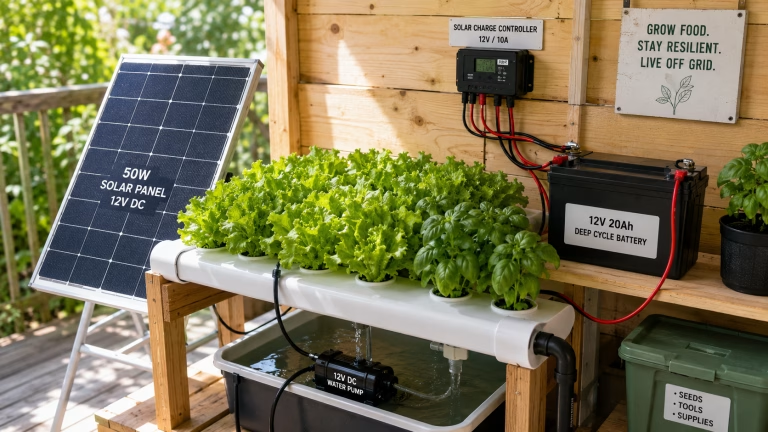
1. Power Your Hydroponic Garden With Solar
Hydroponic systems need constant power: pumps, aeration, lighting, and sometimes climate control. Tying this to fossil-fuel electricity is usually the single biggest sustainability gap.
Why solar + hydroponics is such a strong combo
- Hydroponics already uses up to ~90–98% less water than conventional soil farming, and requires far less land.
- Pairing it with solar panels creates a low-carbon, high-yield food production system that can operate almost anywhere (urban rooftops, arid regions, off‑grid sites).
-
Adding solar components – even small ones helps with sustainability and can be an affordable place to start:
- Solar Pond Aerator with Battery Backup – this can add aeration to your water for under $30
- Compact Programmable Solar Automatic Drip Irrigation Pump Kit can keep up to 20 plants watered for under $50
Practical steps
- Start with a load audit
- List all devices: pumps, air stones, LEDs, fans, heaters, controllers.
- Total daily kWh (most solar vendors will help you do this).
- Size a starter solar kit
- Many small systems can be powered with a simple 1–3 panel array and a small battery bank or solar generator.
- Consider a plug‑and‑play solar generator + panel kit if you’re renting or can’t mount a permanent array.
- Prioritize critical loads
- Put pumps and core controls on solar first; lights can be added later.
- Use timers and smart controllers to limit unnecessary run time.
Over time, shifting more of your system to solar can dramatically reduce both emissions and monthly power bills.
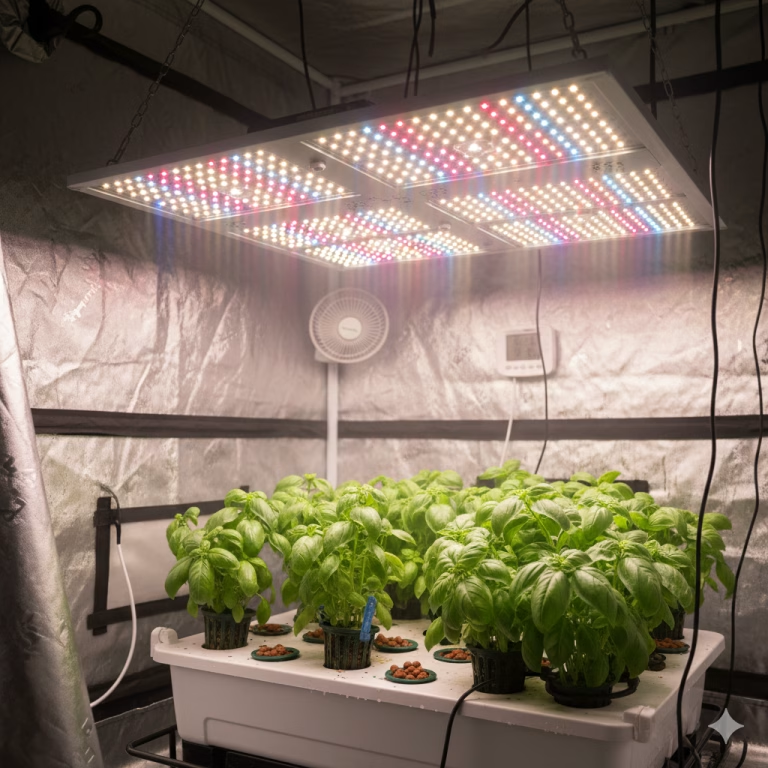
2. Use High‑Efficiency LED Grow Lights (The Right Way)
Lighting is often the largest energy draw in indoor and vertical hydroponics. Swapping outdated HPS or fluorescent fixtures for modern LEDs is one of the fastest sustainability wins.
Why LEDs are essential for a sustainable hydroponic garden
- Quality LED grow lights use around 50% less electricity than typical HPS fixtures for the same yield.
- They last 50,000+ hours, which means far fewer replacements and less waste.
- LEDs run cooler, reducing or eliminating the need for active cooling.
How to optimize LED sustainability
- Choose full‑spectrum LEDs
- Mimic natural sunlight; support all growth stages while maximizing energy efficiency.
- Look for high efficacy (μmol/J) and good coverage rather than just high wattage.
- Match light intensity to crop needs
- Leafy greens need less light than fruiting crops. Overshooting PAR wastes energy.
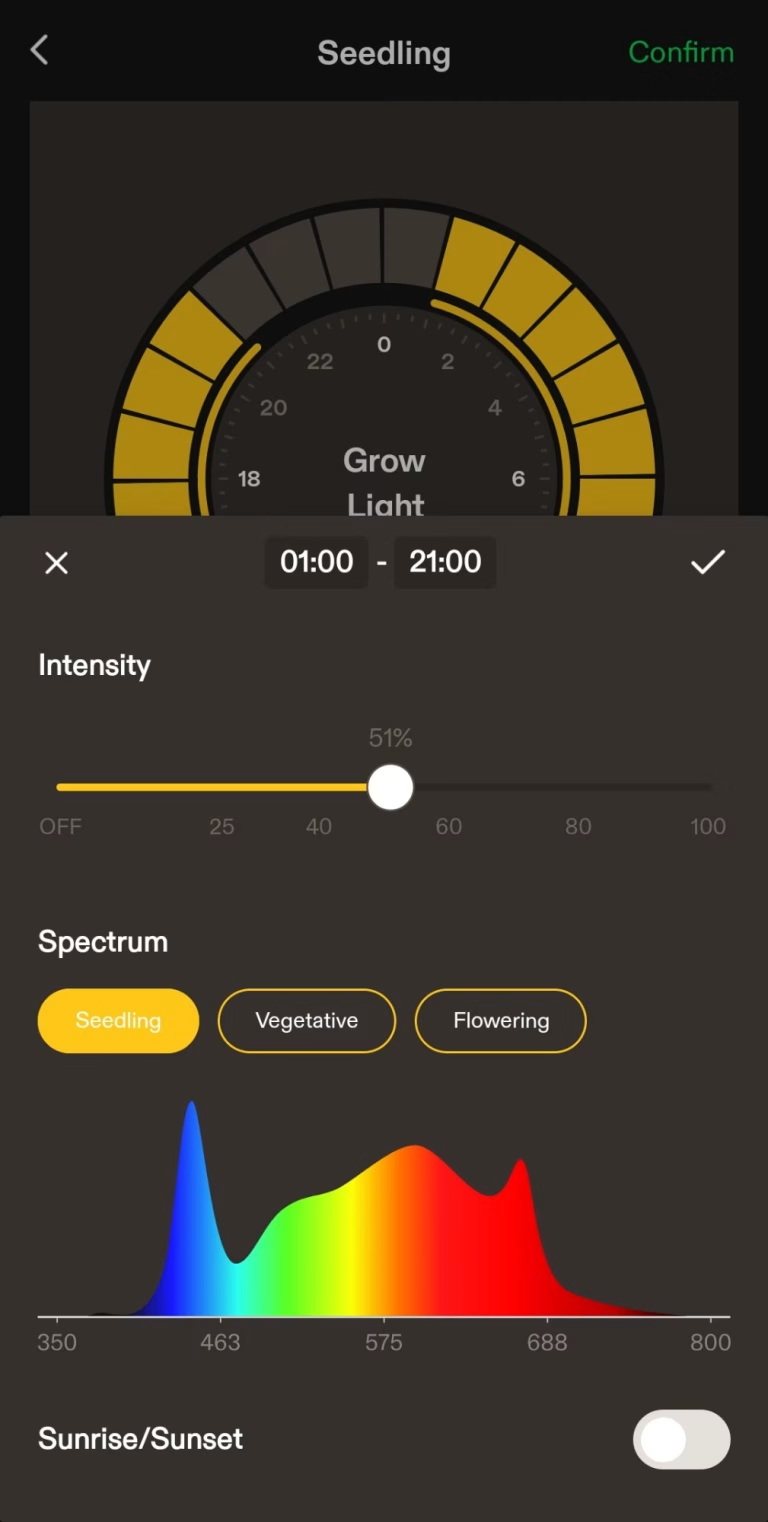
- Use dimmable drivers and separate veg/flower modes if available.
- Use smart controls
- Timers or Wi‑Fi plugs to run lights only when needed.
- Stagger light cycles across multiple systems to avoid peak-load spikes.
The combination of solar + LED is the backbone of a genuinely low‑carbon hydroponic setup.
3. Close the Water Loop and Minimize Losses
Water is where hydroponics already shines: many systems can use up to 90–98% less water than soil-based farming by recirculating nutrient solutions instead of letting water run off.
Best practices for water sustainability
- Recirculate whenever possible
- Use NFT, DWC, or recirculating drip systems that capture and reuse solution.
- Regularly top up and adjust EC/ppm instead of dumping frequently.
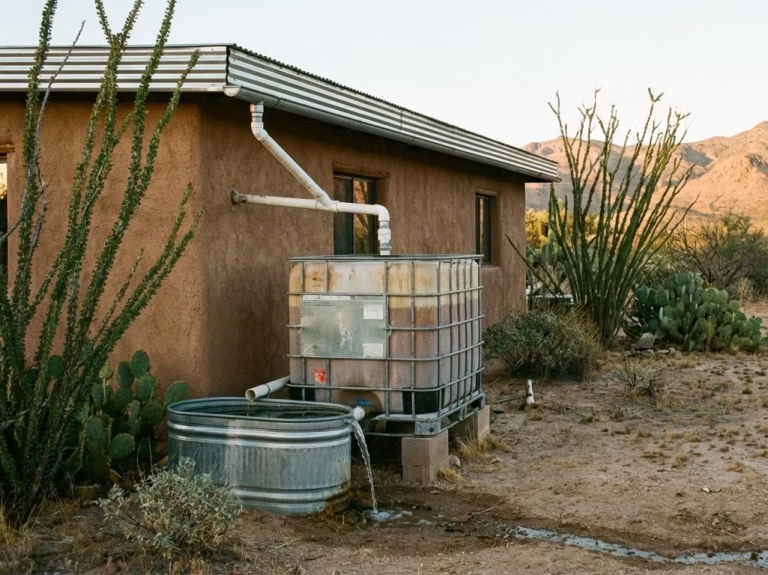
- Collect rainwater where legal and safe
- Pre‑filter (leaf screens, sediment filters) and then use carbon/UV treatment if feeding directly into your system.
- Prevent evaporation & leaks
- Use lids on reservoirs and opaque tubing.
- Check for slow leaks around fittings; even small drips add up.
- Dispose of spent nutrient solution responsibly
- Apply diluted solution to soil-grown ornamentals or lawns rather than dumping into storm drains.
- Rotate where you apply it to avoid salt buildup.
A tight, recirculating water loop is central to making your hydroponic garden truly sustainable – especially in dry or urban regions. For more detailed information on water conservation in hydroponics: SoilFreeHarvest – Water Efficient Hydroponics
4. Switch to Organic & Bio‑Based Nutrients
Most hydroponic nutrients are synthetic mineral salts. They work well, but their production can be resource‑intensive and energy‑heavy. Organic or bio‑based nutrient lines can reduce your system’s chemical footprint and sometimes improve flavor and nutrient density.
We recommend: FoxFarm Liquid Nutrient Trio: Organic-leaning for rich flavors and aroma, excellent for herbs.
Benefits of organic hydroponic nutrients
- Derived from natural sources (fish hydrolysate, kelp, molasses, plant extracts, compost teas).
- Often include trace minerals and beneficial compounds that can improve taste, aroma, and nutrient density.
- Lower risk of harmful residues entering waterways if mismanaged.
How to use organic nutrients successfully
- Choose products designed for recirculating hydroponics
- Some organic mixes can clog lines or encourage biofilm; look for products specifically formulated for NFT/DWC (e.g., OMRI‑listed hydroponic formulas).
- Boost the biology
- Use beneficial microbes, compost teas, or microbial inoculants to help mineralize organic inputs and prevent root disease.
- Monitor carefully
- Organic solutions can be more variable—test EC, pH, and watch roots closely.
- Increase aeration; organics and low oxygen don’t mix well.
Even if you don’t go 100% organic, replacing part of your nutrient regime with bio‑based sources is a meaningful sustainability win.
5. Choose Sustainable Materials and Growing Media
The most overlooked sustainability lever in home hydroponics is what your system is made from—and how long it lasts.
System materials
- Prefer durable, food‑grade plastics or recycled materials over flimsy single‑season items.
- Reuse totes, barrels, and food‑safe containers where possible.
- For framing and racks, choose recycled metal or FSC‑certified wood, sealed appropriately for humidity.
Growing media choices
Look for media that is:
- Reusable or long‑lasting – e.g., expanded clay pebbles, high-quality rockwool (if you commit to proper disposal), or modular vertical towers designed for years of use.
- Low-impact and locally available when possible – e.g., locally produced coco coir vs imported peat, or regionally sourced aggregates.
Reduce plastics in consumables
- Buy nutrients in larger refill containers to reduce packaging.
- Reuse net pots and trellis clips; avoid single-use plant tags and supports.
Material choices directly influence the lifecycle footprint of your garden and how often you send items to landfill.
6. Design for Zero Waste & Circularity
Truly sustainable hydroponic gardens are designed as mini circular economies, where outputs (even “waste”) become inputs for something else.
Practical circular strategies
- Plant and root waste → compost or vermicompost
- Spent roots and stems can be hot‑composted or fed to a worm bin.
- Finished compost can feed soil beds, container gardens, or community plots.
- Packaging → reuse or recycling streams
- Repurpose sturdy nutrient bottles for mixing small batches or storing concentrates.
- Coordinate with neighbors or local growers to bulk‑order supplies and reduce packaging per unit.
- Energy & heat recovery
- Use the residual warmth from lights to heat adjacent seed-starting shelves.
- In greenhouses, integrate thermal mass (water barrels, stone) to smooth out temperature swings and reduce active heating needs.
- Integrate aquaponics or bioreactors (advanced)
- Fish or insect systems can produce nutrient‑rich effluent that partially replaces synthetic nutrition.
- This further closes loops and reduces dependence on external fertilizers.
The closer you get to “nothing leaves your system as waste,” the closer you are to a 100% sustainable hydroponic garden.
7. Turn Sustainability Into a Business Advantage
If you sell produce, seedlings, or experiences, sustainability is not just “nice to have”—it’s a core business differentiator.
How sustainability increases profitability
- Premium pricing & brand story
- Consumers pay more for local, pesticide‑free, low‑carbon produce.
- A clear sustainability story (solar-powered, 95% less water, zero pesticides) becomes a powerful marketing hook.
- Lower operating costs
- Efficient LEDs, solar power, water recirculation, and durable materials reduce variable and replacement costs over time.
- Year‑round, reliable production
- Controlled hydroponic setups produce multiple crops per year, stabilizing revenue and smoothing out seasonal volatility.
Sustainability & business ideas
- Offer CSA shares or subscription salad boxes highlighting “grown with 95% less water and powered by the sun.”
- Host workshops and tours focused on sustainable food production; charge for education and experiences.
- Partner with local cafés or grocers that want a visible sustainability story on their menu or shelves.
Embedding sustainability into your business model protects you from rising resource costs and gives you a clear competitive edge.
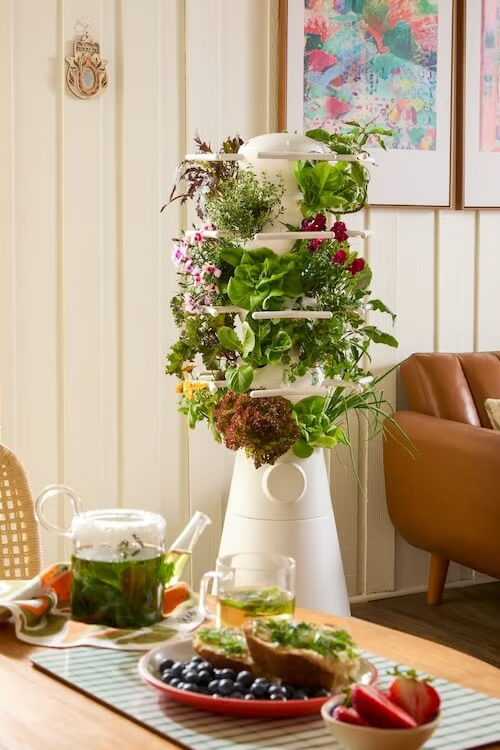
Eco-Friendly Garden Inspiration links
- Vertical, water-efficient systems
- Lettuce Grow’s Farmstand – vertical hydroponic garden using 95% less water than soil beds. Use code SOILFREEHARVEST for $25% off
- Nutraponics Hydroponic Garden Tower – space-efficient tower using ~90–95% less water and minimizing pesticide use.
5 Case Studies: Solar Hydroponic Farms & Indoor Systems Driving Sustainable Yields
1. Solar-powered hydroponic farm in Dubai
Bustanica – The World’s Largest Vertical Farm (Dubai, UAE)
URL: https://agrinextcon.com/turning-deserts-green-solar-powered-solutions/
Overview:
Bustanica, operated by Emirates Crop One, is a 30,000 sqm solar-powered vertical hydroponic farm that produces over 1 million kg of leafy greens annually. Located in Dubai’s harsh desert climate, it demonstrates how solar energy combined with hydroponics enables food security in arid regions.
Key Sustainability Wins:
95% less water than traditional farming
100% solar-powered climate control and hydroponic systems
Uses AI & IoT sensors to optimize nutrient and water use
Produces year-round, reducing food import dependency
2. Renewable energy hydroponic systems
Sundrop Farms (Port Augusta, Australia)
URL: https://agrinextcon.com/turning-deserts-green-solar-powered-solutions/
Overview:
Sundrop Farms operates a solar-powered hydroponic greenhouse in Port Augusta, South Australia, in one of the world’s sunniest regions. The system uses solar-thermal desalination to convert seawater into fresh water and powers all hydroponic growing and climate systems entirely with renewable energy.
Key Sustainability Wins:
Energy self-sufficient: 100% powered by renewable solar energy
Desalination via solar heat: Eliminates freshwater competition and enables coastal agriculture
Supplies fresh produce to Australia with minimal water footprint
Scalable model now inspiring similar projects across the UAE and arid regions globally
3. Off-grid solar indoor farming
Shenzhen Solar-Powered Indoor Vertical Farm (China) – Live Pilot Project
URL: https://indoorfarmsys.com/solar-powered-indoor-vertical-farming-a-shenzhen-case-study/
Overview:
A recent pilot in Shenzhen demonstrates a fully off-grid solar-powered indoor vertical lettuce farm. Using 16 × 550W solar panels (8.8 kW), LED grow lights, and hydroponics, the system achieved 100% renewable energy operation with zero grid electricity.
Key Sustainability Wins:
16-hour photoperiod LED lighting on solar power; 22W efficient tubes
90% water savings vs. traditional farming
Lettuce yields: 180–220g per plant, ~30-day cycle
Fully off-grid operation with smart climate controls (dehumidifiers + airflow)
Demonstrates viability of solar + indoor farming for urban food production.
4. Solar hydroponics success story India
Pritpal Singh’s Solar-Powered Hydroponic Farm (Punjab, India)
URL: https://thebetterindia.com/356971/hydroponics-farming-without-soil-sustainable-agriculture-farmer-increases-income-solar-energy/
Overview:
An MBA graduate turned farmer transformed his 2.5-acre ancestral farm into a thriving hydroponic operation. By integrating a 15 kW solar panel system, he now harvests 800 kg of leafy greens monthly—5× the yield of conventional farming—while reducing operational costs by 80%.
Key Sustainability Wins:
80% reduction in operational costs via 15 kW solar installation
5× yield increase for leafy greens compared to soil farming
Grows 25,000 green leafy plants in just 8,000 sq ft
Annual income increased 5× for leafy greens, 1.5× for vine crops
One-time setup investment (~₹60 lakh) yields recurring benefits year-round
5. Smart hydroponic greenhouse technology
TrueHarvest Farms (Belton, Texas, USA) – Smart Climate Control & Hydroponic Efficiency
URL: https://hoogendoorn.com/en/projects/trueharvest-farms-a-hydroponic-success-story-powered-by-iivo/
Overview:
TrueHarvest Farms operates a 180,000 sq ft controlled-environment hydroponic greenhouse specializing in leafy greens. Using smart climate management (IIVO system) and energy-efficient hydroponic design, they demonstrate how precision technology maximizes sustainability and profitability in North America.
Key Sustainability Wins:
AI-driven climate control reduces energy waste and optimizes growing conditions
Efficient water use: Hydroponics recirculation system
Labor savings & precision: Autonomous climate management frees growers to focus on crop quality
Quick Overview: The 7 Sustainability Levers
| # | Sustainability Lever | Primary Impact |
|---|---|---|
| 1 | Power with solar energy | Cuts carbon footprint & operating costs |
| 2 | Use efficient LED grow lights | Slashes electricity use & heat load |
| 3 | Close the water loop | Up to ~90–98% less water than soil growing |
| 4 | Switch to organic / bio-based nutrients | Reduces chemical footprint & improves crop quality |
| 5 | Choose sustainable materials & media | Lowers plastic waste and embodied carbon |
| 6 | Design for zero waste & circularity | Turns “waste” into inputs in a circular system |
| 7 | Make sustainability a business advantage | Higher margins, better branding, loyal customers |
Sustainability Checklist & Resource Guide (Downloadable Content)
Share this:

Discover more from Soil Free Harvest
Subscribe to get the latest posts sent to your email.