From Seed to Harvest: The 8 Stages Every Hydroponic Grower Must Know
Introduction
Growing plants in a hydroponic system offers unprecedented control over your crops’ environment, resulting in faster growth, higher yields, and year-round production. However, success depends on understanding the complete growth cycle from seed to harvest. Whether you’re growing tender leafy greens, robust tomatoes, or aromatic herbs, every hydroponic crop progresses through distinct stages that require specific management strategies.
This comprehensive guide breaks down the eight critical stages every hydroponic grower must master. Understanding these phases isn’t just helpful it’s essential for maximizing your yields, preventing common problems, and creating a sustainable growing operation. By the end of this article, you’ll have the knowledge to guide your plants through every phase of their lifecycle with confidence and precision.
Affiliate Disclosure: This article contains affiliate links. If you purchase through these links, soilfreeharvest.com may earn a small commission at no extra cost to you.
Stage 1: The Planning Stage – Laying the Foundation for Success
Before you plant a single seed, the planning stage sets the trajectory for your entire hydroponic operation. This often-overlooked phase separates successful growers from those who struggle with preventable problems.
During the planning stage, you need to make critical decisions about your system, crop selection, and resource allocation. Start by determining which hydroponic system type best suits your space and goals. The Deep Water Culture (DWC) system works excellently for leafy greens and herbs, while Nutrient Film Technique (NFT) systems excel with fast-growing crops. Ebb and Flow systems provide versatility for multiple crop types, and Drip systems work well for larger fruiting plants like tomatoes and peppers.
Research your target crops thoroughly. Different plants have vastly different requirements. Lettuce and spinach mature in 3-4 weeks, making them ideal for quick succession crops. Herbs like basil and cilantro are ready in just 2-3 weeks. Fruiting plants like tomatoes, peppers, and cucumbers require 8-10 weeks but reward you with substantial harvests. Understanding these timelines helps you plan crop rotations and maintain consistent production.
Calculate your lighting needs, nutrient requirements, and equipment costs. Gather all necessary supplies before you begin growing. This includes grow lights, pH testing kits, nutrient solutions, growing media, net pots, and monitoring equipment. Having everything on hand prevents mid-cycle disruptions that can stress your plants.
Document your system specifications, including tank volume, growing area dimensions, and system capacity. This baseline information becomes invaluable when troubleshooting problems or scaling your operation. The planning stage typically takes one to two weeks but saves countless hours of problems downstream.
Stage 2: Propagation – Starting Seeds and Establishing First Roots
Propagation is where your hydroponic journey truly begins. This stage involves germinating seeds and establishing the initial root system that will support your plants through their entire lifecycle.
Seed Germination Process
Most seeds cannot germinate directly in a hydroponic nutrient solution because submersion in water inhibits oxygen diffusion across seed membranes. Instead, seeds require a separate germination environment before transplanting into your hydroponic system.
Begin by soaking your seeds in pH 6.0 water for 60 minutes to boost germination rates and ensure hydration. This pre-soaking technique increases success rates and shortens germination time. After soaking, transfer your seeds to your chosen germination medium.
Rockwool cubes are the gold standard for hydroponic seed starting. Soak rockwool cubes in pH-balanced water (5.5-6.5) until fully saturated, then gently squeeze out excess water. The cubes should be damp but not dripping wet. Create small holes about twice the diameter of your seeds, place one or two seeds per hole, and cover lightly with surrounding rockwool. This balance of moisture and aeration creates the ideal environment for rapid root development.
Alternative germination media include:
- Coir pellets for biodegradable options with good moisture retention
- Peat pellets for established, reliable performance
- Oasis cubes for consistent results with excellent aeration
- Paper towel method for a quick, cost-effective germination test before full commitment
Optimal Germination Conditions
Temperature is critical during germination. Most hydroponic crops germinate best at temperatures between 65-85°F (18-29°C). Lettuce prefers the cooler end at 60-75°F and germinates in just 2-3 days. Tomatoes and peppers prefer warmer conditions around 75-80°F and take 7-14 days to germinate.
Maintain 70% relative humidity during germination. Use a humidity dome, plastic wrap, or enclosed germination chamber to maintain moisture levels. Once seeds show their first sprouts, reduce humidity slightly to prevent damping off a fungal disease that kills emerging seedlings.
Germination timing varies by species: most seeds sprout within 7-14 days, though some take up to 20 days. Check seeds daily and watch for the radicle (root) to emerge first, followed shortly by the shoot. This dual emergence signals that your seedling is ready for transplanting into your hydroponic system.
Propagation Duration: 5-20 days depending on species and conditions
Stage 3: The Seedling Stage – Building a Foundation for Robust Growth
The seedling stage begins when your sprouted seeds are transplanted into your hydroponic system and continues until your plants develop true leaves. This critical phase determines whether your plants establish strong root systems or struggle throughout their lifecycle.
Transplanting Seedlings
Once your seedlings have developed visible roots (typically 4-7 days for lettuce, 9-11 days for tomato), they’re ready for transplanting. At this point, roots should be as long as the plant is tall, and they should be white or off-white in color, indicating healthy development.
Transplant seedlings when they have developed true leaves the second set of leaves that appear more complex and characteristic of the mature plant, not the simple seed leaves (cotyledons) that emerged first. This milestone ensures the seedling can support itself through photosynthesis.
Use net pots with your chosen growing medium during transplanting. Many growers continue using rockwool cubes and nestle them into net pots filled with expanded clay pellets (hydroton) or rockwool pellets. This combination provides stability while maintaining excellent aeration around the roots.
Nutrient Management During Seedling Stage
The seedling stage requires a delicate nutrient balance. Young plants cannot handle full-strength nutrient solutions. Begin with heavily diluted nutrients at only 25% strength, maintaining TDS (Total Dissolved Solids) around 300 ppm at pH 5.8-6.0.
High nitrogen at this stage, while important for other growth phases, can actually harm seedlings. Instead, maintain balanced ratios that emphasize calcium, magnesium, and trace elements. Gradually increase nutrient strength each week, reaching 50-75% strength by the end of the seedling stage.
My go to is General Hydroponics Flora Series: Industry standard 3-part mix suitable for all growth stages.
Lighting for Young Seedlings
Seedlings require light, but not the intense illumination that mature plants demand. Position grow lights far enough away that seedlings don’t stretch excessively stretching indicates inadequate light intensity. However, place lights too close and you risk light burn.
LED grow lights provide the ideal spectrum for seedlings. Modern full-spectrum LEDs emit the perfect combination of blue light (for vegetative development) and red light (for root establishment). Start seedlings at 12-16 hours of light daily. Many growers use a 16/8 photoperiod (16 hours light, 8 hours darkness) to encourage rapid early growth.
Monitoring Root Development
Check your seedlings daily during this critical phase. Examine the nutrient solution level, as roots begin actively drinking water immediately after transplanting. Roots should descend into the solution within 24-48 hours of transplanting. If roots aren’t reaching the nutrient solution, lower the solution level slightly or ensure your humidity dome maintains moisture until roots extend.
Seedling Duration: 2-3 weeks depending on species
Stage 4: The Vegetative Stage – Rapid Expansion and Development
The vegetative stage is the most exciting phase for many growers. Your plants transition from delicate seedlings to vigorous, fast-growing producers as they focus entirely on biomass accumulation. Leaves and stems expand rapidly, establishing the framework that will support flowering and fruiting.
Understanding Vegetative Growth
During the vegetative stage, plants prioritize leaf and stem production, driven by nitrogen-rich nutrients and abundant light. This phase typically lasts 3-6 weeks, though fast-growing herbs may be harvest-ready after just 2-3 weeks of vegetative growth.
The vegetative stage represents the optimal time for pruning, training, and shaping your plants. Techniques like topping (removing the apical meristem), fimming (removing a portion of the apical meristem), and low-stress training (LST) encourage bushier, more productive plants with better light penetration throughout the canopy.
Nutrient Requirements During Vegetation
Nitrogen becomes your primary focus during the vegetative stage. High-nitrogen formulations support vigorous leaf production and stem elongation. Maintain TDS around 600-750 ppm (EC 1.2-1.5) with pH at 5.8-6.2. EC (electrical conductivity) readings provide a more precise nutrient strength measurement than TDS alone.
Keep EC and TDS within range by monitoring your nutrient solution every 2-3 days. As plants uptake nutrients, EC drops; as they drink water, minerals concentrate and EC rises. Top up with plain pH-adjusted water when levels drop from transpiration, and adjust nutrient formulations if concentrations drift outside target ranges.
Maintain proper ratios of secondary nutrients calcium, magnesium, and sulfur. Many commercial hydroponic nutrient solutions already include these, but monitor carefully to prevent deficiencies that become apparent only after plants suffer.
Lighting During Vegetative Growth
The vegetative stage demands robust lighting. Mature plants require 400-600 lumens per square meter (or 40-60 watts per square meter with LED grow lights). Position LED grow lights 18-24 inches above canopy height for most full-spectrum units, though specific recommendations depend on your light model’s specifications.
Use an 18/6 photoperiod (18 hours light, 6 hours darkness) or 24/0 for maximum growth during vegetative stage. Twenty-four-hour photoperiods eliminate any risk of accidental light cycle disruption, though they provide no dark period for plant rest. Many growers prefer 18/6 as a compromise that maintains rapid growth while allowing brief metabolic recovery periods.
Temperature and Humidity Management
Maintain temperatures between 68-78°F (20-26°C) during the light period, and cool down 5-10°F during dark periods to simulate natural day-night cycles. Higher temperatures accelerate growth and transpiration but increase water consumption and create heat stress risk.
Relative humidity should be maintained at 50-70% during the vegetative stage. This range supports vigorous transpiration while minimizing disease risk. Use fans to ensure air circulation the constant breeze strengthens stems and distributes CO₂ throughout the grow space. Many growers activate fans during the vegetative stage specifically to develop stronger plant architecture.
Fan and Air Circulation
Install at least one oscillating fan blowing across your plants. By the second week of vegetative growth, fans should run continuously during light periods. Air movement serves multiple functions: it strengthens stems, reduces localized humidity pockets that favor disease, distributes CO₂ for photosynthesis, and hardens plants for eventual transplanting outdoors (if applicable).
Vegetative Duration: 3-6 weeks for most crops; herbs may reach harvest in 2-3 weeks
Stage 5: Pre-Flowering and Bud Formation – The Transition Phase
The pre-flowering stage is when your plants transition from vegetative growth to reproductive mode. This phase signals a fundamental shift in plant metabolism and hormone balance. For growers, it represents an exciting turning point where careful management ensures abundant flowering and fruiting.
Recognizing Pre-Flowering Symptoms
Plants signal pre-flowering readiness through specific indicators. Many plants naturally respond to photoperiod changes as daylight shortens approaching autumn, internal signals trigger flowering. Others flower based on age or environmental triggers like temperature fluctuations or stress.
Watch for early signs of flower initiation: slower leaf production, slight color changes in the canopy, and the first appearance of specialized flowering structures. Some plants show these signs clearly; others transition more gradually.
Inducing Flowering with Light Cycles
For most fruiting hydroponic crops grown indoors, you control flowering by adjusting light duration. Most plants respond to a 12/12 photoperiod (12 hours light, 12 hours darkness) by initiating flowering. This dramatic light cycle reduction serves as a signal that the plant should shift from vegetative growth to reproductive function.
Consistency is critical maintain your 12/12 schedule without disruption. Even brief light leaks during dark periods can confuse plants and delay flowering. Use light-proof doors, cover light leaks, and ensure grow room darkness during the designated dark period.
Nutrient Adjustments During Transition
As plants enter pre-flowering, gradually shift from high-nitrogen vegetative formulas to more balanced bloom formulas. Bloom nutrients emphasize phosphorus and potassium while reducing nitrogen. This nutrient shift supports flower initiation and eventual fruit development.
Transition gradually over 1-2 weeks rather than switching abruptly. Some growers maintain both vegetative and bloom nutrients on hand, gradually increasing the bloom formula percentage while decreasing the vegetative formula percentage. This gradual transition prevents nutrient shock.
Increase TDS to around 850 ppm (EC 1.7) as plants enter bloom. These higher nutrient concentrations support the energy-intensive flowering process. However, some fast-maturing crops like herbs may not require this increase.
Temperature Adjustments for Flowering
Slightly increase daytime temperatures to 75-82°F (24-28°C) during early flowering. This warmth supports flower initiation. Some growers also use a slight temperature stress dropping nighttime temperatures to 60-65°F (15-18°C) to trigger more abundant flowering. This day-night temperature differential mimics natural seasonal changes.
Pre-Flowering Duration: Highly variable depending on plant species; some plants flower within days of the photoperiod change, others take 2-3 weeks
Stage 6: The Flowering Stage – Peak Nutrient Demands and Precision Management
The flowering stage is where fruiting plants develop the flowers that will eventually become your harvest. This phase demands precision in nutrient management, monitoring, and environmental control. Successful flowering directly determines your final yield quantity and quality.
Early Flowering Phase (Weeks 1-3)
During the first three weeks of flowering, plants often continue vegetative growth while simultaneously initiating flowers. Continue supporting this dual growth mode with adequate nitrogen and phosphorus. By week three, the first visible flower buds should appear.
Monitor your plants daily during early flowering. Look for white pistils (female flower structures) or developing flower clusters depending on your crop type. Watch water consumption carefully plants may continue drinking heavily as they support both growth and flower development.
Maintain TDS around 1,000-1,050 ppm (EC 2.0-2.1) during early flowering. Supply adequate calcium to prevent blossom end rot in fruiting crops. If growing tomatoes, a calcium-rich formulation becomes especially important. Keep relative humidity around 60% to support flower development without creating conditions favorable for bud rot.
Mid-to-Late Flowering (Weeks 4-7+)
As flowering progresses into weeks 4-7, plants should slow their upward growth and focus energy entirely on flower and fruit development. Buds swell dramatically, flower clusters become dense and sticky (if growing appropriate crops), and the canopy takes on a distinctive appearance.
By week 6-7, the plant’s growth should have virtually stopped. Instead, bud or fruit development dominates. Increase TDS to around 1,150-1,300 ppm (EC 2.3-2.5) to support this energy-intensive development. Some growers implement a “flush” at week 6 switching to a high-potassium formulation for the final weeks to encourage bud development and reduce excess nitrogen.
Reduce relative humidity to 40-50% during late flowering to prevent bud rot and mold development. Use fans to ensure air circulation. Some growers increase CO₂ levels during flowering if they have the equipment CO₂ enrichment to 1,000-1,500 ppm can boost yields, though it’s not essential for successful growing.
Pollination Considerations
For fruiting crops, ensure pollination occurs. Outdoors, insects handle this naturally. In indoor hydroponic systems, you must pollinate manually. Use a small paintbrush to transfer pollen between flowers, gently shake flowering plants twice daily to distribute pollen naturally, or use a small electric fan to spread pollen through air circulation.
Without pollination, flowers won’t develop into fruits and your harvest will be minimal or absent. This becomes especially important for tomatoes, peppers, cucumbers, and other fruiting crops.
Flowering Duration: 7-14 weeks depending on plant species; some crops flower faster, others require full duration
Stage 7: The Fruiting Stage – Final Development and Ripening
The fruiting stage encompasses the period after successful pollination when plants develop mature fruits ready for harvest. This phase can overlap with the end of the flowering stage but deserves focused attention for the specific management it requires.
Fruit Development Dynamics
After successful pollination, flowers develop into immature fruits. A fruiting tomato plant maintains 6-8 clusters of tomatoes at different development stages some just set, others ripening, others ready to harvest. Each cluster typically requires 6-9 weeks to develop from flower to ripe fruit, with additional clusters ripening every 6-12 days thereafter.
Provide consistent nutrient supply during fruiting. Potassium becomes increasingly important for fruit quality, size, and flavor. Maintain TDS around 1,100-1,200 ppm (EC 2.2-2.4). Continue monitoring water consumption carefully fruiting plants drink enormous quantities as developing fruits draw water and nutrients.
Nutrient Shifts for Quality Fruit
As fruits develop and approach ripeness, gradually reduce nitrogen while maintaining phosphorus and particularly potassium. This nutrient shift encourages fruit sugar development and ripening rather than continued vegetative growth. Many commercial growers use a specialized “late bloom” or “ripening” nutrient formula during this stage.
Monitor calcium throughout fruiting, especially in tomatoes, peppers, and squashes prone to blossom end rot. This condition appears as dark, sunken spots on the fruit’s bottom resulting from localized calcium deficiency despite adequate nutrient solution levels. Maintaining consistent moisture and adequate calcium prevents this problem.
Harvesting Early Ripening Signs
Begin harvesting fruits when they show ripeness signs appropriate to your crop. Tomatoes develop full color while remaining slightly firm. Peppers can be harvested green or allowed to fully color. Cucumbers are harvested while still young and tender rather than waiting for full maturity. Early harvest of ripe fruits encourages continued flower production on perennial crops.
Harvest regularly don’t allow over-mature fruits to remain on the plant. Removing ripe fruits signals the plant to develop additional flowers rather than allowing energy to accumulate in mature seeds.
Fruiting Duration: Variable; typically 6-9 weeks from fruit set to first harvests, with continued production for weeks or months thereafter
Stage 8: Harvest and System Cleanup – Completing the Cycle
The final stage encompasses harvesting your crop and preparing your system for the next growing cycle. This phase determines whether your system remains disease-free and efficient for future crops.
Harvesting Techniques
Harvest vegetables and herbs carefully to minimize plant stress. Use clean, sharp tools to avoid crushing tissue or spreading disease. For leafy greens, you can harvest outer leaves continuously while the plant continues producing, or harvest the entire plant at once. For fruiting crops, twist and gently pull ripe fruit, or use scissors to cut fruits free from the plant.
Harvesting triggers in plants vary by crop. Tomatoes yield best when harvested at full color maturity. Lettuce and greens develop best flavor when harvested before bolting. Herbs like basil produce most prolifically when harvested regularly before flowering. Understanding optimal harvest timing for your specific crops maximizes both quantity and quality.
System Cleanup and Sanitation
Once harvesting concludes, thoroughly clean and sanitize your hydroponic system before starting another crop cycle. This critical step prevents disease carryover and ensures optimal conditions for your next plants.
- Empty the system completely. Remove all growing media, root material, and organic matter.
- Inspect equipment. Check all tubing, fittings, pumps, and sensors for damage or wear.
- Clean all surfaces. Scrub growing trays, tanks, and equipment with a dilute bleach solution (1 part bleach to 10 parts water) or specialized hydroponic system cleaner.
- Replace growing media. While some media like rockwool can be sterilized and reused with careful cleaning, many growers prefer fresh media for disease prevention.
- Flush and refill systems. Completely drain and refill your nutrient solution with fresh water and new nutrients.
- Test all systems. Run pumps, verify aeration, and test all monitoring equipment before starting the next cycle.
Planning Your Next Cycle
Use insights from your completed cycle to plan improvements for your next crop. Document what worked well and what presented challenges. Were specific nutrients deficient? Did any disease or pest problems emerge? Did light intensity or photoperiod need adjustment?
Consider crop rotation for disease prevention and soil (or growing medium) health. Never grow the same crop in the same system continuously without breaks. Rotating between different crop families helps break disease cycles.
Harvest & Cleanup Duration: Varies by crop; typically 1-2 weeks for complete system preparation
Growth Stage Visual Guide – Recognizing Each Phase
Understanding what healthy plants look like at each stage helps you identify problems early and maximize growth. Here’s what to observe:
Stage 2 & 3: Germination Through Seedling
Your seedlings should display:
- White or pale roots extending into the nutrient solution
- Two seed leaves (cotyledons) emerging
- First true leaves appearing by the end of week 2-3
- Healthy green coloration without yellowing or purpling
Stage 4: Vegetative Growth
Look for:
- Rapid leaf production with new leaves appearing continuously
- Bright green foliage indicating adequate nitrogen
- Thick, sturdy stems
- No purple or reddish discoloration
- Healthy root development visible (if using a clear tank)
Stage 5 & 6: Flowering
Identify these signs:
- Flower buds appearing at leaf axils or plant terminals
- For fruiting crops: white or yellow flowers developing
- Leaves may darken slightly as nitrogen naturally decreases
- Root development slowing as resources shift to flowering
Stage 7: Fruiting
Watch for:
- Small green fruits developing from flower sites
- Fruits swelling gradually
- Full color development as fruits mature
- Leaves may show some yellowing as plants redistribute nitrogen to developing fruits
Recommended Grow Lights for Hydroponic Systems
Proper lighting is absolutely critical at every growth stage. Here’s what hydroponic growers need to know about selecting grow lights.
LED Grow Lights – The Modern Standard
LED (light-emitting diode) grow lights have revolutionized indoor hydroponic gardening. They offer several advantages that make them ideal for most growers:
Energy Efficiency: LEDs consume 40-50% less electricity than traditional HPS or Metal Halide lights while producing comparable light output. For growers running systems 18-24 hours daily, this energy savings translates to significant cost reduction.
Customizable Spectrum: Quality LED grow lights allow spectrum adjustment for different growth stages. Blue-spectrum LEDs (400-500nm) promote vegetative growth and compact plants. Red-spectrum LEDs (600-700nm) encourage flowering and fruiting. Full-spectrum LEDs mimic natural sunlight, supporting all growth stages effectively.
Low Heat Production: LEDs produce minimal infrared radiation, keeping grow rooms cooler and reducing cooling costs. This also allows placing lights closer to plants without heat stress, maximizing light intensity at the canopy.
Long Lifespan: Quality LED grow lights last 50,000+ hours (5+ years of continuous operation), far exceeding HPS bulbs (10,000 hours) and Metal Halide bulbs (6,000-10,000 hours). Fewer replacements mean lower maintenance costs.
Recommended LED Brands for Hydroponics:
- HLG (Horticulture Lighting Group) – Known for high PAR output and customizable spectrums
- Fluence Bioengineering – Specializes in full-spectrum output mimicking natural sunlight
- Gavita – Commercial-grade fixtures with exceptional reliability
- Mars Hydro – Affordable, efficient options for home growers
- Viparspectra – Budget-friendly full-spectrum options
HPS and Metal Halide Lights – Traditional Options
High-Pressure Sodium (HPS) and Metal Halide (MH) lights remain popular for specific applications despite higher operational costs:
HPS Lights: Produce warm, red-heavy spectrum ideal for flowering and fruiting. They create very high-intensity light but waste energy as heat. Requires cooling but delivers excellent fruit development and bud density.
Metal Halide Lights: Produce cooler, blue-heavy spectrum supporting vegetative growth and compact plants. Often combined with HPS lights for complete spectrum coverage through a crop cycle.
For most home hydroponic growers, however, modern LED technology provides superior performance at lower cost.
Lighting Recommendations by Growth Stage
- Seedling Stage: 200-300 lumens/m² at 12-16 hours daily
- Vegetative Stage: 400-600 lumens/m² at 18/6 photoperiod
- Flowering/Fruiting Stage: 600-1,000+ lumens/m² at 12/12 photoperiod
LED lights work at these intensity levels while running significantly cooler and cheaper than HPS alternatives.
Essential Seed Starting Supplies for Hydroponics
Successful propagation requires specific tools and materials. Here’s the complete equipment list for starting seeds hydroponically.
Growing Media
- Rockwool Cubes or Slabs: The industry standard. Pre-scored cubes hold exactly the right moisture balance. Available in multiple sizes from 1-inch starter cubes to larger blocks. Purchase 2-3x the number of seeds you plan to start for loss tolerance.
- Coir Pellets: Biodegradable option made from coconut coir. Expands when soaked, providing good moisture retention. Excellent for environmental consciousness but may require pH adjustment.
- Peat Pellets (Jiffy Pots): Traditional, proven option. Compressed peat expands when soaked. Slightly acidic requiring pH consideration but excellent for most seeds.
- Oasis Cubes: Foam-like material with excellent moisture retention and aeration balance. Perfect for uniform germination.
- Clay Pebbles (Hydroton): For larger seeds or when transitioning directly to clay pebble growing media. Less suitable for tiny seeds.
Environmental Control Equipment
- Seedling Heat Mat: Maintains 70-75°F for optimal germination. Non-negotiable for cool-season growing. Look for models with thermostat control. Typical cost: $25-75
- Humidity Dome: Creates a moisture-rich microclimate perfect for germination. Allows monitoring without removing the dome. Many include ventilation holes for humidity reduction as seedlings develop. Typical cost: $15-40
- Seedling Trays: Flat trays designed specifically for seed starting with drainage. Standard nursery trays (10″x20″) hold 50-72 seed cubes. Typical cost: $5-15 per tray
- Grow Lights: For seed starting, basic LED shop lights work adequately. Seedlings need less intensity than mature plants. Typical cost: $30-100
Nutrient and pH Testing Equipment
- pH Test Kit or Meter: Critical for maintaining proper pH during propagation. Digital pH meters offer accuracy and ease. Typical cost: $20-100
- TDS/EC Meter: Measures nutrient concentration. Essential for managing nutrient strength as seedlings develop. Typical cost: $20-60
- Distilled or Rainwater: For preparing rockwool and mixing nutrient solutions. City water often contains chlorine and inconsistent minerals.
Seed Starting Nutrient Solution
Begin with plain water or very diluted nutrients (100-150 ppm TDS) until true leaves emerge. Once true leaves develop, gradually increase to 300 ppm. Specialized hydroponic seed-starting formulas contain extra micronutrients but cost more than general hydroponic nutrients.
Propagation Tools
- Tweezers: For precise seed placement in growing media
- Clean Spray Bottle: For consistent moisture application during germination
- Labels/Markers: For identifying seed varieties and germination dates
- Seedling Trays with Drainage: Never start seeds in containers without drainage
Optional but Helpful Supplies
- Hydrogen Peroxide: 3% food-grade hydrogen peroxide soaked for one hour before germination increases success rates and prevents damping off disease
- Seedling Support Stakes: For supporting weak or damaged seedlings as they develop
- Humidity Monitor: Tracks relative humidity during germination (ideal: 70%)
Nutrient Deficiency Visual Reference Guide
Early identification of nutrient problems prevents permanent plant damage and yield loss. Learn these common deficiency symptoms appearing during various growth stages.
Nitrogen (N) Deficiency
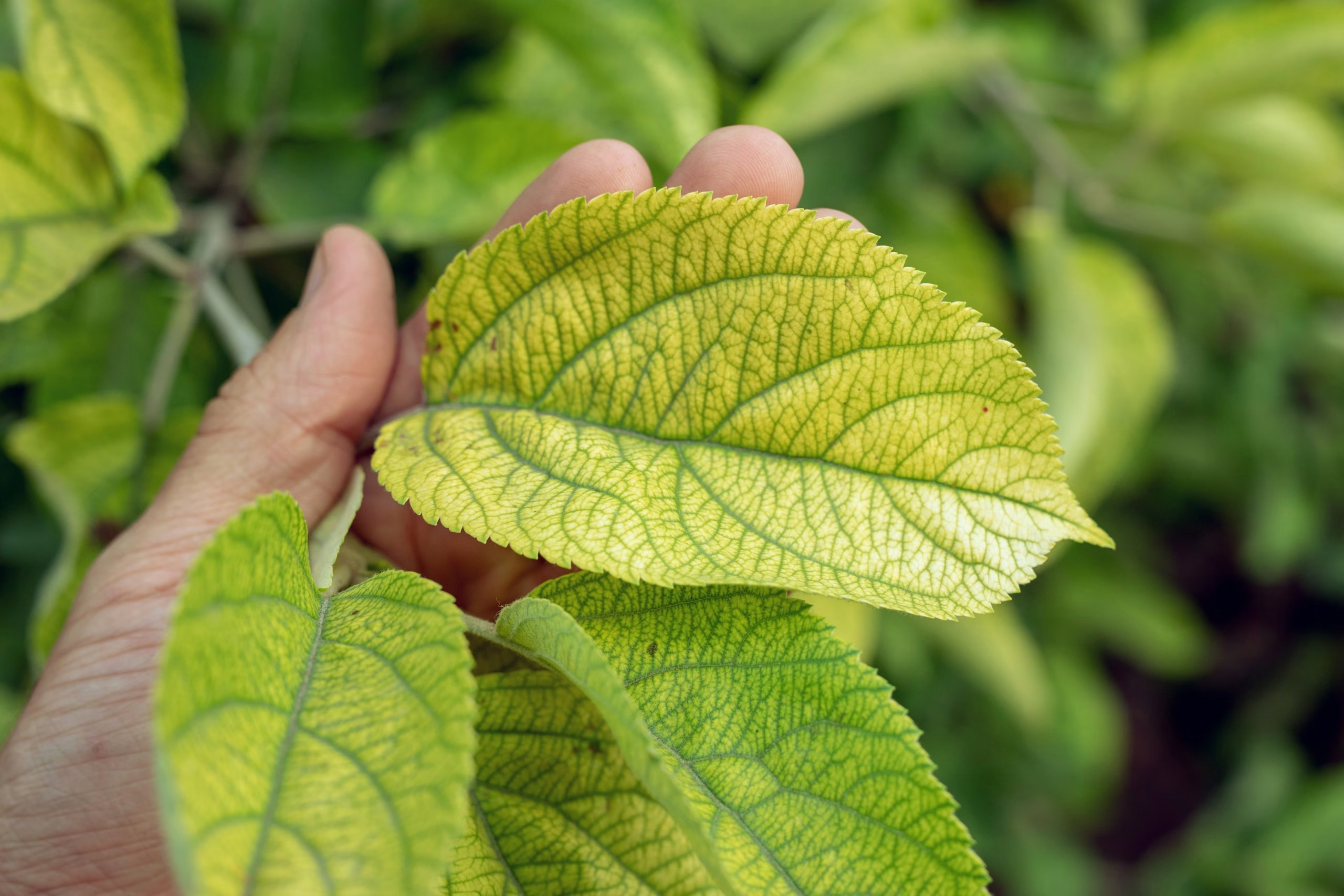
Appearance: Uniform yellowing of older, lower leaves, progressing to chlorosis (yellowing with green veins). Reduced growth within 2-3 weeks.
Where it appears: Always starts on lower, older leaves before affecting newer growth.
Prevention: Maintain high-nitrogen vegetative formulas during the vegetative stage. Reduce nitrogen during flowering but don’t eliminate it entirely.
Phosphorus (P) Deficiency

Appearance: Phosphorus deficiency is most often manifested as purpling of the leaves, particularly the leaf veins. Shorter plants with reduced growth. Leaf margins of older leaves show chlorotic (yellow) regions, followed by necrotic (brown, dead) spots after several weeks. Leaf curling downward may occur.
Where it appears: Lower, older leaves first, then progresses upward.
Prevention: Ensure balanced nutrient ratios. Don’t over-concentrate on nitrogen alone. Switch to bloom formulas with higher phosphorus when entering flowering.
Potassium (K) Deficiency

Appearance: Small necrotic spots appear on margins of older leaves, advancing to larger brown regions. Leaves curl downward. Plant growth slows significantly.
Where it appears: Leaf margins and tips of older leaves show damage first.
Prevention: Maintain adequate potassium throughout all growth stages. Increase significantly during flowering and fruiting. Monitor TDS carefully to ensure potassium concentration stays in range.
Calcium (Ca) Deficiency
Appearance: Numerous scattered necrotic spots appear on young leaves within 1-2 weeks. Margins and tips of newest leaves show distortion and necrosis. Growing tip may die entirely. Often appears as “blossom end rot” in tomatoes.

Where it appears: Young, new growth is affected rather than older leaves (opposite of most deficiencies).
Prevention: Maintain adequate calcium throughout growth. Ensure consistent moisture to allow calcium uptake (calcium moves only through water uptake). High nitrogen formulas can reduce calcium uptake.
Magnesium (Mg) Deficiency

Appearance: Light interveinal chlorosis yellowing between leaf veins while veins remain green, creating a netted appearance. Starts in mature leaves 10-14 days after deficiency begins.
Where it appears: Lower, older leaves show symptoms first, progressing upward.
Prevention: Include magnesium in your nutrient formulas (most commercial hydroponic nutrients include it). Monitor carefully as deficiency develops quickly once it begins.
Iron (Fe) Deficiency

Appearance: Interveinal chlorosis in young leaves yellowing between veins while veins stay green. In severe cases, leaves turn nearly white. Growth slows.
Where it appears: Young, new growth at top of plant.
Prevention: Maintain proper pH (5.8-6.2). Iron availability depends critically on pH; slightly lower pH increases iron uptake. Include iron in nutrient formulas.
Manganese (Mn) Deficiency

Appearance: Yellowing of upper, young leaves between veins (interveinal chlorosis) creating a netted appearance. May appear similar to iron deficiency but occurs on younger rather than older leaves first.
Where it appears: Upper, new growth affects first.
Prevention: Include manganese in nutrient formulas. Maintain proper pH as manganese availability depends on pH.
Boron (B) Deficiency

Appearance: Distorted, cupped new growth with slight marginal necrosis. As deficiency progresses, growing point becomes crowded with new leaves that don’t properly expand. Roots remain stunted with short primary roots.
Where it appears: Growing tip and new leaves show distortion.
Prevention: Include boron in trace element formulas. Don’t over-apply boron (toxicity occurs at only slightly higher concentrations than deficiency).
General Deficiency Prevention
Monitor plants daily, looking for these symptoms early. Early correction prevents permanent damage. Maintain consistent pH (5.8-6.2 for most crops) as pH directly affects nutrient availability. Perform water changes every 2-3 weeks to reset nutrient ratios and prevent compound deficiencies.
Environmental Conditions by Growth Stage – The Complete Reference
Planning Stage
- Temperature: Room temperature (60-75°F)
- Humidity: Not applicable
- Light: Not required
- Photoperiod: Not applicable
Propagation/Germination
- Temperature: 70-75°F for most crops (65-80°F depending on species)
- Humidity: 70% relative humidity
- Light: Optional to minimal (species dependent)
- Photoperiod: Not applicable
Seedling Stage
- Temperature: 70-75°F day / 65-70°F night
- Humidity: 60-70%
- Light: 12-16 hours daily
- Photoperiod: 12-16/8-12 (light/dark)
- Light Intensity: 200-300 lumens/m²
Vegetative Stage
- Temperature: 72-78°F day / 65-70°F night
- Humidity: 50-70%
- Light: 18-24 hours daily
- Photoperiod: 18/6 or 24/0
- Light Intensity: 400-600 lumens/m²
Pre-Flowering/Bud Formation
- Temperature: 75-80°F day / 60-65°F night
- Humidity: 50-70%
- Light: Transitioning to 12 hours
- Photoperiod: 12/12 (critical for most crops)
- Light Intensity: 500-800 lumens/m²
Flowering Stage
- Temperature: 75-82°F day / 60-65°F night
- Humidity: 40-60%
- Light: 12 hours daily
- Photoperiod: Strict 12/12
- Light Intensity: 600-1,000+ lumens/m²
Fruiting Stage
- Temperature: 75-80°F day / 65-70°F night
- Humidity: 50-60%
- Light: 12 hours daily
- Photoperiod: 12/12
- Light Intensity: 700-1,000+ lumens/m²
Harvest & Cleanup
- Temperature: Room temperature
- Humidity: Not critical
- Light: Not required
- Photoperiod: Not applicable
Complete Timeline: From Seed to Harvest
Week 1: Propagation begins. Seeds germinate and develop first roots. Success rate depends on species and conditions (5-20 days).
Weeks 2-4: Seedling stage. Seedlings develop true leaves and establish root systems. Gradually increase nutrients to 25-50% strength.
Weeks 5-10: Vegetative stage. Rapid leaf and stem production. Maintain high nitrogen, bright lighting at 18-24 hours daily.
Weeks 11-12: Pre-flowering/transition (optional for leafy greens and herbs; critical for fruiting crops). Switch to 12/12 photoperiod, change nutrients to bloom formula.
Weeks 13-20+: Flowering and fruiting. Flowers develop into fruits, buds swell, final maturation occurs. Maintain strict 12/12 photoperiod.
Weeks 21-24: Harvest period. Begin harvesting ripe produce. Plant continues producing additional flowers and fruits.
Week 25+: System cleanup and preparation for next cycle.
Conclusion: Mastering Your Hydroponic Journey
Understanding these eight essential growth stages transforms you from a gardener following vague instructions into a true hydroponic cultivator with scientific knowledge backing every decision. Each stage builds on the previous, with proper management at early stages determining your ultimate success.
Success in hydroponics comes from consistency. Maintain stable pH and nutrient levels. Provide appropriate lighting intensity and photoperiod for each stage. Monitor daily. Address problems immediately. Document everything so you can improve with each successive crop.
Your first crop teaches you valuable lessons. Don’t expect perfection. Instead, expect continuous improvement. With each cycle, you’ll become more skilled at recognizing plant needs, adjusting environmental conditions, and ultimately producing abundant, high-quality harvests.
The investment in understanding these stages pays dividends for years. Start with one crop, master the eight stages, then scale your operation with confidence. Your hydroponic garden awaits and now you have the complete roadmap from seed to harvest.
Quick Reference Chart – The 8 Stages At a Glance
| Stage | Duration | Key Focus | Nutrients | Lighting |
|---|---|---|---|---|
| Planning | Variable | Prep & setup | N/A | N/A |
| Propagation | 5-20 days | Germinate seeds | Plain water | Minimal |
| Seedling | 2-3 weeks | Root establishment | 25-50% strength | 12-16 hrs |
| Vegetative | 3-6 weeks | Leaf & stem growth | High nitrogen | 18-24 hrs |
| Pre-Flowering | Variable | Transition | Reduce N, increase P/K | 12 hrs |
| Flowering | 7-14 weeks | Flower development | Bloom formula | 12 hrs |
| Fruiting | 6-9+ weeks | Fruit maturation | High K, maintain | 12 hrs |
| Harvest & Cleanup | 1-2 weeks | Collection & reset | N/A | N/A |
About Successful Hydroponic Growing
Hydroponic gardening rewards knowledge and attention. By understanding the complete growth cycle from seed through harvest, you gain the ability to troubleshoot problems before they devastate your crops. You’ll recognize nutrient deficiencies instantly. You’ll know precisely when to adjust your lighting photoperiod. You’ll understand why your plants behave the way they do at each stage.
This comprehensive knowledge separates successful hydroponic growers from frustrated beginners. Master these eight stages, and you master hydroponic growing. Your journey from seed to harvest becomes predictable, manageable, and increasingly rewarding with each successive crop.
Start your hydroponic adventure today with confidence, knowing you understand every critical phase your plants will encounter. Success awaits.
Share this:

Discover more from Soil Free Harvest
Subscribe to get the latest posts sent to your email.