Hydroponic System Cost Breakdown: Budget Planning for Home Growers in 2025
Introduction: What Does It Really Cost to Start Hydroponics?
The total cost to set up a hydroponic system ranges from as little as $40 to over $15,000, depending on your goals and complexity level. For most home growers, a beginner-friendly system costs $100-$300 upfront, plus $15-$40 monthly for electricity and nutrients. The key is matching your budget to your available space and crop selection, then factoring in both one-time hardware costs and recurring operational expenses.
TL;DR: Start small with a DIY Kratky system ($50) or basic DWC kit ($150) for herbs and leafy greens; budget $20-$40/month for ongoing costs; expect payback in 2-4 years if growing high-value herbs or greens regularly.
Affiliate Disclosure: This article contains affiliate links. If you purchase through these links, soilfreeharvest.com may earn a small commission at no extra cost to you.
What Is a Hydroponic System and Why Does Cost Matter?
Hydroponics is a method of growing plants without soil, instead delivering nutrients directly through a water solution to plant roots. Unlike traditional gardening, the cost structure of hydroponics shifts from land and soil to equipment, electricity, and nutrient solutions. Understanding this cost distribution helps you choose the right system for your situation and avoid overspending on features you won’t use.
Cost becomes critical because hydroponic systems require an initial hardware investment and ongoing operational expenses that don’t exist in conventional outdoor gardening. Small mistakes like buying an oversized system for a studio apartment or choosing high-maintenance equipment when you’re a beginner can quickly waste money. Conversely, selecting the right system at the right price point can deliver significant returns through fresh food production or even passive income for apartment gardeners.
Initial Setup Costs: Understanding Your Budget Tiers
How Much Does a Hydroponic System Cost to Buy?
Ready-made hydroponic systems fall into three main price categories. Budget systems under $150 include simple countertop units and basic 5-gallon deep water culture (DWC) kits, ideal for growing 2-6 plants indoors on a shelf or table. Mid-range systems between $150 and $400 offer more growing capacity (8-24 plants), better light integration, and semi-automated features like timers and sensors. Premium systems above $400 feature AI controllers, full-spectrum LED arrays, vertical stacking capability for 30-120+ plants, and app-based monitoring.
The difference in price directly correlates to growing area, automation level, and crop variety. A $60 countertop herb garden works perfectly for someone growing basil and parsley in a kitchen; a $1,400 vertical tower system makes sense if you’re producing pounds of lettuce weekly to replace grocery purchases.
Beginner Budget Systems ($50-$150)
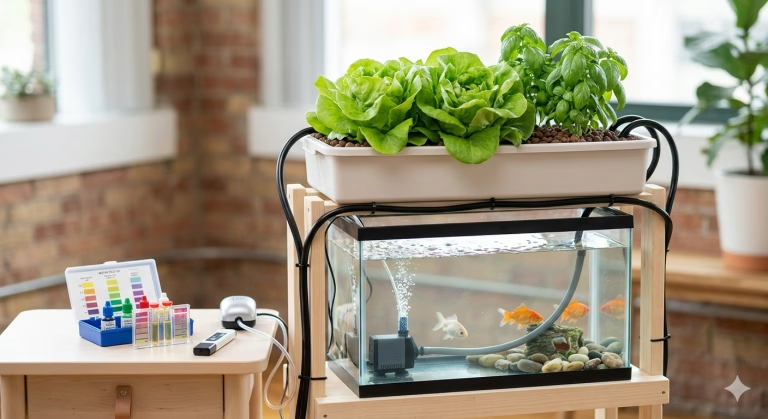
The lowest-cost entry point is the DIY Kratky method, a passive hydroponic approach requiring no electricity or pumps. A complete Kratky setup costs $40-$65 and includes a plastic bucket or mason jar ($10-$20), net pots ($5-$10), growing medium like clay pebbles ($10-$15), and nutrient solution ($15-$20). This system has zero operational costs beyond nutrients and works well for fast-growing crops like lettuce and basil on a 4-6 week cycle.
Basic pre-made DWC (Deep Water Culture) kits run $80-$150 and come ready to assemble with a small reservoir, air pump, air stone, tubing, net pots, and growing medium included. Popular budget models include the Ahopegarden 12-pod countertop system (This is by far my favorite countertop system and I have bought multiple as presents) is under $100 or generic Amazon DWC kits at $100-$120. These kits have minimal setup time (under 30 minutes for most users) and run on standard household electricity, costing about $8-$15 monthly for electricity alone.
Best Budget Hydroponic Kits Under $150 → best hydroponic kits review or budget hydroponic systems guide
Mid-Range Hobby Systems ($150-$700)
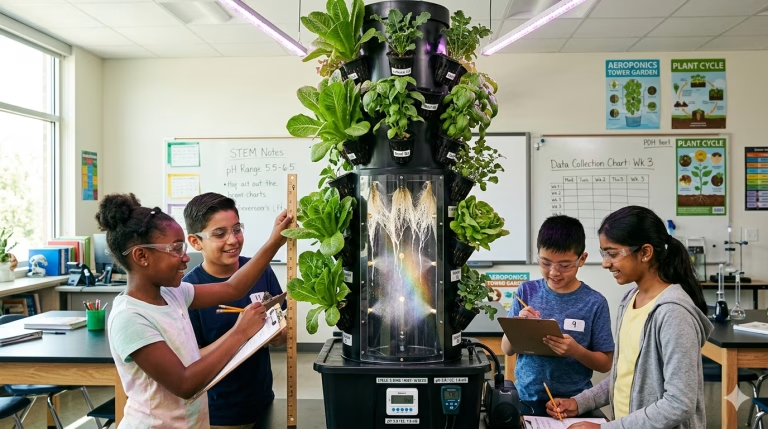
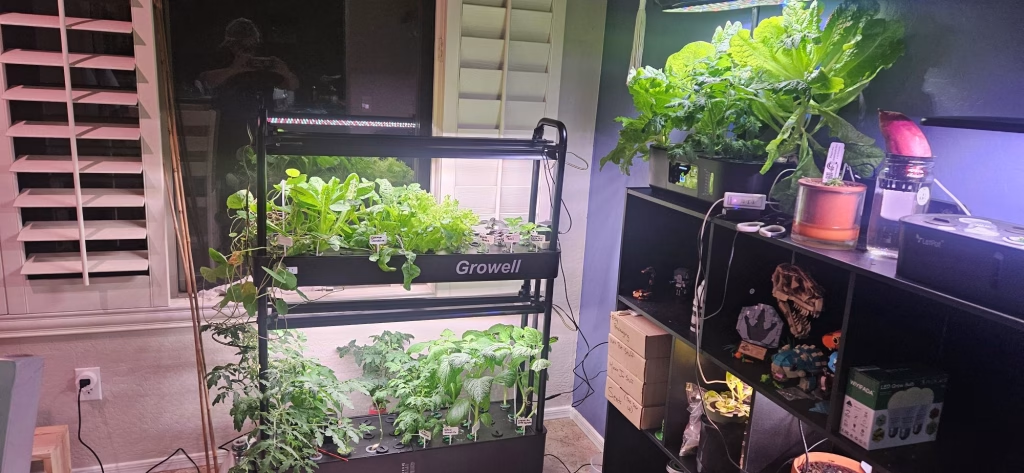
Hobby systems in this price band offer 10-25 plant capacity with better build quality and more control options. AeroGarden Bounty Elite models ($250-$350) include Wi-Fi connectivity, app-based lighting schedules, and higher-wattage LED arrays suited for fruiting crops. Vertical tower systems like the Mr. Stacky or Growell Tower System ($200-$350) stack growing trays vertically to maximize space in apartments or small rooms while maintaining low electricity use.
Rise Gardens Personal ($300-$350) and Lettuce Grow Farmstand (Use code SOILFREEHARVEST for 15% OFF) ($600-$1400) systems combine aesthetic appeal with functional design, making them suitable for visible kitchen spaces. These mid-range systems typically require more detailed assembly (1-2 hours), include better lighting for fruiting crops, and offer modular expandability to grow your system later without replacing the base unit.
Premium and Commercial-Grade Systems ($1000+)
Premium systems range from $1,000 to $15,000+ and target serious home growers, small commercial operations, and resellers. Vertical towers with 70-120 plant capacity like Nutraponics ($1,500+) combine aeroponic misting with integrated LED lighting and climate control. AC Infinity AI Grow tents ($1,600+) are fully enclosed 5×5 ft systems with professional-grade LED panels and AI-controlled airflow. These premium systems justify their cost through high yield density (perfect for CSA production) and long equipment lifespan (8-10 years with proper maintenance).
Commercial RDWC (Recirculating DWC) systems for 9 buckets cost around $2,800 and are designed for continuous production of high-value crops like microgreens or specialty herbs.
DIY Build Costs vs. Pre-Made Kits: Which Saves Money?
Building your own system from hardware store parts typically costs 20-40% less than buying equivalent pre-made kits, but requires research, planning, and comfort with basic assembly. A YouTube builder’s 3-tier ebb and flow system with rails, lighting, pumps, and reservoir totaled approximately $1,400 in materials, while commercial equivalents cost $1,600-$2,000. For smaller builds, the savings are more modest.
A DIY mini 5-gallon DWC system costs $30-$100 with a grow light, while a commercial equivalent runs $150-$200. The DIY advantage shrinks with smaller systems because shipping and bulk pricing on commercial kits offset the markup. However, DIY projects offer customization; you can choose exactly which lights, pumps, and containers match your space, sometimes reducing costs significantly.
Pros of DIY:
- Custom sizing and configurations
- Lower total cost for large systems
- Full learning experience
- Easier to repair or upgrade individual components
Cons of DIY:
- Requires research, planning, and tools
- Potential for costly mistakes
- No manufacturer support or warranty
- Higher time investment
Pros of Pre-Made:
- Quick setup (30 minutes to 2 hours)
- Manufacturer warranty and support
- Tested component compatibility
- Easier troubleshooting
Cons of Pre-Made:
- Higher upfront cost
- Less customization
- Limited expandability for some models
Ongoing Operating Costs: Monthly and Annual Expenses
Electricity Costs by System Size
Electricity is typically the largest monthly operating expense for indoor hydroponic systems. A small countertop system with 1-2 LED grow lights and a small air pump uses approximately 1.75 kWh daily, costing about $8 per month at average US electricity rates ($0.15/kWh). A medium garage setup with 4-6 plants, a 300W LED, heater, and pump uses 7.54 kWh daily or roughly $34/month. Large home farms with multiple tiers and full-spectrum lighting can reach $140/month.
The electricity cost calculation follows this formula: Wattage of all equipment × Hours per day ÷ 1000 = Daily kWh. Multiply by your local electricity rate to find monthly cost. Most home growers can reduce electricity costs by 20-30% by using energy-efficient LED lights instead of older T5 fluorescents, using timers to limit light hours to what plants actually need (14-16 hours for greens), and choosing appropriately sized pumps rather than oversized models.
Outdoor or greenhouse hydroponics eliminates indoor lighting costs entirely, dropping energy expenses to under $5/month for pump operation alone.
Nutrient Costs
Hydroponic nutrient solutions cost $1-$4 per growing cycle for small home systems. A standard nutrient bottle ($15-$30) typically lasts 3-6 months depending on system size and plant count. Large DIY or commercial systems budget $300-$1,000 annually for nutrient solutions. The cost per plant decreases with system size due to economies of scale; a 5-gallon DWC might use $1 of nutrients per cycle for 4 plants, while a 50-plant tower system uses $15-$25 per cycle or $0.30-$0.50 per plant.
Advanced growers who use two-part nutrient systems (separate macro and micro formulas) or specialized additives for specific crops may spend $50-$100 monthly, but basic all-in-one nutrient solutions are considerably cheaper. Buying nutrients in bulk from wholesale suppliers can cut costs by 40-50% for larger systems.
Water and Maintenance Costs
Water costs are minimal for most home hydroponic systems, typically $0-$10 monthly for top-offs and system maintenance. The primary water expense comes from periodic full system flushes and refills (every 3-4 weeks for most systems), which use 20-100 gallons depending on system size. In water-scarce regions like Arizona or California, this may add $5-$15/month to costs.
Maintenance costs include replacement air pump stones, tubing, filters, and occasional equipment repairs. Budget $50-$200 annually for small systems and $500-$2,000 for larger operations. Air pump replacements run $15-$30, grow light replacements (every 2-3 years) cost $50-$300, and water pump replacements cost $20-$100 depending on GPH rating and quality.
Growing Media and Supplies
Growing media like clay pebbles or coco coir costs $10-$20 per bag and is reusable for multiple crop cycles (typically 3-5 harvests before needing replacement). A small home system requires one bag per year, costing $10-$20 annually. Replaceable supplies like net cups ($15-$30 per 50-pack), rockwool cubes, or starting pods cost $10-$30 per cycle but last many grows if stored properly.
pH testing kits and meters cost $15-$50 initially and don’t need replacing unless damaged. Calibration solutions for digital meters cost $5-$10 per bottle annually.
Annual Operating Cost Summary
| Cost Category | Small System | Medium System | Large System |
|---|---|---|---|
| Electricity | $96-$144 | $400-$500 | $1,500-$2,000 |
| Nutrients | $12-$48 | $300-$600 | $1,000-$5,000 |
| Water & Maintenance | $0-$120 | $100-$300 | $500-$2,000 |
| Growing Media & Supplies | $20-$60 | $50-$150 | $200-$500 |
| Total Annual | $128-$372 | $850-$1,550 | $3,200-$9,500 |
System Type Comparison: How Cost Varies by Method
Deep Water Culture (DWC) vs. Nutrient Film Technique (NFT) vs. Ebb and Flow
Deep Water Culture (DWC) is the most affordable active system for beginners. Basic components cost $150-$200 for a DIY multi-bucket setup or $80-$150 for a pre-made kit. Plants’ roots are suspended in oxygenated nutrient solution, requiring an air pump and air stones for oxygen delivery. Monthly operating costs run $10-$20 for electricity and nutrients combined. DWC excels for leafy greens and herbs on 4-6 week cycles; its main drawback is sensitivity to temperature fluctuations and power outages.
Nutrient Film Technique (NFT) systems cost $200-$400 to build DIY or $300-$600 for commercial kits. Nutrient solution flows continuously over plant roots in angled channels, providing excellent water efficiency but requiring more precise calibration. NFT offers faster plant growth and uses less water and nutrients than DWC, reducing annual operating costs by 15-20%, but pump failures can quickly damage crops. NFT works best for experienced growers optimizing productivity per square foot.
Ebb and Flow (Flood and Drain) systems cost $300-$1,000 depending on size and complexity. Growing trays flood with nutrient solution on a timer, then drain back to a reservoir. Ebb and flow systems are more forgiving of minor mistakes than NFT and support a wider crop variety including fruiting plants, but require more maintenance and have higher operational costs due to larger reservoir volumes and more frequent pump cycles. Monthly electricity costs typically run $20-$40 for medium systems.
Kratky Passive Systems cost $40-$65 to build and have zero operational electricity costs, making annual operating expenses just $12-$48 for nutrients. The trade-off is limited growing time (40-50 days maximum per cycle for most crops) and inability to grow large or long-season plants. Kratky is ideal for short-term experiments or balcony growers in apartments without available electrical outlets.
Cost Comparison by System Type:
| System Type | Startup Cost | Monthly Operating | Best For | Plant Capacity |
|---|---|---|---|---|
| Kratky (DIY) | $40-$65 | $1-$4 | Beginners, greens, herbs | 4-16 plants |
| DWC (DIY) | $80-$150 | $10-$20 | Beginners, greens, herbs | 4-12 plants |
| DWC (Commercial Kit) | $150-$250 | $15-$25 | Home growers wanting ready-to-use | 6-12 plants |
| NFT (DIY) | $200-$400 | $15-$25 | Experienced growers, greens, high volume | 20-40 plants |
| Ebb and Flow | $300-$800 | $20-$40 | Variety crops, fruiting plants | 12-40 plants |
| Vertical Tower (Commercial) | $500-$2,000 | $30-$60 | Urban apartments, high-yield herbs | 30-80 plants |
| Premium AI Systems | $1,500-$9,000 | $50-$150 | Serious home farmers, small commercial | 40-120 plants |
DWC vs. NFT Hydroponics → Comparing Hydroponic System Types for Home Growers
Space Considerations and Hidden Costs
Apartment vs. Garage vs. Greenhouse Setup
Apartment growers face different cost implications than those with garage or greenhouse space. An apartment countertop system ($100-$300) fits on a kitchen shelf or under a 2×2 ft table, consuming minimal electricity and water with no external venting needed. However, apartment humidity and air circulation can require fans and dehumidifiers, adding $15-$30/month in electricity costs.
Garage setups allow for larger systems (20-50 plants) and better climate control but require basement or garage space rental value to be considered. A garage system might need heater, humidifier, or AC to maintain optimal 65-72°F temperatures, adding $30-$100/month in costs. However, the cost per plant decreases significantly; a 50-plant garage system spreads fixed costs across more production.
Greenhouse or outdoor systems eliminate indoor lighting costs entirely. A 100 sq ft greenhouse with passive hydroponic NFT or DWC beds costs $2,000-$5,000 to build or $3,000-$8,000 pre-fabricated, but operates at just $5-$15/month for pump electricity. Greenhouses maximize solar exposure and allow batch production of thousands of plants annually for CSA or farmers market sales, making per-plant costs incredibly low ($0.10-$0.30 per plant annually).
Hidden Costs Most Beginners Miss
Climate Control: Many apartment growers discover their system underperforms because room temperature fluctuates or humidity is too high. Fans ($20-$50), dehumidifiers ($100-$300), or small space heaters ($30-$80) become necessary. Total climate cost: $50-$200 initial plus $20-$40 monthly.
Testing and Monitoring Equipment: pH meters ($20-$50), EC/TDS meters ($15-$40), and thermometers ($5-$15) are one-time purchases, but calibration solutions and replacement probes add $10-$20 annually.
Pest and Disease Management: While hydroponic systems have fewer pests than soil gardens, fungal issues and occasional infestations require hydrogen peroxide ($5), beneficial bacteria ($20-$30), or neem oil ($15-$25). Plan $50-$100 annually for preventatives.
Drainage and Water Management: Systems occasionally leak or overflow. Plastic sheeting ($10-$30), waterproof trays ($30-$100), or drain pan kits ($20-$50) prevent water damage. One-time cost: $50-$150.
Backup Systems: Power outages can kill entire crops in 24 hours if aeration stops. Battery-powered air pump backups cost $80-$150 but are worth the investment in areas with unreliable power.
How to Calculate Return on Investment (ROI)
The Basic ROI Formula for Home Hydroponic Systems
Determining whether your hydroponic investment pays off requires tracking three numbers: upfront hardware cost, annual operating costs, and annual harvest value (food you no longer buy at stores).
ROI (%) = [(Annual Harvest Value – Annual Operating Cost) ÷ Initial Setup Cost] × 100
Example 1: Lettuce-focused system in Phoenix, Arizona
- Initial setup: $250 (DIY DWC kit with light)
- Monthly harvest: 4 lbs of premium lettuce (retail value $4/lb = $16/month × 12 = $192/year)
- Annual operating cost: $20/month electricity + $5/month nutrients = $300/year
- Annual net benefit: $192 – $300 = negative $108
- ROI: Negative in year one, but with optimized LED and bulk nutrients, costs drop to $15/month ($180/year), yielding +$12/year, or 4.8% ROI
This example shows why ROI matters most for high-value crops like basil, microgreens, or specialty herbs rather than budget lettuce.
Example 2: Basil and herb-focused system
- Initial setup: $180 (Kratky system, no electricity)
- Monthly harvest: 2 lbs fresh basil (retail $8/lb = $16/month × 12 = $192/year) + 1 lb mixed herbs (retail $10/lb = $10/month × 12 = $120/year) = $312/year total
- Annual operating cost: $0 electricity + $24 nutrients = $24/year
- Annual net benefit: $312 – $24 = $288
- ROI: ($288 ÷ $180) × 100 = 160% annual ROI
High-value herbs transform the economics of home hydroponics. Basil typically payback in 6-9 months and then generates pure profit.
Read our full ROI article here: Calculating Yield and ROI from Your Hydroponic System
Payback Timeline
Payback period is how long before your system generates enough savings to equal its upfront cost.
Payback Period (years) = Initial Setup Cost ÷ Annual Net Benefit
If your $300 system generates $150/year net benefit, payback occurs in 2 years. Most well-optimized home systems for herbs and leafy greens achieve payback between 18 months and 4 years.
[INTERNAL LINK: “Calculating Hydroponic Yield and ROI” → hydroponic ROI calculator or yield calculation guide]
Best Budget Crops for Faster Payback
Not all plants offer equal ROI. Crops with short growing cycles, high retail value, and low maintenance deliver the fastest payback.
Herbs are the ROI champions. Basil, mint, oregano, and chives retail for $6-$12 per ounce fresh at grocery stores. A single basil plant produces 2-4 oz per week after reaching maturity, with retail value of $12-$48/week. A $200 system growing 12 basil plants pays for itself in 1-2 months of regular harvest.
Leafy Greens including lettuce, spinach, kale, and arugula cycle every 28-35 days and yield 0.5-1 lb per plant. Retail value is $3-$8/lb organic. A system growing 20 heads of lettuce monthly generates $60-$160 in grocery value, covering costs in 2-4 months with optimized electricity and nutrients.
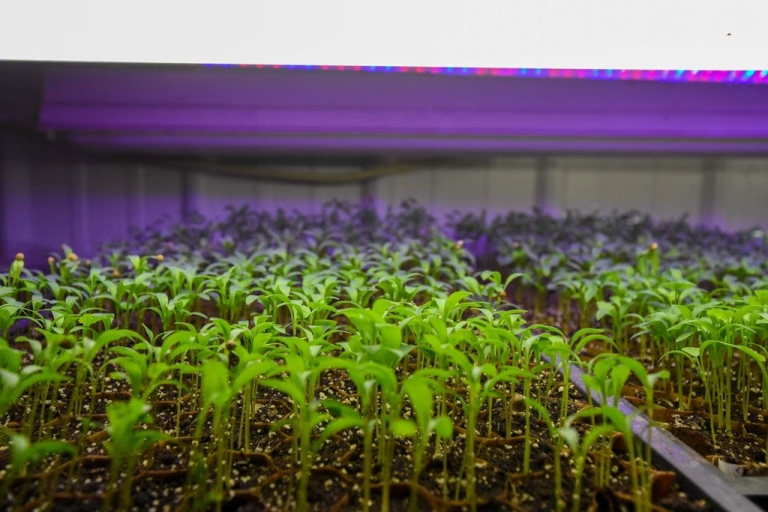
Microgreens in dedicated trays grow to harvest in 10-14 days, offering 15-20 harvest cycles annually. Retail microgreens sell for $15-$20/lb, and a small microgreen tray yields 0.5-1 lb per cycle. Initial investment is low ($80-$150 for a microgreen mat kit), making payback as fast as 1-2 months.
Fruiting crops like tomatoes, peppers, and strawberries have longer growing cycles (8-16 weeks) and higher electricity demands for flowering, extending payback to 6-12 months. However, they command premium retail prices ($3-$6/lb for quality tomatoes or strawberries) and produce for months, making long-term ROI very attractive.
Crops to avoid initially:
- Root vegetables (potatoes, carrots, beets): Poor root support in water, expensive to grow well
- Vining crops (squash, cucumber): Require extensive vertical space and heavy pruning
- Tree crops (fruit trees, nut trees): Years to first harvest, unrealistic for apartment systems
- Large plants (corn, wheat): Massive nutrient and light demands, poor yield per plant for home systems
How-To: Setting Up a Budget DWC System in 5 Steps
Materials and Tools Required
Hardware & Growing Components:
- 1x 5-gallon food-grade plastic bucket or 10-20 gallon reservoir
- 1x 400-600 GPH submersible water pump ($15-$25)
- 1x Aquarium air pump ($20-$30)
- 1x Air stone or bubble diffuser ($3-$5)
- 2-3x Net pots, 2-3 inches diameter ($0.50-$1 each)
- Growing medium: hydroton clay pebbles or rockwool ($10-$15)
- 20 feet of half-inch tubing ($8-$12)
- Nutrient solution (all-in-one hydroponic formula) ($15-$30)
Testing & Monitoring:
- pH test kit or meter ($10-$50)
- EC/TDS meter ($15-$30)
- Thermometer ($3-$8)
Optional but Recommended:
- LED grow light, 20-40W ($25-$80)
- Timer for light cycles ($8-$15)
- Plant supports or trellises ($5-$20)
Tools:
- Hole saw bit, 2-3 inch diameter ($5-$10)
- Electric drill
- Scissors or tubing cutter
- Measuring cup or syringe
Estimated Total Cost: $100-$180
Step-by-Step Setup
Step 1: Prepare the Bucket and Aerate
Thoroughly wash and rinse your 5-gallon bucket with clean water. Drill a 2-3 inch hole in the bucket lid (or create one from plywood if using an open bucket). Attach the air stone to the air pump using tubing, then place the air stone inside the bucket at the bottom. Run the air pump for 30 minutes before adding water to ensure the aeration system works. This step ensures roots will receive adequate oxygen, preventing root rot and fungal issues.
Step 2: Mix and Prepare the Nutrient Solution
Fill the bucket three-quarters full with tap water. Let tap water sit for 24 hours to allow chlorine to evaporate, then add your hydroponic nutrient solution following the bottle’s instructions (typically 1-3 teaspoons per gallon). Use your pH test kit or meter to check pH, adjusting to 5.5-6.5 for most plants using pH up or pH down solution. Measure TDS or EC using your meter, aiming for 800-1200 ppm for leafy greens or 600-800 ppm for herbs. This balanced nutrient environment maximizes plant growth and prevents deficiencies.
Step 3: Install and Secure Net Pots
Place net pots into the holes you drilled in the bucket lid, ensuring they fit snugly. Add growing medium to each net pot (clay pebbles or damp rockwool), filling until the pot is three-quarters full. This medium supports plant roots and allows them to access water while remaining oxygenated by air bubbles from the pump below.
Step 4: Transplant or Seed Your Plants
If transplanting seedlings from soil, gently rinse the soil from roots using lukewarm water and massage gently to expose the root system. Place the roots into the net pot growing medium, adjusting the medium level so roots make contact with the nutrient solution below but the plant crown remains dry. For direct seeding in rockwool, plant 2-3 seeds per starter cube, thinning to the strongest seedling after germination. For Kratky-style passive setups, ensure the root just barely touches the water surface; as plants grow, roots will develop and extend deeper.
Step 5: Monitor and Adjust Daily
For the first week, check water level and top off with additional prepared nutrient solution if the level drops below the net pot roots. Monitor pH and EC daily, making small adjustments (a few drops of pH up/down) rather than large corrections. Once plants establish (roots visibly extending into the water), reduce monitoring to every 2-3 days. Keep the water temperature between 65-72°F; if your water gets warmer than 72°F, use a small aquarium chiller ($50-$100) or add frozen water bottles to the reservoir. Maintain 14-16 hours of daily light using your LED grow light or positioned near a bright window.
Timeline to First Harvest: 28-35 days for most leafy greens and herbs from transplant; 45-60 days from seed.
Maintenance Schedule and Projected Costs
Weekly Tasks (5 minutes)
- Check water level and top off with fresh prepared solution
- Inspect plants for visible signs of nutrient deficiency (yellowing, brown spots, slow growth)
- Verify air pump is running and no tubing is kinked
- Monitor water temperature with thermometer
Cost: $0
Bi-Weekly Tasks (10-15 minutes)
- Test pH and EC/TDS, adjusting as needed
- Remove any dead leaves from plants
- Inspect for algae growth (green slime on water surface or tubing)
- Check that all equipment (lights, pump, air pump) is operating normally
Cost: $0-$2 (for pH adjustment chemicals if needed)
Monthly Tasks (30-45 minutes)
- Perform 25% water change by removing one-quarter of the nutrient solution and replacing with fresh prepared solution
- Wipe down light fixtures and bucket exterior to remove dust
- Deep clean air pump filter if present
- Examine roots (if using a clear bucket) for brown coloration or foul odor indicating root rot
Cost: $2-$5 (nutrients for top-off)
Every 4-6 Weeks (1-2 hours)
- Complete water change: drain the entire system, scrub the bucket interior with a soft brush and clean water (no harsh chemicals), rinse thoroughly, and refill with fresh nutrient solution
- Replace air stones if they become clogged (visible as reduced bubble flow)
- Clean all tubing by running a brush through it or soaking in a bleach solution (1 part bleach to 10 parts water) for 15 minutes, then rinsing thoroughly
- Sterilize all tools and supplies that contact the system
Cost: $5-$15 (replacement parts if needed)
End-of-Cycle (3 hours, every 6-8 weeks)
- Harvest mature plants
- Compost or dispose of growing medium
- Fully disassemble the system for inspection
- Replace any worn components (air pump, tubing, net pots)
- Clean reservoir and all containers with diluted bleach solution
- Sterilize growing medium if reusing or purchase new medium
- Reassemble for next growing cycle
Cost: $10-$50 (replacement parts, new medium if not reusing)
Annual Maintenance Cost Estimate: $50-$200 for small home systems
Common Problems and Cost-Saving Solutions
Root Rot: Prevention is Cheaper Than Replanting
Root rot, caused by fungi and bacteria thriving in warm, oxygen-poor water, can destroy an entire system overnight. Prevention costs nothing but attention; fixing it costs lost crops and replacement costs.
Prevention (Free): Keep water temperature between 65-72°F, maintain constant aeration with air pump and air stones, perform weekly water changes, and sanitize between growing cycles using diluted bleach (1:10 ratio).
Treatment (If It Happens): Remove affected plants immediately to prevent spread. Drain the entire system. Scrub all surfaces with a bleach solution, rinse thoroughly, and refill with fresh oxygenated nutrient solution. Treat remaining roots with a 1.5% hydrogen peroxide solution (dilute 3% store-bought peroxide with equal parts water) by submerging roots for 5 minutes. Add beneficial bacteria product (like Hydroguard) to future batches to prevent recurrence. Cost of treatment: $15-$30 plus lost harvest value.
Algae Growth: Block Light, Not Your Budget
Green algae grows on nutrient solution exposed to light, competing with plants for nutrients and potentially harboring root pathogens. Algae looks like green slime on the water surface, reservoir walls, or tubing.
Prevention (Free to $5): Cover your reservoir with an opaque lid or black cloth so no light reaches the water surface. This single step eliminates 90% of algae problems. If using clear tubing that allows light penetration, wrap tubing in black tape ($2-$3 for a roll).
Treatment: Drain the system, scrub all surfaces with a stiff brush and diluted bleach solution, then rinse thoroughly. Do not add new plants until the system is bleach-free. For reusable equipment, soak tubing in a 10% bleach solution for 15 minutes to kill spores. Cost: $0-$10 for bleach and supplies.
Nutrient Deficiency: Test First, Buy Later
Yellow leaves, purple stems, or stunted growth often signal nutrient deficiency, but misdiagnosis wastes money on unnecessary supplements.
Prevention ($15-$30 one-time): Invest in an EC/TDS meter to verify nutrient concentration stays in the 800-1200 ppm range for greens. Check pH weekly to ensure it stays 5.5-6.5; outside this range, nutrients lock up and become unavailable even if present in solution.
Treatment: Before adding anything, verify your EC/TDS reading is in the correct range. If it’s low (below 600 ppm), add more of your balanced nutrient solution. If it’s high (above 1500 ppm), perform a partial water change. If levels are correct but deficiency persists, identify which nutrient is missing: nitrogen (yellowing of oldest leaves first), iron (yellowing of newest leaves with green veins), or potassium (purple stems and leaf edges). Add a targeted micronutrient supplement ($8-$15 per bottle) in small doses rather than replacing the entire solution.
Equipment Failure: Budget for Replacement
Air pumps wear out every 1-2 years. Water pumps typically last 2-3 years. Grow lights degrade gradually over 2-3 years, producing dimmer light. Budget for replacements:
- Air pump replacement: $20-$30
- Water pump replacement: $20-$40
- Grow light replacement: $50-$300 depending on wattage
- Tubing replacement kit: $10-$20
- Air stones: $3-$5 each
Planning $50-$100 annually for replacement parts prevents expensive system downtime.
FAQ: Hydroponic System Costs and Planning
How much does it cost to start hydroponics as a complete beginner with zero experience?
A beginner can start with a $50-$100 Kratky passive system for herbs, requiring just a bucket, net pots, nutrient solution, and no electricity. If you want active systems with automatic aeration and lighting, budget $150-$300 for a basic DWC kit. Most beginners find a $150-$250 investment accessible and sufficient to grow useful quantities of lettuce or basil.
What’s the cheapest way to start if I live in an apartment with limited space?
The Kratky method costs $50-$65 and requires zero electricity or special ventilation, fitting on a windowsill or bookshelf. Countertop DWC systems like the Ahopegarden ($56-$100) are only slightly more expensive and offer better control. Both produce herbs and greens sufficient for cooking within 4-8 weeks.
How long before a hydroponic system pays for itself?
High-value crops like basil and specialty herbs typically pay back in 3-6 months of regular harvest. Leafy greens like lettuce take 6-12 months to break even due to lower retail value ($3-$4/lb). Budget systems optimized for electricity efficiency and bulk nutrient purchasing achieve faster payback than premium systems with higher operating costs.
Does growing hydroponically actually save money compared to buying groceries?
For high-value herbs (basil, mint, expensive specialty herbs), yes, systems typically generate positive ROI within 6-9 months and thereafter produce herbs at 50-75% lower cost than grocery stores. For standard lettuce and greens, hydroponics breaks even or slightly exceeds grocery store prices when including electricity and nutrients. The real savings come from food freshness, flavor quality, and convenience of harvesting for dinner 60 seconds before cooking rather than purchasing wilted week-old grocery store produce.
Are there hidden costs that surprise new growers?
Common surprises include climate control (fans, dehumidifiers, heaters adding $20-$40/month in apartments), replacement parts (pumps, lights, tubing costing $50-$200 annually), pest and disease management ($50-$100 annually), and testing equipment calibration solutions ($10-$20 annually). Budget an additional 20-30% on top of your estimated operating costs to account for these often-overlooked expenses.
Should I invest in an expensive automated system like AeroGarden or Gardyn, or build a budget DWC?
Expensive systems ($1,000+) justify their cost only if you’re growing seriously (20+ plants continuously) or prioritize convenience over savings. For occasional herb growers or first-time experimenters, budget systems ($100-$300) teach the fundamentals more effectively because you understand every component. Once you’ve successfully grown through 3-4 cycles and understand your needs, upgrading to a larger system makes sense.
What plants have the best ROI for home hydroponics?
Basil, mint, and specialty herbs ($8-$12/lb retail) offer 150-250% annual ROI. Microgreens (ready in 10-14 days, selling for $15-$20/lb) offer fastest payback. Leafy greens like lettuce and spinach offer moderate ROI (30-50% annually) and steady production. Fruiting crops like tomatoes and strawberries require more light and nutrients but command high prices ($4-$8/lb), achieving positive ROI after 6-12 months.
Can I expand my system cheaply if I want to grow more later?
Modular systems like vertical towers and vertical NFT systems are designed for expansion at lower incremental cost than single large systems. Adding a second DWC bucket costs just $50-$80 rather than buying an entire new system. Expanding from a $200 system to a 3x or 5x larger system typically costs 60-70% additional investment, creating economies of scale.
What’s the electricity cost for running lights 16 hours daily?
A single 40-watt LED grow light running 16 hours daily uses 0.64 kWh daily or 19.2 kWh monthly. At $0.15/kWh, this costs $2.88/month for lighting alone. Two lights cost $5.76/month. Adding air pump (typically 5-10W) and water pump (typically 10-30W) adds $1-$3/month. A small complete system runs $8-$12/month electricity, well below the cost of buying equivalent fresh produce.
Should I buy new growing medium or reuse it between cycles?
Clay pebbles and expanded clay can be sanitized and reused for 5-8 growing cycles if rinsed thoroughly between crops and soaked in a 10% bleach solution. This reduces medium costs to $2-$3 per cycle versus $10-$15 for fresh medium. However, contaminated medium from disease should be discarded. Rockwool and coco coir typically last 2-3 cycles before breaking down. The decision depends on whether you’re optimizing for cost (reuse) or disease prevention (fresh medium).
Is it worth buying an expensive pH meter, or can I use cheaper test kits?
Cheap liquid pH test kits ($8-$15) are accurate for casual home growers if used carefully. Digital pH meters ($20-$50) provide faster results and more consistency but require calibration every few months ($5-$10 for calibration solutions). For beginners, start with a cheap test kit and upgrade to a digital meter after 2-3 cycles if you find it cumbersome. The $10-$30 difference is less important than testing regularly.
Cost Breakdown Summary Table
Complete First-Year Cost for a Home Hydroponic Herb/Lettuce System
| Category | Low-Budget (DIY Kratky) | Mid-Budget (DWC Kit) | Higher-Budget (NFT Tower) |
|---|---|---|---|
| Initial Hardware | $50-$65 | $150-$250 | $500-$1,200 |
| Grow Light (if needed) | $0-$40 | $40-$80 | $100-$300 |
| Nutrients (Annual) | $12-$48 | $48-$100 | $150-$300 |
| Electricity (Annual) | $0 | $96-$144 | $300-$500 |
| Growing Media & Supplies | $20-$40 | $40-$80 | $100-$200 |
| Testing Equipment | $15-$30 | $15-$30 | $30-$50 |
| Replacement Parts | $0 | $0-$50 | $50-$150 |
| Total Year One | $97-$223 | $389-$734 | $1,230-$2,700 |
| Cost per Plant (20 plants) | $5-$11 | $19-$37 | $62-$135 |
| Expected Harvest Value | $100-$200 | $300-$600 | $1,000-$2,000 |
Conclusion: Making Your Hydroponic Investment Count
Hydroponic gardening costs range dramatically based on your goals, space, and crop selection. A committed home grower in an apartment can start producing herbs for cooking within weeks using a $100 budget system. A serious urban farmer optimizing for yield can build a 50-plant vertical system for $800-$2,000 and generate $2,000-$5,000 annually in personal fresh produce or direct sales.
The key to positive ROI is matching your system size and complexity to your actual growing commitment. Overbuying expensive automation features you won’t use wastes money; starting too small and upgrading frequently wastes money through poor economies of scale. Begin with a modest budget system ($100-$200), succeed through 2-3 growing cycles with that system, then intelligently upgrade based on what worked and what didn’t.
Focus first on high-value crops like basil, mint, and specialty herbs rather than budget greens. These high-margin crops deliver rapid payback and motivate consistent maintenance. After establishing a successful herb production cycle, expand to leafy greens for volume production or fruiting crops if you have adequate lighting and space.
Track your actual costs carefully through the first year: write down every nutrient purchase, electricity meter readings, equipment replacements, and harvest weight. This data transforms your second year into a far more profitable and optimized operation. Most successful home growers report breaking even on their initial investment within 18-36 months, then enjoying fresh food production at fraction of grocery store cost for years afterward.
Hydroponic System Maintenance Guide → maintenance schedule or troubleshooting guide
Hydroponic Nutrients Explained → nutrient solutions and PPM/EC guides
Author Note
This article is written from the perspective of a hands-on hydroponics practitioner based in Phoenix, Arizona, where year-round indoor growing transforms the challenge of the hot, dry desert climate into an advantage. Arizona’s intense sun and water scarcity make hydroponics financially attractive for locals; systems can operate outdoors in shade cloth structures for 10 months annually, eliminating expensive indoor lighting costs entirely. I’ve learned that cost efficiency comes not from buying the cheapest equipment, but from disciplined system selection, careful monitoring, and focusing production on crops that deliver real financial or nutritional value. The goal of this article is to help apartment dwellers, small space gardeners, and budget-conscious growers understand exactly where money goes in hydroponics and make informed decisions about whether this method fits their financial situation and growing goals.
Share this:

Discover more from Soil Free Harvest
Subscribe to get the latest posts sent to your email.