Best Plants for Aquaponics: Leafy Greens, Herbs, and Fruiting Crops Ranked by Difficulty
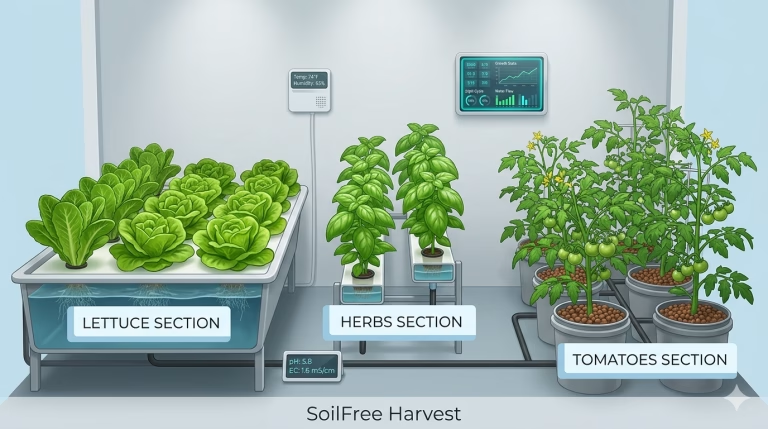
The best plants for aquaponics are leafy greens (lettuce, spinach, kale), herbs (basil, mint, cilantro), and fruiting crops (tomatoes, peppers, cucumbers), ranked from easiest to most challenging. Leafy greens thrive in nutrient-rich water with minimal care, herbs tolerate a wide pH range and grow quickly, while fruiting crops require mature systems, higher nutrient levels, and careful pollination management .
TL;DR: Start with lettuce and basil for fast success in new systems. Progress to tomatoes and peppers once your aquaponics ecosystem is stable (6+ months) with consistent nutrient levels and pH 6.8–7.2.
What Are the Best Plants for Aquaponics?
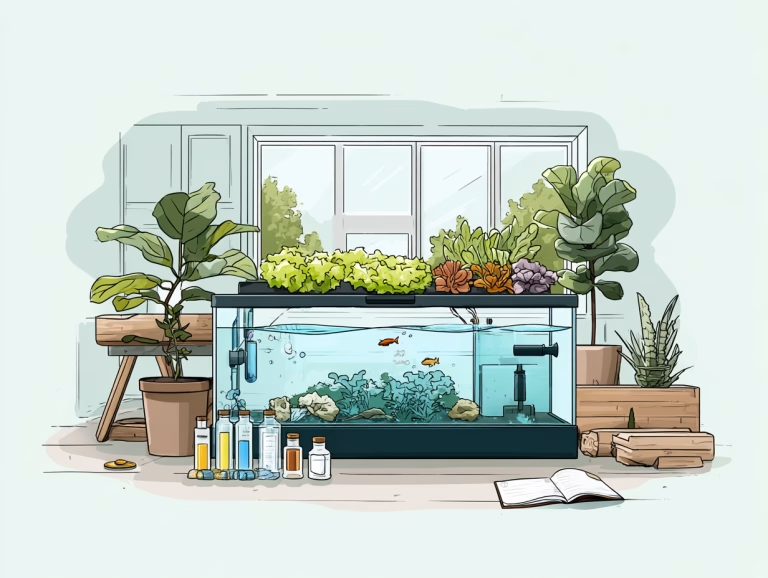
Aquaponics combines fish farming and soilless plant growth in a symbiotic cycle where fish waste becomes plant fertilizer. Not all plants perform equally in this system. The ideal aquaponics plants share three traits: moderate nutrient needs, tolerance for pH 6.8–7.2, and shallow or manageable root systems .
Plants are ranked below by difficulty level, with specific varieties, growth timelines, and system requirements for each category.
Beginner aquaponics setup → Beginner Aquaponics Equipment Checklist: Essential Gear for Your First Home System
Which Leafy Greens Are Easiest for Aquaponics Beginners?
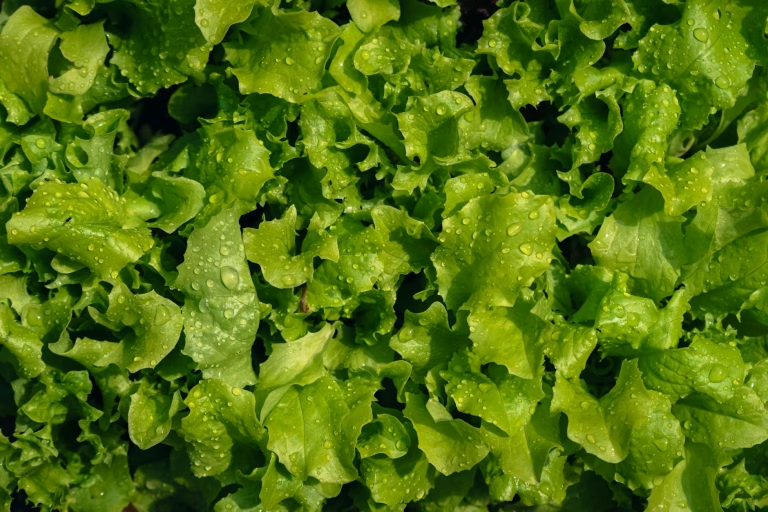
Leafy greens are the #1 recommendation for new aquaponics growers because they grow fast, need fewer nutrients, and tolerate system fluctuations better than fruiting crops .
Top Leafy Greens for Aquaponics (Ranked)
| Plant | Difficulty | Days to Harvest | pH Range | Nutrient Demand | Yield Notes |
|---|---|---|---|---|---|
| Lettuce (Romaine, Butterhead) | Easiest | 30–45 | 6.0–7.0 | Low | 2–3 heads per plant; continuous harvest |
| Spinach | Easiest | 35–45 | 6.0–7.5 | Low–Medium | Prefers cooler temps; bolts in heat |
| Kale (Lacinato, Curly) | Easy | 45–60 | 6.0–7.5 | Medium | Cut-and-come-again; very hardy |
| Swiss Chard | Easy | 40–55 | 6.0–7.5 | Medium | Continuous harvest; heat-tolerant |
| Arugula | Easy | 25–35 | 6.0–7.0 | Low | Fast but bolts quickly in warmth |
| Bok Choy | Easy | 35–50 | 6.0–7.2 | Medium | Thrives in warm weather |
From my own experience in Phoenix’s hot climate, lettuce and kale performed best in deep water culture (DWC) rafts when grown during fall–winter months. Summer growing required shade cloth and increased aeration to prevent root rot .
Why Leafy Greens Dominate Aquaponics
- Low nutrient requirements: They thrive on ammonia/nitrate levels naturally produced by fish
- Fast turnaround: Harvest in 30–45 days vs. 70+ days for tomatoes
- Shallow roots: Work well in media beds, NFT channels, and DWC rafts
- Continuous harvest: Cut outer leaves for weeks of production
What Herbs Grow Best in Aquaponics Systems?
Herbs are the second-easiest category and often outperform greens in flavor and yield when grown aquaponically. Most herbs prefer slightly higher pH (6.8–7.2) than soil gardening, which aligns perfectly with aquaponics .
Top Herbs for Aquaponics (Ranked by Difficulty)
| Herb | Difficulty | Days to First Harvest | pH Range | Special Notes |
|---|---|---|---|---|
| Basil (Genovese, Thai) | Easiest | 25–35 | 6.0–7.5 | Very fast; pinch flowers to extend life |
| Mint | Easiest | 20–30 | 6.5–7.5 | Aggressive spreader; use separate grow bed |
| Cilantro | Easy | 30–40 | 6.0–7.0 | Bolts quickly; successional planting essential |
| Parsley (Italian, Curly) | Easy | 35–50 | 6.0–7.5 | Slow start but long-lived |
| Dill | Easy | 30–45 | 6.0–7.0 | Tall; needs support in windy areas |
| Oregano | Easy | 40–60 | 6.5–7.5 | Drought-tolerant once established |
| Thyme | Easy–Medium | 45–70 | 6.5–7.5 | Woody stem; trim regularly |
| Chives | Easy | 30–45 | 6.0–7.5 | Cut-and-come-again; very hardy |
Basil is my top herb pick for beginners. In Michigan’s indoor setups during winter, Genovese basil reached harvest size in 28 days under 14 hours of LED light. The plants were bushier and more aromatic than soil-grown equivalents .
Pro Tip: Herb Succession Planting
Cilantro and dill bolt (flower) quickly in warm temperatures. Plant new seeds every 2–3 weeks for continuous harvest. In my Central Michigan home, I succession-plant cilantro indoors year-round with 16-hour grow light cycles.
Which Fruiting Crops Work in Aquaponics (and When to Try Them)?
Fruiting crops are advanced-level plants in aquaponics. They demand mature systems (6+ months old), higher fish densities, supplemental potassium/calcium, and careful pollination .
Fruiting Crop Difficulty Ranking
| Crop | Difficulty | Days to Harvest | pH Range | Nutrient Needs | System Requirements |
|---|---|---|---|---|---|
| Tomatoes (Determinate) | Medium–Hard | 60–80 | 6.0–7.0 | High (K, Ca) | 20+ gal fish tank; support trellis |
| Tomatoes (Indeterminate) | Hard | 70–90 | 6.0–7.0 | Very High | 30+ gal tank; daily pruning |
| Peppers (Bell, Chili) | Medium–Hard | 70–90 | 6.0–7.5 | High | Warm temps (70–85°F); hand pollination |
| Cucumbers | Medium | 50–70 | 6.0–7.0 | Medium–High | Vertical trellis; high humidity |
| Strawberries | Medium | 60–90 | 6.0–7.0 | Medium | NFT or vertical towers; birds netting |
| Eggplant | Hard | 80–100 | 6.0–7.5 | High | Heat-loving; slow starter |
| Beans (Bush) | Medium | 50–60 | 6.0–7.0 | Medium | Nitrogen fixer; less fish needed |
| Melons (Small varieties) | Very Hard | 80–100 | 6.0–7.0 | Very High | Large system (50+ gal); space-intensive |
When Are You Ready for Fruiting Crops?
You can successfully grow tomatoes and peppers when your system meets all these criteria:
- System age: 6+ months (microbial community fully established)
- Fish biomass: At least 1 lb fish per 5–7 gal water (higher for tomatoes)
- Nitrate levels: Consistently 50–150 ppm
- pH stability: Holds 6.8–7.2 for 3+ weeks without adjustment
- Supplemental nutrients: Calcium carbonate and potassium sulfate added monthly
From my Phoenix experiments, cherry tomatoes produced 3–4 lbs per plant in a 100-gal DWC system after 8 months. Beefsteak tomatoes required 200-gal systems and supplemental potassium to prevent blossom end rot .
How Do You Match Plants to Your Aquaponics System Type?
Different aquaponics systems favor different plant types. Choosing the right plant-system match prevents root rot, nutrient deficiencies, and poor yields.
Plant-to-System Compatibility Guide
| System Type | Best For | Avoid | Why |
|---|---|---|---|
| Media Bed (clay pebbles) | All plants; ideal for beginners | None | Natural biofiltration; supports heavy fruiting crops |
| DWC (Deep Water Culture) | Leafy greens, herbs, strawberries | Large fruiting crops | Floating rafts; limited root depth for big plants |
| NFT (Nutrient Film) | Lettuce, herbs, spinach | Tomatoes, peppers, kale | Shallow channels; no support for heavy plants |
| Vertical Tower | Strawberries, lettuce, herbs | Tomatoes, eggplant | Limited root space; wind instability for tall plants |
| Raft + Media Hybrid | All plants; advanced setups | None | Best of both worlds; allows crop rotation |
In my own Hybrid system (50% media bed + 50% DWC), I grow tomatoes and peppers in the media section while lettuce and basil thrive on the rafts. This setup maximized space in my 400 sq ft indoor Michigan grow room.
What Equipment Do You Need to Grow the Best Aquaponics Plants?
Essential Equipment by Plant Category
For Leafy Greens (Beginner Setup)
- Fish tank: 20–50 gallons (goldfish or minnows)
- Grow bed/raft: 4×4 ft media bed or 2×8 ft DWC raft
- Water pump: 200–400 GPH (gallons per hour)
- Air pump: 2–4 W air stone for oxygenation
- pH test kit: Digital meter or liquid drops
- Growing media: Clay pebbles (LECA) or gravel
For Herbs (Intermediate Setup)
- Fish tank: 50–75 gallons
- Grow area: Media bed or NFT channels
- Pump: 400–600 GPH
- Light: Full-spectrum LED (14 hrs/day indoors)
- Timer: For pump and lights
- Net pots: 2-inch for NFT/vertical
For Fruiting Crops (Advanced Setup)
- Fish tank: 100–300+ gallons (tilapia, perch, or trout)
- Grow bed: 8×4 ft media bed with bell siphon
- Pump: 800–1,200 GPH with backup
- Air: 2× aquarium air stones (high oxygen demand)
- Supplements: Calcium carbonate, potassium sulfate, iron chelate
- Trellis system: Cable or bamboo for tomatoes/peppers
How to Set Up Your First Aquaponics System: Step-by-Step
How-To: Build a Beginner Media Bed Aquaponics System
Description: Set up a 50-gallon media bed system for lettuce, basil, and herbs in 1 day.
Materials/Tools:
- 50-gallon food-grade tank
- 4×4 ft grow bed (food-grade plastic)
- 1–2-inch clay pebbles (3–4 cu ft)
- Water pump (400 GPH)
- Air pump (3 W) + air stone
- Bell siphon or standpipe
- pH test kit
- Goldfish or minnows (10–15 fish)
- Lettuce/basil seedlings
Steps:
- Position the tank: Place on level, reinforced surface (50 gal = 420 lbs when full)
- Installgrow bed: Mount 6–12 inches above tank on stand; ensure watertight connection
- Add growing media: Rinse clay pebbles; fill bed to 1 inch below overflow
- Install bell siphon: Set at desired drain level (typically ¾ full cycle)
- Connect pump: Run tubing from tank bottom to grow bed input; test flood/drain cycle
- Add aeration: Place air stone in fish tank; run 24/7 for oxygen
- Cycle the system: Run 4–6 weeks with fish food only; wait for ammonia → nitrate conversion
- Add fish: Introduce 10–15 hardy fish; feed sparingly (1% body weight/day)
- Plant seedlings: Insert 9–12 lettuce/basil plants per 4×4 ft bed after nitrate > 20 ppm
- Monitor daily: Check pH (6.8–7.2), temperature (65–80°F), and fish behavior for first 2 weeks
Tips:
- Start with ½ recommended fish density; increase over 4 weeks
- First harvest: 30–35 days for lettuce; 25 days for basil
- Expect water top-offs of 10–20% weekly due to evaporation
What Maintenance Does an Aquaponics System Require?
Weekly Maintenance Checklist
- Test water: pH (target 6.8–7.2), ammonia (<0.5 ppm), nitrate (40–80 ppm)
- Top off water: Replace 10–20% evaporated water with dechlorinated water
- Clean filter: Rinse mechanical filter media if flow drops
- Trim plants: Remove dead leaves; harvest outer lettuce leaves
- Check fish: Observe swimming behavior; ensure no gasping at surface
Monthly Maintenance
- Add supplements: 5 g calcium carbonate + 3 g potassium sulfate per 100 gal (for fruiting crops)
- Inspect pipes: Clear biofilm buildup from tubing
- Prune aggressively: Prevent herbs from shading leafy greens
- Measure EC/TDS: Target 800–1,200 ppm for mixed crops
In hot climates like Phoenix, evaporation can reach 3–5 gallons/day in summer. I added an auto-top-off system to my 200-gal setup to maintain consistent water levels.
What Went Wrong? Common Aquaponics Problems and Fixes
Troubleshooting Table
| Problem | Likely Cause | Quick Fix |
|---|---|---|
| Yellowing leaves | Nitrogen deficiency | Increase fish feeding; add fish emulsion |
| Brown leaf tips | Salt buildup / low calcium | Flush 20% water; add calcium carbonate |
| Root rot | Low dissolved oxygen | Add air stone; reduce plant density |
| Algae in tank | Too much light | Cover tank; reduce daylight exposure |
| Stunted growth | pH outside 6.0–7.5 | Adjust with potassium hydroxide or phosphoric acid |
| Fish gasping | Low oxygen / high ammonia | Increase aeration; perform 30% water change |
| Blossom end rot (tomatoes) | Calcium deficiency | Add eggshells (slow) or calcium carbonate (fast) |
From personal experience, my firstPhoenix tomato crop failed due to blossom end rot. Adding 10 g calcium carbonate per 100 gal weekly solved it within 2 weeks.
Where Should You Grow Aquaponics Plants: Indoors vs. Outdoors?
Indoor Growing (Apartment/Urban)
Best for: Leafy greens, herbs, strawberries
Advantages: Year-round production; climate control; no pests
Challenges: Artificial lighting costs; limited space
Light requirement: 14–16 hrs/day LED (25–30 W per sq ft)
My Michigan indoor setup: 4×4 ft grow tent with 2×48W full-spectrum LEDs produces 12 heads of lettuce + 4 basil plants continuously. Electricity cost: ~$15/month.
Outdoor Growing (Backyard/Greenhouse)
Best for: All crops; especially fruiting plants
Advantages: Natural light; lower energy costs; larger systems
Challenges: Temperature swings; pests; seasonal limitations
Climate tip: In Phoenix, grow greens Oct–Apr; fruiting crops May–Sep
Frequently Asked Questions About Best Plants for Aquaponics
1. What are the absolute easiest plants for aquaponics beginners?
Lettuce (especially Romaine and Butterhead varieties) and basil are the easiest plants to grow in aquaponics. They reach harvest in 25–45 days, tolerate pH fluctuations well, and thrive on the natural nutrients produced by fish without needing supplements.
2. How long does it take to harvest leafy greens in aquaponics?
Most leafy greens like lettuce, spinach, and arugula are ready to harvest in 30–45 days from transplanting. Basil is even faster at 25–35 days. You can start harvesting outer leaves early for a “cut-and-come-again” approach that extends production for weeks .
3. Can I grow tomatoes and peppers in aquaponics as a beginner?
Not recommended for your first system. Fruiting crops like tomatoes and peppers require a mature, stable system (6+ months old), higher fish density, and supplemental calcium and potassium. Start with greens and herbs for 6 months before attempting fruiting plants.
4. What pH range works best for all aquaponics plants?
The ideal pH range for aquaponics is 6.8–7.2, which balances plant needs and fish health. Leafy greens tolerate 6.0–7.0, while herbs and fruiting crops prefer 6.5–7.5. Never adjust pH abruptly; make gradual changes of 0.2–0.3 per day .
5. How many plants can I grow per square foot in aquaponics?
For leafy greens and herbs in media beds, plant 9–16 plants per 4×4 ft bed (about 1 plant per square foot). In NFT or DWC systems, space lettuce 6–8 inches apart and basil 8–10 inches apart. Overcrowding reduces airflow and increases disease risk.
6. What fish produce the best nutrients for plants?
Tilapia, trout, perch, and goldfish are the most common aquaponics fish. Tilapia produce high waste output and tolerate warm water, making them ideal for fruiting crops. Goldfish work well for beginner lettuce/herb systems with lower fish density.
7. Do I need to add fertilizer to aquaponics for fruiting crops?
Yes. While leafy greens thrive on fish waste alone, fruiting crops like tomatoes and peppers need supplemental calcium carbonate and potassium sulfate added monthly. Iron chelate may also be needed if leaves turn yellow between veins .
8. What are the most common mistakes when choosing aquaponics plants?
Common mistakes include: planting fruiting crops too early in a new system, overcrowding plants, ignoring temperature requirements (spinach bolts in heat), and not succession-planting fast-bolting herbs like cilantro. Start simple and expand gradually.
9. How much does a beginner aquaponics system cost?
A basic 50-gallon media bed system for beginners costs $200–400 including tank, pump, air stone, media, and tests. Indoor systems add $50–150 for LED grow lights. Expect to spend $800–1,500 for a 100–200 gallon system capable of growing fruiting crops .
10. When will I see my first harvest from a new aquaponics system?
You’ll see your first basil harvest in 25–30 days and lettuce in 35–40 days after adding plants to a cycled system. The system itself needs 4–6 weeks to cycle (establish beneficial bacteria) before adding any plants. Total time from setup to first harvest: 2–3 months.
About the Author
I’m a hydroponics and aquaponics grower with 8+ years of hands-on experience gardening indoors and outdoors with and without soil. Originally based in Phoenix, Arizona, where I tested heat-tolerant crop varieties in hot, dry climates, I now grow year-round in Michigan using climate-controlled indoor setups. My focus is on practical, budget-friendly aquaponics for home growers, apartment gardeners, and urban farmers who want fresh produce without soil. I’ve grown everything from lettuce and basil to tomatoes and peppers in systems ranging from 20 to 300 gallons, and I share real-world data on yields, pH ranges, and common mistakes to help you avoid costly failures.
Share this:

Discover more from Soil Free Harvest
Subscribe to get the latest posts sent to your email.