Media Bed Aquaponics: How Media Beds, Rafts, and Towers Compare
Media bed aquaponics is usually the best all around choice for home growers, while raft beds shine for high volume leafy greens and vertical towers work best when space is very tight. Media beds are generally the most beginner friendly, rafts are cleaner but require more filtration equipment, and towers maximize plant count per square foot.
TL;DR: If you are building your first aquaponics system at home, start with a media bed. Once your fish, bacteria, and water quality are stable, you can add a small raft section or vertical tower to expand production.
What are media beds, rafts, and towers in aquaponics?
Aquaponics combines fish, beneficial bacteria, and plants in one recirculating system. Fish waste becomes plant nutrients, and the plants help clean the water before it returns to the fish tank.
At the plant growing stage, most home systems fall into three categories:
- Media beds use a container filled with inert media such as expanded clay, gravel, or lava rock.
- Rafts or deep water culture systems float plants over channels of water with roots hanging below.
- Towers stack plant sites vertically so water flows from the top down through the root zone.
What do you need to start aquaponics → Beginner Aquaponics Equipment Checklist: Essential Gear for Your First Home System
How does media bed aquaponics work?
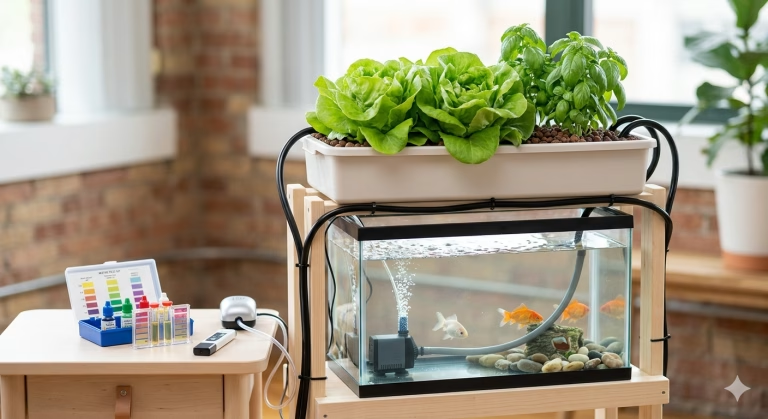
In a media bed system, water is pumped from the fish tank into a grow bed filled with media, then drains back to the tank by gravity or through a bell siphon. The media supports the roots, traps solids, and provides a large surface area for beneficial bacteria.
This is one reason media beds are so popular with home growers. In small systems, the grow bed often acts as the plant bed, mechanical filter, and biofilter all at once.
Typical ranges for a healthy home media bed system include:
- pH: 6.8 to 7.2
- Water temperature: 18 to 26 degrees Celsius, depending on fish species
- Flood and drain cycle: about every 10 to 30 minutes on many bell siphon systems
In my own systems, these ranges have worked well across mixed vegetables and common beginner fish choices.
How do raft aquaponics systems work?
Raft systems, also called deep water culture, suspend plants in floating boards over shallow water channels. Plant roots hang directly into the water, where they absorb nutrients and oxygen.
Unlike media beds, raft systems usually need separate filtration. Solids must be removed before water enters the raft channel, and a dedicated biofilter is often used to support nitrifying bacteria.
Raft systems are especially good for:
- Lettuce
- Basil
- Spinach
- Bok choy
- Other lightweight leafy greens
The larger water volume in raft channels can help stabilize root zone temperatures, which is useful for consistent leafy green production.
Deep water culture basics → beginner guide to deep water culture hydroponics
How do vertical tower aquaponics systems work?
Vertical tower systems grow plants in stacked columns or towers. Water is pumped to the top and trickles down through each planting site before returning to the fish tank or sump.
The main advantage is space efficiency. Towers can grow a surprising number of plants in a very small footprint, which makes them attractive for balconies, patios, greenhouses, and other compact spaces.
Towers are usually best for:
- Herbs
- Strawberries
- Small lettuce varieties
- Compact leafy greens
They are less ideal for large, heavy fruiting plants unless the system is specifically designed for them.
Vertical hydroponic towers → The $50 Vertical Tower Garden: Maximize Space & Yields
How do media beds, rafts, and towers compare?
The best system depends on your goals, plant choices, budget, and available space. For most home growers, the decision comes down to simplicity versus specialization.
| Feature | Media bed | Raft bed | Vertical towers |
|---|---|---|---|
| Best crops | Mixed crops, including fruiting plants and greens | Leafy greens and herbs | Herbs, strawberries, compact greens |
| Beginner friendliness | High | Medium | Medium |
| Filtration needs | Often built into the bed | Usually requires separate filtration | Often needs careful pre filtration |
| Footprint efficiency | Good | Moderate | Excellent |
| Setup complexity | Low to moderate | Moderate | Moderate to high |
| Heavy crop support | Strong | Limited | Limited |
| Maintenance style | Media and siphon maintenance | Filter and channel cleaning | Clog checking and flow balancing |
Which system is easiest for beginners?
Media beds are usually easiest because they combine multiple functions in one unit. A beginner can often build a productive system with one fish tank, one grow bed, one pump, and basic plumbing.
Rafts and towers can work for beginners too, but they usually need more precise design and more troubleshooting.
Which system grows the most food in the smallest space?
Towers usually win on plant count per square foot. If your biggest challenge is limited space, vertical growing can be extremely productive.
That said, a media bed often gives a better balance of productivity, stability, and ease of use for a first system.
Choosing an aquaponics system → how to choose the right aquaponics system for your home
What are the main benefits of media bed aquaponics?
Media beds remain a favorite for home growers for good reason. They are flexible, forgiving, and capable of growing a wide range of crops.
Main benefits include:
- Built in root support for both small and heavy plants
- Biological filtration and solids capture in one bed
- Easy transplanting and direct seeding
- Good fit for mixed crop growing
- Simpler plumbing than many raft systems
- Strong beginner to intermediate learning platform
In my own setups, media beds have been the most forgiving when feed rates, fish loads, or seasonal temperatures shift. That matters a lot in real world backyard and indoor growing.
What are the drawbacks of media beds?
Media beds do have tradeoffs. The biggest issues are weight, cleanup labor, and possible clogging if solids management is ignored.
Common drawbacks include:
- Heavy media, especially gravel or lava rock
- More difficult deep cleaning compared with raft channels
- Potential for clogged zones if fish are overfed
- Higher evaporation from exposed media in hot climates
- Large beds may become expensive as system size increases
These drawbacks are manageable, but they are worth planning for before you build.
When is a raft system better than a media bed?
A raft system is often the better choice when your main goal is steady production of leafy greens and herbs. It is especially useful if you want clean root zones, predictable spacing, and a crop mix centered on lettuce rather than tomatoes or peppers.
Choose raft aquaponics when:
- You want to grow mostly lettuce, basil, and salad crops
- You have enough room for troughs or channels
- You are comfortable adding separate filtration
- You want a layout that can scale more easily into greenhouse production
Rafts are less attractive when space is tight or when you want to grow lots of heavy, fruiting crops.
When are vertical towers better than media beds?
Vertical towers are a smart option when floor space is your biggest limitation. They let you grow more plants in a small footprint, and they are often visually appealing in urban settings.
Choose towers when:
- You garden on a balcony, patio, or compact yard
- You mainly want herbs, strawberries, or baby greens
- You do not mind checking emitters and flow paths often
- You want to maximize vertical space
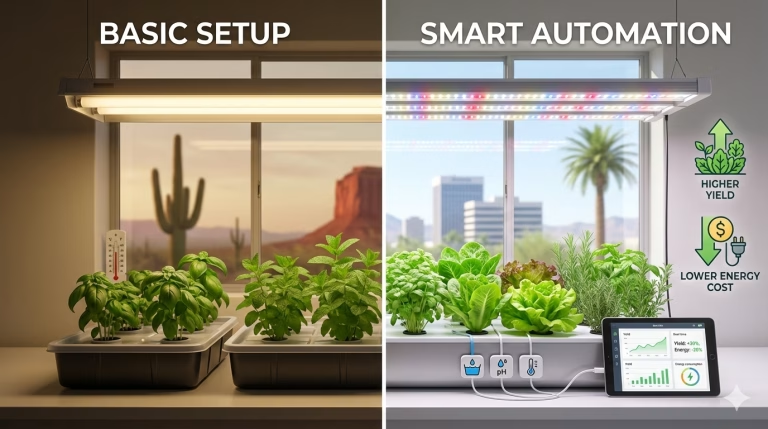
In my experience, towers perform best when sun, wind, and flow are carefully managed. In a hot, dry climate like Phoenix, shading and moisture monitoring matter a lot. In Michigan, a shaded patio or greenhouse often gives a more forgiving environment.
Which plants are best for each system?
Matching plant type to system design improves both yield and maintenance.
Best plants for media beds
Media beds are best for:
- Tomatoes
- Peppers
- Cucumbers
- Beans
- Kale
- Basil
- Swiss chard
- Eggplant
- Larger herbs
- Some root crops in the right media
Best plants for raft systems
Rafts are best for:
- Lettuce
- Bok choy
- Basil
- Arugula
- Spinach
- Watercress
- Small Asian greens
Best plants for towers
Towers are best for:
- Strawberries
- Mint
- Basil
- Parsley
- Baby lettuce
- Small leafy greens
- Compact ornamentals or edible flowers
How do you build a beginner media bed aquaponics system?
Build a simple media bed aquaponics system
A basic media bed aquaponics system can be built with one fish tank, one grow bed, a pump, and simple plumbing. This setup is a strong starting point for beginners because it is flexible and relatively forgiving.
Materials and tools
- Food safe fish tank or tote, about 150 to 300 liters
- Grow bed or shallow container
- Inert grow media such as expanded clay or washed gravel
- Submersible pump
- Bell siphon or timed flood and drain setup
- PVC pipe and fittings
- Drill with hole saw
- Tape measure
- Level
- Water test kit for pH, ammonia, nitrite, and nitrate
- Air pump and air stone
- Fish
- Plant starts or seeds
Aquaponics tools checklist → essential tools for home aquaponics
Step 1: Choose the system location
Pick a level area with access to power and enough room to work around the system. Think ahead about sunlight, shade, and how easy it will be to feed fish, test water, and harvest plants.
In Phoenix style heat, afternoon shade can reduce stress on both fish and roots. In Michigan, extra warmth or season extension may be more important.
Step 2: Size the tank and grow bed
A beginner friendly setup often uses a fish tank in the 150 to 300 liter range with a grow bed of similar or somewhat larger volume. That balance helps with filtration and plant support.
A larger grow bed generally gives more biofiltration capacity, which can make the whole system more stable.
Step 3: Install plumbing and the drain
Set the grow bed so water can drain back by gravity. Install the standpipe, bell siphon, or timed drain components, then connect the pump line from the fish tank to the bed.
Before adding media, test the plumbing to make sure the bed fills and drains correctly.
Step 4: Rinse and add the grow media
Rinse the media thoroughly to remove dust and fine particles. Then fill the bed, leaving the top layer relatively dry to help reduce algae and fungus gnats.
Recheck siphon performance after the media is in place, because media can change flow behavior.
Step 5: Fill and cycle the system
Fill the system with dechlorinated water and run it continuously. Start the cycling process so beneficial bacteria can colonize the media and convert fish waste into plant available nutrients.
This stage often takes several weeks. Test water regularly and wait until ammonia and nitrite are under control before fully stocking fish.
Step 6: Add fish and easy starter crops
Once the system is cycling well, add a modest fish load and begin with beginner friendly crops like lettuce, basil, kale, or Swiss chard. This makes it easier to match nutrient production with plant demand.
Avoid pushing fish stocking or planting density too hard at the beginning.
Step 7: Adjust feeding and maintenance
Feed fish lightly at first and increase gradually as the system matures. Test pH, ammonia, nitrite, and nitrate regularly, especially in the first couple of months.
As the biofilter strengthens, you can add more crops and slowly increase the load on the system.
Step 8: Expand only after the core system is stable
Once the media bed is running smoothly, you can add a small raft trough or vertical tower to the same system. This is often the best way to experiment without making the original build overly complex.
Cycling an aquaponics system → step by step guide to cycling aquaponics without fish
How do you maintain these systems long term?
Maintenance is where beginner success is usually won or lost. Most systems fail slowly from skipped checks rather than sudden major problems.
Media bed maintenance
- Check that the pump and siphon are working properly
- Remove dead roots and old plant material
- Watch for slow drainage or soggy zones
- Test water regularly
- Keep fish feeding consistent
Raft maintenance
- Clean filters often
- Watch root health and dissolved oxygen
- Scrub channels if biofilm builds up
- Remove unhealthy plants quickly
Tower maintenance
- Inspect emitters and water distribution points
- Watch for dry pockets in the tower
- Check for salt buildup or clogging
- Monitor flow evenly from top to bottom
Aquaponics troubleshooting guide → common aquaponics problems and how to fix them
What problems do growers run into most often?
Beginners across all three systems tend to run into a handful of common problems.
Yellow leaves
This is often caused by nutrient deficiency, especially iron, or by an immature system with low nutrient output. It can also happen when pH drifts too high and locks out nutrient uptake.
Slow growth
Slow growth often points to low nutrient production, poor light, root stress, or water temperatures outside the ideal range. In media beds, compacted or clogged areas can also reduce root oxygen.
High ammonia
High ammonia usually means overfeeding, too many fish, inadequate biofiltration, or a pump or aeration problem. This is one of the most urgent issues to correct.
Root issues
In rafts and towers, poor oxygenation or poor flow can damage roots quickly. In media beds, solids buildup and stale zones can create similar symptoms over time.
What system should most home growers choose?
If you want one practical recommendation, most home growers should start with a media bed. It offers the best mix of simplicity, flexibility, and tolerance for beginner mistakes.
Rafts make more sense when leafy green production is the main goal and you are comfortable with extra filtration. Towers make more sense when floor space is limited and you are willing to monitor the system more closely.
For many growers, the smartest long term path is:
- Start with a media bed.
- Learn cycling, feeding, and water quality.
- Add rafts for greens or towers for space efficiency once the system is stable.
Frequently asked questions
Is media bed aquaponics good for beginners?
Yes. Media beds are often the easiest way to start because they combine plant support, filtration, and bacterial colonization in one unit. That keeps the equipment list and learning curve more manageable.
How much does a small media bed system cost?
A small DIY system can often be built for a few hundred dollars, depending on whether you reuse containers or buy everything new. Costs increase with larger tanks, premium media, and better pumps or aeration.
Which system grows fastest?
For leafy greens, raft systems often deliver very fast and uniform growth. For mixed crops and fruiting plants, media beds usually provide a better balance of growth, support, and reliability.
Can I grow tomatoes in a raft or tower system?
You can, but it is usually more complicated than growing them in a media bed. Large fruiting plants need support, stable nutrition, and strong root anchoring, which media beds provide more naturally.
How long does a new aquaponics system take to stabilize?
Most new systems take several weeks to cycle and establish a healthy bacterial population. Plant growth may begin earlier, but full nutrient stability takes time.
Are towers worth it for apartment gardeners?
Yes, especially when floor space is limited. Towers can be extremely productive in a compact footprint, but they require more frequent monitoring than a basic media bed.
Do media beds need extra filtration?
Small media bed systems often do not need separate filtration if fish stocking is reasonable. As systems grow more complex or heavily stocked, additional solids filtration can become helpful.
Which climate is harder for aquaponics, Phoenix or Michigan?
They are difficult in different ways. Phoenix style heat increases evaporation and water temperature stress, while Michigan conditions often require better cold weather planning and season extension.
Author note
This content is shaped by hands on experience with hydroponic and aquaponic growing in both Phoenix, Arizona and Michigan. Working across those very different climates has made system design, crop choice, and environmental control central to the growing process.
The focus remains on practical indoor, urban, patio, and backyard food production for real home growers. The goal is to help beginners and intermediate gardeners build systems that are productive, stable, and realistic to maintain.
Share this:

Discover more from Soil Free Harvest
Subscribe to get the latest posts sent to your email.