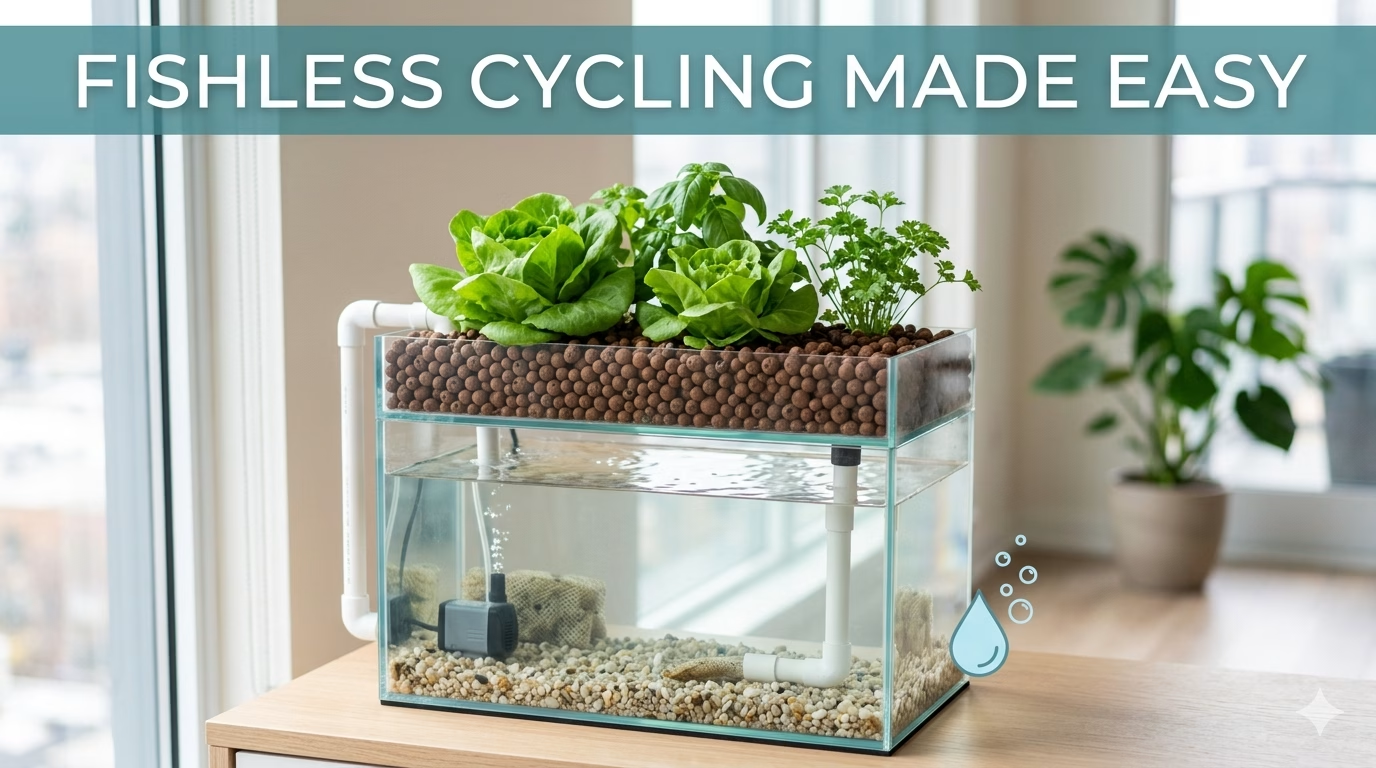
Fishless Cycling for Aquaponics: How to Start Your System Safely
Fishless cycling is the process of building a population of beneficial bacteria in your aquaponics system without using live fish to provide waste. You add ammonia from a controlled source, then let nitrifying bacteria convert ammonia → nitrite → nitrate so your plants can use it as fertilizer.
TL;DR: Fishless cycling lets you establish a healthy nitrogen cycle in 4–6 weeks, while keeping fish out of harm’s way and giving you full control over ammonia levels.
What fishless cycling actually is
Fishless cycling is a way to “break in” a new aquaponics system by growing colonies of Nitrosomonas and Nitrobacter bacteria before you add any fish. These bacteria turn toxic ammonia (from fish waste) into nitrite, then into nitrate, which plants can use.
In a typical aquaponics setup, fishless cycling means you dose the water with a clean ammonia source or decomposing organic matter, then wait until tests show ammonia and nitrite at or near zero, while nitrates are present.
Water quality basics for aquaponics → Hydroponics vs Aquaponics: Water, Nutrients, and Complexity for Home Growers
Why use fishless cycling in aquaponics
Fishless cycling is especially popular among home growers and beginners because it:
- Eliminates the risk of fish death or stress from ammonia and nitrite spikes.
- Lets you dial in ideal water conditions (pH, temperature, aeration) before introducing livestock.
- Often completes in 4–6 weeks, which can be faster than traditional fish‑in cycling if you manage ammonia carefully.
Because you control the ammonia input, you can also test and debug your plumbing, pumps, and aeration without worrying about harming fish.
Indoor aquaponics systems → Aquaponics System Types Explained: Media Bed, Raft, NFT, and Hybrid
How the nitrogen cycle works in aquaponics
Nitrification is the two‑step process that turns fish waste into plant‑friendly nutrients:
- Nitrosomonas bacteria convert ammonia (NH₃/NH₄⁺) into nitrite (NO₂⁻).
- Nitrobacter and related bacteria convert nitrite into nitrate (NO₃⁻), which plants uptake through their roots.
In an uncycled system, ammonia and nitrite can quickly reach toxic levels for fish, while plants see little benefit. Fishless cycling builds bacterial biofilm on grow‑bed media, tank walls, and surfaces until they can handle your system’s planned ammonia load.
Benefits of fishless cycling vs fish‑in cycling
| Aspect | Fishless cycling | Fish‑in cycling |
|---|---|---|
| Fish safety | No fish exposed to spikes; zero risk of death | Fish sit in ammonia/nitrite during early weeks |
| Control | You choose ammonia dose and timing | Ammonia depends on feeding and fish load |
| Speed | Often 4–6 weeks; can be faster with starters | Similar timeframe, but more stress on fish |
| Monitoring needed | Frequent testing, but predictable spikes | Constant vigilance to protect fish |
Fishless cycling is especially appealing if you’re setting up in a small apartment, an indoor system, or a climate where water temperature swings make it hard to keep fish stable.
Typical drawbacks and risks to watch
Fishless cycling is safer for livestock, but it still has trade‑offs:
- The process can “feel” slow for beginners; 4–6 weeks without fish is a long wait.
- You need to buy or borrow a reliable liquid test kit for ammonia, nitrite, and nitrate.
- If you overshoot ammonia (typically above 5 ppm), you can slow bacterial growth or encourage algae, even without fish.
I’ve run multiple fishless cycles in hot, dry climates and found that high evaporation and fluctuating temperatures can lengthen the cycle if you’re not careful with water top‑offs and aeration.
Equipment and supplies you’ll need
Here’s a practical checklist for a home‑scale fishless cycle:
Core components
- A fully constructed aquaponics system (fish tank, grow bed, and plumbing)
- A submersible heater (if your ambient temperature is below about 18–20°C / 65–70°F)
- Air pump and air stones or venturi for strong aeration
Water and chemistry
- Dechlorinator to remove chlorine and chloramine from tap water
- Control‑test bottles or strips for ammonia, nitrite, and nitrate
Ammonia sources
Common options home growers use:
- Plain household ammonia (unscented, no surfactants or dyes)
- Fish‑food cycling (dry pellets or flakes added to the tank)
- Bacteria starter products (liquid nitrifying‑bacteria cultures)
If you already have a cycled aquarium or aquaponics system, you can usually “seed” the new tank with mature media or filter sponges to cut cycling time by 1–2 weeks.
Step‑by‑step fishless cycling setup
Follow this sequence to cycle your aquaponics system safely and consistently.
Step 1. Fill and dechlorinate the system
Fill the fish tank and plumbing to working level, then dose with a dechlorinator according to label instructions. Chlorine and chloramine will kill or suppress nitrifying bacteria, so this step is non‑negotiable.
Step 2. Set water temperature and pH
Aim for roughly 24–28°C (75–82°F), which is near the sweet spot for nitrifier growth.
Keep pH around 7.0–7.8; both Nitrosomonas and Nitrobacter do best in this range.
Step 3. Start gentle aeration and circulation
Turn on the air pump and water pump so the system runs as it will later. Good oxygen levels speed up bacterial colonization on surfaces.
How to dose ammonia safely
Most guides recommend starting your ammonia dose around 2–4 ppm and then tracking how fast it drops.
- Use a 5% unscented ammonia solution: about 4 drops per gallon of tank water to hit ~4 ppm (check your test kit and adjust).
- If your ammonia is lower than 2 ppm, add more today. If it lands in the 2–4 ppm band, wait 12–24 hours.
Never let ammonia exceed about 5 ppm, because very high levels can stall bacterial growth and make the cycle longer.
The cycling timeline (what to expect)
Fishless cycling usually unfolds in three overlapping phases:
- Ammonia rise and plateau (Days 1–10)
You will see ammonia stuck at 2–4 ppm for several days, then slowly start to fall as the first population of Nitrosomonas grows. Nitrite will either be absent or barely detectable. - Nitrite spike (Days 7–21)
As ammonia drops, nitrite often climbs sharply, sometimes to 1–5 ppm or higher. This is normal and expected. Nitrates may begin to appear as Nitrobacter colonies build. - Ammonia→nitrite→nitrate balance (Days 21–40)
Once Nitrobacter catches up, nitrite will fall, and nitrates will rise steadily. The cycle is complete when:- Ammonia and nitrite test near zero within 24 hours of a fresh 2–4 ppm dose.
- Nitrates are clearly present and steadily increasing.
In my own aquaponics runs, this has taken anywhere from 3–6 weeks depending on temperature, aeration, and how much seeding media I used from an existing system.
How to tell when your system is fully cycled
Instead of guessing, use clear test‑based milestones:
- After you dose 2–4 ppm ammonia, test 12 and 24 hours later.
- If both ammonia and nitrite stay below about 0.5 ppm after 24 hours, your system is close to ready.
- If you can dose 2–4 ppm again and ammonia and nitrite still hit 0 within 24 hours, the cycle is complete.
At that point, you should see a steady background level of nitrates (often 10–50 ppm or higher depending on your ammonia input), and pH should remain stable.
How to transition from fishless cycling to fish
Once you confirm the cycle is complete:
Step 1. Stop adding ammonia
Halt your ammonia source and let the system run for at least 24 hours to confirm ammonia and nitrite stay near zero.
Step 2. Test pH and alkalinity
Ensure pH is in the 6.8–7.5 range and alkalinity is sufficient to buffer against pH swings once fish are added.
Step 3. Introduce fish gradually
Start with a small bio‑load (about 25–30% of your planned fish density) and add more after a week or two if ammonia and nitrite remain low.
This approach avoids a “mini‑cycle” where a sudden burst of fish waste overwhelms young bacteria populations.
How‑to: Fishless cycling a small aquaponics system
Title:
Fishless cycling a small home aquaponics system
Description:
A step‑by‑step guide to establish a healthy nitrogen cycle in a 50–100 gallon aquaponics setup without ever exposing fish to toxic ammonia or nitrite.
Materials and tools
- Fully assembled aquaponics system (tank, grow bed, plumbing)
- Aquarium‑style air pump and air stones
- Submersible heater (if room temperature is below 65°F)
- Liquid test kit for ammonia, nitrite, and nitrate
- Dechlorinator
- 5% unscented ammonia solution (or fish food)
- Notepad or app to log water‑test results
Step‑by‑step procedure
Step 1. Fill and dechlorinate the system
Connect all plumbing and fill the fish tank to normal operating level. Add dechlorinator according to the label, then let the system circulate for at least 1 hour. This ensures chlorine and chloramine are neutralized so bacteria can colonize.
Step 2. Adjust temperature and pH
Turn on the heater and air pump. Aim for a water temperature between about 24–28°C (75–82°F), which is ideal for nitrifying‑bacteria growth.
If pH is below 6.5, add a small amount of hydrated lime or baking soda in tiny increments, then retest. Target ~7.0–7.8.
Step 3. Start aeration and begin ammonia dosing
With the water circulating and aerated, note your starting ammonia and nitrite (they should be negligible). Add 5% unscented ammonia at about 4 drops per gallon of water to reach 2–4 ppm.
Step 4. Monitor ammonia and start the first week
Test ammonia and nitrite every 12–24 hours.
- If ammonia is above 4 ppm, wait it out; do not add more yet.
- If ammonia drops below 2 ppm within 24 hours, add another dose to bring it back to 2–4 ppm.
During this phase, you may see little change in nitrite; that’s normal.
Step 5. Track the nitrite spike
As days pass, ammonia will begin to fall more quickly, and nitrite will rise.
- Keep dosing ammonia to 2–4 ppm when it drops below 2 ppm, but still avoid exceeding 5 ppm.
- Expect nitrite to peak anywhere from Day 7–21, depending on your temperature and bacterial load.
Use this time to scratch your schedule: write “test at 10 a.m. and 6 p.m.” into your calendar so you don’t miss 24‑hour checks.
Step 6. Confirm nitrification and stability
Once nitrite starts to fall and you see nitrates increasing, you’re entering the last phase.
- Pick a day to dose 2–4 ppm ammonia again, then test at 12 and 24 hours.
- If ammonia and nitrite both read near zero after 24 hours, and nitrates are clearly present, your system is cycled.
Make sure this pattern holds for at least two consecutive doses before you feel safe moving on.
Step 7. Add starter plants and prepare for fish
Once cycled, install your chosen growing media and a few hardy “buffer” plants (lettuce, kale, or basil) in the grow bed.
Run the system for 24–48 hours without adding ammonia while watching pH and nitrates. If everything stays stable, you can slowly introduce fish as described earlier.
Common mistakes and how to avoid them
Beginners often run into these issues during fishless cycling:
- Impatience and skipping tests
Relying on “looks clear” instead of actual test readings can put fish at risk. Commit to at least once‑daily testing for the first 2–3 weeks. - Overdosing ammonia
Trying to “speed things up” with high ammonia doses can stall bacteria and promote algae. Stick to 2–4 ppm and never exceed about 5 ppm. - Ignoring temperature and aeration
Cold water (below 60°F) or low oxygen can extend the cycle by 1–2 weeks or more. Use a heater and a tuned air‑pump setup in most indoor and small‑scale setups. - Adding all fish at once
After a successful cycle, some growers dump in their full planned bio‑load immediately. This can trigger a mini‑cycle and ammonia spikes.
From my own runs in Phoenix and later in Michigan, I’ve learned that keeping a simple log sheet (date, ammonia, nitrite, nitrate, temp, pH) pays off heavily in avoiding these mistakes.
Best plant types and system types for fishless cycling
Fishless cycling is particularly effective for:
- Small media‑bed systems (e.g., 50–200 gallon tanks with 1–2 grow beds)
- Deep‑water‑culture (DWC) or raft‑style aquaponics where you can pre‑fill the fish tank and grow‑channel.
It also works well if you plan to grow:
- Leafy greens (lettuce, kale, spinach, arugula)
- Herbs (basil, mint, cilantro)
- Fast‑growing fruiting plants like cherry tomatoes or cucumbers, once the cycle is stable and nitrates are established.
Because fishless cycling gives you a cleaner, more predictable start, it is especially suited to beginners and apartment growers who want to minimize risk and maximize control.
DWC (deep water culture) basics → Deep Water Culture (DWC) Hydroponics: The Complete Beginner’s Guide to Growing Faster
Frequently asked questions
Q: How long does fishless cycling take in aquaponics?
Most small home systems take about 4–6 weeks to fully cycle, assuming stable temperature (around 24–28°C / 75–82°F), good aeration, and consistent ammonia dosing.
If you use a bacteria starter or seed media from an existing system, you may shave off 1–2 weeks depending on how strong the bacterial source is.
Q: Can I use urine or fish food instead of ammonia for fishless cycling?
Yes, both urine and dry fish food can work as ammonia sources, but they are less predictable than pure unscented household ammonia.
Fish food tends to raise ammonia more slowly, which can be gentler on bacteria, but it may also feed unwanted heterotrophic bacteria and small decomposers in your system.
Q: Do I need to do water changes during fishless cycling?
In most home‑scale setups, you do not need water changes while cycling as long as ammonia stays around 2–4 ppm and nitrite is not extreme.
However, if ammonia exceeds about 5 ppm or nitrite climbs very high, a partial water change can reduce stress on the bacteria and help keep the cycle stable.
Q: Can I add plants during the fishless cycling phase?
You can add plants during cycling, but at first, they usually grow slowly because nitrates are low.
As soon as you see measurable nitrates, fast‑growing leafy greens like lettuce, kale, or herbs can start to benefit, and their roots also provide extra surface area for bacteria.
Q: Should I buy bottled bacteria, or will it cycle on its own?
A quality bacteria starter can shorten the cycle by 1–2 weeks and reduce the risk of long stalls, especially in new or sterile systems.
You can still cycle without bottled bacteria, but it demands more patience and careful monitoring of ammonia and nitrite over several weeks.
Q: How do I avoid killing my fish after a fishless cycle?
After the cycle is complete, continue testing ammonia and nitrite for at least 24 hours with no new ammonia added, confirming both are near zero.
Then add fish in stages, starting with about 25–30% of your planned bio‑load, and wait another week or two before adding the rest so the bacteria can adjust.
Q: Is fishless cycling harder for beginners than fish‑in cycling?
Fishless cycling is actually easier conceptually for beginners because it removes the emotional stress of watching fish in toxic water.
The main challenge is getting comfortable with test kits and dosing precision, but both are skills that pay off for long‑term aquaponics success.
Q: Can I speed up fishless cycling in a colder climate?
Yes; the most effective way to speed up cycling in a cool room is to raise water temperature to about 24–28°C (75–82°F) with a heater.
Strong aeration and, if available, seeding the system with mature media or a bacteria starter will also shorten the cycle.
Q: What if my ammonia or nitrite never goes down?
If ammonia or nitrite stays stubbornly high for more than 2–3 weeks, check pH, temperature, and aeration, because all three strongly affect bacteria growth.
Also verify that your ammonia source is truly inorganic (no surfactants or dyes) and consider adding a bacteria starter or some mature media from an existing system.
Q: Is fishless cycling safe for edible plants after I add fish?
Once the cycle is stable and you’ve stopped dosing external ammonia, the system works like any other aquaponics system, so fishless‑cycled tanks are just as safe for edibles.
The only extra consideration is making sure your ammonia source (for example, household ammonia) was truly plain and free of fragrances or additives before you started.
Share this:

Discover more from Soil Free Harvest
Subscribe to get the latest posts sent to your email.








One Comment