What Can You Grow in Hydroponics? 25+ Crops for Beginners to Advanced Growers
You can grow almost any crop in hydroponics, but the most successful plants are leafy greens (lettuce, spinach, kale), herbs (basil, mint, cilantro), and fruiting vegetables (strawberries, peppers, tomatoes). While beginners should start with greens that require lower light and nutrients, advanced growers can successfully cultivate root vegetables and complex fruiting crops by adjusting system types and nutrient strength.
TL;DR: Start with lettuce or basil, they are fast, forgiving, and need minimal equipment. Intermediate growers can move to peppers and strawberries using DWC or Dutch Buckets. Advanced growers can tackle carrots or large tomatoes, provided they have precise climate and nutrient control.
What Can Be Grown in a Hydroponic System?
In theory, if a plant has roots, it can grow in hydroponics. However, “can you grow it?” and “is it worth growing?” are two different questions. The best crops for soil-free gardening are those that naturally thrive with constant water access and don’t require massive root space relative to their yield.
Success depends largely on matching the plant to the right system. Deep Water Culture (DWC) is excellent for lettuces and heavy feeders like tomatoes, while Nutrient Film Technique (NFT) is perfect for lightweight, fast-growing herbs.
1. The Best Hydroponic Plants for Beginners (Leafy Greens & Herbs)
If you are new to hydroponics, start here. These crops have low nutritional needs (EC 0.8–1.5), grow fast, and recover quickly from mistakes.
Why Start with Greens?
- Harvest speed: Most are ready in 30–45 days.
- Simplicity: They don’t need pollination or complex light cycles.
- Diet: They thrive on a simple “Grow” nutrient formula high in nitrogen.
Top Leafy Greens
- Lettuce (Lactuca sativa): The “king” of hydroponics. Varieties like Butterhead and Romaine are ready to harvest in as little as 3-4 weeks.
- Lettuce is one of the easiest crops to grow in Deep Water Culture (DWC)
- Tip for Hot Climates: If you live in a hot region like Arizona, choose heat-tolerant varieties like “Muir” or “Jericho” to prevent bolting.
- Lettuce is one of the easiest crops to grow in Deep Water Culture (DWC)
- Spinach: Thrives in cooler temperatures (60-65°F). Keep your water cool to prevent root rot.
- Swiss Chard: Extremely hardy and produces continuously. You can harvest outer leaves while the center keeps growing.
- Kale: Grows faster and more tender in hydro than in soil. Lacinato (Dino) Kale is a favorite for indoor growers.
- Pak Choi (Bok Choy): A superstar for hydroponics. It’s ready in roughly 30 days and tolerates heat better than spinach.
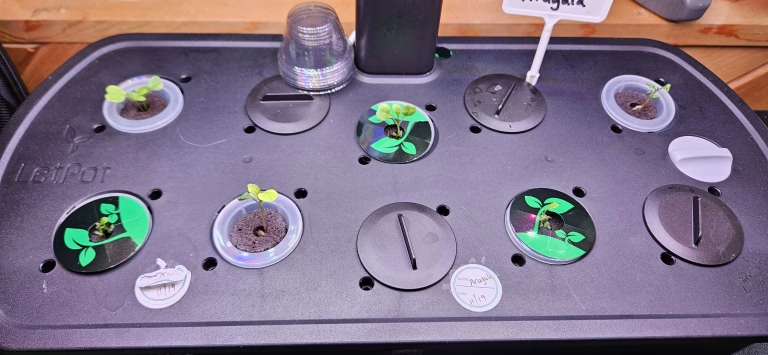
- Arugula: Adds a spicy kick to salads. It grows like a weed and germinates very quickly.
- Mustard Greens: fast-growing and adds variety to green mixes.
Top Herbs
- Basil: The absolute best herb for hydroponics. It grows massively in DWC systems.
- Note: Basil is thirsty! Check water levels daily once the plant is mature.
- Mint: extremely aggressive grower. Warning: Give mint its own reservoir, or its roots will strangle other plants in the system.
- Cilantro: Can be tricky as it bolts (flowers) quickly in heat. Harvest often to keep it vegetative.
- Parsley: Slow to germinate (up to 2 weeks) but produces steadily for months once established.
- Chives: easy to grow and requires very little space. Great for small Mason jar setups.
Choosing the Right Grow Media -> Best Growing Media for Beginners
Quick Reference: Beginner Crops
| Crop | pH Range | EC Range | Best System |
|---|---|---|---|
| Lettuce | 5.5 – 6.5 | 0.8 – 1.2 | DWC, NFT, Kratky |
| Basil | 5.5 – 6.5 | 1.0 – 1.6 | DWC, Ebb & Flow |
| Spinach | 5.5 – 6.5 | 1.8 – 2.3 | NFT, DWC |
| Pak Choi | 6.0 – 7.0 | 1.5 – 2.0 | DWC, NFT |
2. Intermediate Crops (Fruiting Vegetables)
Once you’ve mastered greens, these crops offer high rewards but require more attention. They need higher light intensity, specific flowering nutrients, and often manual pollination.
Small Fruiting Crops
- Strawberries: Hydroponic strawberries are incredibly sweet but sensitive to root rot.
- System Tip: NFT or specialized vertical towers work best to keep the fruit dry.
- Strawberries perform best in NFT channels or vertical tower systems.
- Nutrients: Keep EC lower (1.2 max) and ensure pH stays between 5.5–6.2.
- Peppers: Hot peppers (Jalapeños, Habaneros) love hydroponics. They can live for over a year indoors.
- Beans: Bush beans (like “Blue Lake” or “Contender”) are excellent for hydro. They are self-pollinating and fast.
- Cucumbers: Be prepared! Hydroponic cucumbers grow explosively fast (inches per day). You will need a strong trellis.
- Eggplant: Smaller varieties like “Fairy Tale” eggplant do well in standard 5-gallon buckets.
Hydroponic Nutrients 101 -> Ultimate Guide to Hydroponic Nutrients
Large Fruiting Crops (The Heavy Feeders)
- Tomatoes: The most popular intermediate crop.
- Determinate vs. Indeterminate: “Determinate” (bush) varieties are easier for indoor tents. “Indeterminate” (vining) types need serious space and pruning.
- Care: They are heavy drinkers and eaters. EC levels often need to be 2.0–3.5 depending on the stage.
- Tomatoes are heavy feeders that thrive in Dutch Bucket systems.
Quick Reference: Intermediate Crops
| Crop | pH Range | EC Range | Best System |
|---|---|---|---|
| Strawberries | 5.5 – 6.2 | 1.0 – 1.2 | NFT, Vertical Tower |
| Peppers | 5.5 – 6.0 | 2.0 – 2.5 | Dutch Bucket, DWC |
| Tomatoes | 5.5 – 6.5 | 2.0 – 4.0 | Dutch Bucket, DWC |
| Cucumbers | 5.5 – 6.0 | 1.7 – 2.5 | Dutch Bucket, DWC |
3. Advanced Crops (Root Vegetables & Exotics)
Growing root vegetables in water sounds contradictory, but it is possible. These are considered “advanced” because they often require specialized media beds rather than standard water-only systems.
Can You Grow Root Vegetables?
Yes, but you cannot just dangle them in water like lettuce. The edible root needs support and darkness.
19. Radishes: The easiest root crop. They grow fast enough that they don’t usually rot.
20. Carrots: Require a deep media bed (perlite/vermiculite mix) so the root can push down straight.
* Warning: Short, round varieties (like “Paris Market”) work better than long taproots. Short carrots do best in media beds filled with loose perlite.
21. Beets: Similar to carrots, they need loose media to expand.
22. Ginger & Turmeric: thrive in warm, wet conditions. An Ebb and Flow system filled with expanded clay pebbles works well.
Other Advanced Crops
- Melons (Watermelon/Cantaloupe): Like cucumbers but heavier. You need a sling system to support the heavy fruit so it doesn’t snap the vine.
- Corn: Possible, but requires significant space and wind/manual pollination. Not efficient for small indoor spaces.
- Blueberries: Very difficult because they require acidic pH (4.5–5.0), which is much lower than most other hydro crops.
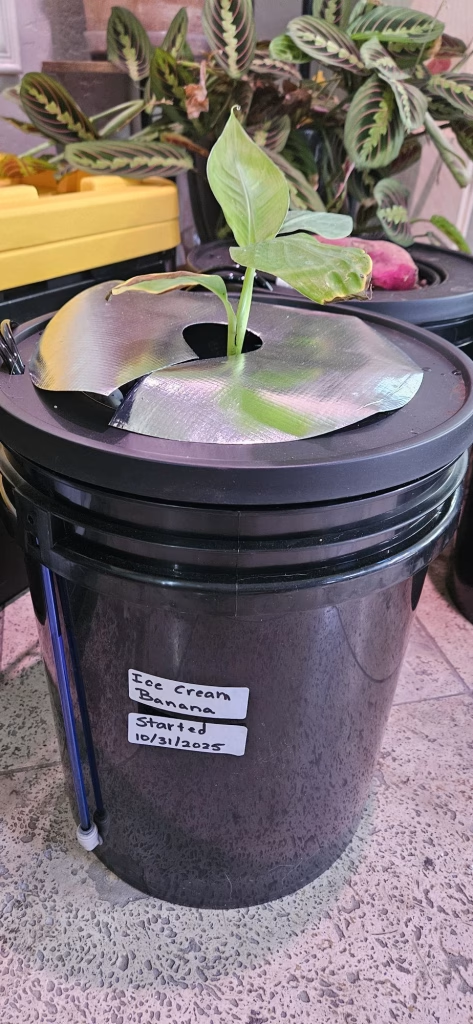
- Ice Cream Banana – (If you are really brave – dwarf fruit trees) My latest journey has been with an Ice Cream banana tree. As of this post revision – I am about 45 days in and have my first full new leaf. It took a little while to acclimate but seems to be doing well. (The Japanese Sweet Potato behind it didn’t fare so well – Kratky definitely works betters for sweet potatoes)
DWC vs Kratky -> Choosing the Best System
How to Choose Your First Hydroponic Crop
Before you buy seeds, follow this simple process to ensure you match the plant to your setup.
How to Select the Right Crop for Your System
Materials/Tools Needed:
- Seed catalog or online store
- Your hydroponic system specifications
- Space measurements
1. Determine your available light hours
Leafy greens can thrive on 12–14 hours of moderate light. Fruiting plants (tomatoes, peppers) need 16–18 hours of intense light to produce fruit. Match the plant to your lighting budget.
2. Check your temperature constraints
If your grow area is consistently hot (>80°F), avoid spinach and cilantro. Choose basil, peppers, or heat-tolerant lettuce. If your area is cool (<65°F), peppers will stall, but spinach will thrive.
3. Match root mass to reservoir size
Do not put a tomato plant in a 1-quart Mason jar; it will drink the water dry in hours.
- Small reservoirs (1 gal or less): Lettuce, herbs.
- Large reservoirs (5 gal+): Tomatoes, peppers, cucumbers.
4. Verify vertical space
Look at the “plant height” on seed packets. Indeterminate tomatoes can grow 8+ feet tall. For shelves or tents, stick to “dwarf” or “bush” varieties.
5. Group plants by nutrient strength (EC)
Do not plant lettuce (low feeder) in the same reservoir as tomatoes (heavy feeder). The nutrient strength needed for tomatoes will burn the lettuce. Group plants with similar EC requirements together.
6. Select your seeds
Purchase high-quality seeds. “Pelleted” seeds are easier to handle for rockwool cubes and small net cups.
Common Challenges & Local Tips
Growing in Central Arizona, or any hot, dry climate presents unique challenges for hydroponics.
- Water Temperature: High ambient heat warms your reservoir. Warm water holds less oxygen, leading to root rot.
- Fix: Keep your reservoir between 65°F–80°F. In my own setups during Arizona summers, I often use frozen water bottles in the reservoir during the hottest part of the day to keep temps down.
- Evaporation: In dry climates, water evaporates fast, leaving salts (nutrients) behind. This spikes your EC/PPM.
- Fix: Top off with plain pH-balanced water daily, rather than adding more nutrient solution, to keep EC stable.
Dealing with Root Rot -> How to Prevent Root Rot in Hydroponic Systems
FAQ: Growing in Hydroponics
1. Is hydroponic food safe to eat?
Yes, it is just as safe, if not safer, than soil-grown food. Because you control the environment, there is often less need for pesticides. The nutrients used are the same mineral salts found in soil, just in a purer form.
2. Does hydroponic food taste different?
It often tastes better! Because plants get perfect nutrition and water, they are less stressed. This typically results in tender greens and sweeter fruit. For example, hydroponic strawberries are famous for their intense flavor compared to store-bought ones.
3. How much does it cost to start?
You can start a simple “Kratky” lettuce jar for under $5 using recycled containers. A proper DWC setup for tomatoes might cost $50–$100 for buckets, pumps, and lights. The ongoing cost is electricity and nutrients, which is relatively low for small gardens.
4. Can I grow organic hydroponics?
It is difficult but possible. Most hydroponic nutrients are synthetic mineral salts because they dissolve fully. “Organic” nutrients are often thick and can clog pumps or cause odors in the water. For beginners, standard mineral nutrients are cleaner and easier.
5. How long does it take to see results?
Hydroponics is fast. You will often see roots popping out of seedlings in days. Lettuce can be harvested in 30 days. Fast herbs like basil can be harvested in 4-5 weeks from seed.
6. Do I need a greenhouse?
No. Most hobbyists grow indoors using LED grow lights. This allows you to grow year-round regardless of the weather outside. A spare closet, corner of a room, or basement works perfectly.
7. Why are my plants dying?
The most common reasons are pH imbalance (nutrients are locked out) or root rot (water is too hot or lacks oxygen). Check your pH daily and ensure your water smells fresh, not swampy.
About the Author
I am a cybersecurity engineer and avid hydroponics enthusiast based in Central Arizona. Living in a harsh desert climate, I’ve spent years perfecting indoor growing methods that withstand high heat and dry air. My passion is combining technology with sustainable food production to help others grow fresh food in any space, no matter how small.
Share this:

Discover more from Soil Free Harvest
Subscribe to get the latest posts sent to your email.





8 Comments