How AI and Smart Sensors Are Changing Indoor Hydroponics
In the last decade, indoor hydroponic farming has evolved from a curiosity into a thriving solution for sustainable, high-yield crop production. As cities become denser and traditional agriculture faces challenges from climate change and land scarcity, hydroponics (growing plants without soil) has emerged as a transformative method to secure fresh produce.
But a new revolution is underway within this already innovative field. The combination of artificial intelligence (AI) and smart sensors is reshaping indoor farming systems, making them more efficient, data-driven, and resilient than ever before.
Whether you’re a home grower, a commercial farmer, or a tech enthusiast, understanding how AI and smart sensors are changing indoor hydroponics can help you build more productive systems.
We’re passionate about uncovering how these technologies empower growers at every level through curated affiliate-linked recommendations and unbiased comparisons.
Affiliate Disclosure: This article contains affiliate links. If you purchase through these links, soilfreeharvest.com may earn a small commission at no extra cost to you.
What Is Indoor Hydroponics?
At its core, hydroponics replaces traditional soil-based agriculture with a nutrient-rich water solution that delivers all essential minerals directly to the plant roots. This setup allows precise control over conditions such as pH levels, light exposure, and oxygenation, producing significantly faster and cleaner growth.
Common hydroponic systems include:
- Deep Water Culture (DWC) – Plants are suspended in nutrient-rich water, with roots fully submerged.
- Nutrient Film Technique (NFT) – A thin film of nutrient solution continuously flows over plant roots.
- See our full guide to NFT here: Complete Guide to NFT Hydroponic Systems
- Aeroponics – Nutrients are delivered via mist, maximizing oxygen exposure to roots.
- Ebb and Flow Systems – Water floods the plant tray periodically and then drains away.
However, the delicate balance of water, nutrients, temperature, and humidity demands constant monitoring. That’s where AI and smart sensors come in, reducing guesswork and maximizing efficiency for growers.
The Rise of AI in Controlled Environment Agriculture
Artificial intelligence has rapidly become a cornerstone of Controlled Environment Agriculture (CEA). In hydroponics, AI algorithms process enormous amounts of sensor data to make micro-adjustments to temperature, lighting, and nutrient delivery.
How AI Enhances Hydroponic Systems
AI’s role in hydroponics extends beyond automation. It’s about optimization, learning from patterns, responding to environmental shifts, and predicting plant needs before stress arises.
Key AI applications include:
- Predictive Analytics: Machine learning models anticipate nutrient deficiencies or pest risks before they occur.
- Automated nutrient dosing: AI adjusts concentrations in real time to match plant growth stages.
- Climate control: Algorithms balance humidity, temperature, and CO₂ levels using learned patterns.
- Yield forecasting: AI systems analyze plant health data to project harvest size and timing.
These capabilities free growers from excessive manual monitoring, allowing them to focus on strategic decisions like scaling operations or experimenting with new crops.
Affiliate recommendation: One of our top-rated AI systems for home hydroponic controllers is AC Infinity Controller AI+ with CO2 Sensor Bundle, available through our affiliate partners.
Smart Sensors: The Foundation of Data-Driven Growth
No AI system can function effectively without accurate, real-time data. Smart sensors serve as the “eyes and ears” of a hydroponic farm, monitoring dozens of environmental factors simultaneously.
Types of Sensors Common in Hydroponics
- pH and EC Sensors – Measure water acidity and nutrient concentration, critical for plant nutrient uptake.
- Temperature and Humidity Sensors – Maintain optimal growing conditions within closed environments.
- CO₂ Sensors – Monitor carbon dioxide levels to boost photosynthesis rates.
- Dissolved Oxygen Sensors – Ensure roots are well-oxygenated to prevent rot.
- Optical Sensors – Assess light intensity and spectrum for smart lighting systems.
- Root-Zone Moisture Sensors – Detect hydration changes for aeroponic and drip systems.
Paired with AI, these sensors allow for real-time feedback loops. Data is collected, analyzed, and acted upon automatically. For instance, if sensors detect a drop in humidity, AI can instantly activate misting systems to prevent dehydration stress.
AI-Driven Automation in Modern Hydroponic Farms
Automation is where smart sensors and AI truly shine together. What once required manual calibration can now be handled autonomously by integrated systems capable of learning and adapting over time.
Intelligent Climate Regulation
AI synchronizes with environmental control systems, managing temperature, humidity, CO₂, and ventilation automatically. By learning from sensor data trends, AI minimizes fluctuations that could otherwise hinder plant growth.
Nutrient Management Systems
AI-driven dosing units use continuous feedback from pH and EC sensors to precisely deliver nutrients. Systems analyze plant consumption patterns to avoid overfeeding or nutrient imbalance, optimizing resource efficiency.
Affiliate recommendation: For growers wanting modular automation, we recommend systems like Bluelab Guardian Monitor
Smart Lighting Control
Lighting consumes up to 60% of energy in indoor farms. AI-enabled systems optimize light duration and intensity based on crop type and growth phase. For example, machine learning algorithms can dim or switch lights off in unoccupied zones, reducing wasted energy without affecting yield.
The Data Advantage: Insights for Continuous Improvement
Beyond immediate automation, data generated from AI and sensor networks become a valuable asset for strategic decision-making. Every crop cycle produces data that can be used to refine processes and predict long-term outcomes.
Historical Data and Performance Trends
AI compiles and visualizes historical datasets, helping growers compare yields, nutrient formulations, or environmental changes across seasons. Over time, this results in a self-improving system capable of precision agriculture on a micro-scale.
Predictive Maintenance
By analyzing sensor trends, AI can predict equipment wear or system failures before they occur. This proactive maintenance cuts downtime and reduces operational costs, vital for large-scale hydroponic facilities where a single malfunction can jeopardize thousands of plants.
AI and Sustainability: More Crop, Less Waste
Hydroponics already uses up to 90% less water than traditional soil farming, but AI and sensors take this sustainability benefit even further.
- Water recycling: AI systems detect when water can be safely recirculated without recontamination.
- Nutrient optimization: Algorithms ensure that only required nutrients are added, reducing waste discharge.
- Energy efficiency: AI-powered lighting automatically adjusts to daylight patterns or renewable grid availability.
- Reduced pesticide usage: Early detection of plant stress helps eliminate the need for broad-spectrum chemical use.
The resulting sustainability profile appeals not just to eco-conscious consumers but also investors seeking green technology ventures and climate-smart agriculture solutions.
How Smart Sensors Help Small-Scale Growers
Although many AI-enabled farms are large commercial operations, the technology has become increasingly accessible for small-scale hobbyists thanks to modular IoT (Internet of Things) systems.
Examples include:
- Wi-Fi enabled grow monitors: Mobile apps visualize temperature, pH, and moisture in real time.
- Plug-and-play controllers: Affordable automated timers and dosing pumps adapt from small to medium grows.
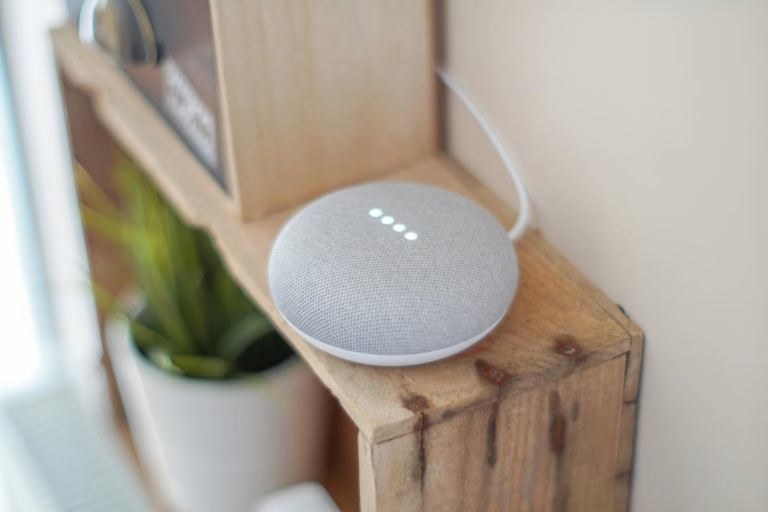
- Voice integration: Systems compatible with Alexa or Google Home allow voice commands like “increase nutrient pump flow.”
These simple setups provide the same advantages as commercial-grade facilities on a smaller, more affordable scale, making home hydroponics and urban indoor farming more accessible than ever.
Check our Beginner’s Guide to Hydroponic Automation
AI-Based Crop Analysis and Health Detection
One of the most exciting areas of development in hydroponic AI is visual recognition and plant health diagnostics. Using camera sensors integrated with machine learning, systems can detect issues invisible to the human eye.
Example Capabilities
- Leaf discoloration detection: Identifies early signs of nutrient deficiency or disease.
- Growth tracking: Measures canopy expansion and leaf area to assess vigor.
- Pest and mold detection: Flags suspect patterns or speckles that indicate infestation.
- Harvest readiness prediction: AI evaluates maturity levels and recommends optimal harvesting time.
These computer vision systems enable non-invasive plant monitoring, catching problems before they become widespread crop failures.
While there are not a lot of systems out there that support this, TrolMaster has good modular options for automation, including a camera for about ~$150: TrolMaster TC-1 Grow Camera
The Economics: Cost vs. Return on Investment
At first glance, incorporating AI systems and sensors can seem expensive. However, operational efficiency and yield improvements typically create payback within one to three growing cycles.
Major ROI Factors
- Yield improvement: Up to 30% increase through micro-optimized nutrient delivery.
- Resource savings: 20 to 40% less water and nutrient waste.
- Labor savings: Up to 50% reduction in active human monitoring hours.
- Reduced crop loss: AI early alerts prevent disease and environmental stress damage.
This makes AI-driven hydroponics not just a technological luxury but a financially sound strategy for sustainable farming growth and precision agriculture profitability.
Real-World Success: Plenty Richmond Farm
Plenty Richmond Farm in Virginia represents a landmark achievement in AI-driven indoor hydroponics. Opened in September 2024, this facility is recognized as the world’s first large-scale indoor vertical farm dedicated to berry production. The farm produces over 4 million pounds of strawberries annually on less than one acre of land using 30-foot-tall vertical towers, a dramatic contrast to traditional farming methods. Source: newsweek
The farm’s AI system analyzes more than 10 million data points daily across 12 specialized growing rooms, continuously optimizing temperature, humidity, light intensity, and nutrient delivery to match the evolving needs of the plants. This precision automation has enabled the facility to use 97% less land and up to 90% less water than conventional strawberry farming while eliminating pesticide use entirely. Source: newatlas
Through six years of research involving 200 trials and collaboration with universities worldwide, including the University of Queensland, Wageningen University, and the University of Florida, Plenty perfected a patent-pending pollination system that surpasses traditional bee pollination in efficiency. The controlled environment enables year-round production with consistent peak-season flavor, independent of weather or seasonal constraints. Source: plenty
Innovation at Scale: Oishii’s Amatelas Farm
Another compelling example comes from Oishii’s Amatelas Farm in Phillipsburg, New Jersey, which opened in 2024 as a 237,400-square-foot solar-powered vertical strawberry operation. This facility showcases the integration of robotics, artificial intelligence, and renewable energy in commercial hydroponics.
Nearly 50 proprietary robots work continuously at Amatelas Farm, capturing over 60 billion data points annually through machine vision and learning systems. These robots monitor plant health, optimize pollination timing by coordinating bee activity, and ensure berries are harvested at peak ripeness. The AI analyzes visual data from strawberry flowers to assess yield predictions and adjusts environmental variables in real time to maximize quality. Source: thepacker
The farm features 250 mobile racks, each with eight growing levels that cycle through simulated day and night conditions on a 24-hour schedule. This dynamic architecture, powered primarily by an adjacent 50-acre solar field, is designed to produce 20 times more strawberries than Oishii’s previous generation farms while using 14% less energy per plant. A multi-million-dollar water purification system recycles the majority of water used, demonstrating how AI-driven hydroponics advances both productivity and sustainability. Source: bluebookservices
These real-world implementations demonstrate AI’s transformative power in making hydroponic growing not just possible but scalable, profitable, and environmentally sustainable.
Future Trends: Where AI and Sensors Go Next
As both computing power and sensor affordability improve, the next decade will see widespread adoption of fully autonomous hydroponic farms. Key emerging trends include:
- Edge AI Systems: Local AI processing chips embedded directly in sensors, reducing latency and energy use.
- Cross-farm Data Networks: Shared cloud platforms that aggregate anonymous data from multiple growers for collective learning.
- Robotic Integration: Autonomous planting, pruning, and harvesting robots working alongside AI-driven environmental systems.
- Self-healing Systems: AI capable of automatically rerouting water flow or energy supply when failures occur.
- Quantum AI Forecasting: Experimental technologies promising near-perfect crop outcome prediction algorithms.
Privacy and Data Ethics in AI-Driven Hydroponics
As more farms adopt AI and IoT systems, data privacy and ownership become increasingly relevant. Farmers must ensure that cloud-linked controllers and machine learning networks safeguard operational data.
Transparent AI governance, including encryption, limited data retention, and open-source auditing, will be crucial. Users should choose systems that clearly outline how their agricultural data is used and stored.
Practical Tips for Integrating AI and Sensors
If you’re looking to modernize your hydroponic system with AI, here are straightforward steps to get started:
- Begin with sensor-based automation: Start small by automating pH and EC measurements using a smart controller.
- Adopt an AI-enabled platform: Choose a system that scales with your needs rather than overhauling your entire setup.
- Monitor data actively: Spend time analyzing AI reports to understand your crops’ patterns before enabling full autonomy.
- Update regularly: Keep firmware and app versions up to date for optimal cybersecurity and performance.
- Invest in training: Learn the basics of data analysis and AI calibration to stay in control of your system.
Final Thoughts: The Future of Intelligent Farming
The integration of AI and smart sensors into indoor hydroponics represents more than just a technological upgrade. It’s the next generation of food production. By optimizing everything from nutrient levels to energy efficiency, intelligent systems ensure consistent output with minimal waste and environmental impact.
From hobbyist growers using smartphone apps to massive vertical farms powered by predictive AI, the scope of possibility continues to expand.
For anyone interested in entering this space, one thing is clear: the future of farming is digital, data-driven, and sustainable.
FAQs
Q: What is AI hydroponics and how does it work?
A: AI hydroponics combines artificial intelligence with hydroponic farming systems to monitor and automatically adjust environmental conditions like temperature, humidity, nutrients, and lighting. AI analyzes data from sensors in real time and makes precision adjustments to optimize plant health and maximize yields.
Q: How do smart sensors improve hydroponic farming?
A: Smart sensors continuously monitor critical factors such as pH levels, nutrient concentration, temperature, humidity, and dissolved oxygen. This real-time data allows growers to make informed decisions or enables AI systems to automatically adjust conditions, reducing manual labor and preventing crop stress.
Q: Can small-scale growers afford AI hydroponic systems?
A: Yes. AI and smart sensor technology has become increasingly affordable through modular IoT systems, plug-and-play controllers, and Wi-Fi-enabled monitoring kits. Many entry-level systems are now available for home growers and hobbyists.
Q: What crops grow best in AI-controlled hydroponic systems?
A: Leafy greens like lettuce, spinach, and kale, as well as herbs such as basil and cilantro, thrive in AI hydroponic setups. Strawberries, tomatoes, and peppers are also popular in vertical farming systems with automated climate control.
Q: How much water do AI hydroponic farms save compared to traditional farming?
A: AI-optimized hydroponic systems can use up to 90 to 97% less water than traditional soil-based farming by recycling water and delivering precise amounts based on real-time plant needs.
Q: Are AI hydroponic systems sustainable and eco-friendly?
A: Yes. AI hydroponics reduces water waste, eliminates soil degradation, minimizes pesticide use, and optimizes energy consumption through smart lighting and climate control. These systems support sustainable urban agriculture and reduce the carbon footprint of food production.
Q: How long does it take to see ROI from AI hydroponic investments?
A: Most growers see a return on investment within one to three crop cycles due to increased yields (up to 30%), reduced resource waste (20 to 40%), lower labor costs (up to 50%), and minimized crop loss from early disease detection.
Q: What is the role of computer vision in hydroponic farming?
A: Computer vision uses cameras and AI to visually monitor plants for signs of stress, disease, nutrient deficiencies, or pest infestations. It enables non-invasive plant health assessment and can predict optimal harvest timing.
Share this:

Discover more from Soil Free Harvest
Subscribe to get the latest posts sent to your email.