
Hydroponic Plant Microbiomes: The Hidden Ecosystems in Your Roots
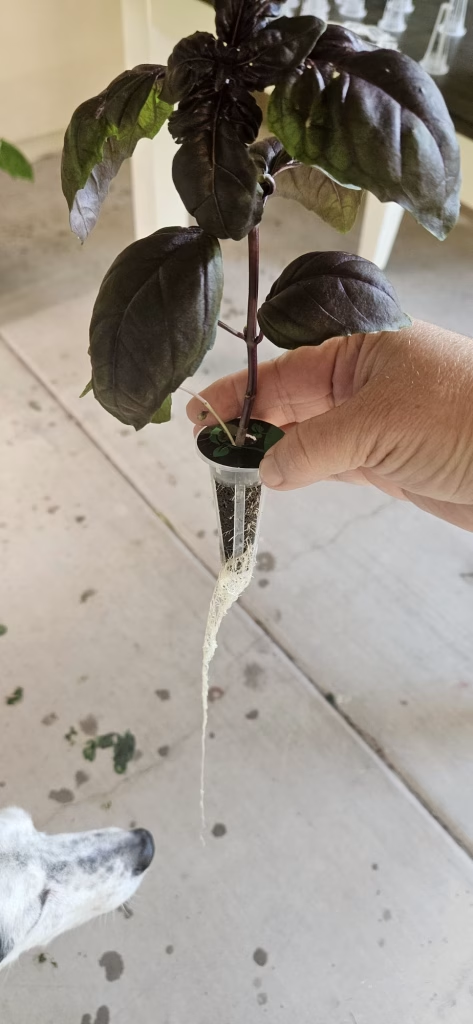
Hydroponic systems are often marketed as clean, controlled, and almost laboratory pure. Yet right under the surface of your nutrient solution there is a living, shifting community of bacteria and fungi that behaves more like a wild ecosystem than a sterile tank.
That hidden ecosystem is your hydroponic plant microbiome. Far from being passive passengers, your plants actively shape which microbes live around their roots and which ones get pushed out. Recent research suggests that roots use sophisticated chemical signaling, feedback loops, and even long distance coordination that looks a lot like a form of plant intelligence in action.
This guide explores what hydroponic plant microbiomes are, how plants recruit beneficial microorganisms in water based systems, and what that reveals about the way plants sense, decide, and adapt. You will also find practical steps to encourage helpful microbes in your own system without turning it into a slimy mess.
What Is a Plant Microbiome in Hydroponics
The plant microbiome is the community of microorganisms that live on and inside a plant. In hydroponics, this is mostly concentrated around the roots. It includes:
- Rhizosphere: The thin zone of solution or media directly influenced by the root.
- Rhizoplane: The actual root surface where microbes attach and form biofilms.
- Endosphere: Microbes that live inside the root tissues.
Even in fully soilless systems, roots do not stay sterile for long. Studies in rockwool grown tomato and lettuce systems show that hydroponic setups quickly develop dense, structured root microbiomes with their own characteristic composition and dynamics. In fact:
- Hydroponic roots can host microbial communities as diverse as those in soil, especially as crops mature and stay healthy.
- The community around the root surface is different from the circulating solution, which means roots are not simply coated with whatever drifts by. They select.
So when you look at a white root mass in DWC, NFT, or rockwool, what you are really seeing is the scaffolding for an entire microscopic city of organisms your plant interacts with every minute.
How Roots Shape Their Own Microbiome in Water
A common myth in hydroponics is that microbes in the water column colonize roots purely by chance. If the system is “dirty,” roots will just be covered by whatever happens to be floating around.
In reality, plants are not passive. Research with lettuce in hydroponic and aquaponic systems showed that plants exert a stronger influence on rhizosphere composition than the upstream source water. In that study:
- Lettuce was grown in different water sources, including nutrient solution, aquaculture water, and inoculated treatments.
- Despite different starting communities in the water, the root associated microbiome converged toward a plant specific pattern across treatments.
This supports a couple of important ideas:
- Plants have a core microbiome they tend to assemble around their roots.
- Roots are not just surfaces to colonize. They are active filters, selecting some microbes, feeding others, and starving or rejecting the rest.
Root exudates as the steering wheel
The main tool plants use to shape their microbiome is root exudates. These are organic compounds plants intentionally release into the root zone, including:
- Sugars
- Organic acids
- Amino acids
- Secondary metabolites such as coumarins, flavonoids, terpenes, and other signaling molecules
Plants can allocate a surprisingly large fraction of their energy to this. Estimates suggest that 10 to 50 percent of the carbon fixed during photosynthesis can be secreted as exudates.
These exudates do several jobs at once:
- Provide food that favors helpful microbes over freeloaders.
- Act as signals that attract specific beneficial species.
- Influence quorum sensing and communication in bacterial communities.
- Help microbes recognize that they are in a friendly environment rather than a hostile one.
In hydroponics, that same chemistry plays out in the thin film of nutrient solution, in rockwool pores, or on net pot surfaces. Roots essentially carve out a zone around themselves where the conditions are radically different from the bulk reservoir, even though everything is connected.
Hydroponic Versus Soil Microbiomes
Soil is traditionally seen as the natural home of complex plant microbiomes. Hydroponics is often viewed as a simplified version of that world. The reality is more nuanced.
Diversity and structure
Reviews of rockwool and other hydroponic substrates show that:
- Hydroponic root microbiomes may have lower overall diversity than soil, but they are still rich and functionally complex.
- Rockwool tends to favor bacteria over fungi compared with organic substrates.
- Within the hydroponic environment, a facility specific microbiome often develops. Over time, each greenhouse or grow room evolves its own characteristic microbial signature around roots.
Importantly, microbial communities at the root surface are distinct from those in the circulating nutrient solution. Studies with lettuce and rockwool demonstrated that root communities and solution communities begin to diverge within about 12 days after germination, and the gap continues to widen as plants grow.
In other words, the plant is not just a passive extension of the reservoir. It is more like an active gatekeeper that constructs its own private ecosystem on its roots.
Time and plant age
Plant age often turns out to be one of the strongest drivers of microbiome composition. Work in hydroponic tomatoes found that the root community changes more with plant age than even with some disease pressures, which suggests developmental stage is a major organizing force.
- Young plants establish a microbiome that looks very different from the community later in the crop cycle.
- As crops mature, their microbiomes in hydroponics may begin to resemble those of soil grown plants, especially in healthy, well managed systems.
If you run long cycle crops like tomatoes, cucumbers, or peppers, your root microbiome is not static. It is evolving with your plants, often in ways that support their changing nutrient and defense needs over time.
Evidence That Plants Actively Recruit Beneficial Microbes
The idea that plants “choose” their microbial partners sounds almost mystical until you look at the experiments. Hydroponic and split root systems have become powerful tools to show that plant behavior is not random.
Systemically induced root exudation
One landmark set of experiments used a split root hydroponic system in tomato to test how local microbial colonization affects root exudation elsewhere on the same plant.
Researchers grew tomatoes with their roots divided into two sides:
- One side was inoculated with different soil microbial communities.
- The other side was kept separate and analyzed for changes in exudates.
They found that:
- Colonizing just one side of the root system with specific microbes caused systemic changes in exudation on the opposite side.
- The composition of exuded metabolites shifted in ways linked to defense and stress responses.
This phenomenon was named systemically induced root exudation of metabolites (SIREM). It shows that:
- Plants sense which microbes are present on one set of roots.
- They transmit that information internally.
- They then respond by changing exudation patterns somewhere else to influence the microbiome there.
That internal sensing and coordinated response across different root zones is a clear sign of complex information processing, not just automatic leakage.
Exudates under nutrient and stress conditions
Other studies have shown that root exudates change under specific stress conditions, leading to selective recruitment of beneficial microbes. For example:
- In iron limited conditions, the production of coumarins and related exudates helps restructure the root microbiota so that iron mobilizing microbes become more abundant and efficient.
- Certain exudates modulate bacterial quorum sensing and perception signals, which can suppress pathogens while favoring symbiotic or neutral members of the community.
In hydroponics, similar logic applies. When plants experience nutrient imbalance, disease pressure, or abiotic stress, they can shift the profile of exudates in the root zone, which favors specific microbial allies that help them cope.
Pathogens versus bodyguards
Research in rockwool tomato systems has examined how pathogens and beneficial microbes interact at the root surface:
- Beneficial Bacillus and Pseudomonas strains can colonize roots and suppress fungal diseases like Pythium and Fusarium through competition, antibiotic production, and induced plant defenses.
- Non pathogenic Fusarium species can help control more aggressive Fusarium strains and other root rots when they colonize the same niche.
In some trials, the presence of a robust commensal bacterial community in a recirculating system reduced disease incidence compared with constantly refreshed “clean” water, because the dense microbiome left little space and nutrients for pathogens to attack.
Plants are not only reacting to microbes. They are enlisting them as part of their immune system, and hydroponics gives a clearer window into that behavior.
What This Reveals About Plant Intelligence
Traditional agriculture often treats plants as passive victims of their environments. Modern plant biology paints a very different picture.
To talk about plant intelligence in a scientific sense, it helps to define it carefully:
Intelligence, in this context, means the ability of an organism to sense its environment, process information, and adjust behavior adaptively to improve survival or reproduction.
Plants obviously do not have brains, but several features of their microbiome interactions strongly resemble intelligent, strategic behavior.
Sensing and discrimination
Plants can:
- Distinguish between different microbial strains based on subtle surface molecules and signaling compounds.
- Recognize beneficial symbionts versus pathogens and shift defense responses accordingly.
- Adjust root exudates to favor allies and discourage enemies, including tweaking specific classes of metabolites.
This is context aware discrimination, not random chemical leakage.
Distributed decision making
The SIREM work in tomato shows long distance communication between root regions. Roots colonized on one side influence exudation patterns on the other side, which suggests:
- Local sensing of microbial communities.
- Internal signaling through vascular or hormonal pathways.
- Remote adjustments in exudation to reshape a physically distant microbiome.
This kind of distributed control resembles a decentralized nervous system. Instead of a central brain, each root zone participates in a network of local decisions and systemic messages.
Learning like behavior
When plants encounter pathogens or beneficial microbes, they can undergo systemic priming. After an initial encounter, defense and exudation responses are often faster or stronger on the next exposure, even in other parts of the root system.
That is not memory in the human sense, but it is functionally similar to a learned response:
- Stimulus
- Internal state change
- Altered future behavior
Viewed through this lens, the hydroponic root microbiome becomes a living record of the plant’s history of interactions and choices.
Why a Healthy Hydroponic Microbiome Matters for Growers
Concepts like plant intelligence and exudate driven recruitment are interesting, but they also have very practical consequences for your yields and system stability.
A well balanced hydroponic plant microbiome can:
- Improve nutrient uptake efficiency
Microbes recycle complex organic residues and trace contaminants into plant available forms and stimulate root development through hormones like auxins and cytokinins. - Enhance pathogen resistance
Beneficial microbes compete for space and resources, produce antibiotics safe for plants, and trigger systemic resistance that makes roots less susceptible to disease. - Increase stress tolerance
Under salinity, drought like conditions in recirculation, or temperature swings, microbially mediated changes in exudation and hormone balance can help plants maintain growth. - Stabilize your system over time
Systems with a mature microbiome often show fewer violent swings in pH and fewer explosive disease outbreaks than constantly sterilized setups, provided hygiene is still reasonable.
Growers who work with beneficial microbes often describe the result as a “buffered” system that feels more forgiving of small mistakes.
How Growers Accidentally Destroy Their Root Microbiomes
Many hydroponic guides still promote a zero microbe mindset:
- Bleach or peroxide between every crop.
- Regular dosing of strong oxidizers in the reservoir.
- Obsession with crystal clear, biologically lifeless nutrient solution.
Some sanitation is essential, especially in commercial operations, but there is a catch. When you aggressively nuke every surface and then refill with sterile nutrient solution, you are not just killing pathogens. You are removing the entire protective community and leaving an empty stage.
Experienced growers and community discussions often highlight a pattern:
- Over sterilized systems are more prone to recurring root rot cycles.
- Once a pathogen like Pythium takes hold, it spreads quickly because there is no competing microbiome to resist it.
As one grower comment summarized, a perfectly “cleaned out” system with fresh nutrient can become a playground for whatever pathogen happens to land there next, while systems that carry over beneficial communities often stay more stable.
In scientific studies, recirculating hydroponic systems with robust bacterial communities have sometimes shown lower Pythium incidence than constantly refreshed setups, because the dense, adapted microbiome suppresses pathogen establishment.
The lesson is not to abandon hygiene. It is to recognize that hygiene and biology must be balanced rather than treated as opposites.
How To Encourage Beneficial Microbes in Your Hydroponic System
Here are practical strategies to support a healthy root microbiome without turning your reservoir into a swamp.
1. Start with living inoculum instead of a blank slate
If your system is brand new or has just been deeply sanitized for a legitimate reason, consider ways to introduce beneficials early:
- Allow a small portion of healthy, disease free root zone media or solution from a previous successful run to “seed” the new system.
- Use microbial inoculants that contain strains of Bacillus, Pseudomonas, or Trichoderma that are documented to colonize roots and support growth.
In commercial rockwool tomato systems, certain beneficial fungi such as Trichoderma species help maintain microbiome balance and reduce disease risk when established early.
The goal is not to rely on a single “magic” product but to jump start diversity so plants can recruit the partners they want.
2. Give microbes a stable, oxygen rich habitat
Beneficial root microbiomes thrive where:
- Dissolved oxygen is high
Aerated DWC, properly designed NFT channels, and well drained substrates prevent anaerobic zones that favor root rot organisms. - Temperature is within a moderate band
Warm nutrient solutions accelerate microbial and pathogen activity. Keeping solution temperature in a reasonable range limits explosive growth of opportunistic pathogens while still allowing beneficial metabolism. - Biofilms have somewhere to live
In systems like rockwool or other porous substrates, matrix surfaces support stable microbial communities. Even in bare root DWC, root hairs, net pots, and reservoir walls become colonization sites.
A well oxygenated, thermally stable, and gently circulating system favors beneficial aerobic communities that work with your plants instead of against them.
3. Feed the microbiome by letting plants do their job
You do not need to add sugar or molasses to a hydroponic reservoir for microbes to thrive. In fact, heavy carbon additions can backfire by feeding pathogens and crashing oxygen levels.
Plants already invest heavily in root exudates, providing a steady flow of organic acids, amino acids, and sugars to the rhizosphere. To support this natural process:
- Avoid extremely harsh nutrient swings that shock root metabolism.
- Keep EC appropriate for the crop and stage so roots are healthy and exuding at a normal rate.
- Maintain good plant vigor through proper lighting, temperature, and airflow.
Healthy plants will naturally “pay” their microbial partners with exudates in return for better access to nutrients, water, and protection.
4. Balance cleaning with biological continuity
Total system resets are sometimes necessary, for example after a severe outbreak of Pythium or Fusarium. But as a routine practice, you can often use a softer hygiene approach that leaves room for beneficials to persist:
- Physically remove root debris and organic sludge between crops.
- Use moderate sanitization on hard surfaces while leaving a small volume of solution or a bit of media from a healthy system to re inoculate.
- Avoid continuous dosing of strong oxidizers like high level hydrogen peroxide in a running system if your goal is to cultivate a stable microbiome.
Think of it this way: you want to curate your hydroponic microbiome, not erase it every time.
Simple Experiments To Watch Plant Intelligence At Work
If you are running a home or small commercial system, you can design simple experiments to see microbiome behavior and plant recruitment in action.
Experiment 1: Sterile style versus microbially active
Set up two small DWC or Kratky reservoirs with identical lettuce or basil:
- In System A, use freshly sanitized equipment and sterile nutrient solution. Keep everything as clean as possible and avoid deliberate microbial additions.
- In System B, introduce a small amount of healthy solution or media from an established, disease free system, or use a reputable microbial inoculant.
Monitor:
- Root color and structure over several weeks.
- Time to visible root biofilm or slight cloudiness in the rhizosphere.
- Incidence of root rot symptoms or nutrient issues.
You may find that System B develops a more complex but healthier root environment, while System A is more vulnerable to any invading pathogen because it lacks a protective community.
Experiment 2: Root area sampling
In a system with accessible roots:
- Gently observe roots near the crown versus fine tips.
- Note where slimy films or tan coatings develop first.
In studies, bacteria often concentrate near root tips and actively exuding regions, not randomly across the root mass, indicating targeted attraction to exudate rich zones. Even without a microscope, you can often see that colonization is not uniform.
These simple observations reinforce the idea that roots are shaping where and how microbes attach, not just getting uniformly coated by whatever floats in the water.
When a More Sterile Approach Still Makes Sense
Although a live microbiome is beneficial in many cases, some situations truly do call for highly sanitized conditions:
- Tissue culture and plant propagation labs where contamination can ruin high value clones.
- Very short term propagation of cuttings that will later be transplanted into other systems or media.
- Systems with immunocompromised users who need reduced pathogen exposure from aerosols or surfaces.
Even then, it can be helpful to treat sterile systems as temporary stages in a broader production pipeline, with plans to introduce plants into more biologically active environments later in their life cycle.
For most home and hobby scale hydroponic growers, and for many commercial greens and fruiting operations, a carefully managed microbiome is a performance asset, not a liability.
Frequently Asked Questions About Hydroponic Microbiomes
Do hydroponic systems really need microbes, or is it better to stay as sterile as possible
Completely sterile systems are rare outside of lab settings and are extremely difficult to maintain in practice. Evidence from commercial greenhouses, rockwool systems, and lettuce hydroponics shows that:
- Microbial communities inevitably establish in root zones.
- Well balanced, plant selected communities support plant health and can suppress disease.
Trying to stay perfectly sterile often leads to repeated cycles of cleaning and reinfection instead of letting a stable protective community form.
Which beneficial microbes are most useful in hydroponics
Several groups show up repeatedly in hydroponic and soilless studies:
- Bacillus species that form resilient spores and colonize roots while producing antibiotics and growth promoting compounds.
- Pseudomonas species that are strong colonizers, good competitors, and effective in biocontrol of root pathogens in tomato and other crops.
- Trichoderma fungi that help maintain balance in the root microbiome and protect against opportunistic invaders, especially in rockwool setups.
Commercial inoculants often blend these or similar organisms. Their success, however, still depends on good system design and plant health.
Will adding sugars or organic additives help the microbiome
In most recirculating hydroponic systems, adding simple sugars is risky:
- It can fuel explosive microbial growth in the reservoir rather than at the root surface.
- Rapid blooms may deplete oxygen and favor opportunistic pathogens.
Plants already supply targeted carbon through exudates, so the safest strategy is usually to support plant health and steady root function instead of dumping extra carbon into the tank.
How can I tell if my microbiome is “healthy”
You do not need sequencing data to spot red flags. Signs of a reasonably balanced microbiome include:
- Roots that are off white to cream but not foul smelling or slimy.
- A mild earthy smell rather than a sour or rotten odor.
- Stable pH trends and nutrient uptake with no sudden unexplained crashes.
- Low incidence of root rot or sudden wilting in otherwise well managed conditions.
If you see brown, mushy roots, strong sulfur or rotten smells, or rapid plant decline, those are signs that pathogenic organisms have gained the upper hand, and sanitation plus microbiome rebuilding may be needed.
Bringing It All Together: Working With Plant Intelligence Instead of Against It
Hydroponic systems are not glass boxes full of inert nutrient solution. They are living environments where plants, microbes, and water continuously negotiate with each other.
The research behind hydroponic and rockwool root microbiomes shows that:
- Plants can assemble and maintain diverse microbial communities in fully soilless systems.
- They do this using carefully tuned root exudates that feed, attract, or repel specific microbes.
- They sense their microbial partners on one root segment and adjust exudation elsewhere, demonstrating system wide coordination that strongly resembles intelligent behavior.
For growers, this means that sterility is not the only route to control. Encouraging the right kind of microbial life in your root zone can:
- Improve nutrient efficiency and plant resilience.
- Reduce disease pressure and the need for harsh chemical interventions.
- Create a more forgiving, self stabilizing system that continues to perform even under small mistakes.
The more your hydroponic garden behaves like a well managed ecosystem rather than a lifeless tank, the more it reveals just how sophisticated and adaptable plants really are. By tuning your practices to respect and harness the hydroponic plant microbiome, you are not simply growing plants. You are collaborating with their hidden decision making systems that have been learning how to manage microbes for millions of years.
Share this:

Discover more from Soil Free Harvest
Subscribe to get the latest posts sent to your email.









One Comment