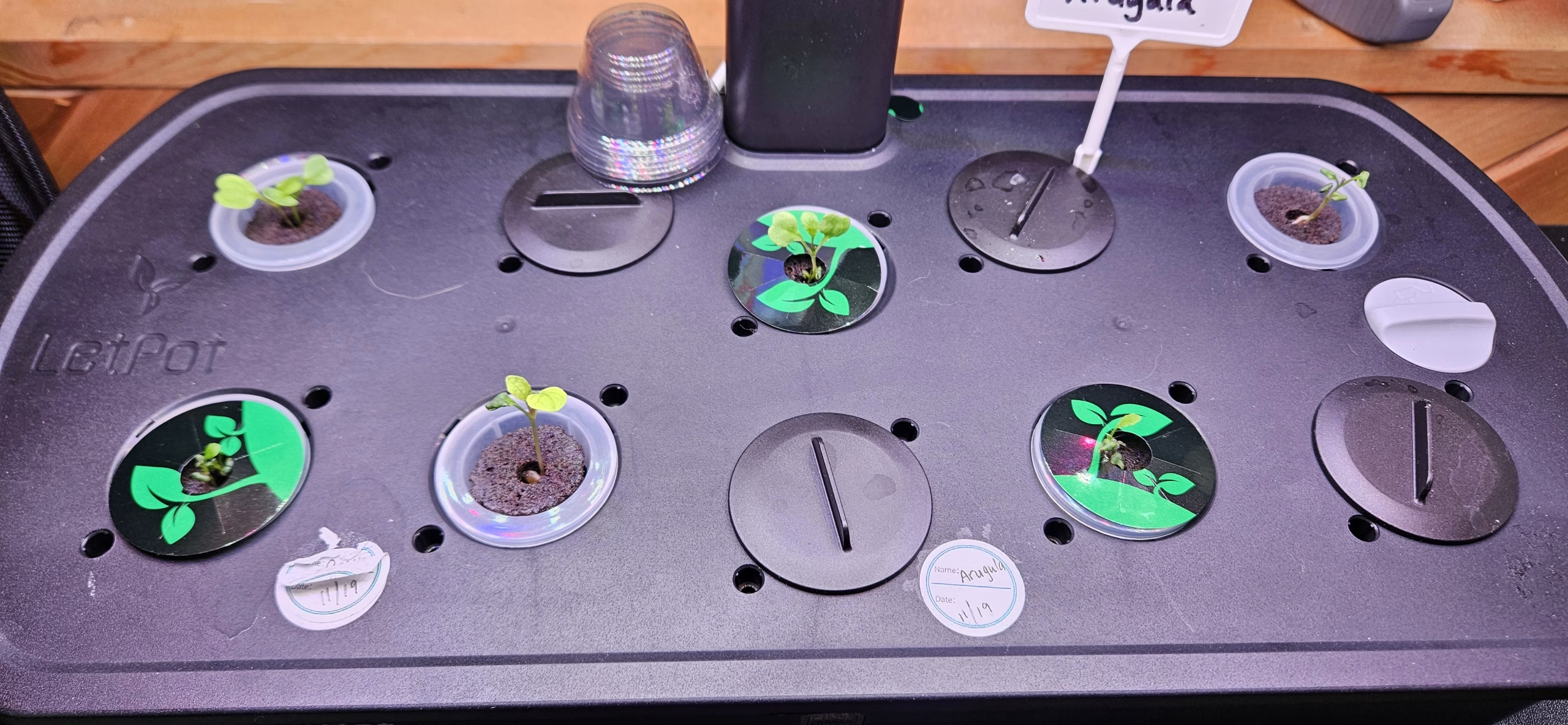
Hydroponic Lettuce From Seed to Harvest: Timing Guide for Hydroponics and Aquaponics
Hydroponic lettuce usually takes about 35 to 60 days from seed to harvest in a well-run home system. Most growers transplant seedlings at 14 to 21 days and harvest full heads 21 to 35 days after transplant.
TL;DR: Most hydroponic and aquaponic lettuce crops finish in 5 to 8 weeks from seed under good conditions. For reliable results, keep root-zone pH in range, avoid excess heat, and plan your timeline around transplant age, not just the seed packet date.
How long does hydroponic lettuce take from seed to harvest?
For most home growers, the most useful rule of thumb is 35 to 60 days from sowing to final harvest. This breaks into about 3 days for germination, roughly 10 days of seedling growth, transplanting at 14 to 21 days after seeding, and then about 21 to 35 more days to harvest after transplant.
That range matters because not all lettuce grows at the same speed. Leaf lettuce and butterhead are usually easier and more predictable in hydroponic systems, while romaine can be slightly more demanding in controlled environments.
What is a realistic timeline for beginners?
A realistic beginner timeline looks like this:
| Stage | Typical timing | What to expect |
|---|---|---|
| Germination | 2 to 3 days | Seeds sprout fastest in warm, humid propagation conditions. |
| Seedling stage | Day 3 to Day 14 | First true leaves develop and roots begin filling the plug. |
| Transplant window | Day 14 to Day 21 | Seedlings usually have 3 to 4 true leaves and visible roots. |
| Early vegetative growth | 1 to 2 weeks after transplant | Plants establish roots and begin rapid leaf expansion. |
| Baby leaf harvest | About 25 to 35 days from seed | Outer leaves can often be picked earlier than full heads. |
| Full head harvest | About 35 to 60 days from seed | Timing depends on cultivar, light, temperature, and system design. |
In home systems, the crop often lands closer to the middle of that range rather than the absolute fastest finish time. If the room runs cool with steady light and the plants never stall after transplant, harvest can come surprisingly fast.
Hydroponic lettuce varieties → best lettuce varieties for hydroponics
Why does one lettuce crop finish in 35 days and another in 60 days?
The biggest drivers are cultivar, light intensity, air temperature, nutrient solution temperature, and spacing. Lettuce grown under suboptimal light and cool winter conditions can still perform, but the production cycle stretches out noticeably.
Heat can slow quality even when it seems to speed growth. When daytime temperatures push above 75°F and nights stay too warm, lettuce becomes more prone to bolting, bitterness, and tipburn, which can force an earlier but lower-quality harvest.
What lettuce types grow best in hydroponics and aquaponics?
Butterhead, leaf lettuce, and many compact romaine types are the best fit for home hydroponics and aquaponics. They handle dense indoor production well, grow quickly, and give clear visual cues for when to transplant and harvest.
For beginners, looseleaf and butterhead are usually the easiest choice because they are forgiving and harvest well either as baby greens or full heads. Romaine is absolutely doable, but it often needs tighter control of temperature, airflow, and spacing for top quality.
Best plant types for this method
This seed-to-harvest timing guide is especially useful for:
- Butterhead lettuce, including Bibb and Boston types.
- Looseleaf lettuce, including green and red leaf types.
- Compact romaine varieties suited to controlled environments.
- Salad mixes harvested young as cut-and-come-again greens.
This method is less ideal for large head lettuce types that need longer finishing time or much more space. In small indoor systems, compact crops win because they mature faster and are easier to keep uniform.
Which hydroponic and aquaponic systems work best for lettuce?
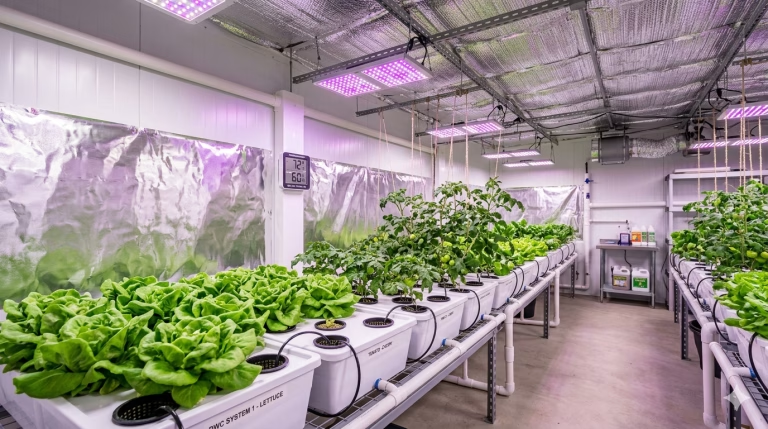
Lettuce grows well in DWC, NFT, and other water-based systems, plus drip or ebb-and-flow systems that use a soilless substrate. For home growers, DWC and NFT are usually the most common because they support quick growth and make timing more predictable once the environment is stable.
Aquaponic lettuce follows a similar crop timeline, but nutrient balance and pH management are often less direct than in standard hydroponics. That can slightly slow growth if fish, biofilter activity, and plant demand are out of balance.
Deep water culture
DWC, also called raft or float-bed culture, keeps roots suspended in oxygenated nutrient solution. It is simple to set up and has low labor needs, but it requires good aeration and careful sanitation because waterborne issues can spread through the shared solution.
In my own DWC-style lettuce runs, the easiest timing rhythm has always been seeding weekly and transplanting only when roots clearly emerge from the plug and the seedling has real momentum. That simple habit reduces stalls after transplant and keeps the harvest window tighter.
Nutrient film technique
NFT moves a thin stream of nutrient solution past the roots in sloped channels. It uses less water than DWC, but the tradeoff is faster dry-out if flow stops or seedlings fail to contact the solution right after transplant.
For timing, NFT can be very fast when conditions are steady. It is also less forgiving during hot spells or power interruptions, so beginners should watch root contact and pump reliability closely.
Aquaponic rafts and media beds
Aquaponic raft beds grow lettuce in a way that feels very similar to DWC, while media beds act more like a buffered hybrid system. In real home setups, raft beds tend to give the clearest lettuce timeline, while media beds often trade speed for resilience.
Aquaponics usually runs at a compromise pH compared with pure hydroponics. Lettuce can still do well near neutral, but one study found lettuce biomass at pH 6 was significantly higher than at pH 7 in tested systems.
Aquaponics for beginners → beginner aquaponics system guide
What growing conditions give the fastest lettuce harvest?
If your goal is the shortest path from seed to harvest, focus on stable cool temperatures, enough light, moderate humidity, and a balanced nutrient solution. Lettuce is a cool-season crop, so speed and quality both improve when the environment stays in its preferred range instead of swinging between hot and cold.
The key targets below are practical starting points for home growers.
| Metric | Useful target | Why it matters |
|---|---|---|
| Air temperature | Up to 75°F day, about 65°F night | Higher heat increases bolting and bitterness risk. |
| Relative humidity | 50% to 70% | Helps maintain transpiration without encouraging disease. |
| Airflow | 0.3 to 1.0 m/s | Supports calcium movement and helps reduce tipburn. |
| Hydroponic pH | 5.5 to 6.0 ideal for nutrient uptake in lettuce systems. | Keeps nutrients available and helps avoid lockout. |
| Lettuce EC | 1.2 to 1.8 mS/cm is a common target range. | Supports growth without over-concentrating the solution. |
| Dissolved oxygen in DWC | 6 to 8 ppm | Helps roots stay healthy in deep water systems. |
| DLI | 12 to 17 mol/m2/day optimal | Strongly affects speed, density, and finish time. |
How important is water temperature?
Water temperature matters more than many beginners expect. Lettuce tolerates higher EC more effectively when nutrient solution temperature is controlled, while hot solution can reduce growth and quality.
In practical home systems, warm nutrient solution often shows up as slower growth, softer roots, and more disease pressure before a grower even notices a number on the thermometer. That is one reason lettuce timing in a Michigan basement can be easier to manage than in a hot garage.
Does local climate matter if you grow indoors?
Yes, because your local climate still influences room temperature, incoming water temperature, seasonal light, and how hard your system works to stay stable. From multiple runs in hot, dry climates, summer lettuce tends to demand more active cooling, airflow, and shading than the same crop grown in a cooler Michigan indoor space.
For growers in Phoenix-like heat, plan for longer troubleshooting time in summer even if the crop technically grows fast. For growers in Michigan, winter growth often slows mainly because of reduced light unless supplemental lighting closes the gap.
Hydroponic water temperature → ideal water temperature for hydroponics]
Hydroponic grow lights → How Many Watts of Grow Light Do You Need for Hydroponics? (Simple Canopy Sizing Guide)
What equipment do you need to grow lettuce from seed to harvest?
A basic lettuce setup does not need to be expensive, but it does need to be consistent. The most important tools are the ones that let you measure conditions before plants start showing problems.
Core materials and tools
- Seeds chosen for hydroponic or controlled-environment production.
- Propagation plugs such as rockwool, coco-based plugs, or peat-based plugs.
- Net pots, rafts, channels, or containers depending on the system.
- A nutrient reservoir or aquaponic fish-and-biofilter loop.
- Air pump and air stones for DWC systems.
- A calibrated pH meter and EC meter.
- Clean water source, ideally well or municipal water rather than surface water.
- Basic lighting if natural light is not enough.
- Small circulation fan for airflow.
Nice-to-have tools that save crops
- Infrared thermometer for leaf and solution temperature checks.
- Dissolved oxygen meter for serious DWC growers.
- Hygrometer for humidity tracking.
- Backup power or pump alarm for NFT and DWC systems.
Hydroponic meters guide → best pH and EC meters for hydroponics
How do you grow hydroponic lettuce step by step?
Hydroponic lettuce seed-to-harvest method
A simple home lettuce crop follows a short chain: germinate seeds, raise sturdy seedlings, transplant at the right stage, maintain stable conditions, and harvest before heat or crowding reduce quality. The steps below are written so they can be reused for hydroponics or adapted to aquaponic raft systems.
Materials/Tools
- Lettuce seeds
- Seedling plugs or cubes
- Tray with humidity dome
- Hydroponic or aquaponic lettuce system
- Balanced nutrient solution or established aquaponic water
- pH meter
- EC meter
- Grow light or bright greenhouse space
- Fan for airflow
- Clean scissors or harvest knife
Steps
- Prepare the propagation plugs. Pre-charge plugs with a balanced nutrient solution around EC 1.0 and pH 5.5 to 6.0 before seeding. This gives seedlings immediate access to moisture and nutrients without the shock of a dry or alkaline plug.
- Sow one seed per plug. Lettuce seeds germinate best around 68°F with high humidity, and emergence often begins in about 2 to 3 days. Remove the humidity dome soon after emergence so seedlings do not stretch.
- Raise compact seedlings. Increase light after sprouting and water daily as needed with a mild nutrient solution near EC 1.0 and pH 5.5 to 6.0. The goal is a short, stocky seedling with healthy white roots.
- Transplant at the right age. Move seedlings when they have 3 to 4 true leaves and visible roots coming from the plug, usually 14 to 21 days after seeding. Transplanting too early often slows the crop more than waiting a few extra days.
- Make sure roots contact the solution. In DWC, NFT, or aquaponic raft systems, roots must touch the nutrient solution immediately after transplant. If they do not, seedlings can dry quickly and stall.
- Stabilize the root zone. Keep pH and EC in range, top off the reservoir as water is used, and watch for drift every few days. In recirculating systems, full or partial solution replacement every 3 to 4 weeks is commonly recommended to avoid imbalance.
- Control the climate. Keep daytime temperatures below about 75°F, maintain humidity around 50% to 70%, and provide steady airflow to reduce tipburn risk. Stable climate usually tightens the harvest window more than any additive or gadget.
- Adjust spacing as plants enlarge. Respacing helps improve airflow, leaf expansion, and final head quality as lettuce fills out. Crowding is one of the easiest ways to turn a fast crop into a disappointing one.
- Harvest at the right stage. Pick baby leaves earlier or wait until heads reach marketable size, often 21 to 35 days after transplant. In warm conditions, harvesting a little earlier can preserve quality and avoid tipburn.
Timing tips that improve results
- Seed every 7 days for a steady harvest rhythm.
- Track seeding date, transplant date, and harvest date for each cultivar.
- Do not compare your timing to someone else’s system unless light and temperature are similar.
- In aquaponics, expect timing to shift slightly after feed changes, fish stocking changes, or biofilter disruptions.
How to start seeds for hydroponics → hydroponic seed starting guide
What problems delay lettuce harvest?
Most slow lettuce crops are not caused by bad seed. They are caused by weak seedlings, poor root contact after transplant, low light, excess heat, pH drift, or overcrowding.
Common causes of slow growth
- Low DLI or weak grow lights, especially in winter.
- Day temperatures above 75°F or strong temperature swings.
- Root-zone pH out of range, which reduces nutrient availability.
- EC that drifts too high or too low over time.
- Poor airflow, which contributes to tipburn and uneven growth.
- Warm nutrient solution and low oxygen in DWC systems.
- Transplant shock from moving seedlings too early.
Common quality issues near harvest
| Problem | Likely cause | What to do |
|---|---|---|
| Tipburn | Fast growth plus weak calcium movement, often tied to heat and poor airflow. | Improve airflow, reduce heat stress, and harvest a bit earlier if needed. |
| Bitter leaves | Heat stress or bolting pressure. | Lower temperature and choose heat-tolerant cultivars in summer. |
| Root browning | Low oxygen, disease pressure, or warm solution. | Improve aeration, sanitation, and root-zone temperature control. |
| Small heads | Low light, crowding, or weak nutrition. | Increase light, respace plants, and verify pH and EC. |
Disease can also derail timing. Kentucky Extension highlights Pythium root rot, Botrytis gray mold, powdery mildew, and bacterial soft rot as notable greenhouse lettuce problems, with sanitation and climate control playing a major role in prevention.
Hydroponic root rot guide → how to prevent root rot in hydroponics
When is lettuce ready to harvest?
Lettuce is ready when the plant matches your intended harvest style, not just when the calendar says so. For cut-and-come-again harvests, outer leaves can often be picked around the third to fifth week depending on growth rate, while full heads usually need more time to fill and firm up.
For full heads, most hydroponic lettuce is harvested 21 to 35 days after transplant under suitable conditions. A fully grown lettuce can be about 100 to 210 g per head, depending on cultivar and environment.
Practical harvest signs
- Leaves are broad, crisp, and well colored.
- The crown feels full for the variety.
- Plants are still tender and have not started stretching or showing heat stress.
- Outer leaves are clean and marketable.
- Root systems are white to cream colored and active.
In my own indoor lettuce cycles, the best quality usually comes just before the plant looks maximized. Waiting for the last bit of size often adds only a few grams but increases the risk of tipburn, loose texture, or bitterness.
Which setup is best for beginners, intermediate growers, and advanced growers?
| Skill level | Best fit | Why it works |
|---|---|---|
| Beginner | DWC or simple raft system | Stable moisture and simple daily management make timing easier to learn. |
| Intermediate | NFT or refined DWC | Faster turnover and efficient use of space reward stronger monitoring habits. |
| Advanced | Aquaponic raft systems or tightly managed NFT rooms | Greater system integration can be highly productive but requires stronger control of pH, flow, and biology. |
For apartment gardeners and hobbyists, the simplest winning approach is often a small raft or countertop DWC system with consistent light and a written crop calendar. Complexity rarely beats consistency with lettuce.
Questions growers ask
How much does it cost to grow hydroponic lettuce at home?
Costs vary widely by system size, lighting, and whether you already own meters and containers. A simple small DWC setup can stay modest, while a fully lit indoor rack with environmental controls costs much more.
Is hydroponic lettuce easier than soil lettuce?
For many beginners, yes, especially indoors where weeds and muddy soil are removed from the equation. The tradeoff is that hydroponics demands more attention to pH, EC, water level, and temperature.
How long does lettuce take in aquaponics compared with hydroponics?
Aquaponic lettuce can grow on a very similar schedule, but the timeline is often a little less predictable because nutrient availability depends on fish load, feed rate, and biofilter health. Well-balanced raft aquaponics can still produce fast, high-quality lettuce crops.
What is the fastest lettuce to grow hydroponically?
Looseleaf and some butterhead varieties are usually among the fastest choices for home systems because they establish quickly and can be harvested young. Compact varieties also fit small systems better, which helps maintain spacing and airflow.
Why is my lettuce growing slowly after transplant?
The most common reasons are weak seedlings, poor root contact with the nutrient solution, low light, high heat, or pH and EC drift. Check those before changing nutrients or buying additives.
Can you harvest hydroponic lettuce more than once?
Yes, if you harvest outer leaves and leave the center growing point intact. Full-head harvests are usually one-and-done, but baby leaf and cut-and-come-again styles can extend the usable harvest window.
What pH is best for lettuce in hydroponics and aquaponics?
In hydroponics, lettuce nutrient solutions are commonly managed around pH 5.5 to 6.0 for nutrient uptake. In aquaponics, the practical range is often higher because fish, bacteria, and plants share the same water, though lettuce can still perform well near neutral with careful management.
What EC should I use for hydroponic lettuce?
A common guideline for lettuce is around 1.2 to 1.8 mS/cm, though exact targets vary by water source, cultivar, and environment. Stable EC matters more than chasing the highest number.
Do I need a grow light for lettuce indoors?
Yes, in most indoor apartment or basement setups you will need supplemental light to reach strong, compact growth and predictable harvest timing. Low light can keep plants alive, but it often stretches the crop cycle and reduces head size.
Author note
This article reflects years of hands-on hydroponic growing across very different environments, including hot, dry conditions in Phoenix, Arizona and cooler seasonal conditions in Michigan. That contrast makes lettuce timing easier to explain in realistic terms, because the same cultivar can behave very differently when room temperature, water temperature, and seasonal light shift. The focus remains practical indoor and urban food growing, especially small systems that home growers can actually manage day after day. The goal is simple: make hydroponics and aquaponics clear enough that more growers can get from seed to harvest without wasting time, money, or confidence.
Share this:

Discover more from Soil Free Harvest
Subscribe to get the latest posts sent to your email.