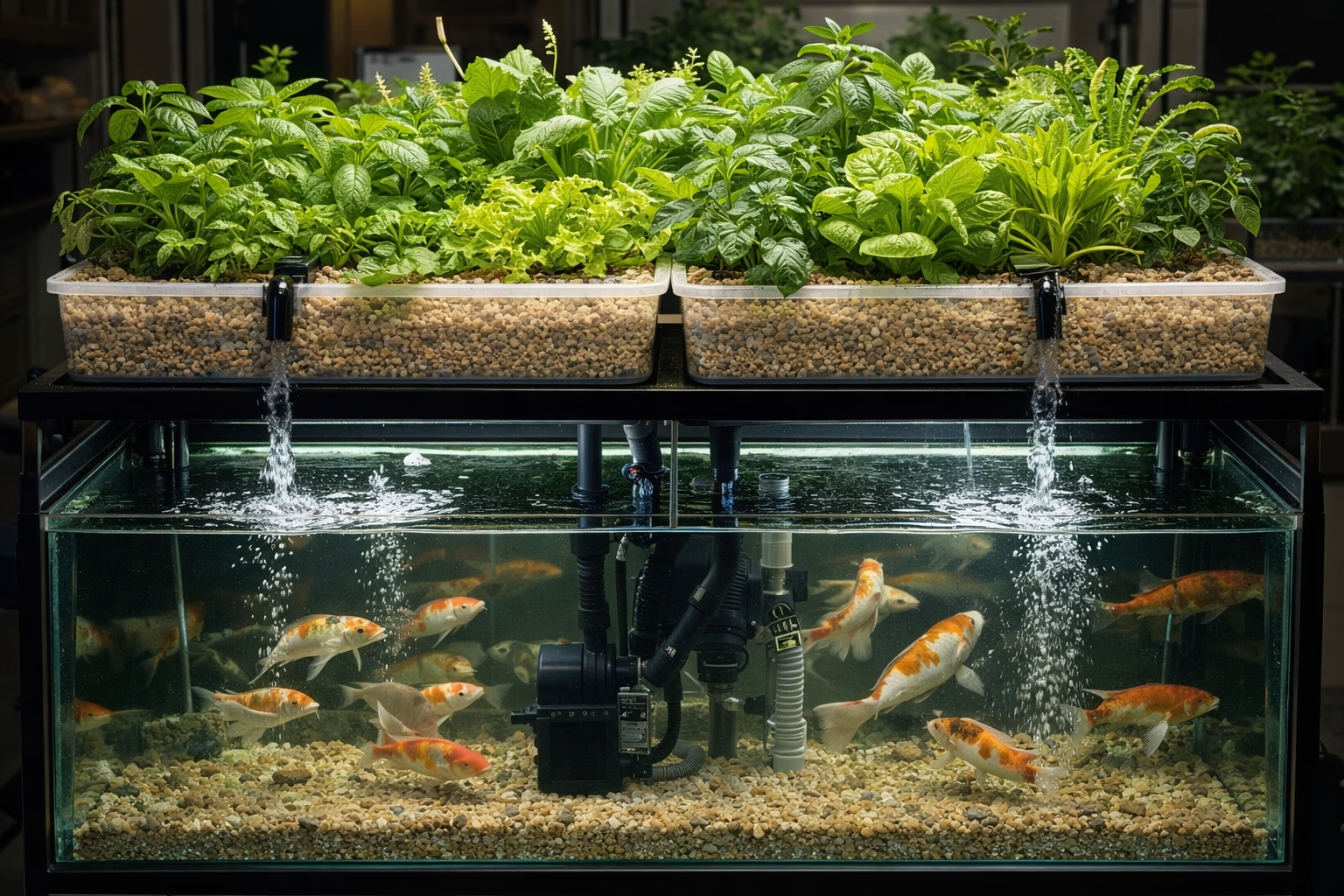
Climate-Specific Aquaponics: How to Adapt Systems for Hot and Cold Regions
Aquaponics can work in both hot and cold climates, but the system has to match the weather, not fight it. In warm regions, the biggest job is cooling water, protecting oxygen levels, and shading fish tanks; in cold regions, the priority is insulation, heat retention, and keeping biofiltration active.
TL;DR: Build for your climate first, then choose fish and plants that naturally fit that temperature band. Warm-water systems tend to favor tilapia, basil, and leafy greens, while cold-climate systems do better with trout, kale, spinach, and other cool-season crops.
What is climate-specific aquaponics?
Climate-specific aquaponics means designing the whole loop around your local temperature swings, daylight, humidity, and seasonal extremes. Instead of forcing one setup to work everywhere, you tune the tank, grow area, insulation, airflow, and crop selection to the environment you actually live in.
That matters because fish, plants, and nitrifying bacteria do not all want the same conditions. Most aquaponic systems are happiest in roughly 65 F to 85 F water, but vegetable growth often peaks around 70 F to 75 F and nitrifying bacteria perform best closer to 77 F to 86 F.
Aquaponics basics → what is aquaponics and how it works
How does climate affect aquaponics?
Temperature changes dissolved oxygen, bacterial activity, fish appetite, and plant uptake. Warm water holds less oxygen, so hot climates can stress fish and slow the whole loop unless you add aeration, shade, and cooling strategies.
Cold water usually holds more oxygen, but the biology slows down. Nitrification drops as temperatures fall, so winter systems often need slower feeding, lower stocking density, and better insulation to keep the cycle stable.
Humidity, sun exposure, and wind also matter. A greenhouse that works well in Michigan can overheat fast in Phoenix, while a setup that thrives in Arizona may freeze at night in a northern winter.
Which plants and fish fit each climate?
The easiest way to succeed is to match species to the season and climate band. Warm systems usually do best with tilapia, basil, mint, and fast leafy greens, while cool systems pair well with trout, lettuce, spinach, kale, bok choy, and arugula.
| Climate | Better fish choices | Better crops | Main risk |
|---|---|---|---|
| Hot regions | Tilapia, catfish, bluegill | Basil, mint, lettuce, tomatoes, peppers | Low dissolved oxygen and overheating |
| Cold regions | Trout, goldfish in non-food systems, hardy cool-water species | Kale, spinach, lettuce, arugula, Swiss chard | Slow nitrification and freezing |
| Mixed climates | Tilapia in warm season, hardy greens year-round | Succession plantings | Seasonal swings and inconsistent growth |
In my own climate thinking, the safest beginner strategy is to choose the crop first and let temperature lead the design. If your water spends most of the year below 64 F, cool-season greens will usually be easier than fruiting crops. If your water regularly rises above 80 F, you need a cooling plan before adding a dense fish load.
What works best in hot climates?
Hot-climate aquaponics is about keeping water stable and oxygen-rich. Shade cloth, buried or partially buried tanks, reflective roofing, extra aeration, and covered plumbing all help reduce heat gain.
A few practical tactics matter most:
- Shade the fish tank before you shade the plants.
- Increase surface agitation and aeration.
- Use light-colored or insulated tank walls.
- Reduce direct sun on plumbing and return lines.
- Stock more conservatively during heat waves.
From multiple warm-weather runs, the hardest failure mode is oxygen collapse during a heat spike. That is why a hot-climate system should be designed as a cooling and aeration system first, and a production system second.
Greenhouse cooling methods → shade cloth, ventilation, and evaporative cooling ideas
What works best in cold climates?
Cold-climate aquaponics is mostly a heat-retention problem. Insulated tanks, greenhouse walls, thermal mass, and reduced air leaks help the system stay above freezing and keep bacteria active enough to process waste.
Useful cold-weather strategies include:
- Put tanks in the ground or wrap them with insulation.
- Use a greenhouse or indoor enclosure.
- Seal drafts around doors, vents, and pipe penetrations.
- Keep backup heat available for fish safety.
- Reduce feed rates when water temperature drops.
Winter systems often produce best with hardy greens rather than fast fruiting crops. Spinach, lettuce, kale, Swiss chard, and arugula handle cooler water far better than most summer vegetables.
What equipment do you need?
Climate-specific aquaponics uses the same basic parts everywhere, but the support equipment changes by region. In hot places, cooling and aeration matter most. In cold places, insulation, heaters, and greenhouse protection become more important.
Core equipment:
- Fish tank.
- Grow bed, raft bed, or NFT channels.
- Water pump.
- Air pump and air stones.
- Biofilter or media bed.
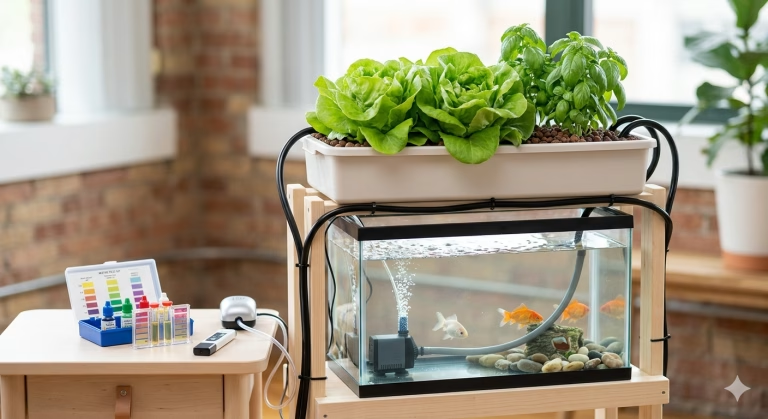
- Test kit for pH, ammonia, nitrite, nitrate, and temperature.
Climate-focused equipment:
- Shade cloth or greenhouse venting for heat control.
- Tank insulation, blankets, or buried tanks for cold control.
- Aquarium or inline heater for winter.
- Backup power or battery aeration for extreme weather.
- Thermometer and, ideally, dissolved oxygen monitoring.
How do you set one up?
How to build a climate-adapted aquaponics system
Short description: Build a small aquaponics system that stays stable in your local weather by matching tank placement, insulation, crop choice, and aeration to your climate.
Materials and tools:
- Fish tank or tote.
- Grow bed, raft bed, or NFT channels.
- Pump and plumbing.
- Air pump and air stones.
- Media such as expanded clay if using a media bed.
- Test kit for pH, ammonia, nitrite, nitrate, and temperature.
- Shade cloth, insulation, or heater depending on climate.
- Choose your climate lane.
Decide whether your system is primarily hot-climate, cold-climate, or mixed-season. That decision drives fish choice, crop choice, tank location, and whether you prioritize cooling or heating. - Pick compatible fish and plants.
Warm-water systems usually pair well with tilapia and basil or lettuce, while cool-water systems do better with trout and leafy greens like spinach and kale. Matching species to temperature reduces stress and lowers the chance of a crash. - Place the tank for thermal stability.
In hot climates, use shade and avoid direct sun on the tank. In cold climates, place the tank in a greenhouse, basement, garage, or partially buried location to reduce heat loss. - Build in aeration from day one.
Extra oxygen is cheap insurance, especially in summer. Warm water holds less oxygen, and fish become more vulnerable when feeding and metabolic demand increase. - Install insulation or cooling support.
Wrap tanks in foam board, use reflective barriers, or bury them for winter resistance. For heat, use shade cloth, airflow, and evaporative cooling where appropriate. - Cycle the system before adding a full fish load.
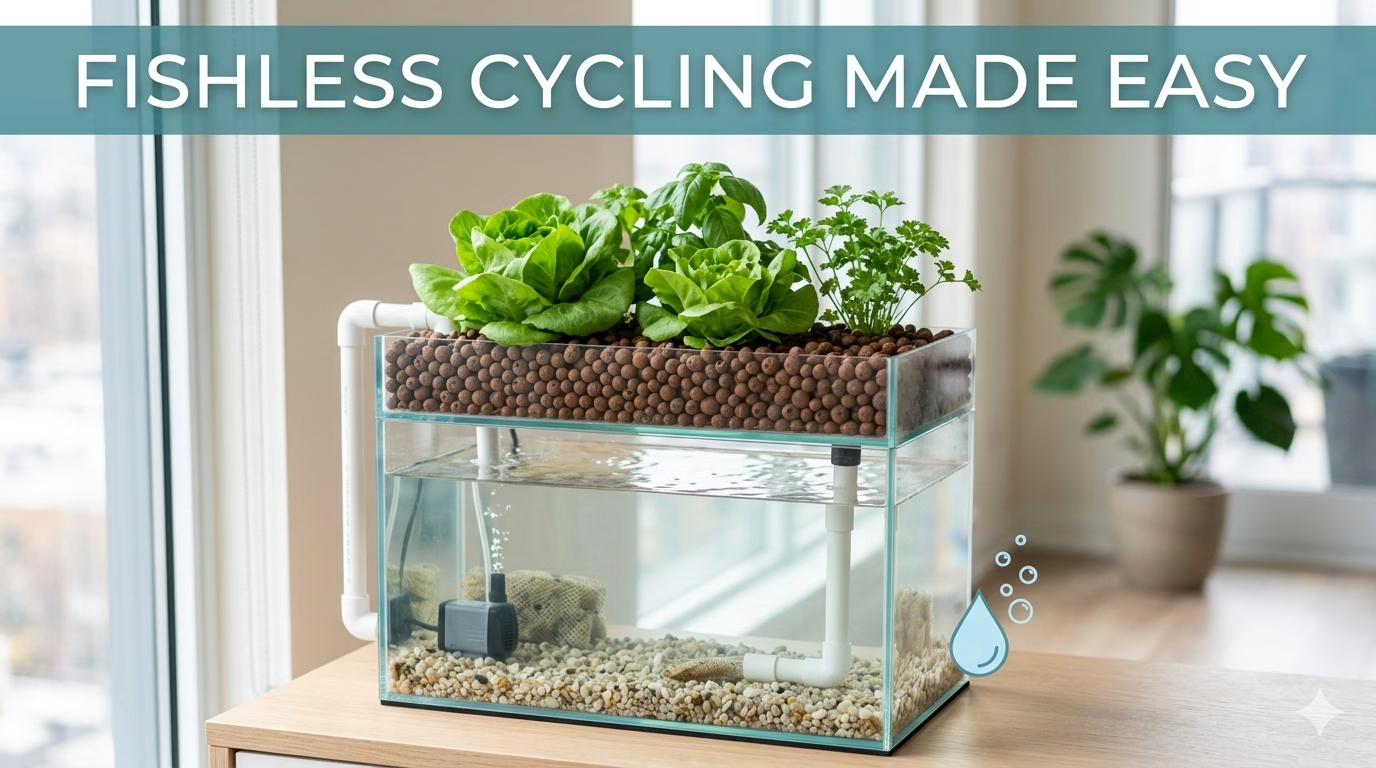
Let bacteria establish before pushing the system hard. Stable cycling usually takes 4 to 6 weeks, and warm, stable temperatures help the biofilter settle faster. - Start with a conservative stocking rate.
This gives the system room to handle temperature swings. Lower density is especially important in hot weather because oxygen drops and waste stress rises quickly. - Test water on a schedule.
Check pH, ammonia, nitrite, nitrate, temperature, and oxygen often at first, then at least weekly once the system is stable. A practical pH target is about 6.0 to 7.0 for balance between fish, plants, and bacteria. - Adjust seasonally instead of permanently.
In summer, increase shade and aeration. In winter, reduce feeding, protect plumbing, and add heat only as needed to keep the system above freezing and biologically active.
Cycling aquaponics system → Fishless Cycling
Which system types fit each climate?
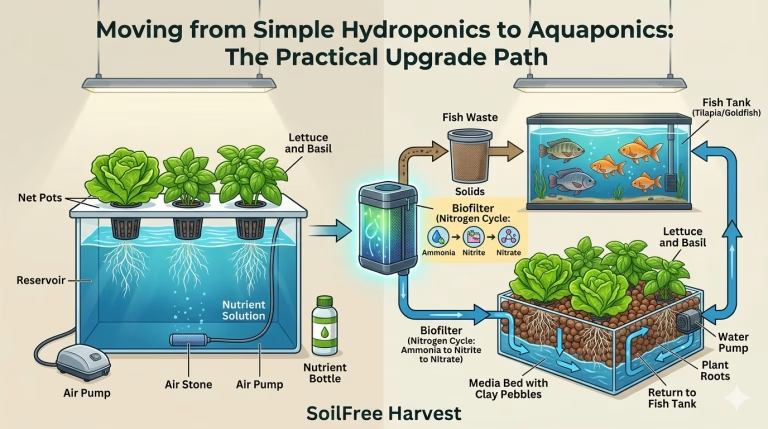
Media beds are usually the most forgiving for beginners because they add filtration, support bacteria, and buffer the system against swings. They are a strong choice for both cold and mixed climates because the media helps stabilize roots and water chemistry.
DWC, also called raft culture, works well when the water temperature is controlled and the grow area is stable. NFT can perform well in mild, controlled spaces, but it is less forgiving in extreme heat or freeze-prone setups because shallow channels change temperature quickly.
Hybrid systems are often the best answer for difficult climates. A media bed can handle filtration and cold buffering while DWC or NFT produces fast greens in the most stable part of the build.
Aquaponics system types explained → media bed, DWC, NFT, and hybrid designs
What are the main benefits?
Climate-aware aquaponics gives you steadier production and fewer losses. Instead of trying to force a single layout through every season, you design for local reality, which usually means better fish health, better plant growth, and less emergency maintenance.
Other benefits include:
- Lower energy waste because heating and cooling are targeted.
- Better crop selection by season.
- More predictable harvests.
- Lower risk of bacterial slowdowns or oxygen crashes.
- Easier scaling from apartment setup to greenhouse build.
For urban growers, this is especially valuable because indoor and balcony systems often have microclimates that differ from the weather outside. A south-facing apartment window, an enclosed porch, or a basement grow room all behave differently, so the system should be tuned to the room, not just the city.
What are the drawbacks?
The biggest drawback is complexity. Once climate enters the design, you are not just growing fish and plants, you are managing temperature, oxygen, airflow, and seasonal transitions at the same time.
Common drawbacks include:
- Higher startup cost for heaters, insulation, shade, or ventilation.
- More monitoring during weather extremes.
- Slower growth in winter.
- Extra oxygen demand in summer.
- A narrower list of fish and crops that work well together.
That said, most problems are manageable if you build for the worst month, not the average month. In practice, that means a Michigan grower should plan for winter first, while a Phoenix grower should plan for summer first.
How do you maintain it?
Maintenance is mostly about watching the numbers before the plants show stress. Stable aquaponics usually stays in a narrow band of pH, temperature, and nitrogen readings, and climate shifts make that even more important.
A simple maintenance routine:
- Check temperature daily during extremes.
- Test pH, ammonia, nitrite, and nitrate weekly.
- Inspect pump flow and air stones.
- Remove solids before they break down.
- Adjust feeding to match fish appetite and water temperature.
A useful rule from practical systems is this: feed less when water cools, and aerate more when water warms. That single habit prevents a lot of seasonal stress.
Aquaponics water testing guide → pH, ammonia, nitrite, nitrate, and iron
What are the most common problems?
Hot climates usually create oxygen shortages, algae growth, and fish stress. Cold climates usually cause slow nitrification, root damage, freezing plumbing, and stunted growth.
Watch for these warning signs:
- Fish gasping at the surface.
- Plants yellowing despite good feed.
- Slow nitrate rise after cycling.
- Ice on plumbing or tank edges.
- Sudden pH swings after a temperature shift.
If the system is unstable, fix the climate issue first, not the crop. Many growers chase nutrient problems when the real issue is temperature or oxygen.
Which setup is best for beginners?
For most beginners, a media bed system in a greenhouse or protected indoor space is the easiest to manage. It gives you a forgiving buffer, works in multiple climates, and handles a wide range of crops better than more delicate systems.
Best beginner matches:
- Hot climates: shaded media bed with strong aeration.
- Cold climates: insulated media bed in a greenhouse or garage.
- Mixed climates: hybrid media bed plus DWC for greens.
If your goal is reliable food production rather than experimental design, start simple. A small, stable system that survives every season is more valuable than a larger one that only thrives in spring.
FAQ
How much does climate-specific aquaponics cost?
A small starter system can be built on a modest budget, but climate control adds cost. Expect extra spending for shade, insulation, heaters, aeration, or greenhouse materials depending on where you live.
Is aquaponics harder in hot weather or cold weather?
Both create problems, but hot weather is often riskier because warm water loses oxygen fast. Cold weather usually slows growth, while heat can cause sudden fish stress or a rapid system crash.
What is the best pH for aquaponics?
A practical target is about 6.0 to 7.0 for most aquaponic systems. That range gives a workable balance for fish, plants, and nitrifying bacteria.
How long does it take to cycle a system?
Most systems take about 4 to 6 weeks to cycle, sometimes longer if temperatures are unstable. Warmer, stable conditions usually help bacteria establish more quickly.
Can I grow aquaponics in an apartment?
Yes, as long as you keep the system small and stable. Indoor apartment systems work best with compact fish loads, controllable lighting, and crops that do not demand huge space or extreme temperatures.
What crops are easiest for cold climates?
Spinach, kale, lettuce, arugula, Swiss chard, and bok choy are some of the easiest choices. These crops handle cooler water and lower light better than fruiting vegetables.
What crops are easiest for hot climates?
Basil is one of the best warm-climate aquaponic crops, and lettuce can work well if the water is managed properly. Tomatoes and peppers can also do well once the system is stable and oxygenated.
What is the biggest beginner mistake?
The biggest mistake is choosing fish and plants before choosing climate controls. If the water gets too hot, too cold, or poorly oxygenated, the entire system suffers even if the plumbing is perfect.
Do I need a greenhouse?
Not always, but a greenhouse helps in cold or highly variable climates. It gives you more control over temperature, wind, and humidity, which usually makes aquaponics more reliable year-round.
How soon will I see results?
Leafy greens can show clear growth within a few weeks once the system is cycled and stable. Fish and bacteria take longer to balance, so the first real success is often a stable cycle, not the first harvest.
Author note
I have spent years learning hydroponics and aquaponics from both warm and cold growing environments, with experience shaped by life in Phoenix, Arizona and now Michigan. That contrast has made me especially focused on temperature control, crop matching, and practical indoor growing strategies that actually hold up across seasons. My writing centers on clear, beginner-friendly systems for apartment growers, home growers, and urban gardeners who want reliable harvests without unnecessary complexity.
Share this:

Discover more from Soil Free Harvest
Subscribe to get the latest posts sent to your email.