Liquid Hydroponics vs. Substrate Systems: Which Is Best for Home Growers?
Quick Answer
Liquid hydroponics (DWC, NFT, ebb and flow) delivers faster growth, precise nutrient control, and zero-waste closed-loop operations, making them ideal for serious home growers and apartment gardeners. Substrate-based systems (rockwool, coco coir, hydroton) are more forgiving, require less maintenance, and work better if you’re learning hydroponics for the first time or growing in variable temperature conditions.
TL;DR: Choose liquid hydroponics for maximum yield and control; choose substrate systems for simplicity and reliability.
Understanding Hydroponics: The Two Main Approaches
Hydroponic gardening eliminates soil entirely, delivering nutrients directly to plant roots through water. However, the method you choose to deliver those nutrients defines your entire growing experience. The two dominant categories are liquid hydroponics systems and substrate-based hydroponics systems, each with distinct advantages and trade-offs.
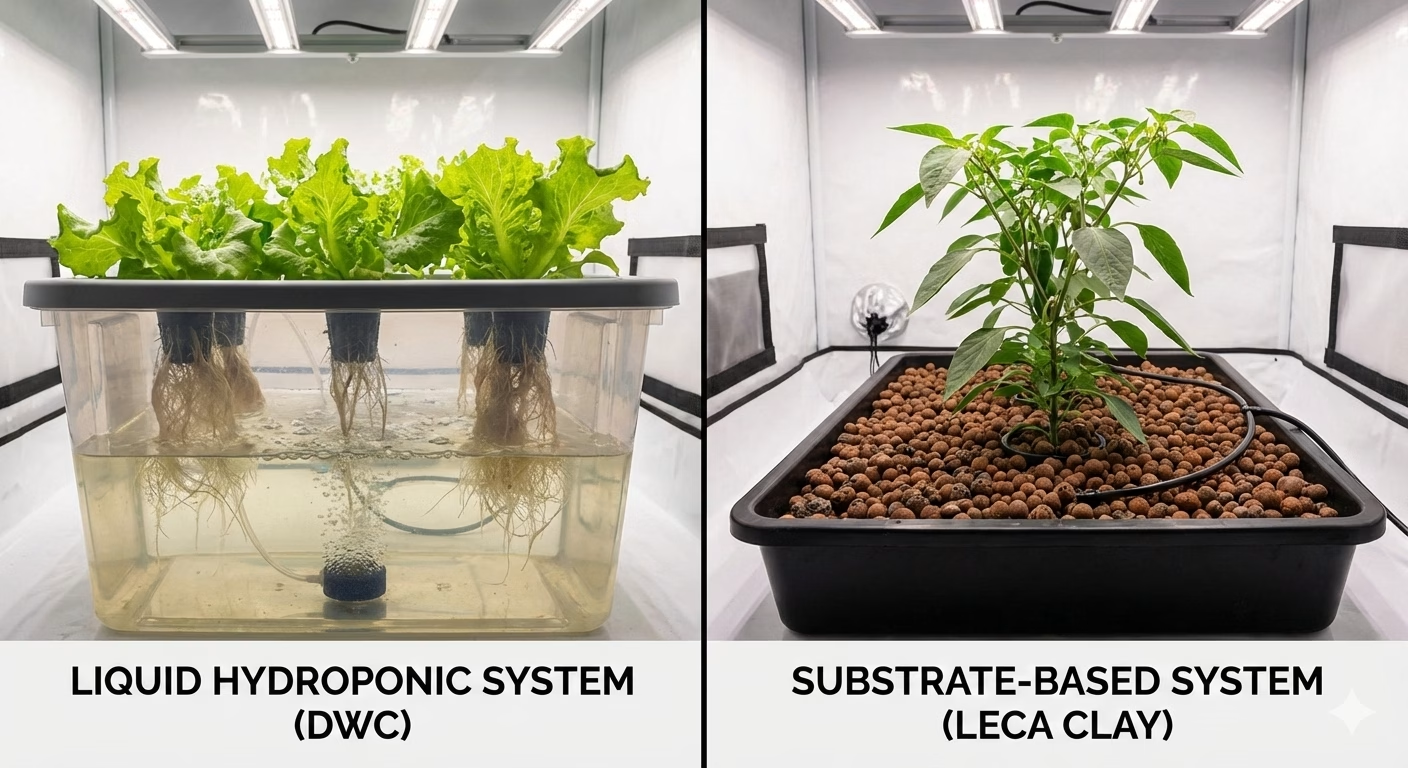
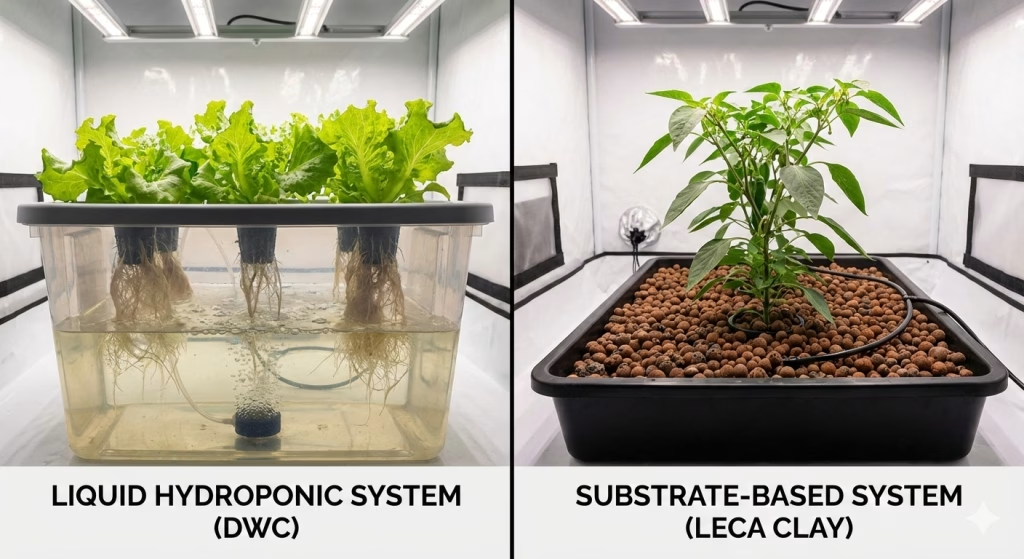
Liquid hydroponics suspends plant roots directly in nutrient-enriched water, using air stones or spray mechanisms to oxygenate the root zone. Substrate-based hydroponics places plant roots in a growing medium (coco coir, rockwool, hydroton) that holds water and nutrients while allowing air pockets for oxygen access. Understanding which approach fits your goals, space, and experience level is essential for long-term success.
What Is Liquid Hydroponics?
Liquid hydroponics refers to any system where plant roots remain suspended or partially submerged in oxygenated nutrient solution without a growing medium. The most common liquid hydroponics systems are Deep Water Culture (DWC), Nutrient Film Technique (NFT), and Ebb and Flow systems.
In liquid hydroponics, the nutrient solution is the root zone. An air pump or water circulation system delivers oxygen to prevent root rot, while the grower monitors and adjusts nutrient concentration (EC), pH, and temperature in a single solution. Because plants draw directly from this shared water reservoir, changes occur quickly and uniformly across all plants.
Deep Water Culture (DWC) hydroponics → Beginners guide to DWC
Nutrient Film Technique → NFT hydroponics guide
What Is Substrate-Based Hydroponics?
Substrate-based hydroponics (also called aggregate or media-based hydroponics) uses an inert growing medium to anchor plant roots, store moisture, and facilitate oxygen exchange. Common substrates include rockwool, coco coir, hydroton (expanded clay), perlite, and even peat moss alternatives.
Water and nutrients are delivered to the substrate via drip irrigation, flood-drain cycles, or capillary action. The substrate acts as a buffer: it holds excess nutrients and moisture, releasing them gradually as the plant consumes them. This buffering effect makes substrate systems more forgiving of minor nutrient or pH imbalances compared to liquid systems.
Growing media for hydroponics → Hydroponics Growing Mediums: The Complete Guide to Types, Selection, and Management
How Liquid Hydroponics Works: The Mechanics
In a liquid hydroponics system, plant roots float in or touch a reservoir of nutrient solution. An air pump connected to an air stone (in DWC) or a water circulation pump (in NFT or ebb and flow) ensures roots receive oxygen continuously. Without adequate oxygenation, roots suffocate and rot, so equipment reliability is non-negotiable.
The grower maintains one central reservoir of water and nutrients. All plants share this solution, so dissolved oxygen (DO), pH, and nutrient concentration must stay within optimal ranges for the crop. Any change to the water, salt balance, or oxygen level affects every plant simultaneously. This creates both an advantage (rapid, uniform growth) and a risk (a single mistake can crash the entire system).
From my own DWC setups in Phoenix, I’ve seen basil and lettuce growth rates double compared to substrate-based alternatives, provided the air pump runs continuously and the water stays between 16-20°C during peak season.
How Substrate-Based Systems Work
Substrate-based hydroponics relies on the growing medium to absorb and release water and nutrients over time. Water is applied regularly (daily or multiple times per day) via drip lines or flood cycles, saturating the substrate. The medium’s pore structure allows excess water to drain away, leaving air pockets for root respiration.
As roots and microbes consume water and nutrients, the substrate releases its stored reserves. This creates a self-buffering effect: minor pH or EC fluctuations are dampened by the substrate’s chemical composition and microbial activity. For this reason, substrate systems tolerate wider environmental variation and occasional missed nutrients or water changes.
The downside is slower nutrient uptake. Plants must wait for roots to make contact with new water, then gradually absorb nutrients from the moist medium. This slower pace sometimes slows growth by 15-25% compared to direct liquid contact, but the trade-off is increased forgiveness for newer growers.
Liquid Hydroponics vs. Substrate Systems: Head-to-Head Comparison
| Feature | Liquid Hydroponics | Substrate-Based Hydroponics |
|---|---|---|
| Growth Speed | Fast (30-40 days for leafy greens) | Moderate (35-50 days for leafy greens) |
| Nutrient Control | Precise (real-time adjustments) | Moderate (substrate buffers changes) |
| Maintenance Frequency | High (daily monitoring) | Low to Moderate (3-4x weekly) |
| Water Usage (30-day cycle) | 15-25 gallons per plant | 8-12 gallons per plant |
| Startup Cost (5-plant system) | $400-800 | $250-500 |
| Learning Curve | Steep (low tolerance for error) | Gentle (substrate buffers mistakes) |
| Best for Beginners | No | Yes |
| Best for Maximum Yield | Yes | No |
| Scalability | Moderate (individual tank control) | High (easy to add more drip lines) |
| Best Plant Types | Leafy greens, microgreens, herbs | Vegetables, longer-cycle crops, herbs |
Advantages of Liquid Hydroponics
Liquid hydroponics excels when speed and precision matter most. Because roots have direct contact with nutrient solution, uptake is nearly instantaneous. Any adjustment to pH, EC, or nutrient ratio takes effect within hours, allowing expert growers to fine-tune performance.
The absence of substrate eliminates several failure points. There is no wet/dry cycle that can trigger root rot or nutrient lockout in the medium. Cleaning and reusing the system is simpler: flush the tank, refill with fresh water and new nutrient concentrate, and start again. From a sustainability standpoint, closed-loop liquid systems produce zero waste (assuming you recycle or compost spent plant material).
Growth rates in liquid hydroponics often exceed other methods by 20-40% for fast-growing crops like lettuce and basil. In commercial settings, this speed translates to more harvest cycles per year and higher annual yields. For apartment gardeners with limited space, that extra productivity per square foot justifies the added complexity.
Additional advantages include:
- Uniform growth across all plants in the system (since all share one nutrient solution)
- Simple visual diagnostics (cloudy water, algae, color changes are immediately visible)
- Minimal substrate waste and cost over time (no medium to replace every 3-6 months)
- Lower water usage overall when using closed-loop nutrient recycling
- Easier pH and EC measurement since there is no substrate to interfere with readings
Disadvantages of Liquid Hydroponics
The steepest drawback is unforgiving failure modes. If the air pump fails for even a few hours, roots begin to suffocate and rot within 8-12 hours in warm water. Equipment redundancy (backup pump, battery-powered air stone) is essential but adds cost. Temperature swings also hit harder: if your water climbs above 25°C, dissolved oxygen plummets and disease accelerates rapidly.
Liquid systems demand daily attention. You must check the air pump, monitor water temperature, and observe plant health every single day. Missing a day is usually fine, but missing three days in summer heat can be catastrophic. For busy growers or travel-heavy lifestyles, this commitment is a dealbreaker.
Additional disadvantages include:
- High sensitivity to temperature fluctuations (especially heat)
- Greater initial equipment investment
- Less forgiving of forgotten water changes or nutrient imbalances
- Requires continuous power for air pumps or water circulation
- Algae growth in transparent containers is common and can harbor pathogens
- Smaller water volume means water parameters shift quickly
Hydroponic system maintenance → DIY Hydroponic System Maintenance Guide
Root rot in hydroponics → How to prevent and fix root rot in hydroponic systems
Advantages of Substrate-Based Hydroponics
Substrate systems shine for beginners and growers who value reliability over maximum speed. The growing medium acts as a chemical and physical buffer, dampening pH swings, nutrient imbalances, and minor temperature fluctuations. This forgiveness means you can miss a watering by a day or two without catastrophic loss.
Substrate systems also tolerate temperature variation better. If your grow room temperature fluctuates between 18-26°C, substrate systems handle it. Liquid systems become unstable above 22-24°C because dissolved oxygen crashes in warm water. In hot climates like Phoenix, apartment growers without AC find substrate systems far more reliable.
Additional advantages include:
- Lower startup and ongoing costs
- More forgiving of watering or nutrient inconsistencies
- Better heat stability (substrate insulates roots from temperature swings)
- Easier to diagnose and correct individual plant problems (since each plant’s medium is somewhat independent)
- Simple to scale by adding more plants to the same drip line
- Less equipment failure risk (no reliance on a single air pump)
- Beneficial microbes can establish in the substrate, improving plant health
- Easy to implement in outdoor or mixed-light environments
Disadvantages of Substrate-Based Hydroponics
Substrate-based systems sacrifice growth speed for ease of use. Plant growth typically lags liquid hydroponics by 15-25% because nutrient uptake is slower. If your goal is maximum yield in minimum space, substrate systems will underperform.
Medium replacement is recurring cost and waste. Rockwool and coco coir degrade after 1-2 growing cycles and must be replaced or composted. Over a year, substrate cost can equal or exceed initial system cost. In contrast, liquid systems reuse the same water indefinitely (with top-ups).
Inconsistency is harder to prevent. Because each plant occupies its own substrate pocket, one plant can develop a nutrient deficiency or pH problem while others appear fine. Diagnosing which plant needs help and how to correct it requires more investigation than a liquid system.
Substrate systems also tend toward three common problems: algae growth in moist substrate (which can harbor pathogens), fungal gnats attracted to the damp environment, and substrate compression over time (reducing drainage and oxygen flow).
Additional disadvantages include:
- Slower growth rates (15-25% slower than liquid systems for fast crops)
- Substrate replacement cost and waste stream every few months
- Higher disease risk if substrate stays too wet for too long
- Harder to achieve uniform results across multiple plants
- More difficult to recycle or dispose of spent substrate
- Substrate itself can introduce pathogens if not properly sourced
Which System Is Best for Beginners?
If you are completely new to hydroponics, substrate-based systems are the superior starting point. The forgiving nature of the medium means you can experiment with nutrient ratios, watering schedules, and lighting without risking an entire crop to a single mistake. You will learn faster because failure is less dramatic.
Substrate systems also cost less upfront, reducing the financial risk of discovering you dislike hydroponics or lack the space to maintain it long-term. Start with a basic coco coir drip system, five plants, and a simple timer. As you build confidence and understand what works for your climate and schedule, you can upgrade to liquid systems.
That said, if you are technically inclined, willing to invest a little more money upfront, and have reliable electricity in your grow space, a DWC system is an exciting and highly rewarding entry point. The faster results and precise control appeal to growers who enjoy tinkering and optimization.
Hydroponic starter kits for beginners → Hydroponic Kits under $150
Which System Maximizes Yield for Advanced Growers?
Advanced growers prioritize liquid hydroponics systems like Deep Water Culture, NFT, or Flood and Drain for their superior growth rates and yield potential. With proper environmental control (temperature, humidity, light, CO2), liquid systems consistently outproduce substrate systems by 25-40% for fast-growing crops like leafy greens, microgreens, and herbs.
The scalability of liquid systems also appeals to advanced growers. A single DWC setup can be enlarged by expanding the reservoir and adding more net pots. In contrast, substrate systems face increasing complexity and cost as you scale (more drip lines, more substrate, more pH variability).
For advanced growers in climate-controlled environments (basements, enclosed patios, rooms with HVAC), liquid hydroponics is the clear choice. However, if you are growing longer-cycle crops like tomatoes, peppers, or cucumbers, substrate systems remain competitive because slower growth is offset by the crop’s longer productive life.
Hydroponic system types and methods → Complete guide to hydroponics systems types
Setting Up a Liquid Hydroponics System: A Step-by-Step Guide
Required Materials and Tools
Before you begin, gather these essentials:
Container and Structure:
- Food-grade plastic reservoir (10-20 gallons for 4-6 plants)
- Net pots (2-inch diameter for seedlings, 3-inch for mature plants)
- Grow tray or frame to hold net pots
- Rockwool or oasis cubes for seedling starting
Oxygenation:
- Air pump (3-5 watt minimum for your volume)
- Air tubing (5/16 inch diameter, food-safe)
- Air stone diffuser
- Check valve to prevent backflow
Nutrient and Monitoring:
- Two-part or three-part hydroponic nutrient concentrate
- pH adjustment solutions (pH Up and pH Down)
- pH meter and EC/TDS meter
- Thermometer (digital preferred)
Lighting and Environment:
- LED grow light (minimum 30W per square foot)
- Light timer (24-hour cycle)
- Small fan for air circulation
Optional but Recommended:
- Backup air pump and battery backup power supply
- Aquarium heater (for cold climates)
- Chiller or water cooling system (for Phoenix-area hot summers)
How-To: Assemble Your First DWC System
Step 1: Prepare Your Reservoir and Container
Select a food-grade plastic container or storage tub at least 10 gallons (38 liters) for 4-6 small plants. Drill holes in the lid to fit your net pots snugly. Cover the outside with aluminum foil or a light-blocking material to prevent algae growth if the container is not opaque. This single step prevents one of the most common DWC problems: murky green water and root disease from algae accumulation.
Step 2: Install the Air Stone and Air Pump
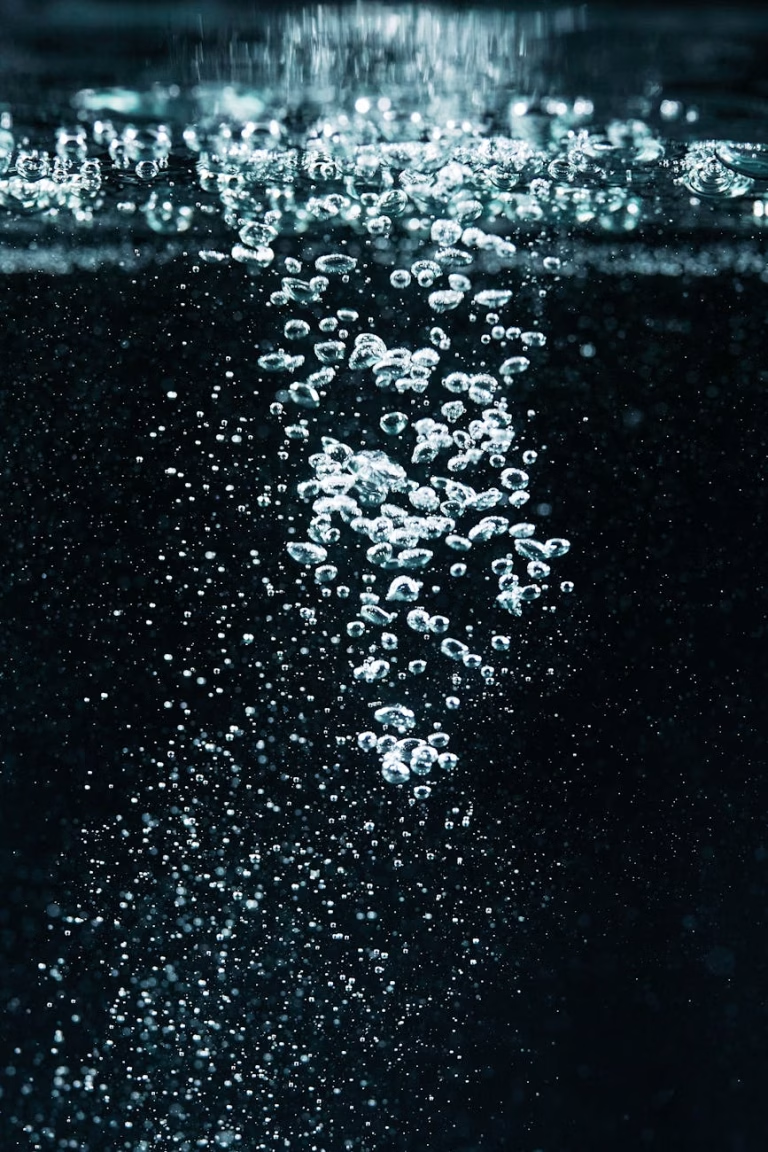
Place an air stone at the bottom of the reservoir. Attach food-safe air tubing to the air pump outlet, insert a check valve (prevents backflow), and connect to the air stone. Fill the reservoir with RO or dechlorinated tap water, then turn on the air pump. You should see vigorous bubbling throughout the solution. Weak bubbling or no bubbling indicates a clogged air stone or insufficient pump power; replace the air stone or upgrade the pump.
Step 3: Mix Your Nutrient Solution
Most two-part hydroponic nutrients are mixed at a specific EC ratio (usually 1.2-1.4 EC for vegetative growth). Start with half the recommended dose for leafy greens and microgreens; you can increase it after observing plant response. Mix thoroughly and allow the solution to circulate via air pump for 30 minutes before measuring pH and EC. Aim for a pH of 5.5-6.5 and EC of 1.0-1.4 depending on your crop.
Step 4: Start Your Seedlings
Soak rockwool cubes in pH 5.5 water for 30 minutes, then wring out excess. Place one seed per cube and keep in a humid environment (plastic dome or propagation chamber) under low light for 4-7 days. Once the seedling emerges and develops its first true leaves (the second set of leaves), transfer it to the DWC system by placing the rockwool cube in a net pot filled with hydroton or perlite.
Step 5: Position Net Pots in Your System
Fit the net pots through the prepared holes in your reservoir lid, spacing them 6-8 inches apart to prevent leaf crowding. The roots will dangle into the solution, and the hydroton in the net pot will stay moist from capillary action and hydration from the air moisture. Ensure the net pot rests securely so it cannot tip or sink into the water.
Step 6: Install and Set Your Light
Mount an LED grow light 12-18 inches above the plant canopy (adjust based on light intensity; hotter LEDs should be farther away). Set the light timer for 16-18 hours per day for vegetative crops (herbs, lettuce, greens) or 12-14 hours for flowering plants. Place a small fan nearby on low speed to gently move air over the plants; this strengthens stems and prevents fungal issues.
Step 7: Monitor Daily and Record Data
Every morning, check the air pump, water level, temperature, pH, and EC. If pH has drifted above 6.5, add pH Down in small increments and retest. If water level drops due to evaporation, top up with dechlorinated water (not nutrient solution, since this would over-concentrate salts). Record your observations; after a few weeks, patterns will emerge and you will know exactly what your system needs.
Step 8: Harvest When Ready
Leafy greens and microgreens mature in 25-35 days from transplant. Basil and other herbs reach harvestable size in 30-45 days. Cut outer leaves or entire plants depending on your preference. Most growers replace harvested plants with new transplants, creating a continuous cycle.
Tips for DWC Success in Hot Climates
From my experience running DWC systems in Phoenix’s 115+ F summers, water temperature is your biggest challenge. Aim for 65-70 F if possible. Strategies that work include growing in a basement or interior closet (coolest part of the home), using an immersion aquarium chiller (pricey but reliable), or adding frozen water bottles to the reservoir during peak heat (labor-intensive but free).
Algae growth accelerates in heat and light. Black or opaque containers, frequent (weekly) partial water changes, and hydrogen peroxide additions (1 teaspoon per 5 gallons) keep algae in check without harming plants.
Setting Up a Substrate-Based System: A Step-by-Step Guide
Required Materials and Tools
Container and Structure:
- 5-10 gallon grow bags or individual net pots
- Large drip reservoir (15-25 gallons)
- Growing medium: coco coir, rockwool, or hydroton
- Grow tray with drainage holes
Water Delivery:
- Drip tubing and emitters (0.5 GPH or 2 GPH depending on substrate)
- Submersible water pump (500-1000 GPH)
- Timer for intermittent feeding (optional but recommended)
Nutrient and Monitoring:
- One-part or two-part hydroponic nutrient
- pH meter and EC meter
- Thermometer
Lighting and Environment:
- LED grow light (25-30W per square foot minimum)
- Fan for air circulation
- Humidifier (optional, for dry climates)
How-To: Assemble Your First Drip System
Step 1: Choose and Prepare Your Growing Medium
Select coco coir for ease and reusability, or rockwool for precision nutrient control. If using coco coir, rinse it thoroughly in RO water to remove excess salt and dust (accumulated during processing). If using rockwool, soak blocks or cubes in pH 5.5 water for 30 minutes. Fill your grow bags or pots about 3/4 full with prepared medium, then set them on a drainage tray or net pot tray.
Step 2: Set Up the Water Pump and Drip Lines
Place your submersible pump in a large reservoir (bucket or tote). Attach vinyl tubing to the pump outlet and run it to your growing area. Split the main line into individual drip lines for each plant, ending with an adjustable emitter (0.5-2 GPH depending on medium and climate). For substrate systems, slower drip rates (0.5-1 GPH) work best because the medium retains moisture; faster rates risk waterlogging and root rot.
Step 3: Mix and Test Your Nutrient Solution
Prepare your nutrient solution at slightly lower EC than liquid systems: 0.8-1.0 EC for vegetative growth, 1.0-1.2 EC for fruiting crops. The substrate will buffer nutrient concentration, so you do not need to be as aggressive with dosing. Fill your reservoir, then pump and run the drip lines for 5 minutes to flush the tubing and settle air pockets. Turn off the pump and let the system sit for 30 minutes, then check pH.
Step 4: Transplant Seedlings into the Substrate
Once seedlings have 2-3 true leaves and are 2-3 inches tall, transplant them to the substrate-filled containers. Make a small hole in the medium, nestle the seedling (still in its rockwool cube), and gently firm the surrounding medium. Water gently to settle everything. For the first 3-5 days after transplant, hand water lightly once daily instead of using the automated drip system.
Step 5: Activate Your Irrigation Timer
Once seedlings are established, connect the pump to a timer and set it to run 15-30 minutes, 2-4 times per day. In hot, dry climates, you may need 4-5 cycles daily; in cooler conditions, 2-3 cycles suffice. Start conservatively and increase based on how quickly the substrate dries between cycles. Wet substrate should still have a small air pocket at the top (squeeze test: a few drops of water come out, not a stream).
Step 6: Install and Adjust Your Light
Position your LED light 12-18 inches above the canopy, on a 16-hour photoperiod for herbs and greens. Substrate systems tolerate slightly lower light intensity than liquid systems (because slower nutrient uptake means lower photosynthetic demand), so 25-30W per square foot suffices. A small circulation fan (4-6 inches) on low speed prevents stagnant air pockets in the medium.
Step 7: Monitor and Adjust Weekly
Check substrate moisture by feel or via a simple moisture meter. Adjust drip timer cycles to maintain consistent moisture without waterlogging. Monitor pH and EC weekly and adjust the reservoir solution if parameters drift. Because the substrate buffers nutrients, you can often go 7-10 days between nutrient checks and adjustments.
Step 8: Replace Substrate and Refill Reservoir
After 1-2 complete growing cycles (60-90 days), drain the reservoir and replace the medium. Coco coir can sometimes be recycled by rinsing and re-buffering, but most growers compost spent coir. Rockwool should not be reused (disposal is problematic; composting is slow).
Tips for Substrate System Success
From repeated growing cycles, I find that slow drip rates (0.5-1 GPH per plant) and 3-4 daily cycles beat faster, less frequent watering. The substrate stays consistently moist without becoming waterlogged, fungal issues drop dramatically, and plants grow evenly.
Watch for algae on the top of the medium in humid environments. A thin layer of mulch (perlite or a plastic cover with holes) prevents algae and slows evaporation. Similarly, monitor drip lines for clogging; flush the system weekly with water only (no nutrients) to clear mineral buildup.
Comparing Operating Costs: Liquid vs. Substrate Over One Year
To make an informed decision, consider total cost of ownership over 12 months:
| Cost Category | Liquid Hydroponics (DWC) | Substrate-Based (Drip) |
|---|---|---|
| Monthly Nutrients | $20-30 | $15-20 |
| Water Top-Ups | $0 (municipal) | $0 (municipal) |
| Substrate/Medium Replacement | $0 | $80-120 (quarterly) |
| Electricity (light + pump, 6 hrs/day) | $8-12/month | $8-12/month |
| Maintenance Items (pH buffers, air stones, tubing) | $30-50/year | $20-30/year |
Over 3-5 years, a DWC system becomes cost-competitive or cheaper per pound of produce grown.
Best Crops for Liquid Hydroponics
Liquid hydroponics excels with fast-growing, shallow-rooted crops that benefit from high nutrient uptake:
- Leafy greens (lettuce, spinach, arugula): 25-35 days to maturity
- Microgreens and sprouts: 10-20 days
- Basil and other soft herbs: 30-45 days
- Chard, kale, bok choy: 35-50 days
- Mint and parsley: 30-40 days
- Strawberries (in vertical towers): 60-90 days to first fruit
These crops grow fastest in liquid systems because roots access maximum nutrient concentration constantly. The trade-off is that you must maintain tighter environmental control.
Best Crops for Substrate-Based Systems
Substrate-based hydroponics works well for a broader range of crops, especially those with longer growing cycles or deeper root systems:
- Tomatoes, peppers, cucumbers: 60-120 days to first fruit
- Beans and peas: 45-70 days
- Herbs with fibrous roots (oregano, thyme, rosemary): 40-80 days
- Lettuce and greens (slower but reliable): 35-50 days
- Microgreens: 10-20 days (similar speed to liquid)
- Edible flowers (nasturtium, calendula): 45-60 days
For fruiting crops like tomatoes and peppers, substrate systems shine because the longer growing cycle means you can tolerate a 15-25% growth-rate penalty. The inherent forgiveness of substrate systems also reduces the stress of managing these heavier-feeding crops.
Common Mistakes and How to Avoid Them
Liquid Hydroponics Mistakes
Inadequate Aeration: Weak air pump bubbling or long-term reliance on a single air stone without backup is the number-one cause of root rot in DWC. Install a quality pump (5+ watts) and have a battery-powered backup air stone. Test your air delivery monthly.
Temperature Neglect: Letting water temperature climb above 24-25°C causes dissolved oxygen to crash. In Phoenix summers, a simple chiller (USD 150-300) is non-negotiable. Without it, grow only in early spring or fall, or accept crop losses every summer.
Overfeeding Nutrients: Starting at full recommended EC is a common trap. Begin at 1.0 EC and increase by 0.2 EC increments every week until you observe the sweet spot (fastest growth, no burn). Most crops thrive at 1.2-1.4 EC vegetatively.
Algae Overgrowth: Black or opaque reservoirs, weekly water changes, and hydrogen peroxide treatments (1 teaspoon per 5 gallons weekly) prevent algae. Algae competes for nutrients and hosts pathogens; ignoring it leads to plant disease.
Forgetting pH Management: Drifting pH (usually rising to 6.8-7.5 in DWC) locks out micronutrients and causes deficiencies despite adequate nutrient dosing. Check pH every 2-3 days and adjust with pH Down to stay in the 5.5-6.5 range.
Substrate-Based Mistakes
Overwatering: The most common substrate-system error is watering too frequently or at too high a flow rate. This creates anaerobic conditions, root rot, and fungal gnats. Drip duration should be 15-30 minutes, 2-4 times daily. Squeeze-test the substrate: slightly moist with a small air pocket at the top is ideal.
Medium Compaction: Over time, substrate compresses and loses drainage. After 4-6 weeks in heavy feeders like tomatoes, gently fluff the top inch of medium with your fingers or a small fork. This restores air pockets and prevents root suffocation.
pH Drift Without Monitoring: While substrate systems are more forgiving, pH still matters. Check pH weekly. Coco coir tends toward acidic pH (5.0-5.5) due to its composition, so you may need pH Up every few weeks. Rockwool is more neutral.
Neglecting Pump and Drip Maintenance: Clogged emitters or mineral buildup in tubing reduces water delivery. Flush drip lines weekly with plain water only. Replace air stones or check lines if bubbling weakens over time.
Ignoring Pest Colonization: Fungal gnats are attracted to moist substrate. A layer of mulch or a light plastic cover prevents them. Once gnats colonize, they spread quickly and require repeated treatment (neem oil, sand top layer, beneficial insects).
Troubleshooting Common Problems
Yellow Leaves in Liquid Systems
Cause: Usually pH drift (over 6.8), nitrogen deficiency, or iron lockout due to high water temperature.
Fix: Check pH immediately and correct to 5.5-6.5. If pH is correct, increase EC by 0.1-0.2. If temperature is above 24°C, cool the water using a chiller or by changing 25% of the solution with cooler water. Iron deficiency (yellowing between veins) responds to chelated iron supplements added to the reservoir.
Wilting Despite Wet Substrate
Cause: Root rot from waterlogging, overfertilization, or pathogenic fungus.
Fix: For substrate systems, reduce drip frequency immediately. Allow the medium to dry out slightly between cycles. If the problem persists, remove the plant, inspect roots (healthy roots are white; rotted roots are brown and slimy), and consider replacing the substrate around that plant. Use a fungicide drench (per product instructions) if fungal disease is confirmed.
Stunted Growth in Both Systems
Cause: Inadequate light, low EC (nutrient deficit), or temperature below 18°C.
Fix: Measure light intensity at plant level (should be 200+ micromoles per square meter per second for greens). Increase EC to 1.2-1.4 if currently below 1.0. If your room temperature is cold, add a small space heater set to 68-72°F (20-22°C), which is ideal for most crops. Wait 2-3 weeks; growth should accelerate.
Algae Bloom in DWC
Cause: Light reaching the nutrient solution, warm water, and nutrient excess.
Fix: Block all light entering the reservoir using opaque containers or light-blocking covers. Perform a 50% water change immediately. Add hydrogen peroxide (1 teaspoon per 5 gallons, weekly). If algae returns, increase water change frequency to twice per week until gone.
Maintenance Schedules: What You Need to Do Weekly and Monthly
Liquid Hydroponics Maintenance
Daily (5-10 minutes):
- Check air pump operation and sound
- Observe water level
- Quick plant health scan for wilting, discoloration, or pest signs
2-3 Times Per Week:
- Measure and record pH and EC
- Check water temperature
Weekly:
- Perform 20-30% water change (especially in summer heat)
- Clean and inspect air stone
- Add hydrogen peroxide if algae risk is high
Monthly:
- Deep clean the reservoir and pump
- Replace air stone if bubbling declines
- Check tubing for cracks or discoloration
- Harvest and replace mature plants
Every 6 Months:
- Replace the air pump if performance declines
- Inspect and clean light fixtures
Substrate-Based System Maintenance
Daily (5 minutes):
- Visual plant inspection
- Check that drip lines are running
Weekly:
- Feel substrate for moisture level
- Adjust drip timer if needed
- Check for pests (especially fungal gnats, spider mites)
- Measure and record pH and EC of reservoir
Every 2 Weeks:
- Clean or replace drip emitters if clogging is observed
- Inspect pump performance
Monthly:
- Drain and refill the reservoir completely
- Clean the submersible pump
- Check for algae on substrate surface and remove mulch if needed
Every 6-8 Weeks:
- Replace substrate completely or refresh the top 2-3 inches if medium is compacted
Making the Final Choice: Decision Tree
Use this simple decision tree to determine which system is right for you:
Are you a complete beginner to hydroponics?
Yes > Substrate-Based Systems
No > Continue
Do you have reliable electricity and a temperature-controlled space (65-75°F year-round)?
Yes > Liquid Hydroponics
No > Substrate-Based Systems
Is maximizing yield in minimal space your priority?
Yes > Liquid Hydroponics
No > Substrate-Based Systems
Do you travel frequently or have limited time for daily monitoring?
Yes > Substrate-Based Systems
No > Liquid Hydroponics
Are you growing fast crops (greens, herbs) or longer-cycle crops (tomatoes, peppers)?
Fast Crops > Liquid Hydroponics
Longer Crops > Substrate-Based Systems
Frequently Asked Questions
What is the main difference between liquid and substrate hydroponics?
Liquid hydroponics suspends plant roots directly in nutrient solution; substrate hydroponics uses a growing medium (coco coir, rockwool) to hold water and nutrients while providing air pockets. Liquid systems grow faster but require more daily attention. Substrate systems are more forgiving and lower cost upfront.
Can I grow tomatoes and peppers in hydroponics?
Yes, but substrate-based systems are better suited for long-cycle fruiting crops. Tomatoes and peppers benefit from the stability and forgiveness of growing media. DWC or NFT systems can grow tomatoes, but they require expert management of water temperature, EC, and pH. Start with substrate-based systems if you are new to fruiting crops.
How often should I change the water in my hydroponic system?
For liquid systems (DWC), perform a 25-30% water change weekly, or a complete reservoir change every 3-4 weeks. For substrate systems, change the reservoir completely once monthly. In hot climates, increase frequency to prevent salt accumulation and disease.
What is the fastest-growing crop in hydroponics?
Microgreens mature in 10-15 days, followed by lettuce and other leafy greens (25-35 days). Basil, arugula, and spinach also mature quickly. All of these are best suited to liquid hydroponics for maximum speed. Fruiting crops like tomatoes take 80-120 days to first harvest regardless of system type.
Do I need a backup air pump for DWC?
Yes. Without aeration, roots suffocate within hours in warm water. A power outage, pump failure, or blocked air stone can crash your entire system in a single day. A battery-powered backup air stone (USD 30-50) is essential insurance, especially in climates with unreliable power or summer heat.
How do I prevent root rot in hydroponics?
For liquid systems: maintain dissolved oxygen via continuous aeration, keep water temperature below 24°C, and avoid overfeeding nutrients. For substrate systems: drip at slow rates (0.5-1 GPH), allow substrate to dry slightly between cycles, and monitor for waterlogging. In both systems, remove visibly diseased roots and sterilize tools to prevent spread.
Can I use tap water in my hydroponic system?
Yes, if your tap water has low chlorine and low mineral content. If your water is heavily chlorinated, let it sit 24 hours before use to allow chlorine to off-gas. If mineral content (hardness) is very high, consider using filtered or RO water, especially in liquid systems where mineral accumulation can become problematic over weeks.
How long does it take to see growth in hydroponics?
Fast crops (microgreens, lettuce, herbs) show noticeable growth within 7-10 days of transplant. Fruiting crops like tomatoes begin flowering at 30-45 days and produce fruit at 60-90 days. Results are visible faster in liquid systems than substrate systems (often 3-7 days earlier).
Is hydroponics worth the cost and effort for a home gardener?
For anyone growing herbs or greens year-round, hydroponics saves money compared to buying organic from stores. A simple substrate system produces 5-8 kilograms of basil or lettuce per month at a fraction of grocery cost. The initial investment pays back within 6-12 months for steady growers. For outdoor gardeners in climates with short seasons, hydroponics extends your growing window dramatically.
Author Bio
The author is a cybersecurity engineer and hydroponics/indoor agriculture enthusiast based in Phoenix, Arizona. The focus is on demystifying hydroponics, lowering barriers to entry, and helping growers achieve professional-grade results in limited spaces without sacrificing reliability or harvest quality. Based in Peoria, Arizona, the author combines cybersecurity expertise with a passion for resilient, decentralized food systems and automated urban growing.
Share this:

Discover more from Soil Free Harvest
Subscribe to get the latest posts sent to your email.