Submersible Pump Sizing for Hydroponic Towers: Complete Guide to GPH, Head Height, and Wattage
Quick Answer: Submersible pumps for hydroponic towers need to be sized based on three critical factors: GPH (gallons per hour), head height (vertical distance the pump must push water), and wattage. Most home tower gardens need a 350-400 GPH pump with a head height rating of 5-7 feet and 20-35 watts of power.
TL;DR: Match your pump’s GPH to your tower height and plant count, verify the head height rating can handle your vertical lift, and check that wattage suits your electrical setup. A properly sized pump delivers consistent water flow that keeps plants thriving without wasting energy.
Affiliate Disclosure: This article contains affiliate links. If you purchase through these links, soilfreeharvest.com may earn a small commission at no extra cost to you.
What Is a Submersible Pump and How Does It Work?
A submersible pump is a water-delivery device that sits directly inside your hydroponic system’s reservoir tank. Unlike inline pumps that sit outside the system, submersible pumps are completely submerged in water, which keeps them cool while delivering nutrient solution to your tower’s top. The pump contains an electric motor that powers an impeller, which spins to move water upward through attached tubing and into your tower garden.
Submersible pumps work by creating pressure that forces water against gravity. This upward push is measured in “head height,” which represents the vertical distance the pump can reliably deliver water. As water rises higher, the pump works harder, and its flow rate (GPH) typically decreases. This relationship between height and flow is the foundation of proper pump sizing for tower gardens.
Submersible pumps are popular for hydroponic towers because they’re affordable, quiet, energy-efficient, and require minimal maintenance compared to inline alternatives. They also cool efficiently since they’re surrounded by water, making them ideal for hobby and home growers.
Hydroponic tower system setup guide → $50 DIY Tower Build
Types of Submersible Pumps for Hydroponic Systems
Magnetic Drive Pumps
Magnetic drive pumps are the most common choice for hydroponic towers. These use a magnetic coupling to power the impeller without a traditional shaft seal, eliminating oil leaks and making them safe for edible plants. They run quietly, last for years with minimal maintenance, and come in flow rates from 40 GPH to over 1,000 GPH. The Active Aqua brand dominates this category with reliable models at various price points.
Magnetic drive pumps work exceptionally well for vertical towers because they maintain steady pressure across a range of head heights. You’ll find them pre-installed in commercial systems like Tower Garden and Tower Farm, and they’re the go-to recommendation for DIY growers.
Centrifugal Pumps
Centrifugal pumps use a spinning impeller inside a housing to move water. They’re powerful and efficient but tend to be louder and larger than magnetic drive options. These pumps excel at moving high volumes of water but are typically overkill for small to medium home towers. Most home growers choose magnetic drive instead because of the quieter operation and smaller footprint.
Gear-Driven Pumps
Gear pumps are less common in hydroponics but work well for very small systems. They deliver consistent, precise flow but are more expensive and require more frequent maintenance than magnetic or centrifugal options. For tower gardens, they’re rarely necessary unless you’re building a highly specialized setup.
Understanding GPH and Why It Matters for Your Tower
GPH stands for gallons per hour, the volume of water your pump can move in 60 minutes. This is the most important specification when sizing a pump for your tower.
To calculate the GPH you need, use this simple formula:
- Number of towers × 2 gallons per tower per hour + 50 gallons for reservoir = Required GPH
For example, if you have three tower gardens:
- 3 towers × 2 GPH = 6 GPH minimum
- Add 50 GPH for the reservoir = 56 GPH base requirement
However, this is just the starting point. You must also account for head height, which reduces actual flow. A pump rated at 400 GPH at ground level might deliver only 250 GPH when pushing water 6 feet up a tower.
Hydroponic nutrients and mixing → Complete nutrient guide
Head Height: The Critical Measurement You Can’t Ignore
Head height (also called head lift or static head) is the vertical distance from the bottom of your reservoir to the point where water exits at the top of your tower. This measurement is absolutely critical because it determines how efficiently your pump performs.
How to Measure Head Height
- Locate the water line in your nutrient reservoir (usually several inches from the bottom)
- Measure vertically to the exit point where water enters your tower
- Add 1-2 feet for tubing resistance and friction losses
- This total is your system’s head height
For example, if your water line is 2 feet below your tower top, and the tower rises 5 feet, your head height is roughly 7 feet. A pump rated 400 GPH at 0 feet might only deliver 250-300 GPH at 7 feet of head.

This chart displays three popular pump models (Active Aqua 250 GPH, Active Aqua 550 GPH, and Active Aqua 800 GPH) showing realistic performance degradation as head height increases. The visual demonstrates why you cannot rely on a pump’s maximum GPH rating alone, flow output decreases significantly as the pump must push water higher in your tower. For example, a 550 GPH pump only delivers about 240 GPH at 8 feet of head height.
Head Height in PSI Conversion
Sometimes pump charts show pressure in PSI instead of feet. Use this simple conversion:
- 1 foot of head = 0.433 PSI
- 1 PSI = 2.31 feet of head
So a pump with 3 PSI of pressure can lift water approximately 6.9 feet. Understanding this relationship helps you read pump specification charts accurately.
Typical Tower Garden Head Heights
| Tower Configuration | Head Height | Notes |
|---|---|---|
| Single tower, 5 gallons reservoir | 4-5 feet | Most beginner setups |
| Dual towers, 45+ gallon tank | 5-6 feet | Standard commercial config |
| Extended towers (with add-ons) | 7-8 feet | Requires larger pump |
| Multi-level vertical setup | 8-10 feet | Demands high-capacity pump |
Wattage and Power Consumption: Running Costs and Safety
Wattage measures electrical power consumption, directly affecting your electricity bill and electrical circuit safety.
Submersible pumps for tower gardens typically range from 9 watts (small 160 GPH models) to 92 watts (large 1,100 GPH models). Here’s what’s typical:
- Small systems (160-250 GPH): 9-15 watts
- Medium systems (350-550 GPH): 23-35 watts
- Large systems (800-1,100 GPH): 50-92 watts
A standard Tower Garden pump operates at 23 watts for approximately 2.4 hours per day (5 minutes on, 45 minutes off), consuming roughly $0.21 per month in electricity at the U.S. average rate of 12.91 cents per kilowatt-hour.
Calculating Your Power Costs
- Multiply wattage × hours of operation = Watt-hours per day
- Divide by 1,000 to convert to kilowatt-hours
- Multiply by your local electricity rate
Example: A 30-watt pump running 6 hours daily:
- 30W × 6 hours = 180 watt-hours = 0.18 kWh
- 0.18 kWh × $0.1291 = $0.023 per day, or roughly $0.70 per month
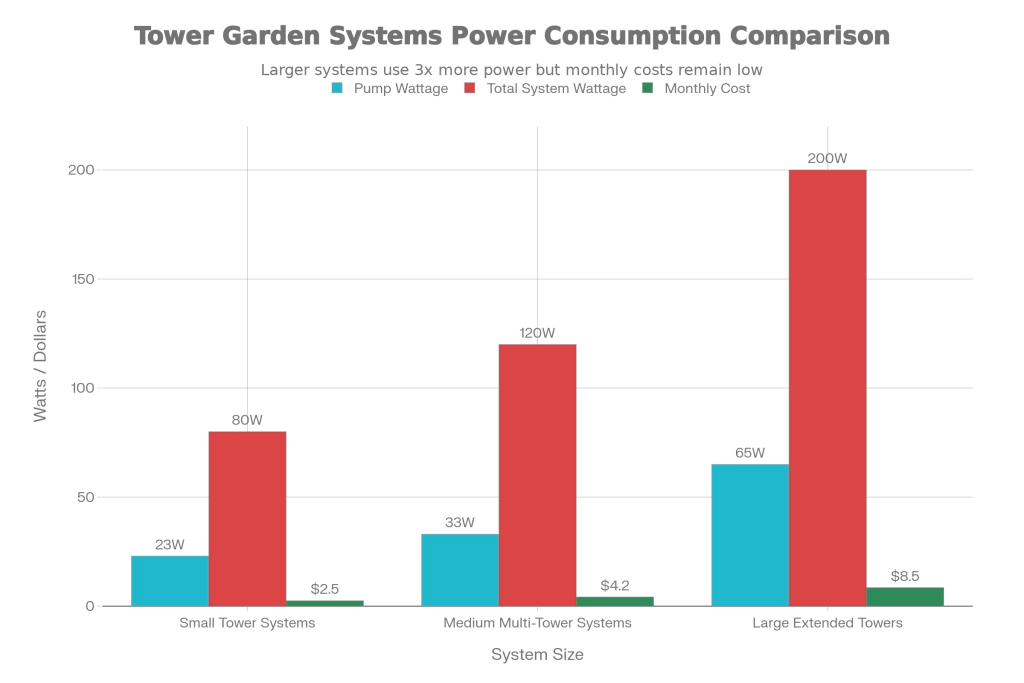
This bar chart compares three key metrics across small, medium, and large tower systems: pump wattage only, total system wattage (including all equipment), and monthly electricity cost. It demonstrates that a small hobby tower costs only $2.50/month to operate, while even a large commercial-scale setup runs just $8.50/month.
Electrical Safety Considerations
Most home circuits are 15-20 amps at 120 volts. A submersible pump alone rarely exceeds 1 amp, but always check the rating on your specific pump. Never exceed 80% of your circuit’s total amperage to prevent overload. If you’re running multiple devices (pump, air pump, grow lights, heater), calculate total amperage:
- Watts ÷ 120 volts = Amperage
- A 30-watt pump draws 0.25 amps; plenty of headroom on a standard circuit
Hydroponic lighting → Top LED grow lights
Pump Specifications Explained: Reading Manufacturer Charts
Every submersible pump comes with a specification chart showing flow at different head heights. These charts are essential for proper sizing.
Reading a Typical Pump Chart
A standard chart shows head height in feet on one axis and GPH on the other. For example, an Active Aqua 800 GPH pump might show:
- 0 feet head: 800 GPH
- 2 feet head: 650 GPH
- 4 feet head: 450 GPH
- 6 feet head: 200 GPH
- 7.5 feet head: 0 GPH (maximum lift, no flow)
This tells you the pump physically cannot push water higher than 7.5 feet, and flow drops significantly with height. You must choose a pump where the head height chart shows adequate GPH at your system’s actual head height.
What “Maximum Head Height” Means
This specification indicates the absolute maximum vertical distance the pump can push water, even with zero flow. Don’t use a pump near its maximum head rating—you’ll get little to no water delivery. Instead, choose a pump where your actual head height is in the lower-to-middle portion of its capability range.
How Tubing and Fittings Affect Performance
Friction inside tubing reduces actual flow. Use these guidelines:
- 1/4-inch tubing: High friction, suitable only for very small systems
- 3/8-inch tubing: Medium friction, standard for most home towers
- 1/2-inch tubing: Lower friction, recommended for multi-tower setups
- 5/8-inch or larger: Minimal friction, best for large or extended towers
Every elbow, T-fitting, and valve adds back-pressure equivalent to several feet of head. A well-designed system accounts for these losses.
Matching Pump Size to Your Tower Garden Setup
Small Home Tower Gardens (1-2 towers)
For single or dual tower setups under 6 feet tall, target:
- GPH: 200-350 GPH
- Head Height Rating: 5-6 feet minimum
- Wattage: 15-25 watts
- Recommended Pump: Active Aqua 250-300 GPH or similar
In my own small tower setups in Phoenix’s dry climate, I’ve found that 250-300 GPH pumps provide excellent circulation without over-watering, especially when plants are young. As roots develop, the slightly higher flow prevents nutrient depletion in the root zone.
Medium Multi-Tower Systems (3-6 towers)
For commercial-style Tower Farms or DIY multi-tower setups 6-7 feet tall, target:
- GPH: 350-600 GPH
- Head Height Rating: 6-8 feet minimum
- Wattage: 25-40 watts
- Recommended Pump: Active Aqua 550 GPH, EcoPlus 396-594 GPH
Medium systems are the sweet spot for home and small commercial operations. The standard Tower Garden pump (357 GPH at 23 watts) is engineered specifically for their tower heights and has proven reliability across thousands of installations.
Large Extended Towers (7+ feet or multiple levels)
For commercial farms, extended DIY towers, or stacked tower configurations above 7 feet, target:
- GPH: 600-1,100 GPH
- Head Height Rating: 8-10 feet minimum
- Wattage: 40-92 watts
- Recommended Pump: Active Aqua 800-1,100 GPH or inline alternatives
Larger pumps require more electrical current and generate more heat, so ensure adequate ventilation and cooling in your grow space. From multiple runs in hot, dry Arizona climates, I’ve seen that large pumps pushing water 8+ feet actually benefit from slightly longer intervals between pump cycles, as the increased friction inherently creates slower, steadier distribution.
Hydroponic troubleshooting → fixing common hydroponic problems
How to Choose the Right Pump for Your Hydroponic Tower: Step-by-Step
Step 1: Measure Your System’s Head Height
Use a measuring tape to find the vertical distance from your reservoir water line to the tower’s exit point. Add 1-2 feet for tubing friction.
Step 2: Calculate Your Required GPH
Multiply the number of towers by 2 (gallons per tower per hour), then add 50 for reservoir turnover.
Step 3: Find a Pump Chart for Your Head Height
Search online for the pump brand’s specification sheet. Locate your head height on the chart and verify the listed GPH meets your calculated requirement.
Step 4: Check Wattage and Electrical Safety
Confirm the pump’s wattage doesn’t overload your circuit and won’t cause excessive electricity costs.
Step 5: Verify Tubing Compatibility
Check that the pump’s outlet fitting matches your existing tubing size or plan for adapters.
Step 6: Review Warranty and Support
Choose pumps with 2-5 year warranties and accessible customer support. Active Aqua, EcoPlus, and Tower Garden offer excellent support for their products.
Best Submersible Pumps for Hydroponic Towers: Recommendations by Size
| Pump Model | GPH | Head Height | Wattage | Best For | Price Point |
|---|---|---|---|---|---|
| Active Aqua 160 GPH (affiliate link) | 160 | 4.5 ft | 9.5W | Tiny countertop systems | $ |
| EcoPlus 396 GPH (affiliate link) | 396 | 6.5 ft | 36W | Small to medium towers | $$ |
| Active Aqua 550 GPH (affiliate link) | 550 | 7.5 ft | 33W | Medium multi-tower | $$ |
| Active Aqua 800 GPH (affiliate link) | 800 | 8.5 ft | 65W | Large/extended towers | $$$ |
| Active Aqua 1100 GPH (affiliate link) | 1100 | 10 ft | 92W | Commercial systems | $$$$ |
Maintenance: Keeping Your Pump Running Smoothly
Daily Tasks
- Check that water reaches the tower top
- Listen for unusual grinding or clicking sounds
- Monitor reservoir water level (top off as plants transpire)
Weekly Maintenance
- Visually inspect the pump and tubing for blockages
- Ensure the pump sits flat on the reservoir bottom (not tilted)
- Check that the intake filter (if present) is clear
Monthly Cleaning
- Remove the pump from the reservoir
- Brush debris and algae from the housing
- Rinse the intake area thoroughly with clean water
- Look for root intrusion into the pump (very common issue)
Annual Deep Clean
Once per year, disassemble the pump if possible, clean all components with warm soapy water, and run vinegar solution through your entire system to dissolve mineral buildup. From my experience managing tower systems year-round in Arizona’s hard water conditions, this annual clean prevents 90% of seasonal flow problems.
Hydroponic system maintenance → Cleaning and care
Common Pump Problems and Quick Fixes
Water Doesn’t Reach the Tower Top
Likely cause: Undersized pump for the head height, or reduced flow from clogged intake.
Fix: Verify the pump’s head height rating actually exceeds your system’s height. If the rating is adequate, clean the intake filter or remove roots from the pump housing.
Reduced Water Flow Over Time
Likely cause: Tubing has become twisted or mineral buildup is restricting flow.
Fix: Disconnect the blue/clear delivery hose and straighten any twists. Run vinegar solution through the system or soak tubing in a vinegar and water solution (1:3 ratio) for 30 minutes.
Pump Runs But No Water Comes Out
Likely cause: Air pocket (airlock) in the pump or tubing.
Fix: Gently lift and lower the pump several times to release trapped air. If that fails, fill the pump housing with water before power-on by pouring water directly into the intake.
Pump Cycles On and Off Repeatedly
Likely cause: Float valve stuck, water level too low, or pump sitting on its side.
Fix: Check the reservoir float valve isn’t stuck open or closed. Ensure the pump sits flat and upright. Top off water level to prevent the pump from running dry.
Pump Sounds Loud or Has Strange Noises
Likely cause: Cavitation (air in the pump), debris hitting the impeller, or bearing wear.
Fix: Check water level, remove any debris, and ensure tubing is securely attached. If noise persists, the pump likely needs replacement.
FAQ: Your Hydroponic Tower Pump Questions Answered
Q: What size pump do I need for a single Tower Garden?
A: Most single Tower Garden setups use 350-400 GPH pumps. The standard Tower Garden pump is rated at 357 GPH with a 6-foot head height rating, which is ideal for standard configurations up to 5.5 feet tall.
Q: Can I use a pump larger than recommended for my tower?
A: Yes, but you should reduce flow with a ball valve or flow control dial (many pumps have adjustable outlets). Oversized pumps are quieter at partial throttle than undersized pumps at maximum capacity. However, consistently running a large pump at minimum setting wastes energy.
Q: How often should I replace my submersible pump?
A: High-quality mag drive pumps last 5-10 years with proper maintenance. Most failures occur from inadequate cleaning or running dry. Check your pump annually and replace if flow decreases despite cleaning attempts.
Q: Is 23 watts really cheap to run?
A: Yes. At the U.S. average electricity rate, a 23-watt pump running 2.4 hours daily costs roughly $2.50-$3.00 per year. Even a 40-watt pump running 6 hours daily costs only about $10 per year.
Q: What happens if my pump stops working?
A: Plants in a tower have only minutes to hours before roots dry completely. If power outages are common in your area, install a backup pump or use an uninterruptible power supply (UPS) system. Many growers keep a spare pump on hand for emergencies.
Q: Do I need a special pump for organic or aquaponic systems?
A: No. Mag drive pumps are safe for any hydroponic or aquaponic nutrient solution, including organic. They don’t leak oil and are BPA-free, making them suitable for edible crops.
Q: Can I build a tower with a cheap pool pump instead?
A: Pool pumps are designed for horizontal water movement, not vertical lift. They typically lack the head height rating needed for towers. Stick with hydroponic-specific submersible pumps rated for vertical systems.
Q: How much does a quality submersible pump cost?
A: Active Aqua and EcoPlus pumps range from $30-$120 depending on size. Tower Garden proprietary pumps cost $100-$150. Budget-friendly DIY growers can find comparable alternatives on Amazon for $25-$80. Higher-quality pumps last longer and run more efficiently.
Conclusion: Sizing Your Pump for Long-Term Tower Success
Choosing the right submersible pump is the single most important equipment decision you’ll make for your hydroponic tower. A properly sized pump ensures consistent nutrient delivery, healthy plant growth, and reliable operation year after year. The three critical factors—GPH, head height, and wattage—work together to determine whether your tower thrives or struggles.
Start by measuring your head height and calculating required GPH using the simple formula in this guide. Always verify your chosen pump’s specification chart confirms adequate flow at your actual head height. Pay attention to wattage for electrical safety and cost considerations. And remember that maintenance makes the difference between a pump that lasts five years and one that lasts a decade.
From my experience building and maintaining multiple tower systems in Phoenix, Arizona’s demanding climate, I’ve learned that investing in a slightly larger pump than minimum requirements, combined with annual maintenance and a backup unit on hand, eliminates 99% of growing problems. Your plants depend entirely on consistent water delivery, so don’t underestimate this critical component.
Hydroponic tower plants → best crops to grow in your vertical garden
Author Bio
I’m a hydroponics enthusiast and cybersecurity professional based in Phoenix, Arizona, with experience designing, building, and maintaining both DIY and commercial hydroponic systems. As the creator of Soil Free Harvest, I focus on practical, evidence-based guidance for indoor and urban growers who want to produce fresh food year-round without soil. My background in cybersecurity combined with my passion for sustainable agriculture drives my approach to system automation, data tracking, and troubleshooting complex growing problems. I’m committed to sharing what actually works for home growers.
Share this:

Discover more from Soil Free Harvest
Subscribe to get the latest posts sent to your email.








2 Comments