The $50 Vertical Tower Garden: Maximize Space & Yields
Yes, you can build a fully functional vertical hydroponic tower garden for around $50 using basic materials like PVC pipes, buckets, a small submersible pump, net pots, and growing media. This budget-friendly system produces 20 to 30 lettuce or herb plants in a footprint smaller than a standard refrigerator, making it perfect for apartments, patios, and balconies. With proper setup and maintenance, you’ll harvest fresh greens in 3 to 5 weeks.
TL;DR: A $50 DIY vertical tower garden uses a 5-gallon bucket reservoir, a 200 to 400 GPH submersible pump, and stacked planting layers to grow up to 30 plants vertically. It’s ideal for beginners, apartment dwellers, and anyone wanting fresh herbs year-round with minimal space and water.
Affiliate Disclosure: This article contains affiliate links. If you purchase through these links, soilfreeharvest.com may earn a small commission at no extra cost to you.
What is a $50 Vertical Tower Garden?
A vertical tower garden is a compact, soilless growing system where plants are arranged in tiers around a central column or pipe. Instead of spreading horizontally across soil, nutrient-rich water is pumped up from a small reservoir and trickles or sprays back down, feeding all plants as it circulates. The $50 version uses basic hardware store materials to achieve professional-looking results on a tight budget.
Key benefits of this budget approach include:
- Footprint of just 2 to 3 square feet (smaller than most furniture)
- Growing capacity of 20 to 30 plants per tower
- Water usage up to 90% less than soil gardening
- Harvest-ready in 3 to 5 weeks for fast-growing crops
- Suitable for beginners with no prior hydroponic experience
How Does a Budget Vertical Tower Garden Work?
A $50 vertical tower operates on a simple recirculating system. A submersible pump in the base reservoir lifts nutrient solution up a central pipe or tube to the top of the tower. From there, water flows or sprays down through the planting sites, where plant roots absorb nutrients and oxygen. The water then returns to the reservoir and is recirculated continuously.
The basic flow works like this:
- Pump takes in water from the reservoir base
- Water travels up through a central delivery pipe (often 1/2 inch PVC or vinyl tubing)
- Water is distributed across planting pockets at the top via small holes or a spreader
- Nutrient solution trickles or drains down through net pots and growing media
- Water returns to the reservoir to repeat the cycle
This continuous circulation delivers nutrients and dissolved oxygen directly to plant roots, allowing them to grow 30 to 50% faster than in traditional soil. The recirculation also means you use the same water repeatedly, reducing waste compared to hand-watering or traditional drip systems.
How hydroponic systems circulate oxygen→ The Role of Aeration and Oxygen in Successful Hydroponic Systems
Why Choose a Vertical Tower Garden for Your Home?
Vertical tower gardens solve three major problems for home growers: limited space, water scarcity, and pest pressure. For apartment dwellers in Phoenix, Arizona’s hot, arid climate, these systems are particularly valuable because they reduce water consumption by 90% compared to traditional gardening. You can produce fresh lettuce, basil, and spinach on a balcony, in a kitchen corner, or even in a basement with supplemental LED lights.
Additional reasons to build a $50 tower include:
- Space efficiency: 20 to 30 plants in less than 4 square feet
- Water conservation: Uses just 5 to 20 gallons per week versus hundreds in soil gardens
- Year-round production: Control temperature and light for continuous harvests
- No soil mess: Perfect for apartments where soil is impractical
- Beginner-friendly: Minimal tools and technical knowledge required
- Cost-effective: Initial investment under $50 with years of use
- Faster harvests: Leafy greens ready in 3 to 5 weeks versus 6 to 8 weeks in soil
Benefits of soilless growing → Hydroponics vs Traditional Gardening: Pros and Cons
Vertical Tower Build Guide: Materials and Components
Essential Materials for a $50 Tower
Building a functioning vertical tower for $50 requires strategic material choices. Here’s a breakdown of typical components and costs based on 2025 pricing:
| Component | Avg Cost | Notes |
|---|---|---|
| 5-gallon plastic bucket or reservoir | $3-5 | Food-grade is preferred but any food-safe bucket works ( I used and old Koi Food bucket that I upcycled) |
| 4-inch PVC pipe (10 feet length) | $8-12 | Cut to tower height (4 to 6 feet) |
| 1/2-inch vinyl hose or PVC pipe | $3-5 | For water delivery to top of tower |
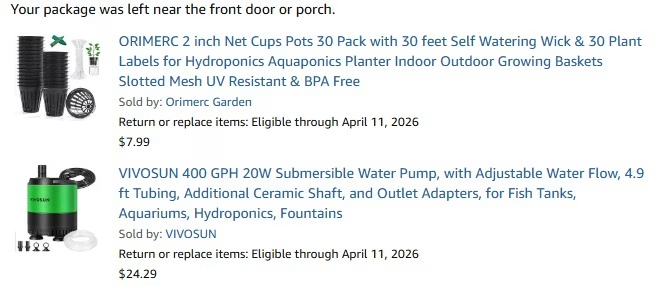
| Submersible pump (200-400 GPH) | $15-25 | The most expensive component; Amazon <- this is the one I bought and it came with tubing (It was on sale and is a good brand) |
| Net pots (50-pack, 2-3 inch) | $8-12 | Standard plastic growing pots – Amazon <- This is what I bought |
| Growing medium (coconut coir or perlite) | $5-8 | Can substitute pool noodles cut into rings |
| Nutrient solution | $10-15 | Hydroponic nutrient mix or quality all-purpose fertilizer |
| Miscellaneous (fittings, tape, tubing clamps) | $3-5 | PVC connectors, vinyl tubing, cable ties |
| Total Estimated Cost | $50-80 | Budget range for complete functional system |
Choosing growing media → Hydroponics Growing Mediums: The Complete Guide to Types, Selection, and Management
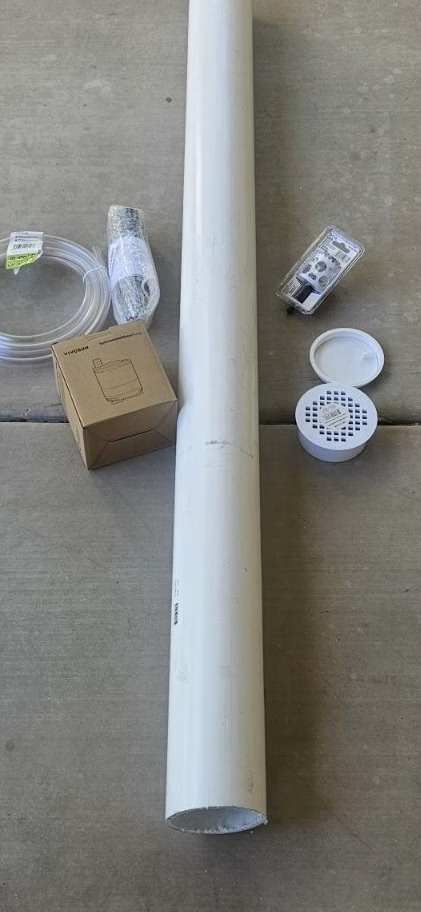
Tower Components Explained
Submersible Pumps for Vertical Systems
The pump is the heart of your tower, and selecting the right size matters. For a $50 budget tower (4 to 5 feet tall), a 200 to 400 GPH pump is ideal. At ground level, a 400 GPH pump will deliver approximately 100 to 150 GPH at a height of 4 feet due to head pressure loss. This flow rate is more than adequate for distributing nutrients to 20 to 30 plants.
Key pump specifications to understand:
- GPH (gallons per hour): Flow rate at zero feet elevation. A 400 GPH pump rated pump can push 100 to 150 GPH at 4 to 5 feet high.
- Head height: The maximum vertical distance a pump can push water. Most 400 GPH submersible pumps are rated for 6 to 10 feet of lift.
- Wattage: Budget towers use 20 to 40 watt pumps, which consume about 0.5 kWh per day of operation (less than $0.15 per month in electricity).
- Type: Magnetic drive submersible pumps are preferred for their durability and quiet operation.
Submersible pump sizing → choosing the right pump for your tower
Net Pots and Planting Sites
Net pots are small plastic containers (typically 2 to 3 inches) that hold individual plants and growing media while allowing roots to access the circulating nutrient solution. They’re reusable, inexpensive (often $0.15 to $0.25 each), and available at any hydroponics supplier or online retailer.
For a $50 tower:
- Use 2-inch net pots for lettuce, herbs, and small greens (standard choice)
- Space pots 4 to 6 inches apart on each tower level to prevent overcrowding
- Plan for 4 to 6 pots per horizontal tier
- A 5-foot tower can accommodate 20 to 28 pots across 4 to 5 tiers
Growing Media Options
Growing media replaces soil and serves two purposes: anchoring plant roots and providing capillary action to wick water upward into the root zone. Budget-friendly options include:
- Coconut coir (coco coir): Renewable, retains moisture well, pH neutral when buffered, cost about $0.10 per net pot fill
- Perlite: Lightweight volcanic rock, excellent drainage, inexpensive, but dries quickly (benefits from mixing with coir)
- Rockwool: Traditional choice, holds water well, must be pre-soaked in pH-balanced water before use
- Pool noodles: Creative budget hack (cost $1 to $2 total), cut into 2-inch rings and placed in net pots, works surprisingly well for lettuce
For absolute budget optimization, cut dollar-store pool noodles into rings. They cost just $1 to $3 for a full tower setup and work adequately for short-term lettuce and herb crops.
Hydroponic growing media comparison → selecting the right substrate
Reservoir Container
A 5-gallon bucket serves as your nutrient reservoir. Food-grade buckets from bakeries are free if you ask; hardware stores sell new ones for $3 to $5. The reservoir needs:
- Opaque material to prevent algae growth
- A lid with a small access hole for maintenance
- Enough volume to prevent rapid pH and EC (electrical conductivity) swings (larger reservoirs are more stable, but 5 gallons minimum works)
- A drain or valve at the bottom for periodic flushing
Step-by-Step Tower Build: From Zero to Harvest
How to Build a $50 Vertical Tower Garden
Difficulty Level: Beginner. Requires basic tools: drill, saw, measuring tape, utility knife. No advanced plumbing or electrical knowledge needed.
Time to Build: 2 to 4 hours for the first tower (faster on subsequent builds).
Harvest Timeline: 3 to 5 weeks for leafy greens; 4 to 8 weeks for herbs.
Materials and Tools You’ll Need
Materials:
- One 5-gallon food-grade plastic bucket (reservoir)
- One 4-inch PVC pipe, 5 to 6 feet length (tower structure)
- One 1/2-inch vinyl hose or PVC pipe, 10 feet (water delivery)
- One submersible pump 400 GPH or smaller (water circulation)
- 20 to 30 net pots, 2 to 3 inch diameter
- Growing medium: coconut coir, perlite, or pool noodles
- Vinyl hose clamps and small PVC connectors
- Hydroponic nutrient solution (all-in-one formula)
- Duct tape, cable ties, PVC cement (optional)
Tools:
- Power drill with 2-inch hole saw bit
- Hand saw or circular saw
- Measuring tape and marker
- Utility knife
- Adjustable wrench or socket set
- Optional: Dremel or small rotary tool for minor adjustments
Building Your Tower: Step-by-Step Instructions
Step 1: Prepare Your Reservoir Bucket
Start with a clean, opaque 5-gallon bucket. If using a clear bucket, wrap it with black duct tape or paint to block light and prevent algae growth. Drill a small hole (1/4 inch) in the lid for adding water and monitoring nutrient levels. Drill another small hole near the bottom rim for a drain valve (optional but helpful for system flushes). Ensure the bucket sits level on a stable surface.
Step 2: Create the Tower Structure
Cut your 4-inch PVC pipe to 5 to 6 feet height using a hand saw or circular saw (plan for about 48 to 60 inches total height). Mark the center of the bucket lid and drill a 4-inch hole to fit the PVC tower snugly. Seal the gap between the pipe and bucket with waterproof silicone sealant or foam insulation tape to prevent water escape. The tower should stand upright and stable; brace it with guy wires or a small frame if needed.
Step 3: Drill Plant Pockets
Using a 2-inch hole saw bit, drill evenly spaced holes around the PVC tower at 6-inch vertical intervals. Plan for 4 to 6 holes per horizontal level, with 4 to 5 levels total. Stagger the holes so plants on lower levels don’t shade those above. After drilling, smooth any rough edges with sandpaper. Each hole should fit your net pot snugly.
Step 4: Install the Pump and Water Delivery System
Place the submersible pump inside the bucket at the bottom. Attach a 10-foot section of 1/2-inch vinyl hose to the pump outlet. Run the hose up the side of the tower and secure it with zip ties or hose clamps. At the top of the tower, attach a simple spreader or T-fitting to distribute water across the top of the tower. Alternatively, simply allow the hose to hang and spray water over the tower opening, letting it cascade down through the net pots.
Step 5: Fill Net Pots with Growing Medium
Fill each net pot with your chosen growing medium (coconut coir, perlite, or pool noodle rings). Moisten the medium with pH-balanced water before planting to help roots establish contact. This step takes about 15 to 20 minutes for a full tower.
Step 6: Insert Net Pots into Tower Pockets
Carefully place each filled net pot into the drilled holes around the tower. They should fit snugly but not so tight that they’re difficult to remove later. You can secure them with a small amount of waterproof silicone if desired, though friction alone usually holds them in place.
Step 7: Fill Reservoir with Nutrient Solution
Fill the bucket with water (preferably dechlorinated tap water or reverse osmosis water for cleaner results). Add hydroponic nutrient solution according to package instructions, typically aiming for an electrical conductivity (EC) of 1.2 to 1.8 mS/cm for leafy greens. Mix thoroughly. Test and adjust pH to the range of 5.5 to 6.5 using pH up or pH down solutions if you have a meter (optional for beginners).
Step 8: Plant Your Seedlings or Seeds
Start with nursery-grown seedlings for fastest results (ready to harvest in 3 to 4 weeks) or plant seeds directly into the growing medium. For seeds, plant 2 to 3 per pocket and thin to the strongest seedling after germination. Lettuce and basil varieties are recommended for first-time growers.
Step 9: Test the System and Establish Flow
Turn on the pump and observe water flow. Water should circulate from the pump, up the delivery hose, and cascade or drip down through all the net pots back into the bucket. Adjust flow rate if needed (some pumps have an adjustable dial). Run the system for 15 to 20 minutes and check for leaks around the bucket lid or tower seams. Seal any gaps with silicone if needed.
Step 10: Monitor and Adjust
For the first week, run the pump continuously (or on a 16-hour day / 8-hour night cycle for natural light setups). Monitor water level daily and top up with dechlorinated water as needed. Check pH and EC levels every 3 to 5 days. Make small adjustments to nutrient concentration if plants show signs of deficiency or excess.
Best Plants for Your Vertical Tower Garden
What Grows Best in a $50 Vertical Tower?
Vertical towers excel at growing leafy greens, herbs, and other light-demand crops. The best performers are fast-growing, shallow-rooted plants that thrive in consistently moist conditions with high nutrient availability. Here’s what works best:
Leafy Greens (Fastest Results, 3 to 5 weeks):
- Butterhead lettuce
- Romaine lettuce
- Loose-leaf lettuce varieties (red leaf, oak leaf, tatsoi)
- Spinach
- Arugula
- Kale (slightly longer, 5 to 7 weeks)
- Swiss chard
- Mizuna
Herbs (4 to 8 weeks, ongoing harvests):
- Basil (sweet, Thai, lemon)
- Mint (spearmint, peppermint)
- Parsley (flat and curly)
- Cilantro
- Dill
- Oregano
- Thyme
- Chives
Fruiting Vegetables (Requires Support Cages, 8 to 12 weeks):
- Cherry tomatoes (small varieties only)
- Peppers (ornamental and culinary)
- Small cucumber varieties
Plants to Avoid in Budget Towers:
- Large fruiting vegetables (require structural support and more nutrients)
- Root crops like carrots or potatoes (inappropriate for net pots)
- Heavy-branching plants that outgrow the tower height
From my own growing in Phoenix’s intense desert heat, I’ve found that fast-growing cool-season crops like lettuce, arugula, and spinach are most forgiving during the learning phase. Once you’re comfortable, experiment with herbs for longer harvests and basil for culinary variety.
Maintenance and Ongoing Care
Daily and Weekly Maintenance Schedule
Daily (5 to 10 minutes):
- Verify the pump is running and water is circulating
- Check water level in the reservoir and top up with dechlorinated water if needed
- Visually inspect plants for wilting, yellowing, or pest damage
- Observe water flow through all net pots
Weekly (15 to 20 minutes):
- Test pH using a simple meter or test strips (target: 5.5 to 6.5)
- Test EC or nutrient concentration using an EC meter (target: 1.2 to 1.8 mS/cm)
- Inspect the pump intake for debris or algae buildup
- Wipe down visible algae on the outside of the tower with a soft cloth
- Perform a visual inspection of all tubing for leaks or kinks
Every 2 to 3 Weeks:
- Adjust nutrient concentration if EC has drifted high (add water) or low (add nutrients)
- Check pH again and adjust with pH up or pH down if needed
- Inspect growing medium for signs of salt buildup or nutrient deficiencies
- Remove dead leaves or plant debris from the system
- Check for root rot or unusual discoloration in the growing medium
Monthly:
- Do a partial system flush: remove approximately 20 to 30% of the nutrient solution and replace with fresh, pH-balanced water
- Deep clean the reservoir if algae or buildup is visible
- Inspect all hoses and connectors for wear or discoloration
- Verify that all net pots are secure and not loose or tilted
Hydroponic system maintenance → pH and EC monitoring
Common Problems and Troubleshooting
What to Do When Problems Arise
Problem: Algae Growth (Green or Brown Slime)
Cause: Light exposure to the nutrient solution encourages algae proliferation, which competes with plants for nutrients.
Solutions:
- Ensure the reservoir bucket lid is completely closed
- Use opaque (black or dark-colored) materials for all surfaces exposed to light
- Block any light leaks around tubing entry points or hose connections
- Wipe affected areas with a soft brush or cloth
- For heavy algae, do a system flush: drain the reservoir completely, rinse with fresh water, refill, and restart
Prevention:
- Paint or tape any clear tubing with black electrical tape
- Keep the system in a shaded location or cover with a light-blocking shield
- Change the nutrient solution every 4 to 6 weeks
Problem: Pump Stops Working or Loses Pressure
Cause: Clogged pump intake, blocked tubing, or power disconnection.
Solutions:
- Verify the pump is plugged in and the outlet is functioning
- Remove the pump and inspect the intake screen for debris or salt buildup
- Flush the tubing by disconnecting and running water through it
- Check for kinks in the delivery hose and straighten if needed
- If buildup is present, soak the pump intake area in distilled water for 30 minutes
Problem: Yellow or Pale Leaves
Cause: Nitrogen deficiency, pH lockout (preventing nutrient absorption), or low light.
Solutions:
- Check pH first (most common issue); if pH is 7.0 or higher, add pH down to bring it to 5.8 to 6.0
- If pH is correct, increase nutrient concentration by adding a balanced hydroponic fertilizer
- Increase lighting (if indoors) by adding LED grow lights closer to the canopy
- Consider that some yellowing is natural as lower leaves mature; remove them if excessive
Problem: Water Leaks Around the Bucket Lid or Tower Seams
Cause: Loose bucket lid, seals that have shifted, or pressure buildup.
Solutions:
- Tighten the bucket lid or the ring that holds the tower in place
- If the lid itself is cracked, replace it with a new bucket lid or cover with duct tape and silicone
- Ensure the tower and bucket are sitting on a level surface
- If water seeps around the delivery hose entry point, apply waterproof silicone sealant
Problem: Plants Not Growing or Stunted
Cause: Poor water circulation, cold temperatures, pH out of range, or inadequate light.
Solutions:
- Check that water is flowing through all net pots; if not, clear any blockages in the distribution line
- If using natural light, ensure the system receives at least 6 to 8 hours of direct sunlight
- Check that water temperature is between 65 and 75 degrees Fahrenheit (cooler water supports better nutrient uptake)
- Verify pH is in the optimal range (5.5 to 6.5 for most crops)
- If all parameters are correct, perform a system flush and restart with fresh nutrient solution
Hydroponic troubleshooting guide → solving common nutrient and environmental problems
Space Saving Inspiration: Real-World Setups

Vertical tower garden on apartment balcony maximizing limited urban space.
This balcony corner setup demonstrates how a vertical tower fits seamlessly into home living spaces. Placed in an unused corner with access to water and a power outlet, a DIY tower produces abundant greens without requiring dedicated garden space.
Best Use Scenarios and Plant Placement
For Apartment Balconies:
Position the tower where it receives 6 to 8 hours of direct sunlight or supplement with LED grow lights. In Phoenix’s intense summer heat, afternoon shade helps prevent heat stress. Place heat-sensitive crops (lettuce, spinach) on lower tiers and heat-tolerant herbs (basil, mint) higher where they catch more sun.
For Indoor Kitchens:
Position under a window for natural light, or add LED grow lights above. Use LED lights on a 16-hour day / 8-hour night cycle for continuous growth and harvests. Kitchen towers produce fresh herbs for cooking immediately after harvesting.
For Patios and Decks:
Ensure the surface can support the weight (a full bucket weighs 40 to 50 pounds). Position for morning sun and afternoon shade in hot climates. Use a simple rain cover or move the tower indoors during heavy rainfall.
Nutrient Management for Maximum Yields
Understanding pH and EC for Vertical Towers
pH (Potential of Hydrogen): Measures acidity or alkalinity on a scale of 0 to 14. Most hydroponic crops thrive between pH 5.5 and 6.5. At this range, nutrient elements remain in forms that plant roots can readily absorb.
- pH too high (above 6.8): Iron, manganese, and boron become locked up and unavailable, causing yellowing and stunted growth
- pH too low (below 5.0): Calcium and magnesium can become toxic to plants, and beneficial microbes in the system are inhibited
- How to adjust: Use pH down (phosphoric or citric acid) to lower pH, or pH up (potassium hydroxide) to raise it
EC (Electrical Conductivity): Measures the total dissolved salts or nutrients in the solution. Higher EC means more nutrients available.
- Optimal EC range: 1.2 to 1.8 mS/cm for leafy greens; 1.5 to 2.0 for fruiting vegetables and herbs
- EC too high: Salt buildup restricts water absorption, causing wilting and nutrient lockout
- EC too low: Nutrient deficiencies develop, causing pale leaves and weak growth
- How to adjust: If EC is high, add fresh water to dilute. If EC is low, add a few drops of balanced hydroponic nutrient solution
From my years running small hydroponic systems in hot, dry climates, I’ve learned that pH stability is more critical than EC. Small daily adjustments of 0.1 to 0.2 pH units are normal; swings larger than 0.5 units warrant a system inspection or partial water change.
Hydroponic nutrient solutions → Nutrient Guide
Cost Breakdown and ROI (Return on Investment)
A $50 vertical tower garden pays for itself quickly. Here’s the financial reality:
| Cost Category | Estimate | Notes |
|---|---|---|
| Initial Build Materials | $45-60 | One-time investment |
| Monthly Electricity | $2-3 | 30-40 watt pump running 16-18 hours daily |
| Monthly Nutrients | $3-5 | Concentrated solutions last months |
| Monthly Water | $1-2 | Minimal water loss, mostly absorption by plants |
| Monthly Operating Cost | $6-10 | Much cheaper than buying greens at a market |
| Grocery Store Lettuce (per head) | $2-4 | Organic varieties cost $3-5 per head |
| Harvests per Month from Tower | 2-3 | Each cycle yields 20-30 plants worth of greens |
| Value of Monthly Production | $40-90 | Equivalent to 15-25 heads of grocery store lettuce |
| Monthly Profit | $30-80 | After subtracting operating costs |
A $50 tower garden typically breaks even in the first 1 to 2 months and produces $250 to $500 of fresh produce annually per household. For a family, this represents substantial savings plus the benefit of pesticide-free, ultra-fresh greens available 24/7 in your home.
Economics of home hydroponics → cost-benefit analysis of growing at home
FAQ: Your Vertical Tower Garden Questions Answered
How much does a vertical tower garden really cost to build?
A functional DIY tower costs $40 to $60 including all materials, though commercial pre-made towers range from $200 to $500. Budget constraints can be addressed by using free or nearly-free materials like five-gallon buckets from bakeries and pool noodles instead of expensive net pots and growing media.
How long does it take to build a vertical tower?
Most builders complete a tower in 2 to 4 hours on their first build, with subsequent towers taking 1 to 2 hours as you refine the process. It’s not complicated, just methodical. You don’t need advanced carpentry or plumbing skills.
Can I grow full-size vegetables like tomatoes in a $50 tower?
You can grow small determinate tomato varieties and peppers, but you’ll need to add external support cages and provide extra nutrients and light. For a first build on a budget, stick with lettuce and herbs, which require minimal support and mature quickly.
How often do I need to check pH and nutrients?
Check pH and EC (nutrient concentration) once weekly as a beginner. As you gain experience and your system stabilizes, you may check less frequently. Missing a weekly check won’t harm plants, but catching drift early prevents nutrient lockout.
Will my tower work outdoors in Phoenix heat?
Yes, but you’ll need to manage heat stress. Tall towers can experience temperature swings of 10 to 15 degrees Fahrenheit between the bottom and top layers. Use afternoon shade cloth during the hottest months (June to August) and ensure water temperature stays between 65 and 75 degrees Fahrenheit. Cool-season crops like lettuce and spinach struggle in peak summer; switch to heat-tolerant herbs like basil and mint.
What’s the fastest crop I can harvest from a tower garden?
Arugula and some microgreen varieties are ready in 3 to 4 weeks. Butterhead lettuce and loose-leaf varieties mature in 4 to 5 weeks. Basil and mint take 5 to 8 weeks but provide months of continuous harvests through repeated pruning.
Can I use regular plant fertilizer instead of hydroponic nutrients?
Not ideally. Regular plant fertilizers are formulated for soil and often include fillers and microbes that can clog drip systems. Hydroponic nutrients are chelated (plant-available) and specifically balanced for soilless growing. That said, an all-purpose liquid fertilizer at half-strength works in a pinch for short-term growing.
How do I prevent algae in my system?
Block all light from entering the reservoir and tubing by using black materials or wrapping clear hoses with electrical tape. Keep the bucket lid closed at all times. If algae does form, wipe it away with a cloth or brush and consider doing a partial water change to remove algae spores.
Is it hard to maintain a vertical tower garden?
No. Daily maintenance takes 5 to 10 minutes (check the pump, water level, plant health). Weekly checks of pH and nutrients take another 15 to 20 minutes. Most problems are caught early and fixed by adjusting pH or nutrient levels. You don’t need advanced knowledge to succeed.
Can I grow year-round in an apartment with a tower garden?
Absolutely. Add LED grow lights above the tower to provide 14 to 16 hours of light daily. This enables year-round growing indoors for lettuce, herbs, and leafy greens. In Phoenix, winter provides excellent natural light; summer requires supplemental shade to prevent heat stress.
What should I do with my tower garden in winter or summer?
In Phoenix winters, your tower thrives in outdoor light. In summer (June to August), move it to a shaded location or use 30 to 50% shade cloth to keep water temperature manageable. For cold climates with hard freezes, move the tower indoors or insulate the reservoir to prevent ice formation.
Maximizing Yields and Harvesting Strategies
Vertical towers produce continuous harvests when managed correctly. Start harvesting outer leaves of lettuce and herbs 4 to 6 weeks after planting, removing only 25 to 30% of foliage per plant. This encourages more growth and extends the production cycle. Many growers practice successive planting, starting new seedlings every 2 to 3 weeks in empty net pots to maintain continuous supply.
Expect each well-maintained tower to produce 8 to 16 ounces of fresh greens per week once plants reach harvestable size. For a family of four, one tower supplies most salad and cooking herb needs. Two towers provide abundant produce plus extra for preserving or sharing.
Conclusion
A $50 vertical tower garden is an achievable, highly productive system for any home gardener or apartment dweller wanting fresh greens year-round. By sourcing budget materials thoughtfully, following the simple build steps, and maintaining consistent pH and nutrient levels, you’ll harvest your first crop within 4 to 5 weeks. The space efficiency, water savings, and production volume make vertical towers unbeatable for urban and small-space growing.
Start with fast-growing crops like lettuce and arugula to build confidence. Once comfortable with maintenance routines, expand to herbs and ultimately fruiting vegetables. Your investment pays for itself many times over while giving you complete control over growing conditions and food quality. Whether you’re growing in a Phoenix apartment, a cold-climate basement, or a sunny kitchen corner, a vertical tower garden adapts to your space and lifestyle.
Author Bio
I’m a hydroponics enthusiast and cybersecurity professional based in Phoenix, Arizona. My focus is on practical, accessible solutions that deliver professional results without commercial budgets or complex infrastructure. Through hands-on experience running systems in Phoenix’s challenging desert climate, I’ve learned what works for home growers and what’s marketing hype. I’m committed to demystifying hydroponics and showing that anyone, regardless of space or experience level, can grow abundant fresh food year-round.
Share this:

Discover more from Soil Free Harvest
Subscribe to get the latest posts sent to your email.