Hydroponic Wick System Full Guide
A hydroponic wick system is the simplest type of hydroponic setup because it moves nutrient solution to plant roots without pumps, timers, or moving parts. In plain terms, a wick pulls water and dissolved nutrients up from a reservoir into the growing medium by capillary action, which makes this method especially beginner-friendly and useful for herbs, lettuce, and other low-demand crops.
If you want an easy, quiet, low-cost way to grow plants indoors, a wick system is often the best entry point. Its biggest tradeoff is that water delivery is slow, so it works best for small plants with modest thirst rather than large, fast-growing, heavy-feeding crops.
Affiliate Disclosure: This article contains affiliate links. If you purchase through these links, soilfreeharvest.com may earn a small commission at no extra cost to you.
What is a hydroponic wick system?
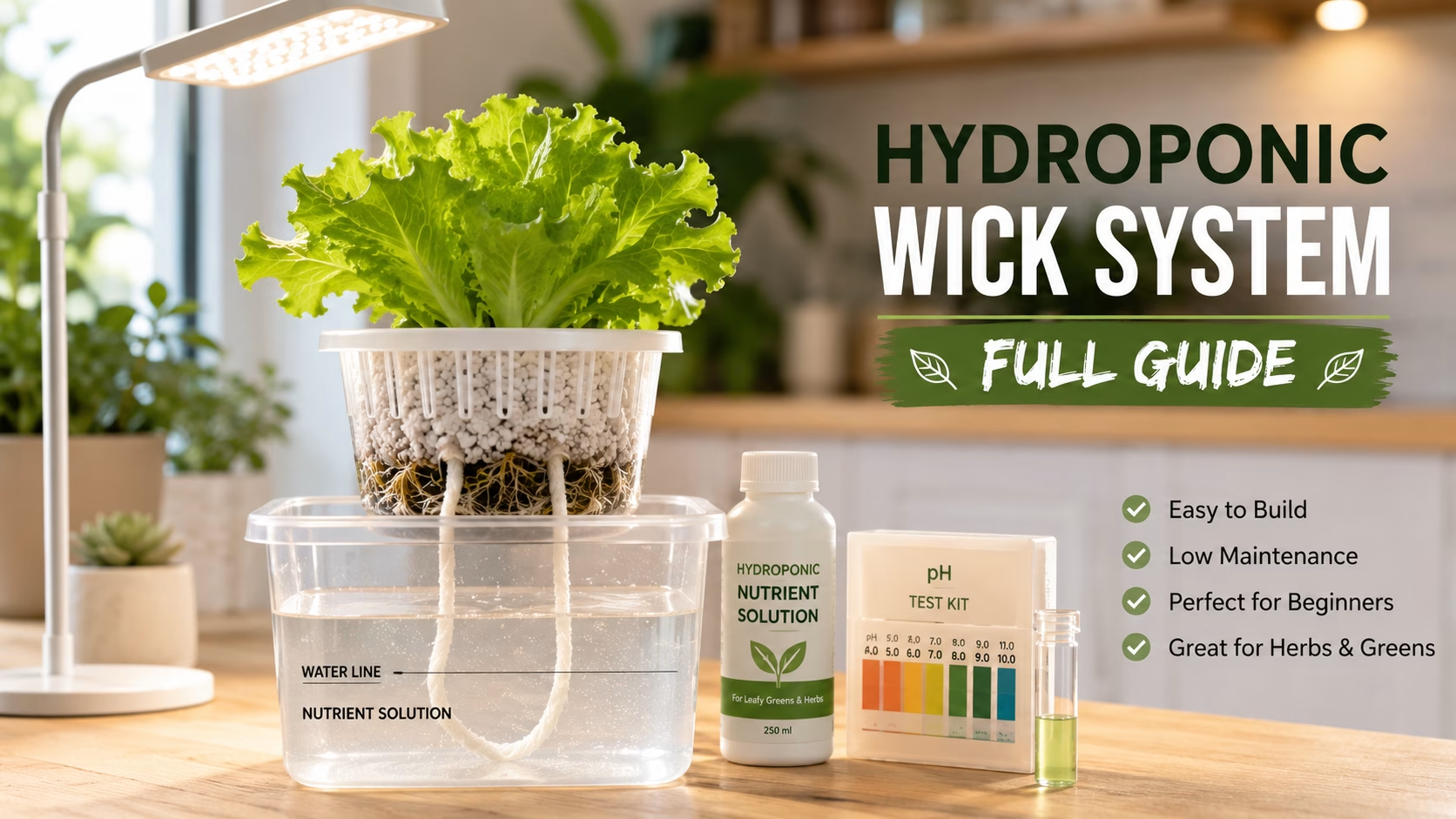
A hydroponic wick system is a passive hydroponic method that stores nutrient solution in a lower reservoir and uses one or more absorbent wicks to move that solution into the upper grow container. Because it has no pump and no moving parts, it is one of the simplest hydroponic systems to build, maintain, and troubleshoot.
For home growers, that simplicity matters. A wick system can fit on a shelf, countertop, balcony corner, or sunny apartment window, and it avoids pump noise, plumbing complexity, and many of the failure points that come with active systems.
How is a wick system different from other hydroponic systems?
Most hydroponic systems actively circulate water with pumps, air stones, spray nozzles, or recirculating channels. A wick system does none of that, which makes it slower but also cheaper, quieter, and easier for first-time growers to understand.
Here is the practical difference:
| System type | How water moves | Complexity | Best for | Main limitation |
|---|---|---|---|---|
| Wick system | Capillary action through wick | Low | Herbs, lettuce, small leafy greens | Limited delivery rate |
| Kratky | Static reservoir below roots | Low | Leafy greens, short-cycle crops | Less flexible after setup |
| DWC | Roots in aerated nutrient solution | Moderate | Fast vegetative growth | Needs power and oxygenation |
| Drip | Timed irrigation | Moderate | Mixed crops, larger plants | More parts to manage |
| Ebb and flow | Flood and drain cycles | Moderate | Many crop types | Pump timing matters |
Hydroponic system types for beginners → Comparing Hydroponic System Types for Home Growers
How does a hydroponic wick system work?
A wick system works through capillary action, the same basic process that lets a paper towel pull up spilled water. The wick sits partly in the nutrient reservoir and partly in the grow medium, so moisture climbs upward and spreads into the root zone over time.
The top container usually holds the plant, the wick, and a moisture-friendly medium such as perlite, vermiculite, coco coir, or a blend. Extension guidance and wick-specific references commonly note mixes such as perlite and vermiculite because they support airflow while still helping distribute moisture through the root zone.
What parts make up the system?
Most wick systems use these basic parts:
- Reservoir, usually a bucket, tote, jar, or bottle that holds nutrient solution.
- Grow container, net cup, or upper pot that holds the plant and medium.
- Wick material, often nylon rope, felt, or other absorbent synthetic material.
- Growing medium, commonly perlite, vermiculite, coco coir, or a mix.
- Light source, either strong sun or a grow light for indoor setups.
- Hydroponic nutrients, plus basic pH testing tools for better consistency.
A useful design rule is to keep the grow bed close to the reservoir. Sources describing wick performance note that capillary lift is limited, with effective wicking height often topping out around 12 to 18 inches, so tall systems tend to perform poorly.
Hydroponic growing media explained → Hydroponics Growing Mediums: The Complete Guide to Types, Selection, and Management
Why do growers choose a wick system?
The biggest reason is accessibility. A wick system is low-cost, quiet, and forgiving enough for beginners who want to learn nutrient basics, root-zone moisture management, and plant selection without committing to pumps or more technical equipment.
In my own small-space setups and test containers, passive systems are often the easiest way to start seeds, grow countertop herbs, and keep one or two greens going with minimal daily work. In hot, dry climates like the Phoenix area, that simplicity is helpful indoors, but reservoir levels can still drop faster than beginners expect, so regular checks matter even in a low-maintenance build.
Main benefits
- No electricity needed for nutrient delivery, which means silent operation and fewer failure points.
- Low startup cost because the design uses basic containers and simple materials.
- Easy to build from common household items, including bottles or buckets.
- Good learning system for beginners who want to understand nutrient solution, pH, and root-zone moisture.
- Useful for apartments, classrooms, windowsills, and hobby growers with limited space.
Main drawbacks
- Slow water and nutrient delivery limits crop size and growth rate.
- Not ideal for large fruiting plants like tomatoes, cucumbers, or heavy pepper plants because demand can outpace wick capacity.
- Overly water-retentive media can create soggy root zones if the build is poorly balanced.
- Salt buildup can occur in passive systems if nutrients are topped off repeatedly without occasional refreshes.
- Reservoir checks still matter because small containers can run low quickly in warm rooms or dry climates.
Which plants grow best in a wick system?
Wick systems are best for small, shallow-rooted, lower-demand plants that do not need aggressive water flow. Good candidates include basil, mint, oregano, thyme, lettuce, spinach, baby greens, and some small ornamentals or houseplants being transitioned into semi-hydro style growing.
Plants with high nutrient and water demand usually perform better in systems like DWC, drip, or ebb and flow. Large tomatoes, full-size cucumbers, squash, and heavy fruiting crops often outgrow a wick system unless the setup is unusually large and carefully tuned.
Best plants for beginners
- Basil
- Mint
- Lettuce
- Spinach
- Arugula
- Chives
- Parsley
- Small leafy greens mixes
For herbs and greens, a nutrient solution pH around 5.5 to 6.5 is a practical target range in hydroponics, and common EC targets for herbs such as basil often fall around 1.0 to 1.6 depending on growth stage and conditions.
Hydroponic herbs for beginners → Indoor Hydroponic Herbs: 10 Easy Varieties for Year-Round Kitchen Gardens
Lettuce hydroponics guide → Best Types of Lettuce to Grow Indoors Using Hydroponics
What equipment do you need?
You do not need much to build a reliable wick system, which is part of its appeal. Most growers can assemble one with a reservoir, an upper container, wick material, a suitable medium, nutrients, and a light source if sunlight is not strong enough.
Materials and tools
- Lightproof reservoir or opaque lower container
- Upper pot, net cup, or small grow tray
- 1 to 2 wicks per plant, or more for larger containers
- Perlite, vermiculite, coco coir, or a blend
- Hydroponic nutrient solution
- pH test kit or meter
- EC meter, optional but very helpful for consistency
- Drill, utility knife, or scissors for making wick holes
- Seeds or seedlings
- Grow light or bright window
What wick material works best?
Synthetic, rot-resistant wick materials are usually more reliable than cotton because they hold shape longer and resist breakdown in constant moisture. Many DIY builds use nylon rope, synthetic felt, or similar absorbent fabrics, while growers often test two wick thicknesses to see which matches the crop and medium best.
A practical rule is to avoid assuming one wick is enough. If the medium dries unevenly or growth stalls, adding another wick is often the simplest fix.
How do you build a hydroponic wick system step by step?
This setup is easy enough for a first hydroponic build and simple enough to scale from one jar to a multi-pot tote. The key is keeping the wick in direct contact with both the nutrient solution and the growing medium so moisture can move consistently.
DIY wick system setup
Short description: This build creates a passive hydroponic planter with a bottom reservoir and an upper grow container connected by absorbent wicks.
Materials/Tools
- Opaque reservoir container
- Upper grow container or net pot
- Wick material
- Growing medium
- Hydroponic nutrients
- pH kit or meter
- Drill, knife, or scissors
- Seedling or rooted cutting
- I have curated a list on Amazon with supplies to get started: https://amzn.to/4nfFmem
Steps
- Choose the containers Select a lower reservoir and an upper grow container that sits securely above it. Keep the vertical distance short because wick systems lose effectiveness as the lift height increases.
- Make wick holes Cut or drill holes in the bottom of the upper container so the wick can pass through cleanly. Some simple DIY versions also include an opening or notch for easy reservoir access and refilling.
- Install the wick Thread the wick so one end hangs into the reservoir and the other extends into the growing medium area. A common approach is to leave several inches of wick inside the root zone to improve moisture spread.
- Add the growing medium Fill the upper container with a moisture-friendly but airy medium such as perlite, vermiculite, coco coir, or a blend. Keep the wick centered or positioned where roots will grow into the consistently moist zone.
- Mix and add nutrient solution Fill the reservoir with hydroponic nutrient solution adjusted to an appropriate pH for the crop. For most herbs and leafy greens, staying around pH 5.5 to 6.5 is a solid starting point.
- Plant the seedling Set a seedling or rooted cutting into the upper container and gently firm the medium around it. Make sure early roots are close enough to benefit from the moist wick zone while the plant establishes.
- Prime the system Moisten the upper medium from the top the first time so the wick starts working faster. This is one of the easiest ways to avoid dry pockets during the first day or two of setup.
- Place under light Move the finished system into bright light, full sun, or under a grow light suited to leafy crops. Indoors, stable lighting usually matters more than perfect container design for early success.
- Monitor and adjust Check moisture, reservoir level, and plant response over the first week. If growth is slow or the top zone stays too dry, shorten the wick path, add a second wick, or switch to a more capillary-friendly medium.
How do you maintain a wick system?
Maintenance is simple, but it is not zero-maintenance. The core jobs are topping up the reservoir, checking pH, watching plant growth, and making sure the medium is staying evenly moist rather than bone dry or constantly soggy.
In dry indoor environments and Arizona-style heat, small reservoirs can drop quickly, especially under grow lights. In more moderate climates like Michigan, evaporation pressure is often lower indoors, but winter heating can still dry out rooms and speed water loss.
Weekly maintenance checklist
- Check reservoir level and refill before the wick runs dry.
- Measure pH and keep most herbs and greens around 5.5 to 6.5.
- Watch EC or nutrient strength if plants show tip burn, pale growth, or stalling.
- Inspect wick contact points to make sure they still touch solution and medium.
- Refresh solution periodically instead of only topping off to reduce salt accumulation.
- Trim dead roots or plant debris before they foul the reservoir.
- Clean algae-prone surfaces and keep the reservoir opaque.
How often should you replace the nutrient solution?
For small home wick systems, a full solution change every 1 to 2 weeks is a reasonable baseline, with adjustments based on plant size, reservoir volume, and visible salt buildup. Growers running very small jars or warm-room setups may need more frequent refreshes because concentration drift happens faster in low water volume systems.
What problems happen most often?
Most wick system problems trace back to one of four issues: poor wick performance, the wrong growing medium, nutrient imbalance, or crop choice. Because the system is passive, it has less ability to compensate for mistakes than an actively aerated or recirculating setup.
Common issues and fixes
| Problem | Likely cause | Practical fix |
|---|---|---|
| Plant wilting with full reservoir | Wick too thin, too short, or poor contact with medium | Add another wick, improve contact, reduce lift height |
| Slow growth | Crop demand exceeds wick capacity | Switch to smaller crops or a more active system |
| Yellow leaves | pH drift or weak nutrients | Recheck pH and nutrient strength |
| Soggy medium | Too much water retention, poor airflow | Increase perlite, reduce wick size, improve drainage |
| Crust on media surface | Salt buildup from repeated top-offs | Replace solution and flush or refresh medium |
| Algae in reservoir | Light leak into nutrient solution | Use opaque containers and block exposed openings |
What are the biggest beginner mistakes?
- Choosing thirsty crops like tomatoes for a tiny wick system.
- Using transparent containers that allow algae growth.
- Ignoring pH until the plant shows visible stress.
- Packing the medium too tightly and reducing airflow around roots.
- Setting the upper container too far above the reservoir.
- Assuming passive means maintenance-free.
Hydroponic troubleshooting guide → Why Your Hydroponic System Failed: A Troubleshooting Flowchart for 7 Critical Problems
When is a wick system the best choice?
A wick system makes the most sense when your priorities are simplicity, low cost, quiet operation, and compact scale. It is especially well suited to apartment gardeners, classroom projects, beginners learning hydroponics, and hobby growers who mainly want fresh herbs or leafy greens without pumps and plumbing.
It is less suitable when your goal is maximum yield, rapid vegetative growth, or heavy fruiting crops. In those cases, DWC, drip, or ebb and flow usually offer better oxygenation and faster nutrient delivery.
Best-use scenarios
- Kitchen herbs near a bright window
- Countertop lettuce for small harvests
- Kids’ or classroom hydroponics projects
- Backup passive growing during power outages
- Low-noise indoor growing in apartments
- Seedling transition systems before moving plants into larger hydroponic setups
FAQ
Is a wick system good for beginners?
Yes. It is widely considered one of the easiest hydroponic methods because it uses no pump, no timer, and very few parts, which keeps setup and troubleshooting simple.
How much does a DIY wick system cost?
A basic DIY setup can be very inexpensive if you reuse jars, bottles, buckets, or plastic containers you already have. Your main recurring costs are nutrients, growing medium, and lighting if natural light is limited.
Can a wick system grow lettuce?
Yes, lettuce is one of the better crops for wick hydroponics because it has a relatively modest water demand compared with large fruiting plants. Compact lettuce varieties usually perform better than oversized heading types in small containers.
Can you grow tomatoes in a wick system?
You can try small tomato varieties, but standard tomatoes usually outgrow the delivery capacity of a basic wick setup. Fruiting crops generally do better in DWC, drip, or other more active systems.
How many wicks do you need per plant?
Many simple builds use one wick per plant, but two can improve reliability, especially in larger containers or thirsty media blends. If the root zone dries unevenly, adding another wick is often the easiest upgrade.
What pH should a wick system run at?
For most herbs and leafy greens, a pH range of 5.5 to 6.5 is a dependable starting target in hydroponics. Different crops may prefer a narrower range, but that window works well for most beginner-friendly plants.
Do wick systems need electricity?
Not for water delivery. The system itself is passive, so nutrient movement happens through capillary action rather than pumps or circulation equipment.
How long does it take to see growth?
Most healthy seedlings begin settling in within a few days, and leafy herbs or greens often show noticeable new growth within 1 to 2 weeks if light, pH, and nutrient strength are in range. Growth speed depends heavily on crop type, temperature, and lighting quality.
What is the best growing medium for a wick system?
Media with a balance of moisture retention and air space usually work best. Vermiculite, perlite blends, and some coco-based mixes are common choices because they help the wick spread moisture while still allowing oxygen around roots.
How often should you refill the reservoir?
That depends on plant size, room conditions, and reservoir volume, but small systems should be checked several times per week. In warm, dry indoor conditions, they may need topping off more often than beginners expect.
Author note
This article reflects hands-on hydroponic growing experience focused on simple, productive systems for indoor and urban gardeners. The growing perspective comes from years of working through hot, dry conditions in the Phoenix, Arizona area and later adapting methods to the more seasonal indoor growing rhythms of Central Michigan. That combination helps shape practical advice for apartments, spare rooms, shelves, basements, and compact home grow spaces. The main focus is reliable food-growing methods that stay approachable for beginners but still useful for experienced hobbyists.
Share this:

Discover more from Soil Free Harvest
Subscribe to get the latest posts sent to your email.