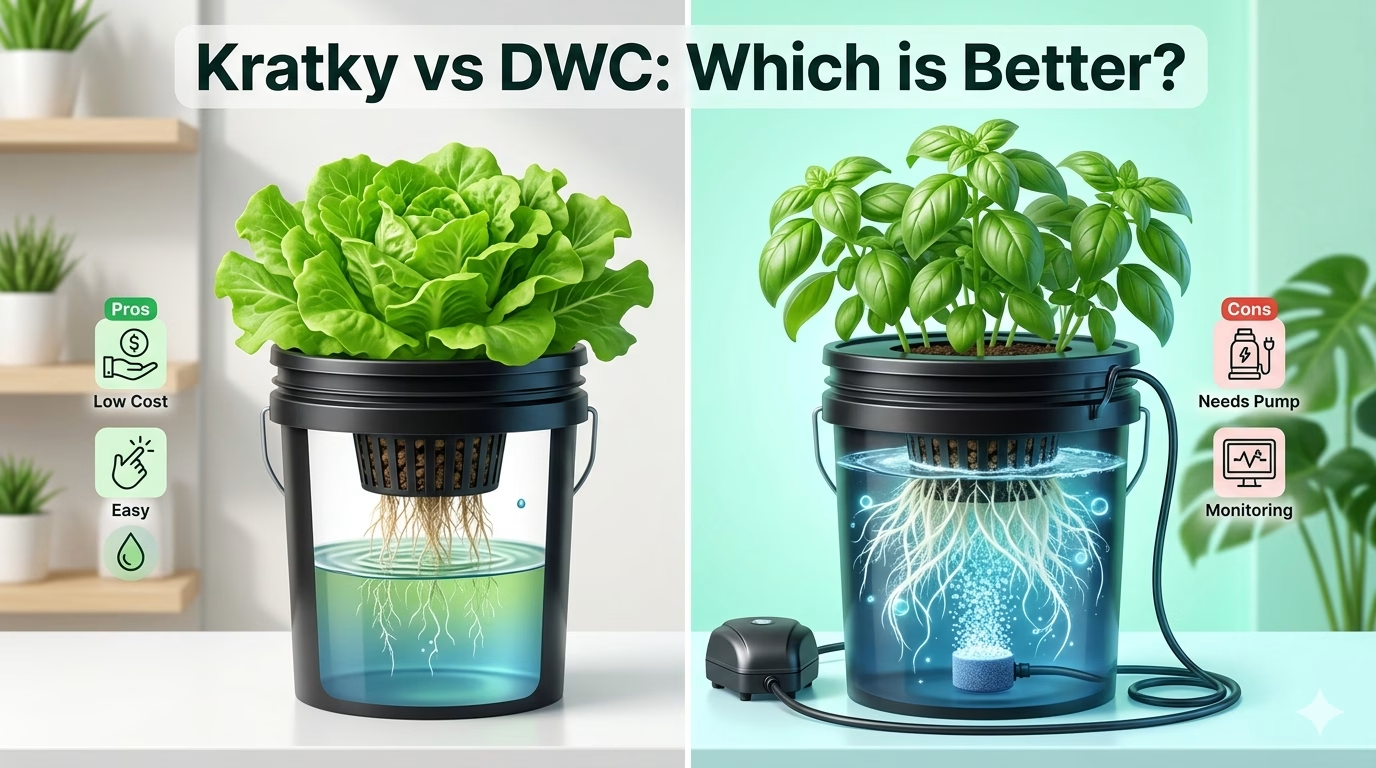
Kratky Method vs Deep Water Culture: Which Is Better?
The better choice depends on what you want to grow and how much maintenance you want to do. Kratky is best for low-effort, short-cycle crops like lettuce and herbs, while Deep Water Culture, or DWC, is better when you want stronger growth, longer grow cycles, and more control.
TL;DR: Choose Kratky for simplicity, low cost, and no electricity. Choose DWC if you want faster growth, bigger plants, and a system that can support longer harvests with an air pump and more monitoring
What Is the Kratky Method?
The Kratky method is a passive hydroponic system where roots sit in a nutrient solution without a pump or air stone. As the plant drinks, the water level drops and an air gap forms, giving roots access to oxygen.
This makes Kratky one of the easiest hydroponic setups for beginners. It is especially practical for leafy greens, basil, cilantro, and other fast crops that finish in a short window.
How Kratky works
You start with a container filled with nutrient solution and a net pot holding the plant. Over time, the plant uses water and nutrients, and the falling solution level exposes part of the roots to air.
That oxygen zone is the key idea behind Kratky. It removes the need for recirculation, bubbling, timers, and most moving parts.
More about Kratky Systems: The Complete Guide to Kratky Hydroponic Method: Build Your Own DIY Passive Growing System
What Is Deep Water Culture?
Deep Water Culture is an active hydroponic system where plant roots stay submerged in oxygenated nutrient water. An air pump and air stone keep dissolved oxygen high, which helps roots stay healthy and support more vigorous growth.
DWC is a better fit for growers who want a more scalable setup. It is commonly used for lettuce, herbs, and, with the right management, fruiting crops like peppers and tomatoes.
How DWC works
Plants are placed in net pots above a reservoir, with roots hanging into aerated nutrient solution. The air pump runs continuously or nearly continuously, which keeps the root zone from going stagnant.
Because the water stays in contact with the roots longer, DWC usually needs closer attention to oxygen, water temperature, and reservoir cleanliness.
More about DWC Systems: Deep Water Culture (DWC) Hydroponics: The Complete Beginner’s Guide to Growing Faster
Why Does the Difference Matter?
The difference matters because oxygen delivery changes plant performance. In Kratky, oxygen comes from the air gap that develops as the reservoir drops, while in DWC oxygen is actively supplied through aeration.
That difference affects crop choice, grow time, and maintenance. Kratky is simpler and cheaper, but DWC gives you more flexibility when plants get bigger or need a longer production cycle.
Kratky vs DWC: Which is better?
For most indoor growers, neither system is universally better. The better system is the one that matches your crop, your space, and your tolerance for maintenance.
| Factor | Kratky | DWC |
|---|---|---|
| Setup | Very easy | Moderate |
| Electricity | None | Required |
| Maintenance | Low | Moderate to high |
| Best crops | Lettuce, basil, herbs | Leafy greens, larger plants, some fruiting crops |
| Cost | Lower | Higher |
| Growth potential | Good for short cycles | Better for longer cycles and bigger plants |
| Risk profile | Lower hardware risk, higher stagnation risk if mismanaged | More parts, but better oxygen control soilfreeharvest+2 |
A simple way to think about it is this: Kratky is a “set it and mostly leave it” approach, while DWC is a “keep it running and watch it” approach.
How do you choose the right system?
If you are a beginner growing on a windowsill, shelf, or apartment counter, Kratky is usually the easiest entry point. It is especially useful when you want to avoid pumps, electrical noise, and constant monitoring.
If you want faster, more consistent growth and plan to grow beyond short-cycle greens, DWC is usually the stronger long-term choice. It is also a better fit for growers who can manage reservoir temperature and oxygenation.
Best system by grower type
- Choose Kratky if you want the lowest-cost setup and plan to grow lettuce, basil, or other quick-harvest crops.
- Choose DWC if you want more control, larger root zones, and the option to push into larger plants.
- Choose DWC in hot climates if you can actively manage water temperature, because warm nutrient water can reduce oxygen availability.
How do you set up Kratky or DWC?
Both systems use the same core parts, but the hardware and maintenance level differ. A good setup starts with a lightproof reservoir, net pots, the right growing medium, and a balanced nutrient solution.
Materials and tools you will need
- Opaque bucket, tote, or reservoir.
- Net pots.
- Seedlings or clones.
- Growing media such as rockwool, coco plugs, or clay pebbles.
- Hydroponic nutrients.
- pH meter or test kit.
- EC or TDS meter.
- For DWC only, air pump, tubing, and air stone.
- For hot environments, a way to reduce reservoir heat, such as insulation or frozen bottle rotation.
How-To: Build a Kratky setup
- Choose a container. Use an opaque container that blocks light to reduce algae growth. A small tote or bucket works well for a first test.
- Prepare the lid and net pot. Cut a hole that lets the net pot sit securely above the reservoir. The roots should be able to reach the solution at transplant time.
- Mix nutrients. Fill the container with a properly mixed hydroponic solution, then adjust pH to a common leafy-green target of about 5.8 to 6.2.
- Transplant the seedling. Place a healthy starter plant into the net pot with the roots just touching the solution. This gives the plant early access to water without drowning the stem.
- Leave an air gap. Do not keep the container completely full for the entire grow. The lowering reservoir creates the oxygen zone Kratky depends on.
- Monitor the crop, not the pump. Check leaf color, root health, and solution level every few days. If the plant is a fast-growing green, you may be able to finish the crop with little or no top-off.
- Harvest and reset. Once the plant finishes, empty and clean the container before the next run. Kratky is often treated as a one-cycle system for clean results.
How-To: Build a DWC setup
- Select a reservoir. Use a lightproof bucket or tote that can hold enough solution for stable root immersion. Bigger reservoirs usually buffer temperature swings better.
- Install the lid and net pot. Cut openings so the net pots sit firmly above the water line. Roots should grow down into the reservoir without the stem staying wet.
- Add air delivery. Connect an air pump, tubing, and air stone, then test for strong bubbling before adding plants. Continuous aeration is what separates DWC from passive systems.
- Mix and balance nutrients. Fill the reservoir with nutrient solution and target a pH around 5.8 to 6.2 for most leafy crops. Keep EC in a range appropriate for the crop stage and nutrient brand you use.
- Transplant seedlings. Place the starter plant into the net pot so the roots can quickly reach the aerated solution. Healthy white roots are a good sign that oxygen levels are adequate.
- Watch water temperature. In warm climates, keep the solution cooler if possible, since warmer water holds less dissolved oxygen. This is especially relevant for growers in Phoenix and similar desert climates.
- Top off and maintain. Add water or nutrient solution as the plant consumes it, and check the reservoir regularly. DWC rewards steady maintenance with more stable growth.
- Clean between cycles. Empty, scrub, and sanitize the reservoir after harvest to prevent root funk and buildup. Clean hardware matters more in DWC because the system runs continuously.
More detailed DWC build here: Build a 5 Gallon Bucket DWC System for Under $30: A Budget DIY Hydroponics Guide
What plants work best?
Crop choice is one of the biggest reasons one system wins over the other. Kratky is best for compact, fast crops, while DWC opens the door to bigger root systems and longer production windows.
| Crop type | Kratky | DWC |
|---|---|---|
| Lettuce | Excellent | Excellent |
| Basil and herbs | Excellent | Excellent |
| Spinach and arugula | Good | Good |
| Peppers | Limited | Better |
| Tomatoes | Usually not ideal for long cycles | Better with management |
| Short indoor herbs | Excellent | Excellent |
| Long-season fruiting crops | Weak | Better |
For most beginners, lettuce is the easiest first crop in either system. If you can grow lettuce successfully, you can learn nutrient handling, transplant timing, and root health without taking on the complexity of a full fruiting plant.
What mistakes should you avoid?
The most common Kratky mistake is trying to use it like a long-term reservoir system. If the plant outgrows the container or the solution runs out too early, the crop stalls fast.
The most common DWC mistake is under-aeration or poor temperature management. If the water becomes too warm or the air pump is too weak, roots can lose oxygen and decline even when nutrients are available.
Common mistakes list
- Using a clear container and inviting algae growth.
- Starting with weak seedlings instead of healthy transplants.
- Letting the pH drift too far from the ideal range.
- Overfilling a Kratky container so the air gap never develops.
- Running DWC without enough bubbling.
- Ignoring reservoir temperature in hot weather.
- Trying to grow a large plant in a container that is too small.
What advanced tips improve results?
If you want better results, focus on stability. Hydroponic plants usually perform best when pH, nutrients, oxygen, and temperature stay within a tight range rather than bouncing around.
For Kratky, use a container sized to finish the crop without constant refills. For DWC, use a strong air pump, opaque reservoir, and enough volume to slow temperature swings.
Advanced grower tips
- Match container size to plant size and crop duration.
- Keep nutrient solution in a narrow pH band, usually around 5.8 to 6.2.
- Use insulated or shaded reservoirs in hot climates.
- Clean roots and hardware between cycles.
- Track growth time, harvest weight, and refill frequency so you can compare results across runs.
What should beginners in hot climates do?
Growers in Phoenix and similar desert climates should pay extra attention to heat. Reservoir temperature can rise quickly indoors near windows or outdoors on patios, and that can reduce oxygen availability in DWC while stressing both systems.
For this climate, Kratky works well for short leafy crops in shaded indoor spaces, while DWC works best when the reservoir is insulated, kept out of direct sun, and monitored more often.
FAQ
Is Kratky the same as DWC?
Kratky is often described as a passive form of DWC, but it behaves differently because it does not use an air pump. DWC keeps the root zone continuously oxygenated, while Kratky depends on a falling water line and air gap.
Which system grows faster?
DWC usually supports faster and more vigorous growth because roots receive steady oxygen. Kratky can still produce strong crops, but it is usually better suited to short, simple harvests.
Can I grow tomatoes in Kratky?
You can try, but Kratky is usually not the best choice for long-season tomatoes. Tomatoes need a larger root zone and longer nutrient stability than passive systems typically provide.
Does DWC always need an air pump?
Yes, if you want true DWC performance, the air pump is a core part of the system. Without active aeration, the setup becomes closer to a passive reservoir grow than DWC.
Which is cheaper to start?
Kratky is cheaper to start because it does not need a pump, tubing, or air stone. DWC costs more upfront, but it gives you more control and more crop options.
What pH should I use?
A common target range for leafy greens is about 5.8 to 6.2. That range supports nutrient uptake for many beginner hydroponic crops.
Which crops are easiest for beginners?
Lettuce, basil, cilantro, and other leafy herbs are usually the easiest starter crops. They grow quickly, show problems early, and make it easier to learn hydroponic basics.
How do I stop algae?
Use an opaque container, keep light away from the reservoir, and avoid exposing nutrient solution to sunlight. Algae usually grows when water, nutrients, and light are all available together.
Is Kratky good for apartments?
Yes, Kratky is one of the best apartment-friendly hydroponic options because it is quiet, compact, and does not require electricity. It works especially well on shelves, counters, and windowsills.
When should I choose DWC instead?
Choose DWC when you want longer crop cycles, better oxygen control, or the option to grow bigger plants. It is the stronger choice once you move beyond simple leafy greens and want more predictable production.
Which method should you use?
Use Kratky if you want the simplest possible hydroponic system for herbs and greens. Use DWC if you want a more powerful setup with better growth potential and do not mind the extra equipment and maintenance.
For most indoor beginners, the best path is to start with Kratky, learn nutrient handling and transplanting, then move to DWC once you are ready for more control.
Author Note
This article was prepared with hydroponics-focused editorial experience for indoor growers and urban gardeners. The guidance is especially relevant for dry, warm regions like Peoria, Arizona, where reservoir temperature and evaporation matter more than they do in cooler climates. It is written for beginners who want practical, trustworthy advice they can apply in small indoor systems.
Top Amazon Hydroponic Picks
Hydroponic kits on Amazon cover every need, from Kratky-style setups for herbs to full-featured DWC kits with automated lighting and pumps.
- Ahopegarden Hydroponics System: Perfect for herbs and leafy greens with integrated lighting. (They are under $75! I have bought three of these systems and gifted them to family – I like them so much)
- iDOO Hydroponics Kit: Versatile starter kit suitable for larger plants and comes with all needed accessories.
- Rapid Rooter Starter Plugs: Great for starting seeds for either system.
- General Hydroponics Nutrient Packs: The gold standard for reliable plant nutrition.
Share this:

Discover more from Soil Free Harvest
Subscribe to get the latest posts sent to your email.






5 Comments