Seedling Stage Secrets: Why 25% Nutrient Strength Changes Everything
The difference between thriving hydroponic seedlings and struggling ones often comes down to a single factor: nutrient strength. While experienced growers understand that seedlings have vastly different nutritional needs than mature plants, many newcomers make the costly mistake of feeding their delicate young plants the same nutrient solution they would use weeks later. The secret? Keeping your nutrient strength at approximately 25% during the seedling stage can literally transform your growing results from mediocre to magnificent.
This comprehensive guide reveals the science behind seedling nutrition, the specific care schedules that keep your plants healthy, the best starter plugs available today, and the precise transplanting techniques that ensure zero growth delays. Whether you’re just beginning your hydroponic journey or refining your existing systems, understanding the seedling stage is the foundation upon which all successful harvests are built.
Understanding the Growth Stage Deep Dives: From Germination to Transplant
The seedling stage represents a critical window in the plant lifecycle, typically lasting from the moment a seed germinates until the young plant develops three to four true leaves and reaches about three to six inches tall. This phase usually spans 10 to 14 days, though timing varies by plant species and growing conditions. During this period, your seedlings transition from relying on stored energy within the seed to developing their own photosynthetic capabilities and root systems.
The Germination Phase (Days 1-3)
During germination, seeds need moisture, warmth, and darkness but absolutely no nutrients. This is a crucial distinction that many beginning hydroponic growers miss. When a seed germinates, it relies entirely on the cotyledons (seed leaves) which contain stored carbohydrates, proteins, and nutrients. The emerging root and shoot haven’t yet developed the capacity to absorb external nutrients efficiently.
The germination phase requires temperatures between 70 to 80 degrees Fahrenheit and consistently moist (but not waterlogged) growing media. Seeds should be kept in darkness during this stage. Using plain, pH-adjusted water with no nutrients during germination is the gold standard approach. A simple trick is to soak your germination plugs in dechlorinated water with a pH of 5.8 before placing seeds in them. This creates the ideal environment for rapid root emergence without the osmotic stress that high nutrient concentrations would create.
The Emergence Phase (Days 4-7)
Once the first true leaves emerge and the seedling develops visible root structure, you can introduce light but still maintain zero or near-zero nutrient strength. This phase is when you’ll want to install your grow lights positioned just two to four inches above the seedling canopy. Keeping lights this close prevents seedlings from becoming “leggy” or stretching excessively as they reach for distant light sources.
The emergence phase demands 14 to 16 hours of continuous light exposure daily. LED or fluorescent grow lights work well here, with full-spectrum or broad-spectrum lights providing the most balanced growth. Seedlings during this phase should receive only plain water or water with minimal nutrient content. The seedling’s own seed reserves are still sufficient for energy and growth.
The Establishment Phase (Days 8-14)
By the second week of the seedling stage, your plants have developed their second set of true leaves and are establishing a robust root system. This is when you can introduce a weak nutrient solution. Here’s where the “25% nutrient strength” concept becomes critical.
A full-strength hydroponic nutrient solution typically measures between 1.2 to 1.6 millisiemens per centimeter (mS/cm) for vegetative growth, or 600 to 1000 parts per million (PPM). For seedlings in the establishment phase, you’ll want to maintain an electrical conductivity (EC) of approximately 0.3 to 0.4 mS/cm. This equates to roughly 150 to 200 PPM, which represents approximately 25% of your standard vegetative nutrient solution strength.
This reduced nutrient concentration accomplishes several critical objectives. First, it prevents osmotic stress where the nutrient solution’s salt concentration actually makes it harder for tender seedling roots to absorb water through osmosis. Second, it provides just enough essential macronutrients (nitrogen, phosphorus, potassium) and micronutrients (magnesium, calcium, iron, zinc) to support accelerated growth without overwhelming the young plant’s nutrient uptake mechanisms. Third, it allows the seedling to gradually acclimate to hydroponic conditions rather than experiencing the shock of full-strength nutrients.
The Complete Seedling Care Schedule: Nurturing Young Plants Day by Day
Consistent daily attention to environmental conditions and nutrient management separates successful hydroponic growers from frustrated beginners. Follow this detailed schedule for reliable seedling development:
Daily Care Routine
Morning Inspection (5 minutes): Check that your grow lights are operating properly and positioned at the correct distance from the seedling canopy. Verify that humidity levels remain between 50 to 70 percent, which you can monitor with an inexpensive digital hygrometer. Inspect seedlings for any visible signs of disease, pest damage, or stress symptoms, including unusual yellowing, browning, or wilting. (This is my favorite part of the day, I love checking on the plant babies in the morning.)
Moisture Management (5 minutes): Check the moisture level of your growing medium by gently touching the surface. The medium should feel moist but never waterlogged. The best approach is to maintain consistent moisture by using a timer-controlled misting system if possible, or by hand-watering with a spray bottle several times daily. Seedlings are susceptible to damping off disease when growing media becomes too wet, so err on the side of moist rather than soggy.
Temperature Monitoring (2 minutes): During the germination phase, maintain temperatures between 70 to 80 degrees Fahrenheit. Once seedlings emerge and lights are activated, you can reduce temperatures slightly to 65 to 75 degrees Fahrenheit. Evening temperatures can drop slightly lower without harming seedlings. Rapid temperature fluctuations between day and night should be avoided as they stress young plants.
Nutrient Solution Check (if applicable): Once you’ve introduced your quarter-strength nutrient solution (typically by day 8 to 10), check the pH and EC levels daily. Your pH should remain between 5.5 to 6.5 for optimal nutrient availability. EC should stay at 0.3 to 0.4 mS/cm (150 to 200 PPM) during the seedling establishment phase. Most hydroponic systems allow for gradual evaporation, so topping off with the same quarter-strength solution daily maintains consistency without causing nutrient imbalances.
Weekly Care Routine
Complete System Inspection (10 minutes): Once weekly, perform a thorough inspection of all equipment including pump operation, air stone function (if using an aeroponic or air-enhanced system), tubing connections, and reservoir integrity. Look for any signs of algae growth, which thrives under light and can compete with seedlings for nutrients while potentially harboring pathogens.
Air Circulation Assessment (5 minutes): Install a small oscillating fan set to low speed near (but not directly on) your seedling area. This gentle air circulation strengthens seedling stems, prevents stagnant humid pockets where damping off fungus thrives, and distributes fresh carbon dioxide essential for photosynthesis. Position the fan so it creates gentle movement without creating a harsh wind that would stress delicate seedlings.
Lighting Adjustment (5 minutes): As seedlings grow, raise your grow lights proportionally to maintain the optimal 2 to 4 inch distance from the canopy. Most LED lights should maintain at least 12 inches of clearance (check manufacturer specifications), but fluorescent lights can be positioned much closer. Record the height weekly so you can calculate how quickly your seedlings are growing.
Transition Week (Days 10-14)
By the second week, your seedlings are approaching the transplant window. Begin hardening them off by gradually increasing air circulation and reducing humidity slightly. If seedlings came from a heat mat, begin reducing the mat temperature by 5 degrees Fahrenheit every few days. Maintain your 14 to 16 hour light cycle but ensure seedlings still receive at least 8 hours of darkness for proper photosynthesis and hormone regulation.
Continue feeding with quarter-strength nutrients while monitoring for any signs of nutrient deficiency. If growth appears sluggish despite proper light and temperatures, this is actually positive because it indicates your seedlings are ready for transplanting into your main hydroponic system where they can access increased nutrient concentrations.
Optimizing Seedling Nutrients: The Science of Diluted Feeding
Understanding why 25% nutrient strength is optimal requires examining the unique physiology of germinating and emerging seedlings. Unlike mature plants that have fully developed root systems and leaf area for nutrient uptake and photosynthesis, seedlings operate under severe resource constraints.
Why Full-Strength Nutrients Are Problematic
Full-strength hydroponic nutrient solutions designed for vegetative or flowering plants maintain EC levels of 1.2 to 1.6 mS/cm or higher. These concentrations provide adequate nutrients for plants with established root systems that can actively absorb mineral ions. However, for seedlings, this concentration creates an osmotic gradient problem.
In osmosis, water moves across a semipermeable membrane (the root cell membrane) from areas of lower dissolved solute concentration to areas of higher concentration. A seedling’s roots have very limited surface area and minimal root hair development, making osmotic uptake of water difficult. When the growing medium contains full-strength nutrients (high external solute concentration), water actually has a harder time entering root cells because the osmotic gradient works against water uptake.
Additionally, full-strength nutrients provide far more macronutrients than seedlings can utilize. Nitrogen in excess quantities actually inhibits root development, particularly for newly emerged seedlings that should be developing robust root systems. Seedlings provided with excess nitrogen exhibit rapid shoot growth at the expense of root development, creating weak, top-heavy plants that become stressed when transplanted.
The Perfect 25% Solution
Quarter-strength nutrients (approximately 0.3 to 0.4 mS/cm or 150 to 200 PPM) solve these problems elegantly. This concentration provides sufficient nutrient ions for photosynthesis and cell division without creating osmotic stress. The reduced nutrient load allows seedlings to focus metabolic energy on root development rather than leaf expansion. This balanced approach produces stockier seedlings with proportionally larger root systems, exactly what you want before transplanting into a full-scale hydroponic system.
Most commercial hydroponic nutrient formulas are balanced for vegetative growth, meaning they provide approximately equal proportions (by weight) of the three macronutrients: nitrogen (N), phosphorus (P), and potassium (K). When you dilute these to 25% strength, you’re diluting all nutrients proportionally, which maintains the nutrient formula’s intended N:P:K ratio. This is significantly better than trying to supplement individual nutrients haphazardly.
Micronutrient Sufficiency at Reduced Strength
A potential concern with heavily diluted solutions is whether micronutrients (iron, zinc, manganese, boron, copper, molybdenum) remain adequate at 25% strength. Research demonstrates that quarter-strength solutions provide sufficient micronutrients for healthy seedling development. The micronutrient requirement for seedlings is genuinely lower than for mature plants because the total plant biomass is so much smaller.
However, pH management becomes critically important when operating at reduced nutrient strength. Without adequate buffering capacity from the full nutrient complement, pH can drift outside the optimal 5.5 to 6.5 range more readily. Check pH at least twice weekly and adjust with small amounts of pH-up (potassium hydroxide) or pH-down (phosphoric acid) as needed. Most commercial hydroponic pH adjustment products are designed for this purpose and come with clear dosing instructions.
Transition Strategy: Ramping Up Nutrients Gradually
Rather than immediately jumping from quarter-strength to full-strength nutrients, employ a gradual transition that prevents transplant shock. When seedlings are first moved to your main hydroponic system (typically at 3 to 6 inches tall with 2 to 3 true leaves), maintain quarter-strength nutrients for the first week. During week two post-transplant, increase to 50% strength (approximately 0.6 to 0.8 mS/cm). By week three, transition to your standard vegetative strength (1.2 to 1.6 mS/cm). This gradual ramp prevents nutrient uptake problems and allows the expanded root system time to acclimate to higher nutrient concentrations.
Starter Plugs: Choosing the Right Growing Medium for Your Seedlings
The growing medium you select for seedlings significantly impacts transplant success, labor requirements, and overall system cleanliness. Hydroponic growers have multiple proven options, each with distinct advantages and limitations.
Flexible or Polymer-Bound Plugs
Polymer-bound plugs (such as Flexiplugs) represent the gold standard for commercial hydroponic seed starting. These plugs consist of compressed peat or coir fibers bound together with a food-grade polymer. They’re designed specifically for hydroponic environments where traditional potting soil would break apart and clog irrigation lines.
The advantages are substantial. Polymer-bound plugs provide excellent aeration and water retention simultaneously, a rare combination in growing media. They’re reusable within a growing season if properly managed. Most importantly, they maintain structural integrity throughout the hydroponic system and won’t disintegrate into your reservoir. Many polymer-bound plugs now incorporate slow-release fertilizers and beneficial bacteria directly into the medium, essentially eliminating the need for nutrient solutions during germination and emergence phases.
The process of using polymer-bound plugs is straightforward. Pre-soak them in pH-adjusted (5.8) water for 15 to 30 minutes before planting seeds. The plugs will expand slightly and achieve optimal moisture. Place one seed per cell at the appropriate depth (usually 1 to 2 times the seed’s diameter). Cover with a humidity dome and maintain temperature at 70 to 80 degrees Fahrenheit.
Rockwool Plugs
Rockwool is produced by melting basalt rock and spinning it into fine fibers, creating an open-structure growing medium. Many professional hydroponic growers prefer rockwool for its superior consistency, non-biodegradability (no decomposition affecting pH or nutrient ratios), and proven performance across diverse crop types.
Rockwool plugs require pH adjustment before use because freshly manufactured rockwool has an extremely high pH (around 8.0). Pre-soak rockwool plugs in pH 5.5 water for 20 to 30 minutes to lower the pH to approximately 6.0 to 6.5. Some growers add a very dilute nutrient solution (perhaps 10% strength) to the soaking water to give seedlings a slight nutrient boost once roots emerge.
The primary environmental concern with rockwool is that it doesn’t biodegrade. Once you remove seedlings for transplanting, rockwool plugs can’t be composted and will persist indefinitely in landfills. For growers committed to sustainability, this is a significant limitation. However, rockwool plugs can be reused within a season if properly sterilized between crops. Soaking used rockwool in a 10% bleach solution, rinsing thoroughly, and air-drying accomplishes effective sterilization.
Coir Plugs and Loose Coir Media
Coconut coir represents a renewable and rapidly growing alternative to peat-based plugs. Coir is the fibrous material between the coconut husk and shell, essentially a waste product from coconut processing. Using coir represents a sustainable approach that improves waste utilization from coconut farming.
Coir plugs provide good aeration and water retention similar to peat-based products but with superior sustainability credentials. However, coir can contain residual salt from the coconut growing environment and sometimes requires pre-soaking and flushing to remove excess salt that might inhibit germination. If your coir plugs don’t include instructions for pre-treatment, err on the side of rinsing: soak in distilled water, let drain, and repeat twice.
Some growers prefer loose coir media in small cell trays rather than bound plugs. Loose coir provides maximum flexibility and can be composted at the end of the season. The tradeoff is slightly more labor during transplanting because loose media will fall away from roots, requiring more careful handling.
Selecting the Best Option for Your System
For cleanest hydroponic system operation, polymer-bound plugs win decisively. They’re specifically engineered for hydroponic use and won’t disintegrate into your reservoir. For sustainability-focused growers or those running hydroponic systems for educational purposes, coir plugs or coir media represent the better ethical choice despite slightly more challenging preparation. Rockwool splits the difference: excellent for consistency and performance but with environmental concerns that are important to consider.
The most important factor is consistency. Commit to one plug type for a complete growing cycle. Mixing plug types introduces variables that complicate troubleshooting if problems arise. Once you’ve successfully completed one cycle with a particular plug type, you’ll develop intuition for its moisture characteristics and idiosyncrasies.
Comprehensive Transplanting Tutorial: Moving Seedlings to Their Forever Home
Transplanting seedlings represents the single most stressful event in a young plant’s life. Even well-executed transplants reduce growth rate temporarily as the plant allocates energy toward root recovery rather than shoot growth. However, proper technique minimizes this shock and can actually result in improved long-term performance.
Pre-Transplant Preparation: Setting the Stage
Begin by ensuring your main hydroponic system is completely set up, operating properly, and equilibrated at least 24 hours before transplant day. Your system should be running, pH should be stable at 5.5 to 6.5, EC should be at quarter-strength (0.3 to 0.4 mS/cm), water temperature should be stable at 65 to 70 degrees Fahrenheit, grow lights should be positioned correctly, and all timers should be functioning.
Prepare a clean transplanting workspace. Have ready a shallow basin of clean water at room temperature, clean shears or a sterile knife, fresh pH-adjusted water, and small net pots or baskets if you’re using rockwool plugs (polymer-bound plugs sometimes transplant directly into your system without a basket).
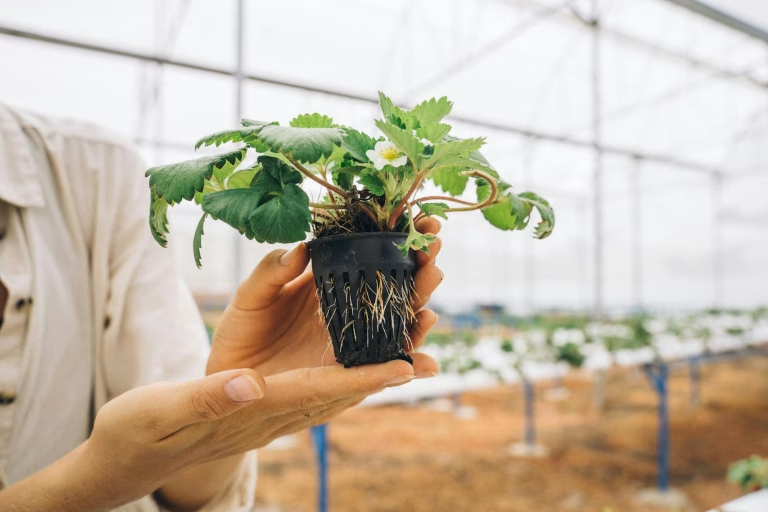
The critical pre-transplant assessment involves examining your seedling’s readiness. Ideal transplant candidates possess three to four true leaves (the seed’s first two cotyledons don’t count as true leaves), measure three to six inches tall, display white healthy-looking root tips emerging from the plug bottom, and show no signs of nutrient deficiency or disease. Roots emerging from the plug indicate the seedling is ready to access the expanded nutrient availability in your main system.
The Gentle Transplant Procedure
Remove seedlings from the starting tray carefully. For polymer-bound plugs, gently flex the tray to loosen the plug, then lift it straight up supporting the seedling from below. Never grab the seedling by its stem or yank it upward. Handle plugs by the medium, never by the plant tissue.
Once removed, inspect the root structure. Healthy seedling roots appear white or light tan and grow outward in all directions from the plug. If roots appear dark, slimy, or smell musty, the seedling is suffering from root rot and should be discarded rather than transplanted into your main system where it could contaminate other plants.
For seedlings in rockwool cubes that will be transplanted into larger rockwool blocks or clay pebble systems, you have several options. One effective method involves dunking the entire rockwool plug in clean water and gently swishing it to remove loose fibers while keeping the root ball intact. This removes any loose rockwool that might clog drip lines or filters. Pat gently with a clean cloth to remove excess water.
Alternatively, if your seedling roots have extended well beyond the plug bottom, you can carefully rinse away much of the original growing medium. Hold the seedling by the top (supporting the plant body, not the stem) over a basin of water. Use a gentle stream from a spray bottle to rinse away growing medium while carefully separating roots. This method requires more care but produces seedlings with thoroughly exposed roots that make direct contact with the hydroponic system much faster.
The Critical Acclimatization Window
The first 48 hours after transplant are absolutely critical. Maintain lower light intensity than your seedlings were receiving in the seed-starting area. If your seed starting area used 200 to 300 micromoles per square meter per second (µmol m”2 s”1) of light intensity, reduce to 150 to 200 µmol m”2 s”1 after transplant. Your LED or fluorescent grow lights can typically be raised higher above the canopy for the first week post-transplant to reduce light intensity.
Maintain your quarter-strength nutrient solution for the first seven days post-transplant. Yes, your seedlings might appear to be growing into larger plants, but their root systems are still recovering from transplant stress and aren’t ready for increased nutrient concentrations. This moderated approach prevents nutrient burn and allows the roots to develop to sufficient size for absorbing higher nutrient concentrations.
Increase humidity slightly if possible during the first week post-transplant. If your system lacks humidity control, simply ensure good air circulation through the root zone by maintaining gentle airflow around the seedlings. Some growers lightly mist seedling foliage for the first few days post-transplant, though this is optional and can increase disease risk if done improperly.
Post-Transplant Monitoring and Adjustment
Check on transplanted seedlings multiple times during the first day, watching for signs of wilting or extreme stress. Some temporary wilting is normal even with perfect technique, as the plant adjusts to increased water availability and reduced humidity. However, dramatic wilting suggests either water stress or environmental problems requiring adjustment.
Common post-transplant issues and their solutions include yellowing of lower leaves (normal, the plant is mobilizing stored reserves), extreme wilting despite adequate water availability (reduce light intensity further), and brown leaf edges (possibly nutritional, but more often indicates water quality or EC issues). Any concerning symptoms should be photographed and documented so you can identify patterns.
After seven days post-transplant, gradually increase nutrient strength to 50% (approximately 0.6 to 0.8 mS/cm) over the following week. Do this by replacing water in your reservoir with a solution at 50% strength rather than a sudden concentration change. By day 14 to 21 post-transplant, your plants are typically ready for standard vegetative nutrient strength at 1.2 to 1.6 mS/cm.
Transplanting Multiple Seedlings: Timing and Organization
If transplanting numerous seedlings, work in batches to prevent any seedlings from drying out while awaiting transplant. Transplant 5 to 10 seedlings, ensure they’re stable in their new positions with growing medium or media surrounding the roots, then return to harvest the next batch. Staggering transplants across several days is superior to transplanting everything simultaneously because it allows you to identify and correct problems with earlier-transplanted seedlings before potentially affecting later batches.
Always transplant seedlings when your main system reservoir is at optimal temperature. Transplanting into warm water increases uptake of root rot organisms. Transplanting into cold water stresses the seedling. Equilibrate water temperature to 65 to 70 degrees Fahrenheit before adding seedlings.
Maximizing Success: Advanced Tips for Seedling Excellence
Beyond the fundamentals, several advanced practices can dramatically improve your seedling results:
Maintain Detailed Records: Document the date transplants occurred, nutrient concentrations used, water temperature, light intensity and duration, humidity levels, and any observed symptoms. After just a few growing cycles, these records reveal patterns that guide optimization.
Use Beneficial Bacteria: Many growers add Trichoderma or other beneficial bacteria to the transplanting water. These organisms colonize seedling roots and provide protection against pathogenic fungi while improving nutrient availability. This step is completely optional but can noticeably improve transplant success rates, particularly for growers still refining their technique.
Control Ambient Temperature Precisely: While seedlings tolerate a range of temperatures, precise control optimizes growth. Daytime temperature of 72 to 75 degrees Fahrenheit paired with nighttime temperature of 65 to 68 degrees Fahrenheit creates an ideal environment. This slight day-night differential mimics natural environments and encourages strong root development.
Monitor for Nutrient Deficiency: Even at quarter-strength, occasionally a nutrient imbalance manifests. Nitrogen deficiency appears as yellowing of older leaves while new growth remains green. Iron deficiency shows as yellowing between the veins (interveinal chlorosis) of new growth. Phosphorus deficiency creates stunted growth and purplish-tinged leaves. Observing these symptoms early allows for correction before serious problems develop.
Never Reuse Growing Media Without Sterilization: Growing medium can harbor pathogens even if previous plants appeared healthy. If reusing rockwool or other media, soak in 10% bleach solution (one part bleach to nine parts water) for 15 minutes, rinse thoroughly, and air dry completely before reuse.
Conclusion: Mastering the Foundation of Hydroponic Success
The seedling stage represents far more than merely getting seeds to sprout. It’s the foundation upon which your entire hydroponic growing system is built. Seedlings that start with robust roots, balanced nutrition, and proper environmental conditions will express their full potential throughout the vegetative and flowering stages. Conversely, seedlings that experience stress, nutrient burn, or improper care will struggle with stunted growth, disease susceptibility, and reduced yields throughout their entire lifecycle.
The 25% nutrient strength approach represents a scientifically validated method for optimizing seedling growth while preventing common problems like osmotic stress and nutrient toxicity. Combined with proper starter plugs, consistent daily care schedules, and careful transplanting technique, this approach transforms seedling production from frustrating to predictable.
Your next growing cycle is your opportunity to implement these proven strategies. Begin by selecting your preferred starter plug, preparing your quarter-strength nutrient solution, setting up your germination environment, and most importantly, committing to the daily care requirements that seedlings demand. The investment of attention during these critical 10 to 14 days will pay returns throughout your entire harvest season. Start small if you’re new to hydroponics, transplanting just 10 to 20 seedlings while you refine your technique. Once you’ve achieved consistent success at small scale, scaling to larger volumes becomes straightforward because you’ve eliminated variables and established systems that work reliably for your unique growing environment.
The seedling stage secrets aren’t complicated mysteries reserved for experienced growers. They’re simple biological principles properly applied through consistent technique and attention to detail. Master the seedling stage, and every subsequent growing phase becomes more manageable, more productive, and genuinely more enjoyable.
Share this:

Discover more from Soil Free Harvest
Subscribe to get the latest posts sent to your email.