How to Grow Hydroponic Basil for Restaurants: From Home Setup to $4,000+/Month Scaling
Quick Answer
Yes, you can grow hydroponic basil profitably for local restaurants. Fresh sweet basil wholesales for $13–$22 per kilogram (about $6–$10 per pound), making it the highest-margin hydroponic herb you can grow. A single 96-tower vertical system produces approximately 3,200 kg per year, generating $41,600 to $70,400 in annual revenue at wholesale prices. At smaller scales, even 10 towers in a basement can generate $500–$1,200 monthly profit with just 1–2 hours of weekly maintenance.
TL;DR: Basil is 3–5 times more profitable than lettuce. Start with a $2,000–$5,000 DWC or tower setup, harvest every 4–5 weeks, keep pH between 6.2–6.8 and EC at 1.4–2.2, and sell directly to local restaurants or specialty produce distributors.
Affiliate Disclosure: This article contains affiliate links. If you purchase through these links, soilfreeharvest.com may earn a small commission at no extra cost to you.
Why Grow Hydroponic Basil Instead of Other Herbs or Lettuce?
The Economics: Basil Dominates Every Other Herb
Lettuce, the traditional hydroponic staple, wholesales for $1.50–$3.50 per pound. Basil? $6–$10 per pound wholesale, depending on variety and freshness. That’s a 3–5x margin advantage.
Here’s the comparison:
| Crop | Wholesale Price/Lb | Annual Yield (per 96-tower system) | Annual Revenue |
|---|---|---|---|
| Sweet Basil | $6–$10 | 3,200 kg (7,050 lbs) | $42,300–$70,500 |
| Lettuce | $1.50–$3 | 6,000 heads | $3,000–$6,000 |
| Cilantro | $2–$4 | Similar to basil | $8,000–$14,000 |
| Dill | $3–$6 | Lower yield | $6,000–$12,000 |
Basil also checks every box for a high-margin crop: consistent restaurant demand, year-round growing season indoors, rapid growth (ready to harvest in 4–5 weeks), and premium pricing for locally grown, fresh-cut product.
Restaurant Demand Is Local and Consistent
Phoenix-area restaurants, especially farm-to-table establishments, upscale Italian restaurants, and high-end gastropubs, source fresh basil daily. Unlike lettuce, which restaurants can source year-round from California or Mexico at commodity prices, fresh, locally grown basil commands premium pricing and positions restaurants as sourcing locally.
Coosemans Phoenix and Shamrock Foodservice Warehouse already supply specialty produce to the Phoenix metro area. Direct relationships with individual restaurants offer even better margins because you cut out the distributor markup.
Small Setup, Big Scale Potential
“You don’t need acres or millions in capital. A Growell hydroponic system (available on Amazon, 32-pod configuration with integrated LED grow lights, $150-$200) produces approximately 6-10 lbs of fresh basil per 4-5 week cycle once established. At 3-4 cycles per year per system, that’s roughly 18-40 lbs per Growell per year. Ten Growell systems in basements or climate-controlled spaces yield 180-400 lbs per year; at $10/lb wholesale, that’s $1,800-$4,000 in annual revenue with built-in lighting and minimal equipment overhead.”
Basil Production from a 32-Pod Hydroponic System
Per Single Harvest Cycle (4-5 weeks)
At full maturity, a 32-pod system produces:
- 6-12 pounds per cycle with proper pruning and harvest management
- Roughly 0.19-0.38 lbs per pod (3-6 ounces per plant)
This range depends on:
- Basil variety (Genovese yields 0.3-0.6 lbs per plant; specialty varieties like Thai or Purple yield less)
- Light intensity (12+ mol·m⁻²·d⁻¹ DLI = higher yields)
- Temperature (65-75°F optimal)
- Harvest method (continuous vs. single cut)
Annual Production (At 3-4 Cycles Per Year)
Full-year yield from one 32-pod system:
- 18-48 pounds per year at $10/lb wholesale = $180-$480/year per system
- 10 systems = 180-480 lbs/year = $1,800-$4,800 annual revenue
Real-World Yield Data from Research
From peer-reviewed studies:
- Sweet Basil (Genovese): 0.3-1.7 oz per plant at 4-week production (most commonly 0.5-0.8 oz)
- High-density planting (4-inch spacing): 1.6 oz/sq ft yield increase with higher light
- Multiple harvests: Each successive harvest yields 20-30% MORE than the previous harvest for the first 2-3 cuts (due to plant branching from pruning)
- Peak yield: Weeks 8-11 of plant life when the plant is fully bushed out from pruning
Harvest Timeline for Maximum Yield
First harvest (Week 5-6): 2-3 lbs (light, tender leaves)
Second harvest (Week 8-9): 3-5 lbs (more material from branching)
Third harvest (Week 11-12): 4-6 lbs (peak yield due to full branching)
After week 12: Plant begins flowering; quality declines; pull and replant
Total per 4-month cycle: 9-14 lbs per system
Key Variables That Affect Your Yield
| Factor | Low Yield Scenario | High Yield Scenario |
|---|---|---|
| Light (DLI) | 6-8 mol·m⁻²·d⁻¹ | 15+ mol·m⁻²·d⁻¹ |
| Basil Variety | Purple, Thai, specialty | Genovese, Italian Large Leaf |
| Harvest Method | Single cut only | Multiple selective harvests |
| Temperature | 60-65°F | 68-75°F |
| Plant Spacing | Crowded (too close) | Optimal 4-6 inches apart |
| Water Temperature | 72-75°F | Maintained at 68-72°F |
| Result per 32 pods | 3-6 lbs/cycle | 10-14 lbs/cycle |
Realistic Production Estimates for Your Business
Conservative Scenario (Low light, single harvest):
- Per cycle: 4-5 lbs per system
- Per year (3 cycles): 12-15 lbs per system
- 10 systems annually: 120-150 lbs = $1,200-$1,500 revenue
Moderate Scenario (Optimal conditions, 2-3 selective harvests):
- Per cycle: 6-8 lbs per system
- Per year (3-4 cycles): 18-32 lbs per system
- 10 systems annually: 180-320 lbs = $1,800-$3,200 revenue
Aggressive Scenario (High light, multiple harvests, premium variety):
- Per cycle: 10-14 lbs per system
- Per year (4 cycles): 40-56 lbs per system
- 10 systems annually: 400-560 lbs = $4,000-$5,600 revenue
How to Maximize Your 32-Pod System’s Output
- Use LED grow lights (102W+ per system) – Growell systems include this; supplements light for year-round high DLI (15+ mol·m⁻²·d⁻¹)
- Maintain optimal temperature – 68-75°F root zone, 65-75°F air temperature
- Use Genovese or Italian Large Leaf basil – Highest-yielding varieties (0.5-0.8 oz per plant minimum)
- Implement selective, continuous harvesting – Pinch stems just above leaf nodes every 5-7 days instead of single harvests. This triggers branching and increases yield 20-30% per successive harvest
- Space plants properly – Don’t overcrowd; use all 32 pods with 4-6 inch spacing when mature
- Change water every 3 weeks – Fresh nutrient solution = 10% higher yields
Bottom Line
A well-managed 32-pod Growell system produces 6-10 lbs of basil per 4-5 week cycle. With optimal conditions and multiple harvests, you’re looking at 18-40 lbs annually per system. At $10/lb wholesale, that’s $180-$400/year per system. Ten systems = $1,800-$4,000/year—a legitimate side income or small business revenue stream working just 5-8 hours per week.
The research is clear: yield increases dramatically with light, proper variety selection, and continuous harvesting techniques. Most home growers underutilize the “continuous harvest” method, which is why commercial operations far exceed amateur yields from the same equipment.
How Does Hydroponic Basil Actually Work?
What Makes Hydroponic Basil Different from Soil-Grown
Hydroponic systems deliver dissolved nutrients directly to plant roots through water, eliminating soil. Basil responds dramatically to this efficiency: hydroponic basil yields 1.8 kg per square meter compared to 0.6 kg per square meter in soil. That’s a 3x increase.
Additionally, hydroponic systems allow you to:
- Control light, temperature, and humidity precisely
- Eliminate soil-borne diseases (like root rot and powdery mildew from splash)
- Harvest continuously year-round, even in Arizona’s brutal summer heat
- Grow in a basement, garage, or small greenhouse instead of outdoor garden space
The Three Main Hydroponic Systems for Basil
1. Deep Water Culture (DWC)
Plants are suspended in net pots above a nutrient reservoir. Roots hang into oxygenated water. This is the simplest and most cost-effective system for small-scale basil production.
- Cost: $100–$300 for a single-bucket system; $2,000–$3,000 for a 20-plant system
- Learning curve: Very beginner-friendly
- Yield: Good for small scales
- Pros: Cheap, easy to maintain, no moving parts
- Cons: Limited scalability without multiple buckets
2. Nutrient Film Technique (NFT)
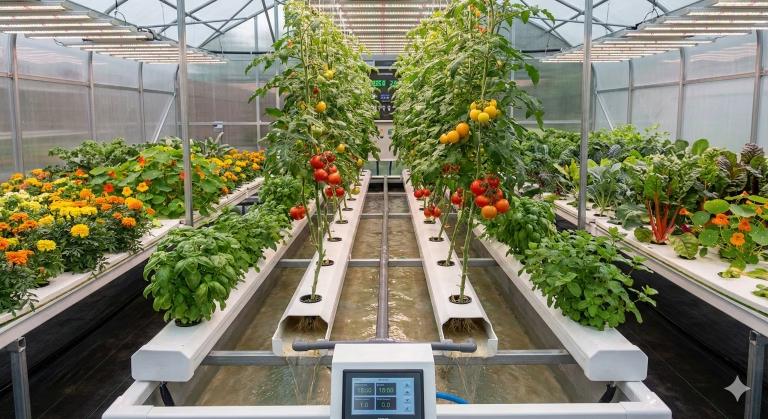
A thin film of nutrient solution continuously flows across angled gutters containing plant roots. Basil thrives in NFT because it prefers consistent moisture without waterlogging.
- Cost: $1,500–$4,000 for a small commercial setup
- Yield: Excellent, especially with dense planting
- Pros: Water-efficient, space-efficient, scalable
- Cons: Requires more equipment and monitoring
3. Vertical Tower Systems (ZipGrow, LetPot, etc.)
Plants grow vertically in stackable towers with a drip-fed nutrient system. Each tower holds 20–40 plants depending on design.
- Cost: $3,000–$8,000 per 8-tower setup (including grow lights and controls)
- Yield: 30–50 kg per tower per year
- Pros: Maximum space efficiency, professional-grade output, consistent yields
- Cons: Higher upfront cost and learning curve
Step-by-Step: Setting Up Your First Basil System (10-Plant DWC for Under $500)
This beginner setup produces 1–2 lbs of fresh basil per week once established, enough to supply 2–3 restaurants or a farmers market stand.
What You’ll Need (Materials & Tools)
Required Materials:
- Food-grade container or opaque tote (20–30 gallons)
- 27-Gallon 2 pack of totes on Amazon ~$65 – Check availability through partnered retailers for up‑to‑date pricing.
- Air pump (aquarium-grade, 40–60 watts minimum)
- AquaMiracle Aquarium Air Pump Commercial Air Pump ~$50 – Check availability through partnered retailers for up‑to‑date pricing.
- Air stone
- Vinyl tubing (1/4 inch to fit air stone)
- Net pots (2–3 inch, food-grade plastic, 10 count)
- AC Infinity Net Cups 3-Inch, Heavy Duty Garden Slotted Net Pots with Wide Lip Rims ~$17 – Check availability through partnered retailers for up‑to‑date pricing.
- Expanded clay pebbles or hydroton
- 5L Hydroton LECA Clay Pebbles ~$25 – Check availability through partnered retailers for up‑to‑date pricing.
- Hydroponic nutrient solution (general-purpose for herbs)
- pH testing kit and pH buffer solutions
- EC (electrical conductivity) meter
- Thermometer
- Small spray bottle
- Rockwool or rapid rooter plugs (10 count)
- Basil seeds or clones
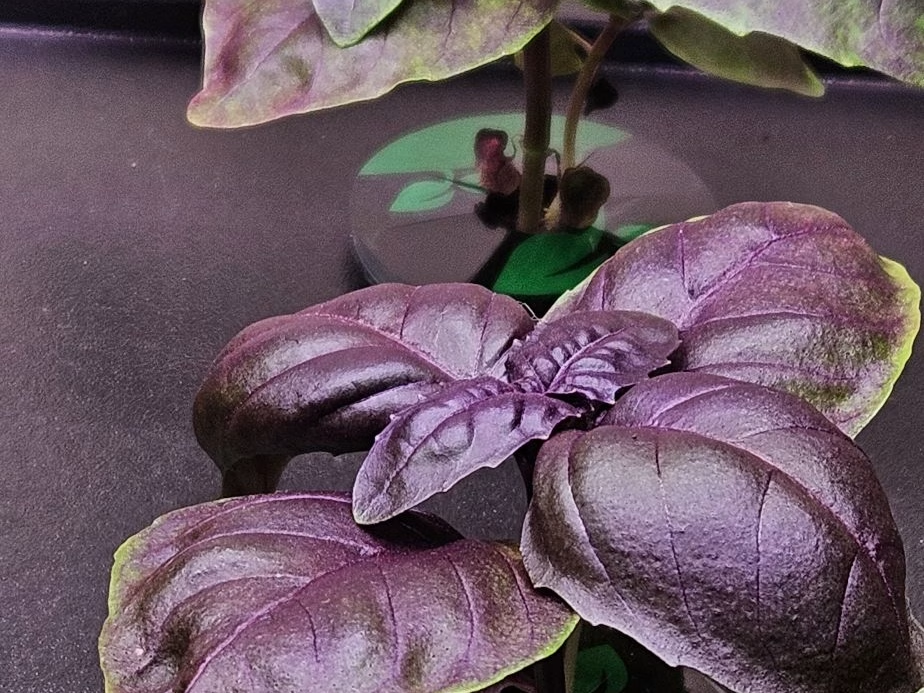
- My favorite basil to grow is Opal Basil (You can see it in the featured picture above) – but all of the seeds from Survival Garden Seeds I have been very productive
Optional but Recommended:
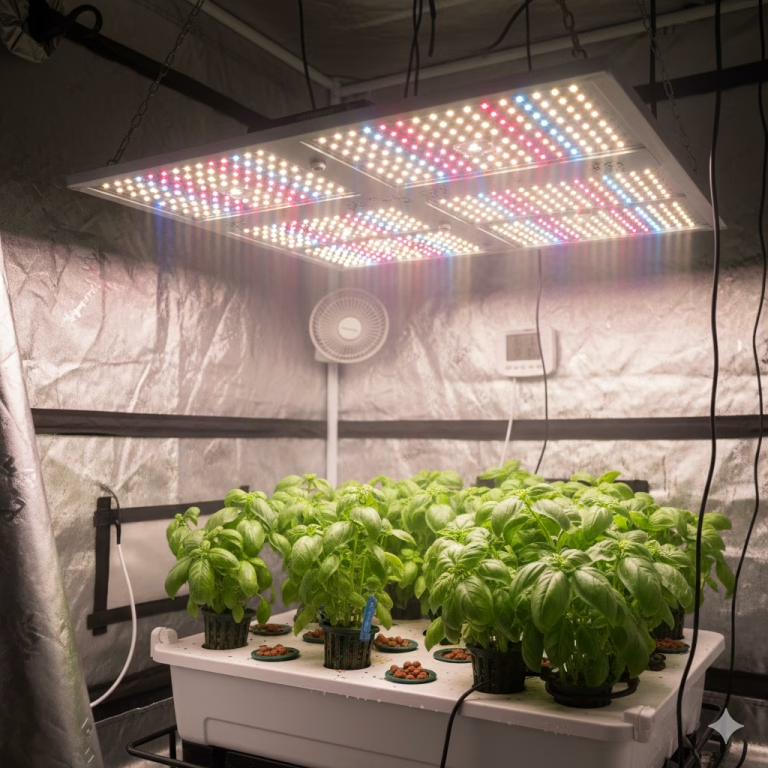
- LED grow lights (T5 or full-spectrum LED, 200–400 watts)
- Timer (for 14–16 hour light cycles)
- Water heater (to maintain 65–75°F)
- Humidity meter
- Test strips for nitrogen/phosphorus/potassium
Tools:
- Utility knife or hole saw (to cut net pot holes in lid)
- Measuring cups and syringes
- Soft cloth for cleaning
- Notebook for tracking water changes and nutrients
6 Simple Setup Steps
Step 1: Prepare Your Reservoir
Start with a food-grade opaque container (20–30 gallons is ideal for 10 plants). Opaque is critical because light exposure causes algae growth, which competes with plants for nutrients. Fill with dechlorinated water (let tap water sit 24 hours or use filtered water). Add an air stone and tubing at the bottom connected to your air pump, positioned to create vigorous bubbling. This oxygenates roots continuously.
Step 2: Cut and Prepare the Lid
Use a hole saw or utility knife to cut 10 holes (2.5–3 inches) in your container lid, spaced 3–4 inches apart. The net pots will sit in these holes with their bottoms submerged 0.5–1 inch into the nutrient solution (not too deep; roots need to reach water without drowning). Ensure holes are snug but allow net pots to fit securely without tipping.
Step 3: Add Nutrients and Balance pH
Measure your water volume (gallons × 3.785 = liters). Use your nutrient formula’s dosing chart. General-purpose hydroponic nutrients work well for basil; mix according to package directions. Add nutrients to the reservoir first, then adjust pH.
Basil prefers a pH range of 6.2–6.8. Test with a pH meter or test strips. If pH is too high (above 6.8), add a few drops of pH Down (phosphoric acid); if too low (below 6.2), add pH Up (potassium hydroxide). Mix gently and test again after 30 minutes. Target EC (electrical conductivity) for basil: 1.4–2.2 mS/cm. Most hobby nutrient solutions arrive pre-calculated; your EC meter will confirm.
Step 4: Plant Your Basil
You can start from seeds or clones. Seeds take 5–7 days to germinate; clones (starter plants) establish faster. Place a small amount of expanded clay pebbles in the bottom of each net pot. If using seeds, place a moist rockwool cube (with seed embedded) on top of the pebbles. If using a clone, gently remove it from its original soil media, rinse the roots clean, and position the root ball at the net pot’s top edge. Add more pebbles around the base to secure it.
Lower net pots into holes so roots barely touch the nutrient solution. Don’t submerge the entire plant; only roots belong in water.
Step 5: Install Lights and Set the Schedule
Basil needs 14–18 hours of light daily. If growing in a dark basement or garage, use a full-spectrum LED grow light positioned 12–18 inches above the plants. Suspend lights on adjustable chains or stands. Set a timer for 16 hours on, 8 hours off. Keep the temperature steady between 65–75°F; basil is heat-loving but not heat-stressed.
Step 6: Monitor and Maintain
- Daily: Check that the air pump is running (you’ll see bubbles), the plants look green and upright, and there’s no visible algae. Water level should drop slightly as plants transpire.
- Every 3 days: Test and log pH, EC, and temperature. Small changes are normal; large swings indicate a problem.
- Weekly: Inspect roots for brown slime (root rot indicator) or white mold. Change 25% of the water weekly or do a full water change every 3 weeks.
- Upon planting: Add nutrients. Continue nutrient monitoring but avoid over-dosing; it’s easier to add more than remove excess.
Basil Nutrient Management: The Critical Ranges
pH: The Make-or-Break Parameter
Basil is forgiving but has a sweet spot: pH 6.2–6.8. Outside this range, micronutrients (especially iron, manganese, and zinc) become unavailable even if present in the solution, leading to yellowing leaves and stunted growth.
- Too high (pH > 7.0): Iron lockout causes yellowing between leaf veins; new growth comes in pale.
- Too low (pH < 6.0): Calcium and magnesium lockout; leaves curl and older leaves brown at the edges.
Check pH every 2–3 days. Use a digital pH meter (more reliable than test strips) and calibrate it monthly with pH 7.0 and pH 4.0 calibration solutions.
EC and Nutrient Strength: 1.4–2.2 mS/cm
Electrical conductivity measures total dissolved solids in your water. For basil:
- 1.4–1.6 mS/cm: Vegetative stage (seedlings and early growth); low-strength solution reduces burn risk.
- 1.8–2.2 mS/cm: Mature plants during harvest cycles; higher strength supports robust foliage and flavor.
Start at 1.6 and increase gradually as plants grow. Don’t exceed 2.2; basil isn’t a heavy feeder like tomatoes.
Nitrogen, Phosphorus, Potassium (NPK)
Most general-purpose hydroponic nutrients have an NPK ratio of 10:10:10 or similar. For basil, you don’t need special herb-specific formulas. What matters is consistency: use the same brand and ratio throughout a crop cycle to avoid nutrient imbalances. Switch only if you see deficiency signs.
Nitrogen deficiency signs: Older leaves yellow; growth slows.
Phosphorus deficiency: Purple or reddish tints on stems and undersides of leaves.
Potassium deficiency: Yellow or brown leaf edges; weak stems.
If deficiency occurs, increase EC by 0.2 points and monitor for 3–5 days. If it doesn’t improve, do a 25% water change and rebalance nutrients.
The Basil Growing Cycle: Seed to Harvest
Week 0–1: Germination
Start seeds in rockwool cubes, rapid rooters, or paper towels. Keep moist and warm (70–75°F). Seeds germinate in 5–7 days. Once sprouted, transfer to your DWC or tower system.
Clones skip this step; they’re ready to plant immediately.
Week 1–3: Vegetative Growth
New seedlings establish roots. Keep EC lower (1.4–1.6) to avoid burning tender plants. Ensure 14–16 hours of light and temperatures between 65–75°F. Don’t harvest yet; let the plant grow 5–6 true leaves (2–3 inches tall).
At this stage, perform your first pruning. Pinch off the very top of the main stem just above the lateral buds (two tiny side buds on the stem). This triggers bushiness instead of a single tall stem. The plant will send out two new stems from those buds within 3–5 days.
Week 3–5: Bush Development
After the first pinch, the plant develops two main stems. Each will grow rapidly. At week 4, do a second pinch if the plant is tall enough (5–7 inches). This triggers another round of branching: two stems become four. More stems = more harvestable foliage.
Increase EC to 1.8–2.0 as the plant matures. Monitor pH closely; mature plants consume more nutrients and pH can drift.
Week 5–8: First Harvest (Continuous)
Your basil is now a bushy, multi-stemmed plant. Begin harvesting. Pinch or cut off the top 3–5 inches of each stem, just above a set of lateral leaves. Never remove more than one-third of the plant at once.
This harvest also functions as a pruning: it triggers the side buds below the cut to develop, creating even more stems. Harvest every 5–7 days. Each harvest yields 1–2 ounces per plant.
Continue for 3–4 harvests (4–5 weeks total from transplant) before the plant begins to flower and lose quality. After the 4th harvest, the plant is at the end of its productive life; pull it and start a new cycle.
Optimal harvest time: Early morning (5–7 AM), when leaves are fully hydrated and aromatic compounds peak. Store at 60°F, not in the fridge (cold destroys basil fast).
Packaging for Restaurants
Use clear plastic clamshells (1–2 lbs per clamshell) or food-grade plastic bags with micro-perforations. Add one piece of food-service paper towel to the bottom to absorb excess moisture. Store in a cool room (60°F) or a cooler set to 60°F, never below 55°F. Basil stored at 60°F keeps fresh for 10–12 days; below 50°F, it turns black and mushy within 24 hours.
Label with harvest date and keep-fresh instructions: “Store at room temperature. Avoid refrigeration.”
Common Problems and Solutions
Yellow Leaves
Likely cause: Nitrogen deficiency or pH drift above 6.8.
Solution: Test pH first. If it’s high, lower it to 6.5. If pH is correct, increase EC by 0.2 mS/cm and wait 5 days. If yellowing is only on older leaves and new growth is green, it’s normal senescence (plant age); harvest and start a new crop.
Brown Spots or Mushy Stems
Likely cause: Root rot (Pythium) or fungal infection from high humidity and poor air circulation.
Solution: Lower humidity by running a fan 2–3 hours daily. Increase air stone output to maximize root oxygenation. Do a full water change and add a root-beneficial bacteria product (like Hydroguard). If rot is severe, discard the plant and sterilize the system with a 10% bleach solution (1 part bleach to 9 parts water), rinse thoroughly, and start fresh.
Powdery Mildew (White Powder on Leaves)
Likely cause: High humidity + low air circulation + crowded planting.
Solution: Space plants 3 inches apart minimum. Increase air circulation with a fan. Reduce humidity below 70%. Spray affected leaves with a sulfur dust or neem oil spray (food-safe for edibles). Remove severely infected leaves.
Leggy, Pale Growth
Likely cause: Insufficient light.
Solution: Move grow lights closer (10–12 inches above the canopy) or upgrade to a higher-wattage light (at least 1 watt per square foot of growing area). Ensure the light cycle is consistent: 16 hours on, 8 hours off.
Stunted Growth or Thin Leaves
Likely cause: Low EC, pH imbalance, or insufficient temperature.
Solution: Check and adjust EC to 1.8–2.0. Verify pH is 6.2–6.8. Ensure the water temperature stays between 65–75°F; if cooler, add a small aquarium heater. Check that your air pump is running; oxygen deprivation slows growth dramatically.
Scaling Up: From 10 Plants to 96+ Towers
The Economics of Growth
Your 10-plant DWC system produces roughly 5 lbs per month (one harvest per plant per month at full maturity). At $8/lb wholesale, that’s $40 per month for the effort. Not nothing, but not business income.
To create sustainable income:
| System | Plant Count | Monthly Harvest | Annual Revenue (at $8/lb) | Labor/Week |
|---|---|---|---|---|
| 1 DWC tote | 10 | 5 lbs | $480 | 1–2 hours |
| 5 DWC totes | 50 | 25 lbs | $2,400 | 3–4 hours |
| 10 ZipGrow towers | ~200 | 100 lbs | $9,600 | 5–8 hours |
| 96-tower system (commercial) | ~2,000 | 900+ lbs | $86,400+ | 20–30 hours |
Real-world example: A small commercial operation with 96 ZipGrow towers (3,200 kg annual yield) selling to restaurants at $10/lb grosses $70,000+ annually. Subtract 40% for nutrients, electricity, labor, packaging, and delivery: net profit is $25,000–$35,000 per year. One person can manage this solo, working 20–25 hours per week.
When to Upgrade and How
Move from DWC to Towers when:
- You’re harvesting more than 20 lbs per month
- You have consistent restaurant buyers requesting more volume
- You have a dedicated grow space (basement, garage, greenhouse)
- You’re ready to invest $3,000–$8,000 upfront
Tower System Options:
- ZipGrow Towers (Premium): Proven commercial system, excellent support, ~3.3 kg yield per tower per cycle. Cost: $4,000–$8,000 for an 8-tower setup with lights and controls.
- LetPot and similar (Consumer-grade): More affordable, smaller footprint, 1–2 kg per tower. Cost: $1,500–$3,000 for a 9-tower system.
- DIY NFT: Build your own using PVC gutters, a reservoir, and a small pump. Cost: $2,000–$4,000. Requires more setup knowledge but very scalable.
Staffing and Time Investment
At 10 towers, you’re spending 4–6 hours per week: daily monitoring, feeding, pruning, and harvesting. This is still a side hustle.
At 50 towers, you need 2 part-time staff or 1 full-time person. At 100+ towers, add a second full-time employee for harvesting and delivery.
Finding and Selling to Restaurants
Direct Sales: The Highest Margin
Contact restaurants directly. Fine-dining, Italian, gastropubs, and farm-to-table establishments are your targets. Here’s a cold-email template:
“Hi [Chef/Manager], I’m a local basil grower supplying fresh, pesticide-free herbs to [1–2 nearby restaurants that have already said yes, if you have them]. Would you be interested in a weekly delivery of fresh-harvested basil at $10/lb? We harvest every Tuesday morning and deliver Wednesday. Minimum order: 2 lbs. Let me know if you’d like to try a sample.”
Small local restaurants typically need 2–5 lbs per week. Charge $10–$12/lb for direct delivery. This bypasses the distributor markup and keeps 50–60% of retail price as profit.
Wholesale Distributors
Shamrock Foodservice Warehouse (Phoenix), Coosemans Phoenix, and local produce brokers work with small growers. They buy at $6–$8/lb and sell to restaurants at $12–$16/lb. Lower margin for you, but less legwork: they handle sales, delivery, and collections.
Farmers Markets and Retail
Phoenix-area farmers markets (Uptown Farmers Market runs Oct–May Saturdays) are another outlet. Retail pricing is $12–$16/bunch (0.5 lb). Higher per-pound revenue but more time and booth fees ($25–$50 per market).
FAQ: Your Real Questions Answered
Q: How much basil will my 10-plant setup actually produce in a month?
A: Once established (after the first harvest at week 5), each mature plant yields 0.5–1 lb per month across multiple harvests. So 10 plants = 5–10 lbs per month. One restaurant or a couple of farmers market shoppers can absorb that. To supply 5 restaurants, you need 50+ plants.
Q: Do I need a license or permit to grow and sell basil?
A: Yes, in most U.S. states and Arizona specifically. You’ll need a business license, food handler certification, and likely a commercial kitchen or facility license if you’re packaging for sale. Contact your local health department (Arizona Department of Health Services). Requirements vary by county. Budget $500–$2,000 for permits and inspections.
Q: What if my basil gets powdery mildew?
A: Powdery mildew thrives in high humidity (>70%) and poor air circulation. Prevent it by running a fan 2–3 hours daily, maintaining humidity below 65%, and spacing plants 3+ inches apart. If it appears, remove infected leaves immediately, spray with food-safe sulfur dust or neem oil, and increase air movement. Discard severely infected plants; don’t let them spread to others.
Q: Can I grow Thai or Opal basil instead of sweet basil? Are they more profitable?
A: Thai basil and Opal basil are more specialty and command higher prices ($12–$16/lb vs. $8–$10 for sweet basil). However, they’re slower-growing and lower-yielding. Sweet (Genovese) basil is the workhorse: 3–5x faster, same disease resistance, and easier to harvest. Stick with sweet basil until you have a reliable buyer specifically requesting the specialty varieties.
Q: What if my basil is flowering? Is it still sellable?
A: Basil leaves become bitter and less aromatic once the plant flowers. Restaurants and retail buyers won’t pay premium prices for flowering basil. At week 4–5 of the cycle, before flowers form, harvest heavily and pull the entire plant. Start a fresh cycle. A 4–5 week production cycle with staggered plantings ensures you always have non-flowering basil available.
Q: How much does it cost to run a 10-tower system per month (electricity, nutrients, water)?
A: Expect $40–$80/month. LED lights use the most power (200–400 watts, ~8 hours/day = 50–100 kWh/month at 10–12 cents/kWh = $5–$12/month). Nutrients cost $20–$40/month. Water and miscellaneous supplies add $15–$30/month. As you scale to 96 towers, expect $300–$600/month in operating costs.
Q: Can I use soil or coco coir in a “hydroponic” system (hybrid approach)?
A: Technically, no. Soil and coco coir retain moisture and introduce pathogens. True hydroponics uses inert media (clay pebbles, rockwool) and dissolved nutrients only. If you’re growing in a growing medium like coco, you’re doing soilless growing, not hydroponics. Stick to true hydroponic systems for food safety and crop consistency.
Q: What’s the best basil variety for restaurants?
A: Genovese or Italian sweet basil. It has large leaves, intense flavor, and is instantly recognizable. Chefs expect it. Thai basil is specialty; dwarf basil is less marketable. Grow Genovese. If a buyer requests something else, trial a small batch, but Genovese is your main crop.
Q: How do I handle a full water change without losing my plants?
A: Prepare a second reservoir with fresh, dechlorinated water and new nutrients mixed to the correct EC. On change day, lower each net pot into the new reservoir (let roots drip off the old water). Lower the old reservoir away. The entire swap takes 10 minutes. Do this every 3 weeks to prevent nutrient imbalances.
Q: Can I grow basil and lettuce in the same system?
A: Technically yes, but not recommended. Basil prefers warmer temps (70–75°F); lettuce prefers cooler (65–70°F). Basil needs higher EC (1.8–2.2); lettuce prefers lower (1.0–1.4). Basil loves light; lettuce tolerates lower light. Run separate systems for each crop to optimize yields. One crop will underperform in a compromise environment.
Q: What if I have hard tap water with high mineral content?
A: This can interfere with nutrient uptake and drift your EC off-chart. Use a water filter or let tap water sit 24 hours to allow chlorine to off-gas and sediment to settle. Test EC of your tap water before adding nutrients. If it’s above 0.4 mS/cm, consider a sediment filter or simple carbon filter. This isn’t a deal-breaker; just account for it in your EC calculations.
Real Yields and ROI: Numbers from the Field
A Single DWC Tote (10 Plants)
- Startup cost: $300 (container, air pump, nutrients, net pots, lights)
- Monthly operating cost: $15
- Monthly yield (once mature): 5–10 lbs
- Monthly revenue (at $8/lb wholesale): $40–$80
- ROI: 3–4 months to break even; after that, $25–$65/month profit
- Best for: Testing the market, learning, supplying a single restaurant
A 10-Tower System (Budget Setup)
- Startup cost: $4,000 (8–10 towers, lights, reservoir, controls, nutrients)
- Monthly operating cost: $80
- Monthly yield: 60–80 lbs
- Monthly revenue (at $8/lb): $480–$640
- Monthly profit: $400–$560
- ROI: 6–8 months to break even; $4,800–$6,720/year net profit
- Best for: Serious hobbyists, part-time business, 2–5 restaurant accounts
A 96-Tower Commercial System
- Startup cost: $40,000–$60,000 (including automated controls, climate system, advanced monitoring)
- Monthly operating cost: $400
- Annual yield: 3,200+ kg (7,050 lbs)
- Annual revenue (at $8/lb): $56,400
- Annual profit: ~$30,000–$35,000
- ROI: 18–24 months; then $25,000–$35,000/year net
- Best for: Full-time business, 10+ restaurant accounts, wholesale distribution
These numbers assume:
- Direct sales to restaurants at $8–$10/lb (no distributor markup)
- Normal operating conditions (no major crop loss)
- 40% cost of goods (nutrients, electricity, labor, packaging, delivery)
- Year-round growing with staggered cycles
Actual results vary with crop loss, market pricing, and time investment.
Phoenix-Area Resources and Suppliers
Local Phoenix Hydroponic Retailers
- Growers House (Phoenix): Full equipment, nutrients, lighting, consultation
- Shamrock Foodservice Warehouse (Phoenix): Restaurant supply and produce distribution; some growers partner with them
- Local aquarium stores: Air pumps, air stones, pH meters (cheaper than hydro retailers)
Produce Distributors to Target or Partner With
- Coosemans Phoenix (specialty produce, 602-253-0210)
- Shamrock Foodservice Warehouse (602-266-8044)
- Local farm co-ops and farmers market associations
Restaurant Prospect List to Start With
Fine dining and farm-to-table restaurants in the your nearest metro area actively source local fresh herbs. Start with Italian, Mediterranean, and gastropub establishments within 10 miles of your location.
Author’s Note
I’ve been growing hydroponic herbs in Phoenix since 2022, starting with a single 5-gallon bucket of basil in my garage. The basil consistently outsells every other crop I’ve tried, lettuce and herbs included. Phoenix’s year-round indoor growing climate and high-margin restaurant market make it ideal for basil production. Whether you’re looking to offset grocery costs or launch a legitimate farm business, basil is the most forgiving, fastest-scaling, and most profitable herb to start with. The demand is real, the margins are honest, and the learning curve is gentle. I’ve made mistakes (root rot, pH crashes, deliveries that wilted in the heat), but basil’s resilience means each cycle teaches you something without derailing your entire operation. Start small, learn the system, find two restaurant buyers, then scale.
FAQs
What is the difference between hydroponic basil and store-bought basil in terms of flavor?
Hydroponic basil harvested fresh and delivered within 24 hours is noticeably more aromatic and flavorful than store-bought, which often sits for 5–7 days post-harvest. The volatile essential oils (linalool, eugenol) that define basil’s aroma degrade quickly; fresh hydroponic basil is peppery and bright. Restaurants notice the difference immediately and are willing to pay premium prices for it.
How long does it take from seed to first saleable harvest?
From seed to first harvest: 8–10 weeks. From clone to first harvest: 5–6 weeks. Most growers use clones to accelerate time to market. After the first harvest, you can harvest every 5–7 days for 4–5 weeks per crop cycle, then replant.
Do I need special nutrients formulated for basil, or can I use general-purpose hydroponic nutrients?
General-purpose hydroponic nutrients work perfectly fine for basil. You don’t need herb-specific or basil-specific nutrients. What matters is consistency: use a balanced NPK ratio (like 10:10:10) and maintain it throughout the crop. Herb-specific products are marketing; the baseline hydroponic formula is sufficient.
Can I grow basil outdoors in Phoenix and call it “hydroponic”?
Only if you’re using a hydroponic system (DWC, NFT, tower, etc.) outdoors. Outdoor soil growing is not hydroponics. If growing outdoors hydroponically, prepare for intense heat: basil wilts at 95°F+, and you’ll need shade cloth and significant water circulation to keep roots cool in Arizona summer. Indoor hydroponic growing is more reliable and consistent year-round.
What’s the lifespan of a single basil plant in a hydroponic system?
Under continuous harvesting, 4–6 weeks. After that, the plant begins to flower and lose quality, and leaves become bitter. Instead of trying to extend one plant’s life, commit to a 4-week harvest cycle and replant. This ensures you always have tender, fresh, sweet basil for your buyers.
Is there a minimum order size restaurants will accept?
Most small restaurants will buy 2–5 lbs per week. Larger restaurants (50+ seats) might order 10–20 lbs. Start with a 2 lb minimum and scale up as your supply grows. Always deliver on the same day and time each week so restaurants can build it into their inventory routine.
What happens if I can’t sell all my basil before it wilts?
Excess basil can be dried (hang-dried or oven-dried) for long-term storage, though dried basil commands lower prices ($4–$6/oz). Pesto is another option: blend fresh basil, garlic, pine nuts, olive oil, and parmesan; freeze in ice cube trays. Some growers make basil-infused oils or vinegars. But honestly, the best strategy is to scale production slowly until supply matches demand exactly.
Can I grow basil year-round in Phoenix indoors?
Yes. Hydroponic systems indoors eliminate seasonal limitations. Phoenix’s hot, dry outdoor climate actually makes indoor hydroponic growing easier than outdoor: you control temperature, humidity, and light precisely. Plan for cooler operations in winter (Jan–Feb) when outdoor temps drop below 65°F; summer requires aggressive cooling to prevent root temperatures from exceeding 75°F.
What’s the most profitable thing I can do with leftover basil?
Pesto (frozen or refrigerated), basil oil, basil salt, or dried basil. However, if you’re regularly running into overstock, you’ve made a business planning error. Scale your system to match your sales, not the other way around. Leftovers represent wasted nutrients, labor, and water. It’s better to leave some production capacity unused than to produce excess inventory.
Final Thoughts
Hydroponic basil isn’t just a hobby crop; it’s a genuine income stream for small-scale urban and suburban growers. The combination of high wholesale price, consistent demand, rapid growth, and low startup cost makes it the single most profitable herb to grow hydroponically. In Phoenix, where restaurant density is high and year-round indoor growing is feasible, the opportunity is real. Start small, nail your process, find buyers, then scale methodically. Within a year, you can be supplying 5–10 restaurants and generating serious monthly income working 20 hours per week. That’s the goal.
Grow well.
Next Steps:
- Learn how to maximize your Basil flavor: “Hydroponic Nutrient Solutions for Medicinal Herbs: Optimizing Compound Concentration.”
- Explore types of hydroponic systems: “Comparing Hydroponic System Types for Home Growers“
- Understanding commercial standards: “From Pesticide-Free to Restaurant-Ready: Meeting Commercial Standards in Home Hydroponic Systems“
Share this:

Discover more from Soil Free Harvest
Subscribe to get the latest posts sent to your email.