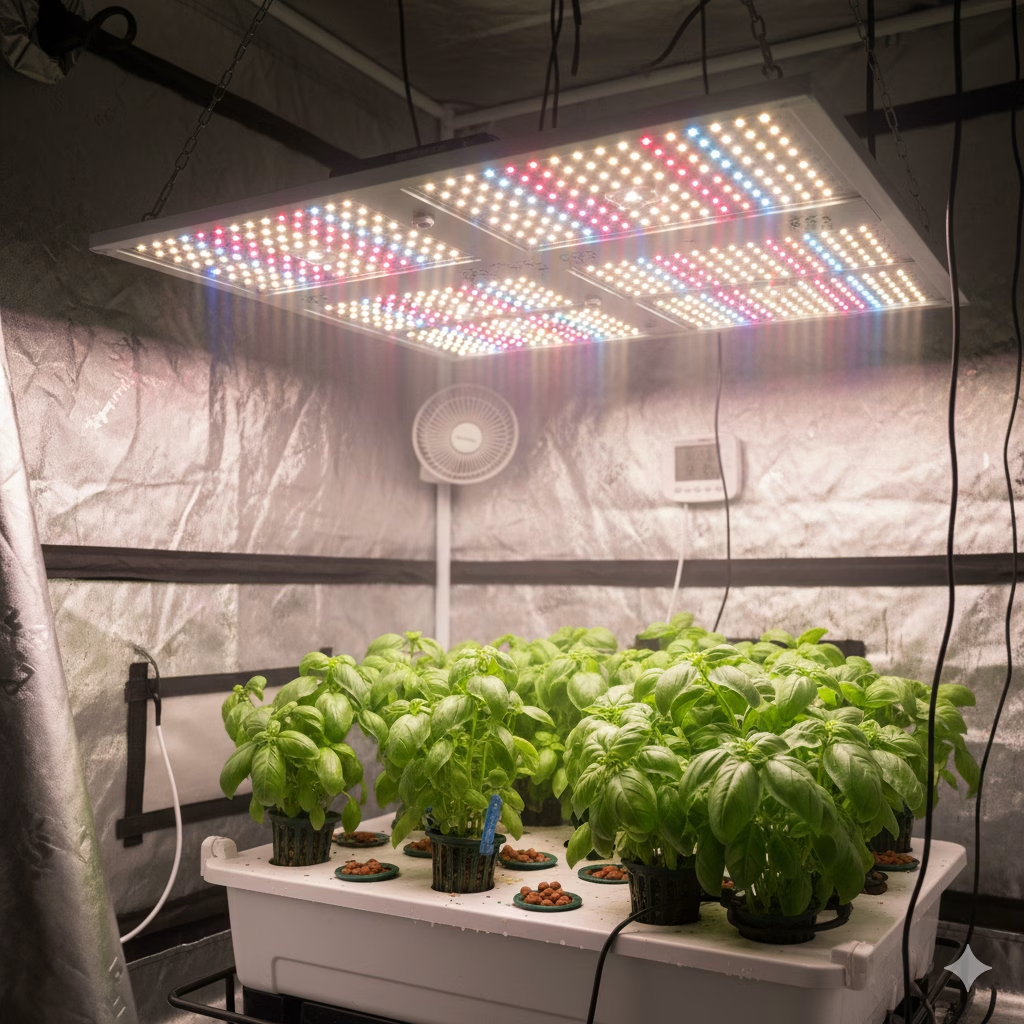
How Many Watts of Grow Light Do You Need for Hydroponics? (Simple Canopy Sizing Guide)
Sizing grow lights for hydroponics starts with your plant canopy area, then matching watts and PPFD to what you grow. For most home hydroponic setups, aim for roughly 20 to 40 watts of quality LED light per square foot, or 200 to 600 µmol/m²/s PPFD at the canopy for leafy greens, herbs, and typical fruiting crops.
TL;DR: Measure the actual plant canopy, choose a modern full spectrum LED that delivers 20 to 40 watts per square foot at that area, and verify that PPFD at the canopy lands in the right range for your crop and growth stage. Adjust height and dimming rather than blindly chasing more wattage.
Affiliate Disclosure: This article contains affiliate links. If you purchase through these links, soilfreeharvest.com may earn a small commission at no extra cost to you.
What does grow light wattage really mean?
Wattage tells you how much electrical power a grow light uses, not directly how much usable light your plants receive. Modern LED fixtures often deliver more photosynthetic photons per watt than older HID or blurple LEDs, so 200 watts of a high efficiency LED can outperform a 300 watt older fixture.
The more useful metric is PPFD, which measures how many photosynthetically active photons hit one square meter of your canopy each second in µmol/m²/s. Manufacturers now publish PPFD maps so you can see how much light reaches different points under the fixture at specific hanging heights.
Wattage still matters for planning heat, electrical load, and rough sizing. For beginners, using watts per square foot as a first pass, then checking PPFD charts for fine tuning, works very well.
How many watts per square foot do hydroponic growers need?
Most reputable guides recommend 20 to 40 watts of LED grow light per square foot of growing space, depending on crop type and growth stage. Leafy greens and herbs sit at the low end of that range, while heavy fruiting crops need the higher end. Anything above 40 to 50 watts per square foot with modern LEDs is typically overkill for home gardens and adds unnecessary heat.
Crucially, you size the light to the plant canopy area, not the total tent or room footprint. If your plants only occupy a 2 by 3 foot patch inside a larger tent, you calculate watts for 6 square feet, not the whole tent floor.
Recommended LED watts per square foot
| Crop type / use case | Suggested LED watts per ft² | Notes |
|---|---|---|
| Seedlings, clones | 10–20 | Often raised higher or dimmed; focus on gentle PPFD. |
| Leafy greens (lettuce, kale) | 15–25 | Lower PPFD crops that thrive with moderate light. |
| Herbs (basil, mint, cilantro) | 20–30 | Benefit from moderate to higher PPFD for compact growth. |
| Fruiting crops (tomatoes, peppers, cucumbers) | 30–40 | Need higher PPFD especially in flowering and fruiting. |
| High light or specialty flowering plants | 35–45 | Advanced growers sometimes push intensity with good cooling and nutrition. |
These ranges assume decent quality full spectrum LEDs with good photon efficacy. Cheap, inefficient fixtures may need more watts to reach the same PPFD at the canopy.
How does PPFD relate to wattage for hydroponic plants?
PPFD measures how much usable light actually hits your plants, and different crops have different PPFD sweet spots. Leafy greens are happy at 200 to 400 µmol/m²/s, while fruiting crops often perform best above 600 µmol/m²/s in their flowering or fruiting stage.
Here are practical PPFD targets by crop and stage, useful whether you grow in DWC, NFT, Kratky, ebb and flow, or aeroponic systems:
| Plant type | Seedling PPFD (µmol/m²/s) | Veg PPFD (µmol/m²/s) | Flower / fruit PPFD (µmol/m²/s) |
|---|---|---|---|
| Leafy greens | 100–200 | 200–300 | 300–400 |
| Culinary herbs | 150–250 | 300–500 | 400–700 |
| Fruiting crops (tomato, pepper, cucumber) | 100–200 | 200–500 | 500–700 |
| High light flowering crops | 200–400 | 400–600 | 600–900+ |
These numbers line up well with the 20 to 40 watt per square foot rules of thumb for efficient LEDs at common hanging heights.
Hydroponic lettuce from seed to harvest → how to grow lettuce hydroponically
How do you size grow lights to your hydroponic space?
Step 1: Measure your plant canopy area
Measure the length and width of the actual plant area, not the tent size. For a shelf with two 10 by 20 trays side by side, your canopy might be roughly 2 by 3 feet, which is 6 square feet.
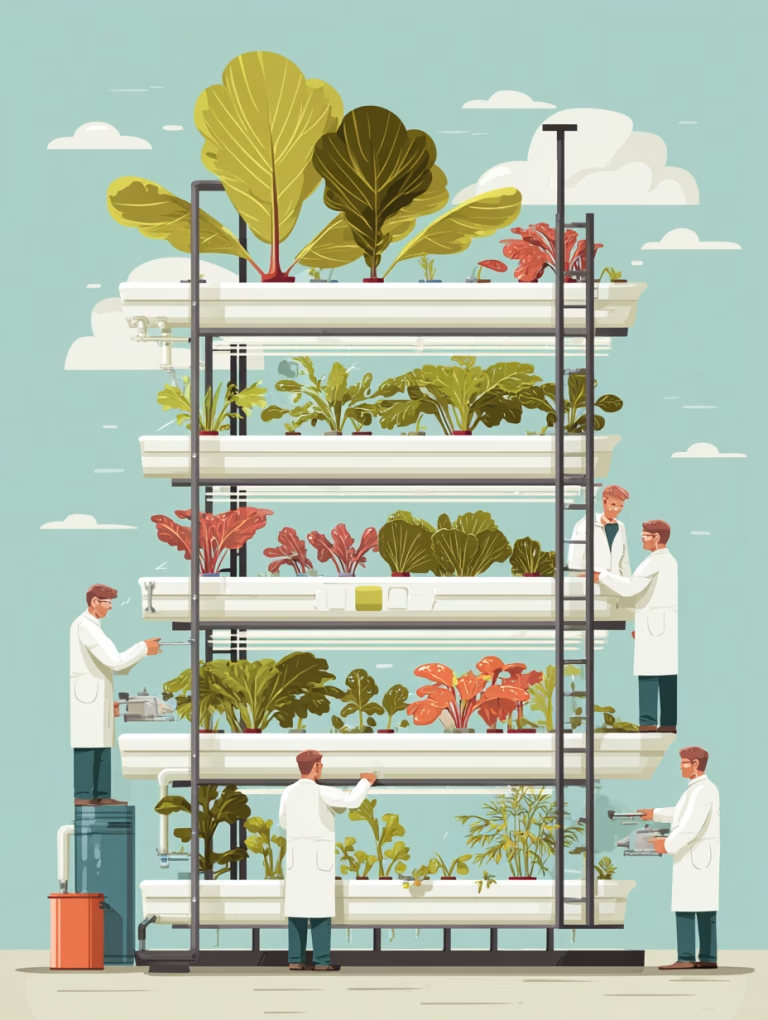
If you stack vertical shelves or towers, calculate each layer separately. Multi tier hydroponic racks often need one light per shelf or per vertical tier to maintain even PPFD across all levels.
Step 2: Choose a watt per square foot target
Use the ranges from the earlier table to pick your target based on crop and system. For example, a shallow water culture or NFT system for lettuce might target 20 watts per square foot, while a DWC bucket grow of peppers might use 35 watts per square foot.
Multiply canopy area by your chosen watts per square foot to get total fixture wattage. For a 6 ft² lettuce shelf at 20 watts per ft², you want about 120 watts of high quality LED lighting.
Step 3: Cross check with PPFD charts
Next, look at the manufacturer PPFD map at a realistic hanging height. You want PPFD to match the plant’s needs, not just fixture wattage.
For example, if a 150 watt bar light provides 300 to 350 µmol/m²/s over a 2 by 3 area at 18 inches, that is perfect for leafy greens and herbs. If you are growing dwarf tomatoes hydroponically, you may want a fixture or hanging height that delivers 500 to 600 µmol/m²/s at the canopy in flowering.
Understanding EC and pH in hydroponics → hydroponic nutrient management
How many watts for common hydroponic setups?
What about a 2 x 2 foot hydroponic tent?
A 2 by 2 tent has 4 square feet of area. For leafy greens or basil in a DWC tote, 80 to 120 watts of quality LED light is usually adequate.
If you plan to flower compact peppers or strawberries in that tent, 120 to 160 watts gives more headroom for higher PPFD during fruiting without maxing out the fixture.
What about a 2 x 4 foot shelf or tent?
A 2 by 4 space is 8 square feet. For salad bars, microgreens, and herbs in NFT channels or shallow raft systems, 160 to 200 watts is a solid range.
For mixed plantings that include a few fruiting crops, target 240 to 300 watts so you can dim down for greens or run higher intensity over the fruiting section. Splitting this across two bar lights often gives more even coverage than one large panel.
What about a 4 x 4 foot hydroponic garden?
A 4 by 4 canopy is 16 square feet. Many grow light calculators suggest 320 to 480 watts for typical flowering plants in that footprint, which lines up with 20 to 30 watts per square foot.
If the 4 by 4 is mostly leafy greens in vertical NFT rails, you can run closer to 300 watts with high efficiency LEDs. For heavy feeding fruiting crops wall to wall, 480 to 600 watts can make sense for advanced growers who have temperature and CO₂ under control.
How does hydroponic system type affect light sizing?
Different hydroponic system geometries change how light spreads across the plants, even when wattage is the same. Shallow raft or DWC tables with low, uniform canopies are efficient to light, since the distance and angle from the fixture are fairly consistent.
Tall vine crops in Dutch buckets or vertical trellis systems need more careful placement to avoid shading and to keep PPFD in the target range from bottom to top. Fruit trusses on tomatoes or cucumbers may sit closer to the light than lower foliage, so these systems benefit from bar style LEDs that spread light across the canopy.
Hydroponic towers and vertical aeroponic systems often work best with several narrower fixtures placed around the column rather than one central light. This arrangement improves side lighting of lower tiers and reduces hot spots directly beneath a single panel.
Comparing DWC vs NFT vs Kratky → hydroponic system types explained
How high should hydroponic grow lights hang above the canopy?
Most LED grow light guides recommend starting around 18 inches above the canopy and adjusting based on plant response and PPFD measurements. Seedlings tend to prefer 24 to 30 inches with lower intensity, while vegetative plants do well at about 18 to 24 inches. Flowering and fruiting stages sometimes benefit from 12 to 18 inches if you manage heat and light stress.
Start on the higher end of each range and move the light closer over several days. Watch for upward cupping, bleaching, or crispy leaf tips as signs that the light is hung too low or intensity is too high.
In hydroponic systems, water cooled root zones can help plants tolerate slightly higher light levels, but leaf surfaces can still burn if the light is too close.
Hydroponic seed starting under lights → starting seeds for hydroponics
How do efficiency, heat, and electricity cost factor into wattage?
Not all watts are equal. High efficiency LEDs can deliver more usable photons per joule of electricity, which means more useful light for the same watt draw. Lower efficiency fixtures waste more energy as heat, which is a big deal in indoor grows and hot climates.
Better efficiency lets you hit target PPFD with fewer watts per square foot, lowering long term operating costs. Good fixtures use robust heat sinks and quality drivers so they maintain output and lifespan instead of dimming or failing early from heat stress.
Electricity cost is simple to estimate: multiply fixture watts by hours per day, divide by 1000 to get kWh, then multiply by your local rate. For example, a 300 watt light running 16 hours per day uses 4.8 kWh daily; at 15 cents per kWh, that is about 72 cents per day.
How should you size grow lights in hot, dry climates like Phoenix?
In the Phoenix metro area, ambient temperatures can push indoor grow spaces toward the upper comfort limit, especially in garages or sunrooms. That extra heat makes high watt densities harder to manage, even if the plants would love the extra PPFD.
For small hydroponic tents or racks in hot, dry climates, stay toward the lower end of the watt per square foot ranges and favor high efficiency bar style LEDs with good passive heat sinks. Running fixtures at 60 to 80 percent power with some headroom is often better than maxing out a smaller, hotter light.
Running lights at night, using oscillating fans, and exhausting hot air from tents helps you run more intensity without cooking the canopy. In practice, many Phoenix area home growers find that around 20 to 30 watts per square foot with efficient LEDs is a sweet spot that balances yield and temperature inside a typical apartment or suburban home.
Growing hydroponic greens in hot climates → warm climate hydroponics tips
How do you troubleshoot too much or too little light?
Too little light shows up as stretched stems, large internode spacing, pale leaves, and slow growth even when nutrients and pH look correct. In that case, consider lowering the fixture slightly within safe distance ranges or increasing intensity if the fixture is dimmable.
Too much light causes leaf edge burn, bleaching near the top of the canopy, clawing, or plants that seem overfed even at modest nutrient levels. Exceeding a plant’s maximum light needs without matching CO₂ and nutrition can reduce quality and waste energy.
If you suspect over lighting, raise the fixture a few inches, dim the power, or cut back light hours slightly. For hydroponic crops like lettuce or basil, dialing back from 400 to around 200 to 250 µmol/m²/s often improves leaf texture and color.
Diagnosing hydroponic plant problems → hydroponic troubleshooting guide
How to size a grow light for your hydroponic system
Title: Size a hydroponic grow light by canopy area and crop type
Description: A simple, repeatable process to calculate the right grow light wattage and PPFD for any home hydroponic setup, from countertop Kratky tubs to 4 by 4 tents.
Materials and tools
- Tape measure or ruler
- Notepad or phone for calculations
- Grow light fixture spec sheet or product page
- Optional: PAR / PPFD meter or phone app paired with a basic quantum sensor
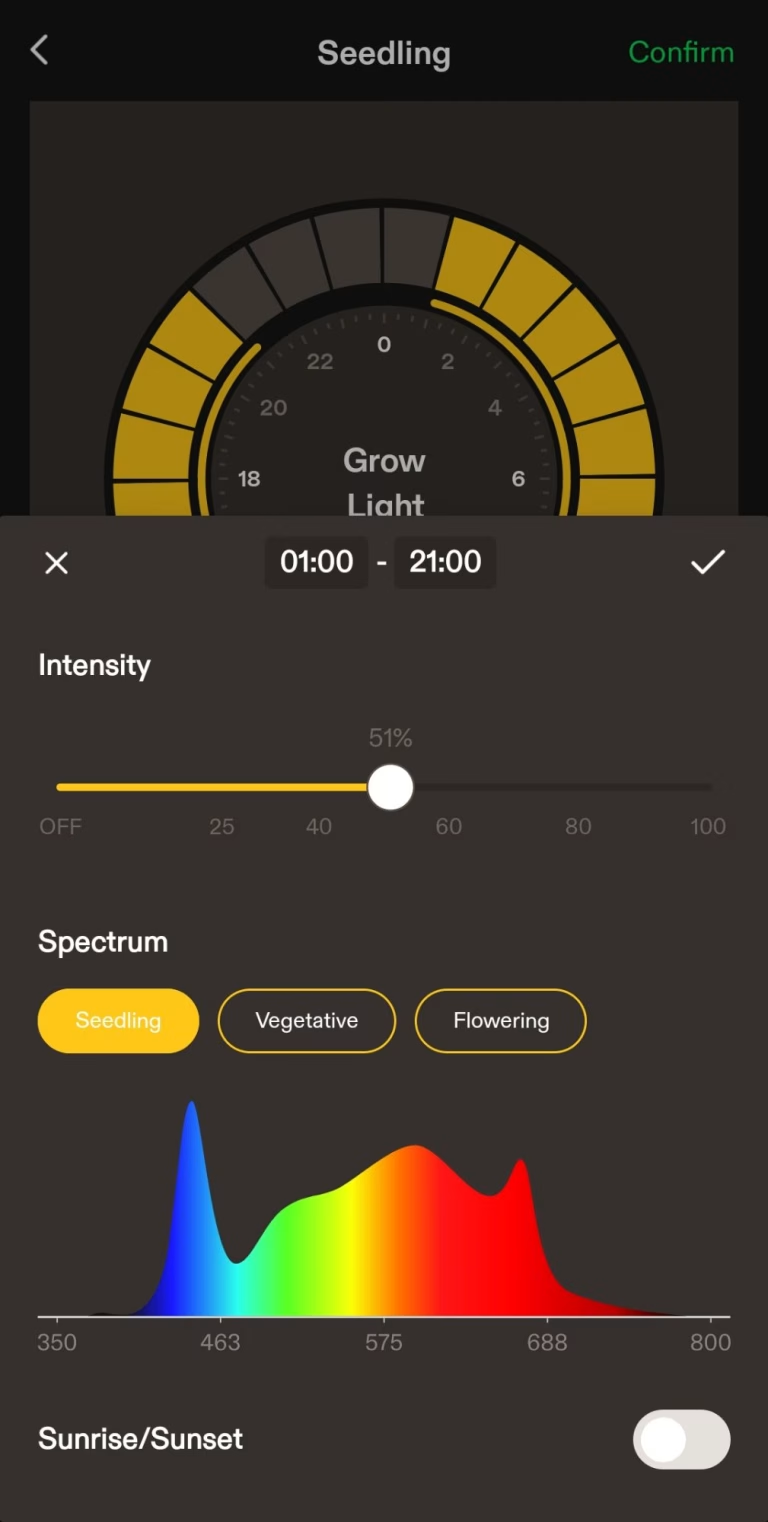
- Photone App (affiliate link – Check availability through partnered retailers for up‑to‑date pricing.)
- This smartphone hardware option is complimentary to the app provided: Photone Lightray Diffuser & Cosine Corrector (affiliate link – Check availability through partnered retailers for up‑to‑date pricing.)
- Your hydroponic system set up with plants or an empty layout
Step 1: Measure your canopy area
Measure the length and width of the space your plants occupy or will occupy. Multiply length by width to get the canopy area in square feet. Record this number, since all your wattage calculations will use it.
Step 2: Identify your main crop type
Decide whether the majority of your space will be leafy greens, herbs, fruiting crops, or mixed plantings. Use leafy greens as your baseline if half or more of the area is lettuce, kale, or similar crops. For tomato, pepper, or cucumber focused setups in DWC, drip, or Dutch buckets, classify the system as fruiting.
Step 3: Pick a watt per square foot target
Choose a watt per square foot value within the recommended range for your crop. Most growers can start at 20 watts per ft² for leafy greens and herbs, and 30 to 35 watts per ft² for fruiting crops. Write this target down.
Step 4: Calculate total fixture wattage
Multiply your canopy area by your target watts per ft² to get total LED wattage. For example, a 6 ft² NFT lettuce rail at 20 watts per ft² calls for about 120 watts, while a 9 ft² pepper DWC array at 35 watts per ft² needs about 315 watts.
Step 5: Match a grow light to your wattage and coverage
Look for fixtures whose recommended coverage matches your canopy footprint and whose wattage is close to your calculated value. Many companies publish coverage estimates such as 2 by 4 veg or 2 by 2 flower, as well as PPFD maps for those areas. If needed, choose multiple smaller lights to better match long, narrow shelves or L shaped systems.
Step 6: Check the PPFD chart at your planned hanging height
Open the PPFD chart for your chosen light and find the PPFD at the center and edges of your canopy at a realistic hanging height, often 12 to 18 inches for LEDs. Confirm that the average PPFD lines up with the target for your crop and stage, such as 200 to 300 µmol/m²/s for lettuce or 500 to 600 µmol/m²/s for fruiting tomatoes.
Step 7: Install, test, and watch your plants
Mount the fixture at the starting height and run it for a few days while watching leaf color, posture, and internode spacing. If using a PAR meter, confirm that readings at canopy height match your expectations based on the chart. Adjust fixture height and dimmer settings gradually until the plants look compact and vigorous without signs of burn.
Step 8: Fine tune for seasons and climate
In hot periods or in a warm climate like Phoenix, consider dimming the light slightly or raising it an inch or two to manage canopy temperature. During cooler months, or if you add CO₂ and push nutrient strength within safe EC ranges, you can gradually increase PPFD within the recommended band for your crop.
Setting light schedules for hydroponic crops → hydroponic lighting schedules
FAQ: grow light wattage for hydroponics
How many watts of grow light do I need per square foot for hydroponics?
Most home hydroponic setups do well with 20 to 40 watts of quality LED light per square foot of plant canopy. Use the low end for leafy greens and herbs, and the high end for heavy fruiting crops or advanced flowering grows.
Is watts per square foot enough, or do I need to care about PPFD?
Watts per square foot is a good starting rule of thumb, but PPFD tells you how much usable light actually hits your plants. Once you choose a wattage range, check the light’s PPFD chart to be sure you are landing in the right µmol/m²/s range for your crop and stage.
Can I use one grow light for both leafy greens and fruiting plants?
Yes, as long as your fixture has a dimmer or you can adjust hanging height, one light can handle both types. Leafy greens usually want 200 to 300 µmol/m²/s, while fruiting plants can use 500 to 600 µmol/m²/s in flowering, so you simply tune intensity based on what is in the system at the time.
How close should I hang my LED grow light over a hydroponic system?
Most guides recommend 24 to 30 inches for seedlings, 18 to 24 inches in veg, and 12 to 18 inches during flowering, depending on fixture power. Start on the higher side and lower the light gradually while watching for signs of stress.
What is the cheapest lighting setup that still works for hydroponic lettuce?
Lettuce is forgiving and can thrive under relatively low PPFD, so 15 to 20 watts per square foot of mid range LEDs can be enough. Focus on even coverage across the canopy and run 14 to 16 hours of light per day rather than buying oversized fixtures.
How quickly will I see results after upgrading my grow light?
If light was your limiting factor, improvements in growth rate and plant posture can show within a week. Fruiting crops may take a few weeks to express the full benefit, since flowers and fruit development respond to sustained light levels over time.
What are the biggest mistakes people make when sizing grow lights?
Common mistakes include sizing to tent area instead of plant canopy, ignoring PPFD charts, and buying very cheap fixtures with poor efficiency that never reach the claimed coverage. Hanging lights too close without watching plant response is another frequent issue, especially in hot climates and small tents.
Is it better to buy one big light or several smaller ones for hydroponics?
Several smaller bar or panel lights often provide more even coverage over long NFT channels, shelves, or L shaped systems. One big light is simpler to hang but can create a very bright center and dim corners.
How does hydroponics change light needs compared to soil?
Hydroponic plants often grow faster because they have constant access to water and nutrients, which lets them use moderate to high PPFD efficiently if other conditions are dialed in. The actual PPFD targets for each plant type are similar to soil, but hydroponic systems make it easier to support higher light levels with precise nutrient and pH control.
Balancing nutrients, pH, and light in hydroponics → optimizing hydroponic growth factors
Author note
The author grows hydroponic lettuce, herbs, and compact fruiting crops from a home base in the Phoenix metro area. Multiple indoor and patio systems are run in a hot, dry climate, so light sizing is always balanced with heat management and energy use. Experience includes DWC, NFT rails, Kratky tubs, and small vertical towers tuned specifically for apartment and suburban growers. The focus is practical, tested setups that fit into real homes and give consistent harvests without overcomplicated gear.
Share this:

Discover more from Soil Free Harvest
Subscribe to get the latest posts sent to your email.







4 Comments